
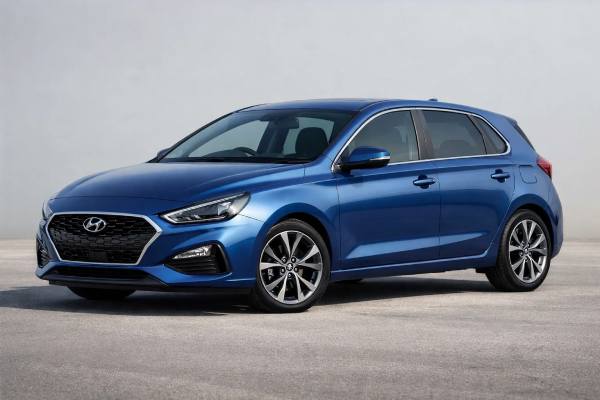
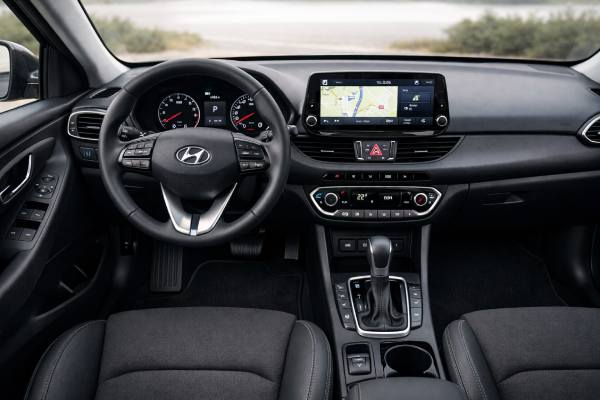
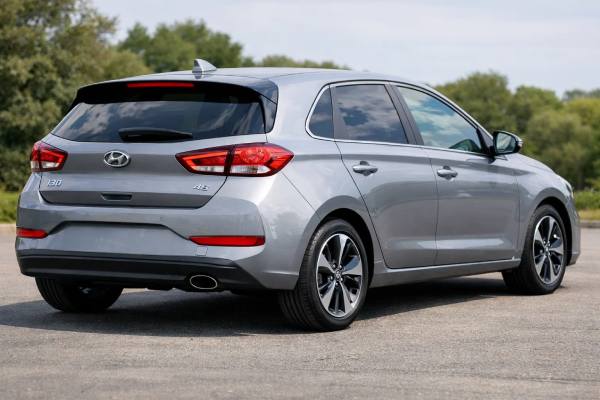
The facelift Hyundai i30 PD with the 1.5 T-GDi 48V mild-hybrid powertrain is one of those compact cars that makes more sense the longer you look at it. On paper it offers a familiar recipe: front-wheel drive, a turbo petrol four-cylinder, and hatchback practicality. In practice, it adds several details that matter in daily use: a 48-volt belt starter-generator, a six-speed intelligent manual or seven-speed dual-clutch transmission, multi-link rear suspension, and a cabin that was updated with better connectivity and broader driver assistance during the facelift years. The result is a car that feels more mature than many ordinary compact hatchbacks without becoming expensive or complicated in the way a full hybrid or plug-in can. It is also quick enough to feel effortless. The main ownership caveat is equally modern: this is still a turbo direct-injection engine with electrical support, so service history, software condition, and gearbox behavior deserve more attention than the badge alone suggests.
Essential Insights
- Strong mid-range torque and mild-hybrid assistance make the 1.5 T-GDi feel easier than the numbers suggest.
- The facelift cabin gained better screens, more SmartSense features, and stronger everyday refinement.
- Multi-link rear suspension helps the i30 stay composed on poor roads and at motorway speed.
- Poor maintenance can lead to carbon build-up, weak ignition performance, or jerky DCT behavior.
- An annual oil service, or every 10,000–15,000 km, is a sensible long-term routine even if official intervals are longer.
Explore the sections
- Hyundai i30 facelift 48V roundup
- Hyundai i30 1.5T hybrid numbers
- Hyundai i30 facelift equipment and ADAS
- Reliability and software watchpoints
- Service schedule and buyer advice
- Everyday performance and efficiency
- Rival verdict and alternatives
Hyundai i30 facelift 48V roundup
The 2020 facelift gave the Hyundai i30 a useful refresh rather than a superficial one. The styling changed, the lighting signatures became sharper, the infotainment options improved, and Hyundai widened the availability of connected services and SmartSense driver assistance. More important for this specific version, the facelift also brought the newer 1.5 T-GDi 48V mild-hybrid powertrain into the heart of the range. That makes this model notably different from the older 1.4 T-GDi cars it effectively replaced.
At the core is a turbocharged 1.5-litre petrol four-cylinder paired with a 48-volt electrical system. This is not a full hybrid and it is not an EV-style assist motor at the axle. Instead, Hyundai uses a belt-driven starter-generator to support the engine during starting, acceleration, and energy recovery. That matters because it shapes the ownership experience. The i30 still behaves like a normal petrol hatchback, refuels like one, and avoids the cost and packaging compromises of a large traction battery. At the same time, the engine can shut down and restart more smoothly, coast more cleanly, and take some of the edge off urban and mixed-use fuel consumption.
The rest of the package is quietly strong. The i30 hatch remains a practical five-door, easy to park, roomy enough for everyday family use, and comfortable on longer journeys. Hyundai did not cheap out underneath, either. The facelift car keeps multi-link rear suspension, which gives it a tidier and more settled feel than many compact rivals that rely on simpler rear axle designs in equivalent trims. That is one reason the i30 often feels more grown-up on broken roads than its price point suggests.
This version also sits in a useful middle ground inside Hyundai’s own line-up. It is more muscular and relaxed than the 1.0 T-GDi mild-hybrid cars, but less demanding and less expensive to run than an i30 N. For many buyers, that is exactly the right place to land. The 1.5 T-GDi 48V is not a hot hatch engine, yet it gives the i30 enough performance that overtakes, loaded motorway trips, and uphill work do not feel like chores.
There is one detail worth remembering, though. Published technical data is not perfectly uniform across markets. Some Hyundai documents list the 48V hatchback with reduced luggage space because the battery sits under the luggage floor, while later trim-and-pricing sheets in other markets still quote the ordinary hatchback boot figure. That is a good reminder that facelift i30s are best bought by exact powertrain, trim, and VIN, not by a broad model-year label alone.
Hyundai i30 1.5T hybrid numbers
The facelift i30 1.5 T-GDi 48V is best treated as a European-market hatchback with either a six-speed intelligent manual transmission or a seven-speed dual-clutch transmission. Hyundai’s German and UK technical sheets together give a solid picture of the car’s layout, output, dimensions, and mild-hybrid hardware.
Powertrain and efficiency
| Item | Hyundai i30 1.5 T-GDi 48V |
|---|---|
| Code | Smartstream 1.5 T-GDi 48V mild hybrid |
| Engine layout and cylinders | Inline-4, DOHC, 4 valves/cyl |
| Displacement | 1.5 L (1482 cc) |
| Bore × stroke | 71.6 × 92.0 mm (2.82 × 3.62 in) |
| Induction | Turbocharged |
| Fuel system | Direct injection |
| Compression ratio | 10.5:1 |
| Max power | 160 hp class (117 kW / 159 PS) @ 5500 rpm |
| Max torque | 253 Nm (186.6 lb-ft) @ 1500–3500 rpm |
| Timing drive | Chain |
| Motor type | Single belt starter-generator, non-axle drive |
| Motor output | 12 kW (about 16 PS) |
| System voltage | 48 V |
| Battery chemistry | Li-ion polymer |
| Battery capacity | 0.44 kWh |
| Rated efficiency | about 5.4 L/100 km in early published data; roughly 6.1–6.3 L/100 km WLTP on later 18-inch N Line data |
| Real-world highway @ 120 km/h | roughly 6.2–7.0 L/100 km |
The mild-hybrid hardware is intentionally modest. It improves stop-start smoothness and light-load efficiency, but it does not transform the car into a low-speed EV. Buyers expecting Toyota-style hybrid behavior will misunderstand it. Buyers who want a normal turbo petrol with a useful efficiency boost usually get exactly what they hoped for.
Transmission and driveline
| Item | 6iMT | 7DCT |
|---|---|---|
| Transmission | 6-speed intelligent manual | 7-speed dual-clutch automatic |
| Public transmission code | not stated in open Hyundai technical data | not stated in open Hyundai technical data |
| Drive type | FWD | FWD |
| Differential | Open | Open |
Chassis and dimensions
| Item | Hyundai i30 1.5 T-GDi 48V hatchback |
|---|---|
| Suspension front / rear | MacPherson strut / multi-link |
| Steering | MDPS; 2.57 turns lock-to-lock |
| Brakes | Front vented discs 280–305 mm; rear discs 272–284 mm, trim-dependent |
| Wheels and tyres | 205/55 R16, 225/45 R17, or 225/40 R18 |
| Ground clearance | 140 mm (5.5 in) |
| Length / Width / Height | 4340 / 1795 / 1455 mm |
| Wheelbase | 2650 mm (104.3 in) |
| Turning circle | 10.6 m (34.8 ft) |
| Kerb weight | about 1250–1399 kg manual; 1282–1431 kg DCT |
| GVWR | about 1830 kg |
| Fuel tank | 50 L (13.2 US gal / 11.0 UK gal) |
| Cargo volume | 357–395 L / 1263–1301 L (12.6–13.9 / 44.6–45.9 ft³), VDA, market and floor-layout dependent |
| Towing capacity | 1000–1420 kg braked, market and gearbox dependent; 500–600 kg unbraked |
| Roof load | 80 kg |
Performance and service capacities
| Item | 6iMT | 7DCT |
|---|---|---|
| 0–100 km/h | about 8.4–8.6 s | about 8.6–8.8 s |
| Top speed | 210 km/h (130 mph) | 210 km/h (130 mph) |
| Engine oil incl. filter | 4.2 L (4.4 US qt) | 4.2 L (4.4 US qt) |
| Transmission fluid / gear oil | 1.6 L (1.7 US qt) | 2.0 L (2.1 US qt) |
| Coolant | 6.3 L (6.7 US qt) | 6.1 L (6.4 US qt) |
| Wheel nut torque | 107–127 Nm (79–94 lb-ft) |
Safety and driver assistance
| Item | Hyundai i30 facelift |
|---|---|
| Euro NCAP | 5 stars for the i30 family platform |
| Adult / child / vulnerable road users / safety assist | 88% / 84% / 64% / 68% |
| IIHS | not applicable |
| ADAS | FCA car/ped standard; LKA standard; LFA, BCW, RCCW, ISLW, and Safe Exit Warning trim-dependent |
The specifications tell a clear story: the facelift i30 1.5 T-GDi 48V is not exotic, but it is thoughtfully engineered and more complete than many compact hatchbacks in ordinary trim.
Hyundai i30 facelift equipment and ADAS
Trim structure for the facelift i30 depends on country, but two patterns show up clearly in Hyundai’s open material. Early facelift European price and equipment sheets revolve around grades such as Select, Trend, N Line, and Prime. Later UK material uses SE Connect, N Line, and Premium. The names differ, but the logic is similar: one trim focuses on value, one on visual sportiness, and one on comfort and technology.
That matters because the 1.5 T-GDi 48V is not always sold in every trim. In some markets it appears mainly in upper-spec versions, which changes both how the car feels and what a used buyer should expect. The N Line is the obvious example. It brings the sportier body kit, 18-inch wheels, darker detailing, and a more aggressive cabin look. It also tends to carry the highest published fuel use because the tyre and wheel package is heavier and less forgiving. Premium-style trims, by contrast, often sit on 17-inch wheels and add more of the equipment people notice every day: heated seats, heated steering wheel, electric seat adjustment, larger navigation display, wireless charging, and a fuller instrument cluster.
The facelift also improved convenience tech in a way that matters more in used ownership than flashy marketing ever does. Depending on trim and market, buyers could get a 10.25-inch navigation screen with Bluelink and MapCare, a 7-inch supervision cluster, Apple CarPlay and Android Auto, rear camera support, front and rear parking sensors, keyless entry, and stronger LED lighting. By the 2024 update, Hyundai also made some convenience features more widely available, including broader parking-sensor fitment.
Safety and driver assistance are one of the i30’s real strengths. The underlying i30 platform already had a strong Euro NCAP result, and the facelift car built on that with a broader SmartSense package. Across the range, features such as Forward Collision-Avoidance Assist for cars and pedestrians, Lane Keep Assist, Manual Speed Limit Assist, TPMS, eCall, and cruise control were widely available or standard. Higher trims layered on Lane Follow Assist, Blind Spot Collision Warning, Rear Cross Traffic Collision Warning, Safe Exit Warning, and Intelligent Speed Limit Warning.
That mix is important in the used market because the best-looking trim is not always the best all-round buy. An N Line looks sharper and often carries the desirable 1.5 T-GDi 48V engine, but a Premium-grade car may be the more relaxed long-distance choice if you value seat comfort, lighting, and assistance features over the sportier wheel package. For many buyers, the sweet spot is whichever trim combines the 1.5 T-GDi 48V with 17-inch wheels, strong infotainment, and the better SmartSense package.
Also remember that ADAS calibration matters after repairs. Windscreen replacement, front camera work, radar-related components, bumper repair, and wheel-alignment changes can all affect how these systems behave. On a used car, a clean equipment list is not enough. You want the systems to work properly.
Reliability and software watchpoints
The facelift i30 1.5 T-GDi 48V is generally a dependable modern hatchback, but it is best understood as a well-sorted turbo petrol with mild-hybrid support, not as an old-school simple engine that shrugs off neglect. In open official material, there is no single public recall or campaign that defines ownership for this exact powertrain across all markets. That is reassuring, but it does not mean every used example deserves blind trust.
The first watch area is the direct-injection turbo engine itself. This is a fairly stressed 1.5-litre unit making real torque from low rpm. It rewards clean oil and regular use. Cars that have gone too long between services can develop rougher cold running, higher oil consumption, slower turbo response, or noisy timing-related behavior. The engine uses a chain, which removes a routine belt-change event, but not the need to monitor chain noise, timing-correlation faults, or poor oil history. Chain systems usually last well when lubrication is good and age badly when it is not.
The second area is intake and ignition cleanliness. Like many direct-injection petrol engines, the 1.5 T-GDi can gradually accumulate carbon deposits on the intake valves because fuel no longer washes the back of the valves. This is normally a medium-term issue, not an early-life disaster, but short-trip driving makes it more likely. Symptoms are usually subtle at first: uneven idle, softer throttle response, or a slight stumble when cold. Coil and spark-plug condition also matter more here than they did on older naturally aspirated engines.
The third area is the 48-volt system. In this car, the mild-hybrid hardware is modest, but it is still another electrical layer to inspect. The belt starter-generator, related belt drive, 48-volt battery, DC/DC conversion, and control software should all work quietly in the background. Any car with charging warnings, erratic stop-start behavior, repeated battery complaints, or unexplained warning lights deserves a proper diagnostic scan before money changes hands.
The fourth area is the 7DCT transmission, if fitted. Hyundai’s dual-clutch unit suits steady driving well, but it can feel clumsy if abused in creeping traffic, and neglected cars may show shudder, inconsistent take-up, or delayed engagement. A test drive should include cold low-speed work, reverse, hill starts, and stop-start traffic. A healthy DCT should feel mechanical but not unhappy.
Software matters more than many buyers expect. Infotainment updates, ADAS calibration, gearbox software revisions, and battery-management checks all play a role in how polished the car feels. A used i30 with documented dealer or specialist support is worth more than one that merely has the correct engine and trim. And because public recall and service campaigns are VIN-specific, always verify completion through Hyundai’s official check system and dealer records rather than relying on seller memory.
Service schedule and buyer advice
Hyundai’s published technical data for the facelift i30 1.5 T-GDi 48V lists long official maintenance intervals in some markets, including oil service intervals that are longer than many enthusiasts would choose for a turbocharged direct-injection engine. For long-term durability, I would treat the official maximum as a warranty-era ceiling, not an ownership goal.
A practical service plan looks like this:
- Engine oil and filter: every 10,000–15,000 km or 12 months. Official open data may allow longer, but this is the most valuable preventive step you can take.
- Engine air filter: inspect every service; replace around 30,000 km, sooner in dusty conditions.
- Cabin filter: every 12 months.
- Spark plugs: inspect around 45,000 km and replace by about 45,000–60,000 km depending on use, fuel quality, and drivability.
- Brake fluid: every 2 years.
- Coolant: inspect yearly and renew by official age guideline for the exact coolant type and market.
- Manual gearbox oil or DCT fluid: if history is unclear, a preventive change is wise in long-term ownership rather than waiting for symptoms.
- Tyres, pads, discs, and alignment: inspect at every service. These cars respond clearly to tyre quality and correct geometry.
- Timing chain: no routine replacement interval, but listen for cold-start rattle and watch for timing-correlation faults or poor oil history.
- 12 V battery and 48 V system health: test annually from about year 4 onward, with a diagnostic check for charging-system faults and stop-start irregularities.
- Belt starter-generator belt and tensioning hardware: inspect at service intervals because the mild-hybrid system relies on it.
- ADAS calibration status: confirm after windscreen, bumper, suspension, or wheel-alignment work.
Useful published capacities are straightforward: 4.2 L engine oil with filter, 1.6 L manual gear oil, 2.0 L DCT fluid, 6.3 L coolant manual or 6.1 L DCT, and a 50 L fuel tank. The 48-volt battery is a 0.44 kWh Li-ion polymer unit, and it is not a routine service item in the way the engine and gearbox are, but it should be checked for fault codes and charging consistency during pre-purchase diagnosis.
As a used car, the best examples are the predictable ones:
- full documented service history
- smooth cold start and even idle
- clean pull under load with no misfire
- no charging, mild-hybrid, or stop-start warnings
- quiet timing-chain area on cold start
- normal DCT take-up if automatic
- even tyre wear and quality matching tyres
- working radar, camera, lane support, and parking sensors
- official VIN recall and campaign check
Cars to avoid are the usual suspects: delayed servicing, cheap tyres, unexplained dashboard warnings, aftermarket tuning, poor battery behavior, or sellers who cannot explain recent maintenance. The long-term outlook is good when the car is treated as the modern turbo mild-hybrid it is, not as a throwaway compact that only needs fuel.
Everyday performance and efficiency
On the road, the facelift i30 1.5 T-GDi 48V feels like a car Hyundai spent time refining rather than merely updating. The first impression is not aggression but smoothness. The mild-hybrid system helps the engine restart neatly, the turbocharged torque arrives low enough that the car never feels strained, and the multi-link rear axle gives the car more polish than many rivals in ordinary trim.
The powertrain character is easy to like. With 253 Nm available from low rpm, the 1.5 T-GDi does not need large throttle openings to move the car along briskly. The six-speed intelligent manual suits drivers who want more control and a simpler long-term ownership story. The 7DCT makes the i30 more relaxed in traffic and on mixed commuting routes, though it still behaves like a dual-clutch unit rather than a soft torque-converter automatic. In other words, it is efficient and direct, but not especially creamy in creeping traffic.
The mild-hybrid system does not add dramatic shove, but it smooths the edges. That matters more in daily use than marketing material sometimes admits. Initial response is cleaner, stop-start events are less abrupt, and the car feels less busy in urban work. Out on the motorway, the i30 is stable and quiet enough to feel one class above many budget-minded compact hatchbacks. Steering feel is not especially rich, yet the car tracks neatly and the body stays composed over long undulations and fast lane changes.
Official performance is strong for a normal hatchback. Depending on trim and gearbox, 0–100 km/h takes around 8.4 to 8.8 seconds, and top speed reaches about 210 km/h. In practice, the more useful figure is the way the car gathers speed in the middle of the rev range. It feels easy rather than dramatic, which is exactly what many owners want.
Real-world economy depends heavily on wheel size and route mix. A lighter-wheel, calmer-use car can deliver about 6.0–6.8 L/100 km on the highway and 6.4–7.2 L/100 km mixed. Urban-heavy or cold-weather use usually pushes the car toward 7.5–8.8 L/100 km. On 18-inch N Line wheels, expect the upper end of those ranges. In mpg terms, that works out to roughly 27–31 mpg US / 32–37 mpg UK in heavier town use, 34–39 mpg US / 41–47 mpg UK on a steady highway run, and 33–37 mpg US / 40–45 mpg UK mixed.
This is not a car that turns every road into an event. Instead, it gives you a well-calibrated blend of pace, refinement, and everyday ease. For many compact-car buyers, that is a better result.
Rival verdict and alternatives
The facelift i30 1.5 T-GDi 48V competes in one of the busiest parts of the market, but it has a clear identity. It is not the roomiest car in the class, not the cheapest, and not the sportiest. What it does better than many rivals is balance style, technology, chassis polish, and sensible ownership.
Compared with a Volkswagen Golf 1.5 eTSI or 1.5 TSI, the Hyundai often gives away a little badge prestige and sometimes some cabin softness, but it fights back with clear controls, a strong standard safety story, and typically better value on the used market. Against a Ford Focus 1.0 or 1.5 EcoBoost, the Hyundai feels slightly less playful but often more settled and more cohesive inside. Versus a Kia Ceed mild-hybrid, the difference is smaller because the engineering roots are so close, which means condition and equipment usually matter more than brand preference.
The Mazda3 is a good comparison for buyers who care about design and cabin feel. The Mazda often feels richer inside and more premium in detail, but the Hyundai usually counters with better rear-seat practicality, simpler infotainment learning curve, and a more flexible torque-rich turbo response in this specific mild-hybrid form. A Skoda Octavia gives far more rear space and cargo volume, though it is also a bigger car to place and park. That makes the i30 the tidier choice for buyers who still want a normal hatch footprint.
The i30’s strongest arguments are easy to summarize:
- strong real-world torque without hot-hatch cost
- multi-link rear suspension and good motorway manners
- improved facelift tech and SmartSense equipment
- practical hatchback body
- sensible used values
Its weaker points are just as clear:
- not as engaging as the best driver-focused rivals
- long official service intervals are not ideal for longevity
- DCT needs a careful test drive
- direct injection and mild-hybrid hardware add modern complexity
So is it a smart used buy? Yes, provided you buy carefully. The facelift 1.5 T-GDi 48V is one of those cars that rarely dominates headline comparison tests, yet often makes a lot of sense once real-life ownership is the goal. It has enough performance, enough refinement, enough safety, and enough practicality to satisfy a broad range of drivers. That breadth is its real advantage.
References
- Hyundai i30 | Technische Daten | Stand: 4.2019 2021 (Technical Data)
- Hyundai i30 | Technical, Specifications and Pricing | Model year 2023 | April 2024 2024 (Technical Data)
- Bolder and more high-tech: i30 gets update 2024 (Press Release)
- EuroNCAP | Hyundai i30 2017 (Safety Rating)
- Home | Hyundai Recalls & Service Campaigns 2026 (Recall Database)
Disclaimer
This article is for informational purposes only and is not a substitute for professional diagnosis, repair, or VIN-specific workshop information. Specifications, torque values, service intervals, procedures, trim content, and even some published capacity figures can vary by VIN, market, gearbox, wheel package, and model year, so always verify the exact data against official Hyundai service documentation for the specific vehicle.
If this guide helped you, please consider sharing it on Facebook, X, or another community you trust to support our work.