
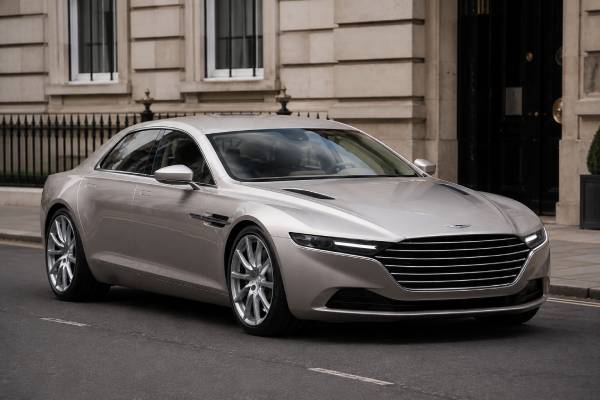
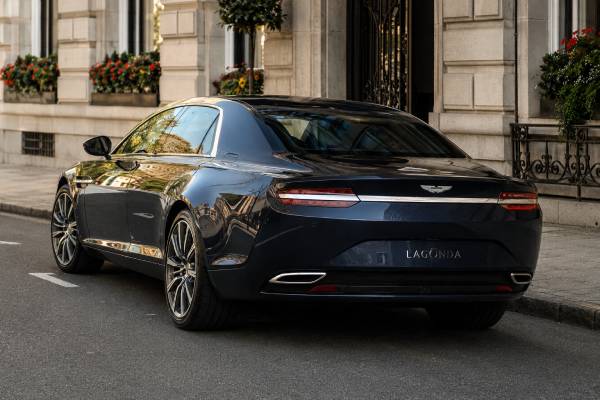
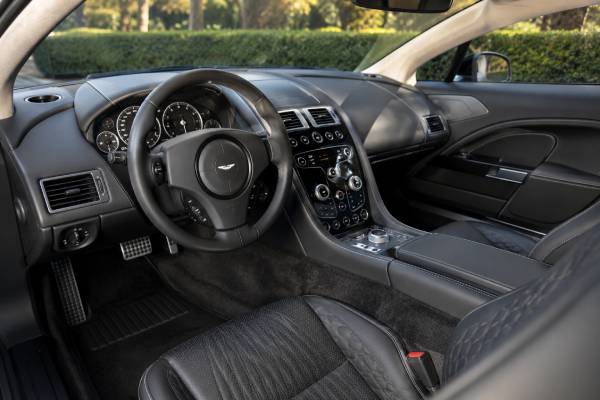
The Aston Martin Lagonda Taraf is a four-door luxury saloon built with the proportions, materials, and mechanical character of an Aston Martin grand tourer. Produced in tiny numbers for 2015 and 2016, it combined a stretched VH-generation aluminium platform, carbon-fibre exterior panels, a naturally aspirated 5.9-litre V12, and an eight-speed rear transaxle. The result was not a conventional limousine. It was quicker, louder, and more driver-focused than the chauffeur-oriented flagships it was priced against.
That identity is central to understanding the Taraf as a collector car. Its appeal comes from rarity, design, and the unusual decision to revive Lagonda as an ultra-exclusive sporting saloon. Its ownership demands are equally unusual: many cars have covered very little mileage, bespoke trim can be difficult to replace, and long storage can create more problems than regular use. This guide explains the exact 2015–2016 model, its verified specifications, engineering, driving character, maintenance priorities, inspection points, and the questions that matter before purchase.
Table of Contents
- Why the Taraf Exists
- Lagonda Taraf Technical Specifications
- V12, Chassis, and Driving Character
- Rear Cabin and Real-World Usability
- Maintenance and Storage Priorities
- Inspection Risks and Common Concerns
- Buying a Lagonda Taraf
Why the Taraf Exists
The Taraf was created as an ultra-low-volume Lagonda flagship, not as a mass-market alternative to the Rolls-Royce Phantom or Bentley Mulsanne. Its purpose was to offer exceptional rarity, hand-finished construction, and Aston Martin dynamics in a full-size four-seat saloon.
Aston Martin unveiled the car in Dubai in 2014, initially focusing on Middle Eastern customers before widening availability to selected markets. The name “Taraf” was presented as an Arabic expression of ultimate luxury. That choice reflected the launch market, but the design also looked directly at the 1976 William Towns Lagonda. The modern car did not copy the wedge. Instead, it reused its themes: a long, low body, a formal four-door profile, and a deliberate rejection of ordinary luxury-car proportions.
Under the skin, the Taraf was related to Aston Martin’s VH-generation cars, particularly the Rapide, DB9, and Vanquish. The aluminium-intensive architecture was lengthened, with most of the added wheelbase devoted to rear legroom. Carbon-fibre body panels helped control mass despite a length of roughly 5.4 metres. The saloon was assembled in a dedicated area at Gaydon that had previously been used for the One-77, reinforcing its positioning as a hand-built special rather than a normal production model.
Production totals are often described inconsistently because the planned limit changed during the programme. Aston Martin discussed a maximum of 200 cars, while later auction documentation commonly identifies 120 completed examples. Buyers should therefore distinguish between the announced ceiling and the number understood to have been delivered. For valuation, an individual car’s chassis record, original invoice, market specification, and build documents matter more than a broad production claim.
The Taraf’s rarity was not achieved by giving it an experimental powertrain. Aston Martin used mature components: the long-running naturally aspirated V12, an eight-speed ZF automatic transaxle, hydraulic steering, adaptive dampers, and conventional rear-wheel drive. That gave the car a recognisable Aston Martin feel and made service knowledge more accessible than the body and cabin exclusivity might suggest. It also means that a Taraf should not be treated as a decorative object. Its systems benefit from exercise, heat cycles, and preventive care.
Lagonda Taraf Technical Specifications
The 2015–2016 Taraf is a petrol-only, front-engined, rear-wheel-drive four-door saloon. Its 5,935 cc V12 sends power through a torque tube to an eight-speed automatic transaxle mounted at the rear, helping weight distribution. The specifications below apply to the regular production Taraf rather than the four-car 2018 Final Edition.
| Specification | Value | Notes |
|---|---|---|
| Engine type | All-alloy 5,935 cc V12 | Quad overhead camshafts, 48 valves |
| Induction | Naturally aspirated | Petrol engine |
| Maximum power | 540 bhp (403 kW) | At 6,650 rpm |
| Maximum torque | 630 Nm (465 lb-ft) | At 5,500 rpm |
| Engine position | Front-mid mounted | Behind the front axle line as far as packaging allows |
| Drive | Rear-wheel drive | Rear transaxle layout |
| Specification | Value | Condition |
|---|---|---|
| Transmission | Eight-speed Touchtronic III automatic | ZF automatic rear transaxle |
| Differential | Limited-slip differential | Mechanical rear-axle traction aid |
| 0–60 mph | 4.4 seconds | Manufacturer figure |
| 0–100 km/h | About 4.4 seconds | Manufacturer-era published figure |
| Maximum speed | 314 km/h (195 mph) | Published maximum |
| Stability control | Three-stage DSC | Includes selectable intervention levels |
| Specification | Value |
|---|---|
| Body style | Four-door, four-seat luxury saloon |
| Body construction | Carbon-fibre exterior panels over VH aluminium architecture |
| Length | 5,396.5 mm (212.5 in) |
| Width | 1,917.5 mm (75.5 in), excluding mirrors |
| Height | 1,389 mm (54.7 in) |
| Wheelbase | 3,189 mm (125.6 in) |
| Kerb weight | Approximately 1,995 kg (4,398 lb) |
| Specification | Value | Notes |
|---|---|---|
| Front suspension | Independent double wishbones | Coil springs and anti-roll bar |
| Rear suspension | Independent double wishbones | Coil springs and anti-roll bar |
| Damping | Adaptive damping | Normal, Sport, and Track modes |
| Steering | Hydraulically assisted rack and pinion | More communicative than typical luxury-saloon steering |
| Wheel diameter | 20 inches | Design and finish vary by specification |
| Front brakes | 400 mm dual-cast discs, six-piston calipers | Large performance braking system |
| Rear brakes | 360 mm dual-cast discs, four-piston calipers | Matched to stability-control system |
| Feature | Practical significance |
|---|---|
| Carbon-fibre body panels | Light for their size but expensive to repair correctly after impact |
| Rear transaxle | Supports balanced handling but adds driveline complexity beneath the cabin |
| Four individual seats | No conventional three-person rear bench |
| Bespoke Q finishes | Original colour, leather, veneer, and hardware records are important |
| Bang & Olufsen audio | Complex powered components should be tested individually |
| Low production volume | Model-specific trim and body parts may require factory or specialist support |
The official displacement is 5,935 cc even though the engine is often marketed as a 6.0-litre V12. Likewise, power may appear as hp, bhp, PS, or kW depending on market literature. A buyer should keep the original unit and source context rather than treating every converted figure as a different engine tune.
V12, Chassis, and Driving Character
The Taraf drives more like a long-wheelbase Aston Martin than a softly isolated limousine. The V12 is responsive and vocal, the steering communicates road texture, and the chassis remains composed at speed, but the ride is firmer and more connected than many buyers expect from a million-dollar saloon.
The naturally aspirated engine is central to that character. Its 630 Nm torque peak arrives high by modern turbocharged standards, so the car gains urgency as revs rise rather than delivering one large low-speed surge. The eight-speed gearbox helps by keeping the engine in a useful range and by giving relaxed cruising ratios. In normal driving, it can move the car smoothly and discreetly. Under larger throttle openings, the exhaust and intake become unmistakably Aston Martin.
Locating the gearbox at the rear separates the heavy powertrain masses and allows the engine to sit farther back than a conventional front-engine layout. The Taraf still has the scale and inertia of a near-two-tonne saloon, yet it changes direction with unusual confidence for its length. Hydraulic steering adds clarity that many electrically assisted luxury cars filter out. The trade-off is that the driver also feels more road surface and receives less isolation through the rim.
The adaptive dampers offer Normal, Sport, and Track settings. Normal is the sensible road setting because it gives the suspension room to breathe over broken surfaces. Sport can tighten body control on smooth, fast roads. Track is best reserved for very even pavement; on an imperfect road, excessive stiffness can reduce grip and passenger comfort rather than improve either.
The braking system is large and capable, but low-mileage cars deserve careful attention. Surface corrosion, aged fluid, sticky parking-brake mechanisms, or tyres hardened by time can make an apparently pristine car feel disappointing. Pedal response should be progressive, without vibration, pulling, warning messages, or an unusually long first application after storage.
Drivers should also respect the mismatch between performance and visual scale. A 195 mph claimed maximum and a 4.4-second sprint to 60 mph are serious numbers, but the car occupies a large amount of road. Sightlines, wheelbase, and low front bodywork matter in urban use. The best experience comes from flowing roads and long journeys, where the steering, torque, and stability can be enjoyed without asking the car to behave like a compact sports coupe.
Rear Cabin and Real-World Usability
The Taraf’s defining practical feature is rear-seat space, but it remains an intimate four-seater rather than a mobile lounge. The extended wheelbase gives rear passengers substantially more legroom than a Rapide, while the low roof and sporting seating position preserve a close-coupled cabin feel.
Each cabin was heavily configurable. Leather colours, stitching, carpets, headlining, veneer, carbon-fibre trim, brightwork, and small Q details can differ from car to car. That variety is part of the appeal, but it complicates condition assessment. A faded, damaged, or poorly recoloured panel may not be replaceable from normal inventory. Before repair, a specialist should identify the original hide, grain, perforation, thread, edge paint, and colour code from build records.
Rear occupants typically receive individual seats divided by a substantial console. The arrangement emphasises privacy and occasion, but it reduces flexibility. Owners cannot fold a bench for bulky cargo, and the car is not designed around family-car convenience. The boot is usable for touring luggage, yet the long exterior dimensions do not translate into estate-car practicality.
The infotainment system reflects the car’s production period. Its graphics, navigation, device integration, and response time are dated next to current flagship saloons. That is not necessarily a defect; originality is more important than modernisation in such a rare car. Permanent aftermarket screens, cut trim, non-factory audio wiring, or poorly integrated phone modules can reduce both reliability and collector appeal.
Real-world usability depends heavily on location. The Taraf was not sold in every market, and some cars have moved across borders after delivery. Registration, lighting, emissions compliance, navigation data, radio frequencies, tyre availability, and local parts support should all be checked before purchase. Left- and right-hand-drive cars exist, but the buyer should confirm the exact original market rather than assuming steering position tells the full story.
Parking requires care. The wheelbase is long, the nose is low, and carbon-fibre panel repair is specialised. Cameras and parking sensors should function correctly, but they are aids rather than protection. A front-end scrape that seems cosmetic can involve paint matching, carbon inspection, mounting points, and replacement hardware.
Maintenance and Storage Priorities
A Taraf should be maintained on time even when it covers almost no mileage. Fluids absorb moisture, seals age, batteries discharge, tyres harden, and fuel degrades whether the odometer moves or not.
The safest maintenance plan begins with the car’s VIN-specific Aston Martin documentation and an authorised or recognised specialist familiar with VH-generation V12 models. Exact oil specifications, capacities, service operations, software updates, and torque values can differ by market and equipment. Generic internet schedules are not a substitute for the correct service record.
For a normally used car, focus on these areas:
- Engine oil and filter: Change by time as well as mileage. Repeated short starts without full warm-up are worse than an occasional proper drive.
- Cooling system: Inspect hoses, radiator faces, header tanks, caps, fans, and traces of dried coolant. The long body contains extensive plumbing and heat management remains critical.
- Automatic transaxle and differential: Check for smooth cold and hot operation, correct fluid service history, seepage, and driveline vibration.
- Brake fluid and hydraulics: Replace fluid at the specified interval and inspect calipers, hoses, discs, and parking-brake operation.
- Tyres: Judge by date, condition, and heat history, not tread alone. Correct load, speed rating, and matched axle fitment matter.
- 12-volt battery: Use the correct maintainer when stored. Low voltage can trigger unrelated warning messages and stress modules.
Storage should preserve the car without turning it into a static exhibit. A climate-controlled, dry, ventilated space is ideal. Keep the fuel system managed with fresh fuel, protect the leather from heat and ultraviolet exposure, maintain correct tyre pressure, and avoid leaving the car resting in one position for months. Any exercise drive should be long enough to bring oil, coolant, gearbox, brakes, and exhaust fully to temperature.
Do not repeatedly idle the car in place as a substitute for driving. Idling produces moisture, does little for bearings and transmission components, and may not charge the battery adequately. If road use is impossible, a specialist can prepare a controlled storage and recommissioning programme.
Annual inspection is especially valuable because it builds a continuous condition record. Photographs of the underside, suspension, brakes, body-panel edges, interior, and diagnostic report make later changes easier to identify. For a car whose value depends on provenance, maintenance documentation is part of the asset, not merely proof that bills were paid.
Inspection Risks and Common Concerns
The greatest Taraf risk is not one famous model-specific failure; it is the combination of age, extremely low use, complex shared electronics, and almost irreplaceable bespoke components. A thorough inspection should therefore evaluate function, originality, and storage history together.
Start with the battery and diagnostic systems. The car should be presented with a fully charged, correctly specified battery. Scan every control module, record stored and historic faults, and then retest after a proper drive. A seller who simply clears codes before inspection removes useful evidence.
Examine the carbon-fibre body in strong, even light. Look for paint mismatch, waviness, cracked lacquer, irregular panel gaps, disturbed fasteners, or repair overspray. Carbon damage can extend beyond the visible mark, so any impact area deserves professional non-destructive assessment. Check the underside, front splitter area, jacking points, door edges, and lower rear quarters.
The cabin inspection should be slow and methodical. Operate every seat motor, memory setting, window, mirror, door lock, light, climate-control function, camera, sensor, audio component, display, and console control. Confirm that powered audio speakers rise and retract as intended where fitted. Test both hot and cold climate output and listen for fan or actuator noise behind the dashboard.
Mechanical checks should include:
- cold start from genuinely cold coolant and oil temperatures;
- stable idle without excessive ticking, smoke, or fuel smell;
- clean acceleration through the full usable rev range;
- smooth upshifts and downshifts in automatic and manual modes;
- no torque-tube, propshaft, wheel-bearing, or differential vibration;
- even damping with no knocking or fluid leaks;
- straight braking with no pulsation;
- correct operating temperature in traffic and at speed.
A low odometer reading must be supported by condition and records. Compare tyre dates, brake-disc condition, seat bolsters, pedal surfaces, steering-wheel finish, switch wear, underbody marks, and service invoices. Very low mileage can be genuine, but it also increases the need for recommissioning. Auction catalogues regularly warn that static-display examples require work before road use.
Finally, verify all accessories supplied at delivery. Keys, glass ECU units, books, battery charger, tools, umbrellas, luggage, headphones, remotes, and market-specific equipment can be difficult to replace. Their absence may not prevent use, but it affects completeness and collector value.
Buying a Lagonda Taraf
Buy the best-documented and best-preserved Taraf, not automatically the car with the lowest mileage. A properly exercised example with continuous specialist maintenance can be a safer purchase than a delivery-mile car that has sat unserviced for years.
The first step is identity. Match the VIN on the vehicle, registration documents, build record, invoices, and any auction history. Confirm model year, original market, steering position, exterior colour, interior scheme, options, and delivery date. Because these cars were highly personalised, the original specification is an important part of authenticity.
Next, establish legal usability. Determine whether the vehicle can be registered where it will live, whether taxes and customs obligations have been satisfied, and whether any temporary import or display restrictions apply. The Taraf was never a normal global-series product, so assumptions based on other Aston Martins are risky.
Also identify the original sales region before ordering parts or interpreting equipment. Lighting, navigation data, radio frequencies, warning labels, emissions hardware, glass markings, and security functions can be market-specific. A conversion that makes the car usable elsewhere should be documented carefully; undocumented substitutions can complicate diagnostics, authenticity, and a later return to factory configuration.
Commission a pre-purchase inspection from a facility that can do three things: diagnose VH-generation Aston Martin electronics, inspect carbon-fibre structures, and verify bespoke trim and provenance. A standard used-car check is not enough. Ask for a written report, diagnostic printout, paint-depth map where meaningful, underbody photographs, tyre dates, fluid condition, and a costed list of immediate and near-term work.
Value is influenced by more than production number. Important factors include:
- original and attractive Q specification;
- complete factory documentation and accessories;
- continuous authorised or recognised-specialist history;
- absence of structural or carbon-fibre repair;
- correct recommissioning after storage;
- market eligibility and registration status;
- mileage that is credible and supported;
- evidence that all electronic and comfort systems work.
Budget beyond the purchase price. Insurance may require an agreed value, secure storage, mileage limits, and named-driver conditions. Transport should use a carrier familiar with low, long, carbon-bodied cars. Tyres, batteries, fluids, brakes, and cosmetic work can create a substantial first-year bill even when the vehicle appears nearly new.
The Taraf makes sense for a buyer who wants a rare Aston Martin that can carry four adults and who accepts that exclusivity reduces convenience. It is less suitable for someone seeking the quietest limousine, the newest cabin technology, or easy access to replacement trim. Its strongest qualities are the ones no modern option package can reproduce: a naturally aspirated V12, hydraulic steering, hand-built carbon bodywork, and a production story that sits between coachbuilding and series manufacture.
A good purchase should feel coherent. The documents, physical condition, mileage, driving behaviour, and seller’s explanation should support one another. When they do, the Taraf offers a distinctive form of ownership: not simply a large Aston Martin, but one of the final expressions of the company’s VH-era engineering and one of the rarest modern four-door British cars.
References
- LAGONDA TARAF | Aston Martin UK 2018
- LAGONDA TARAF – 2018 (Historic Model)
- Lagonda Car (1974-1990) | Aston Martin (United Kingdom) | Aston Martin UK 2026 (Heritage Context)
- Bonhams Cars : 2015 Lagonda Taraf Sports Saloon Chassis no. SCFTMDCS7FGS50018 2023 (Auction Catalogue)
- Aston Martin Luxury Car Servicing | Aston Martin (UK) | Aston Martin UK 2026 (Servicing)
- Owner’s Guides | Car Ownership | Aston Martin (UK) | Aston Martin UK 2026 (Owner Documentation)
Disclaimer
This article is for informational purposes and is not a substitute for professional diagnosis, inspection, or repair. Specifications, torque values, service intervals, fluids, and procedures can vary by VIN, market, and equipment; verify every technical requirement against the vehicle’s official Aston Martin service documentation. Please share this guide on Facebook, X/Twitter, or your preferred platform if it helped you research the Lagonda Taraf.