
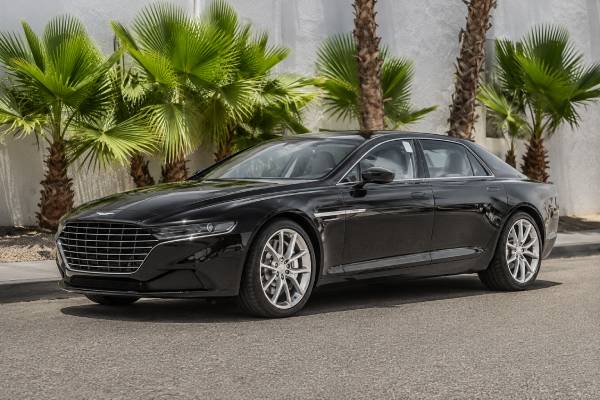
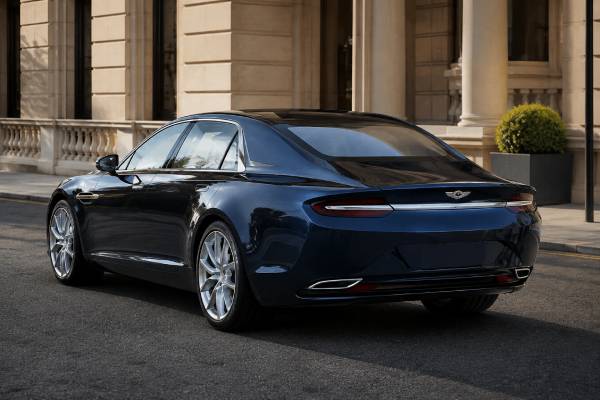
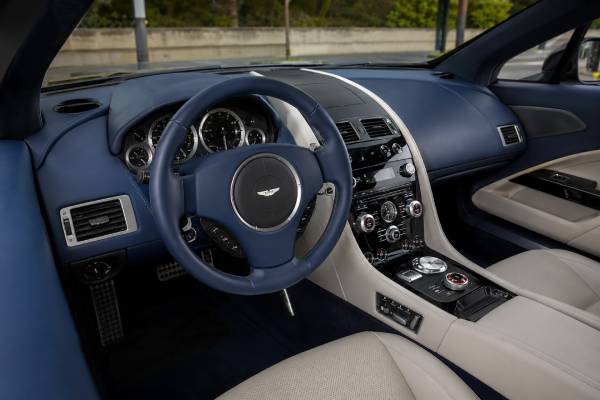
The 2018 Aston Martin Lagonda Taraf Final Edition is the closing chapter of an already rare luxury saloon. Only four cars were offered in this specification, all left-hand drive and finished around a tightly controlled Art Deco-inspired theme. Beneath the bespoke paint, sterling-silver badge, red accents, and blue-and-white cabin sits the same essential VH-platform engineering that made the Taraf unusual: a 5.9-litre naturally aspirated V12, rear-mounted eight-speed transaxle, hydraulic steering, adaptive damping, and a carbon-fibre body over an aluminium structure.
That combination makes the Final Edition more than a colour package, but less than a mechanical reinvention. Its collector value depends on the survival of the exact factory specification and delivery items, not on a major increase in power or performance. A prospective buyer therefore needs two kinds of evidence: proof that the car is one of the four genuine Final Editions, and proof that it has been maintained and recommissioned correctly despite very low use. This guide covers the confirmed equipment, technical data, design intent, driving character, service needs, authentication checks, and purchase strategy for the 2018 cars.
Table of Contents
- What the Final Edition Is
- Final Edition Specification and Technical Data
- Art Deco Design and Q Details
- How the 2018 Taraf Drives
- Authenticating One of Four
- Preservation, Service, and Recommissioning
- Collector Buying Strategy
What the Final Edition Is
The Final Edition is a four-car 2018 continuation of the Taraf programme, built for selected Aston Martin Lagonda customers after regular production had ended. It uses a shared, factory-defined Q specification and does not represent a separate chassis generation or a substantially different powertrain.
The normal Taraf was produced mainly during 2015 and 2016. It revived the Lagonda name as an exceptionally exclusive four-door car and combined a stretched VH aluminium platform with carbon-fibre body panels. In June 2018, Aston Martin offered the final four cars in a coordinated specification that referred to historic Lagonda colours and competition heritage. Delivery was scheduled from June 2018, and the factory sales material identified the cars as left-hand drive only.
The word “edition” can cause confusion because many low-volume Aston Martins were individually commissioned through Q. A regular Taraf with unusual paint or trim is not automatically a Final Edition. The four 2018 cars are defined by the documented package: Ultramarine Black paint, Volcano Red details, silver diamond-turned wheels, a special sterling-silver Lagonda badge, a blue-and-white interior, Final Edition sill plaques, and matching luggage.
The factory material quoted a price of £550,000 before tax and ex works, with a substantial deposit. That figure is historical context rather than a modern valuation guide. Today, condition, completeness, mileage, registration status, provenance, and auction timing can move the result considerably. The fact that only four exist creates scarcity, but scarcity does not remove the need for careful inspection.
Mechanically, the 2018 specification lists 544 PS and 537 bhp rather than the 540 bhp figure often associated with the earlier Taraf. This should not be interpreted as a meaningful reduction in real-world performance. The difference is largely one of source, unit convention, and published specification. The important point is to quote the 2018 sales document accurately when identifying a Final Edition.
Final Edition Specification and Technical Data
The Final Edition is a naturally aspirated petrol car with a front-mid-mounted V12, rear-wheel drive, and rear automatic transaxle. Its special status comes principally from design and equipment. The technical tables retain the 2018 brochure’s units and distinguish confirmed factory details from general Taraf context.
| Specification | Value | Notes |
|---|---|---|
| Engine | 5,935 cc all-alloy V12 | Quad overhead camshafts, 48 valves |
| Induction | Naturally aspirated | Petrol |
| Maximum power | 544 PS / 537 bhp | At 6,650 rpm |
| Maximum torque | 630 Nm (465 lb-ft) | At 5,500 rpm |
| Transmission | Touchtronic III eight-speed automatic | Rear mid-mounted transaxle |
| Drive | Rear-wheel drive | Limited-slip differential |
| Measure | Value | Source condition |
|---|---|---|
| 0–60 mph | 4.4 seconds | Factory sales specification |
| 0–100 km/h | 4.6 seconds | Factory sales specification |
| Maximum speed | 314+ km/h (195+ mph) | Published maximum |
| Stability control | Three-stage DSC | Selectable intervention |
| Damping modes | Normal, Sport, and Track | Adaptive damping system |
| Component | Final Edition specification |
|---|---|
| Wheels | 10-spoke Silver Diamond Turned 20-inch wheels |
| Front tyres | Bridgestone Potenza 245/40 R20 |
| Rear tyres | Bridgestone Potenza 295/35 R20 |
| Front brakes | 400 mm dual-cast discs with six-piston calipers |
| Rear brakes | 360 mm dual-cast discs with four-piston calipers |
| Steering | Hydraulically assisted rack and pinion |
| Item | Factory description |
|---|---|
| Paint | Ultramarine Black |
| Primary badge | Solid sterling-silver Lagonda wings with red transparent enamel |
| Side strake housing | Volcano Red |
| Bonnet and side-strake meshes | Black |
| Fender identification | Q badges |
| Door-sill identification | Final Edition sill plaque |
| Area | Specification |
|---|---|
| Upper environment | Aurora Blue |
| Lower environment and seat contrast | Q White Essence semi-aniline leather |
| Seat inserts | Snowflake perforation |
| Steering wheel | Aurora Blue colour-keyed finish |
| Rotary controls | Bespoke red transparent-enamel treatment |
| Carpets and overmats | Caspian Blue carpet with Dark Blue lambswool overmats |
| Luggage | Three-piece Aurora Blue leather set with Lagonda wings embroidery |
The Final Edition brochure also confirms a production volume of four, LHD-only configuration, and direct VIP sales process. Those details are useful authentication evidence, but the car’s individual build record remains essential because low-volume production can include minor finishing differences or later factory work.
Art Deco Design and Q Details
The Final Edition’s design is a controlled historical interpretation rather than a random collection of bright accents. Ultramarine Black and the red details were chosen to connect the modern Taraf with pre-war Lagonda identity and the red associated with the Le Mans-winning M45R.
Ultramarine Black can appear almost black in low light and reveal a blue cast under stronger illumination. That subtlety matters during inspection. A repaired panel may look acceptable indoors but fail to match when the car is viewed outside from several angles. Carbon-fibre panels and low production volume make correct refinishing particularly important. Paint-depth readings can help, but they do not tell the whole story on composite panels; visual assessment, repair records, and specialist inspection are more valuable.
The Volcano Red side-strake housing is deliberately small. Its purpose is to draw the eye along the front fender without turning the body into a two-tone design. The red enamel in the sterling-silver wings and the red treatment on the cabin controls repeat the same idea at different scales. Missing or damaged pieces should not be replaced casually with standard Taraf hardware, because their material and finish are part of the edition’s identity.
Inside, Aurora Blue dominates the upper environment while Q White Essence lightens the lower areas and seat centres. The combination is visually dramatic and vulnerable to use. White semi-aniline leather can show dye transfer, creasing, edge wear, and incorrect cleaning quickly. Blue leather and carpets can fade if the car is displayed near windows. A specialist should preserve the original surface rather than applying heavy recolouring that obscures grain and stitching.
The snowflake perforation and bespoke quilt pattern are especially important. On an ordinary production car, a trimmer may reproduce a broadly similar panel. On a one-of-four model, the exact hole pattern, stitch spacing, thread colour, padding depth, and seam position should be documented before any work. Factory records and high-resolution photographs can prevent a well-intentioned restoration from reducing authenticity.
Completeness extends beyond fixed trim. The matching three-piece luggage, embroidered branding, lambswool overmats, headphones, tablets, remotes, keys, books, chargers, and umbrellas may form part of a car’s delivery set. Auction descriptions show that surviving cars can retain many of these items. Their presence should be confirmed physically, not inferred from a catalogue photograph.
How the 2018 Taraf Drives
The Final Edition should feel mechanically like a properly sorted Taraf: fast, stable, communicative, and more sporting than its size suggests. The special trim does not transform the chassis, so unusual looseness, harshness, warning messages, or driveline hesitation should never be dismissed as an edition-specific trait.
The 5.9-litre V12 produces its best performance at higher engine speeds. At low revs it is smooth and tractable, but it does not deliver the immediate torque plateau of a modern turbocharged flagship. The eight-speed automatic compensates with close ratios and quick access to the appropriate gear. Manual paddle control is useful on a winding road, although the car’s natural role remains rapid grand touring rather than repeated track laps.
The rear transaxle and long wheelbase create a calm platform at speed. Hydraulic steering gives the driver a clear sense of load building through a corner. That feedback is one reason the Taraf is distinct from more isolated ultra-luxury saloons, but it also means the cabin receives more road information. A prospective owner expecting near-silent progress should experience the car on imperfect pavement before buying.
Normal damper mode is normally the best choice for road use. Sport reduces body movement and can suit smooth routes. Track is the firmest setting and should not be treated as the “best” mode simply because it sounds most serious. On rough surfaces, a softer setting can keep the tyres in contact with the road more consistently and protect both passengers and bodywork.
The brakes use large dual-cast discs rather than the carbon-ceramic system fitted to some Aston Martin specials. Their response should be strong and progressive. Cars that have stood may exhibit surface corrosion, pad imprint, vibration, or sticky calipers. A careful bedding and inspection process is better than assuming a few hard stops will solve every storage-related issue.
Tyre condition is decisive. The 2018 specification lists staggered Bridgestone Potenza sizes, but an original-looking tyre can be unsafe if its date code is old or the compound has hardened. Any replacement must match the correct dimensions, load and speed ratings, axle pairing, and wheel condition. The goal is not merely to preserve showroom appearance; it is to maintain the behaviour for which the chassis was calibrated.
Authenticating One of Four
Authentication should prove that the vehicle left Aston Martin as a 2018 Final Edition, not merely that it has been refinished to resemble one. Because the visual package is known publicly, paint and trim alone are insufficient evidence.
Begin with the VIN and factory records. Ask an authorised Aston Martin source or recognised marque specialist to confirm the chassis number, model year, original sales channel, build date, factory colour, trim codes, option list, and Final Edition designation. Compare that information with the physical car and every ownership document.
A proper authentication file should include:
- The original order, sales contract, or factory invoice where available.
- A build specification identifying the Final Edition package.
- Delivery documentation and first-registration history.
- Service invoices that trace mileage and location over time.
- Photographs of the car early in its life.
- Records for any factory, dealer, transport, storage, or cosmetic work.
- A complete inventory of accessories and loose items.
Inspect the sterling-silver wings carefully. Verify hallmarks, construction, enamel, mounting, and condition with a specialist rather than polishing aggressively. The Final Edition sill plaques and Q fender badges should be photographed and compared with known factory material. Fasteners, adhesive traces, overspray, or inconsistent aging can reveal later changes.
The interior deserves a component-by-component comparison. Confirm Aurora Blue and Q White Essence placement, snowflake perforation, quilt style, red enamel controls, carpet colour, overmats, embroidery, and luggage. Do not assume that every blue-and-white Taraf is correct. Q could create other bespoke combinations, and a later retrim can imitate the broad palette without reproducing the original details.
Mileage authentication should combine electronic data, invoices, inspection stickers, tyre dates, brake wear, seating surfaces, switch condition, and transport records. Delivery mileage can accumulate through factory testing, shipping, dealer movement, and events. A small discrepancy is not automatically suspicious, but the history must be coherent.
Finally, search auction archives and previous advertisements. They can reveal earlier mileage, missing accessories, damage, paint changes, or descriptions that conflict with the current story. Treat catalogue statements as leads to verify, not as factory certificates.
Preservation, Service, and Recommissioning
Preserving a Final Edition means keeping it functional as well as cosmetically original. Long-term static display without timed servicing can damage the very originality a collector is trying to protect.
The car should follow VIN-specific Aston Martin service guidance. The V12, rear transaxle, differential, cooling system, brake hydraulics, air conditioning, adaptive dampers, steering, and extensive electronics all need time-based attention. Exact fluid specifications and intervals must come from official documentation, not from a generic Rapide or DB9 schedule.
A car stored for months should remain on an approved battery maintainer. Low voltage can create a cascade of faults, disable convenience features, and obscure the difference between a weak battery and a failed control module. The battery itself still ages while maintained and should be load-tested periodically.
Fuel management is equally important. Old petrol loses volatility and can leave deposits. Before starting a car that has been dormant for years, a specialist should assess fuel age, oil condition, coolant, belts, hoses, filters, and whether the engine should be pre-lubricated. Simply installing a battery and pressing the starter can turn a manageable recommissioning job into an expensive repair.
A careful return-to-road plan includes:
- full diagnostic scan before and after starting;
- fluid and filter service based on time and condition;
- inspection for leaks before heat cycling;
- cooling-fan and thermostat function checks;
- brake-fluid test and caliper inspection;
- tyre age and wheel inspection;
- gradual road testing with temperature monitoring;
- follow-up inspection after the first meaningful drive.
The body and interior need a separate preservation routine. Use products approved for semi-aniline leather, avoid silicone-heavy dressings, and test every cleaner in a hidden area. Protect the cabin from ultraviolet light and excessive dryness. Wash the exterior with methods that minimise scratches in the dark paint, and never machine-polish around badges, sharp carbon edges, or thin areas without measuring and planning.
Transport is part of maintenance. The car is long and low, so loading angles, wheel straps, underbody clearance, and door access inside an enclosed trailer must be planned. Photograph the car before collection and after delivery. For an edition this rare, transport damage prevention is cheaper than even a minor correct repair.
Collector Buying Strategy
The best Final Edition is the example with the strongest combined case for authenticity, condition, completeness, and legal usability. Mileage is important, but it should not outrank a coherent history or proper recommissioning.
Before negotiating, establish whether the car is already registered in the intended country and whether any import taxes, duties, emissions requirements, or display restrictions remain. The Taraf was not homologated and sold as a normal volume model in every region. A vehicle that can be bought may not be straightforward to license for public-road use.
Commission an inspection team with Aston Martin diagnostic access, carbon-fibre knowledge, high-end trim experience, and collector-car provenance skills. One workshop may not cover all four areas, so a coordinated inspection can be appropriate. Request written findings and cost ranges rather than a simple pass or fail.
Financial planning should include:
- immediate recommissioning even for a very low-mileage car;
- tyre replacement based on age;
- specialist transport and storage;
- agreed-value insurance;
- replacement or restoration of missing delivery items;
- annual servicing and diagnostic review;
- a contingency for bespoke trim, electronics, and bodywork.
Be cautious with claims that all four cars are identical and therefore easily interchangeable. The common package is clear, but individual build details, delivery accessories, usage, and later work can differ. A collector should document the specific car at a level suitable for future sale: high-resolution photography, scanned records, component inventory, service chronology, and written authentication.
The four-car production claim also makes chain-of-custody research unusually valuable. Build a separate chronology for each known chassis only from records that can be attributed confidently, then compare the candidate car against that chronology. A photograph of another Final Edition can help identify a shared feature, but it cannot prove the subject car’s plaque, silver wings, luggage, trim, or mileage. Keep images labelled by VIN, date, source, and certainty so evidence from one car does not migrate into another car’s file.
Conservation decisions should respect the package’s mixed materials. Sterling silver, enamel, leather, embroidery, piano-black trim, carbon body panels, plated hardware, and painted wheels age differently and require different products. Before polishing the wings, recolouring leather, refinishing a badge, or replacing a marked sill plate, obtain a written plan that distinguishes cleaning, stabilisation, reversible repair, and replacement. A small original imperfection may be more valuable than a visually perfect but undocumented restoration. Photograph condition before and after work, retain removed components, and record the craftsperson and materials used.
Transport and display need their own protocol. The long wheelbase and low carbon body require measured ramp angles and approved tie-down points, while the pale Q interior needs protection that does not transfer dye or trap moisture. For concours or showroom presentation, confirm battery support, fuel level, tyre pressure, ventilation, alarm behaviour, and the safe operation of doors and boot before the public arrives. These details reduce the temptation to improvise around a one-of-four car.
The 2018 Final Edition occupies a narrow but compelling position. It is the rarest factory-defined Taraf configuration, one of the last naturally aspirated V12 Lagondas, and a four-door Aston Martin special with a fully coordinated historical design. It is not the most advanced luxury saloon of its year, nor does it need to be. Its value comes from being a deliberate finale built in numbers closer to coachbuilding than production manufacturing.
Buyers who understand that distinction are more likely to enjoy it. The car should be preserved, but not neglected; driven, but not consumed; maintained to factory standards, but not casually modernised. With its specification intact and its mechanical systems healthy, the Final Edition delivers exactly what its name promises: a conclusive, highly visible statement at the end of the Taraf story.
References
- Lagonda Taraf Final Edition « Aston Martins.com 2018 (Model History)
- PowerPoint Presentation 2018 (Final Edition Sales Brochure)
- 2018 Aston Martin Lagonda Taraf Final Edition | The Quail Auction 2026 | Broad Arrow Auctions | Driven by Hagerty | Classic Car Auctions 2026 (Auction Catalogue)
- LAGONDA TARAF | Aston Martin UK 2018
- Aston Martin Luxury Car Servicing | Aston Martin (UK) | Aston Martin UK 2026 (Servicing)
- Owner’s Guides | Car Ownership | Aston Martin (UK) | Aston Martin UK 2026 (Owner Documentation)
Disclaimer
This article is for informational purposes and does not replace professional authentication, diagnosis, or repair. Specifications, torque values, service intervals, and procedures can vary by VIN, market, and equipment; confirm all work with official Aston Martin documentation for the individual car. Please share this article on Facebook, X/Twitter, or another platform to support carefully researched collector-car guidance.