

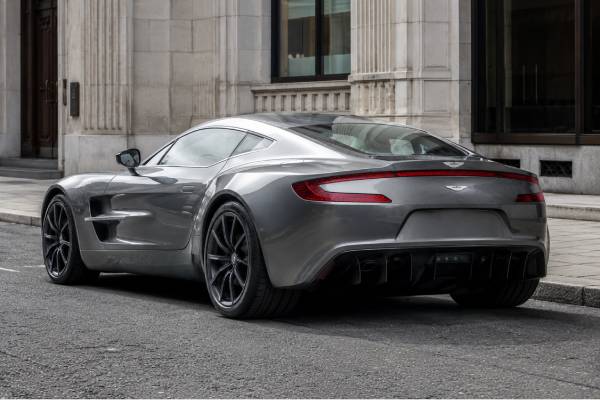
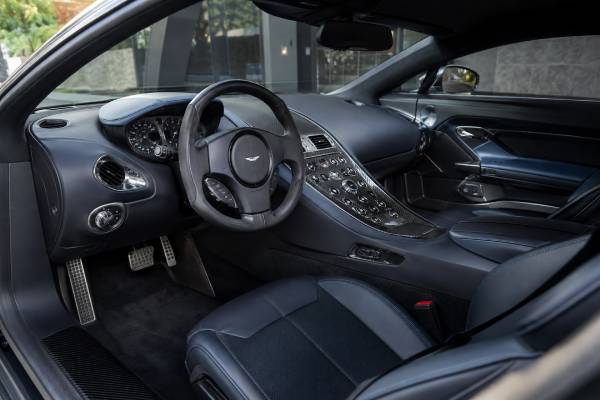
The Aston Martin One-77 Q-Series is best understood as a bespoke subset of the 77-car One-77 production run, not as a mechanically separate model. The underlying car remains Aston Martin’s carbon-monocoque, aluminium-bodied flagship with a 7.3-litre naturally aspirated V12, rear-mounted six-speed automated manual transaxle, pushrod suspension, and carbon-ceramic brakes. What sets a Q-enhanced example apart is factory-backed personalisation: unusual materials, colours, wheels, luggage, cameras, carbon finishes, or other commissioned details documented for the individual chassis.
That distinction matters because the “Q-Series” name is used more confidently in collector listings than in surviving factory literature. A buyer should never assume that every car described this way belongs to one identical seven-car specification. The strongest example is the one whose Aston Martin build records, invoices, photographs, and physical equipment agree. This guide explains the naming, confirmed AM77 technical data, possible Q content, driving character, maintenance demands, authentication process, and purchase strategy for 2011–2012 One-77s represented as Q-Series cars.
Table of Contents
- Defining the One-77 Q-Series
- AM77 Technical Record
- Bespoke Content and Build Variation
- Performance and Driving Character
- Proving Q-Series Authenticity
- Maintenance, Storage, and Recommissioning
- Buying a Q-Enhanced One-77
Defining the One-77 Q-Series
The Q-Series is a designation for One-77s believed to have received additional work through Aston Martin’s bespoke Q programme. It does not identify a different engine, chassis, transmission, or officially published performance package.
The standard One-77 was already highly individual. Each customer selected colours, hides, metal finishes, wheel treatments, and cabin details for a car assembled in exceptionally small numbers. Q moved beyond that broad factory choice by enabling more unusual commissions and, where approved, specially developed components or materials. A period car may therefore be both a One-77 and a Q by Aston Martin creation without belonging to a single shared visual specification.
Independent marque records commonly state that seven production cars received Q updates. That figure is useful context, but it should be treated as a research lead rather than sufficient proof for any specific chassis. Aston Martin’s own current pages describe how Q works as a collaboration between client, designers, engineers, and craftspeople; they do not publish a complete public register of seven identically defined One-77 Q-Series cars.
This creates three practical rules:
- Use the chassis, not the sales label, as the starting point. The VIN, production number, engine number, and original build documentation must identify the car.
- Separate standard personalisation from Q work. Rare paint, contrast stitching, or anodised trim alone may have been available within the normal One-77 commissioning process.
- Demand evidence for every claimed Q feature. A factory invoice, specification sheet, correspondence, or recognised provenance report is more valuable than an auction description repeated across later advertisements.
The relevant model years are 2011 and 2012 because customer production and delivery concentrated in that period, with the programme completed in 2012. Registration year can differ from build year, especially for cars kept in collections, exported, or registered only after prolonged storage. A 2012 registration does not by itself establish a Q conversion, and a 2011 chassis may have received factory work or accessories later.
The One-77’s desirability makes terminology commercially powerful. “Q-Series,” “Q specification,” “Q commissioned,” and “Q enhanced” are not always used with the same precision. A careful article, inspection report, or sale contract should state exactly what the available records prove instead of turning a probable history into an absolute claim.
AM77 Technical Record
The One-77 Q-Series is an ICE vehicle: a two-seat petrol coupé powered solely by a naturally aspirated V12. Its front-mid engine sends power through a carbon-fibre propeller shaft to a rear-mid-mounted automated manual transaxle, while the carbon monocoque and pushrod suspension distinguish it fundamentally from Aston Martin’s contemporary aluminium VH-platform grand tourers.
| Specification | Factory value | Technical context |
|---|---|---|
| Engine | 7,312 cc all-alloy V12 | Front-mid mounted, dry-sump lubrication |
| Induction | Naturally aspirated | Petrol |
| Maximum power | 750 bhp / 559 kW / 760 PS | Final published production output |
| Maximum torque | 750 Nm (553 lb-ft) | Factory figure |
| Compression ratio | 10.9:1 | Production specification |
| Transmission | Six-speed ASM/SSM automated manual | Electro-hydraulic rear transaxle |
| Final drive | 3.538:1 | Limited-slip differential |
| Drive | Rear-wheel drive | Carbon-fibre propeller shaft |
| Measure | Published value | Interpretation |
|---|---|---|
| 0–100 km/h | Under 3.7 seconds | Factory claim |
| Maximum speed | Over 354 km/h (220 mph) | Factory threshold |
| Power-to-weight basis | 750 bhp and 1,630 kg kerb weight | Use source definitions when comparing |
| Active aerodynamics | Deployable rear spoiler | Integrated into rear bodywork |
| System | Specification |
|---|---|
| Body structure | Carbon-fibre monocoque |
| Exterior panels | Hand-formed aluminium |
| Front suspension | Pushrod-actuated double wishbones with horizontal spring and damper units |
| Rear suspension | Pushrod-actuated double wishbones with horizontal spring and damper units |
| Adjustment | Factory-configurable ride height and suspension settings |
| Steering | Speed-sensitive hydraulic rack and pinion |
| Stability systems | DSC and traction control |
| Position | Wheel and tyre | Brake disc |
|---|---|---|
| Front | 20 × 9.5-inch wheel; 255/35 ZR20 tyre | 398 mm carbon-ceramic disc |
| Rear | 20 × 12.0-inch wheel; 335/30 ZR20 tyre | 360 mm carbon-ceramic disc |
| Control hardware | Forged wheel construction | ABS, EBD, and emergency brake assist |
| Measure | Value |
|---|---|
| Length | 4,601 mm |
| Height | 1,222 mm |
| Wheelbase | 2,791 mm |
| Front track | 1,706 mm |
| Rear track | 1,627 mm |
| Kerb weight | 1,630 kg |
| Fuel capacity | 98 litres |
| Seating | Two |
These values describe the production One-77 platform shared by Q-enhanced cars. Bespoke wheels or other approved components may alter the visible specification of an individual example, so the factory build record should take priority over a generic table during inspection.
Bespoke Content and Build Variation
A Q-enhanced One-77 should be evaluated as an individual commission. Known possibilities include additional exposed carbon fibre, special forged wheels, fitted luggage, in-car camera equipment, unique trim, and non-standard material or colour combinations, but no buyer should assume that one car carries every item.
The most obvious difference may be paint. The One-77’s aluminium panels were hand formed and hand finished, so a rare factory colour is part of the car’s original artistic and manufacturing identity. Match the paint name and code to factory records, then inspect it under diffuse daylight and strong directional lighting. Look for colour mismatch across the long clamshell bonnet, doors, roof, rear quarters, and active spoiler. Metallic orientation can reveal a repaired panel even when colour readings appear close.
Carbon treatment is another likely Q area. The standard car already exposes carbon throughout its structure and cabin, which makes a vague claim such as “carbon interior package” insufficient. Establish which panels, weave patterns, gloss levels, edge treatments, and tinted finishes were ordered. Compare the car with dated photographs and documentation. Later replacement pieces can be technically excellent yet still weaken originality if their history is undocumented.
Wheel claims require equal care. The standard specification uses forged 20-inch wheels, and several factory finishes were available. A Q wheel should have supporting paperwork or a clearly traceable part identity. Check dimensions, offsets, markings, fasteners, pressure-monitoring hardware, and whether the tyre specification remains compatible with Aston Martin’s chassis calibration. The apparent rarity of a wheel design does not prove factory fitment.
Fitted luggage has particular collector importance because it can become separated from the car. Confirm the number of pieces, leather colour, stitching, lining, hardware, monograms, dust bags, and storage arrangement. Photograph serial or identification marks where present. A complete luggage set can help connect a car to its original commission, but it is supporting evidence rather than a substitute for the build sheet.
Camera equipment deserves technical inspection as well as provenance checking. Period in-car recording systems age quickly, and obsolete storage media or displays may be difficult to repair. Determine whether the equipment was installed at build, added by Q after delivery, or fitted by a third party. Preserve original components even if a discreet modern system is installed for actual use.
Because every One-77 was already tailored, Q content is most credible when several evidence streams agree: factory language, invoices, build codes, distinctive parts, period images, and continuous ownership records. The objective is not to force the car into a seven-car template. It is to reconstruct the exact commission faithfully.
Performance and Driving Character
The Q-Series drives like a One-77 because its defining engineering is unchanged: enormous naturally aspirated response, a highly rigid carbon structure, rear transaxle balance, hydraulic steering, and manually controlled automated shifts. It feels more physical and mechanical than a modern dual-clutch or hybrid hypercar.
The Cosworth-developed V12 is central to that character. Dry-sump lubrication allowed Aston Martin to mount it lower and farther behind the front axle than a conventional wet-sump installation. Throttle response builds without turbo lag, and the engine’s delivery becomes more urgent with speed rather than relying on a broad low-rpm torque plateau. Its 750 bhp figure remains remarkable, but the way the power arrives is more important than the number.
The six-speed automated manual requires deliberate inputs. It is not a torque-converter automatic and should not be judged by the seamless low-speed behaviour of a current luxury car. Lifting slightly during an upshift can reduce driveline interruption and clutch stress. At parking speed, repeated creeping and holding the car on throttle can generate unnecessary clutch heat. A driver who understands the system will usually achieve smoother changes and better mechanical sympathy.
The pushrod layout places the spring and damper assemblies inboard and horizontally. This reduces unsprung mass and allowed engineers to control suspension geometry while keeping the dramatic body low. Visible rear suspension components beneath Perspex panels also turn engineering into part of the cabin theatre. Adjustment was intended to be configured for the owner, so a specialist should document ride height, alignment, damper condition, and any settings altered during previous service.
Hydraulic steering gives the front axle a directness that is increasingly uncommon. The wide rear tyres and substantial torque demand respect in cold or wet conditions, especially because tyre age can matter more than tread depth on a collector car. Stability control supports the driver, but it cannot restore grip lost to hardened rubber or incorrect pressure.
Carbon-ceramic brakes reduce mass and tolerate high temperatures, yet they need heat and correct bedding to feel their best. Low-speed noise or a firm pedal is not automatically a defect. Cracks beyond the manufacturer’s criteria, impact damage, contamination, severe edge chipping, or measurable wear require specialist assessment because replacement costs are significant.
Q equipment can change the atmosphere but should not blunt the engineering. Heavy aftermarket audio additions, non-approved wheels, altered suspension, or badly integrated electronics can introduce faults and dilute the car’s original balance. The most satisfying examples retain their commissioned individuality while still operating exactly as the One-77 engineering team intended.
Proving Q-Series Authenticity
Authentication should prove two separate propositions: first, that the car is a genuine production One-77; second, that the claimed Q work was commissioned or completed by Aston Martin. A production number plaque or distinctive trim alone cannot establish both.
Start by recording the VIN exactly from every location and document. Match it to the production number, engine number, registration records, certificate of conformity, import papers, and service history. Inconsistent transcription is common in international files, but every discrepancy must be explained rather than ignored.
Request the original order form, sales invoice, deposit records, final build specification, option invoices, Q correspondence, delivery certificate, and any factory photographs. Q work may be described by a project name, individual line items, special paint codes, engineering approval, or a later factory invoice rather than by the precise words “Q-Series.” The documentary chain is therefore more important than one preferred label.
A structured physical audit should cover:
- chassis and engine identities;
- exterior colour, panel finish, and active spoiler;
- wheel design, markings, finish, and tyre specification;
- carbon weave, tint, and gloss in every claimed Q location;
- leather colours, perforation, embroidery, stitching, and woven elements;
- anodised or precious-metal controls and trim;
- camera, audio, navigation, and communications equipment;
- fitted luggage, tools, books, keys, covers, chargers, and delivery accessories.
Compare current findings with period photographs. Auction catalogues can be useful because they preserve earlier mileage and condition descriptions, but catalogues remain secondary sources. A repeated statement can still originate from one unverified seller claim.
Inspect for accident and cosmetic repair without treating every repair as disqualifying. Aluminium body panels and carbon structures require different diagnostic methods. Paint-depth readings are useful on aluminium but do not interpret carbon in the same way. The monocoque should be assessed by a technician familiar with bonded composite structures, factory reference points, and approved repair limits.
Aston Martin Works’ provenance programme can provide an authoritative route for eligible cars by comparing evidence with build records and assessing originality. Even where a formal certificate is not available or does not cover every Q detail, direct factory or authorised specialist involvement strengthens the file. The final report should distinguish confirmed facts, probable conclusions, and unresolved claims.
The best authentication package is usable by the next owner. Organise scanned records chronologically, retain high-resolution photographs, identify loose items, and record who inspected each system. Provenance is not a decorative binder; it is an evidence set that protects the car’s identity and value.
Maintenance, Storage, and Recommissioning
A One-77 Q-Series needs time-based maintenance even when mileage is extremely low. Static display can age fluids, seals, tyres, batteries, fuel, hydraulic systems, and electronics while leaving the odometer almost unchanged.
Service should be entrusted to an Aston Martin facility or specialist with direct One-77 experience, correct diagnostic access, lifting knowledge, and the ability to obtain model-specific technical guidance. The One-77 is not simply a DB9 with a larger engine. Its carbon monocoque, dry-sump V12, rear automated transaxle, pushrod suspension, carbon-ceramic brakes, active aerodynamics, and bespoke electronics require model-specific procedures.
Before moving a long-stored car, establish when it last ran, what fuel is in the tank, whether the engine was turned during storage, and what services were performed by time. A conservative recommissioning may include fluid sampling, oil and filter replacement, fuel-system assessment, cooling-system pressure testing, belt and hose inspection, battery testing, diagnostic scanning, brake-fluid testing, tyre replacement, and pre-lubrication before the first start.
The dry-sump system makes oil-level procedure important. Follow the official temperature, engine-running, and checking sequence for the exact car. Overfilling based on a cold or incorrectly performed reading can be as harmful as underfilling. Do not rely on a generic V12 guide.
Transmission health should be judged with diagnostic data and road behaviour. Record clutch wear or adaptation values where supported, check hydraulic operation, and test engagement from cold and hot. Jerky shifts may result from driving technique, calibration, clutch condition, or actuator issues; diagnosis should separate them before parts are ordered.
Storage practice should include:
- A dry, temperature-stable, secure space with controlled humidity.
- An approved battery conditioner connected according to factory guidance.
- Correct tyre pressures and measures to prevent flat spotting.
- Clean paint and underbody before extended storage.
- Pest control that does not introduce corrosive chemicals.
- Periodic inspection for leaks, condensation, low voltage, and fluid changes.
- Documented exercise cycles only after fluids and temperatures are suitable.
Avoid brief starts that never warm the oil, exhaust, and gearbox properly. They add moisture and fuel dilution without delivering the benefits of a complete operating cycle. When road use is legal and conditions are appropriate, a planned drive is usually more useful than idling in storage.
Preserve Q materials with equal discipline. Record every cleaner or treatment used on unusual leathers, anodised metal, exposed carbon, paint, and luggage. Test products out of sight. Protect the cabin from ultraviolet exposure and excessive dryness, and avoid aggressive polishing around panel edges or special finishes.
Transport requires a low-angle enclosed carrier familiar with valuable carbon-bodied cars. Confirm tie-down points, wheel-clearance, alarm state, battery management, door access, and insurance before loading. Photograph the car and accessories at handover. A rare commission can lose important provenance through something as simple as separated luggage or an unrecorded transport scrape.
Buying a Q-Enhanced One-77
The right purchase is the best-documented, best-preserved individual car, not automatically the example with the boldest Q-Series claim or lowest mileage. Price should reflect the strength of evidence as well as specification and condition.
Begin with documentary due diligence before arranging an inspection. Ask for the VIN, production number, engine number, build sheet, Q invoices, current title, export history, service file, mileage chronology, damage declarations, accessory inventory, and recent diagnostic or inspection reports. A seller unwilling to provide basic identity information through a controlled process creates unnecessary risk.
Then commission independent inspections. The mechanical specialist should assess engine, dry-sump system, clutch and transaxle, cooling, suspension, brakes, active spoiler, electrical systems, and tyres. A body specialist should inspect aluminium panels, carbon structure, paint, glazing, and underbody. A provenance specialist should reconcile documents and physical specification.
Budget beyond the purchase price. Likely ownership costs include enclosed transport, secure climate-controlled storage, agreed-value insurance, annual service, tyre replacement by age, battery care, diagnostic work, bespoke parts, and periodic recommissioning after inactivity. Customs, temporary-import rules, registration, emissions compliance, and road-use restrictions vary by country and can materially affect usability.
Mileage deserves context. A car with several thousand properly documented kilometres and continuous servicing may be mechanically more settled than a delivery-mile example that has remained dormant for a decade. Conversely, low mileage with excellent timed maintenance, controlled storage, and recent factory-level recommissioning can be highly desirable. Look for coherence, not one headline number.
Negotiate unresolved Q claims explicitly. The sale agreement should identify which features are represented as original factory Q work, which records support them, which accessories are included, and what happens if a material representation proves false. Avoid paying a large premium for a label that the documents only suggest.
A strong One-77 Q-Series file should allow a future expert to answer five questions quickly: Which chassis is it? What did Aston Martin originally build? What additional Q work was ordered? What has changed since delivery? What maintenance and damage history does it have? When those answers are precise, the car’s rarity becomes meaningful rather than merely promotional.
The One-77 was conceived as automotive art, but it remains a complex machine. Q can make one example more personal and historically interesting, yet the bespoke content should support rather than overshadow the core achievement: a 750 bhp naturally aspirated V12, carbon monocoque, hand-formed body, and unusually direct analogue driving experience. Buy the evidence, inspect the engineering, preserve the commission, and the Q-enhanced car can remain both credible and usable.
References
- Aston Martin One-77 | Aston Martin 2026 (Model Archive)
- ONE-77 – 2018 (Manufacturer Media Archive)
- one-77 2010 (Factory Brochure)
- One-77 ‘Q by Aston Martin’ « Aston Martins.com 2012 (Variant History)
- Q by Aston Martin | Bespoke Car Personalisation | Aston Martin UK 2026 (Bespoke Programme)
- Assured Provenance | Aston Martin Works 2026 (Authentication)
Disclaimer
This article is informational and is not a substitute for factory authentication, legal advice, diagnosis, or repair. Confirm the VIN, Q specification, market equipment, service intervals, fluids, fasteners, and procedures with official documentation for the individual car. Please share this guide on Facebook, X/Twitter, or another platform if it helps improve careful research around rare Aston Martins.