
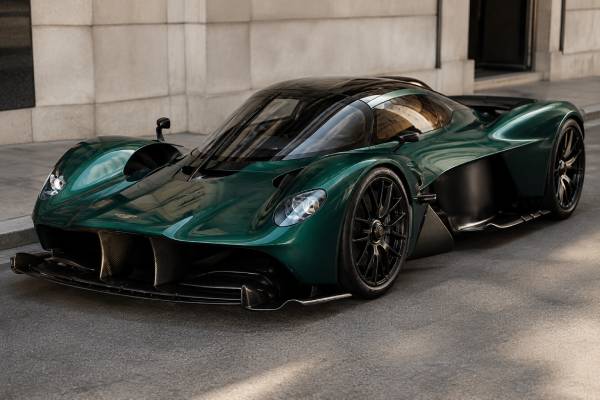
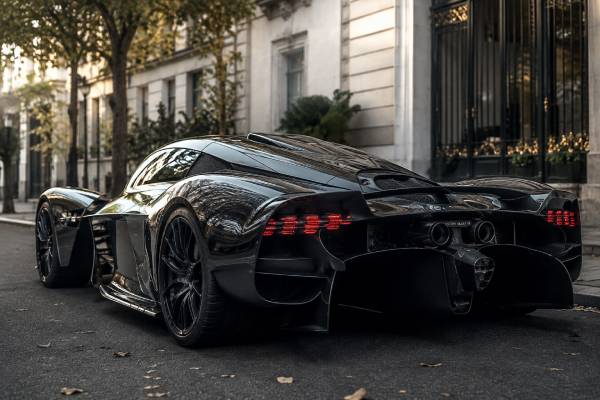
The Aston Martin Valkyrie is less a conventional road car than a road-legal prototype racer built around a singular idea: use Formula One-style packaging, aerodynamics, and structural thinking without giving up registration plates. Its 6.5-liter naturally aspirated Cosworth V12, compact hybrid boost system, carbon-fiber tub, and enormous underbody tunnels create an experience that even most other hypercars do not attempt. The headline 1,160 bhp figure matters, but the way the car makes that power matters more. The engine reaches 11,100 rpm, the electric motor helps the transmission and adds short-duration thrust, and the whole machine depends on active hydraulics to control its aerodynamic platform. This guide separates launch specifications from later published figures, explains how the engineering works, and focuses on the practical realities of maintaining, inspecting, storing, and buying one of the 150 road-going Valkyrie coupes built at Gaydon.
Table of Contents
- What Makes the Valkyrie Fundamentally Different
- Valkyrie Specifications and Technical Data
- How the V12 Hybrid System Delivers Its Performance
- Aerodynamics, Chassis, and Cockpit Experience
- Maintenance, Storage, and Track Preparation
- Ownership Risks and Inspection Priorities
- Buying, Provenance, and Long-Term Value
What Makes the Valkyrie Fundamentally Different
The Valkyrie is different because its structure, powertrain, suspension, and aerodynamics were designed as one interdependent system. It is not a normal supercar with a larger engine and a more aggressive body; removing one major component changes how the rest of the car works.
The project began as the AM-RB 001 collaboration between Aston Martin and Red Bull Advanced Technologies, with Adrian Newey’s aerodynamic priorities shaping the car from the floor upward. The cockpit occupies the narrow space left between two full-length Venturi tunnels. Those tunnels accelerate air under the car and feed a large diffuser, allowing the upper body to remain relatively clean while the underfloor produces much of the downforce.
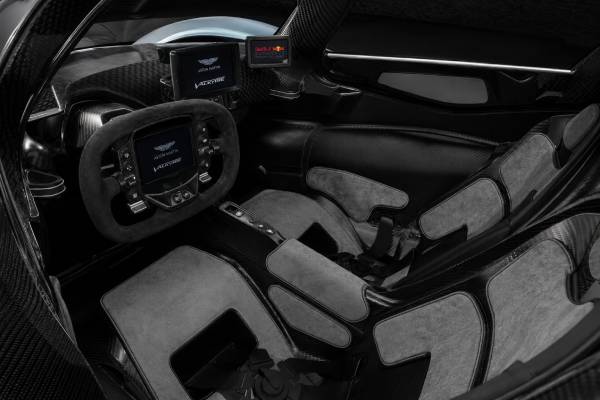
That layout dictates nearly everything else. The cabin is tight, the occupants sit in a reclined feet-up position, luggage space is essentially absent, and entry requires practice. The V12 is a stressed structural member, while the rear-mounted transmission casing also carries suspension loads. This saves the mass of a conventional rear subframe, but it makes servicing and accident repair unusually specialized.
The road-going coupe was limited to 150 examples. Aston Martin announced the first completed customer car in November 2021 after a long development program, and construction continued through the period covered here. Each car required more than 2,000 labor hours and was track-tested before delivery. That production method means no buyer should treat two cars as perfectly interchangeable. Paint, exposed carbon, seating fit, options, software state, delivery package, and usage history can differ meaningfully.
It is also important to separate the coupe from the Valkyrie AMR Pro and Valkyrie Spider. The AMR Pro is a track-only derivative with a longer, wider, non-hybrid configuration. The Spider uses the road car’s hybrid V12 but has a removable roof, revised carbon structure, and recalibrated active systems. Specifications from those versions should not be used to fill gaps in a coupe inspection or valuation.
Valkyrie Specifications and Technical Data
The road-going Valkyrie is a non-plug-in full hybrid, or HEV. Its naturally aspirated V12 provides the dominant output, while a small high-voltage battery and motor add performance, recover energy, assist gear changes, and provide electric reverse rather than offering a meaningful electric-driving range.
A note on published output is necessary. Aston Martin’s 2019 certified launch data states 1,160 bhp and 900 Nm for the complete system. Later manufacturer pages have displayed lower figures under different wording and ERS conditions. For identification of the 2021–2024 assignment, the tables retain the original certified 1,160 bhp specification and clearly label it.
| Specification | Value | Notes |
|---|---|---|
| Powertrain type | Non-plug-in performance hybrid | V12 plus KERS-style motor |
| Engine | 6.5-liter, 65-degree naturally aspirated V12 | Cosworth clean-sheet design |
| Valve gear | DOHC, 48 valves | Four valves per cylinder |
| Engine output | 1,000 bhp (746 kW) at 10,500 rpm | Original certified figure |
| Engine torque | 740 Nm (546 lb-ft) at 7,000 rpm | Combustion engine alone |
| Maximum engine speed | 11,100 rpm | Road-car specification |
| Engine mass | 206 kg (454 lb) | Stressed structural installation |
| Electric motor contribution | 160 bhp and 280 Nm available | Integral Powertrain motor |
| Certified combined output | 1,160 bhp (865 kW) at 10,500 rpm | 2019 launch certification |
| Certified combined torque | 900 Nm (664 lb-ft) at 6,000 rpm | 2019 launch certification |
| Specification | Value |
|---|---|
| Motor location | Between engine and transmission |
| Battery | Compact high-voltage Rimac hybrid battery pack |
| Hybrid functions | Power boost, energy recovery, pull-away assistance, shift synchronization, and torsional damping |
| Transmission | Rear-mounted 7-speed sequential automated transmission |
| Reverse | Electric reverse |
| Drive | Rear-wheel drive |
| Differential | Open differential with brake-based torque vectoring |
| Launch system | Launch control |
| Specification | Value | Standard or condition |
|---|---|---|
| 0–60 mph | Under 2.5 seconds | Manufacturer claim |
| Top-speed capability | More than 200 mph (322 km/h) | Road-car program target and published capability |
| WLTP combined fuel use | 24.08 L/100 km | Regulated laboratory result |
| WLTP low phase | 45.75 L/100 km | Regulated laboratory result |
| WLTP extra-high phase | 16.77 L/100 km | Regulated laboratory result |
| Production volume | 150 road-going coupes | Excludes Spider and AMR Pro |
| Specification | Front | Rear |
|---|---|---|
| Suspension | Double wishbones, torsion-bar spring, anti-roll bar, active damper and ride-height actuator | Double wishbones, torsion-bar spring, anti-roll bar, active damper and ride-height actuator |
| Brake discs | 420 mm ventilated CCM-R carbon-ceramic | 385 mm ventilated CCM-R carbon-ceramic |
| Brake calipers | Six-piston | Six-piston |
| Wheel size | 9.5J × 20 | 11.5J × 21 |
| Tire size | 265/35 ZR20 | 325/30 ZR21 |
| Factory tire family | Michelin Pilot Sport Cup 2 | Michelin Pilot Sport Cup 2 |
| Specification | Value |
|---|---|
| Body style | Two-door, two-seat coupe |
| Primary structure | Carbon-fiber tub and carbon body structures with aluminum inserts |
| Hydraulic system | 200-bar active platform control |
| Driver restraints | Six-point harnesses |
| Rear visibility | Camera-based rear-view system |
| Driver aids | Adjustable stability control, ABS, traction control, emergency brake assist, and parking sensors |
| Road lighting | LED headlamps, light-blade tail lamps, and ultra-light high-mounted stop lamp |
The specification tables deliberately omit values that vary across development publications or cannot be tied confidently to every production coupe. A buyer should rely on the build record and current factory documentation for the exact car, not a generic internet specification sheet.
How the V12 Hybrid System Delivers Its Performance
The Valkyrie’s electric system is designed to sharpen a very high-revving combustion engine, not to turn the car into an electric commuter. The motor fills functional gaps, adds acceleration, and helps the transmission work without the mass of a large traction battery.
Cosworth designed the V12 around a 98 mm bore and an extremely short stroke, producing a fast-breathing engine that can sustain more than 10,000 rpm. The crankshaft starts as a large steel bar before extensive machining and heat treatment removes most of the original material. Titanium connecting rods, lightweight pistons, dry-sump lubrication, and highly optimized cylinder heads allow the engine to combine high speed with road-car emissions and durability targets.
The engine’s structural role is equally significant. In a conventional mid-engine sports car, a subframe supports the powertrain and joins the cabin structure to the rear suspension. In the Valkyrie, the engine and transmission participate in that load path. This saves weight but raises the consequences of incorrect lifting, collision damage, heat exposure, or unauthorized disassembly.
The hybrid motor sits in the driveline between the V12 and gearbox. It can deliver additional power, harvest energy under deceleration, smooth torsional behavior, and help synchronize the gearbox during shifts. Electric reverse avoids the weight and packaging of a mechanical reverse gear. Because the battery is small, repeated maximum-boost use depends on state of charge and energy recovery. A test drive that produces different boost behavior from one run to the next is not automatically evidence of a fault; the technician must first check battery condition, temperatures, selected mode, and permitted operating window.
The seven-speed sequential unit is not a smooth dual-clutch transmission. It is a lightweight, performance-led automated gearbox whose behavior changes with speed, throttle position, and driver timing. At low speed, the car requires mechanical sympathy. Creeping in traffic, holding it on an incline with throttle, or repeatedly slipping the clutch can create unnecessary heat and wear. Owners should learn the factory-recommended pull-away and maneuvering technique rather than applying habits from a conventional automatic.
Aerodynamics, Chassis, and Cockpit Experience
The Valkyrie generates its defining performance through underbody airflow and active platform control. The driver therefore feels not only tire grip and suspension response, but also a car whose aerodynamic load rises dramatically with speed.
Large tunnels run beside the cabin floor and feed the rear diffuser. This produces downforce without covering the upper body in a forest of wings. Active ride-height and damping control keep the floor in its intended operating window, manage pitch under braking, and prevent excessive aerodynamic load from overwhelming the tires. Aston Martin describes a complex hydraulic network with numerous actuators and multiple control strategies responding to the road and vehicle state.
At road speeds, the active system also has to make the car usable over bumps, cambers, and ramps. A fault in ride-height sensing, hydraulic pressure, an actuator, or control software is therefore more than a comfort issue. It can affect clearance, stability, and the aerodynamic platform. Warning messages should be documented and diagnosed through the factory network, even if they disappear after a restart.
The steering, brake pedal, and seating position are intentionally intense. Occupants sit low with their legs raised and bodies closely supported by fitted seat pads. The steering wheel carries key controls and a display, while exterior mirrors are replaced by cameras. Noise is high enough that Aston Martin supplied communication and hearing-protection equipment. Buyers should verify that every delivered headset, cable, charger, and fitted pad set remains with the car.
Tires are central to the chassis calibration. Cup 2 tires can offer exceptional dry grip when warm, but they are temperature-sensitive and unsuitable for standing water, frost, or careless cold-weather use. Age matters even when tread depth looks generous. A car that has spent years static may need tires because of time, flat spotting, or storage conditions rather than mileage.
Carbon-ceramic discs reduce unsprung mass and tolerate track heat, yet they demand inspection. Surface appearance, remaining mass, edge condition, heat history, and pad compatibility matter more than a quick glance at thickness. Gravel trapped near a wheel, a careless washing method, or an incorrect lifting point can cause costly damage to carbon components.
Maintenance, Storage, and Track Preparation
Valkyrie maintenance should be managed as an aerospace-style program of condition control, documentation, and authorized intervention. Mileage alone is a poor guide because age, heat cycles, battery state, fluid condition, software status, and storage environment all influence the car.
A practical ownership routine includes:
- keeping the car on the approved battery support equipment whenever specified;
- maintaining a dry, temperature-stable, clean storage area;
- recording every start, drive, fault message, fluid top-up, tire change, and transport event;
- following the factory procedure for warming the engine, gearbox, brakes, and tires;
- avoiding long static idling that adds heat without useful airflow;
- using approved lifting and tie-down points only;
- checking for fluid traces, hydraulic seepage, coolant odor, tire pressure loss, and damaged aero edges before movement.
The V12 should not be treated like an ordinary engine that can be started briefly for entertainment and shut down cold. Short starts can leave moisture in the exhaust and oil system, discharge support batteries, and fail to bring the car through its intended temperature cycle. It is better to follow Aston Martin’s current storage procedure and arrange a proper supervised run when conditions permit.
Track preparation begins well before arrival. The dealer or Valkyrie support team should confirm software, diagnostic status, service eligibility, tire age, brake condition, fluid state, fastener checks, and any campaign work. The circuit must suit the car’s noise, clearance, runoff, and support requirements. Transport equipment should accommodate the low body and long aero surfaces without loading the diffuser or floor.
After track use, the inspection should not end when the brakes cool. The car needs a review for tire pickup and cuts, wheel damage, brake wear, floor strikes, fluid leaks, heat effects, debris in cooling openings, and stored faults. A written post-event record adds value and helps distinguish careful use from anonymous hard mileage.
Because public service data are limited, owners should not improvise fluid specifications, torque settings, bleeding procedures, or high-voltage work. Even an apparently simple wheel removal can involve exact jacking, wheel, brake, and tire requirements. The official documentation for the specific VIN and market is the governing source.
Ownership Risks and Inspection Priorities
The greatest Valkyrie risks are not ordinary high-mileage wear; they are incomplete history, improper handling, deferred specialist work, and damage to systems that few facilities can repair. A low odometer reading does not compensate for poor storage or missing records.
Hybrid and electrical condition
Confirm that the high-voltage system reaches its expected ready state, accepts the approved support procedure, and shows no persistent isolation, cooling, or battery warnings. The 12-volt side also deserves attention because low auxiliary voltage can trigger misleading faults across control modules. Ask for diagnostic reports rather than accepting “it only needed a reset.”
Hydraulics and active chassis
Observe the car’s height, startup sequence, and warning display. Look for asymmetry, slow settling, fluid traces, repeated pump operation, or a history of height-control faults. Any event involving an underbody strike should be investigated with specialist inspection of the floor, tunnels, mounting points, and active components.
Carbon structure and body finish
Paint protection film can hide chips, lifted clearcoat, or repaired carbon. Inspect panel edges, door apertures, the floor, diffuser, wheel arches, splitter, and roof under controlled lighting. A repair is not automatically disqualifying if it was factory-authorized and completely documented, but an undocumented cosmetic explanation is insufficient for a structural hypercar.
Powertrain operation
A cold-start video is useful, but a factory diagnostic review is more valuable. Check for abnormal mechanical noise, fluid consumption, clutch adaptation concerns, overheating history, and repeated aborted starts. Verify that the exhaust and emissions hardware remain original for the registered market.
Completeness
The car should retain its keys, fitted luggage or storage pieces if supplied, headsets, chargers, covers, tools, manuals, delivery book, option records, spare seat pads, and any track or transport accessories. Replacing a bespoke item can be difficult even when money is not the main constraint.
There is little conventional reliability data because production is tiny and usage patterns are private. That makes documented factory care more important, not less. General claims that “all Valkyries do that” should be treated cautiously unless the behavior is confirmed in official guidance for the exact software and model state.
Buying, Provenance, and Long-Term Value
The best Valkyrie is the example with the clearest chain of custody, strongest factory relationship, correct specification, and evidence of disciplined use. Color rarity or celebrity association may add appeal, but neither should outweigh technical condition.
Start by establishing identity. Match the VIN, build number, engine and transmission records, market homologation, registration status, and Q specification. Confirm that the car is a road-going coupe rather than an AMR Pro, and that no Spider data have been inserted into the sales description. Review invoices chronologically rather than accepting a summary stamp.
Then examine how the car has lived. A properly supported car with modest, regular exercise may be preferable to an untouched display example that missed battery, fluid, tire, or campaign attention. Conversely, track use can be entirely acceptable when every event was prepared and inspected by qualified personnel. The problem is unrecorded use, not use itself.
A pre-purchase inspection should be arranged through Aston Martin or a facility specifically accepted for the Valkyrie program. The scope should include diagnostic history, campaign status, high-voltage condition, active hydraulic system, clutch and gearbox data, cooling circuits, brake and tire condition, carbon structure, paint depth and finish, underfloor inspection, and inventory of supplied equipment. Agree in advance whether encrypted or owner-controlled records can be released.
Insurance and logistics require planning before purchase. Confirm agreed value, geographic use, track exclusions, approved storage, driver restrictions, recovery procedure, and transport coverage. Ensure the chosen storage location has suitable access, fire planning, power supply, and environmental control. A standard low-loader may not be adequate.
Valuation is driven by scarcity, specification, provenance, public history, condition, and buyer confidence. Highly personalized paint can attract one collector and deter another. Originality generally matters, yet reversible protection and factory-approved updates can support usability. Keep every removed original component and every authorization document.
Before signing, turn the inspection findings into written conditions: completed campaigns, documented correction of active faults, transfer of the supplied equipment and records, and a confirmed support path in the buyer’s region. A Valkyrie purchased on those foundations is still demanding, but its demands are visible and manageable. Buying on spectacle alone turns the car’s extraordinary optimization into avoidable technical and financial uncertainty.
References
- Aston Martin Valkyrie | Aston Martin 2026
- ASTON MARTIN VALKYRIE – THE ULTIMATE HYBRID POWERTRAIN FOR THE ULTIMATE HYPERCAR 2019
- Aston Martin Valkyrie V12 turns the hypercar engine up to 11,100 2018
- First Aston Martin Valkyrie customer car complete 2021
- Bringing the Valkyrie to life: the people behind the power | Cosworth 2024
- Aston Martin Valkyrie hypercar set to steal the show at Goodwood Festival of Speed 2021 2021
Disclaimer
This article is for informational purposes and is not a substitute for professional diagnosis, repair, or factory support. Specifications, torque values, service intervals, software, and procedures can differ by VIN, market, build state, and equipment; verify every decision against the current official Aston Martin documentation for the specific car. Please share this guide on Facebook, X/Twitter, or another enthusiast community if it helped you.