
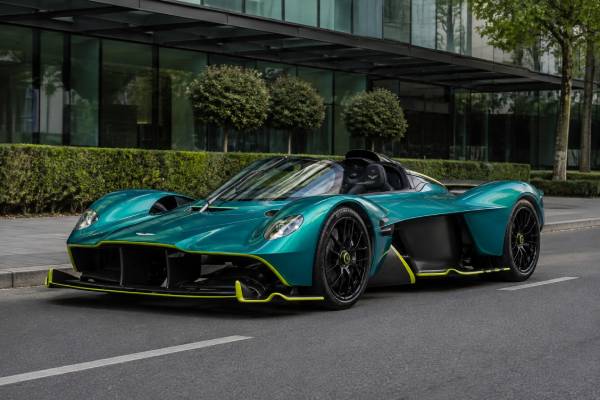
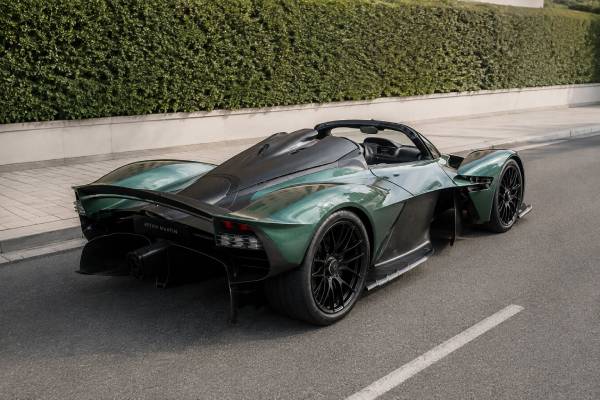
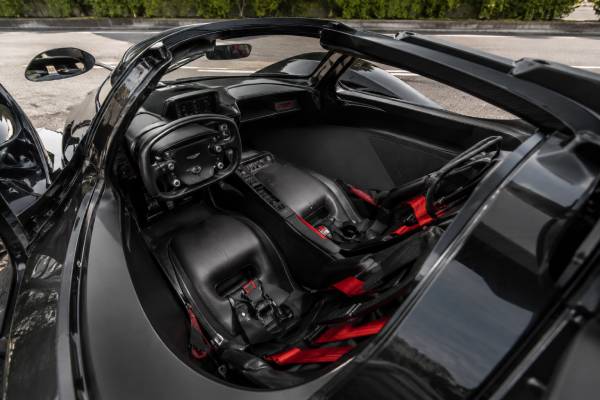
The Aston Martin Valkyrie Spider takes a car already shaped around extreme aerodynamic efficiency and removes the fixed roof without abandoning the original performance brief. That sounds simple until the roof’s structural role, the door hinges, the airflow over the cockpit, and the active chassis calibration are considered together. Aston Martin and Red Bull Advanced Technologies retained the coupe’s Cosworth-built 6.5-liter V12 and compact hybrid system, then revised the carbon tub, introduced forward-tilting doors, and recalibrated the active systems for open driving. The result is a run of only 85 cars with roof-on performance beyond 350 km/h and roof-off capability beyond 330 km/h. This guide covers the 2023–2024 scope in the assignment, explains the removable roof and revised structure, separates published launch output from later web figures, and gives buyers a practical framework for service history, roof completeness, carbon inspection, storage, insurance, and factory-supported ownership.
Table of Contents
- Model Scope, Production, and What the Spider Changes
- Valkyrie Spider Technical Data and Specifications
- Roof, Carbon Structure, and Unique Door Design
- Open-Air Performance and Driver Experience
- Care, Service, Storage, and Transport
- Pre-Purchase Checks for a Valkyrie Spider
- Who Should Buy One and How to Protect Its Value
Model Scope, Production, and What the Spider Changes
The Spider is not merely a coupe with a detachable panel. Its carbon structure, doors, active-aero calibration, and active-chassis control were changed so the car could retain the Valkyrie’s underfloor-driven performance with the roof removed.
Aston Martin unveiled the Spider at Monterey in August 2021 and announced a worldwide limit of 85 examples. Demand exceeded supply before customer deliveries, and both left- and right-hand-drive versions were offered. The assignment covers 2023 and 2024 cars, the period in which customer examples were seen and completed after the initially announced delivery timetable.
The underlying concept remains the same as the road-going Valkyrie coupe. Two huge Venturi tunnels run along the sides of the cockpit floor and feed the diffuser. The occupants sit between those airflow channels in a narrow, reclined cabin. The 6.5-liter V12 and rear transmission form part of the load-bearing structure, while a high-voltage motor supplements the engine and supports gearbox functions.
The open model differs in three especially important ways. First, the tub is reinforced and reshaped around the roof openings and windscreen surround. Second, the coupe’s roof-hinged doors cannot be used once the central roof is removable, so the Spider receives front-hinged dihedral doors that tilt forward. Third, the active aerodynamic and suspension logic is recalibrated to preserve stability and platform control when airflow over the open cockpit changes.
Buyers should distinguish the Spider from a coupe described loosely as “open cockpit,” and from the track-only AMR Pro. The Spider has road homologation, a removable roof assembly, the hybrid powertrain, road lighting, parking assistance, and a two-seat cabin. The AMR Pro has a different body, chassis proportions, and non-hybrid track powertrain. Parts, service assumptions, performance values, and market prices are not interchangeable.
The production limit is part of the car’s identity, but rarity alone does not establish quality. With this type of hand-built, heavily personalized vehicle, build specification, delivery equipment, factory updates, roof fit, and documented use can have more influence on desirability than the odometer.
Valkyrie Spider Technical Data and Specifications
The Valkyrie Spider is best classified as a full hybrid that cannot be charged externally. Its electric system provides boost, energy recovery, electric reverse, pull-away help, and transmission support; it is not intended to provide a published electric-only driving range.
Aston Martin’s original certified Valkyrie powertrain announcement quoted 1,160 bhp and 900 Nm combined. The Spider launch material later used 1,155 PS, and current model pages may show other figures or ERS conditions. The difference reflects published specification and calibration wording across the program, so a buyer should verify the exact build record rather than combining numbers from separate pages.
| Item | Specification | Context |
|---|---|---|
| Combustion engine | 6.5-liter, 65-degree naturally aspirated V12 | Cosworth; mid-rear structural installation |
| Engine peak power | 1,000 bhp at 10,500 rpm | Original certified engine-only value |
| Engine peak torque | 740 Nm at 7,000 rpm | Engine alone |
| Maximum engine speed | 11,100 rpm | Road-car V12 specification |
| Electric motor | 120 kW class, mounted between engine and gearbox | KERS-style assistance |
| Motor contribution | 160 bhp and 280 Nm available | Original program data |
| Certified system output | 1,160 bhp at 10,500 rpm | 2019 Valkyrie powertrain certification |
| Certified system torque | 900 Nm at 6,000 rpm | 2019 Valkyrie powertrain certification |
| Battery | Compact high-voltage hybrid pack by Rimac | No external charging port |
| Specification | Value |
|---|---|
| Gearbox | Seven-speed rear-mounted sequential automated transmission |
| Driven wheels | Rear |
| Reverse function | Electric motor reverse |
| Shift assistance | Electric synchronization during gear changes |
| Low-speed assistance | Motor-supported pull-away |
| Energy recovery | Regeneration into the high-voltage battery |
| Performance boost | Battery-dependent KERS/ERS contribution |
| Rear differential | Open differential with brake-based torque vectoring |
| Measure | Published value | Condition |
|---|---|---|
| Maximum speed with roof fitted | More than 350 km/h (217 mph) | Manufacturer launch claim |
| Maximum speed with roof removed | More than 330 km/h (205 mph) | Manufacturer launch claim |
| Downforce | More than 1,400 kg at 240 km/h | Track mode, launch specification |
| Production | 85 units worldwide | Both steering configurations |
| Body configuration | Two-seat open-top with removable roof | Road legal |
| Component | Specification |
|---|---|
| Central roof section | Removable lightweight carbon-fiber panel |
| Roof windows | Two hinged polycarbonate panels |
| Door design | Spider-specific front-hinged dihedral doors |
| Primary body structure | Revised carbon-fiber tub and carbon bodywork |
| Seat position | Low hip-to-heel, near-central two-seat layout |
| Restraints | Six-point harnesses |
| Rear vision | Camera-based display |
| Parking assistance | Front and rear sensors |
| Area | Front | Rear |
|---|---|---|
| Suspension layout | Independent double wishbone with torsion-bar spring and active control | Independent double wishbone with torsion-bar spring and active control |
| Brake discs | 420 mm ventilated carbon-ceramic | 385 mm ventilated carbon-ceramic |
| Calipers | Six-piston | Six-piston |
| Wheel size | 20-inch | 21-inch |
| Road tire size | 265/35 ZR20 | 325/30 ZR21 |
| Factory tire type | Michelin Pilot Sport Cup 2 family | Michelin Pilot Sport Cup 2 family |
These figures describe the published road-car program rather than every software state or market variation. VIN-specific factory records should decide any dispute about output, permissible operating mode, tire marking, or service setting.
Roof, Carbon Structure, and Unique Door Design
The removable roof is the Spider’s most obvious feature and one of its most important inspection areas. A complete car should include the entire roof assembly, its protective storage equipment, operating instructions, and undamaged latching and sealing surfaces.
The central carbon panel attaches to the rear of the tub and the windscreen surround. Polycarbonate sections hinge at the sides, creating a lightweight assembly that can be removed after the doors are opened. Because the coupe’s doors use the roof area for their hinge arrangement, the Spider’s doors pivot from the front and tilt forward. That geometry creates different clearance needs in a garage or transporter.
Roof removal should be treated as a controlled procedure rather than a casual one-person task. Painted carbon edges, clear-coated surfaces, polycarbonate glazing, seals, and latches can be damaged by twisting, setting the panel on an unsuitable surface, or closing a door before the parts are correctly positioned. The owner should know where the removed components are placed and how they are secured during travel. A missing bag or support may appear minor but can make safe use inconvenient and reduce completeness.
Water management deserves equal attention. An open hypercar can encounter a sudden shower even if it is never deliberately driven in rain. Inspect seals for compression marks, tears, contamination, and incorrect seating. Check the cockpit, harness mounts, electronic displays, switchgear, camera equipment, and exposed carbon for evidence of moisture. A musty odor, staining, fogged electronics, or unexplained trim replacement should prompt deeper investigation.
The carbon tub modifications should only be assessed by specialists familiar with the Spider. Visible marks around the roof opening, windscreen base, hinge mounts, sills, or door apertures may result from normal use, cosmetic contact, transport handling, or something more serious. Paint-depth readings alone cannot establish carbon integrity. Repair records, photographs, invoices, and factory authorization are essential.
Door operation should be smooth and symmetrical. Observe the hinge movement, gas support behavior, latch alignment, window sealing, and clearance to nearby panels. A door that needs lifting or force may indicate adjustment, worn support hardware, transport damage, or body movement. Do not accept repeated slamming as normal for a hand-built car.
Open-Air Performance and Driver Experience
The Spider’s main appeal is sensory rather than numerical: the intake, exhaust, mechanical vibration, airflow, and speed are less isolated from the occupants. Roof removal intensifies the experience but also changes how the car should be prepared and driven.
The V12’s 11,100 rpm ceiling places its sound and response far outside a typical turbocharged road engine. With no roof, wind and mechanical noise can overwhelm ordinary conversation and hearing. The communication and hearing-protection equipment supplied with the vehicle is functional safety equipment, not a novelty. Confirm correct operation before a drive and retain replacement batteries, cables, and compatible components.
Aerodynamic performance remains dominated by the floor tunnels. The Spider was recalibrated so its active suspension and aero systems maintain the intended platform despite different cockpit airflow. At very high speed, small changes in ride height and pitch can affect the floor’s performance. This is why a chassis or hydraulic warning should never be dismissed merely because the car still moves normally at parking speed.
The open cockpit also changes the practical environment. Loose objects must be secured. Clothing, caps, camera straps, and paperwork can become distractions or hazards. Sun exposure is stronger than expected because the occupants sit reclined and cannot easily adjust their posture. A driver should plan hydration, eye protection, hearing protection, and weather around even a short route.
At low speed, visibility and width require concentration. Camera-based rear vision has a different depth impression from glass mirrors, and the forward doors need space. The sequential gearbox rewards deliberate inputs rather than creeping. Smooth pull-away, adequate gaps in traffic, and avoiding clutch slip are more important than trying to make the car behave like a luxury automatic.
Tire temperature remains a limiting factor. Michelin Cup 2 tires may feel wooden and offer reduced adhesion when cold, especially in damp conditions. Open-roof enthusiasm can tempt a driver to accelerate before the tires, brakes, gearbox, engine oil, coolant, and hybrid system are ready. The correct warm-up is progressive and should follow current factory guidance.
Care, Service, Storage, and Transport
A Valkyrie Spider needs a written care plan that covers the car and the removable roof as separate high-value systems. The plan should define battery support, exercise, humidity control, roof storage, cleaning, transport, scheduled service, and post-drive inspection.
Store the roof assembly in its approved supports or cases, away from direct sunlight, heat, accidental loads, and chemicals that can attack polycarbonate or seals. Never place heavy covers or boxes on top. Record whether it is stored fitted or removed, because seal compression and dust exposure differ. Before refitting, clean the mating surfaces with approved materials and inspect for grit that could scratch carbon or prevent correct latching.
The car itself benefits from a clean, stable, dry environment with suitable electrical supply for approved battery support. Both high-voltage and low-voltage systems affect readiness. An auxiliary battery problem can produce faults that appear unrelated, while an improperly maintained hybrid pack can limit boost or require specialist recovery.
Cleaning must account for open cockpit electronics, cameras, carbon surfaces, brake hardware, and aerodynamic passages. Avoid aggressive pressure washing near seals, connectors, roof joints, intake openings, and exposed cockpit components. Brake dust and road debris should be removed using products accepted for carbon-ceramic systems and the car’s specific finish.
Transportation requires a carrier that understands the Spider’s ground clearance, door movement, roof handling, wheel restraint, and tie-down points. The roof should not travel loose in the cabin. Photograph the car, underside edges, wheels, roof pieces, and mileage before loading. The bill of lading should list all separate components and accessories.
For track use, arrange factory or approved technical support. Pre-event work should include diagnostics, software status, tire age and pressure plan, brake condition, fluids, cooling, active chassis operation, and roof configuration. Confirm any maximum-speed or mode restrictions with the roof removed. Post-event checks should include floor and diffuser inspection, door and roof alignment, tire damage, brake wear, debris in ducts, fluid traces, and stored fault history.
Avoid inventing maintenance intervals from ordinary Aston Martin models. The Spider’s V12, hybrid system, hydraulics, gearbox, and structure require current VIN-specific instructions. Service invoices should identify the work, software versions, parts, and technician or facility rather than simply stating “annual service.”
Pre-Purchase Checks for a Valkyrie Spider
A Spider inspection should begin with completeness and identity before moving to cosmetics. Replacing a unique roof piece, latch, polycarbonate panel, headset, seat pad, or transport accessory may be slow, expensive, or dependent on factory approval.
Ask for the original build specification, delivery photographs, VIN record, service history, campaign completion, diagnostic printouts, and all roof documentation. Verify both keys, communication equipment, battery support hardware, covers, tool kit, fitted seat pads, alternative pads if supplied, and every roof storage item. Compare the actual paint, carbon weave, interior materials, and wheel finish with the Q specification.
Inspect the roof in three states: fully removed, laid out in its storage equipment, and correctly installed. Check latches, seals, polycarbonate clarity, edge protection, alignment, wind noise history, and evidence of water entry. Operate both doors through their complete travel and note any asymmetry or contact.
The underbody deserves a lift inspection using approved procedures. Look for floor strikes, diffuser damage, scraped tunnel edges, crushed lift areas, fluid residue, damaged fasteners, and repairs. Because much of the car’s aerodynamic performance comes from the underside, cosmetic-looking damage may have functional importance.
The active systems should complete their startup routines without unexplained warnings. A qualified technician should read stored and historical faults, not just current dashboard messages. Review hydraulic pressure behavior, ride-height sensors, high-voltage isolation, battery state, cooling circuits, gearbox and clutch adaptation, camera system, and emissions equipment.
Tires should be assessed by date code, specification marking, heat history, flat spotting, cuts, and previous repair, not tread alone. Wheels require inspection on both faces. Carbon-ceramic discs should be evaluated using the manufacturer’s accepted method, including surface condition and remaining mass when required.
Finally, establish legal usability. Confirm road registration, import status, emissions compliance, taxes, title, insurance eligibility, and any region-specific restrictions. A car that was easy to own in one jurisdiction can be difficult to register or service in another.
Who Should Buy One and How to Protect Its Value
The Valkyrie Spider suits a collector who values mechanical intensity and accepts that every drive is an event with planning before and inspection afterward. It is not an easy substitute for a conventional convertible supercar.
Its strongest long-term attributes are clear: only 85 examples, a naturally aspirated Cosworth V12, direct Adrian Newey and Red Bull Advanced Technologies involvement, open-air bodywork, and an engineering relationship to the Valkyrie coupe. Yet value will still separate according to condition and confidence. A famous color is less persuasive than an unbroken factory record and a perfect roof assembly.
Use the car enough to keep systems exercised, but document that use. Track mileage is not necessarily harmful when supported by preparation and post-event inspection. Static display is not automatically beneficial when tires age, seals dry, batteries deteriorate, and campaigns go incomplete. A balanced history can be more credible than an implausibly untouched one.
Preserve originality. Keep removed protective film patterns, replaced tires’ records, old parts, software invoices, transport photographs, and any correspondence authorizing repairs. Do not add non-approved exhaust, tuning, wheel, restraint, or electrical equipment. Modifications can affect safety, homologation, insurance, and buyer trust even when they are reversible.
Before committing, obtain written estimates for annual support, transport, tires, insurance, storage, and a contingency for bespoke parts. The purchase price is only one part of ownership. The car’s value is best protected by maintaining access to the people and documentation needed to keep it functioning exactly as intended.
The specification also deserves a suitability check with the intended drivers. Seat pads, harness geometry, pedal reach, steering-wheel position, and helmet clearance can make a major difference in comfort and control. A car tailored around its first owner may require factory-supported refitting for another person. Test the driving position with the roof both installed and removed, and do not assume that a short static sit reveals pressure points that appear after an hour.
Consider the car’s public history as well. Event appearances, press use, concours entries, and track demonstrations can strengthen provenance when documented, but they should be matched to service records and condition. Social-media photographs sometimes reveal dates, roof configurations, wheel damage, transport methods, or track use absent from a sales file. Such evidence should guide questions rather than replace a professional inspection.
A buyer planning international touring should map authorized support and recovery options along the route. The Spider cannot be treated like a normal convertible that any roadside operator can load. Ground clearance, carbon aero, door travel, and separate roof components require correct equipment. Written instructions inside the transport kit can prevent a small incident from becoming a major repair.
References
- Aston Martin Valkyrie Spider | Aston Martin 2026
- Aston Martin Valkyrie Spider uncovers exhilarating Formula One® experience on the road 2021
- ASTON MARTIN VALKYRIE – THE ULTIMATE HYBRID POWERTRAIN FOR THE ULTIMATE HYPERCAR 2019
- Aston Martin Valkyrie V12 turns the hypercar engine up to 11,100 2018
- Bringing the Valkyrie to life: the people behind the power | Cosworth 2024
- First Aston Martin Valkyrie customer car complete 2021
Disclaimer
This guide provides general information only and cannot replace inspection, diagnosis, or repair by Aston Martin and properly trained specialists. Specifications, tightening values, service intervals, software behavior, and procedures may change with VIN, market, options, and build status, so consult the official documentation issued for the individual car. Sharing this article on Facebook, X/Twitter, or an owners’ group helps support further technical guides.