
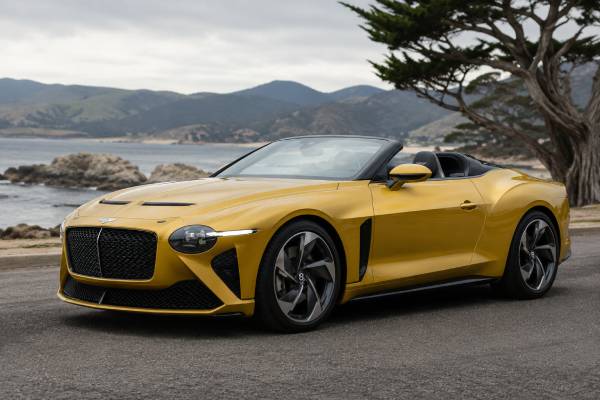
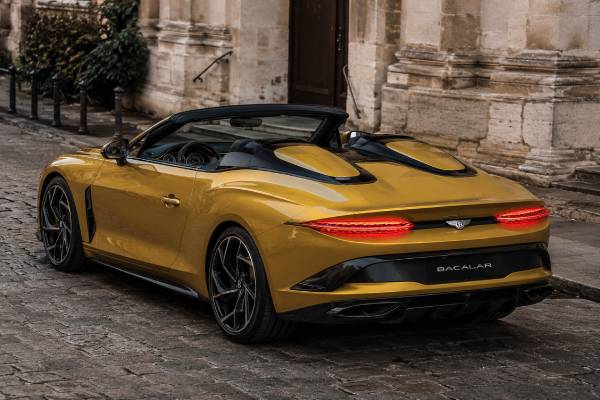
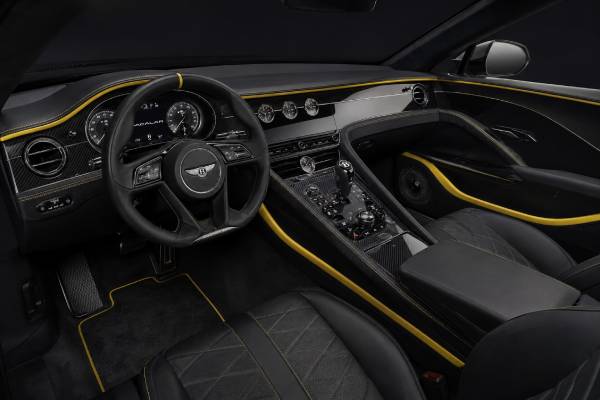
The Bentley Bacalar is a roofless, two-seat barchetta that restarted Mulliner’s modern coachbuilding program. Only 12 customer cars were made, each with unique colors, materials, and details, yet all share a formidable mechanical core: a 650 hp, 6.0-liter twin-turbo W12, an eight-speed dual-clutch transmission, and active all-wheel drive. The Bacalar is related to the Continental GT platform, but its body is not a simple derivative. Carbon-fiber front wings and doors, an aluminum rear clamshell and top deck, a 20 mm wider rear track, and a wraparound cockpit give it its own shape and airflow strategy. Its lack of any roof also changes ownership more than a normal convertible’s folding top does. Weather planning, drainage, interior exposure, transport, storage, and material care become central responsibilities. This guide separates verified Bacalar specifications from prototype context, explains how the barchetta engineering works, and shows what a buyer should examine when provenance and preservation matter as much as mileage.
Table of Contents
- Mulliner’s Return to Coachbuilding
- Bacalar Technical Specifications
- Barchetta Body, Structure, and Airflow
- How the 650 hp W12 Drives
- Twelve Commissions and Material Craft
- Preservation, Maintenance, and Storage
- Collector Buying Guide
Mulliner’s Return to Coachbuilding
The Bacalar’s main historical role is straightforward: it returned Mulliner to creating a new, limited-series body for individual clients rather than merely personalizing a regular production Bentley. Announced in 2020 and delivered across the 2021–2022 period, the 12-car project established the process later used for the Batur family.
The word barchetta means “little boat” in Italian and traditionally describes a light, open sports car with no permanent roof. Bentley applied the idea differently. The Bacalar is not stripped out, tiny, or basic. It is a large, luxurious grand tourer with a full W12 powertrain, sophisticated all-wheel drive, rich cabin materials, and substantial weather exposure. Its “little boat” quality comes from the flowing rear deck and wraparound cockpit, not from minimalist engineering.
Mulliner treated every car as a collaboration. Clients did not merely select from a short option list; they developed color and material combinations with designers. The program used hundreds of thousands of possible combinations, and Bentley stated that no two cars would be the same. By August 2022, eight had been delivered and the final four were in completion, with roughly six months of hand work associated with each build.
The prototype known as Car Zero was important because the Bacalar’s low volume did not remove the need for durability work. It underwent a 20-week validation program that included high-speed testing, structural evaluation, climate exposure, and electrical checks. That development car remains useful as an official technical reference, but its published weight and details should be identified as Car Zero data rather than assumed to describe every bespoke customer car to the last kilogram.
For collectors, the model therefore sits at the start of a sequence. The Bacalar is the roofless return, the Batur coupe is the new design statement, and the Batur Convertible is the all-weather open successor. That chronology does not make one automatically more valuable than another, but it gives the Bacalar a clear identity that should be reflected in its documentation.
Bacalar Technical Specifications
The Bacalar is a gasoline-only ICE barchetta powered by a 6.0-liter twin-turbo W12 and driven through an eight-speed dual-clutch transmission. Its active all-wheel-drive system behaves with a rear-led character, while the bespoke two-seat body and roofless cockpit define the model more strongly than a conventional trim level would.
| Specification | Value | Notes |
|---|---|---|
| Powertrain type | Gasoline ICE | No hybrid drive system |
| Engine | 6.0-liter twin-turbo W12 TSI | Uprated Bentley W12 |
| Displacement | 5,950 cc (363.1 cu in) | Factory engine capacity |
| Maximum output | 659 PS / 650 bhp (485 kW) at 5,000 rpm | Official specification |
| Maximum torque | 900 Nm (664 lb-ft) at 1,500 rpm | Official specification |
| Induction | Twin turbochargers | Supports broad low-speed torque |
| Specification | Value | Configuration |
|---|---|---|
| Transmission | 8-speed dual-clutch | Automatic with manual selection |
| Drive system | Active all-wheel drive | Rear-biased in normal dynamic operation |
| Front suspension | Double wishbone | Independent layout |
| Rear suspension | Multi-link | Independent layout |
| Rear-track change | 20 mm (0.8 in) wider than Continental GT | Supports the Bacalar’s rear stance |
| Measure | Value | Condition |
|---|---|---|
| 0–60 mph | 3.5 seconds | Official published figure |
| 0–100 km/h | 3.5 seconds | Published metric acceleration figure |
| Maximum speed | More than 322 km/h (200 mph) | Officially stated threshold |
| Maximum torque | 900 Nm (664 lb-ft) | Available from low engine speed |
| Measure | Value | Definition |
|---|---|---|
| Body style | 2-door, 2-seat roofless barchetta | No folding or removable roof |
| Length | 4,900 mm (192.9 in) | Official Car Zero specification |
| Width | 1,997 mm (78.6 in) | Official Car Zero specification |
| Wheelbase | 2,851 mm (112.2 in) | Official Car Zero specification |
| Published weight | 2,270 kg (5,004 lb) | Engineering prototype Car Zero |
| Customer production | 12 cars | Each individually commissioned |
| Component | Specification | Notes |
|---|---|---|
| Wheel diameter | 22 in | Bespoke tri-finish design |
| Front tires | 275/35 ZR22 | Staggered high-performance fitment |
| Rear tires | 315/30 ZR22 | Wider rear fitment |
| Front wings | Carbon fiber | Bespoke exterior panels |
| Doors | Carbon fiber | Bespoke exterior panels |
| Rear clamshell and top deck | Aluminum | One-piece visual treatment around the open cabin |
| Roof provision | None | Weather planning is an ownership requirement |
The acceleration and dimensional data above combine official model information with Bentley’s published Car Zero specification. Customer cars can differ in trim mass because of their individual materials and equipment. Fuel economy is omitted rather than borrowed from a Continental GT W12; the Bacalar’s unique body and tiny production run make that substitution misleading.
Barchetta Body, Structure, and Airflow
The Bacalar’s body is engineered around permanent openness, not a roof mechanism. That gives the rear deck a clean form and removes folding-top hardware, but it also leaves the cabin continuously exposed whenever the car is outside.
The body uses a mixture of materials selected by panel function. Carbon fiber forms the front wings and doors, while aluminum is used for the rear clamshell and top deck. This combination allowed Mulliner to create shapes that were substantially different from the Continental GT’s outer panels without committing to normal mass-production tooling.
The rear clamshell is especially important. It begins behind the seats and carries the eye toward the tail, giving the Bacalar a boat-tail impression without copying a historic body. Twin raised forms behind the occupants help shape the cockpit, while a semi-enclosed luggage area replaces the rear seats. Bespoke Schedoni luggage could be designed to fit this space and visually continue the cabin theme.
Because there is no roof, the windscreen, cockpit rim, seat position, and wraparound interior must manage airflow. Bentley designed the cabin surfaces to guide air over and around the occupants. The effect depends on speed and seating position; a tall driver sitting high will experience more turbulence than a shorter occupant seated lower. Side-window position also changes the flow.
The wider rear track gives the Bacalar a planted stance and creates room for muscular rear haunches. It is a modest 20 mm (0.8 in) engineering change, not the 200 mm sometimes repeated from an erroneous secondary description. That distinction matters because a 200 mm increase would imply a radically different suspension and overall width.
Structural behavior should be evaluated as an open car. Bentley’s validation work was intended to ensure stiffness and durability, but a buyer should still listen for windscreen shake, trim movement, squeaks over diagonal bumps, or doors whose gaps change when the car is parked unevenly. Any evidence of accident repair deserves close analysis because carbon-fiber panels, aluminum structures, adhesives, and painted finishes require different repair methods.
There is no emergency top to rescue careless planning. Owners need an accurate weather forecast, a dry destination, and a contingency involving enclosed transport or covered parking. A fitted temporary cover may protect a stationary car from a brief surprise, but it is not a driving roof and should not be treated as one. The Bacalar is usable, but its use has to be designed around the sky.
How the 650 hp W12 Drives
The Bacalar delivers speed through torque and traction rather than a peaky, high-revving temperament. Its 900 Nm (664 lb-ft) arrives from 1,500 rpm, so the car responds strongly without needing dramatic downshifts.
The compact W12 layout fits four banks of three cylinders into a package shorter than a traditional V12. Two turbochargers provide the airflow needed for 650 bhp, while the engine’s cylinder count and firing frequency help it remain smooth under load. The defining sensation is sustained acceleration: the car gathers pace with little vibration and without the narrow power band of a racing engine.
An eight-speed dual-clutch transmission connects that output to the active all-wheel-drive system. Under normal driving, the car is tuned to feel rear-led, sending more of the experience through the rear axle while retaining the ability to use the front tires when traction demands it. This is useful in a barchetta because open-air sound and speed can tempt a driver to use more throttle than the road surface supports.
Low-speed behavior should be interpreted correctly. A dual-clutch gearbox engages physical clutches and may feel more deliberate when creeping than a torque-converter automatic. It should not repeatedly shudder, hesitate for several seconds, or produce overheating messages. A careful road test includes reversing uphill, maneuvering at full steering lock, rolling away gently, and then making firm shifts after the powertrain is warm.
The 22-inch staggered tire package places a wider 315-section tire at the rear. The sizes help transmit torque and support the car’s stance, but they reduce tolerance for poor alignment, incorrect pressure, and old rubber. Tire age is especially important on a collector car. Full tread does not guarantee grip if the compound has hardened through time, ultraviolet exposure, or long static storage.
A 3.5-second 0–60 mph claim and a top speed beyond 200 mph show the car’s capability, yet the absence of a roof changes the sensible operating envelope. Wind noise, loose cabin items, insects, weather, and occupant comfort become serious well before the mechanical limit. The Bacalar is most convincing as a rapid open grand tourer, not as a repeated top-speed machine.
Braking and chassis hardware are derived from Bentley’s high-performance grand-touring experience. Pedal response should be straight and consistent, air suspension should maintain an even stance, and the steering should remain stable over road crowns. Any pull, vibration, or clunk deserves diagnosis rather than being dismissed as a side effect of large wheels.
The engine should be warmed fully before heavy load. Turbocharged engines depend on correct oil temperature and flow, while the transmission and driveline also need time to stabilize. After a demanding drive, use a calm final section so temperatures can normalize. Long idling in place is not an adequate warm-up or cool-down substitute.
Sound is a major part of the Bacalar’s identity. With no roof, the driver hears intake, exhaust, tire, and surrounding road noise directly. The W12 remains more cultured than theatrical, but its smooth pressure wave suits the car. Rattles, ticking that changes abnormally with temperature, exhaust leaks, or metallic resonance should be recorded and investigated while cold and warm.
Twelve Commissions and Material Craft
Each Bacalar should be judged as an individual design, not against a fictional standard color scheme. Mulliner offered rare woods, wool, special paint effects, leather, metals, embroidery, and bespoke luggage, allowing every customer to create a separate visual identity.
One of the signature materials was Riverwood, a 5,000-year-old timber preserved in the peat of the East Anglian Fens. It was used as a veneer after careful processing rather than harvested from living trees. Its age and natural variation mean replacement cannot be treated like ordering a common production trim strip.
British wool appeared in selected cabin areas, offering a different texture from leather and emphasizing craft rather than shine. Paint technology also carried a sustainability story: one finish used ash derived from rice husks to create a metallic effect. These materials made headlines, but their ownership importance is practical. Each requires correct identification before cleaning, refinishing, or repair.
The wraparound theme connects the exterior color to the cockpit. A bright body accent can continue across the dashboard, door tops, seat piping, and luggage area. That means a repair to one zone may need to match several others under direct daylight. Color that looks correct beneath workshop lamps may shift when the open cabin is outdoors.
A complete commission archive should contain design renders, paint references, leather and thread codes, veneer records, wool or textile descriptions, metal finishes, luggage information, photographs, invoices, and delivery documents. Material samples are especially valuable. They allow a future specialist to compare aging, color, sheen, and grain without removing an original part.
The absence of a roof accelerates visible wear. Ultraviolet light can fade dyes, heat can dry leather, sunscreen can mark matte surfaces, and dust can settle into stitching. Owners should favor shade, clean hands, and gentle frequent maintenance over rare aggressive detailing. Seat bolsters, head restraints, cockpit edges, and the rear luggage zone deserve regular photographs so changes can be noticed early.
Riverwood and open-pore veneers should not be soaked or treated with household furniture polish. Wool should be vacuumed with a protected nozzle before spot cleaning. Leather needs a product compatible with its exact finish; a heavy conditioner can darken pale hides or make perforations collect residue. Metal trim may be plated, painted, brushed, or solid, and each reacts differently to polishing.
The original Schedoni luggage, if specified, contributes to completeness even when unused. Check hardware, keys, straps, dust bags, serial marks, and storage condition. Luggage left in the open rear compartment during display can fade differently from the cabin around it, so it should be rotated or stored separately according to material-care guidance.
Preservation, Maintenance, and Storage
Bacalar maintenance begins with weather control, but it cannot end there. The W12, dual-clutch gearbox, all-wheel-drive system, air suspension, brakes, electronics, tires, and handcrafted cabin all need scheduled attention based on time, condition, and the car’s VIN-specific Bentley documentation.
Plan every drive before opening the garage
Check forecast, route, parking, roadworks, and a covered fallback. Avoid rain, road salt, freshly laid loose gravel, and routes where the car may sit uncovered. Carry a clean temporary protective cover if Bentley approves one for stationary emergency use, along with soft towels reserved for water rather than general detailing.
Before departure, inspect tire pressures cold, tread and sidewalls, fluid levels as instructed, battery voltage, lights, cameras, and the cabin for unsecured objects. The rear luggage area should be packed so hard fittings cannot move against trim. Confirm the fuel is fresh enough for the intended load and distance.
Exercise the machinery, not just the starter
A collector car benefits from complete operating cycles. Starting the W12 for a few minutes creates condensation and consumes battery charge without warming the gearbox, differentials, wheel bearings, or brakes. A proper drive brings all systems to stable temperature, operates the suspension through real movement, and reveals faults while they remain manageable.
Use light load until oil and coolant are warm. Include gentle braking to clean friction surfaces, several smooth gear changes, and steering movement in both directions. Avoid parking immediately after a hard run; finish with a calmer section. Record mileage, route, weather, and any observations in the car’s log.
Protect the open cabin
The safest storage is dry, climate-controlled, clean, and secure. Humidity should be stable enough to discourage corrosion and mold without desiccating leather and wood. Use a breathable tailored cover only when the car is dust-free. A plastic sheet can trap moisture and rub the body.
Inspect drains and low cabin areas even if the car is never intentionally driven in rain. Washing, humidity, or an accidental shower can place water where it is not obvious. Look beneath removable mats, around seat mounts, in the luggage recess, and near electronic modules. A musty odor or persistent glass misting requires investigation.
Clean dust from the cabin before wiping. Sunscreen, hand lotion, and dye transfer should be removed promptly with approved products. Keep a separate care kit for each material and label it. Generic “interior cleaner” is not enough for a cabin combining leather, wool, ancient wood, lacquer, metal, and bespoke paint.
Mechanical and electronic priorities
Maintain the battery with equipment approved for the car and connected according to the owner documentation. Low voltage can trigger network faults, affect gearbox or window adaptation, and create confusing warnings. Keep battery replacement and coding records.
Inspect the cooling system, turbocharger plumbing, seals, hoses, and heat shielding at every service opportunity. The W12’s dense layout makes small leaks worth addressing early. Oil, coolant, brake fluid, transmission fluid, and differential lubricants must meet the exact Bentley specification; no fluid should be selected by color or a generic brand claim.
Tires should be replaced by age and condition, not only tread depth. Preserve the exact size, load index, speed rating, and approved construction. After replacement, use a shop familiar with the car’s lift points, wheel finish, torque procedure, pressure-monitoring system, and alignment requirements.
Transport should be enclosed and documented. Photograph paint, carbon panels, aluminum rear bodywork, wheels, cabin, and odometer before loading. Confirm ramp angle, tie-down method, alarm setting, suspension mode, and door clearance. A transporter experienced with ordinary supercars may still need specific instructions for a roofless coachbuilt Bentley.
Collector Buying Guide
The best Bacalar purchase is the car with authenticated identity, a complete commission archive, original materials, dry cabin, measured mechanical condition, and a believable use history. Low mileage is useful information, but it is not a substitute for any of those elements.
First confirm the VIN and the car’s place among the 12 customer examples. Obtain Bentley or Mulliner confirmation rather than relying on a plaque alone. Match the exterior and cabin to original renders and delivery photographs. Verify the market specification, steering position, registration history, taxes, import status, ownership chain, and any public appearances.
Then inventory everything delivered with the car:
- all keys and remote devices;
- owner and service documents;
- build books, renders, samples, and certificates;
- fitted luggage and its accessories;
- tailored indoor or emergency covers;
- battery-maintenance equipment;
- presentation items, plaques, and correspondence;
- spare commissioned trim or paint samples.
The physical inspection should start before the car is washed. Check for water marks, dust patterns, roofless storage evidence, sunscreen residue, mold odor, seat-belt staining, and corrosion around low fasteners. Examine the carbon-fiber doors and wings for cracks, distortion, edge repairs, and paint mismatch. Inspect the aluminum rear clamshell for refinishing, transport damage, and panel-gap changes.
Paint-depth readings require interpretation because carbon fiber, aluminum, and repaired areas may produce different results. Use a specialist who understands composite and aluminum bodies. Protective film should be identified by brand, age, and installer; lifting edges can trap contamination, while removal from a rare paint system needs controlled technique.
A factory-capable diagnostic scan should be completed before purchase. Review current and stored faults, battery history, engine data, gearbox adaptation, all-wheel-drive operation, suspension status, climate control, cameras, parking sensors, seat functions, and every commissioned electronic feature. Warning lights cleared immediately before inspection are a reason to pause, not proof of repair.
On the road, begin cold and progress gradually. Note start quality, idle, coolant behavior, boost delivery, transmission engagement, straight-line tracking, steering return, brake feel, suspension noise, and the way the body reacts over uneven surfaces. Confirm that no trim or luggage-area component moves in the airflow. Repeat checks warm because some leaks, rattles, and electronic faults appear only after heat builds.
Ask for measured tire and brake information, not “looks good.” Record tire manufacturing dates and inner-edge condition. If the brake system uses high-cost performance components, obtain specialist measurements and replacement estimates. Inspect wheels for refinishing and confirm that fasteners and center details are correct.
Accident history requires more than a database search. A low-speed loading incident can damage a carbon door, wheel, sill edge, or aluminum rear panel without creating a conventional insurance record. Compare transport photographs, service invoices, paint data, underbody condition, and owner explanations.
Value depends on the individual commission. Some buyers may favor famous colors, public show history, or a particularly innovative material story. Others may pay more for discretion, first ownership, or a specification suited to their home climate. Completeness and repair quality remain broadly important across tastes.
Before completing the purchase, arrange agreed-value insurance that recognizes the lack of a roof and the cost of Mulliner-level repair. Confirm weather-loss exclusions, transport coverage, geographic restrictions, luggage and presentation-item coverage, and the approved repair route. Also confirm where the car will be stored and who will maintain it; purchasing first and solving those questions later is an avoidable risk.
A well-kept Bacalar should not be reduced to a stationary sculpture. Careful, planned drives preserve its mechanical health and explain why the car exists: an open cockpit, a smooth 650 hp W12, and modern coachbuilding expressed without a roofline.
References
- Bacalar 2026
- Mulliner Coachbuilt | Mulliner | Bentley Motors 2026
- History and Heritage 2026
- Autocar writers’ cars of 2021: Bentley Bacalar | Autocar 2021
- 2021 Bentley Mulliner Bacalar First Look 2020
- Service and maintenance 2026
Disclaimer
This article is for informational purposes only and is not a substitute for professional diagnosis or repair. Specifications, torque values, service intervals, and procedures can differ by VIN, market, and equipment; verify every technical decision against the car’s official Bentley service documentation. Please share this guide on Facebook, X/Twitter, or your preferred social platform if it was helpful.