
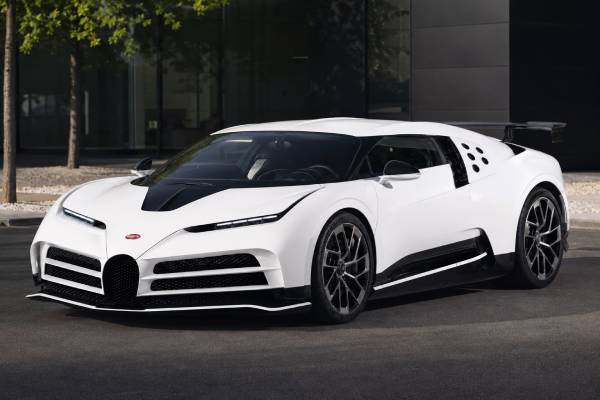
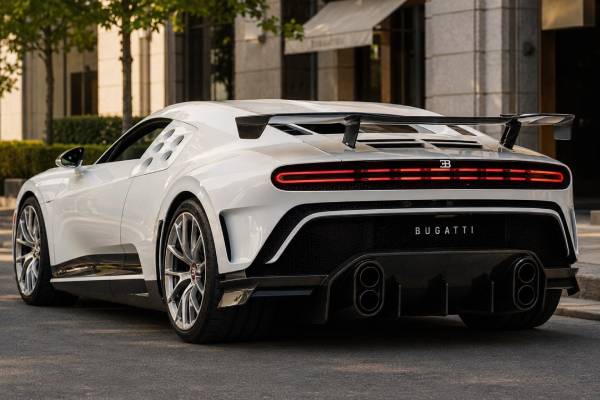
The Bugatti Centodieci is one of the rarest modern Bugattis: a ten-car, coachbuilt hypercar created as a tribute to the EB110 and as a celebration of Bugatti’s 110-year history. It is based on the Chiron’s core technology, but it is not just a rebodied Chiron. Its lower nose, fixed rear wing, five round side intakes, glass-covered W16 engine bay, and sharply reworked cooling layout give it a distinct identity. The 8.0-liter quad-turbo W16 produces 1,600 PS, the car reaches 100 km/h in 2.4 seconds, and top speed is electronically limited to 380 km/h. For buyers and collectors, the Centodieci is less about ordinary usability and more about provenance, originality, service continuity, and access to Bugatti’s factory-level support network. This guide covers the car’s specifications, engineering details, driving character, ownership demands, and buying priorities.
Table of Contents
- Why the Centodieci Still Matters
- W16 Specs and Core Hardware
- Ten-Car Production and Identity
- EB110 Design with Chiron Technology
- Performance Feel and Road Character
- Maintenance Realities for Owners
- Collector Buying Guide
Why the Centodieci Still Matters
The Centodieci matters because it connects three important Bugatti eras: the EB110 revival of the 1990s, the Chiron-based W16 age, and Bugatti’s modern coachbuilt collector cars. It is not the fastest Bugatti by top speed, but it is one of the most historically pointed and visually specific cars the brand has built.
Centodieci means “one hundred and ten” in Italian. The name points directly to the EB110, the supercar launched under Romano Artioli’s Bugatti revival in Campogalliano, Italy. That car used a carbon chassis, a mid-mounted quad-turbo engine, all-wheel drive, and a design language that was technical, flat, and wedge-like. The Centodieci reinterprets those ideas through the Chiron’s far more powerful 21st-century platform.
Bugatti revealed the Centodieci in 2019 as an extremely limited small series. Customer cars were completed in 2022, with the tenth and final example delivered in December of that year. Only ten were built, and all were spoken for before the car reached normal public availability.
Its place in Bugatti history is also tied to a broader coachbuilding period. The Divo, La Voiture Noire, Centodieci, W16 Mistral, and Bolide showed how Bugatti could use Chiron-era engineering as the base for highly specialized cars. The Centodieci is the most direct historical tribute among them because its shape, cooling concept, and exterior references are clearly linked to one earlier model.
For readers who know the Chiron, the Centodieci is best understood as a sharper, rarer, more visually radical expression of the same W16 foundation. For collectors, it is a near-unrepeatable object: ten cars, a final-period W16 powertrain, and a design theme connected to one of the most important Bugatti revivals.
W16 Specs and Core Hardware
The Centodieci uses Bugatti’s 8.0-liter quad-turbo W16, tuned to 1,600 PS and paired with a 7-speed dual-clutch gearbox and permanent all-wheel drive. Its published specification shows a car built around huge power, heavy cooling demand, wide tires, carbon-ceramic braking capacity, and active chassis modes.
| Category | Specification |
|---|---|
| Model years covered | 2022 |
| Body style | Two-seat coupe hypercar |
| Engine | 8.0-liter W16 |
| Displacement | 7,993 cm3 |
| Valvetrain | 4 valves per cylinder |
| Induction | Four turbochargers with two-stage turbocharging and water/air intercooling |
| Power | 1,177 kW / 1,600 PS at 7,050–7,100 rpm |
| Torque | 1,600 Nm at 2,250–7,000 rpm |
| Transmission | 7-speed DSG dual-clutch gearbox |
| Drivetrain | Permanent all-wheel drive |
| Fuel capacity | 100 liters |
The important point is not only the peak number. The torque plateau from 2,250 to 7,000 rpm gives the Centodieci a huge usable power band. In a normal high-performance car, the driver waits for the engine to reach its strongest range. In the Centodieci, the force arrives almost everywhere once the drivetrain is awake and the turbos are supplying full pressure.
| Area | Specification |
|---|---|
| Length | 4,665 mm |
| Width without mirrors | 2,020.5 mm |
| Width with mirrors | 2,183 mm |
| Height | 1,215.5 mm |
| Wheelbase | 2,711 mm |
| Front / rear track | 1,749 mm / 1,666 mm |
| DIN empty weight | 1,995 kg |
| Suspension | Double wishbone, front and rear |
| Front wheels and tires | 10J x 20; 285/30 R20 |
| Rear wheels and tires | 13.5J x 21; 355/25 R21 |
| Front brakes | 420 mm discs, 8-piston calipers |
| Rear brakes | 400 mm discs, 6-piston calipers |
| 0–100 km/h | 2.4 seconds |
| Lateral acceleration | 1.6 g in Handling mode |
| Top speed | 380 km/h, electronically limited |
The gearbox is a key part of the car’s character. A 7-speed dual-clutch transmission can shift with the speed needed for a 1,600 PS car, yet it also has to manage low-speed maneuvering, heat, clutch load, and all-wheel-drive traction. At this level, drivability depends as much on software calibration as it does on mechanical strength.
The chassis modes also matter. The Centodieci lists Lift, EB, Autobahn, and Handling programs. These modes alter controlled components such as steering, shock absorbers, stability control, traction control, and differential behavior. In practical terms, the car changes from a usable low-speed hypercar into a high-speed stability machine, and then into a firmer handling-focused car for more demanding driving.
Aerodynamics are also measurable. The published drag coefficient is 0.428 in EB mode and 0.410 in Autobahn or Handling mode. That is only one part of the aero picture, because cooling, downforce, stability, underbody airflow, wing setting, and temperature control are just as important on a car that can reach 380 km/h.
Ten-Car Production and Identity
The Centodieci was built as a ten-unit small series, and that production number defines its identity more than any option package. There is no normal trim walk, no base model, and no mass-market version; each car is a collector-level Bugatti built around a shared concept and finished to its owner’s specification.
Bugatti described the Centodieci as handcrafted in Molsheim, France. The original announced starting price was EUR 8 million plus VAT, and the full run was already sold out when the car was presented. This means a buyer today is not choosing between dealer stock cars. They are competing for one of ten known examples, each with its own color, trim, delivery record, mileage, and ownership story.
What separates the cars
Because the mechanical specification is fixed, desirability often comes from provenance and specification details rather than trim level. Important identity points include:
- original factory order and build documents
- exterior color and exposed carbon treatment
- interior leather, stitching, trim, and special pattern choices
- delivery date and warranty start date
- mileage and storage environment
- service history through Bugatti or an approved specialist
- paint-protection work and whether it is documented
- originality of wheels, tires, brake components, glass, and trim
- completeness of accessories, books, chargers, keys, tools, and presentation material
The tenth and final car had a Quartz White exterior with Black Carbon lower areas and black matte grilles. Its Light Blue Sport accents were a deliberate nod to the EB110’s historic blue identity. That final car also used a special interior pattern across the seats, roof liner, door panels, center console, and floor mats. Not every Centodieci will share that exact specification, but every car should be treated as a highly individualized build.
Authenticity checks
A serious buyer should not rely only on photos or mileage. For a car this rare, the first inspection question is whether the car’s identity is complete and consistent. The VIN, factory build specification, delivery documents, service records, warranty history, tax documentation, and export/import paperwork should all align.
The second question is whether the car has stayed close to factory condition. Even tasteful changes can reduce confidence if they are undocumented or hard to reverse. On a ten-car Bugatti, originality is not just a preference; it is part of the car’s market value.
EB110 Design with Chiron Technology
The Centodieci’s design works because it does not copy the EB110 literally. It takes the earlier car’s flat, wedge-like graphic language and rebuilds it around the much larger cooling, airflow, and packaging needs of the Chiron-based W16 platform.
The front is one of the clearest departures from the standard Chiron look. The low nose, reduced horseshoe grille, deep front spoiler, and three-section intake layout make the car appear flatter and sharper. Narrow LED headlights replace the heavier visual mass of the Chiron’s front lamps. This is not only styling. The front airflow has to feed cooling systems, manage pressure over the hood, and keep the car stable at extreme speed.
The side view contains the most direct EB110 reference: five round air inserts arranged in a diamond-like pattern behind the side glass. On the EB110, side intakes were part of the car’s identity. On the Centodieci, they also solve a practical problem. The 1,600 PS W16 creates huge thermal load, and the bespoke body could not simply reuse the Chiron’s usual side treatment without modification.
At the rear, the Centodieci becomes even more technical. The eight light elements, broad ventilation opening, 2+2 exhaust outlet arrangement, fixed rear wing, diffuser, and glass engine cover create a dense mechanical look. The rear is not smooth for the sake of elegance. It is shaped around heat extraction, downforce, and the visual idea of a modern EB110 SS.
Cooling as a design theme
Cooling is one of the hidden stories of the car. A quad-turbo W16 at this output needs air for combustion, intercooling, oil temperature control, coolant temperature control, brakes, and underbody management. The Centodieci’s body changes forced Bugatti to rethink how air entered and left the car.
That is why the styling feels more open and vented than a regular Chiron. The extra air inlet near the oil cooler, the rear outlet, the side inserts, and the engine bay glass are all part of a single design problem: show the EB110 influence without starving the W16 of air or trapping heat under the bodywork.
Interior character
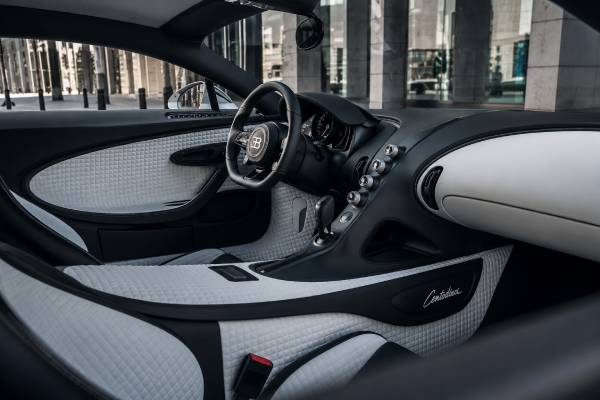
The Centodieci cabin follows the modern Bugatti pattern: low seating, a strong center spine, high-grade leather and trim, and a layout that puts the driver close to the mechanical experience. The cabin is not minimalist in the lightweight racing sense. It is a luxury hypercar cockpit, where craftsmanship and usability sit beside extreme performance.
The most interesting detail is how Bugatti used trim patterns, color, and material choices to connect the cabin to the exterior story. In cars with EB110-inspired blue accents or quadrate-style interior patterns, the interior becomes part of the historical tribute rather than just a place to sit.
Performance Feel and Road Character
The Centodieci’s driving character is best understood as immense W16 acceleration with a more focused, coachbuilt chassis and aero personality than the standard Chiron. It is brutally fast, but its published numbers also show that Bugatti prioritized high-speed stability, controlled handling, and cooling durability rather than chasing an unrestricted top-speed headline.
The 0–100 km/h time of 2.4 seconds tells only part of the story. Many powerful all-wheel-drive cars can launch hard from a stop. The Centodieci’s deeper strength is the way it continues pulling after ordinary supercars begin to fade. Reaching 200 km/h in 6.1 seconds and 300 km/h in 13.1 seconds puts the car in a very small group of road-legal machines where acceleration remains violent at speeds most cars never reach.
The engine character is different from a high-revving naturally aspirated V12 or V10. The W16 delivers a dense, turbine-like surge. With four turbochargers and a wide torque plateau, it feels less like an engine that climbs toward one dramatic peak and more like a controlled pressure system that keeps pushing as long as the road and temperature window allow.
Drive modes and behavior
The Lift mode matters in normal use because the car is low, wide, and expensive to repair. EB mode is the natural road setting, while Autobahn and Handling modes lower the car and change the controlled systems for higher speeds or more aggressive cornering. These modes are not decorative. They affect how the car presents its weight, steering, damping, traction, and stability systems.
Handling mode is the setting that best reveals the car’s chassis work. The published 1.6 g lateral acceleration figure shows how much grip the tire and aero package can generate when the car is in its most focused setup. That number also reminds owners that tire temperature, surface quality, and driver skill are critical. A cold tire or dusty road changes the safety margin dramatically.
Road use versus track use
On public roads, the Centodieci is dominated by width, visibility limits, value, and speed compression. The driver must think far ahead because the car covers distance extremely quickly. A short throttle input can erase a straight road. Brakes, tires, and cooling systems are engineered for extreme use, but public-road conditions rarely allow the car to work near its full envelope.
On a track or closed runway, the car’s systems make more sense. The brakes can build temperature, the tires can reach a proper operating window, and the aero package can stabilize the car at speeds where it begins to work as designed. Even then, a Centodieci is not a disposable track toy. Its rarity means many owners will preserve it rather than subject it to repeated high-load sessions.
Ride quality should be viewed through the lens of a Chiron-based hypercar. It can be usable in calm driving, but the combination of huge tires, low ride height, firm body control, and expensive carbon components makes bad roads a real concern. The car is capable of normal movement through a city, yet it is happiest where roads are smooth, traffic is light, and the driver has space to manage speed responsibly.
Maintenance Realities for Owners
Centodieci maintenance is not ordinary “reliability” ownership; it is preservation of a ten-unit, W16-powered, factory-supported collector car. The main risks are not high-mileage wear in the normal sense, but age, inactivity, heat cycles, tire aging, software condition, brake health, hydraulic systems, and the availability of bespoke body or trim parts.
Because so few cars exist, public Centodieci-specific failure patterns are limited. A buyer should avoid anyone who speaks with false certainty about common problems. The smarter approach is to inspect the systems that any Chiron-derived, 1,600 PS hypercar stresses most.
| Area | Why it matters | What to verify |
|---|---|---|
| Engine and cooling | The W16 produces extreme heat and relies on precise airflow and fluid control. | Service records, leak checks, temperature behavior, coolant history, oil condition, and factory diagnostic reports. |
| Dual-clutch gearbox | Low-speed maneuvering and launch events can stress clutches and calibration. | Shift quality, clutch data, adaptation values, software updates, and documented service actions. |
| Carbon-ceramic brakes | Replacement cost is high, and visual condition alone is not enough. | Disc condition, pad thickness, caliper finish, heat marks, and brake fluid history. |
| Tires | Age matters as much as tread on a 380 km/h car. | Date codes, correct specification, storage history, pressure system status, and any flat-spotting. |
| Lift and suspension | Ride-height systems are essential for real-world use and expensive to repair. | Mode changes, lift function, damper behavior, warning lights, and hydraulic or electronic faults. |
| Software and modules | Modern Bugattis rely on electronic control of powertrain, stability, damping, and infotainment. | Dealer scan, update status, battery health, fault history, and module communication. |
| Bespoke bodywork | Centodieci-specific panels, lights, and trim are rare and costly. | Paint depth, carbon finish, panel alignment, protective film quality, and repair documentation. |
Low mileage can still be a risk
Many Centodieci examples will have very low mileage. That can help value, but it does not automatically mean the car needs nothing. Cars that sit for long periods can suffer from aged tires, discharged batteries, dried seals, old fluids, brake corrosion, fuel deterioration, or software issues caused by weak voltage.
A collector should view storage as part of the service history. Climate control, battery maintenance, regular warm-up procedures, fuel quality, and correct tire pressure all matter. A car that has covered few kilometers but has been poorly stored may need more attention than a slightly used car maintained under a strict factory plan.
Service access and documentation
The best maintenance record is not a pile of generic invoices. It is a clear chain of Bugatti-authorized work tied to the VIN. The owner should have proof of scheduled checks, software updates, warranty actions, and any special inspections required by the factory or selling dealer.
Parts availability is another reason to stay close to Bugatti’s network. Engine and drivetrain support draws from the broader W16 ecosystem, but Centodieci body panels, lights, aero pieces, interior patterns, and trim details are specific to the model. Damage that would be expensive on a Chiron can become a major originality issue on a Centodieci.
Collector Buying Guide
The best Centodieci to buy is the one with complete provenance, factory-backed service history, original specification integrity, clean paint and carbon condition, fresh-enough tires, healthy diagnostics, and no unclear repair story. Color matters, but documentation matters more.
Most buyers at this level already understand rarity. The real challenge is separating a beautiful car from a fully correct car. A Centodieci can look flawless in studio photography while still raising questions about service timing, tire age, PPF installation, battery history, or export paperwork.
Start with provenance
Before discussing price, confirm the car’s identity. Ask for the factory build sheet, delivery documents, warranty start date, ownership record, and any correspondence confirming specification. Check that the VIN appears consistently across all documents. Confirm whether the car has been registered, stored as part of a collection, imported, exported, or kept on temporary plates.
A one-owner car with complete documentation and factory records will usually be easier to evaluate than a car that has moved through several dealers or jurisdictions. That does not make multi-owner cars bad, but it raises the standard for paperwork.
Inspect originality carefully
Originality includes more than paint color. It includes the wheels, tires, brake components, trim pieces, carbon finish, exterior lighting, cabin leather, stitching, infotainment condition, and factory accessories. Paint protection film should be documented because poor installation can affect edges, badges, carbon surfaces, and future paint inspection.
For a ten-car hypercar, accident repair is a major value issue. A properly documented factory repair may be acceptable to some buyers, but vague bodywork history should be treated as a serious warning sign. The car’s value depends heavily on trust.
Understand the market logic
The Centodieci’s market is thin because only ten exist. That means there may be no useful “average price” at any given moment. A single public sale, private offer, or failed auction can influence perception, but it may not define the whole market. Specification, tax location, warranty status, delivery mileage, and seller reputation can all change the number.
The original price gives historical context, not today’s value. The car launched at EUR 8 million plus VAT, but secondary-market pricing depends on collector appetite for W16 Bugattis, the specific car’s story, and how often another example is likely to become available.
Buyer checklist
Use this sequence before committing to a purchase:
- Confirm the VIN, factory build specification, and delivery record.
- Verify service history directly through Bugatti or an authorized dealer.
- Review tire date codes and approved tire specification.
- Request a current diagnostic scan and battery report.
- Inspect carbon surfaces, paint depth, panel gaps, lights, glass, and PPF edges.
- Check carbon-ceramic brake condition and brake fluid history.
- Confirm lift-system function and all drive modes.
- Review import, tax, registration, and emissions paperwork for the buyer’s country.
- Confirm included accessories, books, keys, chargers, covers, and presentation items.
- Use a purchase contract that clearly addresses originality, title, taxes, delivery condition, and remedies if documents prove inaccurate.
A buyer who wants to drive the car should budget differently from a buyer who wants a static collection piece. Driving adds value emotionally, but it also adds tire, brake, service, mileage, and insurance considerations. Storage-only ownership protects mileage, but it still requires maintenance discipline.
The Centodieci is ultimately a car for collectors who understand that rarity brings responsibility. It is not enough to afford the purchase. The owner must preserve the documentation, keep the mechanical systems exercised and serviced, protect the bespoke bodywork, and maintain a direct path to factory-level expertise. Done correctly, the Centodieci is one of the defining artifacts of the final Bugatti W16 coachbuilt era.
References
- Bugatti Centodieci – Exclusive small series in extraordinary design – Bugatti Newsroom 2019
- BU_Chiron-SS+PS+S-All 20220606.indd 2022 (Technical Specifications)
- Bugatti delivers the tenth – and final – Centodieci hyper sports car – Bugatti Newsroom 2022
Disclaimer
This article is for informational purposes only and is not a substitute for professional diagnosis, inspection, maintenance, or repair. Specifications, torque values, service intervals, software requirements, inspection procedures, and legal requirements can vary by VIN, market, equipment, registration status, and factory updates. Always verify details against official Bugatti service documentation and consult qualified Bugatti-authorized technicians before buying, servicing, repairing, or operating the vehicle.
If this guide helped you, please consider sharing it on Facebook, X/Twitter, or your favorite automotive community to support our work.