
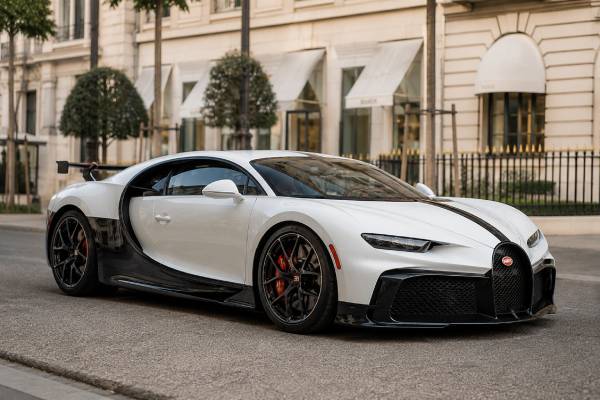
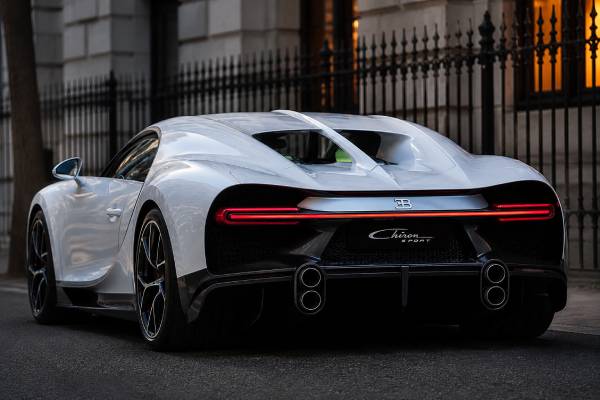
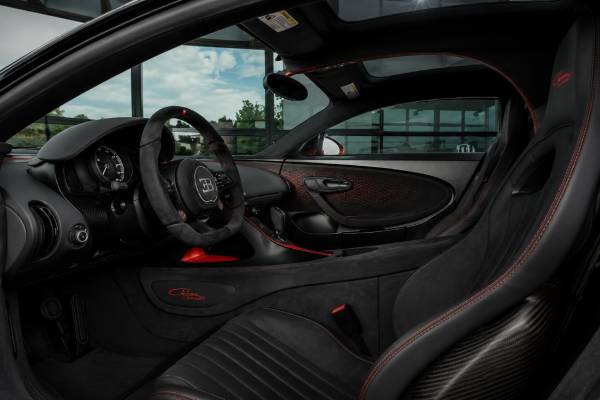
The Bugatti Chiron Sport is not the most powerful Chiron, but it is one of the most important versions because it sharpened the original car without breaking its grand-touring character. It kept the 8.0-liter quad-turbo W16, 1,500 PS output, seven-speed dual-clutch transmission, all-wheel drive, and immense high-speed stability of the standard Chiron, then added lighter components, firmer chassis tuning, revised steering feel, and dynamic torque vectoring for stronger cornering response. The result is a hypercar that still feels luxurious, polished, and deeply engineered, but with more focus on lateral grip and driver control. For collectors, the Chiron Sport sits in a useful middle ground: rarer and more purposeful than a base Chiron, less extreme than a Pur Sport, and more road-friendly than the later track-biased derivatives. This guide covers the 2018–2022 Chiron Sport era, including specifications, engineering details, ownership realities, and buying advice.
Table of Contents
- What the Chiron Sport Changed
- W16 Specs and Performance Data
- Build Years, Special Editions, and Options
- Engineering Details That Define It
- How It Drives in the Real World
- Maintenance Risks and Ownership Reality
- Buying Advice for Serious Collectors
What the Chiron Sport Changed
The Chiron Sport is best understood as the handling-focused version of the original Chiron, not as a higher-output model. Bugatti kept the same 1,500 PS W16 powertrain but reworked the car’s weight, steering, suspension behavior, and torque distribution so it felt more agile without losing the long-distance refinement that defines the Chiron.
Introduced in 2018, the Sport arrived two years after the Chiron’s debut and gave Bugatti a sharper answer for owners who wanted more feedback and control from a car already capable of extreme speed. It did not try to turn the Chiron into a stripped racing car. Instead, it made small but expensive changes in the places that matter most at very high performance levels: unsprung mass, lateral body control, rear-axle power management, and driver confidence.
The standard Chiron already had a huge engineering brief. It had to replace the Veyron, deliver 1,500 PS, remain stable at speeds above 400 km/h, feel luxurious enough for wealthy collectors, and be usable on public roads. The Chiron Sport narrowed that focus slightly. It asked a different question: how can a two-ton, 16-cylinder, all-wheel-drive hypercar feel more alert in corners?
The answer was not one single part. Bugatti used a package approach. The Chiron Sport received a lighter build, revised dampers, a firmer handling setup, recalibrated steering, and a dynamic torque vectoring function that could help rotate the car through tighter bends. It also introduced highly visible details such as round exhaust outlets, Sport badging, lighter wheels, and carbon-fiber windshield wiper arms.
Those wiper arms became famous because they showed Bugatti’s mindset. On an ordinary car, a wiper arm is not a talking point. On the Chiron Sport, it became a place to save weight, improve detail quality, and signal that even small parts had been reconsidered. That is the difference between a cosmetic trim level and a true Chiron derivative.
For today’s buyer, the Chiron Sport matters because it preserves the full Chiron experience while adding rarity and driver appeal. It is more special than a base Chiron, more supple than a Pur Sport, and less speed-specialized than a Super Sport. In collector terms, that balance gives it broad appeal.
W16 Specs and Performance Data
The Chiron Sport uses the same core powertrain as the standard Chiron: an 8.0-liter quad-turbocharged W16 producing 1,500 PS and 1,600 Nm of torque. Its performance comes from massive power, all-wheel-drive traction, advanced cooling, and a chassis designed to remain calm at speeds where most cars are beyond their usable range.
| Category | Specification |
|---|---|
| Model | Bugatti Chiron Sport |
| Production focus | Handling-focused Chiron variant, introduced in 2018 |
| Body style | Two-door, two-seat coupe |
| Engine | 8.0-liter quad-turbocharged W16 |
| Power | 1,500 PS / about 1,479 hp / 1,103 kW |
| Torque | 1,600 Nm |
| Transmission | Seven-speed dual-clutch automatic |
| Drivetrain | All-wheel drive |
| Engine position | Mid-mounted, longitudinal |
| Construction | Carbon-fiber monocoque with aluminum substructures |
| Weight saving versus Chiron | About 18 kg, depending on configuration |
The W16 is the centerpiece. It is effectively the final development stage of the concept that made the Veyron famous: a compact, wide, multi-bank engine with four turbochargers and extraordinary cooling demand. In the Chiron Sport, the engine is not tuned for more power than the regular Chiron because it does not need to be. Its 1,600 Nm torque output already gives the car a huge performance reserve from low and medium engine speeds.
The seven-speed dual-clutch gearbox has a difficult job. It must handle enormous torque, launch the car cleanly, shift smoothly in urban driving, and remain stable under repeated full-power acceleration. The gear changes are fast but not harsh in normal use, which suits the Chiron Sport’s dual purpose: it is both a collector-grade luxury object and a machine capable of extreme acceleration.
| Item | Chiron Sport detail |
|---|---|
| 0–100 km/h | About 2.4 seconds |
| 0–200 km/h | About 6.1 seconds |
| 0–300 km/h | About 13.1 seconds |
| Top speed | Electronically limited; maximum speed depends on mode, key, tires, and conditions |
| Suspension focus | Firmer handling calibration than the standard Chiron |
| Steering | Revised for sharper response |
| Torque management | Dynamic torque vectoring for improved cornering behavior |
| Brakes | Carbon-ceramic braking system |
| Wheels and tires | Staggered high-performance tire package developed for Chiron-level speed and load |
The headline numbers can make the Chiron Sport sound simple: 1,500 PS, all-wheel drive, immense speed. In practice, the more interesting story is how Bugatti manages heat, tire load, aero balance, braking energy, and drivetrain shock. A full-power Chiron Sport places extreme stress on its tires and cooling system, so the car’s control systems, drive modes, aero behavior, and service requirements all matter.
The “DALA” identifier in the article title should be treated as a specific identification cue rather than a substitute for factory documentation. On a car of this value, buyers should verify engine identification, market specification, VIN data, and configuration through official Bugatti records, not through listing shorthand alone.
Build Years, Special Editions, and Options
The Chiron Sport entered the range in 2018 and remained one of the key 1,500 PS Chiron variants during the late 2010s and early 2020s. The broader Chiron family continued beyond the 2018–2022 Sport-focused period, but this guide centers on the Sport and the related special editions most relevant to buyers comparing 1,500 PS Chiron models.
The Sport’s identity is clear: it is not the Pur Sport, not the Super Sport, and not the 300+ top-speed car. It belongs to the original Chiron line but adds a handling package and visual markers. That matters because many Chirons are heavily customized, and a car’s appearance alone does not always tell the full story.
Important identification points include:
- Factory build sheet and VIN confirmation.
- Chiron Sport badging and trim.
- Round exhaust outlets.
- Lightweight wheel design.
- Carbon-fiber wiper arms.
- Correct Sport interior details.
- Original options and color split documentation.
- Service records from Bugatti-authorized facilities.
The Chiron Sport was also a foundation for notable limited editions. The 110 Ans Bugatti celebrated the company’s 110th anniversary with French tricolor details and a highly curated specification. Les Légendes du Ciel honored Bugatti’s aviation-linked racing history and used distinctive paint, interior materials, and design references. These cars are not just option packages in the ordinary sense. They sit in a more collectible space because their stories are factory-defined and production-limited.
| Version | Main character | Buyer appeal |
|---|---|---|
| Chiron Sport | Sharper handling, same 1,500 PS W16 | Balanced road use, rarity, and drivability |
| Chiron Sport 110 Ans Bugatti | Anniversary edition with French design cues | Stronger story and limited-edition collectibility |
| Chiron Sport Les Légendes du Ciel | Aviation-inspired limited edition | Distinct visual identity and factory narrative |
| Chiron Pur Sport | More aggressive handling and shorter gearing | Track-road focus, sharper feel, less grand touring ease |
| Chiron Super Sport | Long-tail high-speed grand tourer with more power | Top-speed prestige and later-run significance |
Options are central to value. Bugatti buyers often specified exposed carbon fiber, custom paint, unique interior leather, contrast stitching, special wheel finishes, polished or painted trim, personalized embroidery, and bespoke color splits. Two cars with similar mileage can feel very different in the market because one has a timeless, factory-elegant configuration while another has a louder specification that narrows the buyer pool.
Originality matters, but so does factory provenance. A special color or interior is valuable when it is documented and factory-applied. Later cosmetic changes, repainting, wrapping, or undocumented interior changes can reduce confidence unless they are reversible and fully recorded.
Engineering Details That Define It
The Chiron Sport is distinctive because its engineering changes are subtle but meaningful. Bugatti did not chase a higher dyno figure; it used weight reduction, suspension calibration, steering response, and torque vectoring to make a huge, powerful car feel more precise.
The carbon-fiber monocoque is the backbone. It gives the car the stiffness needed for accurate suspension control and high-speed stability. At Chiron speeds, a flexible body would make the car feel vague, noisy, and unpredictable. The structure also supports the complex cooling routes, aerodynamic surfaces, and safety systems needed around the W16 powertrain.
The W16’s packaging is extreme. Four turbochargers, heavy cooling demand, multiple radiators, large intake paths, and a compact engine bay create a car that is as much about thermal management as power production. The Chiron Sport’s exterior openings, underbody airflow, and rear-end heat extraction are not decorative. They help the car survive repeated high-load use.
Aerodynamics are equally important. The Chiron’s body is smooth and luxurious, but it is also active and functional. The rear wing can change position depending on mode and braking needs. The car must balance drag reduction, cooling, downforce, and tire safety. Unlike a lightweight track car that creates huge downforce at modest speeds, the Chiron Sport must remain stable across an unusually wide speed range.
The Sport’s dynamic torque vectoring helps the car rotate more cleanly in corners. In simple terms, torque vectoring adjusts how power is sent across the driven wheels to help the car follow the driver’s intended line. For a high-powered all-wheel-drive car, this is crucial. Without careful control, the car could feel heavy, reluctant, or overly safe in tighter bends.
The carbon-fiber windshield wipers and lighter components are useful examples of Bugatti’s obsessive approach. Saving 18 kg from a car near two tonnes does not transform it into a lightweight racer, but it changes the feel at the margins. More importantly, some weight savings are in areas that influence response and precision.
The cabin is part of the engineering story too. Bugatti avoided turning the Chiron Sport into a screen-heavy tech product. The interior uses high-grade materials, clear controls, and a cockpit shape that supports grand touring. The result feels expensive without becoming cluttered. For many owners, that restraint is a major part of the car’s charm.
How It Drives in the Real World
The Chiron Sport drives with shocking speed, but its real achievement is how calm it feels while doing things that would overwhelm most cars. It is more responsive than the standard Chiron, yet still refined enough to feel like a luxury grand tourer rather than a track special.
Acceleration is immediate once the turbos are fully awake, but the delivery is not crude. The all-wheel-drive system helps the car put power down with a level of confidence that makes the numbers feel almost unreal. From a stop, the launch is violent but controlled. At higher speeds, the car’s acceleration remains strong in a way that few road cars can match.
The engine sound is unusual. It is not a high-pitched V12 or a rough racing V8. The W16 has a dense, mechanical, turbine-like character. The sound is part intake, part exhaust, part forced-induction rush, and part deep combustion mass. It suits the car’s personality: more aerospace-grade force than old-school sports-car theater.
The gearbox is smooth in relaxed driving and decisive under load. It does not need to feel dramatic because the engine produces so much torque. In city use, the car can move cleanly, although its width, value, and limited visibility make crowded streets stressful. On open roads, the Chiron Sport feels more natural. It is most comfortable when it has space to breathe.
Steering is where the Sport earns its name. It does not become a small car, and it never hides its mass completely, but it responds with more clarity than the standard Chiron. The front axle feels more alert, the rear follows more willingly, and the torque vectoring helps the car feel less blunt on corner exit.
Ride quality remains impressive. This is not a Pur Sport-style setup that constantly reminds the driver of its track intent. The Sport still has the polish expected from a Bugatti. It can cover distance with remarkable calm, especially on good roads. Poor surfaces require care, partly because of the tires, wheels, suspension hardware, and low ride height.
Braking performance is immense, but condition matters. Carbon-ceramic brakes can last well when treated correctly, but replacement costs are serious. Buyers should pay attention to disc condition, pad life, heat marks, pedal feel, and service history. A car used for repeated high-speed events or track demonstrations needs closer inspection than a low-mileage display car.
Tire temperature and age also shape the driving experience. A Chiron Sport depends heavily on its tire package. Old, cold, or incorrect tires can make the car feel less secure and may limit safe performance. On a car capable of such speed, tires are not consumables to delay; they are core safety equipment.
Maintenance Risks and Ownership Reality
Chiron Sport maintenance is less about ordinary reliability ratings and more about controlled, documented specialist care. The car is highly engineered and robust when maintained correctly, but every system operates at a level where neglect, expired tires, weak batteries, or poor storage can become expensive quickly.
The engine itself is not known as fragile in normal collector use, but it is complex. The W16 uses four turbochargers, major cooling hardware, dense packaging, and many supporting systems. Heat cycles, fluid condition, software status, and service documentation matter more than mileage alone. A very low-mileage car that sat poorly can be less attractive than a slightly higher-mileage car serviced on time.
Key ownership areas include:
- Annual or time-based service history.
- Tire age, specification, and replacement documentation.
- Carbon-ceramic brake condition.
- Battery condition and tender use.
- Cooling system inspection.
- Suspension and lift-system operation.
- Gearbox behavior under low-speed and high-load conditions.
- Software updates and control-module records.
- Evidence of track, runway, or repeated launch use.
- Paint, exposed carbon, and underbody condition.
Battery care is easy to underestimate. Hypercars with many control modules can suffer if stored without proper charging routines. A weak battery can trigger warning lights, communication issues, or confusing fault histories. Serious buyers should ask how the car was stored, not just where it was stored.
Tires deserve special attention. Even if tread depth looks fine, age and storage conditions matter. A Chiron Sport should not be evaluated like a normal used sports car. Its tires operate under extreme load potential, and replacement cost is part of responsible ownership. Old tires may also affect whether the car can safely access its upper performance envelope.
Carbon-ceramic brakes can be durable, but inspection should be expert-led. Visual appearance alone is not enough. Buyers need measurements, service records, and an understanding of how the car was driven. Repeated heavy stops from very high speed create heat loads that ordinary road use never approaches.
Suspension and lift systems should work smoothly and consistently. Any warning, uneven behavior, fluid concern, or delayed response deserves investigation. The same applies to active aero. The rear wing and related systems are not decorative, so proper operation is essential.
Parts availability is specialized. Bugatti support is highly structured, but parts, tires, and service visits can involve long lead times and major costs. Independent general exotic-car shops are not enough for deep Chiron work. The best ownership experience comes from using Bugatti-authorized service channels and keeping every invoice, inspection, update, and correspondence record.
Buying Advice for Serious Collectors
The best Chiron Sport to buy is the one with factory documentation, desirable specification, clean history, current service, fresh tires, and no uncertainty around identity. Mileage matters, but provenance and condition matter more.
Start with authenticity. Confirm that the car is a true Chiron Sport through the VIN, factory build documentation, and Bugatti records. Do not rely only on exterior parts, dealer language, or listing shorthand. Because Chirons can be customized heavily, proper records are the foundation of value.
Next, judge specification. A restrained exposed-carbon and leather combination may appeal to a broader collector base than a highly personal color scheme. Limited editions such as 110 Ans Bugatti or Les Légendes du Ciel carry stronger factory narratives, but they also require exact originality. Missing accessories, altered trim, repainting, or incomplete documents can matter more on a special edition than on a standard Sport.
A proper pre-purchase inspection should include:
- VIN and factory build confirmation.
- Complete service-history review.
- Diagnostic scan by qualified Bugatti personnel.
- Tire date-code and condition check.
- Brake disc and pad inspection.
- Suspension, lift, and active aero function test.
- Cooling-system and fluid-condition review.
- Paint, carbon fiber, glass, and underbody inspection.
- Verification of keys, books, accessories, chargers, and factory items.
- Market comparison against similarly documented cars.
Do not buy purely on low mileage. Very low mileage is attractive, but it can also mean long storage periods, old tires, weak batteries, and deferred servicing. A collector-grade car should feel alive, maintained, and documented, not merely unused.
Also consider how you plan to use it. If you want the most extreme cornering-focused Chiron, the Pur Sport may be more suitable. If you want the highest-speed grand-tourer identity, the Super Sport belongs on the list. If you want the best blend of original Chiron luxury, sharper response, and collectible scarcity, the Chiron Sport is the sweet spot.
Budget beyond the purchase price. Insurance, transport, storage, service, tires, inspections, and occasional factory-level work are part of the car’s real cost. A buyer stretching to purchase the car may not enjoy owning it. The right owner treats maintenance as preservation, not as an unpleasant surprise.
The final decision should come down to documentation, configuration, condition, and story. The Chiron Sport is already a landmark car because it belongs to the final W16 Bugatti era. The best examples will be the cars that remain original, properly serviced, tastefully specified, and fully traceable from Molsheim to the present owner.
References
- Chiron Sport 2018 (Manufacturer Page)
- Bugatti presents Chiron Sport as world premiere at Geneva Motor Show 2018 (Manufacturer Publication)
- Bugatti Chiron Sport “Les Légendes du Ciel” 2020 (Manufacturer Publication)
- The Bugatti Chiron Profilée: An Automotive Solitaire 2022 (Manufacturer Publication)
- L’Ultime: Celebrating The Final Bugatti Chiron 2024 (Manufacturer Publication)
Disclaimer
This article is for informational purposes only and is not a substitute for professional diagnosis, inspection, repair, or valuation. Specifications, torque values, service intervals, software requirements, tire approvals, procedures, and component details can vary by VIN, market, model year, equipment, and factory update status. Always verify technical information against official Bugatti service documentation and have any car inspected by qualified Bugatti specialists before purchase or use.
If this guide helped you, please consider sharing it on Facebook, X/Twitter, or your favorite enthusiast community to support our work.