
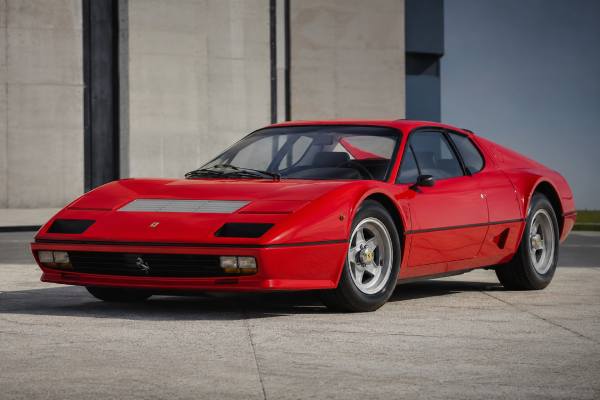
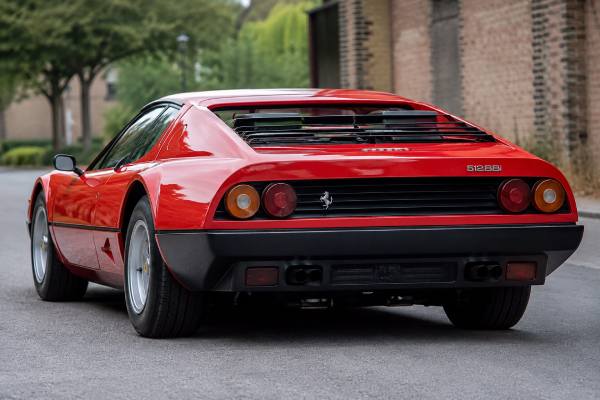
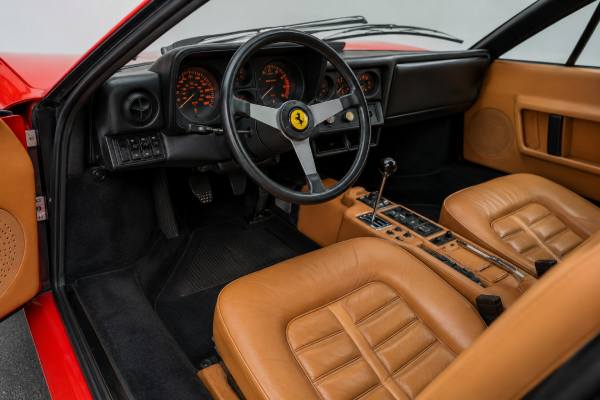
The Ferrari 512 BBi is the final and most usable road version of the Berlinetta Boxer line. Built from 1981 to 1984, it kept the dramatic low Pininfarina shape and mid-mounted flat-12 layout of the earlier 512 BB, but replaced carburetors with Bosch K-Jetronic mechanical fuel injection. That change softened some of the raw edge, improved cold-start behavior and emissions control, and made the car better suited to real-world use.
For collectors, the 512 BBi matters because it sits at a turning point. It was the last Boxer before the Testarossa, one of the final hand-built-feeling analog Ferrari flagship cars, and a model whose value depends heavily on originality, documentation, condition, and correct specialist maintenance. It is not as instantly recognizable to the public as a Testarossa, but among Ferrari buyers it has a strong identity: compact, low, mechanical, rare, and demanding in the right old-supercar way.
Quick Take
The Ferrari 512 BBi’s strongest appeal is its combination of Pininfarina wedge styling, mid-engine flat-12 character, and relative drivability compared with the carbureted Berlinetta Boxers. Its key identity is the Bosch-injected final evolution of Ferrari’s first mid-mounted 12-cylinder road-car family, produced in limited numbers before the Testarossa changed the formula. The main caution is ownership complexity: engine-out belt service, aging fuel-injection hardware, cooling, electrics, chassis condition, and restoration quality can dominate the real cost. The best buys are documented, matching-numbers cars with clear history, factory-correct details, and evidence of recent specialist work rather than simply low mileage.
Table of Contents
- History and Collector Significance
- Engine, Chassis and Core Specifications
- Production, Identity and Factory Details
- Design, Engineering and Special Character
- Road Feel, Performance and Usability
- Maintenance, Reliability and Restoration Risk
- Values, Inspection and Buying Advice
History and Collector Significance
The 512 BBi is important because it was the last version of Ferrari’s Berlinetta Boxer, the model family that moved Ferrari’s flagship road-car idea away from the front-engine Daytona era and toward the mid-engine flat-12 supercar age. It joined the range in 1981 and remained in production until 1984, when the wider, more theatrical Testarossa replaced it.
The Berlinetta Boxer story began before the 512 BBi itself. Ferrari showed the 365 GT4 BB concept in the early 1970s, at a time when Lamborghini’s Miura and Countach had made the mid-engine layout central to the supercar conversation. Ferrari had long used mid-mounted engines in racing, but Enzo Ferrari was cautious about putting that layout into a powerful road car. The Boxer line was therefore a major shift: a two-seat berlinetta with its engine behind the cabin, a very low nose, and styling by Pininfarina.
The 365 GT4 BB was followed by the carbureted 512 BB in 1976. The 512 name reflected the larger 5-liter, 12-cylinder identity. In 1981, Ferrari updated the car into the 512 BBi, with the “i” standing for iniezione, or injection. The fuel system changed from carburetors to Bosch K-Jetronic mechanical fuel injection. Power output was quoted at 340 hp, lower than the carbureted 512 BB’s headline figure, but the injected car became smoother, cleaner, and easier to live with in varied conditions.
That change gives the 512 BBi a distinct position. It is still an analog Ferrari with no power steering, no driver aids, a gated manual gearbox, a tubular steel chassis, and a longitudinal flat-12 mounted behind the driver. Yet it is less temperamental than many carbureted exotics of the same period. It is a collector car that can be driven properly when maintained correctly.
The 512 BBi also matters because it was never officially federalized for the United States in the same way later Ferrari models were. Many U.S. cars arrived through gray-market importation and were modified to meet local emissions and safety requirements. Those changes can affect originality, value, drivability, and inspection complexity. European-market cars, U.K.-delivered right-hand-drive examples, and U.S.-converted examples can all be desirable, but they need to be judged on documentation and quality rather than assumptions.
Today, the 512 BBi is collectible for several reasons:
- It was the final Berlinetta Boxer road model.
- It used a mid-mounted Ferrari flat-12 before the Testarossa made the layout more famous.
- Production was limited compared with later Ferrari flagships.
- Its Pininfarina shape is cleaner and more compact than the Testarossa’s.
- It still feels hand-built, mechanical, and period-correct.
- Good examples are sensitive to originality, matching numbers, and Classiche-style documentation.
The 512 BBi is not a casual classic. It rewards a buyer who understands Ferrari history, is willing to pay for specialist care, and values correct details over cosmetic drama. Its significance comes from its place between eras: more refined than the early Boxers, less modern than the Testarossa, and still close to the raw 1970s supercar idea.
Engine, Chassis and Core Specifications
The 512 BBi’s core specification is simple in concept but complex in execution: a 4.9-liter naturally aspirated flat-12, mechanical fuel injection, a 5-speed manual gearbox, and rear-wheel drive in a low tubular-frame berlinetta. It is not a boxer engine in the strict technical sense, because opposing pistons do not move as a true boxer pair; it is a 180-degree V12, but the Berlinetta Boxer name is part of Ferrari history.
| Item | Specification |
|---|---|
| Production years | 1981–1984 |
| Factory model type | F 102 CB 100 |
| Engine code | F 110 A 000 |
| Engine layout | Mid-mounted longitudinal 180-degree 12-cylinder |
| Displacement | 4,943.04 cc |
| Bore x stroke | 82 mm x 78 mm |
| Fuel system | Bosch K-Jetronic mechanical fuel injection |
| Valve gear | Double overhead camshafts per bank, 2 valves per cylinder |
| Maximum power | 340 hp at 6,000 rpm |
| Transmission | 5-speed manual with gated shift |
| Drivetrain | Rear-wheel drive |
| Chassis | Tubular steel frame with steel and aluminum body panels |
| Steering | Rack-and-pinion, unassisted |
| Brakes | Disc brakes front and rear |
| Fuel capacity | 120 liters |
| Item | Figure |
|---|---|
| Length | 4,400 mm |
| Width | 1,830 mm |
| Height | 1,120 mm |
| Wheelbase | 2,500 mm |
| Front track | 1,508 mm |
| Rear track | 1,572 mm |
| Dry weight | 1,499 kg |
| Top speed | 280 km/h |
| Standing 400 m | 14.2 seconds |
| Standing 1,000 m | 25.1 seconds |
The engine is the center of the car’s appeal. It sits low and longitudinally behind the cabin, with the gearbox mounted below and behind in a packaging layout typical of the Boxer family. This makes the car compact and low, but it also means service access is limited. Belt service is not a simple front-of-engine job. On a properly maintained 512 BBi, the flat-12 is smooth, flexible, and strong. On a neglected car, the same engine can become expensive very quickly.
The chassis is old-school Ferrari: tubular steel, with independent suspension at each corner. The front uses unequal-length wishbones, coil springs, telescopic dampers, and an anti-roll bar. The rear uses independent wishbones as well, with twin damper and spring units per side to manage the mass of the engine and transaxle. This setup gives the 512 BBi a different feel from a front-engine V12 Ferrari. It has more rear mass, a low seating position, and a strong sense of the car rotating around the driver’s hips once the tires and suspension are working properly.
The transmission is a major part of the experience. The 5-speed manual uses Ferrari’s open metal gate. It requires deliberate inputs, especially when cold. Second gear can be reluctant until the oil warms, a familiar trait in many classic Ferraris. A healthy gearbox should feel mechanical and precise, not obstructive, noisy, or vague.
The brakes are discs all around. They are capable for period road use, but buyers should not expect modern carbon-ceramic bite or repeated track abuse without careful preparation. Tire choice also matters. The 512 BBi was associated with metric Michelin TRX fitments, and tire availability, age, and correct specification can influence both safety and originality.
Production, Identity and Factory Details
Ferrari built 1,007 examples of the 512 BBi, making it rarer than many later flagship Ferraris and more numerous than the earlier 365 GT4 BB. Chassis numbers are commonly cited in the 38121 to 52935 range, but any specific car should be checked against factory documentation, engine number, gearbox number, body number, and ownership records.
The 512 BBi was a single main body style: a two-seat berlinetta. Unlike some later Ferrari lines, it was not offered as a factory spider, targa, or regular lightweight road variant. The main distinctions buyers face today are market specification, steering side, color and trim, originality, documentation, and the quality of any federalization or restoration work.
How the 512 BBi differs from the 512 BB
The central mechanical difference is fuel injection. The earlier 512 BB used carburetors, while the 512 BBi used Bosch K-Jetronic mechanical fuel injection. This change was driven by emissions and drivability needs. In simple terms, carburetors can feel more vocal and raw when perfectly tuned, while K-Jetronic injection generally gives smoother starting, cleaner running, and more predictable behavior.
Other visible and detail changes help identify a BBi. The 512 BBi adopted revised exterior lighting details, including front driving lights positioned outside the grille area and rear fog or parking-light changes depending on market. Interior trim and instrumentation details also evolved. Because many cars have been restored, repainted, or modified, visual cues should be treated as helpful clues rather than proof.
Factory colors, interiors and special details
Rosso Corsa over beige or black leather is common in the market, but the 512 BBi was available in a range of Ferrari colors. Dark blues, silvers, blacks, grays, and unusual period shades can command attention when factory-correct and documented. The market often rewards unusual original colors, but only when the color is supported by records rather than later preference.
Interior condition is especially important. The 512 BBi cabin is simple but expensive to restore correctly. Leather quality, seat pattern, dashboard material, switchgear, carpets, instruments, and original trim all affect value. Some BBi examples are associated with Ermenegildo Zegna cloth inserts or distinctive interior specifications, which can add collector interest if documented.
Documentation and authenticity
For a 512 BBi, paperwork can be worth real money. Strong documentation may include:
- Original books, pouch, warranty card, and manuals.
- Service invoices from known Ferrari specialists.
- Ownership history from new or early life.
- Import and federalization records for U.S.-market cars.
- Engine, gearbox, and chassis-number confirmation.
- Ferrari Classiche certification or equivalent factory-supported verification.
- Photos and invoices from any restoration work.
- Evidence of correct paint color and interior trim from factory records.
Matching-numbers status matters, but it should be verified carefully. A correct engine type is not the same as the original engine. A restored car is not automatically better than a preserved one. A low-mileage car is not automatically safer than a regularly serviced car. The strongest examples combine authenticity, condition, and mechanical readiness.
Design, Engineering and Special Character
The 512 BBi’s design is one of the cleanest expressions of the 1970s and early 1980s Ferrari wedge. Pininfarina created a shape that is low, wide, sharp, and simple, with a strong horizontal line separating the upper body from the lower section.
The car’s proportions are very different from later mid-engine Ferraris. The front overhang is short and low, the windshield is steeply raked, and the rear deck is broad because it has to cover the flat-12. The result is dramatic without being over-decorated. Compared with the Testarossa, the 512 BBi looks narrower, cleaner, and less theatrical. Compared with the Daytona, it feels like a different generation entirely.
The two-tone “boxer” paint treatment is one of the model’s most recognizable design features. Many cars were finished with a black lower section, which visually lowered the body even further. Some cars have been repainted in single-color schemes, either by owner preference or during restoration. Single-color cars can be attractive, but buyers should confirm whether the finish matches the factory specification.
Engineering and design are tightly linked on this car. The low nose and cabin position come from the mid-engine layout. The wide rear section is there because the engine, transaxle, cooling, exhaust, and rear suspension need space. The side intakes and rear vents are not decoration; they help feed and cool a tightly packaged mechanical system.
The cockpit is purposeful rather than luxurious by modern standards. The driver sits low, with a view over the front wings and a broad rear structure behind. The gated shifter, simple instrument cluster, analog switches, and slim pillars give the car a focused character. There is no touchscreen, no drive-mode menu, no adaptive suspension, and no electronic safety net. That is part of the appeal, but it also means the driver must pay attention.
The sound is another defining feature. The 512 BBi does not have the same razor-edged noise as some later high-revving Ferraris. Its flat-12 sound is smoother, deeper, and more layered. Intake noise, gear whine, exhaust tone, and mechanical vibration all mix together. A healthy car should feel refined for its age but still alive. Exhaust modifications can make a BBi louder, but originality-focused buyers usually prefer factory-correct systems or well-documented reversible changes.
One unusual engineering compromise is the engine and gearbox arrangement. The engine sits above the gearbox, which helps packaging but raises some mass compared with a pure racing layout. This affects handling balance and service access. It is one reason a 512 BBi needs to be driven with respect, especially on old tires, cold roads, or uneven surfaces.
Road Feel, Performance and Usability
A good 512 BBi feels fast, low, mechanical, and surprisingly usable once warmed through. It is not a modern supercar experience; it is a classic Ferrari flagship that asks the driver to work with the machine.
The first thing many drivers notice is the seating position. You sit low, with the front of the car stretching ahead and the engine behind. Visibility forward is better than the shape suggests, but rearward visibility is limited. The car is wide enough to require care on narrow roads, yet it is smaller and less intimidating than a Testarossa in many real-world situations.
The engine’s character is broad rather than peaky. The Bosch injection gives clean response when properly set up, and the 4.9-liter displacement provides useful torque. The car does not need to be thrashed to feel special. At low and medium revs it is smooth and muscular; toward the upper range it becomes more urgent, with a dense mechanical sound that reminds you there are 12 cylinders behind the cabin.
The gearbox is part of the ritual. When cold, the shift can be stiff and second gear may prefer patience. Once warm, the gated manual becomes one of the car’s great pleasures. The driver needs to move the lever with accuracy, not force. A car that crunches, jumps out of gear, or feels badly obstructed after warming needs inspection.
Steering is unassisted, so parking effort is high. At speed, that same steering becomes communicative and honest. The front end is not as light as some smaller mid-engine cars, but it gives real feedback. The car prefers smooth inputs. Abrupt throttle lifts, poor tires, worn dampers, or aggressive mid-corner corrections can make it feel heavy at the rear.
Ride quality depends heavily on suspension condition and tire choice. A fresh, correctly set-up 512 BBi can cover fast roads with confidence. A tired example can feel nervous, loose, hot, noisy, and much older than it should. These cars are sensitive to alignment, bushings, dampers, ride height, and tire age.
The brakes suit fast road use but need realistic expectations. Pedal feel should be firm and progressive. Pulling, vibration, long pedal travel, or weak braking can point to old hoses, caliper issues, disc wear, master-cylinder trouble, or poor maintenance. Modern traffic also changes the context. A 512 BBi can move quickly, but it cannot stop, stabilize, or protect occupants like a modern Ferrari.
Usability is mixed. The car has luggage space, a large fuel tank, and better manners than many carbureted exotics, but it is still a hot, low, expensive, hand-built Italian supercar from the early 1980s. Cabin heat, air-conditioning performance, electrical behavior, clutch weight, and cooling-system health matter. A sorted car can be enjoyed on long drives. A neglected car will turn every trip into a diagnostic session.
Maintenance, Reliability and Restoration Risk
The 512 BBi can be reliable in the way a properly maintained classic Ferrari can be reliable, but deferred maintenance is extremely costly. The engine, fuel system, cooling system, clutch, suspension, brakes, and electrical system all need specialist knowledge.
The biggest routine maintenance concern is belt service. The flat-12 uses timing belts, and proper belt replacement is an engine-out job on the Boxer family. This is why invoices matter. A seller saying “belts were done” is less useful than a dated invoice from a respected Ferrari specialist showing belts, tensioners, seals, related hoses, fluids, and any while-you-are-there work.
Common ownership concerns include:
- Aging timing belts and tensioners.
- Oil leaks from seals, cam covers, and engine joints.
- Fuel-injection imbalance or hard starting from K-Jetronic wear.
- Old fuel hoses, pumps, accumulators, and injectors.
- Cooling-system weakness from old radiators, hoses, fans, or thermostats.
- Clutch wear or heavy operation.
- Synchro wear, especially if the gearbox has been rushed when cold.
- Old brake hoses, caliper seals, and master-cylinder problems.
- Suspension bushings, dampers, and ball joints past their useful life.
- Electrical faults from age, heat, poor grounds, and old fuse panels.
- Air-conditioning systems that no longer perform properly.
- Metric tire age or incorrect tire substitutions.
The fuel system deserves special attention. Bosch K-Jetronic is durable when clean and correctly adjusted, but it does not respond well to long storage, stale fuel, dirt, air leaks, or amateur adjustment. A BBi that starts badly, hunts at idle, smells strongly of fuel, hesitates, or runs unevenly should be inspected by someone who understands mechanical injection.
Cooling is another major area. The engine produces serious heat, and the body gives limited margin if radiators, fans, hoses, or thermostats are weak. Watch for high temperature in traffic, coolant smell, evidence of overflow, poor fan operation, or inconsistent gauge behavior. Overheating can become expensive very quickly.
Corrosion and accident damage are also important. The 512 BBi has a tubular chassis and mixed body construction, and repairs need to be done correctly. Check lower body sections, sills, floor areas, suspension pick-up points, front and rear structures, door bottoms, wheel arches, and evidence of poor previous repair. A shiny repaint can hide a great deal.
Restoration cost can exceed the value gap between an average car and an excellent one. Interior retrimming, paint correction, engine-out mechanical work, suspension rebuilding, brake restoration, and sourcing missing original parts can add up quickly. Cheap Boxers are rarely cheap after two years of ownership.
Originality creates its own tradeoff. Some upgrades improve usability, such as better cooling fans, carefully chosen modern hoses, upgraded fuse panels, or discreet air-conditioning improvements. But visible modifications, non-original colors, incorrect interiors, aftermarket wheels, federalization scars, and poorly reversed changes can reduce value. The best upgrades are documented, reversible, and made for reliability rather than fashion.
A proper pre-purchase inspection should include compression or leak-down testing when appropriate, fuel-system checks, underbody inspection, chassis-number verification, paint-depth readings, road testing from cold, and a review of records. This is not a car to buy from photos alone.
Values, Inspection and Buying Advice
The 512 BBi market rewards quality more than headline mileage. As of 2026, public market data and dealer listings commonly place solid cars in the mid-six-figure range in U.S. dollars or the high-six-figure range for especially original, low-mileage, rare-color, highly documented examples. Auction results vary widely because condition, market specification, federalization history, and documentation can change the value dramatically.
A rough practical view is this: driver-quality or complicated-history cars can appear tempting, but the cost to correct them can be severe. Strong, documented, matching-numbers examples with recent engine-out service, good paint, correct interior, and respected specialist history deserve a premium. Exceptional cars with rare factory colors, low mileage, Classiche certification, original books and tools, and clear provenance can sit above normal market averages.
What drives value
The biggest value factors are:
- Matching engine, chassis, and major drivetrain components.
- Clear history from new or early ownership.
- Correct factory color and interior.
- Original books, tools, pouch, jack, and documentation.
- Recent engine-out belt service by a known specialist.
- No serious accident history or poor chassis repair.
- High-quality paintwork in the correct finish.
- Correct wheels, lights, trim, instruments, and exhaust.
- Properly sorted Bosch K-Jetronic injection.
- Ferrari Classiche certification or strong equivalent documentation.
- Desirable market specification, including rare right-hand-drive examples where relevant.
- Sensible mileage supported by records, not just odometer reading.
Inspection checklist
| Area | What to Check | Why It Matters |
|---|---|---|
| Identity | Chassis, engine, gearbox, body numbers and factory records | Authenticity strongly affects value |
| Service history | Engine-out belt service, tensioners, seals, fluids and invoices | Deferred maintenance can be very expensive |
| Fuel system | Cold start, hot start, idle, fuel smell and injection balance | K-Jetronic faults can be time-consuming to correct |
| Cooling | Temperature stability, radiator condition, fans, hoses and leaks | Overheating can damage the engine |
| Gearbox | Cold shift, warm shift, synchros, clutch behavior and noises | Transmission work is costly |
| Chassis | Corrosion, accident repair, suspension pick-up points and alignment | Structural problems hurt safety and value |
| Body and paint | Panel fit, paint depth, original color and lower-body finish | Cosmetic restoration can hide deeper issues |
| Interior | Seats, dash, instruments, switches, trim and originality | Correct interior parts are expensive |
| Federalization | U.S. import records, emissions changes and reversibility | Gray-market history can affect value and usability |
| Road test | Brakes, steering, suspension, engine response and temperatures | A static inspection is not enough |
Cars to seek
The best 512 BBi to buy is usually the most complete and best documented car you can afford. Seek a car that starts cleanly from cold, warms correctly, shifts well once warm, tracks straight, brakes confidently, and has no signs of overheating. A recent major service is valuable, but only if the work was thorough and performed by a credible shop.
A preserved car with original paint, honest patina, books, tools, and long-term history can be more desirable than an over-restored car with lost details. A restored car can also be excellent if the restoration is documented with photos, invoices, and correct materials.
Cars to avoid
Avoid cars with missing identity information, unclear import history, no service records, poor hot-start behavior, overheating, badly modified electrics, non-original interiors, suspiciously fresh paint over unknown bodywork, or a seller who discourages specialist inspection. Be careful with cars that have sat unused for years. Low mileage may sound attractive, but storage can damage fuel systems, seals, tires, brakes, clutch hydraulics, and cooling components.
The 512 BBi’s long-term collectability looks solid because it has the right ingredients: limited production, Ferrari flat-12 character, Pininfarina design, analog controls, and a clear place in the brand’s history. It is still less universally famous than the Testarossa, which may appeal to buyers who prefer a subtler and rarer flagship. But the ownership risk is real. Buy the best car, not the cheapest entry ticket.
References
- Ferrari 512 BBi (1981) 1981 (Manufacturer Specifications)
- Ferrari 512 BB (1976) – Ferrari.com 1976 (Manufacturer Model History)
- Ferrari Testarossa (1984) – Ferrari.com 1984 (Manufacturer Model History)
- Ferrari Classiche: Certification – Ferrari.com 2026 (Certification)
- Ferrari BB 512i Market 2026 (Market Data)
Disclaimer
This article is for informational purposes only and is not a substitute for professional diagnosis, repair, valuation, or inspection. Specifications, torque values, service intervals, fluids, procedures, and correct parts can vary by VIN, market, equipment, prior modifications, and factory updates. Always verify details against the official Ferrari service documentation and have any 512 BBi inspected and maintained by a qualified Ferrari specialist.
If this guide helped you, please consider sharing it on Facebook, X/Twitter, or your favorite car community to support our work.