
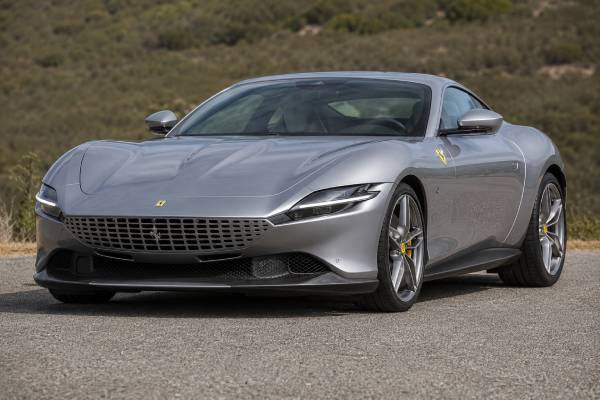
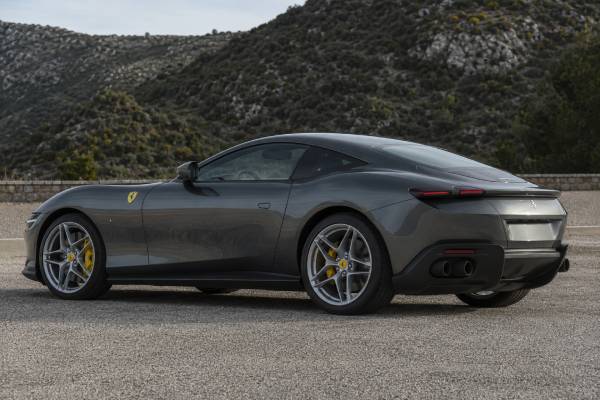
The Ferrari Roma F169 is Ferrari’s front-mid-engine V8 grand tourer from the early 2020s, built around the F154BH 3.9-liter twin-turbo V8 and an eight-speed dual-clutch transmission. Sold as a coupé for the 2020–2024 period, it brought a cleaner, more elegant design language to Ferrari’s modern GT range while keeping serious performance: 612 hp in U.S. rating, 561 lb-ft of torque, rear-wheel drive, and a claimed top speed above 199 mph. The Roma matters because it sits at a useful crossroads. It is more refined than a mid-engine Ferrari, more usable than a track-focused special, and more visually restrained than many modern supercars. For buyers, it is now old enough to compare on the pre-owned market but modern enough to demand careful attention to warranty status, service history, software updates, brake condition, options, and specification.
Table of Contents
- Why the Roma Matters in Ferrari History
- F154BH V8, Chassis, and Key Specs
- Production Years, Options, and Identification
- Design Details and Ferrari GT Engineering
- Road Manners, Speed, and Driver Feel
- Maintenance Risks and Ownership Reality
- Market Values and Smart Buying Checks
Why the Roma Matters in Ferrari History
The Roma is important because it reintroduced a softer, more formal Ferrari GT character without giving up modern Ferrari speed. It was not designed as the sharpest track car in the range; it was meant to be a fast, stylish, front-engine 2+ coupé that could handle daily roads, long trips, and special-occasion driving.
Ferrari revealed the Roma in 2019 and positioned it as a modern interpretation of the brand’s elegant front-engine grand tourers from the 1950s and 1960s. The marketing phrase “La Nuova Dolce Vita” was not just lifestyle language. It described the car’s design brief: less aggression, fewer visual vents, cleaner surfaces, and a cabin shaped more like a luxury cockpit than a stripped performance cell.
The Roma followed the California T and Portofino family in broad layout, but it felt more like a coupé-first model than a roofed version of a convertible. Its front-mid-engine layout placed the V8 behind the front axle line, while the transmission sat at the rear in transaxle fashion. That gave the car the long-hood, short-deck proportions people expect from a classic GT, but with modern weight distribution and electronic chassis control.
In Ferrari’s range, the Roma sat below the more extreme mid-engine V8 and V6 sports cars and apart from the V12 grand tourers. It was the refined front-engine V8 choice: not as spacious or dramatic as an 812, not as open-air-focused as the Portofino M, and not as intense as the F8 Tributo. That position is central to its appeal today. Many owners want a Ferrari they can use without feeling like every drive is a track session.
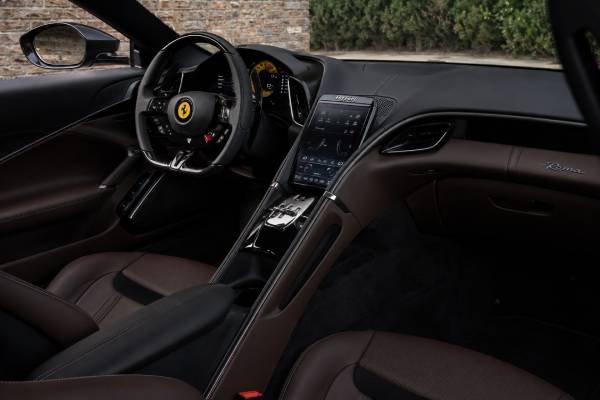
The F169 Roma also marked a clear interior turning point. Ferrari introduced a highly digital cabin with a curved driver display, a compact central screen, available passenger display, and touch-sensitive steering wheel controls. Some owners liked the futuristic feel. Others found the touch controls less intuitive than physical buttons. That mix of beauty, technology, and ergonomic debate has become part of the car’s identity.
For collectors, the Roma coupé is not a numbered limited edition, so rarity depends more on specification than on official production scarcity. Special colors, tasteful carbon options, low mileage, Ferrari Approved status, complete annual service records, and unusual interior combinations matter more than simply owning “a Roma.” The car’s long-term collectability will likely depend on whether buyers continue to value its clean design and non-hybrid V8 character as Ferrari moves further into electrification and more complex driver interfaces.
F154BH V8, Chassis, and Key Specs
The Roma’s core specification is simple but serious: a 3.9-liter twin-turbocharged V8, rear-wheel drive, an eight-speed dual-clutch gearbox, and Ferrari’s modern electronic chassis systems. The result is a GT that can behave politely in town but reach supercar speeds when used hard.
| Category | Ferrari Roma coupé specification |
|---|---|
| Model code | F169 |
| Production focus | Front-mid-engine 2+ coupé, 2020–2024 |
| Engine code | F154BH |
| Engine layout | 90-degree twin-turbocharged V8 |
| Displacement | 3,855 cc / 3.9 liters |
| Output | 612 hp at 7,500 rpm in U.S. rating; 620 cv metric rating |
| Torque | 561 lb-ft / 760 Nm from about 3,000 rpm |
| Fuel system | Direct fuel injection |
| Transmission | Eight-speed dual-clutch automatic |
| Drivetrain | Rear-wheel drive |
| 0–100 km/h | Claimed 3.4 seconds |
| 0–200 km/h | Claimed 9.3 seconds |
| Top speed | Over 320 km/h / about 199 mph |
| Dry weight | About 1,472 kg when lightly specified |
| Fuel tank | About 80 liters / 21.1 U.S. gallons |
The F154 engine family is one of Ferrari’s most important modern V8 lines. In the Roma, the F154BH tune is strong but not the most extreme version of the family. Its character suits a grand tourer: broad torque, rapid response once the turbos are awake, and high-rpm power that keeps pulling toward the top of the tachometer.
The eight-speed dual-clutch gearbox was a major improvement over the older seven-speed unit used in earlier front-engine Ferrari V8 GTs. It shifts quickly in manual mode, behaves more smoothly in automatic mode, and gives the Roma longer-legged cruising ability. The gearing also helps the car feel flexible at normal road speeds rather than needing constant downshifts.
| Area | Roma details |
|---|---|
| Body structure | Aluminum-intensive Ferrari GT structure |
| Suspension | Independent suspension with electronically controlled damping |
| Steering | Electric power steering |
| Front brakes | Carbon-ceramic discs, about 390 mm x 34 mm |
| Rear brakes | Carbon-ceramic discs, about 360 mm x 32 mm |
| Front tires | 245/35 ZR20 |
| Rear tires | 285/35 ZR20 |
| Wheelbase | 2,670 mm |
| Length | 4,656 mm |
| Width | 1,974 mm |
| Height | 1,301 mm |
| Luggage capacity | About 272 liters, with expanded capacity depending on rear-seat configuration |
The electronic package is just as important as the metal underneath. The Roma uses Ferrari’s Side Slip Control 6.0, E-Diff, F1-Trac traction control, SCM-E magnetic damping logic, and Ferrari Dynamic Enhancer in Race mode. In plain language, these systems help the car feel more natural near the limit. They do not make physics disappear, but they make power delivery, grip, and small slides easier to manage for a skilled driver.
Production Years, Options, and Identification
The Roma coupé was a regular-production Ferrari, so the most important buying distinctions are year, mileage, service history, warranty status, color, options, and condition. Ferrari did not treat it like a numbered special series, which means specification and provenance drive desirability more than an official build number.
The coupé covered the 2020–2024 production period in the scope of this guide. A Roma Spider later joined the range with a folding soft top, but the Spider is a different ownership case because roof mechanism condition, wind-management parts, fabric condition, and open-top market demand become major factors. This article focuses on the F169 coupé with the F154BH engine.
Most Romas share the same basic mechanical specification. There were no factory lightweight, track-only, manual-transmission, or hardcore “Speciale” versions of the coupé. That makes the car easier to compare mechanically, but harder to value from a quick glance because options can vary dramatically.
Commonly desirable options and specification points include:
- Exterior carbon fiber, especially front splitter, side details, rear diffuser, and under-door trim
- Interior carbon fiber, including driver-zone trim and steering wheel details
- LED steering wheel shift lights
- Passenger display
- Apple CarPlay, where fitted
- Premium audio
- Daytona-style or more heavily optioned seats
- Contrast stitching, special leather, and colored seat inserts
- Magneride dual-mode suspension where specified by market and build
- Parking camera and surround-view assistance
- Advanced driver assistance features on cars ordered for more touring use
- Forged or optional wheel designs
- Special paint, historical Ferrari colors, and Atelier or Tailor Made combinations
The safest way to identify a Roma is by VIN, factory build sheet, window sticker, Ferrari dealer records, and option printout. A seller’s listing language is not enough. Some advertisements use generic equipment text, and some cars are missing highly desirable options that buyers assume are standard.
| Item | Why it matters |
|---|---|
| Factory color | Classic Ferrari reds are liquid, but special blues, silvers, greens, and historical shades can make a car stand out. |
| Interior condition | Light leather, Alcantara, and contrast stitching can look superb but show dye transfer, bolster wear, and marks quickly. |
| Carbon options | Expensive when new and valued by many used buyers, but damaged carbon trim is costly to replace. |
| Passenger display | Not essential, but it adds showroom appeal and helps distinguish a high-option car. |
| ADAS package | Useful for touring buyers, though some enthusiast buyers prefer simpler specifications. |
| Service records | A complete Ferrari dealer history is often more valuable than one extra visual option. |
| Ferrari Approved status | Can reduce buyer risk because the car has passed brand-specific inspection and may include warranty coverage. |
A good Roma file should include the original order or build details, annual service invoices, recall completion evidence, battery replacement or battery-care records if applicable, tire date codes, brake measurements, paint protection film information, and any body repair documentation. On a modern Ferrari, missing paperwork does not automatically mean a bad car, but it does make valuation more difficult.
Design Details and Ferrari GT Engineering
The Roma’s design is distinctive because it is deliberately restrained. Instead of using large exposed vents and extreme surfacing, Ferrari shaped the car around smooth panels, a long hood, a shark-nose front, slim lighting, and a tightly controlled rear deck.
The car was designed by Ferrari’s in-house Styling Centre under Flavio Manzoni’s design leadership. Its proportions are classic front-engine GT: long bonnet, cabin set rearward, muscular rear haunches, and a low roofline. Yet the details are modern. The front grille is body-colored rather than a traditional bright opening, the headlights are thin and technical, and the rear lamps are set into a clean tail rather than surrounded by heavy trim.
A key engineering feature is the active rear spoiler integrated into the tail. In low-drag running it stays visually discreet. At higher speed or under demanding dynamic conditions, it deploys to add stability and downforce. This matters because the Roma’s elegance does not mean it ignores aero. Ferrari simply hid much of the function inside a cleaner shape.
Cooling is also handled carefully. A twin-turbo V8 needs reliable charge-air cooling, under-hood heat management, brake cooling, and stable airflow around the body. The Roma’s smooth nose and side surfaces make the cooling work less obvious, but the car still has the intake, underbody, and rear-flow management expected of a 199-mph Ferrari.
The cockpit follows a dual-cockpit idea, with the driver and passenger placed in separate sculpted zones. The driver faces a large digital instrument display and a steering wheel packed with controls. The central infotainment screen is small by luxury-car standards, but the cabin’s focus is on the driver rather than a tablet-style dashboard.
The most debated design decision is the steering wheel interface. Ferrari used touch-sensitive controls for many functions, including areas that earlier cars handled with physical buttons. The “eyes on the road, hands on the wheel” idea is understandable, but in real use some drivers find the system easy to brush accidentally. Buyers should test the interface before purchase, especially if they are coming from an older Ferrari with more conventional controls.
Sound is another part of the engineering story. The Roma is turbocharged and fitted with modern emissions hardware, so it does not sound like a naturally aspirated Ferrari V8. Even so, Ferrari worked to give it a clean, rising V8 voice rather than a flat, muted tone. The exhaust is refined at a cruise and sharper under load, which fits the car’s GT role.
Road Manners, Speed, and Driver Feel
The Roma feels fast in the real world because it combines strong torque with quick gearing and rear-drive balance. It is not as raw as a mid-engine Ferrari, but that is part of the point: it is a high-speed GT that can be driven calmly, then become very serious when the road opens.
In Comfort mode, the Roma is surprisingly relaxed for a 612 hp Ferrari. The gearbox shifts smoothly, the suspension breathes better than many expect, and the engine does not need to be worked hard. The 3.9-liter V8 has enough torque to move the car effortlessly at low and medium speeds. That makes it well suited to highway driving, fast A-roads, and longer trips.
Sport mode sharpens the car without making it nervous. Throttle response becomes more urgent, the gearbox holds gears more aggressively, and the chassis feels more alert. Race mode allows more freedom and brings Ferrari Dynamic Enhancer into play. This is where the Roma feels less like a luxury GT and more like a true Ferrari sports car.
The steering is quick and light compared with older hydraulic-steering Ferraris. Some drivers love the immediacy. Others wish for more road texture through the rim. The car responds fast to small inputs, so it rewards smooth hands. On narrow roads, the wide body and quick steering require attention at first, but the car becomes easier to place with familiarity.
The brakes are powerful, but carbon-ceramic systems need temperature and proper condition to feel their best. On the road, the pedal should feel stable, clean, and confidence-inspiring. Any pulsing, grinding, long pedal travel, warning message, or uneven bite deserves inspection before purchase.
Ride quality depends heavily on tires, wheel condition, alignment, and damping mode. A well-kept Roma should not feel crashy or loose. It should feel firm but controlled. Worn tires, old tire compounds, poor alignment, or repaired wheels can make the car feel harsher and less precise than it should.
Visibility is acceptable for a low Ferrari GT, but the long hood, rear haunches, and low seating position mean cameras and parking sensors are useful. The rear seats are best viewed as occasional seats or extra luggage space. Adults will not enjoy them for long trips, but the packaging makes the Roma more practical than a strict two-seater.
On a track, the Roma is quick but not the most natural choice in Ferrari’s range. Its brakes, tires, and mass need respect. It can run hard laps, but it is better understood as a road-biased Ferrari with huge performance rather than a lightweight circuit tool. For most owners, that makes it more enjoyable more often.
Maintenance Risks and Ownership Reality
A Roma is not a fragile car when maintained properly, but it is still a modern Ferrari with expensive parts, advanced electronics, carbon-ceramic brakes, and specialist diagnostic needs. The best ownership experience starts with warranty coverage, annual Ferrari service records, fresh tires, a healthy battery, and no deferred issues.
Ferrari’s seven-year genuine maintenance program is one of the main advantages of buying a modern Ferrari. It generally follows the car rather than only the first owner, but buyers should confirm coverage by VIN and market. Scheduled maintenance is not the same as complete ownership cost. Tires, brake wear, damage, battery problems, cosmetic repairs, alignments, and out-of-warranty faults can still be expensive.
The most important Roma inspection areas are:
- Annual service history and Ferrari dealer database entries
- Recall completion, especially brake-related campaign records on affected cars
- Battery health and charging habits
- Tire age, brand, specification, and tread depth
- Carbon-ceramic brake disc and pad condition
- Suspension lift or damper function where fitted
- Gearbox behavior when cold and hot
- Cooling system leaks, seepage, or warning messages
- Interior electronics, screens, steering wheel controls, and infotainment
- Paintwork, panel alignment, underbody marks, and front-end stone damage
- Evidence of track use, accident repair, or poor repainting
The 2020–2022 Roma was included in a Ferrari brake-fluid reservoir cap recall affecting certain models. The issue involved reservoir cap venting that could contribute to brake fluid loss and reduced braking capability. The remedy involved replacing the cap and updating software for warning behavior. Any affected car should have documented completion by an authorized dealer.
Battery condition deserves special attention. Modern Ferraris are sensitive to low voltage. A car that sits without a proper maintainer can develop warning lights, module communication issues, and nuisance faults. This does not mean every warning light is catastrophic, but low-voltage history can make diagnosis messy. A serious buyer should ask how the car was stored and whether the supplied battery conditioner was used.
Carbon-ceramic brakes can last a long time in normal road use, but replacement is expensive. Do not judge only by mileage. Track use, repeated heavy braking, stone damage, surface condition, and pad wear all matter. A pre-purchase inspection should include proper brake measurements and a technician’s view of disc condition.
The F154BH engine is robust when serviced correctly, but buyers should still look for oil leaks, coolant residue, turbo-related noises, rough running, misfires, abnormal smoke, and overdue service. The eight-speed DCT should shift cleanly. Harsh engagement, hesitation, warning messages, or fluid leaks need specialist attention.
Interior wear can be surprisingly important for value. The Roma’s cabin is elegant but full of expensive trim. Sticky switches are less of a classic-era Ferrari issue here, but leather wear, screen faults, steering wheel control problems, loose trim, damaged carbon, scratched touch surfaces, and seat bolster wear can hurt resale confidence.
Market Values and Smart Buying Checks
The Roma coupé is now a depreciation-sensitive modern Ferrari rather than a speculative limited collectible. The smartest buys are not always the cheapest cars; they are the cars with the right specification, clean history, remaining warranty or Ferrari Approved coverage, complete documentation, and no expensive needs.
In the current U.S. used market, many Roma coupés sit broadly from the high-$100,000s to the mid-$200,000s depending on year, mileage, options, condition, and seller type. Later, low-mile, heavily optioned cars from Ferrari dealers usually command more. Earlier cars with higher mileage, plain specifications, missing records, or non-Ferrari dealer history tend to sit lower. Auction results often show what buyers will pay quickly, while dealer asking prices show the premium for convenience, certification, financing, trade-ins, and warranty support.
Value drivers include:
- Low but believable mileage
- Complete annual Ferrari service history
- Ferrari Approved certification or extended warranty
- Desirable paint and interior combination
- Expensive factory options
- No accident history
- Clean paintwork and original panels where possible
- Fresh, correct tires
- Strong brake life remaining
- Recall completion
- Original books, keys, charger, tools, and documentation
- Sensible ownership history
Avoid cars that are cheap for unclear reasons. A low asking price can disappear quickly if the car needs tires, brake work, cosmetic correction, trim replacement, warranty reinstatement, or electronic diagnosis. A clean Roma with a higher purchase price can be the better buy if it reduces risk.
| Inspection area | What to confirm before buying |
|---|---|
| VIN and build | Match VIN to factory option list, market specification, service records, and title documents. |
| Service history | Confirm annual servicing, dealer database entries, and any warranty or maintenance-plan status. |
| Recalls | Check that all applicable recall and campaign work has been completed by an authorized Ferrari dealer. |
| Engine | Look for leaks, warning lights, abnormal smoke, misfires, overheating signs, and rough cold starts. |
| Transmission | Test smooth takeoff, clean shifts, reverse engagement, paddle response, and fault-free operation. |
| Brakes | Measure carbon-ceramic discs and pads; check for damage, vibration, noise, or pedal concerns. |
| Tires and wheels | Verify correct sizes, matching quality tires, recent date codes, no bends, no cracks, and good alignment. |
| Body and paint | Inspect front splitter, underbody, panel gaps, paint depth, repaint evidence, and paint protection film condition. |
| Electronics | Check screens, steering controls, cameras, sensors, infotainment, seat functions, and all driver modes. |
| Documentation | Confirm books, keys, battery conditioner, tool kit, invoices, window sticker, and ownership file. |
The best Roma buyer is clear about intended use. For regular touring, prioritize comfort seats, driver assistance, premium audio, cameras, and a calmer color combination. For weekend enthusiast use, prioritize carbon driver-zone trim, LED wheel, sportier seats, strong brake condition, and a color that feels special. For long-term collecting, look for low mileage, unusual but tasteful colors, a complete Ferrari file, and originality.
Long-term collectability is promising but not guaranteed. The Roma has beauty, brand strength, a non-hybrid Ferrari V8, and a clear place in the transition period before Ferrari’s range became more electrified and digitally complex. Against that, it was not limited, and modern Ferraris often depreciate before the best examples separate from ordinary cars. The most collectible Romas will likely be the ones that combine elegant specification, low mileage, factory documentation, perfect maintenance, and condition that still feels close to new.
References
- Ferrari Roma, la nuova Dolce Vita 2020 (Official Model Page)
- Warranties And Official Ferrari Maintenance 2026 (Official Maintenance and Warranty)
- Vehicle Detail Search – 2024 Ferrari Roma | NHTSA 2024 (Recall Database)
- Part 573 Safety Recall Report 22V-536 2022 (Recall Report)
- 2024 Ferrari Roma Coupe Features and Specs 2024 (Specifications)
Disclaimer
This article is for informational purposes only and is not a substitute for professional diagnosis, repair, valuation, or inspection. Ferrari specifications, torque values, service intervals, software updates, recall applicability, and repair procedures can vary by VIN, market, model year, equipment, and service history. Always verify details against official Ferrari service documentation and have any specific car inspected by a qualified Ferrari specialist before purchase or repair.
If you found this guide useful, please share it on Facebook, X/Twitter, or your preferred car community to support our work.