
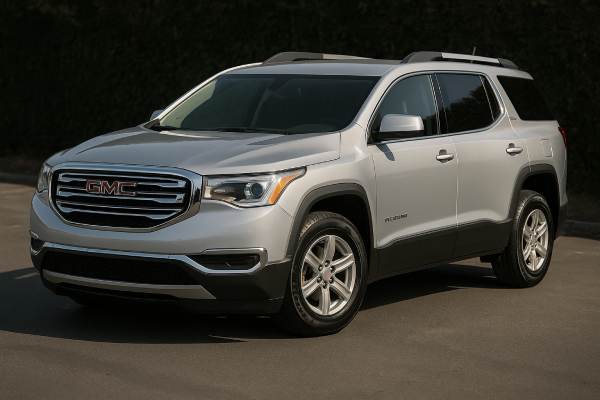

The second-generation GMC Acadia with the LGX 3.6 litre V6 and all-wheel drive targets families who want real space and comfort but still care about engine performance and winter confidence. Compared with the previous full-size Acadia, this C1UG platform is lighter and more agile, yet it keeps seven-seat practicality and a confident driving position. The naturally aspirated V6 delivers 310 hp, so it feels relaxed at motorway speeds and more capable when the car is loaded or towing.
For owners, the key questions are usually the same: how thirsty is the 3.6 AWD, what are the known issues, and which trims and options are worth paying for? This guide walks through those topics in a structured way: technical data, safety, reliability, maintenance, and driving impressions. If you are cross-shopping rivals like the Highlander, Explorer, or Pilot, it will also help you understand where the Acadia 3.6 AWD shines and where it is merely average.
Fast Facts
- Strong 310 hp LGX V6 and relaxed highway gearing give confident acceleration, even with seven people or a trailer.
- Smart AWD system with selectable modes improves traction in rain, snow, and light off-road use without feeling “grabby.”
- Spacious second row and flexible cargo area (up to about 2,200 litres with rows folded) make it an easy family hauler.
- “Shift to Park” switch faults and a driveshaft recall mean a full recall and service history check is important on 2017–2019 cars.
- Plan engine oil and filter changes roughly every 12,000 km or 12 months (or when the Oil Life Monitor calls for it), whichever comes first.
Navigate this guide
- GMC Acadia 3.6 AWD in detail
- Acadia 3.6 AWD technical specs
- Model lines, options and safety tech
- Long-term reliability and AWD problem areas
- Ownership maintenance plan and buying tips
- On-road performance and traction
- How the Acadia 3.6 AWD stacks up
GMC Acadia 3.6 AWD in detail
The 2016–2019 GMC Acadia AWD with the LGX 3.6 V6 sits at the upper end of the range in both performance and equipment. It uses the C1XX platform shared with other GM midsize crossovers, but tuned here for a more premium, quiet-riding character. The big difference versus the 2.5 litre four-cylinder versions is how effortlessly the V6 moves the vehicle. You get 310 hp and around 373 Nm of torque, delivered smoothly at higher revs, with a six-speed automatic gearbox and an on-demand AWD system.
This AWD system normally runs in front-wheel-drive mode for efficiency and sends torque rearward when the front axle starts to slip, or when you pre-select an AWD, Sport, or Off-Road mode (availability depends on trim and package). On All Terrain–type trims it is paired with a more advanced twin-clutch rear drive module that can actively shift torque side-to-side across the rear axle, improving traction in mud, gravel, or snow.
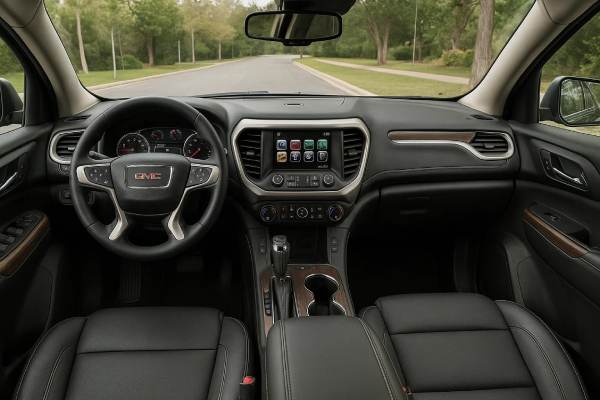
Inside, the Acadia focuses on quietness and usability rather than drama. Most 3.6 AWD examples are mid- to high-spec trims, so you will often see leather upholstery, tri-zone climate control, heated front seats, and an 8-inch infotainment system with Apple CarPlay and Android Auto. Seven-seat layouts are common, with a choice of a bench or captain’s chairs in the second row.
Compared with rivals, the Acadia’s main appeal is that it feels more like a “right-sized” SUV than a huge truck: easier to park than a full-size crossover, but still genuinely useful for family and holiday use. The trade-offs are that third-row and cargo space are good rather than class-leading, and the 3.6 AWD’s fuel economy is solid but not outstanding. For many buyers, the strong engine and snow-friendly AWD balance those drawbacks nicely.
Acadia 3.6 AWD technical specs
This section focuses on the LGX 3.6 V6 AWD automatic as sold from model years 2017–2019 (production 2016–2019) in most North American markets. Figures can vary slightly by market and trim, so always cross-check against the specific VIN.
Engine and performance
| Item | Value |
|---|---|
| Engine code | LGX 3.6 litre V6 petrol |
| Layout | Transverse V6, 60°, DOHC, 4 valves per cylinder |
| Displacement | 3.6 l (3,649 cc) |
| Bore × stroke | 95.0 × 85.8 mm (3.74 × 3.38 in) |
| Induction | Naturally aspirated |
| Fuel system | Direct injection (SIDI) |
| Compression ratio | Around 11.5 : 1 |
| Max power | 310 hp (about 231 kW) @ 6,600 rpm |
| Max torque | 373 Nm (275 lb-ft) @ 5,000 rpm |
| Valvetrain | DOHC with variable valve timing |
| Timing drive | Chain-driven camshafts |
| Emissions category | US Tier 3 / LEV III equivalent, varies by state |
Efficiency (typical AWD 3.6 figures)
| Cycle | L/100 km | mpg (US) | mpg (UK) |
|---|---|---|---|
| City | ~13.0 | 18 | 21–22 |
| Highway | ~9.4 | 25 | 30 |
| Combined | ~11.2 | 21 | 25 |
Real-world owners commonly report low-to-mid 20s mpg (US) on the highway when lightly loaded and around 17–19 mpg in mixed use, especially with winter tyres or heavy city driving.
Transmission and driveline
| Item | Value |
|---|---|
| Transmission | 6-speed Hydra-Matic automatic |
| Gears | 6 forward, 1 reverse |
| Drive type | On-demand AWD (front-biased) |
| AWD details | Electronically controlled clutch to rear axle; twin-clutch rear drive module on All Terrain-type trims (torque vectoring) |
| Final drive | Around 3.16–3.87 (varies by axle ratio and trim) |
| Traction modes | FWD (2×4), AWD, Sport, Off-Road/Terrain, Trailer/Tow (availability varies) |
Chassis, dimensions, and capacities
| Item | Value |
|---|---|
| Platform | GM C1XX (C1UG) |
| Body style | 5-door, 7-seat midsize crossover |
| Length | 4,917 mm (193.6 in) |
| Width (without mirrors) | 1,915 mm (75.4 in) |
| Height | Around 1,745 mm (68.7 in) |
| Wheelbase | 2,858 mm (112.5 in) |
| Ground clearance | About 182 mm (7.2 in) |
| Turning circle | Around 11.8 m (38.7 ft) kerb-to-kerb |
| Curb weight | Typically 1,900–2,000 kg (4,190–4,410 lb), depending on trim |
| Fuel tank | Around 83 l (approx. 21.9 US gal) |
| Cargo volume | About 362 l behind 3rd row; up to roughly 2,237 l with rows folded, depending on configuration |
Suspension, steering, and brakes
| System | Specification |
|---|---|
| Front suspension | Independent MacPherson strut with coil springs and anti-roll bar |
| Rear suspension | Independent multi-link with coil springs and anti-roll bar |
| Steering | Electric power-assisted rack-and-pinion |
| Front brakes | Ventilated discs |
| Rear brakes | Ventilated discs |
| Typical wheel/tyre sizes | 245/65 R17, 235/65 R18, 235/55 R20 factory options |
Performance and capability
| Metric | Value (typical 3.6 AWD) |
|---|---|
| 0–100 km/h (0–62 mph) | About 6.5–7.0 s, depending on trim and load |
| Top speed | Electronically limited; typically around 210 km/h (130 mph) |
| Towing capacity (properly equipped) | Up to about 1,814 kg (4,000 lb) for many 3.6 AWD trims with tow package |
| Roof load | Typically around 75–100 kg (165–220 lb) with OEM rack – verify per VIN |
Fluids, service quantities, and electrical
(Always confirm with the specific manual; figures are typical.)
| System | Specification / Capacity |
|---|---|
| Engine oil | Dexos1-approved 5W-30; approx. 5.7 l (6.0 US qt) including filter |
| Engine coolant | Long-life OAT coolant; roughly 11.4 l (12.0 US qt) total system capacity |
| ATF | GM-specified low-viscosity automatic transmission fluid; capacity varies with drain vs overhaul (around 5–8 l for service) |
| AWD rear drive module | GM-specified gear oil; typically under 1.5 l |
| Power steering | Electric (no regular fluid service) |
| A/C refrigerant | R-134a on these years; charge quantity shown on under-bonnet label |
| 12 V battery | Approx. 70–80 Ah; group size varies by market |
| Alternator | Typically in the 150–170 A range on well-equipped trims |
Safety ratings and driver assistance
Typical results for these years:
- Many AWD V6 Acadia models score 5 stars overall in NHTSA testing, with strong side-impact results and 4–5 stars in frontal and rollover categories, depending on exact configuration.
- IIHS testing for 2017 Acadias equipped with optional front crash prevention achieved “Top Safety Pick” status, with “Good” ratings in key crash tests. Headlight ratings vary by trim and headlamp type.
Common ADAS availability on 2017–2019 models:
- Forward collision alert and low-speed automatic emergency braking (AEB).
- Lane keep assist and lane departure warning.
- Blind-spot monitoring and rear cross-traffic alert.
- Rear park assist and rear-view camera; some later models with surround-view camera systems.
- Teen Driver functions and rear seat reminder.
Model lines, options and safety tech
The 3.6 AWD powertrain was usually paired with mid- and high-level trims, and with specific option packages. The exact naming varies by market, but common North American trims are SLE-2, SLT-1, SLT-2, All Terrain, and Denali.
Trims and mechanical differences
- SLE-2 3.6 AWD
Often the practical entry point for the V6 AWD. Cloth or leatherette seats, power driver’s seat on many examples, and mid-level infotainment. Mechanically, it shares the same 310 hp engine and basic AWD system; wheels are usually 18-inch alloys. Tow packages, larger wheels, and advanced safety tech are commonly optional rather than standard. - SLT-1 / SLT-2 3.6 AWD
These bring leather upholstery, heated front seats, more power adjustments, and often a power tailgate. SLT-2 may include ventilated seats, memory functions, and more advanced audio. Suspension and brakes are largely the same as SLE, but SLT can be ordered with larger wheels and tow packages, so check the build code if maximum towing is important. - All Terrain (where offered)
Or similarly named adventure-oriented trims. These usually include the more advanced twin-clutch rear drive module, specific off-road-focused drive modes, sometimes hill-descent control, and different tyres. They are the best option if you expect regular use on unpaved or snowy rural roads. - Denali 3.6 AWD
The luxury flagship: distinctive grille and chrome trim, premium audio, more sound insulation, and a full suite of driver assistance on most examples. Mechanically, it remains a 3.6 AWD on the same platform, but Denali may have slightly different steering and suspension tuning and frequently comes with 20-inch wheels, which improve response but can reduce ride comfort on poor roads.
Quick identifiers
- Badging: “AWD” on tailgate, trim name (SLT, Denali, etc.) on side or tail.
- Interior cues: Denali has distinctive trim and badging on steering wheel and seats. All Terrain-type trims often have darker interior themes and contrast stitching.
- VIN/build codes: Useful for confirming axle ratio, tow packages, and specific AWD hardware; a dealer can decode these, or you can check the build sheet if available.
Safety equipment by trim
Most 3.6 AWD Acadias share a strong passive-safety baseline: multiple airbags (front, side, and curtain), a rigid safety cage, and standard stability control and ABS. Where they differ is in active safety and driver assists:
- Entry V6 AWD trims (SLE-2) often have a rear-view camera and rear park assist, with advanced systems packaged in optional Driver Alert bundles.
- Mid-trims (SLT-1, some All Terrain) commonly add blind-spot monitoring, rear cross-traffic alert, and lane departure warning, with AEB and active lane keeping on higher option packs.
- Top trims (SLT-2, Denali) are most likely to have full AEB, lane keep assist, front and rear park assist, and sometimes surround-view camera systems, along with more sophisticated infotainment and navigation.
If you are shopping used, prioritise a car with:
- Automatic emergency braking and lane support.
- Blind-spot monitoring and rear cross-traffic alert.
- Rear seat reminder if you regularly carry children.
These features not only improve day-to-day safety but also align the car with expectations for modern crossovers and can help resale value.
Long-term reliability and AWD problem areas
Overall, the LGX 3.6 AWD Acadia has a reasonable reputation for durability if serviced on time, but there are several well-known trouble spots. It helps to think in terms of common versus rare issues, and low versus high repair cost.
Engine and drivetrain
1. Oil-change discipline and timing chains (cost: medium–high)
The LGX 3.6 litre V6 is more robust than some earlier GM V6 designs, but it still relies on clean oil. Consistent long intervals or ignoring the Oil Life Monitor can accelerate timing chain stretch and wear on cam phasers. Symptoms include rough cold starts, rattling at start-up, and check-engine lights for timing correlation codes. The remedy is to inspect for chain wear and, if out of spec, replace timing chains, guides, and tensioners. This is labour-intensive, so maintaining 8,000–12,000 km oil intervals with quality Dexos1 5W-30 oil is a good preventative step.
2. “Shift to Park” fault (prevalence: common, cost: low–medium)
Many 2017–2019 Acadias suffer from a warning message telling you to “Shift to Park” even when the shifter is already in P and the vehicle is secure. The root cause is usually wear or poor contact in the shifter assembly or associated wiring. GM has issued technical service bulletins and, in some regions, special coverage for this concern. Fixes range from a micro-switch or wiring repair to full shifter replacement. When viewing a used car, verify that the message does not appear repeatedly and ask the seller whether an updated part or harness has been fitted.
3. Driveshaft recall (cost: recall repair if outstanding)
A subset of 2017–2018 Acadias built in mid-2017 were recalled because the right-front intermediate driveshaft could fracture, causing loss of drive and potential roll-away if the parking brake was not applied. Any affected vehicle should have had its driveshaft replaced; you can confirm via official recall lookup tools or dealer records.
4. Transmission behaviour (prevalence: occasional)
The 6-speed automatic is generally robust, but owners sometimes report flare or slightly harsh shifts, especially on 2–3 and 3–4 upshifts as the vehicle ages. Fresh fluid and adaptation resets can help. Persistent slipping, flares, or harsh engagement warrant a transmission specialist’s opinion and possibly valve-body or internal repairs.
Chassis and electrical
- Wheel bearings and suspension bushings: As mileage climbs, expect typical wear on front wheel bearings and suspension bushings, especially if the car has lived on poor roads. Listen for humming that changes with speed (bearings) and clunks over sharp bumps (bushings/links).
- Electric power steering: There are occasional reports of assistance warnings; many are resolved with power or ground checks, but some require rack replacement.
- Electrical gremlins: Intermittent infotainment reboots, parking sensor faults, and door latch or tailgate switch issues crop up but usually have straightforward fixes.
Corrosion points
The C1UG Acadia generally resists rust well compared with older body-on-frame SUVs, but you should still:
- Check rear subframe, suspension mounting points, and the bottom of doors and tailgate in road-salt regions.
- Inspect the exhaust system and mounting points for corrosion, especially around hangers and flanges.
Recalls, TSBs, and extended coverage
Beyond the driveshaft recall, certain model years have recalls or service campaigns for:
- Airbag or seat-belt fastening issues in specific production runs.
- Brake-system concerns such as master cylinder or caliper seal issues.
- Lighting and electronics updates for airbag or stability-control modules.
Always:
- Run the VIN through official recall databases for your region.
- Ask the seller for a dealer-printed warranty and campaign history.
- Confirm that any “Shift to Park”–related bulletins or special coverages have been applied if applicable where you live.
Ownership maintenance plan and buying tips
A well-cared-for Acadia 3.6 AWD can easily pass 200,000 km and beyond, but it does best with structured maintenance rather than a “fix it when it breaks” approach. Here is a practical schedule and buyer’s checklist tailored to this powertrain.
Practical maintenance schedule (typical guidance)
Always follow the official schedule for your market and VIN; the list below is a sensible baseline:
- Engine oil and filter: Every 8,000–12,000 km or 12 months, whichever comes first, using Dexos1-approved 5W-30 oil and a quality filter. Shorter intervals if you tow or do mostly short trips.
- Engine air filter: Inspect every 20,000 km; replace around 40,000–50,000 km or sooner in dusty conditions.
- Cabin (pollen) filter: Replace roughly every 20,000–30,000 km or every 2 years.
- Spark plugs: Iridium plugs often last 150,000 km, but check condition from around 120,000 km onwards. Replace as a set and verify correct torque.
- Coolant: Long-life coolant is often rated for 5 years/150,000 km; after the first change, shorter 4-year intervals are prudent.
- Transmission fluid: Drain and fill every 60,000–80,000 km if you plan to keep the car long-term, especially for towing or hot-climate use.
- AWD rear drive module and rear differential (if separate): Replace gear oil roughly every 60,000–80,000 km. This helps keep clutches and gears healthy.
- Brake fluid: Flush every 3 years regardless of mileage.
- Brake pads and rotors: Inspect at least annually; more often if you tow or drive in mountains.
- Serpentine / accessory belt and tensioner: Inspect every service from 100,000 km; replace if cracked, noisy, or at the interval in your manual.
- Suspension and steering: Yearly inspection of links, bushings, shocks, and ball joints.
- 12 V battery: Test annually after 4–5 years of age; replace proactively if marginal before winter.
- Alignment and tyre rotation: Rotate every 10,000–12,000 km; check alignment whenever you notice pull, uneven wear, or after impacts.
Fluid choices and torque values (examples)
Always confirm the exact spec for your market and year, but as a guide:
- Engine oil: Dexos1 Gen 2 (or later) 5W-30.
- Coolant: GM long-life OAT coolant premix or concentrate at the correct ratio (often 50:50 with demineralised water).
- Wheel lug nuts: Often around 140 Nm (103 lb-ft) – verify on the door sticker or manual.
- Spark plugs: Typically 20–25 Nm; tighten to spec with a torque wrench rather than by feel.
Buyer’s checklist for a used Acadia 3.6 AWD
When evaluating a used example:
- Service history
- Look for regular oil changes with dates and mileage.
- Confirm coolant, transmission, and AWD fluid changes on higher-mileage cars.
- Recall and TSB completion
- Use official recall tools to confirm that driveshaft, airbag, brake, and other campaigns are closed.
- Ask specifically about “Shift to Park” repairs and whether updated shifter parts were fitted.
- Test drive checks
- Cold start: listen for rattles from the timing chain area.
- Acceleration: feel for smooth shifts without flares or harsh engagement.
- Braking: check for steering vibration, pulling, or ABS warnings.
- Low-speed parking: turn steering lock-to-lock, listening for CV joint noises and knocking.
- AWD system
- In a safe, empty area, test AWD modes; the car should engage smoothly without loud clunks.
- No warning lights related to AWD or stability control should remain on after start-up.
- Interior and electronics
- Check every window, lock, seat adjustment, infotainment function, and camera.
- Verify that the car shuts down cleanly with no lingering “Shift to Park” message or warning chime.
- Body and underbody
- Inspect for uneven panel gaps (accident repairs), rust on subframes, and corrosion on brake lines and exhaust.
Long-term outlook
With proper care:
- The LGX 3.6 is capable of high mileages without major internal work.
- The AWD hardware is generally robust, especially if its fluid is changed on time and tyres are kept matched and rotated.
- The most likely costs as the vehicle ages are timing chain work (if maintenance was lax), suspension refresh, and resolving any lingering “Shift to Park” issues.
Choosing a vehicle with full documentation, completed recalls, and a clean, quiet drivetrain will tip the odds strongly in your favour.
On-road performance and traction
On the road, the Acadia 3.6 AWD feels noticeably more capable than the 2.5-litre version, especially when loaded with passengers or luggage. The naturally aspirated V6 likes revs, but because of its displacement and variable valve timing, it still provides usable torque from low-to-mid revs.
Powertrain character
From a standstill, the V6 pulls cleanly and without turbo lag. The six-speed automatic is tuned for smoothness rather than aggressiveness, so in everyday driving it shifts early to keep revs modest. Press the accelerator harder or switch into a Sport-type mode, and it will hold gears longer, keeping the engine in the stronger part of the power band. Passing at motorway speeds is confident; 80–120 km/h overtakes do not require excessive planning, even on inclines.
Because the gearbox has only six ratios (later rivals often use eight, nine, or ten), you sometimes feel a more noticeable step between gears, but this also means fewer busy shifts around town. With a healthy transmission and correct fluid, shift quality should be smooth and predictable.
Ride, handling, and NVH
The C1UG Acadia aims for comfort, and it largely succeeds:
- Ride quality: On 17- or 18-inch wheels, the suspension absorbs most bumps with a soft, controlled feel. On 20-inch wheels, sharp potholes are more noticeable, but body control remains acceptable.
- Noise levels: Road and wind noise are well managed for this class, especially on Denali and higher trims with extra sound insulation. The V6 is quiet at cruise and only becomes prominent when revved hard.
- Handling: Steering is light but accurate, with gentle self-centring. The Acadia is not a sports SUV, but it tracks securely at motorway speeds and feels stable in crosswinds.
AWD All Terrain-type models may feel slightly firmer due to their different tyres and suspension tuning, but they still deliver a comfortable ride for daily use.
Real-world economy and range
In mixed use, a typical owner of a 3.6 AWD Acadia can expect:
- City-heavy driving: Around 13–15 l/100 km (16–18 mpg US).
- Steady 110–120 km/h motorway cruising: Roughly 9–10 l/100 km (23–26 mpg US) when lightly loaded.
- Mixed cycles with some hills and passengers: About 11–12 l/100 km (20–22 mpg US).
Cold weather, short trips, roof boxes, trailers, and aggressive driving can push consumption higher. With an 83-litre tank, comfortable motorway range lies in the 550–700 km band between fills for most drivers.
Traction, AWD behaviour, and towing
On wet or snowy roads, the Acadia’s on-demand AWD logic and stability control do most of the work in the background:
- In 2×4/FWD mode, the car behaves much like a front-drive crossover, which can be more efficient in good conditions.
- Selecting an AWD or Terrain mode brings the rear axle into play sooner and more aggressively, improving traction when pulling away on slippery surfaces or climbing snowy hills.
- On All Terrain–type trims with a twin-clutch rear module, the system can direct more torque to the outside rear wheel in a turn, helping the car rotate rather than simply understeering. This is most useful on loose surfaces.
For towing, the 3.6 AWD powertrain and tow package offer up to about 4,000 lb (around 1,800 kg). At these loads you will notice higher fuel consumption and slightly longer stopping distances, but the engine and gearbox are well matched to the task. On long grades, use lower gears and tow/haul modes where available to keep transmission temperatures in check.
How the Acadia 3.6 AWD stacks up
Shoppers considering the Acadia 3.6 AWD will usually compare it to other three-row crossovers such as the Toyota Highlander, Honda Pilot, Ford Explorer, Hyundai Santa Fe XL (and later Palisade), and sometimes premium options like the Buick Enclave or Volvo XC90.
Strengths versus rivals
- Engine performance: The 310 hp V6 puts the Acadia near the top of its class for naturally aspirated power. It feels stronger than many four-cylinder rivals and smoother than some turbo engines when worked hard.
- Right-sized body: It is a little smaller than some three-row competitors, which makes city manoeuvring, parking, and home garage use easier without sacrificing everyday practicality for most families.
- Quiet, refined cabin: In mid- and high-level trims, noise suppression and material quality are competitive with premium-branded rivals, especially at used-car prices.
- AWD confidence: With suitable tyres, the system handles winter and light off-road duties well, and All Terrain–style trims offer more capability than many “soft-roaders.”
Trade-offs and weaker areas
- Third-row and cargo space: The slightly smaller footprint means there is less ultimate space than in some larger three-row SUVs. Adults will fit in the third row, but it is better for children or shorter trips.
- Fuel economy: While improved over the first-generation Acadia, the 3.6 AWD still consumes more fuel than some newer turbo fours and hybrids. Over high annual mileages, this cost difference can be meaningful.
- Known issues: The “Shift to Park” fault and the driveshaft recall are well documented, and while they are solvable problems, they add steps to the buying checklist.
Who the Acadia 3.6 AWD suits best
The 3.6 AWD version makes the most sense if:
- You live in a region with real winters or frequently drive on wet, unpaved, or muddy roads.
- You regularly carry several passengers and luggage and want strong highway performance.
- You value a quieter, more refined ride over sharp, sporty feel.
- You are willing to keep up with maintenance and do a bit of homework on recall and service history when buying used.
If ultimate fuel economy or maximum interior volume is your priority, a hybrid competitor or a larger three-row model might fit better. But as a balanced package of performance, comfort, and all-weather capability, a well-maintained Acadia 3.6 AWD remains an appealing option in the used market.
References
- Manuals and Guides | Vehicle Support 2025 (Owner’s Manual Portal)
- Gas Mileage of 2017 GMC Acadia 2024 (Fuel Economy)
- GMC Acadia II 3.6 V6 (310 Hp) AWD Automatic – Full specifications 2025 (Technical Data)
- 2017 GMC Acadia 2017 (Safety Rating)
- Part 573 Safety Recall Report 17V-516 2017 (Recall Report)
Disclaimer
This article is provided for informational purposes only and is not a substitute for professional diagnosis, repair, or official service information. Specifications, fluid types and capacities, torque values, safety ratings, and maintenance intervals can vary by VIN, model year, market, and equipment level. Always verify all procedures, values, and requirements against the official owner’s manual, workshop manual, and technical documentation for your specific vehicle, and follow all applicable safety instructions.
If you found this guide helpful, please consider sharing it with other owners and shoppers on your preferred social platforms (such as Facebook or X/Twitter). Your support helps keep detailed, independent technical content like this available.