
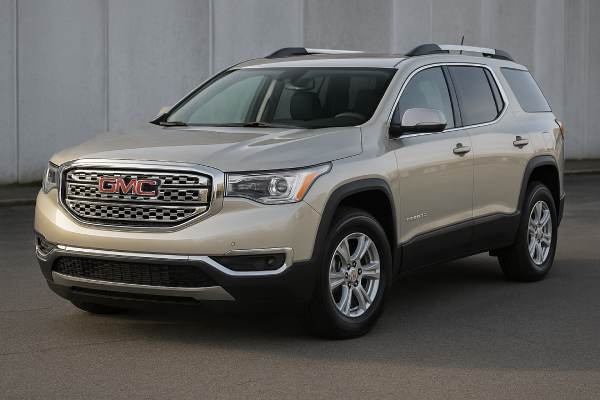
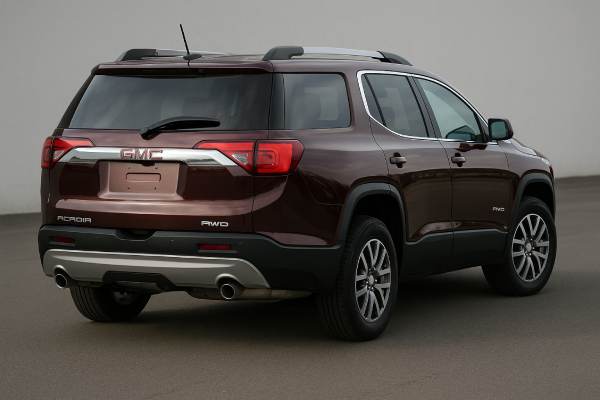
The late first-generation GMC Acadia AWD in its 2016–2017 facelift form sits in a very specific niche. It is a full-size three-row crossover on the robust GMT968 “Lambda” platform, powered by the LLT 3.6-liter V6 and six-speed automatic, with a traditional hydraulic AWD system and real tow capacity. For many buyers it is attractive precisely because it predates downsized turbo engines, dual-clutch transmissions, and heavy reliance on complex driver-assist tech.
This article focuses on the AWD facelift models typically rated around 281 hp for single-exhaust calibrations, although some documentation and markets quote slightly different peak outputs for similar LLT units. The goal here is not just to list numbers but to explain what they mean in real ownership: how the Acadia drives, what fails, what it costs to maintain, and how it compares to newer three-row SUVs. If you are considering keeping, buying, or towing with a 2016–2017 Acadia AWD, this guide is built for you.
Owner Snapshot
- Strong, naturally aspirated 3.6-liter V6 with a conventional six-speed automatic, well suited to highway cruising and light towing.
- Spacious three-row cabin with adult-usable second row and flexible cargo space, even in facelift “Limited” form.
- Realistic mixed fuel economy in the high 13–14 L/100 km range (around high-teens mpg US) for AWD in everyday use, higher when towing.
- Known for timing-chain wear and cooling-system issues if oil changes and coolant service are neglected.
- Plan on engine oil and filter every 8,000–10,000 km (5,000–6,000 miles) or 12 months, whichever comes first, with quality dexos-approved oil.
Contents and shortcuts
- GMC Acadia AWD facelift basics
- AWD LLT engine and specs
- Equipment lines and safety tech
- Reliability notes and known issues
- Maintenance plan and buying advice
- On-road behaviour and performance
- Acadia AWD versus key rivals
GMC Acadia AWD facelift basics
The 2016–2017 GMC Acadia AWD covered here is the last iteration of the first-generation Acadia on the GMT968 platform, often marketed as Acadia “Limited” in 2017 while the smaller new-generation Acadia launched alongside it. Underneath, it remains the same robust Lambda architecture that also underpinned the Chevrolet Traverse, Buick Enclave, and Saturn Outlook. That means a transverse V6, unibody construction, independent suspension, and optional on-demand AWD.
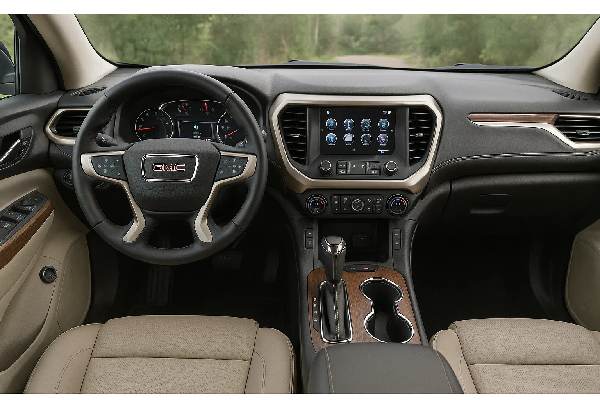
Cosmetically, the facelift brought a bolder front fascia, revised lighting, and updated interior trims and infotainment compared with early 2007–2012 trucks. Inside, you get a genuinely roomy three-row cabin with a usable third row for children or smaller adults, plus easy-folding seats that create a flat load area. Families often appreciate the high seating position and large glass area, which give the Acadia a minivan-like practicality without sliding doors.
Mechanically, the facelift AWD models retain the LLT 3.6-liter direct-injected V6 and the 6T75 six-speed automatic. The AWD system uses an electronically controlled clutch pack at the rear to send torque rearward as needed, while defaulting to front-biased operation for fuel economy. There are no multi-mode terrain dials; instead you get a straightforward, predictable calibration that behaves like a traditional crossover with added traction on slippery surfaces.
Tow ratings are another core strength. Properly equipped, many LLT AWD Acadias are rated around 2,268 kg (5,000 lb) braked towing, enough for small boats, pop-up campers, or a pair of motorcycles. You will want the factory tow package for best results: heavier-duty cooling, appropriate hitch hardware, and factory wiring.
The trade-offs come in weight and size. At well over 2,100 kg (4,600–4,800 lb) curb, the Acadia AWD feels substantial in tight city streets and multi-storey car parks. The steering and suspension are tuned for comfort rather than sharp handling, and the LLT engine likes to rev to make its power. If you are looking for a nimble, compact crossover, this is not it—but if you need space and stability, the platform works in your favour.
Finally, keep in mind that these facelift trucks are now approaching or past a decade old. Their strengths—space, towing, simplicity relative to newer tech—remain, but age-related wear on suspension, cooling components, and electronics must be assumed. The rest of this guide focuses on what you can expect and how to stay ahead of the issues.
AWD LLT engine and specs
This section gathers the key technical data for the 2016–2017 GMC Acadia AWD with the LLT 3.6-liter V6. Figures vary slightly by market, test standard, and exact trim, but the tables give a realistic ballpark for the AWD facelift models.
Engine and performance
| Item | Specification |
|---|---|
| Engine code | LLT 3.6-liter V6, High Feature family |
| Layout and valvetrain | 60° V6, DOHC, 4 valves per cylinder, variable valve timing |
| Displacement | 3.6 L (≈ 3,564 cc) |
| Induction | Naturally aspirated |
| Fuel system | Direct injection (DI) gasoline |
| Compression ratio | Around 11.3:1 |
| Maximum power | Around 281 hp (≈ 210 kW) @ roughly 6,300 rpm (some markets and exhaust setups list higher figures) |
| Maximum torque | ≈ 266 lb-ft (≈ 361 Nm) @ around 3,400–3,600 rpm |
| Timing drive | Chain-driven DOHC with hydraulic tensioners |
| Emissions standard | U.S. Tier 2 Bin 5 / LEV II equivalent, similar to Euro 5 for export variants |
Real-world economy for AWD LLT trucks typically lands around:
- City: 15–17 L/100 km (14–16 mpg US)
- Highway: 10–11 L/100 km (20–23 mpg US) at legal speeds
- Combined: roughly 13–14 L/100 km (17–18 mpg US) in mixed use
These numbers assume a healthy engine, correct tyres, and no heavy towing.
Transmission and driveline
| Item | Specification |
|---|---|
| Transmission | 6T75 six-speed automatic, electronically controlled |
| Drive type | On-demand AWD (front-biased, single-speed transfer) |
| Final drive ratio | Typically in the low-3s (around 3.16–3.39 depending on tow package) |
| Differential | Open front; electronically controlled clutch to rear axle |
| Tow rating (typical) | Up to ≈ 2,268 kg (5,000 lb) with factory tow package and correctly set weight-distributing hitch where specified |
The six-speed works best with gentle throttle inputs. It is programmed for fuel economy, so it tends to upshift early and may hunt slightly on rolling hills. A manual low-gear selection helps when descending grades with a trailer.
Chassis and dimensions
| Item | Specification (approximate for 2016–2017 AWD) |
|---|---|
| Platform | GMT968 Lambda unibody |
| Front suspension | MacPherson strut with coil springs, anti-roll bar |
| Rear suspension | Independent multi-link with coil springs, anti-roll bar |
| Steering | Power-assisted rack-and-pinion |
| Brakes | 4-wheel discs; ventilated front, solid rear with ABS and stability control |
| Wheelbase | ≈ 3,021 mm (118.9 in) |
| Length | ≈ 5,116 mm (201.4 in) |
| Width (without mirrors) | ≈ 1,986 mm (78.2 in) |
| Height | ≈ 1,842 mm (72.5 in) |
| Ground clearance | Around 200 mm (≈ 7.9 in), depending on tyres and load |
| Curb weight | ≈ 2,200–2,350 kg (4,850–5,180 lb) depending on trim |
| Fuel tank | ~83 L (≈ 22 US gal) |
| Cargo volume | Roughly 691 L behind 2nd row, over 1,900 L seats folded (SAE) |
Performance and capability
| Metric | Typical value |
|---|---|
| 0–100 km/h (0–62 mph) | ≈ 8.5–9.0 s unladen |
| Top speed | Limited; around 180–190 km/h (112–118 mph) |
| Braking 100–0 km/h | Commonly in the 38–42 m range in independent tests, depending on tyres and load |
| Max payload | Often around 600–700 kg (1,320–1,540 lb) including passengers and cargo |
| Roof load | Typically around 90–100 kg (200–220 lb) with approved crossbars |
Fluids, electrical, and service-critical data (typical)
These values are approximate and can vary by VIN; always check your service manual:
- Engine oil: dexos1-approved 5W-30, capacity ≈ 5.5–6.0 L (5.8–6.3 US qt) with filter
- Coolant: long-life OAT coolant (e.g., Dex-Cool), total system capacity ≈ 10–12 L (10.5–12.7 US qt)
- Automatic transmission: Dexron-VI ATF, typical refill 5–7 L; dry fill higher
- Rear differential: synthetic gear oil, around 1–1.5 L
- A/C refrigerant: R-134a with matching compressor oil, charge specified on under-hood label
- Alternator: roughly 170 A depending on equipment
- 12 V battery: group 48 or similar, often ≈ 70–75 Ah
Use these numbers as planning guides, not as workshop-level instructions; torque specs and exact capacities must be confirmed against official data for your specific VIN.
Equipment lines and safety tech
Facelift Acadias were sold in familiar GMC trims such as SLE-1, SLE-2, SLT-1, SLT-2, and the more upscale Denali, with minor naming differences in some markets. In 2017 many of these were branded “Acadia Limited” to differentiate them from the newer, smaller-generation Acadia. Equipment can vary a lot, so knowing what each trim usually includes helps when shopping.
SLE-1 typically brought cloth seating, manual liftgate, basic audio, and 18-inch wheels. SLE-2 added features like power liftgate, remote start, tri-zone climate control, and sometimes upgraded infotainment. SLT-1 and SLT-2 moved to leather seating, Bose audio, heated front seats, and more driver conveniences. Denali models layered on distinctive styling, 20-inch wheels, more chrome, and often a fuller option list including dual-panel sunroof and navigation. AWD could be ordered on most trims, but it is more common on upper-mid and Denali builds.
Mechanically, trim lines did not drastically alter the powertrain, but wheel and tyre packages, tow packages, and rear air-suspension options (on some markets) could affect ride and towing behaviour. When evaluating a used truck, verify whether the tow package, factory hitch, and correct cooling hardware are present rather than assuming based on trim name alone.
Safety equipment on facelift models includes:
- Multiple airbags (front, front side, and full-length curtain airbags)
- ABS, electronic brakeforce distribution, and stability/traction control
- LATCH/ISOFIX provisions for child seats in the rear rows
- Tyre pressure monitoring system (TPMS)
- Rear-view camera and rear park assist as model years progressed
Upper trims and later build years added or expanded driver-assist features such as:
- Blind-spot monitoring and rear cross-traffic alert
- Lane departure warning
- Forward collision alert
These features were often bundled in option packages or standardised on higher trims. It is worth inspecting a specific vehicle to confirm which systems it actually has, since brochures and reality can differ.
Crash-test performance for the first-generation Acadia and its Lambda siblings was generally strong in frontal and side-impact tests for the era, with more mixed results in later, more demanding small-overlap and headlight assessments. Compared with modern three-row SUVs designed for the very latest test protocols, the Acadia holds up well but not perfectly—another reason to treat tyres, brakes, and suspension condition as part of your safety budget.
Calibration considerations become more important as these trucks age. If your Acadia has factory camera-based lane or collision alerts, any windscreen replacement or front-end collision repair should include proper sensor alignment and calibration by a competent shop with suitable equipment.
Reliability notes and known issues
The 3.6-liter LLT V6 and 6T75 automatic are long-running units across GM’s crossover range. That history brings plenty of real-world data. Properly maintained, an Acadia AWD can cover high mileage, but there are several recurring themes you should understand.
Timing chain and oil-related wear (common, medium–high cost)
The LLT is sensitive to oil quality and interval length. Long oil change intervals, low oil levels, or poor-quality oil can accelerate timing-chain stretch and wear on guides and tensioners. Symptoms include check-engine lights for cam/crank correlation, rough idle, and rattling on cold start. The remedy is typically a timing-set replacement, which is a labour-intensive job with front-cover removal. Sticking to shorter oil intervals and monitoring oil level is the best prevention.
Cooling system and overheating (occasional, medium–high cost)
Radiators, water pumps, thermostat housings, and crossover pipes can leak with age, leading to coolant loss and potential overheating. Overheating an LLT V6 even once can shorten its life significantly, causing head-gasket issues or internal damage. Inspect hoses, joints, and the water pump regularly; any sign of pink/orange coolant residue needs attention. Pressure tests and UV dye can help pinpoint small leaks.
Transmission behaviour (occasional, medium cost)
The 6T75 transmission can show harsh shifts, flare on upshifts, or delayed engagement if fluid is old, contaminated, or if internal wear has progressed. Solenoid faults and valve-body wear are not rare on high-mileage trucks. A fluid and filter change often improves behaviour; more serious cases may require a valve-body repair or full rebuild. Ignoring early symptoms increases the chance of expensive failure.
Steering, suspension, and wheel bearings (common, low–medium cost)
Given the vehicle’s weight, front struts, rear shocks, sway-bar links, and bushings tend to wear by 100,000–150,000 km. Clunking, looseness, or uneven tyre wear are common signs. Wheel bearings can also develop noise, especially if large wheels and tyres are fitted. Most of these items are straightforward repairs for a competent shop but should be budgeted for in any older Acadia.
Electrical and body issues (occasional)
Owners report intermittent issues with power liftgates, door lock actuators, HVAC blower resistors, and infotainment systems as trucks age. Water intrusion at tailgate seals or roof-rack mounts can cause corrosion in rear body harnesses. Inspect interior carpets and rear spare-well areas for dampness, and check all doors, windows, and the liftgate for proper operation.
Exhaust, mounts, and vibration (occasional)
Age and mileage can bring cracked exhaust flex joints, worn engine and transmission mounts, and vibrations under load. These may not be safety-critical but can make the truck feel tired. Addressing them gradually as part of a reconditioning plan can noticeably improve refinement.
Recalls, service campaigns, and extended coverage
Over the years there have been recalls and Technical Service Bulletins (TSBs) affecting airbag wiring, seatbelt anchorages, power liftgate modules, and other components across Lambda vehicles. Running your VIN through official recall databases and confirming completion with a GMC dealer is essential, especially for safety-critical items like airbags, liftgate supports, and seat structures.
For a pre-purchase inspection, ask for:
- Full service history with dates and mileage, ideally showing regular oil changes
- Evidence of cooling-system repairs or recent coolant change
- Any transmission service (fluid and filter)
- Confirmation of completed recalls and outstanding campaigns
- A scan for stored fault codes, even if the dash is not showing warnings
Maintenance plan and buying advice
A clear, realistic maintenance plan is the best way to keep a facelift Acadia AWD dependable. The intervals below are general guidance for mixed use; heavy towing, extreme temperatures, or stop-and-go city operation justify shorter intervals.
Core service intervals (approximate)
- Engine oil and filter: every 8,000–10,000 km (5,000–6,000 miles) or 12 months
- Engine air filter: inspect every 20,000 km (12,000 miles), replace around 40,000 km (25,000 miles)
- Cabin air filter: every 20,000–25,000 km (12,000–15,000 miles) or 2 years
- Spark plugs (iridium): around 160,000 km (100,000 miles), earlier if misfires occur
- Coolant: replace every 5 years or 160,000 km (100,000 miles), then shorter intervals on older trucks
- Brake fluid: every 3 years regardless of mileage
- Automatic transmission fluid: 60,000–80,000 km (37,000–50,000 miles) drain and fill, sooner for frequent towing
- Rear differential and transfer case fluid: every 80,000–100,000 km (50,000–62,000 miles), more often if towing
- Serpentine/auxiliary belt: inspect yearly, replace around 100,000–120,000 km or when cracked/noisy
- Alignment and tyre rotation: 10,000–12,000 km (6,000–7,500 miles) with every other oil change
Timing chains are not scheduled replacement items but should be evaluated for stretch or noise during high-mileage inspections. If you see correlation codes, excessive cam phaser noise, or metallic debris in the oil, do not delay diagnosis.
Fluid specifications (typical)
- Engine oil: dexos1 or dexos1 Gen2 5W-30 meeting GM specifications
- Coolant: long-life OAT (Dex-Cool or equivalent), 50/50 premix unless freezing conditions require adjustment
- ATF: Dexron-VI
- Power steering: where hydraulic, GM-approved power-steering fluid (some later units use electric assist)
- Brake fluid: DOT 3 or DOT 4 as specified on cap and in the manual
For buying decisions, use a simple checklist:
- Underbody and corrosion: Check subframes, suspension mounts, and rear frame rails for rust, especially in road-salt regions.
- Cooling system health: Look for stains around the water pump, radiator, hose junctions, and heater core connections.
- Driveline slack and noises: On a test drive, listen for clunks on take-off, humming wheel bearings, or whining from the rear differential.
- Electronics: Confirm all windows, locks, HVAC modes, infotainment, camera, and any driver-assist features function correctly.
- Tyres and alignment: Uneven wear can indicate worn suspension or poor alignment; factor this into negotiations.
As a buyer, prioritise:
- Trucks with documented, frequent oil changes and recent major services (coolant, transmission, differential).
- Examples with the tow package if you plan to tow; retrofitting cooling upgrades later is more complex.
- Rust-free bodies and clean interiors over cosmetic accessories.
Avoid or price aggressively down:
- Vehicles with persistent check-engine lights, especially for timing or camshaft correlation faults.
- Trucks with overheating history or unexplained coolant loss.
- Examples with harsh or slipping transmission behaviour that does not improve after a fluid change.
With careful selection and a proactive maintenance attitude, an Acadia AWD facelift can be a very rational way to get a big, comfortable family vehicle without the price of a newer three-row SUV.
On-road behaviour and performance
On the road, the facelift Acadia AWD feels like what it is: a large, heavy crossover tuned for comfort and stability. Straight-line tracking on the highway is confident, helped by the long wheelbase and relatively relaxed steering ratio. Crosswinds are noticeable but not alarming, and the vehicle is generally easy to keep in lane once you are familiar with its size.
The suspension is soft enough to absorb rougher surfaces and speed bumps without harshness, but this also means some body roll in brisk cornering. The chassis prioritises predictable behaviour over sharp responses, which suits a family-focused three-row SUV. On 18-inch wheels the ride is more compliant; Denali models on 20-inch alloys can feel choppier over broken pavement, especially as shocks age.
The LLT 3.6-liter V6 is smooth and eager to rev. There is not a huge amount of low-rpm torque for such a heavy vehicle, so the engine often spins above 3,000 rpm during strong acceleration or highway merging. This is normal for the design. The six-speed automatic usually shifts unobtrusively, though some owners report occasional hesitation or hunting between 5th and 6th at light throttle. Using manual mode on long grades or with a trailer can keep the engine in a more comfortable range and reduce shift busyness.
Noise, vibration, and harshness are generally well controlled for this class and age. Wind noise becomes more noticeable at motorway speeds, but conversation in all three rows is still easy. Road noise depends heavily on tyre choice; aggressive all-terrain patterns will add hum that is not present on standard touring tyres.
In terms of real-world efficiency, expect the following for an AWD facelift truck in healthy condition:
- Urban commuting with short trips: often 16–18 L/100 km (13–15 mpg US)
- Steady highway at 110–120 km/h (70–75 mph): around 11–12 L/100 km (19–21 mpg US)
- Mixed driving: roughly 13–14 L/100 km (17–18 mpg US)
Towing a mid-size camper or boat can easily increase consumption by 30–50 percent, and downshifts on hills will be more frequent. The cooling system and transmission are up to the task when in good condition, but temperature gauges and transmission behaviour should be monitored during long climbs.
In snow or rain, the AWD system provides reassuring traction as it progressively sends torque to the rear axle when the front tyres slip. It is not a hardcore off-road system—there is no low range—but for gravel roads, muddy tracks, or winter conditions on all-season or dedicated winter tyres, it works well. Stability control tends to be conservative; abrupt throttle or steering inputs will quickly trigger intervention, which is appropriate for a tall seven-seat crossover.
Acadia AWD versus key rivals
When cross-shopping the facelift GMC Acadia AWD, the usual comparison set includes the Chevrolet Traverse, Buick Enclave, Ford Explorer of similar years, Dodge Durango, Honda Pilot, and Toyota Highlander. Each takes a slightly different approach to the three-row, family-oriented SUV.
Compared with a same-generation Chevrolet Traverse or Buick Enclave, the Acadia AWD is mechanically very similar. The choice often comes down to styling, interior trim, and equipment. The Buick is positioned more upmarket with additional sound insulation and chrome; the Traverse leans toward mainstream value. If you are comfortable with the LLT/6T75 combo and the Lambda platform’s characteristics, you can shop across all three and pick the best-kept example rather than focusing on badge.
Against a Toyota Highlander or Honda Pilot of similar age, the Acadia typically offers more interior volume and a more substantial, “big American SUV” feel. However, the Japanese rivals tend to deliver better average fuel economy and, in many markets, a stronger long-term reliability reputation—especially around timing components and transmission longevity. If you do high annual mileage and want minimum mechanical drama, a well-maintained Highlander or Pilot is a strong alternative, albeit often at a higher used price.
Versus a Dodge Durango or Ford Explorer, the Acadia AWD sits somewhere in the middle. The Durango often brings rear-wheel-drive architecture and available V8 power, which can be attractive for heavy towing but increases fuel consumption. The Explorer offers a mix of naturally aspirated and turbocharged engines with varying reliability records. The Acadia’s naturally aspirated V6 avoids turbocharger-specific issues but does require more revs to feel lively.
Where the facelift Acadia AWD still stands out is in offering:
- A large, comfortable three-row interior on a proven platform
- Conventional, well-understood powertrain technology without turbocharging or CVTs
- Competitive tow ratings for a crossover of its age and class
Its weaknesses versus newer rivals include:
- Thirstier fuel consumption
- Less advanced active safety and driver-assist suites
- Age-related maintenance needs, especially around the timing chain, cooling system, and suspension
If you value space and towing more than cutting-edge safety tech or fuel efficiency, a carefully chosen 2016–2017 Acadia AWD can still make sense. For buyers prioritising economy, modern driver-assist features, and top-tier crash-test performance, a newer generation Acadia or a different three-row crossover may be a better long-term fit.
References
- GMC Acadia I 3.6 V6 AWD 281 hp automatic technical data 2013 (Specifications Guide)
- 2016 GMC Acadia fuel economy 2016 (Official Fuel Economy Data)
- 2016 GMC Acadia AWD crash test ratings 2016 (NHTSA Safety Rating)
- GMC Acadia crashworthiness ratings 2016 (IIHS Safety Rating)
- 3.6L V-6 gasoline direct injection engine family overview 2015 (Engine Family Overview)
Disclaimer
This article is intended for general informational purposes only and does not replace professional diagnosis, repair advice, or official workshop procedures. Specifications, capacities, torque values, and maintenance intervals can vary by VIN, market, model year, equipment level, and running changes made by the manufacturer. Always confirm critical data and procedures against the official owner’s manual, service information, and technical bulletins for your specific vehicle, and consult a qualified technician before carrying out safety-critical work.
If you found this guide useful, please consider sharing it with other owners or shoppers on social media platforms such as Facebook or X/Twitter. Your support helps more drivers make informed, safe decisions about their vehicles.