
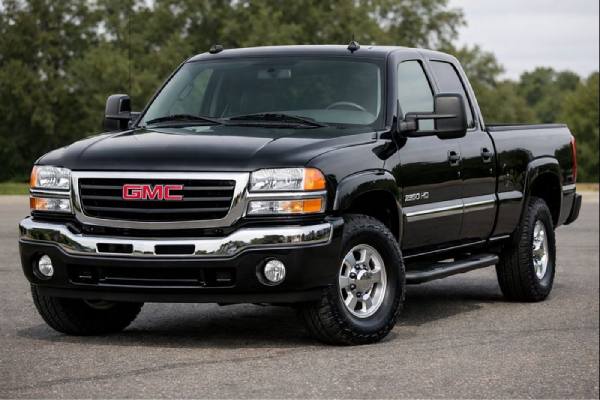
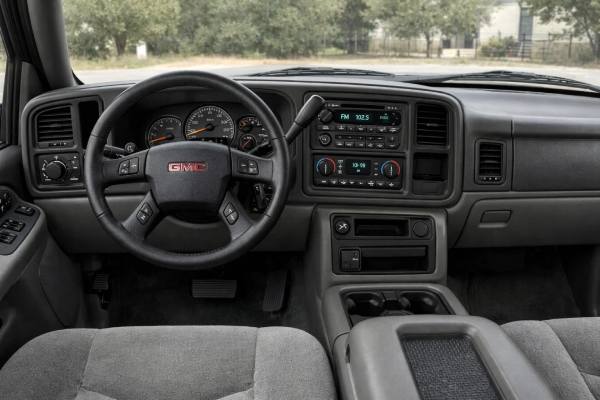

The 2003–2007 facelift GMC Sierra HD 4WD on the GMT800 platform is built around one core idea: heavy work, year-round traction, and straightforward mechanicals you can keep alive for a long time. In L18 8.1L form, it leans on big-displacement torque and simple naturally aspirated power delivery rather than diesel boost and high-pressure fuel systems. Adding 4WD makes this truck more than a tow rig—it’s also a dependable tool for snow, steep gravel access roads, job sites, and boat ramps where traction matters as much as horsepower. The trade-offs are real: extra driveline parts to service, more front-end wear items, and worse fuel economy than the same truck in 2WD. But if you buy a clean example, keep fluids fresh (especially transfer case and differentials), and stay disciplined about tires and alignment, the 8.1 Sierra HD 4WD can be one of the most “do-it-all” heavy-duty setups of its era.
What to Know
- Strong, predictable torque for towing without diesel-specific repair costs
- 4WD adds real-world capability for snow, ramps, and mixed-surface work routes
- Excellent parts availability and a chassis that most shops understand well
- Transfer case, front axle, and hub wear become “ownership items” over time
- Service transfer case and differential fluids about every 50,000 mi (80,000 km) under regular towing or severe use
What’s inside
- 4WD 8.1 Sierra HD essentials
- Technical specs and capacities
- Trims, tow gear, and safety
- Problem areas and recalls
- Service planning for 4×4 use
- On-road, off-road, and towing feel
- Choosing between HD competitors
4WD 8.1 Sierra HD essentials
The facelift-era GMT800 Sierra HD 4WD with the L18 8.1L is best understood as a capability stack: a heavy-duty frame and brakes, a torque-focused big-block V8, and a part-time 4×4 system meant to multiply traction rather than add speed. Owners who love these trucks usually bought them for a specific purpose—towing equipment, hauling a camper, moving livestock, running plows, or reaching job sites through snow—and kept them because the core mechanical package stays serviceable long after newer trucks start depending on more complex systems.
The 8.1L Vortec 8100 is the personality of the truck. It’s a pushrod V8 tuned for usable pulling power in the middle of the tach, which pairs naturally with heavy-duty automatics and low axle ratios. In practice, that means the truck can hold a steady pace on rolling terrain with fewer frantic downshifts than smaller gas engines, and it tends to feel “unstressed” when you’re asking it to do real work—assuming the cooling system and transmission are healthy. The engine’s advantage isn’t just torque; it’s also how predictable it is. You can meter throttle smoothly in low-traction conditions, and you don’t need to manage turbo lag or high-pressure fuel system sensitivity.
Adding 4WD changes how you should shop and how you should maintain. You gain front-drive traction through a transfer case, front differential, CV shafts, and locking hubs (style varies by configuration). That traction is most valuable when you’re launching on wet concrete, climbing a slick grade with a trailer, or negotiating unpaved work surfaces where a 2WD HD truck can spin one tire and lose momentum. The cost is complexity: more seals, more fluids, more joints, and more wear points in the steering and front suspension.
From an ownership perspective, these trucks reward “baseline maintenance.” If fluids are fresh, tires are matched in size, and the front end is kept tight, they drive with impressive stability for their size. If those basics are ignored, the same truck can feel vague, noisy, and expensive. The sweet spot is buying a truck with clean structure (especially in rust regions), realistic towing history, and evidence that the prior owner treated it like equipment rather than an appliance. Do that, and the 8.1 Sierra HD 4WD delivers a rare blend: heavy-duty capability with a mechanical simplicity that still makes sense for long-term ownership.
Technical specs and capacities
Specs on GMT800 Sierra HD 4WD models vary widely by cab, bed, axle ratio, and GVWR package. Use the tables below as configuration-typical guidance for the 2003–2007 facelift range with the L18 8.1L, then confirm exact ratings and fluid specs by VIN labels and service information.
Engine and performance (L18)
| Item | Specification (typical) |
|---|---|
| Code | L18 (Vortec 8100) |
| Layout | V8, 90°, OHV pushrod |
| Valvetrain | 2 valves/cyl |
| Displacement | 8.1 L (8,128 cc) |
| Bore × stroke | 107.95 × 111.0 mm (4.25 × 4.37 in) |
| Induction | Naturally aspirated |
| Fuel system | Sequential multi-port injection (SFI/MPFI) |
| Compression ratio | ~9.1:1 |
| Max power | 340 hp (254 kW) @ ~4,200 rpm |
| Max torque | ~617 Nm (455 lb-ft) @ ~3,200 rpm |
| Timing drive | Chain |
| Firing order | 1-8-7-2-6-5-4-3 |
Transmission and 4WD driveline
| Component | Common real-world configurations |
|---|---|
| Automatic transmissions | 4L80-E 4-speed (some builds) or Allison 1000-series automatic (common in HD towing setups; gears/calibration vary by year) |
| Transfer case | Part-time 4WD (2HI/4HI/4LO) common; some setups include an automatic 4WD mode depending on case and year |
| Drive type | 4WD / 4×4 (part-time) |
| Front axle / differential | Independent front suspension with front differential; fluid type and capacity depend on axle model |
| Rear axle | Heavy-duty axle; ratio and capacity vary by GVWR and towing package |
| Axle ratios (typical) | Often 3.73 or 4.10, selected for towing and grade control |
Chassis, dimensions, and weights (ranges)
| Metric | Typical range (varies by cab/bed) |
|---|---|
| Wheelbase | ~3,378–4,255 mm (133–167.5 in) |
| Length | ~5,200–6,350 mm (205–250 in) |
| Width | ~2,000 mm (≈79 in) excluding mirrors |
| Height | ~1,950–2,050 mm (≈77–81 in) depending on suspension and tires |
| Curb weight | Often ~2,850–3,450 kg (6,280–7,600 lb) for 4WD big-block setups |
| GVWR | Commonly ~4,173–5,171 kg (9,200–11,400 lb) depending on package |
Performance and capability (what matters most)
| Metric | Practical expectation |
|---|---|
| 0–100 km/h (0–62 mph) | Heavily setup-dependent; gearing and tire size move the result more than the badge |
| Top speed | Typically limited by gearing, tires, and power curve rather than aerodynamics alone |
| Towing capacity | Wide spread by hitch, axle ratio, cooling, and cab/bed; confirm on door sticker |
| Payload | Varies significantly by trim and GVWR package; verify sticker to avoid guessing |
Fluids and service capacities (decision-useful)
| Item | Typical guidance (verify by VIN and component labels) |
|---|---|
| Engine oil | GM6094M; SAE 5W-30 common; 6.5 qt (6.1 L) with filter |
| Coolant | Long-life coolant, typically 50/50 mix; system capacity is large (often 23+ L depending on configuration) |
| Transmission service refill | Varies by unit and pan; service fill is far less than a dry fill |
| Transfer case fluid | Depends on transfer case type; confirm by case tag/label and service info |
| Front and rear differential fluids | Spec depends on axle model and any limited-slip/locker requirements |
| Fuel tank | Often 26.0 gal (98 L) or 34.0 gal (129 L) depending on bed and configuration |
Electrical and wear specs
| Item | Typical spec |
|---|---|
| Spark plug gap (8.1L) | 0.060 in (1.52 mm) |
| Wheel nut torque | 140 ft-lb (190 Nm) |
| Battery and alternator | Output varies by option content and fleet/tow equipment |
The right way to use these tables is as a checklist: confirm engine and transmission pairing, confirm transfer case type, then verify axle ratio and weight ratings. On a 4WD HD truck, that trio tells you more about real capability and operating cost than almost any trim badge.
Trims, tow gear, and safety
On the GMT800 Sierra HD, trims mainly affect comfort and convenience, while option codes determine the truck’s working personality. For an 8.1L 4WD buyer, the most valuable “options” are the ones that change heat management, gearing, traction behavior, and towing control.
Trims and equipment that matter for real use
You’ll commonly see work-focused interiors through higher-content trims (often SLE/SLT depending on market). When you’re comparing trucks, prioritize these functional differentiators:
- Axle ratio and towing package: A tow-oriented axle ratio (often 4.10) makes the 8.1 feel sharper off the line and steadier on grades. A true towing package usually adds cooling capacity and wiring provisions that reduce stress and improve safety.
- Transmission pairing and cooler setup: The “best” transmission is the one with clean fluid history, stable operating temperatures, and consistent shifting under load. Auxiliary coolers, if properly installed, can be a meaningful advantage for mountain towing.
- Differential type: Some trucks offer a locking rear differential or traction-oriented setup. That matters on wet ramps and uneven job sites, especially with a trailer pushing weight forward and unloading one rear tire.
- Brake controller and wiring quality: Factory-style integration is a strong plus, but aftermarket can be excellent if it’s done cleanly: correct fusing, protected routing, and proper grounding.
Quick identifiers that save time while shopping:
- RPO/build codes: These are often the fastest way to confirm axle ratio, differential type, and towing content without guessing.
- Transfer case controls: Button layout and labeling can hint at case type (part-time vs auto modes), but you should still confirm with case identification.
- Underbody condition: A 4WD truck that lived in salt can hide expensive problems in brake lines, fuel lines, and crossmembers—even if the paint looks fine.
Safety ratings and how to interpret them
Heavy-duty pickups from this era don’t always have clean, one-to-one crash-test coverage for every HD configuration. The smarter approach is to combine whatever published ratings exist for the body family with an honest assessment of safety content and current condition:
- Airbags and restraints: Expect front airbags for the era; side airbags depend on trim and year. Verify that the airbag warning light behaves correctly and scan for stored SRS faults.
- ABS and stability systems: ABS is common and essential for load control. Stability-control availability varies by year and configuration; don’t assume modern-style intervention even if a light is present.
- Child-seat anchoring: If this truck will carry kids, confirm anchor points and that the rear seatbelts lock and retract properly.
Driver assistance reality check
This generation predates modern ADAS. You should not expect AEB, lane-keeping, or radar cruise. The “driver assistance” you’re buying is mostly mechanical: good brakes, predictable steering, and a 4WD system that can keep you moving on slick surfaces. In that context, tire choice and brake maintenance are safety features. A well-maintained 8.1 Sierra HD with matched tires, healthy shocks, and a properly tuned trailer brake controller will feel more secure than a neglected truck with more “options” on paper.
Problem areas and recalls
The Sierra HD 8.1 4WD can be a durable long-term truck, but it has predictable weak points—especially in the added 4×4 hardware. The best reliability strategy is to separate “wear items you plan for” from “failures you prevent,” then inspect accordingly.
Common (expect it with age and work use)
- Front-end wear and steering looseness (medium cost):
Symptoms: Wandering on the highway, clunks over bumps, steering play, uneven tire wear, shimmy under braking.
Likely causes: Idler and pitman arms, tie-rod ends, ball joints, and hub/bearing assemblies. 4WD trucks often see more load cycles in the front because they’re heavier and frequently run more aggressive tires.
Remedy: Inspect the entire front end as a system, replace worn parts with quality components, then align it for your real-world load and tire size. - 4WD engagement faults (low to medium cost):
Symptoms: Flashing 4WD lights, won’t shift into 4HI/4LO, intermittent engagement.
Likely causes: Switch issues, actuator/encoder motor wear, wiring/ground problems, or transfer case sensor faults.
Remedy: Diagnose with scan data where possible; avoid “parts cannon” repairs. - Brake and line corrosion in rust regions (high safety priority):
Symptoms: Spongy pedal, visible rust swelling on lines, fluid seepage.
Likely causes: Long-term salt exposure.
Remedy: Replace compromised lines and hardware. Treat this as a must-fix, not a negotiation detail.
Occasional (watch towing history and mileage bands)
- Transfer case wear and leaks (medium to high cost if ignored):
Symptoms: Fluid on the case, howl or chain noise under load, vibration, or persistent dampness around seams reminded by underbody grime.
Likely causes: Seal wear, prolonged low-fluid operation, or internal wear from heavy torque cycling.
Remedy: Fix leaks early, keep the correct fluid, and inspect during every oil change. - 8.1L knock sensor and harness moisture intrusion (medium cost):
Symptoms: Check-engine light, reduced power, knock sensor codes.
Likely causes: Moisture intrusion around sensor locations and connectors.
Remedy: Replace sensors/harness as needed, ensure sealing practices are correct. - Fuel pump module fatigue (medium cost):
Symptoms: Long crank, hesitation under load, inconsistent fuel gauge.
Likely causes: Pump wear, sender issues, wiring/ground degradation.
Remedy: Replace the module and verify clean electrical supply.
Rare but expensive (screen hard before purchase)
- Severe structural corrosion (high cost, sometimes a deal-breaker):
Symptoms: Frame scaling at critical points, compromised mounts, repeated brake-line failures, and evidence of patch repairs.
Remedy: Walk away if structural integrity is questionable—4WD capability is irrelevant if the foundation is failing.
Recalls, service actions, and how to verify
At this age, reliability is partly administrative: confirm what safety campaigns and recall work were completed. Use an official VIN lookup, then request documentation (dealer printouts or invoices). If the truck has been modified—lifted suspension, oversized tires, aftermarket wiring—treat that as a separate reliability category. Modifications can be well-executed, but they also introduce alignment challenges, driveline angles, and electrical faults that don’t show up in generic “common issues” lists. A clean, correctly maintained stock-ish truck is usually the safest bet for long-term predictability.
Service planning for 4×4 use
Maintenance on an 8.1 Sierra HD 4WD is about heat, lubrication, and keeping the front end tight. The engine itself can be straightforward to live with, but the 4×4 hardware only stays reliable when fluids are kept clean and tires stay matched.
A practical schedule you can actually follow
Use distance or time, whichever comes first, and shorten intervals if you tow frequently, plow, idle heavily, or drive in deep dust or water.
- Engine oil and filter: Follow the oil-life system, but don’t exceed 12 months. Under heavy towing or short-trip use, plan 5,000–8,000 km (3,000–5,000 mi) intervals.
- Engine air filter: Inspect every oil change in dusty use; replace when restriction is visible or performance drops.
- Cooling system: Keep correct coolant type and a true 50/50 mix. If you don’t have reliable records, refresh coolant and inspect radiator, hoses, fan clutch, and water pump. A practical planning interval is 5 years for coolant service, adjusted for condition and history.
- Spark plugs: Plan around age and mileage (often near 160,000 km / 100,000 mi for a baseline refresh), sooner if misfires appear or towing loads are heavy.
- Transmission fluid: Under towing or heat exposure, service about every 50,000–80,000 km (30,000–50,000 mi) depending on temperatures and shift quality history.
- Transfer case fluid: For frequent 4WD use, towing, or harsh climates, service around 50,000 mi (80,000 km) as a conservative rhythm.
- Front and rear differentials: Service about every 50,000–80,000 km (30,000–50,000 mi) with towing or severe use; confirm the correct gear oil and whether any friction modifier is required.
- Brake fluid: Every 2–3 years, regardless of mileage.
- U-joints, CV boots, and driveline inspection: Inspect at each oil change. Catch torn boots and play early before it becomes a bigger repair.
- Tire rotation and alignment: Rotate every 8,000–10,000 km (5,000–6,000 mi). Keep alignment current; it’s cheaper than front-end parts and tires.
Fluids, specs, and torque values (keep it decision-useful)
- Engine oil: SAE 5W-30 meeting the correct GM standard; capacity 6.5 qt (6.1 L) with filter.
- Wheel nuts: 140 ft-lb (190 Nm)—recheck after wheel service, especially if you tow.
- 4×4 fluid specifications: Transfer case and axle fluids vary by component type; always verify by case/axle identification and official service data.
Buyer’s guide: 4WD-specific inspection checklist
- Tires: All four should match in size and similar wear. Mismatched tires can stress a transfer case and differentials.
- 4WD function test: Confirm 2HI → 4HI engagement, then 4LO engagement (where safe and appropriate). Listen for abnormal grinding or delayed engagement.
- Leaks and dampness: Transfer case seams, front differential, axle seals, and driveshaft slip areas.
- Front-end tightness: Check hubs, ball joints, tie rods, and steering play; budget realistically if the truck feels loose.
- Rust and lines: Brake lines and fuel lines are a priority in salt regions—inspect carefully.
A well-maintained 8.1 4WD Sierra HD isn’t “cheap,” but it is predictable. When you keep fluids fresh and the front end aligned, you can prevent the kinds of cascading repairs that make older heavy-duty trucks feel unreliable.
On-road, off-road, and towing feel
Driving a Sierra HD 8.1 4WD is about mass and control. It feels planted at speed, stable under tongue weight, and calm when the engine is working in its midrange. Compared with a similar 2WD truck, the 4WD version usually feels slightly heavier in the nose and a touch less eager from a stop, but it returns capability that matters in real working conditions.
On-road ride, steering, and NVH
Unloaded, the ride can be firm—rear leaf packs are designed for payload, not plushness. With some load in the bed or a trailer attached, the suspension often settles into a smoother, more controlled rhythm. Steering is typically steady rather than quick. A tight front end and good shocks make a bigger difference here than most people expect; worn parts turn “heavy-duty stable” into “wandery and tiring.”
Noise and vibration trends are predictable:
- Tire noise dominates if the truck runs aggressive all-terrains.
- Driveline vibration often points to U-joint wear, hub play, or driveline angle changes from lifts.
- Exhaust tick on cold start can indicate manifold leaks that become more apparent under load.
Powertrain character and towing behavior
The 8.1’s torque delivery is smooth and easy to modulate, which helps both towing and low-traction driving. Under load, the transmission will typically hold gears longer to keep the engine in a comfortable torque band. If the truck is hunting between gears on mild grades, that often points to axle ratio mismatch for your trailer weight, a calibration issue, or temperature-related transmission behavior.
For towing, the confidence factors are not glamorous, but they’re decisive:
- Trailer brake setup: A properly adjusted controller transforms stopping feel.
- Cooling health: A clean radiator, correct fan function, and fresh fluids keep power consistent on long grades.
- Tire pressure and load rating: Match pressures to load; underinflation is a stability killer.
4WD operation and traction tips
Most setups are part-time 4WD. Use 2HI on dry pavement and reserve 4HI for slick surfaces; part-time systems can bind on high-traction pavement. Use 4LO for slow control—steep ramps, tight maneuvering with a trailer, or controlled descents—where torque multiplication matters more than speed.
A 4WD HD truck is also more sensitive to tire matching. Keep all four tires the same size and similar wear to reduce stress on the driveline. If you replace one tire, think carefully about whether you need to replace more to keep diameters close.
Real-world fuel economy (set expectations early)
The 8.1 4WD is not a fuel saver. Typical owner experience often lands around:
- Mixed driving: roughly 16–22 L/100 km (11–15 mpg US) depending on speed, gearing, and tires
- Highway cruise: often 14–19 L/100 km (12–17 mpg US) at moderate speeds
- Towing: frequently 20–30+ L/100 km (8–12 mpg US) depending on trailer shape and terrain
If the truck’s mission is real towing and winter traction, that fuel cost can still be rational—because it replaces a more stressed setup and delivers predictable performance when conditions get difficult.
Choosing between HD competitors
In the 2003–2007 heavy-duty market, Sierra HD 8.1 4WD buyers typically cross-shopped Ford Super Duty (gas V10 and diesel variants) and Ram Heavy Duty (gas and Cummins diesel variants). The right choice depends less on brand loyalty and more on how often you tow, where you drive, and how comfortable you are with diesel ownership costs.
Why the 8.1 Sierra HD 4WD still makes sense
- Big towing torque without diesel complexity: If your towing is frequent but not constant, the 8.1 can be a practical compromise—strong pulling power without the same sensitivity to diesel-specific service and repair risks.
- Usable 4WD capability for real work: The 4WD system adds meaningful traction for winter routes, mixed surfaces, and ramps—situations where a 2WD HD truck can become a liability.
- Serviceability and parts support: GMT800 trucks are widely understood, and parts availability remains strong, which matters for long-term ownership.
Where rivals can outperform it
- High-mile, heavy towing efficiency: If you tow heavy for long distances week after week, comparable diesels often return better fuel economy and can feel more relaxed on long grades. The break-even point depends on fuel prices, mileage, and repair history, but the pattern is consistent.
- Front axle and off-road durability preferences: Some competitors used solid front axles in many HD 4×4 configurations, which can appeal to owners who prioritize articulation and certain kinds of off-road durability. The Sierra’s independent front suspension can ride well and steer cleanly, but it has more wear points.
- Cab and safety evolution: If family comfort and modern safety expectations are central, later-model trucks from any brand may win simply because of newer structural design and broader safety tech availability.
A practical buyer’s verdict
Choose the Sierra HD 8.1 4WD when you want a capable tow-and-traction platform that you can maintain predictably, especially if your use includes winter driving, seasonal work, or mixed-surface access where 4WD is a real tool—not a style choice. Choose a diesel rival when your towing calendar is dominated by heavy loads and long distances and you’re prepared to manage diesel maintenance proactively. And if your heavy-duty need is occasional but daily mileage is high, consider whether a lighter, newer truck could reduce operating costs—unless you truly need HD brakes, axle capacity, and chassis stability on a regular basis.
In short: the 8.1 Sierra HD 4WD is for owners who value capability and mechanical clarity over fuel efficiency. Treat it like equipment, keep the driveline fluids and front end in shape, and it can remain a dependable partner well past the point where many newer trucks become financially complicated.
References
- GM Owner Manuals 2007 (Owner’s Manual)
- Gas Mileage of 2005 GMC Sierra 2005 (Official Fuel Economy Data)
- Check for Recalls: Vehicle, Car Seat, Tire, Equipment | NHTSA 2025 (Recall Database)
- Car Safety Ratings | Vehicles, Car Seats, Tires | NHTSA 2025 (Safety Rating)
- 2006 GMC Sierra 1500 2025 (Safety Rating)
Disclaimer
This article is for informational purposes only and is not a substitute for professional inspection, diagnosis, or repair. Specifications, torque values, service intervals, fluid requirements, and procedures vary by VIN, market, model year, and installed equipment—verify every detail using official owner information and service documentation for your exact truck before towing, modifying, or performing repairs.
If this guide helped you, please consider sharing it on Facebook, X (Twitter), or your preferred community to support our work.