
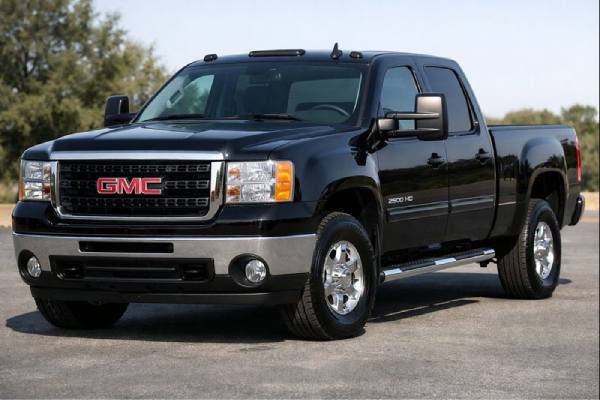
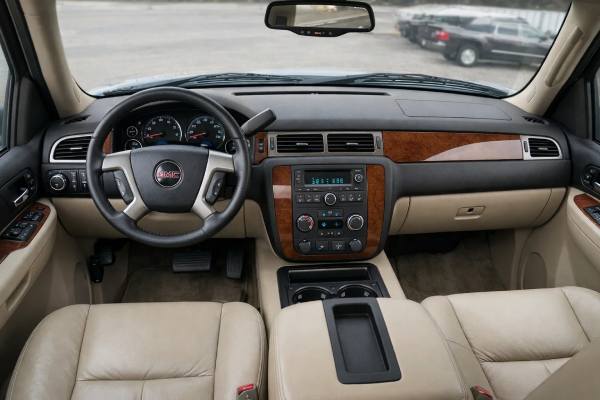
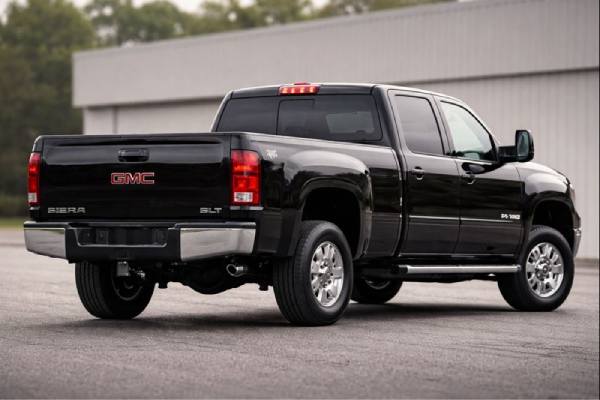
A 2007–2010 GMC Sierra HD 4WD with the LMM 6.6L Duramax is built around one idea: move heavy loads with calm, repeatable control. You get the classic Duramax V8 torque curve and the Allison 6-speed automatic, paired with a true heavy-duty frame and a low-range transfer case for traction. Compared with the 2WD trucks, the 4WD adds weight and extra service points, but it also adds capability you actually feel—slick boat ramps, winter roads, muddy job sites, and steep launches are where this configuration earns its keep. The defining ownership detail is emissions-era hardware (DPF and EGR). The truck will tolerate hard work well, yet it can punish constant short trips and long idling with more frequent regenerations and soot-related issues. Buy one with honest maintenance records, keep it stock or sensibly upgraded, and it remains one of the most usable heavy-duty diesels of its generation.
Quick Specs and Notes
- Strong towing behavior from the Duramax torque and Allison shift logic, especially in tow/haul.
- 4WD low range improves control on steep grades, soft ground, and slippery launches.
- Broad parts availability and service familiarity make long-term ownership practical.
- DPF and EGR systems prefer longer heat cycles; repeated short trips can increase soot loading.
- Service the transfer case fluid about every 80,000–160,000 km (50,000–100,000 mi) depending on duty cycle.
Contents and shortcuts
- GMC Sierra HD 4WD traits
- LMM 4WD specs and tables
- Trims, tow packages, and safety
- Common failures, recalls, and fixes
- Service plan and buyer’s checklist
- Real-world driving and towing
- Rivals and ownership trade-offs
GMC Sierra HD 4WD traits
In GMT900 form, the Sierra HD 4WD (2500HD or 3500HD) is a heavy-duty platform that blends old-school strength with early emissions-era complexity. The LMM Duramax 6.6L and Allison 6-speed combination provides the central value: strong low-rpm pulling power and a transmission calibration that is comfortable managing heat under load. The 4WD system adds a transfer case with a low-range gear reduction, plus the front differential, CV shafts, and hubs needed to deliver torque to the front wheels. That means more capability, but also more places where neglect can turn into vibration, leaks, or binding.
From an owner’s perspective, 4WD changes three things. First, traction becomes a tool rather than a hope. If you tow on wet pavement, launch boats, back trailers up grades, or live with winter roads, the 4WD system provides control you can feel in the steering wheel and in how smoothly the truck starts moving. Second, service becomes a little more demanding. You now have transfer case fluid, front differential fluid, additional U-joints, and front-end wear points that matter as mileage climbs. Third, weight increases slightly, which can shave a little fuel economy and reduce payload in some builds. Many buyers accept that trade because the truck is simply more versatile.
The LMM era’s defining engineering detail is emissions equipment. A diesel particulate filter (DPF) captures soot and periodically burns it off through regeneration, while EGR routes a portion of exhaust back into the intake to reduce NOx emissions. Both systems do their best work when the truck reaches full operating temperature and stays there long enough. If your driving is mostly short trips with lots of idle time, soot accumulation and sensor complaints become more likely. If your usage includes steady highway runs or regular towing, the truck tends to behave better because it naturally completes regen events and keeps the exhaust system hot.
If you are shopping the used market, the most important “trait” is not a trim badge—it is a duty-cycle match. These trucks are happiest when they are used like trucks: long drives, consistent maintenance, and loads that keep the drivetrain working rather than idling.
LMM 4WD specs and tables
Sierra HD 4WD specs vary with cab, bed, single- or dual-rear-wheel, GVWR package, and axle ratio. Use the tables below as a structured baseline, then confirm final numbers using your door-jamb labels (GVWR/GAWR), the Service Parts ID (RPO) label, and the official tow chart for your exact configuration.
Engine and performance (LMM Duramax diesel)
| Item | Specification |
|---|---|
| Code | LMM |
| Engine layout and cylinders | V8 turbo-diesel, 8 cylinders, 4 valves/cyl (typical Duramax architecture) |
| Displacement | 6.6 L (6,600 cc) |
| Induction | Turbocharged and intercooled |
| Fuel system | High-pressure common-rail direct injection |
| Max power | 365 hp (272 kW) @ rpm (factory-rated; rpm varies by calibration) |
| Max torque | 895 Nm (660 lb-ft) @ rpm (factory-rated; rpm varies by calibration) |
| Timing drive | Gear-driven valvetrain (verify by VIN service info) |
| Emissions hardware | EGR and DPF (no DEF on LMM trucks) |
| Real-world highway @ 120 km/h (75 mph) | Often ~15–18 mpg US (15.7–13.1 L/100 km) unloaded; towing varies widely |
Transmission and 4WD driveline
| Item | Typical specification (verify by RPO/build) |
|---|---|
| Transmission | Allison 1000 6-speed automatic |
| Drive type | 4×4 (part-time 4WD with 2HI/4HI/4LO modes on most builds) |
| Transfer case | Two-speed, low-range capable (model varies by year/package) |
| Rear differential | Open or limited-slip/locking depending on option |
| Common axle ratios | 3.73 or 4.10 (most common in HD tow builds) |
Chassis, dimensions, and clearances (ranges)
| Item | Typical range |
|---|---|
| Suspension (front/rear) | Independent front (torsion bar) / rear leaf springs |
| Steering | Hydraulic assist; ratio varies by year and package |
| Ground clearance | Often ~200–250 mm (7.9–9.8 in) depending on tires and suspension |
| Wheelbase | ~3,530–4,170 mm (139–164 in) |
| Overall length | ~5,600–6,600 mm (220–260 in) |
| Kerb (curb) weight | Often ~3,200–3,800 kg (7,000–8,400 lb) in 4WD form |
Performance and capability (configuration dependent)
| Item | What to expect |
|---|---|
| 0–100 km/h (0–62 mph) | Quick for an HD truck; traction and gearing influence results |
| Braking distance | Tire compound and brake condition matter more than trim |
| Towing capacity | Commonly ~5,900–7,700 kg (13,000–17,000 lb) depending on body, axle ratio, and hitch type |
| Payload | Often ~900–1,600 kg (2,000–3,500 lb), reduced by heavy options and crew cabs |
Fluids and service capacities (verify by VIN)
| Item | Typical spec |
|---|---|
| Engine oil | Diesel-rated oil meeting GM diesel requirements; common 15W-40 (warm climates) or 5W-40 (cold) |
| Engine oil capacity | About ~9.5 L (~10 US qt) with filter (varies) |
| Transmission fluid | Dexron VI commonly specified; capacity depends on service method |
| Transfer case | AutoTrak/approved transfer case fluid depending on case (verify label/service info) |
| Front and rear differentials | Synthetic gear oil commonly used; additive needs depend on differential type |
Safety and driver assistance (era-appropriate)
| Item | Notes |
|---|---|
| Crash ratings | HD models are not always directly rated; look up the closest applicable tests for the platform and confirm equipment |
| Airbags | Front airbags standard; side curtain availability varies by trim/year |
| ADAS | No modern AEB or lane keeping; expect ABS, traction control, and stability control depending on build |
These tables are meant to keep your research organized. For purchase decisions, the door sticker and the RPO codes are the final word on how your exact truck is equipped.
Trims, tow packages, and safety
For a 2007–2010 GMC Sierra HD 4WD Duramax, trim names matter less than the mechanical content behind them. WT, SLE, and SLT can all be excellent trucks if they have the right axle ratio, towing equipment, cooling hardware, and safety options. The easiest way to shop is to treat trims as “comfort layers” and packages as the functional core.
Trims in plain terms
WT (Work Truck): usually the simplest interior and often the easiest to keep reliable long-term because it avoids some aging luxury electronics. WT trucks can still have serious towing hardware; many fleets ordered them correctly from new.
SLE: a common sweet spot. You typically gain nicer seating, better audio and convenience features, and sometimes more insulation. It can be a strong daily-driver compromise without becoming overly complex.
SLT (and similar upscale packages): more comfort, more power equipment, and often more desirable resale. The trade is more age-related repairs: HVAC actuators, seat motors, steering wheel controls, and infotainment quirks become normal “older truck” ownership items.
Options that change capability
- Axle ratio and tow calibration: If you tow near the truck’s limit, the axle ratio can be the difference between relaxed climbs and constant downshifts.
- Factory tow wiring and controller support: Some trucks are pre-wired but still need the correct brake controller and settings. Confirm real function, not just the presence of a plug.
- Differential type: A limited-slip or locking differential can make trailer launches and winter driving feel dramatically more controlled, even in 2HI.
- Tire and wheel packages: Load range and tire quality directly affect braking, stability, and steering response under load.
Quick identifiers when shopping used
- Service Parts ID (RPO) label: usually in the glovebox. This is the fastest way to confirm axle ratio, differential type, suspension package, and towing codes.
- Transfer case controls: confirm 4HI and 4LO engagement works smoothly, with no grinding, flashing lights, or delayed shifting.
- Front-end stance and tire wear: uneven wear often points to worn steering linkage, ball joints, or alignment issues—common on heavy front ends.
Safety ratings and what to focus on
This generation sits in an awkward safety-info gap for buyers: many official crash tests focus on light-duty pickups rather than HD variants. Instead of chasing a single “star number,” evaluate safety in a practical way:
- Confirm airbag configuration (front and side curtains if equipped).
- Check seatbelts for smooth retraction and prior crash evidence.
- Prioritize brakes, tires, and suspension condition; those determine emergency stopping and stability.
Driver assistance and stability systems
Expect this era’s “safety tech” to be mostly foundational: ABS, traction control, and stability control depending on build. You may also see rear park assist or an early camera setup on certain trims. There is no modern automatic emergency braking or lane support, so your best upgrades are boring ones: high-quality tires, fresh brake fluid, strong pads/rotors, and properly aimed headlights.
Common failures, recalls, and fixes
A Sierra HD 4WD LMM can run a long time, but it has predictable patterns. The key is to separate issues that are common-but-manageable from the ones that become expensive if ignored. The lists below organize problems by prevalence and cost tier, with the symptom → likely cause → best remedy format you can use during diagnosis or a pre-purchase inspection.
Common issues (frequent; low to medium cost)
Front-end wear and steering looseness
- Symptoms: wander, clunks over bumps, uneven tire wear, “floating” feel on the highway.
- Likely cause: idler/pitman arms, tie rods, ball joints, and alignment drift, especially with heavy tires or towing.
- Remedy: quality steering components, proper alignment, and tire pressures matched to load.
4WD engagement glitches (occasional electrical, usually medium)
- Symptoms: flashing 4WD indicator, delayed shift into 4HI/4LO, mode won’t hold.
- Likely cause: encoder motor, switch issues, wiring corrosion, or worn transfer-case components.
- Remedy: scan for transfer-case codes, inspect wiring grounds, then address the specific actuator/sensor.
DPF regen frequency complaints (medium; can become high)
- Symptoms: frequent regeneration, fuel economy drop, soot smell, warning messages, occasional limp behavior.
- Likely cause: short trips, extended idle, exhaust leaks, failed sensors affecting soot calculation.
- Remedy: correct the root cause (sensor/leak), verify proper regen behavior, and adjust usage so the truck reaches full temperature regularly.
Occasional issues (medium cost; duty-cycle related)
EGR fouling and intake soot buildup
- Symptoms: reduced power, rough idle, EGR flow codes, sticky throttle response.
- Cause: soot accumulation and thermal cycling, worsened by lots of idle time.
- Remedy: cleaning or component replacement, plus fixing boost leaks that make the system work harder.
Transfer case fluid loss or internal wear
- Symptoms: weeping at case seams, noise under load, binding in 4HI, poor low-range feel.
- Cause: seals, wear from low fluid, or housing wear issues on some case designs.
- Remedy: correct leaks early, service fluid on schedule, and investigate any metal in drained fluid.
Hub bearings and CV shaft wear
- Symptoms: growl/hum that changes with steering input, vibration under acceleration, clicking in turns.
- Cause: heavy front axle load, age, and contamination.
- Remedy: replace hubs/CVs with quality parts and check alignment afterward.
Rare but expensive issues (high cost)
Overheating-related transmission wear
- Symptoms: shudder, slipping under load, harsh shifts after heat events.
- Cause: towing in the wrong gear, insufficient cooling, or aggressive tuning without supporting upgrades.
- Remedy: manage heat (coolers, correct gear use), keep fluid fresh, and address early signs before damage spreads.
Fuel system damage from poor fuel
- Symptoms: hard starts, misfire under load, injector imbalance, metal contamination.
- Cause: water or debris, neglected fuel filter, long storage.
- Remedy: treat fuel filtration as critical maintenance and baseline the system when ownership history is unknown.
Recalls and service actions
Because recall coverage can depend on build date and region, the practical rule is simple: verify recall status by VIN and keep proof. Focus especially on safety-related campaigns (airbags, braking components, or electrical fire risks). For a used purchase, insist on documentation or plan a dealer check immediately after purchase.
Service plan and buyer’s checklist
A good maintenance plan for the LMM Sierra HD 4WD is about preventing heat, soot, and wear from stacking up. The truck can handle hard work, but it rewards owners who service it on time and use fluids that match the drivetrain’s needs.
Practical maintenance schedule (distance and time)
| Item | Interval | Notes |
|---|---|---|
| Engine oil and filter | 8,000–12,000 km (5,000–7,500 mi) or 6–12 months | Shorten interval with heavy towing, idle-heavy work, or dusty use |
| Fuel filter | 24,000 km (15,000 mi) | Reduce interval with questionable fuel or water contamination risk |
| Engine air filter | Inspect every oil change | Replace earlier for job-site dust or off-road use |
| Cabin air filter (if equipped) | 15,000–30,000 km (10,000–20,000 mi) | Helps HVAC airflow and reduces blower strain |
| Transmission service | 80,000–160,000 km (50,000–100,000 mi) | Heat and towing push you toward the shorter end |
| Transfer case fluid | 80,000–160,000 km (50,000–100,000 mi) | Shorten if you use 4WD often or tow in harsh conditions |
| Front differential fluid | 80,000–160,000 km (50,000–100,000 mi) | Replace sooner after water exposure or heavy off-road work |
| Rear differential fluid | 80,000–160,000 km (50,000–100,000 mi) | Confirm additive needs if limited-slip equipped |
| Coolant | Often 5 years / 240,000 km (150,000 mi) | Use the correct long-life coolant chemistry and mix |
| Brake fluid | Every 2–3 years | Moisture control improves pedal feel and caliper life |
| Alignment and tire rotation | 10,000–15,000 km (6,000–9,000 mi) | More frequent rotation helps heavy front-end wear patterns |
Fluids to get right (ownership decision list)
- Engine oil: diesel-rated oil meeting the correct GM diesel requirement; choose viscosity based on climate and startup conditions.
- Transmission fluid: use the correct ATF (commonly Dexron VI) and follow the right fill procedure to avoid over/underfill.
- Transfer case fluid: match the case type and GM-approved fluid; the wrong fluid can cause chatter or poor engagement.
- Differential oils: confirm viscosity and whether a friction modifier is required for your differential.
Essential torque values (verify before final tightening)
| Fastener | Typical value to expect |
|---|---|
| Wheel lug nuts (8-lug) | ~190 Nm (140 lb-ft) |
| Driveshaft U-joint strap bolts | Low torque but critical; follow service manual values |
| Differential cover bolts | Even tightening matters more than brute force |
Buyer’s checklist (what to check in 30 minutes)
Paperwork and history
- Oil and fuel filter receipts with dates and mileage.
- Evidence of transfer case and differential fluid services (often skipped).
- VIN-based recall status and proof of completion.
Underbody and drivetrain
- Transfer case and differential leaks, especially near seals and case halves.
- Driveshaft play and U-joint condition (any binding or rust dust is a warning).
- Front hub bearing noise during a test drive; listen for a growl that changes with steering input.
Powertrain behavior
- Smooth cold start with no unusual smoke or harsh knocking.
- No warning messages related to emissions or 4WD.
- On a test drive, confirm 4HI and 4LO engagement works correctly (in an appropriate area and following the correct procedure).
A buyer who verifies drivetrain fluids and 4WD function up front avoids the most common “surprise” costs on these trucks.
Real-world driving and towing
A Sierra HD 4WD Duramax feels like a tow vehicle first and a commuter second, yet it can do both if you accept its priorities. Steering is typically heavier and slower than modern half-tons, but it becomes stable and confident when the front end is tight, the alignment is correct, and tires match the truck’s load range. If the truck wanders, treat it as a maintenance clue, not a personality trait.
Ride, handling, and NVH
Unloaded, the rear leaf springs can feel firm over broken pavement because the suspension is designed for payload. With several hundred kilograms in the bed—or with a trailer—the ride often improves, settling into a smoother, more controlled motion. Road noise depends heavily on tire choice: aggressive all-terrain tread can add highway drone, while a quality highway-terrain tire can make the cabin feel much more refined.
Powertrain character and transmission logic
The LMM’s torque delivery is the main reason people love these trucks. It pulls early, doesn’t need high rpm to work, and feels calm on grades. The Allison transmission complements this with purposeful shifts and a tow/haul mode that reduces hunting and improves engine braking behavior. When towing, your best habit is simple: keep the engine in a comfortable rpm range rather than forcing early upshifts. Downshifting earlier can reduce exhaust temperatures, improve coolant management, and keep the transmission from “slipping heat” into the fluid.
4WD behavior in the real world
4WD changes towing confidence in specific scenarios:
- Wet ramps and steep launches: 4HI can prevent wheelspin and reduce drivetrain shock.
- Snowy roads: stability improves, but tires remain the limiting factor.
- Soft ground: low range (4LO) helps you move slowly with control rather than using speed and wheelspin.
Use 4LO as a control tool, not a “power mode.” It reduces stress during slow maneuvers with a heavy trailer, especially when backing uphill or creeping in tight spaces.
Real-world fuel economy
These HD diesels vary widely by gearing, tire size, speed, and load. As a realistic guide:
- Unloaded mixed driving: often ~13–17 mpg US (18.1–13.8 L/100 km).
- Highway steady: often ~15–18 mpg US (15.7–13.1 L/100 km).
- Towing: expect a significant penalty; speed and trailer shape can matter as much as weight.
Cold weather typically reduces economy because the engine takes longer to reach full temperature and regeneration behavior can change. If your use is mostly short trips, the truck may spend too much time warming up and regening to deliver its best numbers.
Rivals and ownership trade-offs
When you compare a 2007–2010 Sierra HD 4WD LMM to its era rivals, you are really comparing three things: engine character, transmission/driveline integration, and how the emissions-era hardware behaves with real owners. Ford and Ram each offer strong alternatives, but the Sierra often wins buyers by feeling “easy to tow with” and “easy to keep stock and usable.”
Versus Ford Super Duty 4×4 (same-era diesels)
Ford trucks of the late-2000s can be strong tow platforms, and many owners prefer their chassis feel and steering heft. The trade is that some diesel/aftertreatment combinations and maintenance histories can be less forgiving, especially when previous owners modified trucks aggressively. When shopping used, Ford’s biggest advantage is that a well-cared-for example can be excellent, while the biggest risk is that neglected examples can be expensive quickly. The Sierra’s advantage is often consistency: a stock LMM/Allison truck with good service records tends to deliver predictable towing performance.
Versus Ram 2500/3500 4×4 (early 6.7 Cummins era)
Ram’s inline-six Cummins is famous for low-end pull and a straightforward engine layout. In practice, the ownership decision often comes down to the full system: transmission behavior, driveline condition, and how well the emissions system is maintained. Many Ram trucks tow extremely well, but used-market condition varies widely. The Sierra’s strength is the Allison’s towing logic and the overall “integrated” feel when you are climbing grades or managing speed downhill.
The 4WD trade-off question
4WD costs you:
- More weight and slightly more fuel use in many scenarios.
- More fluids and components to service (transfer case, front differential, hubs, CVs).
- More potential wear points if the truck spent years in salt or mud.
4WD gives you:
- Safer traction margins in rain and snow.
- Better control in low-speed, high-load maneuvers.
- Greater versatility for rural living, job sites, and towing in poor conditions.
Best-fit buyer profiles
Choose this Sierra HD 4WD if you want a heavy-duty diesel that:
- Tows regularly and benefits from tow/haul and stable low-rpm torque.
- Sees long enough drives to keep the DPF/EGR systems happy.
- Needs 4WD as a real tool, not as a badge.
If your driving is almost all short trips, you may be better served by a gas HD truck, a lighter vehicle, or a diesel that fits your usage better. In this era, the “right truck” is the one whose design assumptions match your weekly routine.
References
- 2007 GMC Sierra 1500 crew cab pickup 2007 (Safety Rating)
- NHTSA Recalls 2025 (Recall Database)
- Owner Manuals 2025 (Owner’s Manual Portal)
- p06-06-01-007H 1..11 2014 (TSB)
Disclaimer
This article is for informational purposes only and is not a substitute for professional diagnosis, inspection, or repair. Specifications, torque values, service intervals, and procedures can vary by VIN, market, model year, and installed equipment; always verify details against official GM service documentation, labels on your vehicle, and qualified service guidance before performing work.
If you found this guide useful, please consider sharing it on Facebook, X (Twitter), or your preferred community to support our work.