
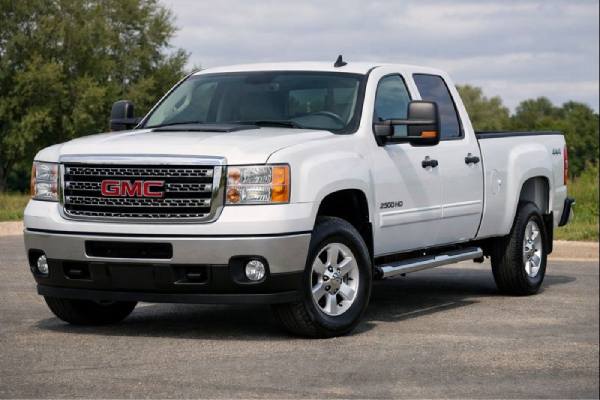
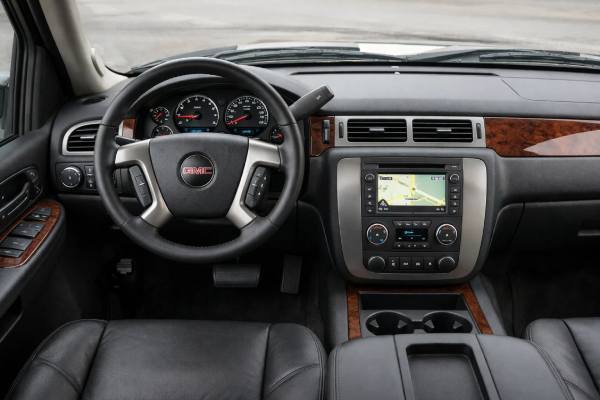

The facelift-era GMT900 GMC Sierra HD 4WD with the 6.0-liter “LC8” CNG-capable V8 is a very specific kind of heavy-duty truck: it’s built for work first, but it tries to reduce operating cost and emissions by running on compressed natural gas (CNG). In practice, that means you get the familiar Sierra HD chassis and towing-focused hardware, paired with a bi-fuel-style engine setup (gasoline and CNG), plus CNG tanks and plumbing that are usually tied to fleet ordering or certified upfit programs.
Ownership success comes down to matching the truck to your fueling reality. If you have reliable CNG access, the LC8’s lower fuel cost potential can be a real advantage. If you don’t, the extra system complexity becomes dead weight. The good news: the underlying 6.0L V8 and 6-speed automatic combination is generally straightforward to service, and the 4WD hardware is proven when maintained.
What to Know
- Strong low- and mid-range pulling power for HD jobs, with the flexibility to run on gasoline when CNG isn’t available.
- Proven 4WD drivetrain and HD chassis suited to towing, payload, and long idle hours.
- CNG hardware adds weight and packaging limits, so payload and bed space may be reduced depending on tank layout.
- Plan on more frequent inspections of fuel lines, regulators, and tank mounts than a gasoline-only truck.
- Change engine oil about every 8,000–12,000 km (5,000–7,500 mi) or 6 months under severe-duty use.
Navigate this guide
- LC8 CNG Sierra HD background
- Specs for LC8, 6L90, 4WD
- Trims, options, and safety gear
- Reliability issues and service bulletins
- Maintenance plan and buyers checklist
- Driving impressions and real economy
- Rival trucks and which to choose
LC8 CNG Sierra HD background
This 2011–2014 Sierra HD 4WD sits late in the GMT900 run, after the “facelift” update that sharpened styling and (in many trims) improved interior features. Underneath, it remains a traditional body-on-frame heavy-duty pickup with a towing-oriented suspension, large brakes, and a driveline meant to handle sustained load. The unique part here is the LC8: a 6.0-liter V8 configured to operate with CNG capability, commonly as a bi-fuel arrangement (gasoline and CNG).
From a mechanical point of view, this is not a “high-strung” engine package. The 6.0-liter small-block architecture is designed around durability and heat management, which matters on HD trucks that may tow, idle for long periods, or run at high load for extended time. Where the LC8 differs is the fuel system and top-end hardware. CNG burns cleanly and typically carries high effective octane, but it also brings different valve-seat and combustion requirements. CNG-capable variants generally use hardened valves and valve seats and specialized calibration so the engine can operate reliably on either fuel.
The ownership proposition is simple: if you can buy CNG at a meaningful discount and you have reliable stations (or private fleet fueling), you can cut fuel cost per mile substantially. If you cannot, the truck still functions as a gasoline HD, but you’re carrying extra complexity, extra inspection points, and reduced packaging flexibility. Tank placement varies by configuration and program. Some setups mount cylinders under the bed or in the bed, and that can reduce cargo usability and sometimes reduce effective payload due to added mass.
The 4WD side is more traditional: a transfer case, front differential, and front axle components that need periodic fluid service and inspection. On GMT900 HDs, longevity is closely tied to preventative maintenance: clean fluids, correct tire sizes, and addressing small driveline noises early before they become expensive failures.
When you shop or service one, treat it like two systems in one truck:
- The underlying Sierra HD (engine block, transmission, axles, brakes, cooling).
- The CNG layer (tanks, high-pressure lines, regulators, injectors, switches, and related sensors).
If either half is neglected, the overall experience suffers. If both are kept healthy, the LC8 Sierra HD can be a very practical fleet-style heavy-duty pickup with a clear cost logic.
Specs for LC8, 6L90, 4WD
Because HD pickups vary heavily by cab, bed, axle ratio, and GVWR class, the smartest way to present specs is in “core mechanical” form plus ranges where configurations differ. Also note: CNG tank capacity, cylinder count, and gasoline-tank size can vary by market and upfit program. Always confirm by VIN, RPO codes, and the upfitter label.
Engine and performance (LC8 6.0L CNG-capable V8)
| Item | Specification |
|---|---|
| Code | LC8 |
| Engine layout and cylinders | V8, OHV (pushrod) |
| Displacement | 6.0 L (5,967 cc) |
| Bore × stroke | 101.6 × 92.0 mm (4.00 × 3.62 in) |
| Compression ratio | 9.7:1 |
| Induction | Naturally aspirated |
| Fuel system | SFI (sequential fuel injection) with gasoline and CNG operation (bi-fuel capable) |
| Max power (gasoline) | 360 hp (268 kW) @ 5,400 rpm |
| Max torque (gasoline) | 380 lb-ft (515 Nm) @ 4,200 rpm |
| Max power (CNG) | 301 hp (225 kW) @ 5,000 rpm |
| Max torque (CNG) | 333 lb-ft (452 Nm) @ 4,200 rpm |
| Timing drive | Chain |
| Emissions and efficiency standard | Market-dependent (EPA compliance varies by certification) |
Transmission and driveline
| Item | Specification |
|---|---|
| Transmission | Hydra-Matic 6-speed automatic (commonly 6L90 on HD gas applications) |
| Drive type | 4WD (part-time system with transfer case) |
| Differentials | Configuration-dependent; HD trims may offer locking rear differential in some packages |
| Final drive | Varies by axle ratio and GVWR package |
Chassis, dimensions, and weights (configuration dependent)
Instead of a single “dimension,” treat HD specs as a matrix. Regular cab/long bed and crew cab/short bed differ significantly.
| Item | Typical range or note |
|---|---|
| Frame | Fully boxed / reinforced HD frame sections (body-on-frame) |
| Suspension (front) | Independent front suspension with torsion bars (HD-tuned) |
| Suspension (rear) | Leaf springs (HD-tuned) |
| Brakes | 4-wheel disc (sizes vary by GVWR and wheel package) |
| Wheels/tires | Vary by trim and payload; verify load rating (LT tires are common) |
| Curb weight | Varies widely with 4WD, cab/bed, and CNG system |
| GVWR | Model-dependent; verify door-jamb sticker |
| Fuel tank (gasoline) | Varies by configuration and market |
| CNG storage | Depends on tank package; verify cylinder count, rated pressure, and total gasoline-gallon-equivalent (GGE) capacity |
Fluids and service capacities (typical GMT900 HD gas powertrain)
These are common service references for the HD gasoline platform; confirm your exact powertrain and cooling package.
| System | Typical specification |
|---|---|
| Engine oil | 5W-30 commonly specified for the 6.0L V8; capacity varies by oil pan and filter |
| Coolant | Dex-Cool type coolant (50/50 mix typical); capacity varies by cooling package |
| Automatic transmission | DEXRON fluid spec (varies by service bulletin and model year) |
| Front and rear differentials | Gear oil spec varies; confirm for locking differential requirements |
| Transfer case | Specific transfer-case fluid required; do not substitute gear oil unless specified |
Safety and driver assistance (era-appropriate)
| Item | Notes |
|---|---|
| Airbags | Front airbags standard; side/curtain airbags depend on cab and trim |
| ABS and stability control | ABS standard; stability control commonly included on many HD trims |
| Modern ADAS | Limited compared to newer trucks; verify features by trim and year |
The key takeaway from the data is how the LC8 behaves on CNG: it typically makes less peak power than gasoline, but it remains torque-focused and usable for work. That makes it well suited to predictable routes and steady loads—especially where fueling is controlled.
Trims, options, and safety gear
Most Sierra HD buyers think in terms of “trim,” but on an HD truck the most important choices are the mechanical packages hidden behind trim names. For the LC8 CNG-capable variant, the situation is even more equipment-driven, because the CNG system often arrived via a fleet order path or a certified second-stage manufacturer program. So the right way to evaluate trims and options is to separate appearance and comfort from capability.
Trims and practical identifiers
Common GMT900-era Sierra HD trims include work-focused models (often WT-style), SLE, SLT, and Denali variants depending on year and market. For CNG trucks, you’ll often see them in fleet-friendly trims with vinyl or durable cloth interiors, rubber flooring, and simpler infotainment—because downtime and serviceability matter more than luxury.
Quick identifiers to look for:
- Under-hood emissions label and fuel information that indicates CNG capability.
- A fuel-selector interface (switchgear) and driver information messages for fuel mode on bi-fuel systems.
- Upfitter label or documentation indicating tank manufacturer, rated pressure, cylinder inspection requirements, and service points.
- RPO codes (in the glovebox label on many GM trucks of this era) showing engine and transmission codes.
Options that change how the truck works
On a Sierra HD, these options have bigger real-world impact than most trim upgrades:
- Axle ratio: A higher numerical axle ratio can improve launch feel and towing confidence but can increase engine speed at highway cruise.
- Tow package: Integrated trailer brake control, heavier cooling, and wiring upgrades matter far more than cosmetic add-ons.
- Rear differential type: If a locking rear differential is present, it can significantly improve traction on wet job sites and in snow.
- Snow plow prep and electrical output: Fleet and plow packages may bring alternator upgrades and wiring provisions.
- Tire and wheel package: Load range and tire construction strongly affect stability and braking feel when towing.
Safety ratings and what to expect
Safety ratings can be confusing on heavy-duty pickups because test coverage and configurations don’t always match real-world fleet builds. Rather than hunting for a single “star” number, focus on what you can verify on the truck itself:
- Presence and condition of airbags (and whether side/curtain airbags are fitted).
- ABS functionality and brake condition (HD brakes are expensive; neglected brakes can hide deeper issues like stuck calipers).
- Stability and traction control functionality (and whether it has been disabled or has persistent warning lights).
Safety systems and limited ADAS
This generation typically relies on fundamentals: structure, airbags, ABS, and stability control. If you’re used to modern driver assistance (automatic emergency braking, lane keeping, adaptive cruise), assume those are not part of the package unless you can verify otherwise. That is not necessarily a dealbreaker on a work truck, but it changes how you manage fatigue, long highway runs, and winter conditions.
Finally, remember that CNG hardware is also a safety system. Tank mounts, line routing, and shutoff behavior must be correct. If you cannot verify the upfit quality and service history, treat the truck as a higher-risk purchase until inspected by a shop familiar with CNG vehicle standards.
Reliability issues and service bulletins
Reliability on an LC8 Sierra HD is best understood as “base truck reliability” plus “CNG layer reliability.” The base GMT900 HD platform is generally well known: robust chassis, serviceable driveline, and a gasoline V8 that can run a long time with correct oil and cooling maintenance. The CNG layer adds specialized parts that are less forgiving of poor service habits.
Below is a practical way to map issues by prevalence and cost tier.
| Area | Prevalence | Cost tier | What it feels like |
|---|---|---|---|
| CNG fuel quality sensitivity | Common | Medium | Rough running on CNG, reduced power, drivability complaints |
| Regulators, solenoids, and lines | Occasional | Medium–High | Hard starting on CNG, fuel-mode switching faults, leaks or fuel odor |
| Valve-seat wear (if abused) | Occasional | High | Misfires under load, compression loss, persistent cylinder misfire codes |
| Cooling system neglect | Common | Medium | Overheating when towing, coolant smell, frequent fan clutch engagement |
| 6-speed automatic heat stress | Occasional | High | Shudder, delayed shifts, fluid darkening, towing performance drop |
| Front-end wear (HD IFS) | Common | Medium | Clunks, uneven tire wear, steering wander, vibration under braking |
CNG-specific failure patterns (symptom → likely cause → remedy)
- Runs fine on gasoline but stumbles on CNG → regulator pressure drift, clogged CNG-side filtration, injector imbalance → pressure test, filter service, calibration check, injector service as needed.
- Hard to switch fuels or won’t switch → switchgear fault, control module communication issue, sensor input out of range → scan for codes, verify software calibration, inspect wiring and grounds.
- Reduced range compared to expectation → tank capacity mismatch (different package than assumed), fueling station under-filling, leak, regulator efficiency loss → verify tank package (GGE), check for leaks, confirm station fill pressure and temperature compensation.
Driveline and chassis concerns under heavy use
- Transfer case and front diff wear shows up as binding, grinding, or “hop” in 4WD on tight turns. Some of this is normal in part-time 4WD on high-traction surfaces, but harsh noise or vibration suggests fluid neglect or component wear.
- Wheel bearings and hub assemblies can wear faster on HD trucks, especially with heavy front-end loads and larger tires. A growl that changes with steering input is a typical clue.
- Brake system heat and corrosion are common on trucks that sit, then work hard. Sticky calipers, uneven pad wear, and soft pedal feel after towing deserve immediate attention.
Recalls, service actions, and how to verify
Because recall coverage depends on exact build, the most reliable approach is VIN-based:
- Run the VIN through an official recall lookup tool.
- Ask a dealer for completion status and service history entries.
- Confirm that any CNG-specific service actions were performed by a qualified facility.
Also treat software and calibration work as real maintenance. Fuel-mode logic, gauge messaging, and misfire detection can change with updates. If you experience inconsistent switching behavior or persistent codes, a reflash may be part of the official fix path.
The big ownership lesson: the LC8 can be dependable, but only when the CNG system is treated as a maintained fuel system—not as “extra hardware you forget about.”
Maintenance plan and buyers checklist
A good maintenance plan for this Sierra HD 4WD has three goals: protect the 6.0L V8, keep the transmission and 4WD hardware cool and clean, and prevent CNG issues from becoming downtime events. Below is a practical schedule you can actually follow.
Practical maintenance schedule (distance or time)
Every 8,000–12,000 km (5,000–7,500 mi) or 6 months (severe duty)
- Engine oil and filter change (short-trip, towing, idling-heavy use pushes you toward the shorter interval).
- Inspect air filter; replace if dusty service.
- Visual inspection of coolant level, hoses, belt condition, and leaks.
- Inspect CNG lines, mounts, and visible fittings for rubbing, corrosion, or loose supports.
Every 24,000–32,000 km (15,000–20,000 mi)
- Rotate tires, inspect brakes, check steering and suspension play.
- Replace engine air filter if not already done.
- Inspect battery health and charging performance (HD electrical loads punish weak batteries).
- Inspect driveline U-joints and slip yokes for play or dry movement.
Every 48,000–80,000 km (30,000–50,000 mi)
- Service transmission fluid based on use: towing and high heat justify earlier service.
- Replace transfer case fluid and differential fluids (front and rear), especially if used in water crossings, snow, or heavy towing.
- Cooling system inspection: pressure test, radiator and condenser cleaning, fan clutch evaluation.
Every 5 years
- Coolant service (time matters even if mileage is low).
- Replace aging hoses if they are soft, swollen, or oil soaked.
CNG-specific service (interval depends on system and certification)
- Follow the tank manufacturer’s inspection schedule and expiration rules.
- Service or replace CNG filtration components per the upfit documentation.
- Any fuel leak should be treated as a stop-driving event until resolved.
Fluid specifications and capacities (decision-useful guidance)
Because exact capacities vary by model and equipment, use these as a decision framework:
- Use the correct engine oil viscosity and spec for the 6.0L; do not “guess” heavier oil to mask wear.
- Use the correct transmission fluid spec for the 6-speed; mixing fluids can worsen shift quality.
- Use the specified transfer-case fluid; incorrect fluid can cause chatter or premature wear.
- For differentials, confirm whether a locking differential requires friction modifier or a specific gear oil spec.
Essential torque values (critical fasteners only)
Exact torque values depend on axle and drivetrain variants, but the high-level rule is more important than a single number: torque-to-yield and driveline fasteners must be tightened to spec, in sequence, with correct thread preparation. If a shop is unfamiliar with HD driveline work, insist on service documentation use.
Buyer’s guide: what to inspect before purchase
CNG layer (highest priority)
- Verify the CNG system’s documentation: tank brand, rated pressure, inspection rules, and service history.
- Check for clean routing and secure mounting. Improvised brackets or chafing lines are dealbreakers.
- Confirm fuel-mode switching works consistently and that no warning lights are present.
Engine and cooling
- Look for coolant staining, crusted overflow tanks, or recurring overheating history.
- Listen for exhaust manifold leaks (ticking) and check for persistent misfire codes.
- Confirm smooth idle on both fuels (if possible).
Transmission and 4WD
- Test for clean shifts hot and cold; towing abuse often shows up when the fluid is hot.
- Engage 4WD in a safe environment and verify operation without harsh noises.
- Check for driveline clunks that suggest worn U-joints or slip yoke issues.
Chassis and corrosion
- Inspect brake lines, frame sections, and suspension mounting points.
- Look for uneven tire wear that hints at front-end wear or alignment issues.
A well-documented LC8 truck can be a smart buy for the right buyer. A poorly documented one can become an expensive “specialty fuel” project very quickly.
Driving impressions and real economy
Drive this Sierra HD 4WD expecting a work tool, not a half-ton commuter. The truck is built to carry and pull, and you feel that in ride, steering, and braking behavior.
Ride, handling, and NVH
Unloaded, the HD suspension can feel firm and sometimes bouncy over broken pavement—especially with higher tire pressures and stiff load-range tires. Loaded or with a trailer, the truck settles down and feels more composed. Steering is typically heavier than modern electric systems and can feel less precise on-center, but it’s stable at highway speed when alignment and front-end components are healthy.
Noise and vibration depend heavily on tires and drivetrain condition. Aggressive tread patterns add a lot of highway drone. Worn hub bearings and cupped tires can mimic driveline noise, so diagnose carefully before chasing expensive components.
Powertrain character (gasoline vs CNG)
On gasoline, the 6.0L delivers predictable response and a broad torque curve. It won’t feel “fast,” but it will feel willing to pull steady grades without constant drama if the transmission is healthy and the cooling system is clean.
On CNG, expect a noticeable reduction in peak power. In real driving, that often shows up as:
- Slightly softer passing power at highway speed.
- More frequent downshifts on grades when towing.
- A stronger incentive to plan merges and passes earlier.
The upside is consistency: CNG combustion can be clean, and when the system is properly maintained, the engine can run smoothly for long hours.
Real-world efficiency and range
Fuel economy depends on how you measure it and how you fuel it.
- Gasoline economy on an HD 4WD 6.0L is typically “work-truck normal,” meaning it can be thirsty in city use and tolerable on steady highway cruising.
- CNG economy is best thought of in gasoline-gallon-equivalent (GGE). Many owners focus on cost per mile more than miles per gallon.
The real-world range story is the deciding factor:
- If your CNG tank package is modest, you may be forced into frequent fills or frequent gasoline fallback.
- Cold weather and short trips can reduce effective range because fueling stations may under-fill in low temperatures and because the engine runs richer during warmup.
Load and towing behavior
A healthy Sierra HD chassis feels stable under trailer load, with strong braking hardware and a planted stance. The biggest “feel” changes happen with:
- Tire load rating and inflation set correctly for the load.
- Trailer brake controller setup and proper trailer brake adjustment.
- Cooling system condition (overheating changes everything, including transmission behavior).
If you tow heavy on CNG frequently, expect more downshifts and more time at higher throttle openings. That’s not automatically harmful, but it increases the need for strict transmission service intervals and cooling-system upkeep.
Rival trucks and which to choose
To choose the LC8 Sierra HD 4WD wisely, compare it to rivals in the way an owner actually experiences them: fueling, uptime, service access, and load behavior.
Versus gasoline HD rivals (Ford 6.2 gas, Ram 6.4 gas, GM L96 gas)
Where the LC8 can win
- If CNG pricing and availability are favorable, cost per mile can beat gasoline-only HD trucks.
- Bi-fuel flexibility can protect you from station outages or route changes.
Where it can lose
- More system complexity: tanks, regulators, and high-pressure lines add inspection and repair needs.
- Some shops are unfamiliar with CNG vehicle systems, which can increase downtime.
If you do not have consistent CNG access, the gasoline-only version of the same truck (or similar gas HD rivals) is often the more rational ownership choice.
Versus diesel HD rivals (Duramax/Cummins/Power Stroke)
Diesel trucks are built for torque and towing efficiency. If you tow heavy frequently, diesel often feels easier and more relaxed—especially on long grades.
Reasons you might still prefer the LC8 CNG
- Fleet fueling strategy: if your organization already has CNG infrastructure, diesel’s advantage shrinks.
- Simpler emissions hardware compared to many modern diesels (depending on year and market), though “simple” is relative.
Reasons diesel may be better
- Better towing economy and often better range under load.
- Stronger low-rpm pulling feel and fewer downshifts.
Versus “conversion” CNG trucks (aftermarket only)
A factory-linked or certified second-stage CNG program is usually preferable to a one-off conversion. The reason is not just parts quality—it’s documentation, parts sourcing, and service procedures.
If you are comparing a certified LC8-based solution to a non-certified conversion, prioritize:
- Clear system documentation and labeling.
- Parts availability and known service processes.
- Evidence of proper installation (mounts, shielding, routing, and protection).
Who should buy this truck
This Sierra HD LC8 CNG 4WD makes the most sense for:
- Fleet users with predictable routes and reliable CNG fueling.
- Owners who value bi-fuel flexibility and can maintain two fuel systems properly.
- Buyers who want an HD platform with familiar GM serviceability, but with alternative fuel capability.
It is not ideal for:
- Owners without easy CNG access.
- Buyers who cannot verify tank age, inspection compliance, and upfit documentation.
- Anyone expecting modern driver assistance tech or half-ton comfort.
Choose it for the right reasons—fueling strategy and work use—and it can be a capable, cost-effective HD tool.
References
- GMPS-LC8-6.0L-Gen-1-CNG-Engine 2024 (Technical Guide)
- Manuals and Guides 2014 (Owner’s Manual Portal)
- Bulletin No.: PI1197 2014 (Service Bulletin via NHTSA)
- Recalls 2025 (Recall Database)
Disclaimer
This article is for informational purposes only and is not a substitute for professional diagnosis, inspection, or repair. Specifications, torque values, service intervals, and procedures vary by VIN, market, upfit program, and equipment; always verify details using official service information and the documentation supplied with the CNG system and tanks.
If you found this guide useful, please consider sharing it on Facebook, X (Twitter), or your preferred platform to support our work.