
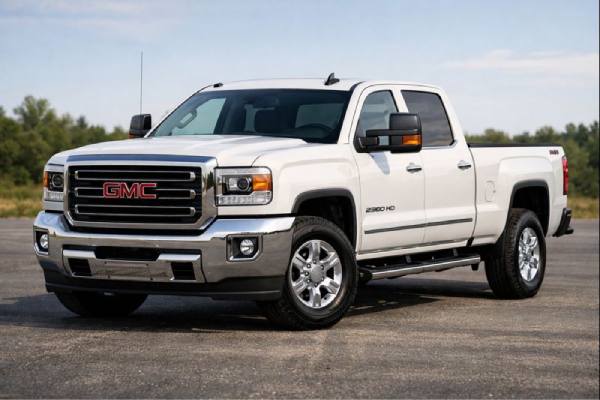
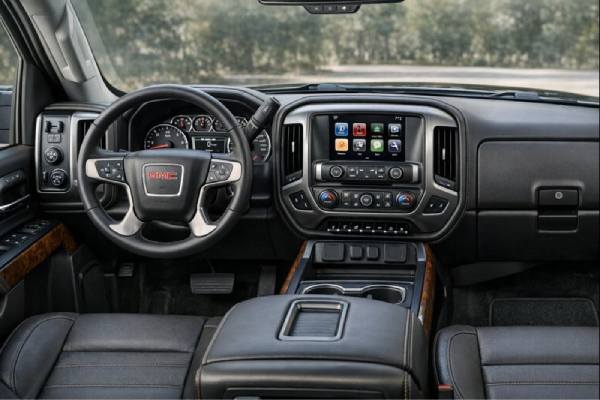
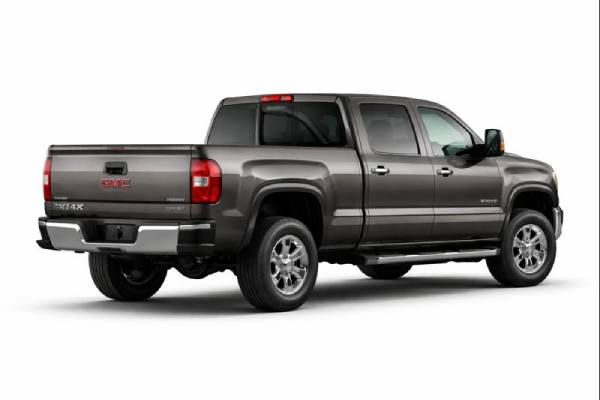
The 2015–2019 GMC Sierra HD 4WD (GMTK2XX) with the L96 6.0L V8 is the “simple gas” heavy-duty setup: a naturally aspirated, port-injected V8 paired to a proven 6-speed automatic and a two-speed transfer case. It is not the most efficient way to move weight, but it is one of the easiest to live with if you value predictable ownership: fewer emissions aftertreatment systems than the diesel, straightforward service access, and strong parts availability. The tradeoff is that towing capability and hill performance depend heavily on axle ratio and cooling condition, and fuel consumption rises quickly under load. If you shop carefully and maintain it on a severe-duty schedule when you tow, this configuration can be a long-term work partner that stays relatively low-drama.
Owner Snapshot
- Strong low-end response for a gas HD truck, with simple port injection and no turbo hardware to manage.
- Stable towing manners from the HD frame, brakes, and cooling package when everything is healthy.
- Wide parts availability and familiar service procedures across many GM 6.0L applications.
- Budget for fuel and for drivetrain fluids if you tow often; transfer case and differential service is not optional.
- Change engine oil about every 8,000–12,000 km (5,000–7,500 mi) depending on towing, idle time, and dust exposure.
Guide contents
- L96 4WD Sierra HD basics
- L96 specs and service capacities
- Trims, towing, and safety gear
- Reliability hotspots and recalls
- Maintenance plan and buying checks
- Real driving and towing feel
- Comparing Sierra HD to rivals
L96 4WD Sierra HD basics
Think of the L96 Sierra HD 4WD as a heavy-duty chassis wrapped around a straightforward gas powertrain. In most trims it is a Sierra 2500HD or 3500HD built to carry and tow daily—contractor loads, trailers, equipment racks—without needing “special behavior” from the driver. The L96 is a 6.0L V8 from GM’s LS-family architecture: pushrod (cam-in-block) valvetrain, port fuel injection, and a naturally aspirated intake path. That combination matters for ownership. It tends to tolerate short trips and varied fuel quality better than many direct-injection engines of the era, and it avoids diesel emissions hardware like DEF systems and diesel particulate filter regeneration.
4WD models use a two-speed transfer case, giving you a true low range for steep grades, snow traction, and controlled maneuvering with heavy loads. The chassis is tuned for payload first: the rear leaf springs and solid axle are designed to sit flatter under weight, and the steering and braking systems are sized for repeated work cycles. Unloaded, you feel that mission—ride quality is firm, and the truck can “hop” over broken pavement compared to a half-ton.
What separates good from frustrating ownership is configuration. Cab style, bed length, axle ratio, tire rating, and suspension packages can change towing and payload by a wide margin. If you plan to tow frequently, the “right” Sierra HD is the one with the cooling system in top condition, the correct hitch hardware, and an axle ratio that lets the engine stay in its torque band without constant downshifts.
Finally, remember where this model fits in the timeline. 2015–2019 GMTK2XX HD trucks sit in a period where tech features improved year over year, but advanced crash-avoidance systems were still limited on HD pickups. That does not make it unsafe by default, but it does mean your safety margin relies more on tires, brakes, visibility, and driver habits than on automatic intervention.
L96 specs and service capacities
Below are practical, ownership-focused specifications for the 2015–2019 Sierra HD 4WD with the L96 6.0L gas V8. Many values vary by cab/box (regular, double, crew; standard or long bed) and by 2500HD vs 3500HD. Use the ranges as a planning tool, then confirm your exact VIN build data before ordering parts or setting up towing.
Engine and Performance
| Item | Specification |
|---|---|
| Engine code | L96 |
| Layout and cylinders | V8, OHV pushrod, 16-valve (2 valves/cyl) |
| Displacement | 6.0 L (5,967 cc) |
| Bore × stroke | 101.6 × 92.0 mm (4.00 × 3.62 in) |
| Induction | Naturally aspirated |
| Fuel system | Port fuel injection |
| Compression ratio | ~9.6:1 (varies by calibration) |
| Max power | 360 hp (268 kW) @ ~5,400 rpm |
| Max torque | 515 Nm (380 lb-ft) @ ~4,200 rpm |
| Timing drive | Chain |
| Fuel | Gasoline; flex-fuel capability depends on calibration/market |
Transmission and 4WD hardware
| Item | Specification |
|---|---|
| Transmission | 6-speed automatic (6L90 family, by application) |
| Gear ratios (typical) | 1st 4.03, 2nd 2.36, 3rd 1.53, 4th 1.15, 5th 0.85, 6th 0.67, Rev 3.06 |
| Drive type | Part-time 4WD |
| Transfer case | 2-speed, electronic shift (2HI / 4HI / 4LO) |
| Low range (typical) | ~2.7:1 |
| Rear differential | Open or automatic locking (availability varies) |
| Axle ratios (common) | 3.73 or 4.10 depending on GVWR/tow package |
Chassis, dimensions, and weights (typical ranges)
| Item | Typical range (varies by cab/bed and 2500HD vs 3500HD) |
|---|---|
| Front suspension | Independent (torsion bar) |
| Rear suspension | Solid axle with leaf springs |
| Brakes | 4-wheel disc (HD-sized) |
| Wheels and tires (common) | LT245/75R17E, LT265/70R18E, LT265/60R20E (by trim) |
| Wheelbase | ~3,670–4,260 mm (144.5–167.7 in) |
| Overall length | ~5,850–6,600 mm (230–260 in) |
| Overall width | ~2,030 mm (80 in) excl. mirrors |
| Height | ~1,980–2,050 mm (78–81 in) |
| Curb weight | ~2,850–3,350 kg (6,300–7,400 lb) |
| GVWR | commonly ~4,310–4,490 kg (9,500–9,900 lb), varies widely |
Fluids and service capacities (planning guide)
| System | Typical specification (verify by RPO/VIN) |
|---|---|
| Engine oil | dexos1 5W-30; capacity varies by pan and filter |
| Coolant | Dex-Cool type 50/50 mix; total system capacity varies |
| Automatic transmission | DEXRON-VI |
| Transfer case | Often DEXRON-VI or AutoTrak-type fluid (depends on transfer case model) |
| Differentials | Gear oil (often 75W-90); locker may require additive by design |
Safety and driver assistance (typical for this generation)
| Category | What to expect |
|---|---|
| Airbags | Front airbags; side and curtain coverage varies by cab and year |
| Stability systems | ABS, stability control, traction control, trailer sway control (when equipped) |
| Cameras and sensors | Rear camera became common; parking sensors often optional/trim-based |
| ADAS | Forward collision alert and lane departure warning may appear on upper trims; automatic emergency braking is not typical for many HD builds in this era |
If you want one “most important spec” for daily work use, focus on GVWR, axle ratio, tire load rating, and cooling condition. Those determine whether the truck feels calm and capable or constantly strained when loaded.
Trims, towing, and safety gear
GMC positioned the Sierra HD lineup so that you could buy anything from a jobsite tool to a long-distance tow platform. For 2015–2019 the trim names and packages vary by year and region, but the ownership logic stays consistent: higher trims add comfort and tech, while towing and payload depend more on mechanical configuration than on the badge.
Trims and what actually changes
- Base/work-focused trims (often “WT” equivalents) prioritize vinyl or durable cloth, simpler infotainment, and fewer electrical options. These trucks can be ideal for fleets because there is less to break, but you must confirm they include the cooling and hitch equipment you need.
- Mid trims (SLE/SLT-type) commonly add better seating, convenience features, and more available trailering equipment. This is often the best value zone for owner-operators: comfortable enough for long days, still straightforward to maintain.
- Denali generally adds higher-end interior materials, larger wheels, and more standard tech. Watch wheel and tire choices if you tow heavy—an attractive wheel package is not automatically the best load-rated tire package.
Packages that matter for towing
When you shop, look beyond “tow package” as a phrase and verify the components:
- Hitch hardware: receiver class, integrated trailer brake controller (if equipped), and correct wiring.
- Axle ratio: 4.10 gears often make the L96 feel significantly more relaxed with heavy trailers than 3.73, especially in hilly terrain.
- Cooling: HD cooling stack condition and transmission cooling capacity are critical. A partially blocked radiator or weak fan clutch can change towing confidence dramatically.
- Mirrors and visibility: tow mirrors and camera aids reduce fatigue and improve safety margins.
Quick identifiers when viewing a truck
- RPO codes: the glovebox/door jamb information or dealer build sheet will list axle ratio, differential type, and trailering equipment.
- Receiver and wiring: inspect for clean, factory-style integration rather than improvised add-ons.
- Tire sidewall: confirm LT tires with appropriate load range (often E) if you plan to work the truck.
Safety ratings and what to expect
Many heavy-duty pickups are not evaluated the same way as lighter vehicles in consumer crash-test programs, and published star ratings may be unavailable depending on weight class and test coverage. Treat this as a prompt to focus on fundamentals you control:
- Buy the best load-rated tires you can.
- Keep brakes and brake fluid fresh, especially if you tow.
- Confirm every recall is completed.
- Make sure your trailer braking system is correctly set up and tested.
In short, the trim shapes comfort and features, but the mechanical build—axle ratio, tires, hitch integration, and cooling health—shapes capability and day-to-day satisfaction.
Reliability hotspots and recalls
The L96 Sierra HD 4WD can be very durable, but heavy-duty durability depends on two things: how the truck was used and whether it was serviced like a work vehicle. Below are the most common patterns owners encounter, organized by prevalence and typical cost tier. Mileage bands are approximate; age, climate, and towing frequency can move these earlier or later.
Common and usually manageable
- Exhaust manifold bolt or leak noise (low to medium cost)
Symptoms: ticking on cold start, soot marks near manifold.
Likely cause: heat cycling and fastener fatigue.
Remedy: replace hardware, address warped sealing surfaces if needed. - Accessory drive wear (low cost)
Symptoms: belt squeal, intermittent charging, wobble at pulleys.
Cause: idler/tensioner bearing wear.
Remedy: replace belt, tensioner, and idlers as a set if mileage is high. - Cooling system aging (medium cost if ignored)
Symptoms: creeping temps under load, heater performance changes, coolant smell.
Cause: tired thermostat, water pump seepage, partially restricted radiator.
Remedy: refresh components before towing season; do not “wait for failure.”
Occasional but can get expensive
- 6-speed automatic shift quality issues (medium to high cost)
Symptoms: harsh shifts, flare, delayed engagement, shudder under light throttle.
Cause: fluid degradation, torque converter wear, valve body issues.
Remedy: fluid and filter service first; diagnosis before parts swapping. Trucks that tow should be serviced on severe intervals. - Transfer case and 4WD actuator/encoder problems (medium cost)
Symptoms: service 4WD message, stuck in range, slow engagement.
Cause: encoder motor wear, switch faults, wiring/ground issues.
Remedy: verify power/ground, scan for codes, repair the actual failing component rather than guessing. - Front-end wear on IFS HD trucks (medium cost)
Symptoms: wander, clunks, uneven tire wear.
Cause: idler/pitman arms, ball joints, tie rods, alignment neglect.
Remedy: replace worn parts in matched pairs, then align with loaded ride height in mind.
Rare, but high-impact if present
- Internal engine issues (high cost)
The L96 is generally robust. When problems do occur, they often trace back to overheating events, oil starvation from neglect, or severe detonation from fuel/ignition issues. A pre-purchase scan and compression or leak-down test can be worth it on high-mileage trucks.
Recalls, TSBs, and how to verify
Do not rely on “the previous owner said it was done.” Verify by VIN through official recall lookup tools and dealer service history. For a work truck, recall completion is not paperwork—it is part of reliability. If the truck has any driver-assistance sensors (camera, park sensors), confirm they function correctly after any bumper or tailgate repair, since calibration and harness routing matter.
Maintenance plan and buying checks
A Sierra HD with the L96 rewards owners who treat maintenance as part of capability. If you wait for symptoms, you usually pay more and lose uptime. The schedule below is a practical baseline; severe service applies to frequent towing, heavy idle time, dusty roads, short trips in cold weather, and commercial use.
Core maintenance schedule (practical baseline)
- Engine oil and filter: every 8,000–12,000 km (5,000–7,500 mi), sooner for heavy towing or long idle time. Use the correct oil spec and a quality filter.
- Engine air filter: inspect every oil change; replace typically every 24,000–48,000 km (15,000–30,000 mi) depending on dust.
- Cabin air filter (if equipped): every 24,000–32,000 km (15,000–20,000 mi) or annually.
- Coolant: replace per GM interval or sooner if contamination is present; confirm freeze protection before winter.
- Spark plugs: typically around 160,000 km (100,000 mi) in light use; earlier if misfires appear or if towing heat cycles are severe.
- Automatic transmission fluid: service by 72,000–96,000 km (45,000–60,000 mi) for towing/severe duty; verify temperature control and consider shorter intervals if you tow near max ratings.
- Transfer case and differential fluids: service about every 72,000 km (45,000 mi) for frequent 4WD use, towing, or water crossings; inspect for leaks at each oil change.
- Brake fluid: every 2 years, regardless of mileage, especially if you tow.
- Tires: rotate every 8,000–12,000 km (5,000–7,500 mi); align at least annually or any time steering parts are replaced.
Essential torque values (common HD planning numbers)
These can vary by wheel type and axle, so treat them as “check points,” not absolute truth:
- Wheel lug nuts: often around 190 Nm (140 lb-ft) on many HD GM applications (verify your wheel and stud spec).
- Spark plugs: commonly around 20 Nm (15 lb-ft) on LS-family engines (verify plug seat type and spec).
Buyer’s guide: what to inspect in person
- Cooling system under load: check for stable temperatures on a long grade, fan engagement, and no coolant odor.
- Transmission behavior: smooth engagement R to D, no flare, no persistent shudder.
- 4WD function: verify 2HI/4HI/4LO engagement on gravel or dirt (not on dry pavement), and listen for abnormal noises.
- Front-end wear: check tire wear patterns, steering play, and clunks over bumps.
- Leaks: rear main area, transmission cooler lines, transfer case, and differential seals.
- Electrical health: battery age, charging stability, clean grounds, and no “mystery” warning lights.
- Tow setup: receiver integrity, wiring condition, trailer brake controller operation, and evidence of correct hitch use (not bent hardware).
Long-term outlook
If the truck has a consistent service history and you keep up with fluids, steering wear items, and cooling maintenance, the L96 gas HD setup can run a long time. The “big expenses” usually come from neglect: overheated transmissions, worn front ends that destroy tires, and deferred driveline fluid service that turns into bearing noise later.
Real driving and towing feel
Driving a Sierra HD 4WD with the L96 is less about quickness and more about control. Unloaded, the truck feels substantial and stiff. The suspension is tuned to carry weight, so over sharp bumps you may notice a busy rear axle and a firm front end. On the highway it settles down and tracks straight, especially with good tires and a tight steering linkage, but the steering is heavier and less “precise” than modern rack-and-pinion half-tons.
Powertrain character
The L96’s strength is predictable response. Around town it feels torquey enough at low rpm, but it is still a gas engine in a heavy truck: when you ask for real acceleration or climb a grade, it will rev and it will downshift. That is normal behavior, not a flaw. The 6-speed automatic typically holds gears decisively under load, and you can help it by using tow/haul mode early rather than waiting until it hunts between gears. Tow/haul usually improves shift timing and engine braking on descents, which reduces brake heat.
Real-world efficiency expectations
Heavy-duty trucks often do not behave like EPA-rated passenger vehicles, and fuel consumption depends strongly on speed, tires, and load. As a realistic planning range:
- Unloaded highway (120 km/h / 75 mph): often around 13–16 L/100 km (15–18 mpg US / 18–22 mpg UK) if the truck is well-aligned and not lifted.
- Mixed driving: commonly 17–21 L/100 km (11–14 mpg US / 13–17 mpg UK).
- Towing: frequently 24–34 L/100 km (7–10 mpg US / 8–12 mpg UK) depending on trailer size, terrain, and wind.
These ranges are not a promise, but they help compare a gas HD purchase against a diesel alternative or a lighter truck.
Braking, stability, and confidence with load
With a properly set up trailer brake controller and correctly inflated LT tires, the Sierra HD is usually a calm tow platform. The chassis feels planted, and the long wheelbase configurations reduce trailer influence. Your biggest “feel” changes come from setup:
- Tire load rating and pressure matter more than many owners expect.
- Weight distribution and hitch height determine whether the truck feels level or “light” in the front.
- Cooling condition determines whether long grades feel controlled or stressful.
4WD traction and low range
In snow, on muddy worksites, or when backing a trailer up a grade, low range is the feature that turns effort into control. Use it to reduce heat and clutch load, not as a rescue button after wheelspin. If you engage 4WD regularly, budget for transfer case fluid and inspection intervals accordingly.
Comparing Sierra HD to rivals
In the 2015–2019 heavy-duty market, the Sierra HD L96 4WD competes most directly with gasoline HD pickups like the Ford Super Duty gas options and the Ram HD gas choices. The right comparison depends on how you use the truck: occasional towing, daily payload, or high-mileage commercial duty.
Against gas HD competitors
- Versus Ford Super Duty gas (typical 6.2L era): Ford’s gas HD trucks often feel strong at higher rpm and can be excellent tow platforms, but ownership experience varies by transmission generation and axle gearing. The Sierra’s advantage is a familiar GM powertrain ecosystem and generally straightforward service access for the LS-family V8.
- Versus Ram HD gas (typical 6.4L era): Ram’s larger-displacement gas option can feel stronger when accelerating with weight, but purchase cost, fuel consumption, and configuration differences can shift the value equation. The Sierra HD’s advantage is often predictability and broad parts availability, especially in fleet channels.
Against diesel alternatives
Within the Sierra HD lineup itself, the diesel is the obvious alternative. For many owners the choice becomes simple:
- Choose diesel if you tow heavy, tow often, and want lower-rpm pulling power and better towing fuel economy—while accepting higher complexity and emissions-system maintenance.
- Choose L96 gas if your towing is moderate, your usage includes many short trips or long idle time, and you want simpler long-term service risk—even if fuel consumption is higher.
When the L96 Sierra HD is the best pick
This configuration is a sweet spot for owners who need a real HD chassis but do not want diesel complexity: landscape trailers, utility bodies, occasional equipment towing, winter work, and mixed-duty fleets. It is also a strong option when total cost of ownership is defined by downtime risk rather than fuel alone.
When you should shop differently
If you routinely tow at the top end of HD ratings in mountainous terrain, a diesel or a newer gas powertrain with more gears may reduce stress and improve control. And if you rarely carry weight, a half-ton or light-duty truck will likely ride better and cost less to fuel.
References
- 2015 GMC Sierra 3500HD Owner Manual 2015 (Owner’s Manual)
- Recalls 2025 (Recall Database)
- New Car Assessment Program 2022 (Regulatory Program)
Disclaimer
This article is for informational purposes only and is not a substitute for professional inspection, diagnosis, or repair. Specifications, torque values, fluid types, capacities, and service intervals vary by VIN, market, model year, and equipment, so always verify details using your official service information and owner documentation before performing maintenance or purchasing parts.
If you found this guide helpful, please consider sharing it on Facebook, X (Twitter), or your favorite forum to support our work.