
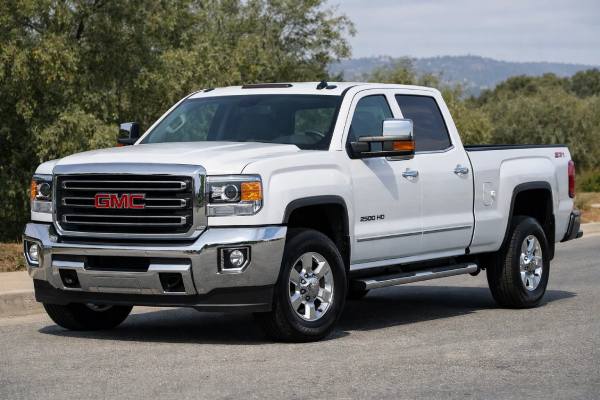
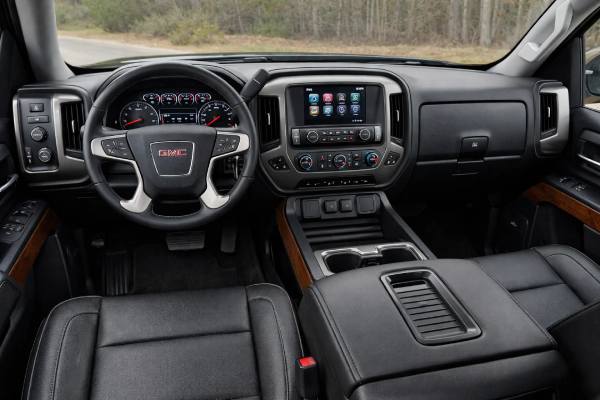
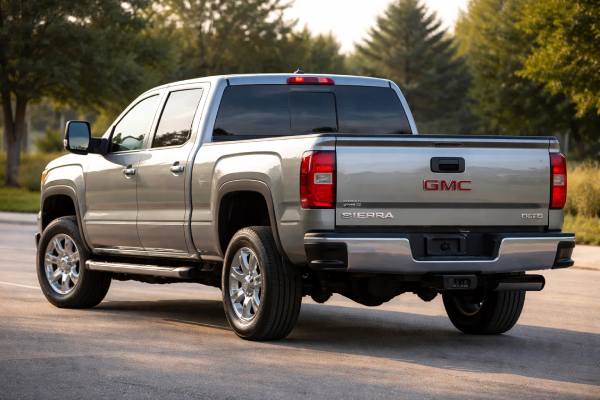
The 2015–2016 GMC Sierra HD 4WD on the GMTK2XX platform pairs a Duramax LML 6.6-liter turbodiesel with an Allison six-speed and a two-speed transfer case that is built for real work, not just brochure towing numbers. In day-to-day ownership, the appeal is the same mix that made this generation popular: massive low-rpm torque, confident exhaust-brake control on grades, and a chassis that stays composed under trailer tongue weight. The 4WD system adds capability in snow, mud, and job sites, but it also adds service points—front differential, transfer case, and additional seals and joints that reward preventative maintenance. If you shop carefully and keep emissions and fuel-system health in mind, this Sierra HD can be a durable long-haul tow rig with a surprisingly refined cabin for its era.
Owner Snapshot
- Strong low-rpm pull and exhaust-brake control make towing and descending grades less stressful.
- Two-speed 4WD and low range add real traction on soft surfaces and boat ramps.
- Heavy-duty cooling and drivetrain are well-matched to sustained loads.
- Budget for diesel emissions components and fuel-system upkeep as mileage climbs.
- Plan on transfer case and both differential fluid service about every 80,000–100,000 km (50,000–60,000 mi) if used for towing or off-road.
Explore the sections
- What this 4WD LML Sierra HD is
- 2015–2016 specs and measurements
- Trims, packages, and safety tech
- Reliability, faults, and official fixes
- Maintenance plan and buyer advice
- Driving, towing, and real economy
- Rivals worth cross-shopping
What this 4WD LML Sierra HD is
Think of the 2015–2016 Sierra HD 4WD as two trucks in one: an everyday pickup with a comfortable, modern-for-its-time cabin, and a heavy-duty drivetrain meant to live under load. The GMTK2XX HD platform uses a fully boxed-style frame design in critical areas, stout spring rates, and truck-grade brakes sized for repeated stops with trailer weight behind you. What distinguishes the HD from a half-ton is not just tow rating, but how it holds speed on long grades, how it manages heat, and how it tolerates high tongue weight without feeling loose.
The LML Duramax is the centerpiece. It delivers peak torque low in the rev range, so the truck can pull a trailer without constant downshifts. The Allison six-speed automatic leans toward smoothness and durability rather than quick, sporty shifts. In practice, that means fewer “busy” gear changes when you are climbing or descending, especially when tow/haul mode and the integrated exhaust brake are used correctly.
The 4WD hardware matters just as much as the engine in this specific configuration. A two-speed transfer case with low range gives you controlled crawling for boat ramps, uneven job sites, or steep gravel driveways. The front drivetrain adds complexity—front differential fluid, additional seals, and rotating components—so owners who use 4WD regularly should treat driveline service as routine, not optional.
This generation also benefits from a solid mix of practical features: trailering mirrors, factory brake-controller integration on many trims, and a straightforward interior layout that is easy to live with. The best ownership experiences usually come from trucks that were serviced consistently, used good-quality diesel fuel, and had recall and calibration updates completed.
2015–2016 specs and measurements
Below are common baseline specifications for the 2015–2016 Sierra HD 4WD with the LML 6.6 diesel. Exact figures vary by 2500HD vs 3500HD, cab/bed, axle ratio, single vs dual rear wheel, and market equipment—so use these as a structured reference, then verify by VIN build sheet.
Engine and performance (LML Duramax)
| Item | Spec |
|---|---|
| Code | LML |
| Layout and cylinders | V8 turbodiesel, 8 cylinders, OHV, 2 valves/cyl |
| Displacement | 6.6 L (6,599 cc) |
| Bore × stroke | 103 × 99 mm (4.055 × 3.898 in) |
| Induction | Turbocharged (variable-geometry turbo) |
| Fuel system | High-pressure common-rail direct injection |
| Compression ratio | ~16.0:1 |
| Max power | 397 hp (296 kW) @ ~3,000 rpm |
| Max torque | ~1,037 Nm (765 lb-ft) @ ~1,600 rpm |
| Timing drive | Gear-driven |
| Efficiency standard | EPA (heavy-duty pickups often have limited published MPG) |
| Real-world highway at 120 km/h (75 mph) | Commonly ~12–15 L/100 km (16–20 mpg US), highly load-dependent |
Transmission and driveline (4WD)
| Item | Spec |
|---|---|
| Transmission | Allison 1000 6-speed automatic (varies by calibration and RPO) |
| Typical gear ratios | 1st 3.10 / 2nd 1.81 / 3rd 1.41 / 4th 1.00 / 5th 0.71 / 6th 0.61 / Rev 4.49 |
| Drive type | 4WD with 2-speed transfer case |
| Low range | ~2.7:1 (typical) |
| Rear axle | Full-floating HD axle (ratio varies; 3.73 common on diesels) |
| Differential | Open or automatic locker depending on option package |
Chassis and dimensions (ranges)
| Item | Spec (typical range) |
|---|---|
| Front suspension | Independent front suspension with torsion bars |
| Rear suspension | Leaf springs |
| Brakes | Four-wheel disc (HD-sized) |
| Length | ~5,850–6,550 mm (230–258 in) |
| Width | ~2,045 mm (80.5 in), excluding mirrors |
| Height | ~1,970–2,020 mm (77.5–79.5 in) |
| Wheelbase | ~3,620–4,260 mm (142–168 in) |
| Turning circle | ~14.0–15.5 m (46–51 ft), configuration-dependent |
| Curb weight | ~3,000–3,700 kg (6,600–8,200 lb) |
| GVWR | ~4,310–5,900 kg (9,500–13,000 lb), configuration-dependent |
| Fuel tank | ~136 L (36 US gal) single tank; dual-tank packages vary |
| Ground clearance | Often ~200–250 mm (8–10 in), tires and trim dependent |
Fluids and key service capacities (verify by VIN)
| System | Common spec |
|---|---|
| Engine oil | Dexos-approved diesel oil; typically 5W-40 (cold climates) or 15W-40 (warmer use), capacity ~9.5 L (10 US qt) |
| Coolant | Dex-Cool type; 50/50 mix, capacity varies by cooling package |
| Transmission fluid | Allison-approved ATF; capacity varies by pan and cooler |
| Transfer case | GM-specified transfer case fluid; capacity varies by model |
| Differentials | GL-5 gear oil; front and rear capacities vary |
Electrical
| Item | Spec (typical) |
|---|---|
| Alternator | Heavy-duty output varies by option (often 150–220 A) |
| Battery | Dual-battery setups common on diesels; CCA and group size vary |
Safety and driver assistance (era-correct)
| Item | Notes |
|---|---|
| Stability control and ABS | Standard on most configurations |
| Trailer brake control | Often available; sometimes standard on higher trims |
| Driver alerts | Forward collision alert, lane departure warning, and vibrating seat alerts were commonly package-based |
Trims, packages, and safety tech
For 2015–2016, Sierra HD trims typically ladder from work-focused to luxury-focused, with real mechanical differences often hiding inside option codes. Common trims you will encounter include base and SLE (work and fleet-friendly), SLT (comfort and towing feature sweet spot), and Denali (premium interior with many options bundled). The good news is that the diesel and Allison pairing stays consistent; the more important differences are how the truck is equipped for trailering, how it is geared, and what axle and cooling options it has.
When shopping, prioritize trailering and drivetrain hardware first, cosmetics second. The most useful packages tend to be those that improve control and thermal headroom: factory integrated trailer brake controller, tow/haul mode calibrations, trailering mirrors, and cooling upgrades. On many trucks, a rear axle automatic locking differential (when fitted) improves low-speed traction on ramps or loose gravel, but it is not a substitute for good tires or proper weight distribution.
For 4WD owners, the transfer-case control type matters. Many trucks use an electronic selector that makes shifting between 2HI, 4HI, and 4LO simple, but it also introduces an encoder motor and position sensors that can fail with age. If you plan to use 4WD regularly, choose a truck with clean service history and evidence that the 4WD system was exercised periodically; trucks that never see 4WD sometimes develop sticky actuators or neglected fluid.
Safety and driver assistance on this generation is best described as “traditional truck safety plus alert features.” Core systems such as ABS and stability control are common, and many trims offer driver alert packages (forward collision alert, lane departure warning, and seat vibration warnings). Adaptive cruise control and automatic emergency braking were not as broadly deployed on heavy-duty pickups in this era as they are today, so confirm what is actually installed rather than assuming modern ADAS coverage.
Crash-test ratings can be tricky for heavy-duty pickups because some testing programs do not rate every HD configuration. The practical approach is to check the truck by VIN in official databases and focus on real-world safety basics: tire condition, brake performance, steering tightness, airbag and seatbelt system health, and recall completion.
Reliability, faults, and official fixes
A well-kept LML Sierra HD can run a long time, but reliability depends heavily on fuel-system health, emissions-system condition, and how the truck was used. The most expensive problems tend to cluster in a few systems, so it helps to separate “common nuisances” from “rare but wallet-heavy” failures.
Common (low to medium cost)
- DEF level and heater sensor complaints: Messages, warnings, or derate triggers can come from heater circuits, tank sensors, or wiring. Symptoms often show up in cold weather. Remedy is usually targeted component replacement and, in some cases, updated parts or software calibrations.
- Transfer case encoder motor and switch issues (4WD): If the truck refuses to shift ranges, flashes range lights, or drops to neutral unexpectedly, the encoder motor, position sensor, or wiring can be involved. A scan tool that reads transfer-case data is the fastest path to diagnosis.
- Front-end wear from heavy tires and loads: Idler and pitman arms, ball joints, and tie-rod ends can wear faster on HD trucks that tow often or run heavy wheel-and-tire setups. Watch for steering wander, uneven tire wear, or clunks over bumps.
Occasional (medium to high cost)
- EGR and charge-air leaks: Sooty residue, coolant loss, or reduced power can point to EGR cooler issues or charge-air system leaks. The fix varies from hose and clamp work to cooler replacement.
- Turbo vane sticking or boost control faults: Variable-geometry turbo systems can develop sticky vanes if the truck does lots of short trips or idling. Symptoms include underboost codes, lazy throttle response, or inconsistent power. Sometimes a hard-working highway run helps, but persistent faults need proper diagnosis.
Rare but high severity
- High-pressure fuel pump (CP4) failure contamination: If the pump fails internally, it can send metal debris through the fuel system. Symptoms can start as hard starting, rail-pressure codes, or sudden loss of power. The repair can escalate into injectors, lines, and tank cleaning. Preventative habits—clean fuel, fresh filters, and avoiding running low on fuel—reduce risk, but they do not eliminate it.
- Diesel emissions system failures under heavy use: DPF and SCR components can be reliable when the truck sees steady highway miles, but frequent short trips, excessive idle time, or repeated interrupted regenerations raise the odds of plugging and sensor failures. Look for a history of completed regenerations and no chronic warning lights.
Recalls, service bulletins, and calibrations
For 2015–2016 Sierra HD trucks, it is especially important to confirm recall completion and software updates because some fixes involve drivability, safety systems, or emissions compliance. Use an official VIN lookup, then ask the seller for repair orders showing dates and mileage. If the truck has dual fuel tanks, pay extra attention to any service actions related to fuel transfer behavior and engine stalling prevention.
Pre-purchase, request a scan for stored and pending codes (engine, transmission, transfer case, and body modules), inspect for coolant and oil seepage, verify 4WD engagement in 4HI and 4LO, and confirm that exhaust brake behavior feels consistent on a test descent.
Maintenance plan and buyer advice
A good maintenance plan for a 2015–2016 Sierra HD 4WD diesel is less about “doing everything early” and more about servicing the right items on time—especially the fuel filter, driveline fluids, and anything that keeps emissions equipment healthy. If you tow, idle for long periods, or drive short trips, assume you are in severe service and shorten intervals.
Practical maintenance schedule (baseline)
| Item | Normal use | Severe use (towing, short trips, heavy idle, dusty) |
|---|---|---|
| Engine oil and filter | Follow Oil Life Monitor; often ~12,000–16,000 km (7,500–10,000 mi) | ~8,000 km (5,000 mi) |
| Fuel filter | ~24,000–32,000 km (15,000–20,000 mi) | ~16,000–24,000 km (10,000–15,000 mi) |
| Engine air filter | Inspect every 16,000 km (10,000 mi) | Inspect more often; replace as needed |
| Cabin air filter (if equipped) | ~24,000 km (15,000 mi) | ~16,000–24,000 km (10,000–15,000 mi) |
| Coolant | Typically 5 years or 160,000 km (100,000 mi) | Shorten if contamination or overheating history |
| Brake fluid | Every 2–3 years | Every 2 years |
| Transmission fluid | Often 80,000–160,000 km (50,000–100,000 mi), use-based | Tow often: closer to 80,000–100,000 km |
| Transfer case fluid (4WD) | ~80,000–100,000 km (50,000–60,000 mi) | Same interval, do not skip |
| Front and rear differential fluids | ~80,000–100,000 km (50,000–60,000 mi) | Tow and water crossings: sooner |
| Serpentine belt and hoses | Inspect each oil service | Replace at first cracking or noise |
| Batteries and charging test | Annually | Annually; before winter |
Fluids and decision-making notes
- Oil: Use diesel-rated oil meeting the correct GM approvals for your climate. Cold climates often benefit from 5W-40 for easier starts and faster oil flow.
- DEF: Treat diesel exhaust fluid as a consumable with shelf-life limits. Keep the filler area clean and avoid contamination.
- Driveline fluids (4WD): Transfer case and front differential service is where 4WD ownership differs most from 2WD. Fresh fluid is cheap compared with actuator, bearing, or chain wear.
Buyer’s checklist (quick but effective)
- Cold start test: Listen for abnormal knocking, extended cranking, or erratic idle.
- Scan tool check: Look for history codes related to fuel pressure, glow system, SCR and DPF sensors, and transfer case range faults.
- 4WD function: Verify 4HI engagement and a clean shift into 4LO on a loose surface; confirm no grinding or flashing indicators.
- Steering and front-end: Check for play, clunks, and uneven tire wear—HD front ends show abuse quickly.
- Cooling system health: Inspect for dried coolant residue at hoses, water pump, radiator seams, and heater connections.
- Service history: Fuel filter receipts and regular oil changes matter more than shiny paint.
Best long-term durability usually comes from trucks that did steady highway miles with regular fluid service and minimal neglected warning lights. The riskiest purchases are “always in town” trucks with constant idling and unresolved emissions faults.
Driving, towing, and real economy
On the road, the Sierra HD 4WD feels like what it is: a heavy, stable platform designed to resist being pushed around by wind and trailer sway. The steering is not sports-car sharp, but a good example tracks straight and feels planted at highway speed. If the truck wanders, needs constant correction, or feels nervous over bumps, suspect front-end wear, alignment issues, or tires that are mismatched for the weight.
The LML Duramax delivers its best work in the first half of the tachometer. Throttle response is strong once boost is built, and torque arrives early enough that you rarely need to rev it out. With tow/haul engaged, the Allison transmission is calmer and more purposeful: it holds gears longer, downshifts sooner when it senses grade, and works with the exhaust brake to control speed on descents. The result is less brake pedal heat and more confidence on mountain roads.
The 4WD system changes the experience most at low speeds and in poor traction. In 4HI, the truck is reassuring in snow-covered streets, muddy fields, and wet gravel. In 4LO, it becomes a slow-control machine—useful for backing a trailer, crawling over ruts, or easing down a steep slope. The key is to use 4WD intentionally, not constantly: engage it for traction and control, then return to 2HI on dry pavement to reduce driveline bind and wear.
Real-world fuel use depends more on speed, tires, and load than on the badge. Unloaded highway cruising often lands in a “mid-teens L/100 km” range for many owners, while city driving and short trips can climb quickly. Under towing, expect a noticeable penalty; moderate trailers can add a 20–40% consumption increase, and heavy, tall trailers can push that higher. The most effective efficiency tools are simple: keep speeds reasonable, maintain tire pressure for load, and avoid extended idling.
If you want measurable performance numbers, this truck is more “passing power” than “launch.” 0–100 km/h (0–62 mph) times are typically in the high-8 to low-10 second range depending on configuration, but the more relevant metric is how easily it maintains speed uphill without drama.
Rivals worth cross-shopping
If you are choosing a 2015–2016 Sierra HD 4WD diesel, you are usually cross-shopping Ford Super Duty and Ram Heavy Duty diesels from the same era. Each has a distinct personality and cost profile, and your best pick depends on how you tow and how long you plan to keep the truck.
Ford Super Duty 6.7 Power Stroke (2015–2016)
Ford’s 6.7-liter diesel is well-known for strong towing performance and broad aftermarket support. Where it can edge the Sierra is in certain towing configurations and available chassis setups. The trade-off is that ownership costs can still be high when diesel emissions components or turbo and fuel-system parts need attention. If you prioritize a wide dealer network and want a truck that many shops know well, the Ford is a logical comparison.
Ram 2500 and 3500 6.7 Cummins (2015–2016)
Ram’s appeal is the inline-six character: strong low-end torque and a simple, work-focused feel. Depending on transmission choice and configuration, Ram can be an excellent tow rig, especially in 3500 form. The downside is that ride quality can vary more by suspension setup, and certain driveline components and steering feel differ significantly from GM’s approach. If you want that Cummins torque delivery and plan to keep the truck for a long time, it is worth serious consideration.
Why the Sierra HD 4WD makes sense anyway
The Sierra HD’s advantage is how cohesive the package feels: Duramax torque plus Allison shift logic plus exhaust brake control. It is easy to drive smoothly while towing, and it tends to feel stable and predictable under load. If you find a clean truck with documented service history, completed recalls, and a healthy emissions system, it can be one of the least stressful heavy-duty pickups to live with day-to-day.
A smart strategy is to judge all rivals using the same checklist: scan for codes, verify recall completion, inspect steering and suspension wear, and test towing-related features (brake controller, tow/haul, exhaust brake, and 4WD range shifts). In this segment, condition beats brand loyalty almost every time.
References
- Owner’s Manual 2015 (Owner’s Manual) ([GMC][1])
- Duramax Diesel Manual 2015 (Owner’s Manual Supplement) ([experience.gm.com][2])
- Vehicle Detail Search – 2016 GMC Sierra 2500HD | NHTSA 2016 (Recall Database) ([NHTSA][3])
- Product Emission Recall 17067 Diesel Dual Tank Fuel Transfer Pump Plumbing & Diagnostics 2018 (Recall and Service Bulletin)
Disclaimer
This article is for informational purposes only and is not a substitute for professional diagnosis, inspection, or repair. Specifications, torque values, service intervals, and procedures can vary by VIN, market, build date, and installed equipment. Always verify details using official owner and service documentation for your exact vehicle and consult a qualified technician for safety-critical work.
If this guide helped you, please consider sharing it on Facebook, X, or your favorite forum to support our work.