
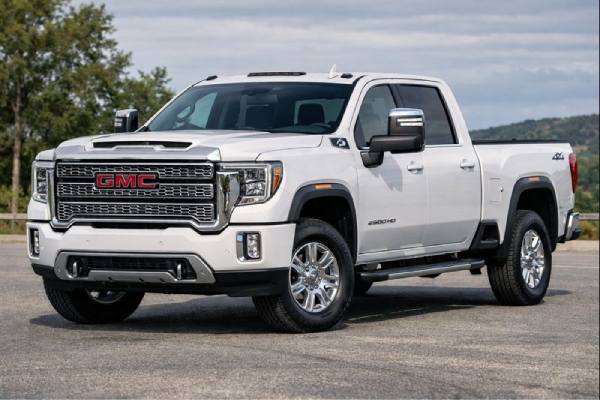
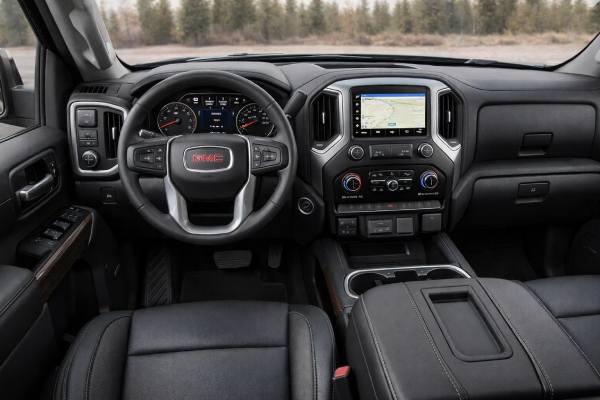
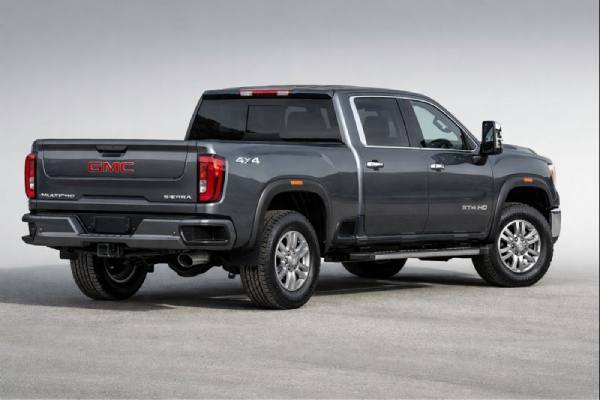
The 2020–2023 GMC Sierra HD 4WD with the L5P 6.6L Duramax is built for work that would overwhelm lighter-duty trucks. Its defining traits are a broad torque curve, a stout 4WD driveline, and a chassis designed to stay stable under heavy pin weight and long downhill grades. In day-to-day use, this Sierra HD feels more “industrial” than sporty: steering and ride are tuned for control with load, not featherweight feedback. Where it shines is repeatability—pulling hard, cooling effectively, and braking confidently when properly set up.
Ownership satisfaction usually comes down to choosing the right axle ratio, cab and bed combination, and trailering tech for your use case. Do that, and the Duramax Sierra HD becomes a dependable long-haul partner—as long as you stay ahead of diesel aftertreatment maintenance and keep fluids fresh under towing stress.
Owner Snapshot
- Strong low-rpm torque makes steep grades and merges easier, especially with a trailer
- 4WD low range helps with boat ramps, soft job sites, and controlled descents
- Excellent trailering camera and hitch tech availability on higher trims and packages
- Budget for diesel emissions-system sensors and DEF-related service as miles add up
- Change engine oil based on the oil life monitor, or at least every 12 months (whichever comes first)
Quick navigation
- 2020–2023 Sierra HD 4WD in context
- L5P Duramax and drivetrain specs
- Trims, packages, and safety tech
- Known issues, recalls, and fixes
- Service schedule and buying tips
- Road manners and towing feel
- Rivals: Ram and Super Duty
2020–2023 Sierra HD 4WD in context
The T1XX-generation Sierra HD (2500HD and 3500HD) arrived with a clear mission: deliver heavy-duty towing capability with modern trailering electronics, better cabin refinement, and the kind of cooling, braking, and driveline strength that holds up on long grades. In 4WD form, these trucks add a two-speed transfer case and a front axle system robust enough for real work—important if you regularly deal with snow, muddy access roads, gravel pits, or construction sites.
The L5P 6.6L Duramax V8 is the centerpiece. In this 2020–2023 configuration it’s rated at 445 hp and 910 lb-ft, but the more important story is how it behaves: strong torque comes in low, stays usable, and pairs well with a 10-speed automatic that can keep engine speed in the right band without “hunting.” When you tow, that means less drama: fewer big rpm swings, steadier coolant and transmission temperatures, and more predictable speed control with exhaust braking.
4WD matters for more than traction. Low range improves slow-speed control when backing a trailer up a grade, creeping down a slippery ramp, or crawling around a job site with a loaded bed. The tradeoff is weight, complexity, and more fluid services (front differential and transfer case), which are easy to ignore until something starts to bind or clunk.
For buyers, the Sierra HD decision is rarely “diesel or not” in isolation. It’s usually a package problem:
- How heavy is the trailer, and is it bumper-pull or gooseneck/fifth-wheel?
- Do you need payload more than maximum tow rating?
- Which cab and bed are practical for your work and parking constraints?
- Will you spend time in cold climates or short-trip duty cycles that stress diesel aftertreatment?
If you get those answers right, these trucks age well. If you get them wrong—especially payload—no amount of horsepower fixes an overloaded rear axle or a squatting, light-steering front end. A carefully optioned Sierra HD 4WD Duramax is best thought of as a system: engine, cooling, brakes, gearing, and trailering equipment working together.
L5P Duramax and drivetrain specs
Below are practical, model-specific specs for the 2020–2023 Sierra HD 4WD with the L5P 6.6L Duramax. Exact figures can vary by cab, bed, axle ratio, wheels, and whether the truck is a 2500HD or 3500HD (single rear wheel or dual rear wheel).
Engine and performance
| Item | Spec |
|---|---|
| Code | L5P |
| Layout and cylinders | 90° V8 turbo diesel, 8 cylinders, OHV pushrod, 4 valves/cyl |
| Bore × stroke | 103 × 99 mm (4.06 × 3.90 in) |
| Displacement | 6.6 L (6,604 cc) |
| Induction | Turbocharged (variable-geometry) |
| Fuel system | High-pressure common-rail direct injection |
| Compression ratio | ~16.0:1 |
| Max power | 445 hp (332 kW) @ ~2,800 rpm |
| Max torque | 1,234 Nm (910 lb-ft) @ ~1,600 rpm |
| Timing drive | Chain (valvetrain), gear-driven accessories vary by subsystem |
| Emissions standard | EPA heavy-duty diesel (aftertreatment with DPF and SCR/DEF) |
| Rated efficiency | Not EPA fuel-economy labeled for HD pickups; depends heavily on load and gearing |
| Real-world highway @ 120 km/h (75 mph) | Commonly ~14–18 L/100 km (13–17 mpg US / 16–20 mpg UK) unloaded; towing can increase consumption dramatically |
Transmission and 4WD system
| Item | Spec |
|---|---|
| Transmission | 10-speed automatic (Allison-branded) |
| Drive type | Part-time 4WD with 2-speed transfer case |
| Low range ratio | Typically ~2.7:1 (varies by transfer case option) |
| Differentials | Rear locking/limited-slip availability varies by trim and package; front is open in most configurations |
Common 10-speed ratio sets for the HD 10-speed are very wide overall: a deep first gear helps launches with heavy trailers, while multiple overdrives keep revs lower at cruising speed. Because GM does not present gear ratios consistently in public brochures, treat any published ratio table as “typical” unless verified against your VIN build information.
Chassis and dimensions (ranges)
| Item | Typical range (varies by cab and bed) |
|---|---|
| Suspension (front/rear) | Independent front suspension / rear leaf springs |
| Brakes | 4-wheel discs with ABS, stability control, and trailer brake integration (when equipped) |
| Length | ~5,980–6,760 mm (235–266 in) |
| Wheelbase | ~3,600–4,370 mm (142–172 in) |
| Width | ~2,065 mm (81 in) excluding mirrors (mirrors add significant width) |
| Height | ~1,980–2,060 mm (78–81 in) depending on configuration |
| Turning circle | Large by design; varies with wheelbase and tire package |
Capability highlights (very configuration-dependent)
| Metric | Typical range |
|---|---|
| Towing capacity | From the low teens (lb) to ~36,000 lb (gooseneck/fifth-wheel on properly equipped 3500HD) |
| Payload | Often ~3,000–7,000+ lb depending on SRW vs DRW, options, and diesel vs gas |
| Acceleration | Unloaded 0–60 mph often in the ~6.5–8.0 s range (traction and tires matter) |
Fluids and service capacities (diesel supplement values)
| Fluid | Spec and capacity |
|---|---|
| Engine oil | DexosD 0W-40 (commonly), 9.5 L (10.0 qt) with filter |
| Engine cooling system | 29.1 L (30.7 qt), DEX-COOL 50/50 mix |
| Low-temp cooling circuit | 3.5 L (3.7 qt), DEX-COOL 50/50 mix |
| DEF tank | 26.5 L (7.0 gal), ISO 22241-compliant DEF |
| Transfer case (2500 and 3500 series) | 2.3 L (2.4 qt), correct GM transfer case fluid spec |
| Power steering (hydraulic system) | 2.0 L (2.1 qt), correct GM hydraulic fluid spec |
Electrical and safety systems (typical)
Most Duramax Sierra HD trucks use high-output charging, strong batteries (often dual-battery setups), and heavy-duty trailer wiring provisions when equipped with trailering packages. Safety structure is a full-frame HD pickup design with multiple airbags, stability control, and optional driver assistance features that depend on trim and packages.
Trims, packages, and safety tech
GMC’s Sierra HD lineup is broad, but the practical differences for owners come down to trailering equipment, axle ratio availability, seat and cab layouts, and which driver assistance features are included or optional.
Common trims and what they change
While trim names vary in emphasis (work-truck focused vs luxury focused), the mechanical core of the Duramax 4WD is consistent. What changes is how easy the truck is to live with and how well it supports towing:
- Work-oriented trims tend to offer the same engine and 4WD hardware but fewer cameras, fewer trailer aids, and simpler tires and wheels that can be cheaper to maintain.
- Mid trims are often the “sweet spot” for owners who tow: they add better mirrors, more camera views, integrated trailer brake controls, and more comfort without forcing every luxury option.
- Upper trims add high-content interiors and the most complete trailering camera systems, which can materially reduce stress when backing or hitching solo.
Key option packages to prioritize
If you tow frequently, these are the options that usually matter more than leather or trim badges:
- Trailering camera systems: multiple views (hitch view, bed view, surround view) can make daily hookup safer and faster.
- Integrated trailer brake controller: a must for serious towing; it improves control and brake feel compared with many aftermarket setups.
- Tow mirrors and auxiliary wiring: reduces sway anxiety and improves lane-change confidence.
- Cooling and brake-related towing equipment: heavy-duty cooling packages and exhaust brake programming are the difference between “it can tow” and “it tows comfortably.”
Safety ratings and what to expect
Heavy-duty pickups are not always crash-tested and rated the same way as lighter vehicles. For some model years and configurations, official star ratings may be unavailable, and IIHS testing coverage can be limited. The practical takeaway is to focus on:
- Proper tire condition and correct load range for your use
- Brake maintenance and trailer brake setup
- Visibility and camera coverage for lane changes and backing
- Stability control behavior with your specific trailer
ADAS and driver assistance availability
On 2020–2023 Sierra HD trucks, driver assistance features are typically trim- and package-dependent rather than universal. Depending on build, you may find:
- Forward collision alert and following distance indicators
- Lane departure warning (more common than true lane-keep assist in this era)
- Automatic emergency braking availability on specific packages and trims
- Blind zone features that may support trailer length input (when equipped)
- Front and rear park assist and surround vision on higher trims
A practical ownership note: if you replace a windshield, front camera, radar sensor, or steering/suspension components, plan for calibration checks. Even when the truck “drives fine,” the driver assistance system may need recalibration to behave correctly.
Known issues, recalls, and fixes
The Duramax Sierra HD is generally durable, but it is not “set and forget.” Most problems fall into a few buckets: emissions aftertreatment sensors, heavy-duty wear items that are stressed by towing, and occasional software updates that improve drivability.
Common issues (higher prevalence)
- DEF and emissions sensor faults (low to medium cost, can become high if ignored)
Symptoms: check engine light, “service emissions system” messages, reduced power warnings, or frequent regens.
Likely causes: NOx sensor aging, DEF quality issues, wiring/connectors exposed to road spray, or software thresholds that are too sensitive.
Remedy: verify DEF meets the correct standard, check for stored codes, inspect connectors, and apply applicable software updates before replacing major components. - DPF regeneration complaints on short-trip duty cycles (medium severity)
Symptoms: rising soot load, frequent regen events, increased fuel use, hot exhaust smell.
Likely causes: repeated short trips, excessive idling, or low-speed operation that never gets exhaust hot enough for clean regens.
Remedy: adjust usage patterns (periodic longer drives), keep the air filter and fuel system healthy, and avoid extended idling where possible. - Shift quality concerns (low to medium severity)
Symptoms: harsh 1–2 shift, “busy” shifting while towing, or delayed downshifts on grades.
Likely causes: adaptive learning needing reset after battery events, outdated calibration, or heat-stressed fluid under extreme towing.
Remedy: dealer-level re-learn procedures and calibration updates; verify cooling and fluid condition if towing heavy.
Occasional issues (moderate prevalence)
- 4WD engagement or actuator quirks
Symptoms: delayed engagement, service 4WD messages, binding in tight turns on dry pavement if left in 4WD.
Remedy: confirm correct mode usage, check transfer case fluid condition, inspect actuators and wiring if warnings appear. - Trailer-related electrical gremlins
Symptoms: intermittent trailer lights, camera dropouts, false trailer connection warnings.
Remedy: start with the trailer connector, grounds, and corrosion; then check software updates for trailering modules.
Rare but expensive problems (low prevalence, high cost)
- Aftertreatment component replacement (DPF, SCR hardware) when contamination, repeated fault driving, or physical damage occurs.
The best prevention is early diagnosis and not continuing to drive for months with active emissions warnings.
Recalls, TSBs, and how to verify completion
Recall activity can affect things like tailgate operation, electrical components, or other safety-related systems. The most reliable approach is:
- Run the truck’s VIN through the official recall lookup.
- Ask for dealer service history showing completed campaigns.
- Confirm that software updates and field actions were actually applied, not just “noted.”
When shopping used, treat recall completion as a non-negotiable item—especially for anything related to latching systems, braking, or powertrain safety modes.
Service schedule and buying tips
A Sierra HD Duramax can run a long time, but it rewards disciplined maintenance—especially if you tow, idle for work, or drive in dusty regions. The schedule below is a practical baseline that balances factory logic (oil life monitoring) with real-world towing stress.
Core maintenance schedule (practical baseline)
- Engine oil and filter: follow the oil life monitor; for many owners that still means about every 8,000–16,000 km (5,000–10,000 mi) depending on load. Always change at least every 12 months.
- Fuel filter: replace on schedule and sooner if you suspect poor fuel quality or frequent water contamination risk. Diesel fuel cleanliness matters more than most owners expect.
- Engine air filter: inspect often in dust; replace when the restriction indicator (if equipped) or inspections show loading.
- Cabin air filter: typically every 24,000–32,000 km (15,000–20,000 mi) or yearly in dusty areas.
- Coolant (both circuits): inspect condition and level regularly; replace at the manufacturer interval unless heavy use suggests earlier service.
- Transmission fluid: the HD 10-speed does not use a traditional dipstick; fluid service is best handled with the correct procedure and temperature checks, especially if you tow heavy.
- Transfer case fluid: inspect for leaks and change more often under frequent 4WD use, water crossings, or heavy towing.
- Front and rear differentials: treat towing and high heat as “severe service.” Earlier changes are cheap insurance.
- Brake fluid: every 2–3 years is a common heavy-duty baseline.
- Tires: rotate as applicable (some dually setups differ), and keep alignment in check—towing loads can reveal marginal alignment quickly.
- Batteries and charging system: test before winter; diesel starting and glow-plug demands punish weak batteries.
Fluids, specs, and decision-making notes
For diesel ownership, three consumables drive reliability more than most: correct oil specification, clean fuel, and quality DEF. Using the right fluid spec matters because emissions hardware and turbo systems rely on tight control. If you buy used, ask for receipts showing oil spec compliance rather than just “oil changed.”
Buyer’s inspection checklist
- Cold start behavior: listen for abnormal clatter beyond normal diesel noise; verify no excessive smoke.
- Emissions messages: scan for stored codes even if the dash is clear.
- 4WD operation: test 2HI, 4HI, and 4LO engagement correctly (in the proper conditions).
- Cooling system condition: check for dried coolant residue around hoses, tanks, and radiator seams.
- Transmission behavior under load: a short test drive can hide issues; if possible, drive a grade and observe shift logic.
- Trailer equipment function: test the integrated brake controller, camera views, and connector outputs.
- Undercarriage and corrosion: look at brake lines, frame seams, and connector corrosion in snow-belt trucks.
- Payload reality check: read the door-jamb payload label and compare it to your real tongue or pin weight plan.
Best long-term “seek or avoid” guidance
Seek trucks with documented maintenance, completed recalls, and towing equipment that matches your trailer type. Avoid trucks with chronic emissions warnings, evidence of aggressive aftermarket tuning (unless you fully understand the tradeoffs), or mismatched tire load ratings that suggest hard use and poor upkeep.
Road manners and towing feel
A Sierra HD 4WD Duramax is designed to feel composed under load first, comfortable second. Unloaded, many owners notice a firm ride—especially with higher load-range tires. That firmness is not a flaw; it is the suspension and tire package telling you the truck expects weight.
Ride, handling, and NVH
- Straight-line stability: strong, especially on long wheelbase configurations. With the right hitch setup, the truck tracks confidently at highway speed.
- Steering feel: typically heavier than half-tons and not especially chatty. Expect accuracy more than feedback.
- Braking feel: robust pedal and consistent stopping power when brakes are maintained and trailer brakes are properly adjusted.
- Cab noise: diesel sound is present but controlled; wind noise and tire noise depend more on mirrors and tire choice than on the engine.
Powertrain character
The Duramax’s best trait is usable torque at low rpm. With a trailer, the truck does not need high revs to move. The 10-speed’s job is to keep the engine in its torque band and avoid unnecessary heat. In tow-haul mode, shifts usually become more purposeful, downshifts happen earlier, and engine braking behavior is more aggressive.
Turbo lag is generally modest for the class, but you can feel the truck’s mass: it responds quickly, yet never feels light. That’s normal. With 4WD engaged on slippery surfaces, launches are more controlled and less dependent on traction control intervention.
Real-world efficiency
Because this is a heavy-duty truck, efficiency is mostly a function of speed, tires, and load:
- Unloaded highway cruising can be reasonable for the class, but aerodynamic drag rises quickly at 70–80 mph.
- City driving and idling for work will push consumption up.
- Towing can double fuel use depending on trailer weight, headwind, and terrain. A 30–60% consumption increase from unloaded to moderate towing is common; heavy towing can be much more.
Load and towing confidence
This Sierra HD’s towing confidence comes from three things: chassis stiffness, cooling headroom, and stable gearing. Where owners sometimes struggle is setup:
- A weight-distributing hitch (when appropriate), correct tongue weight, and properly adjusted trailer brakes matter more than an extra 20 hp.
- Tire load rating and pressure are safety items, not just comfort preferences.
- If you tow in mountains, treat transmission and differential services as “sooner than later,” not “maybe someday.”
Rivals: Ram and Super Duty
Cross-shopping in this segment usually lands on three families: GM’s Sierra and Silverado HD twins, Ford Super Duty, and Ram HD. All can be excellent, but they prioritize different strengths.
Against Ram HD
Ram’s diesel option is known for strong low-speed pull and a relaxed cruising character, especially when paired with towing-friendly axle ratios. Where the Sierra HD often counters is with a feeling of drivetrain coordination: the Duramax and 10-speed combination tends to keep the truck in the right gear without needing dramatic rpm changes. If you value camera systems and trailering visibility, Sierra HD’s available trailering tech can be a deciding factor, depending on trim.
Choose the Ram if you prioritize the inline-six diesel character and prefer its interior layout or specific towing configurations. Choose the Sierra if you want a very broad torque band and an integrated trailering tech ecosystem.
Against Ford Super Duty
Ford’s Super Duty lineup is a benchmark for towing, and depending on year and configuration, it may offer higher published torque figures. The practical question is not only “which number is bigger,” but “which truck is easiest to live with while doing your kind of towing.” The Sierra HD often wins points for calm power delivery and a confidence-inspiring towing stance when properly optioned. Ford often wins points for wide availability, strong payload configurations, and its own advanced trailering features.
Where the Sierra HD 4WD Duramax fits best
This Sierra is a strong choice for owners who:
- Tow frequently and want a powertrain that feels unstrained
- Need 4WD traction and low-range control for real work surfaces
- Value trailering camera support and hitching convenience
- Are willing to maintain diesel emissions components proactively
If your use is mostly short trips with lots of idling and minimal towing, a diesel HD may be the wrong tool. But if you actually use the capability, the 2020–2023 Sierra HD 4WD Duramax is one of the most satisfying “heavy equipment” daily drivers you can buy.
References
- 2020 GMC Sierra HD Catalog 2020
- 2023 GMC Sierra HD Features, Specs and Options 2023
- 6.6L Duramax Diesel Engine Supplement 2019 (Owner’s Manual Supplement)
- Vehicle Detail Search – 2023 GMC 2500 SIERRA HD TD 4WD 2023 (Safety and Vehicle Info)
- Recalls 2025 (Recall Database)
Disclaimer
This article is for informational purposes only and is not a substitute for professional diagnosis, repair, or vehicle-specific service instructions. Specifications, torque values, service intervals, and procedures can vary by VIN, market, model year, and installed equipment. Always verify details using your official owner’s manual, service manual, and dealer documentation for your exact truck.
If you found this guide useful, consider sharing it on Facebook or X to help others find reliable, practical vehicle information.