
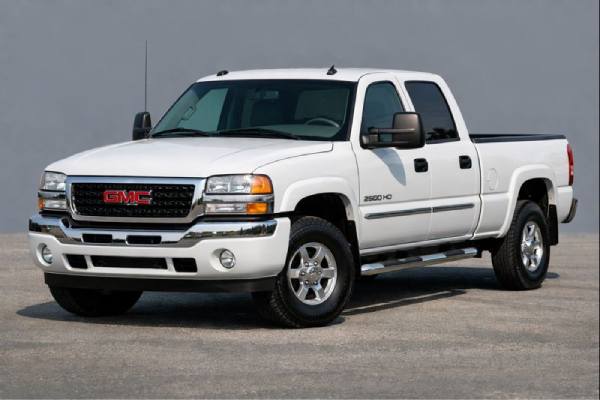
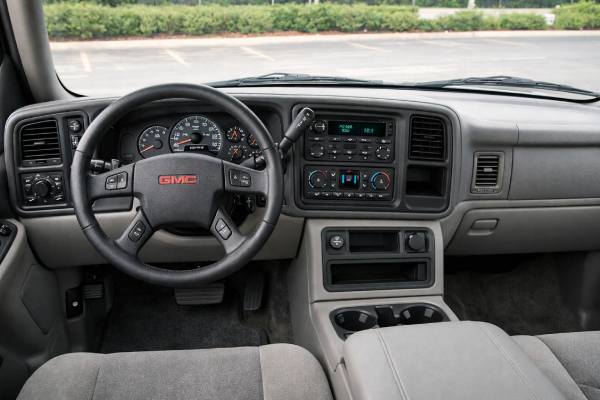
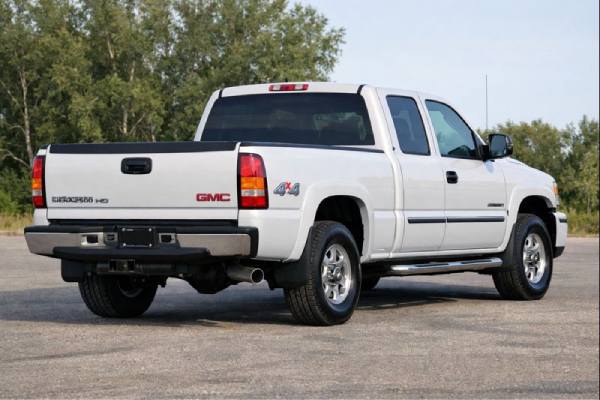
The 2003–2007 GMC Sierra HD RWD on the GMT800 platform with the 6.0 L LQ4 V8 is one of the simplest “heavy-duty” ownership propositions of its era: a stout iron-block gasoline engine, a proven 4-speed automatic, and fewer front-driveline parts than the 4WD trucks. That simplicity matters as these trucks age—there’s less to maintain, fewer wear items to chase, and diagnosing problems is typically straightforward. The LQ4 does its best work with gearing and rpm, so it rewards owners who spec (or buy) the right axle ratio for towing and who keep up with cooling and transmission service. If your goal is a work-ready HD chassis without diesel complexity, the LQ4 Sierra HD RWD sits in a sweet spot of durability, parts availability, and predictable operating costs—especially when maintained with a “fleet mindset.”
Owner Snapshot
- Strong, low-drama powertrain with widely available parts and straightforward repairs.
- RWD layout reduces front-end driveline wear and typically lowers maintenance cost over time.
- Tows best with 3.73 or 4.10 gears; expect higher rpm on grades compared with diesels.
- Watch for age-driven issues like exhaust manifold bolt leaks and cooling-system wear.
- Plan engine oil and filter service about every 8,000 km (5,000 mi) or 6 months for mixed use.
Contents and shortcuts
- LQ4 Sierra HD RWD in context
- LQ4 6.0 specs and measures
- Trim choices and safety basics
- Reliability patterns and fixes
- Maintenance plan and buyer guide
- How it drives when loaded
- Comparing 6.0 HD alternatives
LQ4 Sierra HD RWD in context
The facelifted GMT800 Sierra HD (2003–2007) pairs classic truck hardware with just enough refinement to be livable daily. In RWD form, it’s also the “cleanest” version mechanically: no transfer case, no front differential, fewer CV joints and seals, and generally easier access for service. For owners who tow on pavement, haul materials, or use the truck as a business tool, that simplicity can outweigh the traction advantage of 4WD.
The LQ4 is a 6.0-liter V8 from GM’s LS-based small-block family, built around an iron block intended for heavy-duty duty cycles. In the Sierra HD application it’s commonly rated around 300 hp, with torque delivered higher in the rev range than the diesels people often cross-shop. That shapes how the truck feels: it’s responsive and smooth when unloaded, but under trailer load it asks for rpm and downshifts. That is normal operation, not “strain,” as long as temperatures stay under control and the truck is maintained.
Chassis-wise, the HD badge brings stronger axles, bigger brakes (relative to half-tons), and higher GVWR limits. You’ll see the Sierra HD name used across 2500HD and 3500 variants (cab/bed choices vary by year and market). What matters for a buyer is configuration: cab type, bed length, axle ratio, and whether it has the factory trailering equipment. Two identical-looking trucks can have very different towing comfort depending on gearing and cooling capacity.
Advantages of this specific recipe (GMT800 + LQ4 + RWD) tend to show up over long ownership:
- Fewer expensive drivetrain components than 4WD.
- A durable gasoline engine without diesel emissions equipment.
- Predictable service needs and wide parts support.
The trade-off is equally clear: in snow, mud, and on soft ground, you must rely on tires, weight distribution, and smart throttle control. If you truly need off-pavement traction, 4WD is worth the added complexity. If you do most work on-road, the RWD LQ4 can be the more rational HD.
LQ4 6.0 specs and measures
Because GMT800 Sierra HD trucks were offered in multiple cabs, beds, and axle ratios, many figures are best expressed as ranges. Use the tables below as a “spec window,” then confirm exact values by VIN, door-jamb labels, and axle codes.
Engine and performance
| Item | Spec |
|---|---|
| Code | LQ4 |
| Engine layout and cylinders | V8, OHV (pushrod), 2 valves/cyl (16-valve) |
| Bore × stroke | 101.6 × 92.0 mm (4.00 × 3.62 in) |
| Displacement | 6.0 L (5,967 cc) |
| Induction | Naturally aspirated |
| Fuel system | Sequential port injection |
| Compression ratio | ~9.4:1 (varies by calibration/year) |
| Max power | 300 hp (224 kW) @ ~4,400 rpm |
| Max torque | ~360 lb-ft (488 Nm) @ ~4,000 rpm |
| Timing drive | Chain |
| Emissions and efficiency standard | EPA light-truck requirements (HD models may not have consumer MPG ratings) |
| Rated efficiency | Not consistently published for HD GVWR; real-world varies by load and gearing |
| Real-world highway @ 120 km/h (75 mph) | Often ~14–17 L/100 km (14–17 mpg US) unloaded, depending on tires/gearing |
Transmission and driveline
| Item | Spec |
|---|---|
| Transmission | 4-speed automatic (commonly 4L80-E family) |
| Gear ratios | 1st 2.48 / 2nd 1.48 / 3rd 1.00 / 4th 0.75 (reverse ~2.07) |
| Final drive ratio | Commonly 3.73 or 4.10 (varies by build) |
| Drive type | RWD |
| Differential | Typically open; limited-slip/locker availability varies by axle and option package |
Chassis and dimensions
| Item | Typical spec window |
|---|---|
| Front suspension | Independent (torsion bar) |
| Rear suspension | Leaf springs (HD-rated) |
| Steering | Power steering (ratio varies by year) |
| Brakes | 4-wheel disc ABS; sizes vary by 2500HD vs 3500 and year |
| Wheels and tires | LT-rated tires; common sizes include 245/75 R16 and similar |
| Length | ~5,700–6,300 mm (224–248 in), by cab/bed |
| Width | ~2,000–2,030 mm (79–80 in), excluding mirrors |
| Height | ~1,900–2,000 mm (75–79 in), by suspension and tires |
| Wheelbase | ~3,650–3,900 mm (144–153 in), by cab/bed |
| Fuel tank | Often ~98–129 L (26–34 US gal), by bed and market |
Performance and capability
| Item | Typical range (configuration-dependent) |
|---|---|
| 0–100 km/h (0–62 mph) | ~9–11 s unloaded (varies by axle ratio and curb weight) |
| Top speed | Electronically limited; varies by tire rating |
| Towing capacity (braked) | Commonly ~3,600–5,400 kg (8,000–12,000 lb), by equipment and ratio |
| Payload | Often ~1,000–1,800 kg (2,200–4,000 lb), by GVWR and configuration |
| GVWR | Commonly ~4,100–4,500 kg (9,000–10,000 lb), by model |
Fluids and service capacities
| Item | Typical spec (verify by VIN and pan style) |
|---|---|
| Engine oil | GM-approved gasoline engine oil; common viscosity 5W-30; ~5.7 L (6.0 US qt) with filter |
| Coolant | Dex-Cool type; 50/50 mix; capacity varies widely by radiator and heater plumbing |
| Transmission fluid | Dexron-III era spec; total fill varies (service fill differs from dry fill) |
| Rear differential | GL-5 gear oil (viscosity varies by axle); capacity varies by axle housing |
Electrical and safety baseline
| Item | Typical spec window |
|---|---|
| Alternator output | Often ~105–145 A (option-dependent) |
| 12 V battery | Truck group size varies; CCA depends on climate package |
| Airbags | Dual front airbags standard; side airbags vary by year/trim |
| Driver assistance | ABS standard; traction control availability varies; no modern AEB or lane assist on this generation |
Trim choices and safety basics
Trim names on this generation tend to communicate comfort and appearance more than towing strength, but equipment details still matter—especially axle ratio, cooling, and hitch hardware.
Common trims and how to identify them
Most Sierra HD trucks of this era were sold in familiar GMC trim families (work-focused to comfort-focused). Depending on model year and market, you’ll typically encounter:
- Entry or work trims with durable vinyl or cloth interiors, simpler audio, fewer power options, and steel wheels.
- Mid trims with more convenience equipment (power seat options, upgraded cloth, better sound systems).
- Higher trims with upgraded interiors, more exterior chrome, and additional comfort features.
Quick identifiers often include grille finish, wheel style, seat material, and cluster type. More reliable than appearance, though, are the build codes and axle tags. When shopping, look for:
- Axle ratio code (3.73 vs 4.10 changes towing feel dramatically).
- Factory trailering package content (receiver type, wiring, and cooling provisions).
- Payload and GVWR on the door label (this is what keeps you legal and stable).
Options that change capability
For the LQ4, options that matter most for real work are mechanical:
- Axle ratio: 4.10 helps the 6.0 stay in its power band with a trailer; 3.73 can be a better compromise if you drive empty often.
- Cooling and trailering equipment: look for signs of factory towing prep (receiver, wiring, and transmission temperature management).
- Tire load rating: LT tires with the correct load index can change stability more than many owners expect.
Seating and cab choice also affects usability. Regular cab long beds can have higher payload headroom due to lower curb weight. Crew cabs are more comfortable for people and tools but can eat into payload.
Safety ratings and what they mean here
Crash-test information for heavy-duty variants is not always published in the same way as half-ton pickups. Many buyers use related Silverado 1500 and Sierra 1500 results from the same general platform era as a rough reference point for structure and restraint design, but you should treat that as context—not a guarantee—because HD curb weights, ride heights, and equipment differ.
What you can evaluate directly on any specific truck:
- Airbag warning light behavior and module health.
- Seat belt condition, retractors, and pretensioner history after any accident.
- Brake system condition (pedal feel, rotor wear, caliper slide health).
- Tire quality and age (old LT tires are a common safety risk).
Driver assistance reality check
This generation predates modern ADAS. You’re relying on fundamentals: tires, brakes, lights, mirrors, and good trailer setup. If you plan frequent towing, prioritize trailer brake controller compatibility, proper hitch height, and stable weight distribution over “feature shopping.”
Reliability patterns and fixes
The LQ4 Sierra HD RWD is often reliable when treated like the commercial truck it is, but age and work use create repeat patterns. Below is a practical map of what tends to go wrong, when, and what to do about it.
Common and low-cost issues
- Exhaust manifold bolt leaks (common, medium annoyance):
Symptoms: ticking on cold start, soot marks near manifold.
Likely cause: broken bolts from heat cycling.
Remedy: replace bolts, check manifold flatness, consider updated hardware. - Knock sensor and harness corrosion (common, low-to-medium):
Symptoms: intermittent knock sensor codes, reduced power timing.
Likely cause: moisture intrusion under the intake valley area.
Remedy: replace sensors/harness, reseal properly during intake service. - Accessory drive wear (common, low):
Symptoms: squeal, wobbling idlers, belt dust.
Remedy: replace belt, tensioner, idlers before they fail on a work day.
Occasional but costlier items
- Cooling system aging (occasional, medium):
Symptoms: creeping temps under load, coolant smell, seepage at pump/radiator.
Root causes: water pump wear, radiator end-tank aging, hose fatigue, neglected coolant.
Remedy: refresh pump/thermostat/hoses as a set if history is unknown; pressure test. - 4-speed automatic wear (occasional, medium-to-high):
Symptoms: delayed engagement, flare shifts, converter shudder, heat under towing.
Root causes: old fluid, towing without adequate cooling, solenoid wear.
Remedy: service fluid and filter on schedule; address temperature management; rebuild only when needed. - Fuel delivery issues (occasional, medium):
Symptoms: hard starts, lean codes, loss of power under load.
Root causes: pump wear, electrical connector issues, restricted filter where serviceable.
Remedy: verify pressure and volume; don’t guess-replace parts.
Chassis and wear items in the HD world
- Front suspension and steering wear (common on worked trucks, medium):
Symptoms: wander, clunks, uneven tire wear.
Root causes: idler and pitman arm wear, ball joints, tired shocks.
Remedy: inspect steering linkage play; align after any component replacement. - Brake system corrosion in salt regions (common by geography, high risk):
Symptoms: soft pedal, pulling, visible line rust.
Remedy: replace compromised lines and hoses immediately; flush brake fluid regularly.
Recalls, service actions, and how to verify
At this age, it is normal to see open recalls on older work trucks. The right approach is not to rely on memory of “what was recalled,” but to run the VIN in an official recall database and keep documentation. For a purchase, ask for:
- Proof of recall completion (dealer invoice or printout).
- Evidence of recent fluid services (engine, transmission, differential).
- A clean scan for powertrain codes, plus readiness monitors.
Maintenance plan and buyer guide
A good maintenance plan for an older Sierra HD should be built around heat control, lubrication quality, and corrosion prevention. Treat the schedule below as a practical baseline for mixed use; shorten intervals for heavy towing, dusty conditions, or lots of short trips.
Practical maintenance schedule
- Engine oil and filter: every 8,000 km (5,000 mi) or 6 months; severe use closer to 5,000 km (3,000 mi).
- Engine air filter: inspect every 15,000 km (10,000 mi); replace when restricted.
- Cabin air filter: not fitted on all trims; inspect annually if equipped.
- Coolant: refresh on age, not just mileage—commonly around 5 years intervals for long-life coolant, sooner if contamination is present.
- Spark plugs: typically long-life; replace around 160,000 km (100,000 mi) if condition warrants (earlier if misfires occur).
- Transmission fluid and filter: service about every 50,000–80,000 km (30,000–50,000 mi) for towing use; confirm pan style and correct fluid spec.
- Differential fluid: every 80,000–100,000 km (50,000–60,000 mi), sooner with frequent towing or water exposure.
- Brake fluid: every 2 years, especially in humid or salt regions.
- Belts and hoses: inspect every oil service; replace by condition, not luck.
- Tires: rotate every 8,000–10,000 km (5,000–6,000 mi); align annually or after steering/suspension work.
- Battery and charging: test before winter; replace on condition (many last 4–6 years depending on climate).
Fluids, specs, and “decision-level” torque values
Use official service information for exact specs, but these are common decision points:
- Oil viscosity: many owners run 5W-30 in normal climates; hotter climates and heavy load may justify a higher hot viscosity if permitted by the manufacturer guidance for your VIN.
- Differential gear oil: GL-5 is typical; limited-slip units may need additive depending on design.
Common critical fasteners (verify for your wheel type and year):
- Wheel lug nuts: often around 190 Nm (140 lb-ft) on HD steel wheels.
- Spark plugs: typically light torque on aluminum heads; use correct procedure and torque spec for the exact plug.
Buyer’s guide checklist
- Start cold: listen for exhaust tick, lifter noise, and belt drive sounds.
- Check temperatures under load: even a short hill climb can reveal cooling weakness.
- Scan for codes: pay attention to fuel trims, misfire counters, and transmission slip data if available.
- Inspect the frame and brake lines: corrosion can be a deal-breaker even if the engine is healthy.
- Confirm axle ratio and GVWR: match the truck to your trailer, not the other way around.
- Test steering play: wander and clunks can mean a front-end refresh is due.
- Look for evidence of sane towing: transmission service records and a clean hitch setup matter more than chrome.
Long-term outlook is strong if you buy the least-rusted example you can, keep the transmission cool, and treat suspension and brakes as consumables on a working HD platform.
How it drives when loaded
Unloaded, the LQ4 Sierra HD RWD feels like what it is: a big, stable pickup with predictable steering and a firm ride. The HD suspension is tuned to carry weight, so an empty bed can feel stiff over sharp bumps, and the rear axle will hop more than a half-ton on rough pavement. With a few hundred kilograms in the bed, many trucks settle into a more controlled, less choppy rhythm.
Powertrain character
The 6.0 LQ4 makes its torque higher in the rpm range than the Duramax diesels of the same era. In daily driving that feels smooth and linear. Under trailer load, it translates into:
- More downshifts on grades.
- Higher sustained rpm when holding speed into headwinds or climbs.
- A need for the correct axle ratio so the engine can stay in a useful band without constant hunting.
This is where 4.10 gears can make a dramatic difference. They don’t create more power, but they let the engine access it more easily, reducing “lugging” (running too low in rpm under heavy load). Lugging can create heat and detonation risk; the safer pattern is a willing downshift with stable temperatures.
Ride, handling, and braking
Straight-line stability is a strength, especially with LT tires in good condition and proper alignment. Steering feel is typically light-to-medium; as the trucks age, increased play can make the truck feel vague, which is usually fixable with steering linkage service and a quality alignment.
Braking performance depends heavily on maintenance. A healthy HD brake system feels confident, but old fluid, sticking caliper slides, and tired rubber hoses can make the pedal long. With towing, proper trailer brakes are not optional—they reduce heat load on the truck and improve control in emergencies.
Real-world efficiency expectations
Fuel use varies widely with axle ratio, tire choice, speed, and trailer size. Realistically:
- Unloaded highway can be reasonable for the size if speeds are kept moderate.
- City driving and towing will move the needle sharply upward, especially into wind or hills.
A practical ownership tip is to focus less on “best MPG” and more on “best temperature control.” For longevity, keeping coolant and transmission temperatures stable under load is more valuable than chasing a small fuel savings.
Comparing 6.0 HD alternatives
If you’re shopping an LQ4 Sierra HD RWD, you’re usually cross-shopping other “simple HD” gasoline trucks—and occasionally deciding whether a diesel is worth the added complexity. Here’s how the LQ4’s strengths and weaknesses stack up.
Versus GM 8.1 V8 (gas)
The big-block 8.1 offers noticeably stronger low-rpm pull and can feel more relaxed with heavy trailers. The downsides are fuel consumption and, depending on parts availability in your region, potentially higher operating cost. If you tow heavy often, the 8.1 can be the right tool. If your towing is moderate and you drive empty a lot, the 6.0 is usually the smarter balance.
Versus Duramax diesel (same era)
The Duramax wins on torque delivery and towing ease, especially at altitude and on long grades. But diesel ownership brings its own realities: higher parts costs in many repairs, more specialized service needs, and the risk of expensive injector or fuel-system work depending on generation and maintenance history. If you want the simplest long-term ownership and can live with higher rpm under load, the LQ4 is often the lower-risk choice.
Versus Ford Super Duty gasoline
Ford’s gasoline HD options from the era can be durable, but many buyers find the GM 6.0’s parts ecosystem and repair familiarity appealing—especially for independent shops. The decision often comes down to truck condition, rust, and configuration rather than brand.
Versus Ram heavy-duty gasoline
Ram HD gas trucks can be solid, and later Hemi-era trucks have strong aftermarket support. On older trucks, pay extra attention to transmission behavior and front-end wear patterns. Again, condition matters most.
Why the LQ4 RWD still makes sense
For business use, the LQ4 Sierra HD RWD remains compelling because it’s:
- Mechanically simpler than 4WD.
- Easier to diagnose than many diesel setups.
- Well supported for parts and service.
If your work is primarily on-road and your towing is within the truck’s correctly equipped limits, it’s hard to beat the predictability of this platform—especially when you buy based on configuration, not just appearance.
References
- Manuals and Guides | Vehicle Support | GMC 2025 (Owner’s Manual Portal)
- 2004 GMC Sierra Owners Manual 2004 (Owner’s Manual)
- Vehicle Detail Search – 2005 GMC Sierra 2500HD | NHTSA 2025 (Recall Database)
- 2006 Chevrolet Silverado 1500 extended cab pickup 2006 (Safety Rating)
- 63135 LD Special Applications Trailering 2006 (Trailering Guide)
Disclaimer
This article is for informational purposes only and is not a substitute for professional inspection, diagnosis, or repair. Specifications, torque values, service intervals, and procedures vary by VIN, market, and installed equipment; always verify details using official owner and service documentation for your exact truck.
If this guide helped, please consider sharing it on Facebook, X (Twitter), or your favorite forum to support our work.