
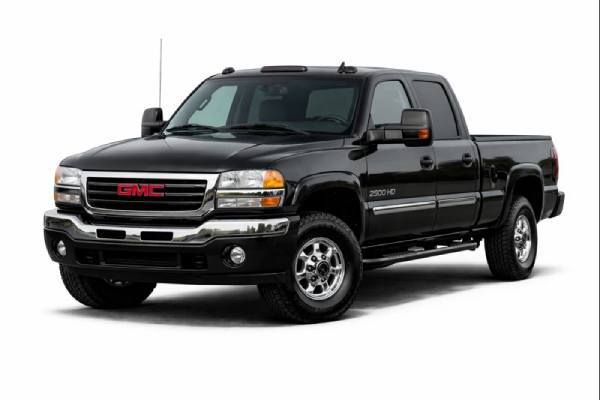
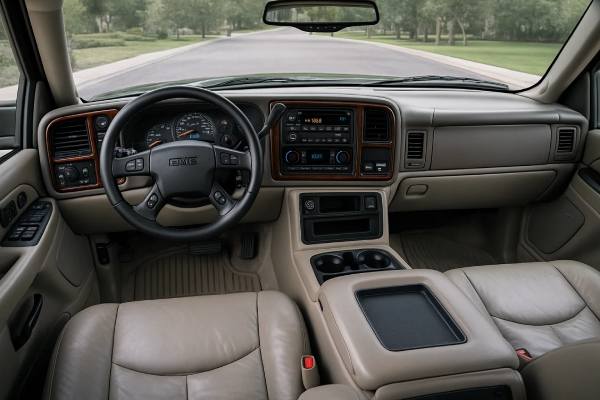
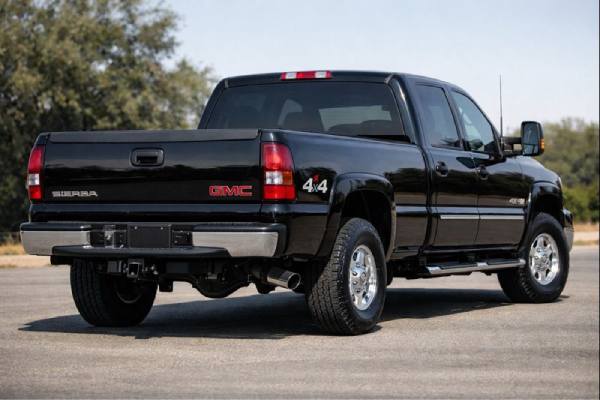
The 2004–2005 facelift GMC Sierra HD RWD with the LLY 6.6L Duramax is a very specific sweet spot in the GMT800 heavy-duty lineup: modern-enough fueling and electronics to tow hard with confidence, but still simple compared with later emissions-era trucks. In rear-wheel-drive form, it’s also the lighter, slightly more straightforward configuration—fewer front driveline parts, fewer wear items, and typically better service access than a 4×4.
The key ownership story is balance. The LLY delivers strong low-rpm torque (especially with the Allison automatic), stable highway manners, and a chassis built for sustained load. At the same time, age-related cooling-system and air-intake constraints, front-end wear from heavy diesel weight, and towing-driven maintenance needs can turn a “cheap HD” into a project if you buy the wrong example. This guide focuses on the exact engine, years, and drivetrain—so you can judge one quickly and maintain it correctly.
What to Know
- Strong towing temperament and calm highway stability when properly cooled and serviced
- LLY torque delivery is excellent at low rpm, especially with the Allison automatic
- Expect front suspension and steering wear sooner than a gas truck of the same age
- Change engine oil and filter about every 8,000–10,000 km (5,000–6,000 mi) or 6 months (severe use: shorter)
- Keep the cooling stack clean and watch operating temperatures under load
Navigate this guide
- LLY Sierra HD RWD ownership
- Specs and capacity data
- Trims, options, and safety
- Reliability issues and service actions
- Maintenance roadmap and buying advice
- Driving, towing, and economy
- Rival comparison for 2004-2005
LLY Sierra HD RWD ownership
Think of the 2004–2005 Sierra HD RWD Duramax as a work platform first and a “truck to enjoy” second. That sounds blunt, but it helps you evaluate one honestly: if the prior owner treated it like an appliance and maintained it like equipment, these trucks can run a long time. If it was modified heavily, ran hot while towing, or went years between fluid services, the same truck can become expensive quickly.
What the facelift years add is a more modern feel inside and out, but the mechanical identity stays classic GMT800: a strong ladder frame, heavy springs, and a suspension tuned for payload rather than empty-bed comfort. Rear-wheel drive keeps the steering a little lighter than a comparable 4×4 and reduces driveline complexity—no transfer case service, no front differential, no CV joints. The tradeoff is traction. With an unloaded bed, RWD on all-season tires can feel nervous on wet ramps or winter roads. Many long-term owners solve this with weight over the rear axle (properly secured), a true LT tire with a winter rating when needed, and realistic expectations about two-wheel-drive limitations.
The LLY Duramax itself is best understood as a towing engine that happens to be quick when empty. Peak torque arrives low, so the truck does not need high rpm to do real work. That is also why cooling and airflow matter so much: towing at low rpm in a tall gear creates sustained heat load. A clean radiator and A/C condenser, a healthy fan clutch, and intact intake ducting do more for reliability than many “power” parts.
Finally, remember the age. Rubber, plastics, and electrical grounds matter now. A Sierra HD that starts cleanly, holds stable temperature, shifts without flare, and shows consistent charging voltage is usually a good sign. One that has intermittent electrical behavior, rising temperatures under load, and sloppy steering feel is telling you the chassis has been working hard for a long time.
Specs and capacity data
Below are practical, decision-grade specs for the 2004–2005 facelift Sierra HD RWD with the LLY 6.6L Duramax. Exact figures can vary by cab, bed, axle ratio, transmission, emissions label, and GVWR package—so treat capacities and ratings as ranges unless you verify the RPO codes and door-sticker numbers.
Engine and performance
| Item | Spec |
|---|---|
| Engine code | LLY (Duramax 6600) |
| Layout | 90° V8, OHV, 4 valves/cyl |
| Displacement | 6.6 L (6,599 cc) |
| Bore × stroke | 103 × 99 mm (4.055 × 3.897 in) |
| Induction | Turbocharged and intercooled |
| Fuel system | High-pressure common-rail direct injection |
| Timing drive | Gear-driven |
| Compression ratio | ~17.5:1 (varies by calibration) |
| Max power | 310 hp (231 kW) @ 3,000 rpm (common automatic rating) |
| Max torque | up to 605 lb-ft (820 Nm) @ 1,600 rpm (common automatic rating) |
| Notes | Some calibrations and manual-trans applications are lower; confirm by VIN and powertrain label |
Transmission and driveline
| Item | Spec |
|---|---|
| Drive type | RWD |
| Typical automatic | Allison 1000 5-speed (common pairing) |
| Typical axle ratios | 3.73, 4.10 (varies by tow and GVWR package) |
| Differential | Usually open; limited-slip availability varies by build |
Dimensions and weights (typical ranges)
| Item | Typical range (varies by cab and bed) |
|---|---|
| Wheelbase | ~3,150–4,100 mm (124–161 in) |
| Overall length | ~5,600–6,300 mm (220–249 in) |
| Width | ~2,000 mm (about 79 in) excluding mirrors |
| Curb weight | commonly ~2,900–3,300 kg (6,400–7,300 lb) |
| GVWR | often ~4,100–4,500 kg (9,200–9,900 lb), package-dependent |
| Fuel tank | commonly ~98–128 L (26–34 US gal), configuration-dependent |
Capability (verify by door sticker and tow guide)
| Item | Typical range |
|---|---|
| Towing capacity (braked) | widely varies by axle ratio, cab, and hitch; often ~4,500–7,000+ kg (10,000–15,000+ lb) |
| Payload | widely varies; often ~1,100–1,800 kg (2,400–4,000 lb) |
| GCWR | set by engine, transmission, axle ratio, and cooling; confirm by tow guide |
Fluids and service capacities (decision-grade)
| System | What to use | Approx capacity (varies) |
|---|---|---|
| Engine oil | Heavy-duty diesel oil meeting the required API category for the year; common grades: 15W-40, 5W-40 (cold) | ~9.5 L (10 US qt) with filter |
| Coolant | Dex-Cool type, 50/50 mix | varies widely with radiator and heater config |
| Automatic transmission | Allison-approved ATF; verify spec and service method | varies by service (pan drop vs total) |
| Rear differential | Gear oil per axle spec; many use 75W-90/75W-140 depending on duty | varies by axle |
| A/C refrigerant | R134a | see underhood label |
Key torque specs (high-confidence, critical use)
| Fastener | Torque |
|---|---|
| Wheel lug nuts (8-lug HD) | typically ~190 Nm (140 lb-ft) — confirm by wheel and year label |
Trims, options, and safety
For 2004–2005 Sierra HD RWD diesels, “trim” affects comfort and appearance more than fundamentals, but options can change towing behavior, gearing, and even how expensive a truck is to refresh. The core mechanical pieces—frame, rear axle family, brakes, and the Duramax—are shared broadly, while cab and package choices shape daily usability.
Trims and options that matter
Common trims for this era include Work Truck (WT), SLE, and SLT, with equipment stepping up from vinyl and basic audio to power seats, upgraded interior materials, and more sound insulation. For long-term ownership, focus on these build-defining options:
- Axle ratio (3.73 vs 4.10): This is one of the biggest “feel” differences. A 4.10 truck tends to pull grades more easily and downshifts less under load, at the cost of higher cruise rpm.
- Tow package and hitch type: Factory receiver, wiring, and cooling provisions matter more than a shiny aftermarket ball mount. Verify trailer-brake controller integration and charging circuit behavior if you tow.
- Cooling and air-intake layout: Not all front-end configurations shed heat equally, and heat management is central to Duramax longevity when towing.
- Bed and cab choice: Longer wheelbase can improve towing stability but increases turning circle and can hide frame corrosion behind longer brake and fuel lines.
Quick identifiers that help in-person: RPO code labels (usually in the glovebox for this era), axle ratio codes, and the presence of factory tow wiring and receiver equipment. If a seller can’t explain axle ratio or tow package details, plan to decode it yourself.
Safety ratings and what’s realistic here
Safety testing for heavy-duty pickups in this period is not as complete or as directly comparable as modern vehicles. You will see more structured results for half-ton relatives than for HD configurations, and equipment also varies by cab style. The practical way to use “ratings” is to combine what testing exists with an inspection of safety equipment:
- Airbags: Expect at least dual front airbags for this era, but side curtain airbags were not common like they are today.
- Child-seat anchors: LATCH provisions depend on cab and seating position; verify in the truck, not in assumptions.
- Brakes and stability systems: ABS is common; stability control was not universal in early-to-mid 2000s trucks. Confirm what’s actually on the vehicle by lamp check and option list.
Driver assistance and calibration implications
Do not shop expecting modern ADAS (automatic emergency braking, adaptive cruise, lane keeping). The “driver assistance” you get here is mainly foundational systems—ABS, sometimes traction control, and driver information displays. The key service implication is that these systems rely on clean wheel-speed sensor signals, correct tire sizing, and healthy grounds. When owners fit mismatched tire sizes or ignore front hub bearing wear, ABS behavior can become erratic. For a working truck, “safety” is often about keeping steering tight, brakes fresh, tires matched, and loads secured—because that’s what prevents the most common real-world incidents.
Reliability issues and service actions
Reliability on an LLY Sierra HD is less about one catastrophic design flaw and more about stacking small weaknesses—heat, airflow, wear from weight, and deferred maintenance—until the truck becomes inconsistent. The good news is that most common problems give warnings, and many are manageable if caught early.
Common issues (higher prevalence)
- Cooling stack restriction (medium severity, medium cost): Dirt, bugs, and debris pack into the radiator and A/C condenser. Symptoms include rising coolant temperature on grades, fan roaring more often, or temperature creeping in hot weather. Remedy: clean the stack correctly (from the engine side out when possible), confirm fan clutch engagement, and verify coolant condition.
- Air-intake and intercooler duct leaks (low-to-medium severity): Boots loosen, ducts crack, and clamps get disturbed during other work. Symptoms include reduced boost, smoke under load, soft power, or a persistent hiss. Remedy: pressure-test the charge-air system and replace aged boots and clamps.
- Front-end wear (low-to-medium severity, cost varies): The diesel’s weight accelerates wear in idler and pitman arms, tie rods, ball joints, and hub bearings. Symptoms include wander, clunks over bumps, uneven tire wear, or steering that never quite centers. Remedy: inspect systematically; don’t “align around” worn parts.
- Glow plug and cold-start behavior (low severity if addressed early): Hard starting in cold weather can be glow plugs, controllers, batteries, or poor grounds. Remedy: test rather than guess; good batteries and clean grounds are foundational.
Occasional issues (moderate prevalence)
- Injector harness or connector faults (medium severity): Electrical issues can mimic fueling problems. Symptoms can be intermittent misfire-like behavior, reduced power, or codes. Remedy: inspect connectors, harness routing, and grounds before condemning injectors.
- Exhaust gas recirculation system deposits (medium severity): LLY-era EGR can contribute to intake soot buildup. Symptoms may include reduced airflow and performance under load. Remedy: proper diagnosis and cleaning where appropriate, plus ensuring the engine reaches full operating temperature regularly.
Rare but high-cost risks
- Overheat-driven head gasket failure (high severity, high cost): The common path is repeated towing heat events, not one random failure. Symptoms include coolant loss with no obvious leak, pressure in cooling system, or recurring overheating. Remedy: do not keep driving a truck that runs hot under load; fix root causes immediately.
Service actions, recalls, and verification
With vehicles this old, the most important “service action” is proof. Ask for documentation of recall completion, cooling system service, and transmission service. Use the official VIN-based recall lookup and dealer service history when possible. If a seller can show consistent maintenance, stable operating temperatures, and stock-like drivability, you’re usually looking at a truck that was managed—not merely used.
Maintenance roadmap and buying advice
A good maintenance plan for the 2004–2005 Sierra HD Duramax starts with one principle: towing and idling shorten intervals. If the truck tows regularly, lives in dusty conditions, or does lots of short trips, treat it as “severe service” even if the odometer is low.
Practical maintenance schedule (baseline)
- Engine oil and filter: every 8,000–10,000 km (5,000–6,000 mi) or 6 months; heavy towing, frequent idling, or extreme heat: shorten. Use a diesel-rated oil that matches the required category and viscosity for your climate.
- Fuel filter: every 15,000–25,000 km (10,000–15,000 mi) is a sensible real-world interval for older trucks; drain water separator as needed. If you notice power loss under load, treat the fuel filter as a first diagnostic step.
- Engine air filter: inspect often; replace based on restriction and environment (dusty towing routes can shorten life dramatically).
- Cooling system: inspect at every oil service; coolant exchange on a time basis is safer on older trucks than “forever coolant” assumptions. Confirm proper mix and that the surge tank cap holds pressure.
- Automatic transmission service: interval depends heavily on towing heat. If towing is common, plan more frequent fluid and filter service. Consider temperature monitoring if not already equipped.
- Rear differential fluid: inspect and service on a schedule that reflects towing and mileage; look for metallic debris and leaks at pinion and cover.
- Brakes: inspect pads, rotors, and brake fluid condition regularly. Brake fluid age matters as much as mileage.
- Tires and alignment: rotate on a consistent schedule; correct any steering looseness before aligning.
Fluid specs and “owner decision” guidance
- Oil viscosity: 15W-40 suits warm climates and heavy load; 5W-40 is a strong all-season choice for cold starts and towing, but follow what your documentation allows.
- Coolant: use the correct Dex-Cool type and keep the mix correct; topping off with plain water repeatedly changes protection levels.
- Transmission fluid: Allison units respond well to correct fluid and filter service; wrong fluid or “universal” approaches can create shift quality issues.
Pre-purchase checklist (fast but effective)
- Cold start: it should start cleanly without excessive cranking. Watch for rough idle that doesn’t settle.
- Temperature control: drive it until fully warm; confirm stable coolant temperature and no boiling smell after a climb.
- Transmission behavior: steady, predictable shifts; no flare, no shudder, and no delayed engagement.
- Steering and front-end: check for play at the wheel, clunks on transitions, and uneven tire wear.
- Leaks: look at turbo plumbing, intercooler boots, rear main area, transmission pan, rear axle, and power steering lines.
- Rust inspection: frame rails, brake and fuel lines, cab corners, bed supports, and hitch area.
A clean, stock-ish truck with proof of cooling and fluid care is usually a better buy than a “built” truck with unknown tuning and unknown heat history.
Driving, towing, and economy
Unloaded, the Sierra HD RWD Duramax feels like a heavy tool that happens to be fast. The steering is typically slow and deliberate, the ride is firm, and the chassis communicates weight—especially over broken pavement. With a load or a trailer, the truck settles into its intended posture and often feels smoother, more planted, and more “right.”
Powertrain character
The LLY’s defining trait is low-rpm pull. In normal driving, you can surf torque and short-shift. With the Allison automatic, the truck usually chooses gears intelligently and avoids constant hunting if axle ratio is matched to the load. When the truck is working hard, pay attention to two behaviors:
- Downshift strategy on grades: A healthy drivetrain will downshift early enough to control temperatures and keep torque steady.
- Converter lockup and heat: Excessive unlocked operation under load builds heat quickly. If you feel “mushy” response while climbing, confirm temperatures and service status.
Ride, handling, and NVH
Expect some bounce and sharpness when empty, especially with stiff LT tires inflated for payload. Straight-line stability is generally good, and the long wheelbase configurations track well at speed. Braking feel depends heavily on maintenance: fresh fluid, good calipers, and correct pads make a bigger difference than many owners expect. Wind and road noise are typical for early-2000s HD trucks; trim level affects insulation, but tire choice often dominates cabin sound.
Real-world efficiency
Fuel economy is highly variable and not well represented by a single number because duty cycles vary so much. As a practical guide:
- Unloaded mixed driving: many owners see “mid-teens” mpg (US) when everything is healthy and speeds are reasonable.
- High-speed highway: efficiency drops quickly as speed rises due to aero drag and gearing.
- Towing: expect a major penalty; plan fuel stops based on worst-case consumption, not best-case bragging rights.
Towing feel and best practices
A properly set up Sierra HD RWD can tow very confidently on pavement. The keys are:
- correct tongue weight and a properly adjusted weight-distributing hitch when needed,
- matched trailer brakes and a controller that is tuned, not simply “turned up,”
- temperature discipline: if you tow in heat or mountains, treat cooling and transmission temperature as primary gauges.
If you tow often, consider adding monitoring before adding power. Extra horsepower without temperature insight is the fastest way to turn a reliable tow rig into a heat-soaked problem.
Rival comparison for 2004-2005
In 2004–2005, the Sierra HD Duramax competed in a three-truck world, and each option had a distinct personality. Your best choice depends on whether you prioritize towing composure, ease of repair, or how much risk you are willing to accept from known-era weaknesses.
Versus Ford Super Duty 6.0 Power Stroke (2004–2005)
Ford’s 6.0 Power Stroke trucks can tow very strongly and often feel solidly built, but ownership risk is more polarized. A well-sorted example can be excellent; a neglected one can be expensive quickly. Compared with the Sierra HD Duramax, shoppers often find the GM drivability and shift behavior more consistent out of the box, while Ford’s upside is strong aftermarket support and broad parts availability. If you choose Ford, purchase condition and proof of correct fixes matter even more than on the GM.
Versus Dodge Ram 2500/3500 5.9 Cummins (common-rail era)
The Cummins-powered Ram is the “engine-first” alternative: the inline-six is widely respected, and the trucks often feel like they will run forever if cared for. Where the GM tends to win is overall refinement—steering feel, transmission pairing (especially with the Allison), and highway quietness depending on trim. Dodge can be a great long-term tow rig, but pay attention to front-end wear, automatic transmission history (depending on configuration), and how the truck behaves at speed with a trailer.
Versus GM 8.1L gas (same platform)
If you want simplicity and do not mind fuel consumption, the 8.1L gas Sierra HD can be an appealing alternative—especially for buyers who tow occasionally and drive short trips where diesel maintenance habits are harder to maintain. The Duramax wins for sustained towing efficiency and low-rpm pull, while the 8.1L can be cheaper to buy and sometimes cheaper to “make right” if diesel-specific problems exist.
The RWD factor in the comparison
Rear-wheel drive is the quiet advantage in some use cases. If you tow on-road, live in a mild climate, and want fewer parts to service, RWD can be a rational choice. If you deal with snow, mud, wet job sites, steep ramps, or you simply want traction margin, rivals (or a 4×4 Sierra HD) may fit your life better even if they cost more.
The best “rival” is ultimately the best-maintained truck. In this era, a clean maintenance history and stable operating temperatures matter more than brand loyalty.
References
- 2005 LD Trailering Information (GM) 2005 (Towing Guide)
- 2005 GMC SIERRA 2500HD | NHTSA 2005 (Recall Database)
- GM Owner Manuals 2005 (Owner’s Manual)
- 2005 Chevrolet Silverado 1500 extended cab pickup | IIHS-HLDI 2005 (Safety Rating)
Disclaimer
This article is for informational purposes only and is not a substitute for professional diagnosis, inspection, or repair. Specifications, torque values, service intervals, and procedures can vary by VIN, market, axle ratio, and equipment. Always verify details against the correct official service information and documentation for your exact truck.
If this guide helped you, please consider sharing it on Facebook, X (Twitter), or your favorite forum to support our work.