
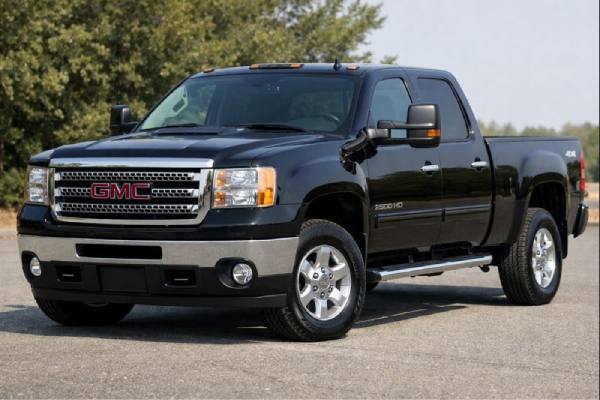
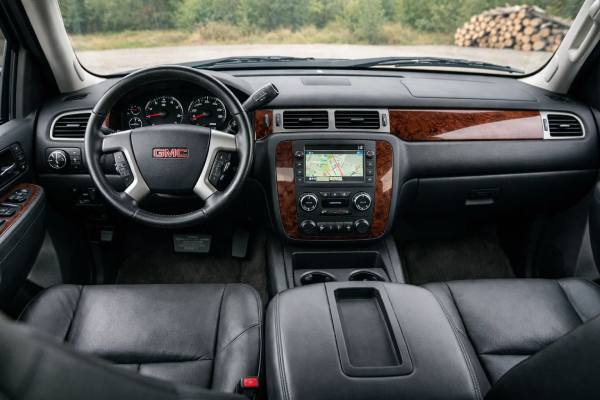
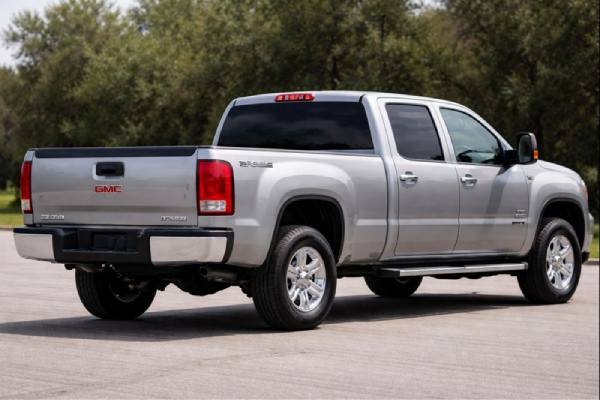
The 2011–2014 GMC Sierra HD RWD with the LML 6.6-liter Duramax is a “work-first” truck that happens to be comfortable enough for daily use—if you accept its size and operating costs. The engineering story is mostly about sustained load: a high-output turbo-diesel built for long pulls, a heavy-duty cooling package, and an Allison automatic designed to manage torque without drama. In real ownership terms, the big wins are effortless towing manners, stable highway behavior, and a driveline that can live a long time when fluids and filters are treated as non-negotiable.
Where buyers get surprised is rarely horsepower. It’s usually condition: emissions hardware health, fuel-system cleanliness, and whether the truck’s past life involved hard towing on old fluids. Choose well, maintain proactively, and this Sierra HD can be a durable, highly capable long-haul tool.
Owner Snapshot
- Strong low-rpm pull makes heavy trailers feel “lighter” than the numbers suggest.
- Allison shifting is calm under load, especially when the truck is stock and well-serviced.
- Budget for diesel emissions components and sensors as the truck ages—especially if it did short trips.
- Replace the fuel filter about every 36,000 km (22,500 mi) or at least every 2 years.
- Plan on 9.5 L (10 qt) oil changes with the correct diesel-rated oil, not “whatever is on sale.”
Guide contents
- Sierra HD LML ownership overview
- LML Duramax specs and capacities
- Trims, packages, and safety tech
- Reliability patterns and known faults
- Maintenance schedule and buying checks
- Driving feel and real-world economy
- Rivals: Super Duty and Ram HD
Sierra HD LML ownership overview
For the GMT900-era Sierra HD, the 2011 facelift years are the sweet spot if you want modern-enough ergonomics with “classic HD” mechanical straightforwardness. In RWD form, you’re trading winter traction for lower complexity: no transfer case service, fewer front driveline parts, and typically a small weight and friction advantage. If your use is mainly towing on pavement, RWD can be the right choice.
The LML Duramax is the headline. It delivers the kind of torque curve that changes how you drive: you lean on low rpm and let the engine do the work instead of revving. That matters when you’re pulling a tall trailer into a headwind or rolling through long grades. Equally important is how the truck manages heat. A healthy Sierra HD cooling system will keep temps steady even when ambient temperatures are high—provided the radiator stack is clean and airflow is not compromised by bugs, mud, or bent fins.
The Allison automatic is the other half of the ownership experience. It is not perfect, but it is consistent. With clean fluid and correct tuning (ideally stock), it tends to hold gears predictably under load, which reduces “hunting” and helps you keep exhaust gas temperatures (EGT) in check while towing. The best-driving trucks are usually the least modified ones.
Where the Sierra HD LML can become expensive is not the basic engine block or transmission case—it’s the supporting systems that modern diesels need. Emissions hardware (DPF and SCR/DEF), sensors, and fuel-system components can turn neglected maintenance into a multi-thousand repair. Short-trip operation is a common trigger: the truck never gets hot long enough to complete soot management cycles comfortably, and the system starts complaining.
If you’re shopping today, focus less on cosmetics and more on the truck’s “operating story”:
- Does it have documented fuel-filter and oil services?
- Was it used for highway towing (often good) or repeated short trips (often hard on emissions)?
- Is it stock-height with stock-sized tires (usually easier on steering and braking)?
- Do the dash messages show recent emissions faults, reduced-power events, or repeated regen issues?
A well-chosen LML Sierra HD is a confident, capable tow platform. A poorly chosen one can be a lesson in modern diesel troubleshooting.
LML Duramax specs and capacities
Below are practical, ownership-relevant specifications for the 2011–2014 Sierra HD RWD with the 6.6 Duramax LML and Allison automatic. Some figures vary by cab/bed, axle ratio, and 2500HD vs 3500HD configuration, so treat dimensions and ratings as ranges unless you’re decoding a specific VIN.
Engine and performance (LML 6.6 diesel)
| Item | Spec |
|---|---|
| Code | LML |
| Layout and cylinders | 90° V8 turbo-diesel, 8 cylinders |
| Displacement | 6.6 L (6,599 cc) |
| Induction | Turbocharged (variable-geometry) |
| Fuel system | High-pressure common-rail direct injection |
| Max power | 397 hp (296 kW) @ ~3,000 rpm (varies by calibration) |
| Max torque | ~1,037 Nm (765 lb-ft) @ ~1,600 rpm (typical LML rating) |
| Timing drive | Gear-driven (diesel valvetrain timing drive) |
| Emissions system | EGR + DPF + SCR/DEF (Urea) |
Transmission and driveline (RWD)
| Item | Spec |
|---|---|
| Transmission | Allison 6-speed automatic (HD application) |
| Typical gear ratios | 1st 3.10 / 2nd 1.81 / 3rd 1.41 / 4th 1.00 / 5th 0.71 / 6th 0.61 |
| Drive type | RWD (2WD) |
| Differential | Typically open; optional locking differential depends on trim/package |
Chassis and dimensions (typical ranges)
| Item | Typical values (varies by cab/bed) |
|---|---|
| Front suspension | Independent with torsion bars |
| Rear suspension | Leaf springs |
| Length | ~5,700–6,600 mm (225–259 in) |
| Width (no mirrors) | ~2,032 mm (80.0 in) |
| Height | ~1,970–1,990 mm (77.5–78.3 in) |
| Wheelbase | ~3,396 / 3,904 / 4,259 mm (133.7 / 153.7 / 167.7 in) |
| Turning circle | Large by modern standards; plan parking accordingly |
| Curb weight | Commonly ~2,700–3,400 kg (6,000–7,500 lb), configuration-dependent |
Capability (what matters in the real world)
Instead of chasing one “maximum tow” number, use three labels:
- GVWR (truck’s max loaded weight)
- Payload (how much you can add to the truck)
- GCWR (max combined truck + trailer)
Those are the numbers that decide whether a setup is safe and legal. Tongue weight or kingpin weight often becomes the limiting factor before “tow rating” does.
Fluids, service capacities, and torque values
Fuel tank (HD pickup): 136.3 L (36.0 US gal) is a common tank size on 2500/3500 pickups.
Wheel lug torque: 190 N·m (140 lb-ft).
Diesel-specific capacities (common HD Duramax values):
- Engine oil (with filter): 9.5 L (10 qt)
- Cooling system: 27 L (28.5 qt)
- DEF tank: 20.1 L (5.3 US gal)
- Allison ATF (pan removal + filter replacement): 7.0 L (7.4 qt)
These numbers are especially useful when you’re pricing maintenance, planning long trips, or checking whether a shop filled the truck correctly after service.
Trims, packages, and safety tech
Trims and options that change ownership
For 2011–2014 Sierra HD, the main trims you’ll see are Work Truck (WT), SLE, SLT, and Denali. In practice, trim matters less than equipment—especially for towing.
Key equipment that’s worth seeking on an LML tow truck:
- Integrated trailer brake controller: cleaner wiring, better modulation, fewer aftermarket surprises.
- Exhaust brake function (diesel grade braking behavior): reduces service-brake heat on descents and makes towing feel controlled.
- Tow mirrors, hitch hardware, and correct receiver class: simple items, but costly to retrofit properly.
- Rear axle ratio: this affects how easily the truck holds speed on grades and how hard the transmission works. Many Duramax trucks use a ratio that balances towing and rpm; verify the axle code on the glovebox RPO label.
- Cooling and electrical upgrades: HD alternator and dual-battery setup are common on diesels, and they matter in cold climates and for winches/inverters.
Cab and bed configuration changes daily livability:
- Regular cab long bed: most “work-truck” feel, best maneuverability among HDs, simpler interior.
- Extended cab: compromise choice for occasional rear passengers.
- Crew cab: best family/tow rig, but longest wheelbases can be more awkward in tight spaces.
Quick identifiers when shopping used
- RPO label (glovebox): it’s the fastest way to confirm axle ratio, suspension packages, and towing equipment.
- Denali cues: unique grille/wheels/interior trim, typically more standard equipment.
- Diesel ownership signals: look for evidence of routine fuel-filter services and correct DEF use; a seller who knows the intervals usually treated the truck correctly.
Safety ratings: what’s available and what isn’t
Heavy-duty pickups are not always crash-tested in the same way, or in every body configuration, by the same organizations and protocols you see for mainstream passenger vehicles. Your best approach:
- Use official databases to check whether your exact model year and configuration has published results.
- Treat “it’s the same as the half-ton” claims cautiously; structure, mass, and equipment can differ.
Safety systems and driver assistance (era-appropriate)
This generation focuses on fundamentals more than modern ADAS:
- ABS, stability control, and traction control are the core electronic safety nets.
- Airbag coverage typically includes front airbags, with side-impact coverage depending on cab/market/equipment.
- Child-seat anchors (LATCH) are present where required; check rear-seat access and anchor usability, especially on extended cabs.
If you want modern driver assistance (automatic emergency braking, lane-keeping, adaptive cruise), you generally have to look at newer HD generations. For the GMT900 Sierra HD, safe operation is more about tires, brakes, lighting, and correct loading than software.
Reliability patterns and known faults
Think of the LML Sierra HD as two reliability stories: the heavy-duty core (engine bottom end, transmission hard parts) and the high-tech support systems (fuel system and emissions). The core is usually durable; the support systems are where ownership costs cluster.
Common issues (higher frequency)
- Fuel system contamination and high-pressure pump risk (high cost tier)
Symptoms: hard starting, rough idle, metal debris found in fuel filter, sudden low-power events.
Likely cause: wear in high-pressure fuel components or contamination (water/dirty diesel), sometimes cascading through injectors and rails.
Remedy: diagnose early, replace affected components, and flush properly; prevention is strict fuel-filter discipline and buying fuel from high-turnover stations. - DEF and SCR sensor faults (medium cost tier)
Symptoms: warning messages, countdowns to reduced power, check-engine lights tied to NOx or DEF quality.
Likely cause: failed sensors, wiring issues, or heaters in colder climates; sometimes the system is reacting to poor DEF quality or crystallization.
Remedy: correct diagnosis matters—parts swapping gets expensive fast. Use fresh DEF and keep the fill area clean. - DPF regeneration complaints (medium to high cost tier)
Symptoms: frequent regens, fuel economy drop, hot exhaust smell, warnings.
Likely cause: repeated short trips, exhaust leaks upstream of sensors, clogged DPF, or EGR-related soot loading.
Remedy: fix root cause, not just the symptom. A truck that never sees sustained highway heat will keep fighting itself.
Occasional issues (depends heavily on use)
- Turbo vane sticking or boost control irregularities (medium cost tier)
Symptoms: inconsistent boost, sluggish response, limp mode in some cases.
Cause: soot buildup from low-load operation.
Remedy: regular highway runs help; mechanical cleaning or replacement may be needed if severe. - Front-end wear (low to medium cost tier)
Symptoms: wandering steering, clunks over bumps, uneven tire wear.
Cause: idler/pitman arms, tie rods, ball joints, alignment drift—often accelerated by oversized tires or heavy plow/tow use.
Remedy: inspect the whole linkage as a system and align after parts replacement. - Brake hardware corrosion in salt climates (low to medium)
Symptoms: uneven pad wear, pulling, hot brakes, sticking calipers.
Cause: slide pins and hardware seize over time.
Remedy: periodic cleaning/lube with correct products; replace hardware when needed.
Rare but worth knowing (low frequency, high consequence)
- Overheating under load due to neglected cooling stack (high consequence)
Symptoms: rising coolant temps on grades, fan roaring constantly, reduced power.
Cause: plugged radiator/intercooler stack, weak fan clutch, aging thermostats.
Remedy: clean and restore airflow first; don’t assume you need a radiator until the basics are verified.
Recalls, TSBs, and service actions
Because coverage changes by VIN and year, the most reliable approach is:
- Run the VIN through an official recall lookup.
- Ask a dealer for “open campaigns” and completion history.
- Treat unresolved safety recalls as a must-fix before purchase.
In other words: don’t memorize recall lists—verify the truck you’re about to own.
Maintenance schedule and buying checks
A Sierra HD LML that lives a long, low-drama life usually follows one rule: fluids and filters are treated like parts of the engine, not optional chores. Below is a practical schedule that matches how these trucks age.
Core maintenance schedule (practical, not optimistic)
Every 8,000–12,000 km (5,000–7,500 mi) or as indicated by the oil-life system (at least yearly):
- Engine oil and filter using a diesel-rated oil that matches the truck’s requirements.
- Inspect air filter and intake ducting (towing in dust can shorten intervals a lot).
- Check for coolant residue, oil seepage, and charge-air leaks (boost hoses).
Every 36,000 km (22,500 mi) or at least every 2 years:
- Replace the fuel filter (this is a major durability lever on modern diesels).
Every 24 months:
- Brake fluid service is a smart preventative step, especially for tow vehicles (moisture lowers boiling point and corrodes components).
Every 80,000–100,000 km (50,000–62,000 mi) under severe use (heavy towing, hot climates, lots of idling):
- Transmission fluid and filter service is a good “longevity” move, even if the truck’s official schedule allows longer intervals in light duty.
- Rear differential fluid service; inspect for seepage at pinion and axle seals.
As needed / condition-based:
- Coolant service at the interval specified for the coolant type and age; verify concentration and freeze protection.
- Serpentine belt, hoses, and thermostats as they age—rubber parts fail by time as much as mileage.
- Batteries: diesels are hard on weak batteries; plan testing before winter and replace as a matched set when necessary.
Fluids, specs, and capacities that matter
These are the numbers owners use constantly:
- Engine oil (with filter): 9.5 L (10 qt)
- Cooling system: 27 L (28.5 qt)
- DEF tank: 20.1 L (5.3 US gal)
- Allison ATF with pan drop + filter: 7.0 L (7.4 qt)
- Fuel tank (HD pickup): 136.3 L (36.0 US gal)
- Wheel lug torque: 190 N·m (140 lb-ft)
Pre-purchase checklist (what to ask for and what to inspect)
Paperwork and scan data
- Service records showing fuel-filter changes and oil services.
- Proof that recalls/campaigns are completed.
- A scan for stored and pending fault codes, especially emissions- and fuel-related.
Underhood and underbody
- Inspect the cooling stack for blockage and bent fins.
- Look for dried coolant residue around hoses and the water pump area.
- Check for oil leaks at common seals and around the turbo plumbing.
- Inspect driveline U-joints and carrier bearing (if equipped) for play.
- Examine frame and brake-line condition in corrosion climates.
Road test cues
- Cold start behavior: excessive cranking or rough running deserves investigation.
- Shifts under light throttle and moderate load should be consistent, not erratic.
- Watch for warning messages about exhaust fluid, emissions, or reduced power.
Buyer guidance: what to seek and what to avoid
Seek: stock trucks with documented filter services, towing equipment that looks professionally installed, and stable operating temps under load.
Be cautious with: deleted/modified emissions hardware (legal and resale risks, plus unknown tuning quality), oversized tires without steering/brake upgrades, and trucks with repeated “reduced power” history.
Driving feel and real-world economy
In normal driving, a Sierra HD diesel doesn’t feel “fast” so much as unstressed. The truck moves with a sense of reserve—especially at highway speeds—because torque arrives early and stays strong. That character becomes more obvious when merging with a trailer or climbing long grades: instead of big rpm swings, the powertrain often holds a steady rhythm and lets boost and fueling do the work.
Ride, handling, and NVH (noise, vibration, harshness)
Unloaded, the rear suspension can feel firm, because it’s designed for payload. Add a few hundred kilograms of tongue weight or a bed load and the ride typically settles down. Steering is geared for control rather than quick response; the best examples track straight, while worn front-end parts show up as wander and constant correction.
Cabin noise is era-typical for a heavy-duty diesel:
- At idle, you hear and feel the engine more than in newer trucks.
- At highway speeds, tire choice matters more than people expect—aggressive all-terrains can add a steady hum.
- Under load, fan roar can be loud, but it’s often a sign the cooling system is doing its job.
Powertrain behavior and towing manners
With the Allison automatic in good health, shifts are deliberate rather than sporty. Under steady towing, the transmission tends to pick a gear and stay there, which helps keep temperatures controlled. Many drivers appreciate how the truck manages descents, especially if grade braking and the exhaust-brake function are operating properly.
A useful real-world tip: for long downhill grades, aim to control speed with gearing early rather than relying on service brakes late. Heavy trucks build brake heat quickly, and heat is what turns “fine” brakes into fading brakes.
Real-world fuel use (what owners typically see)
Because HD pickups in this class are not always labeled with the same official fuel-economy data as lighter vehicles, most buyers rely on observed consumption:
- Empty highway cruising: commonly mid-teens mpg (US) when stock and well maintained.
- City driving and short trips: often low-to-mid teens mpg (US), sometimes worse if regens are frequent.
- Towing: fuel use depends massively on speed, trailer shape, wind, and terrain; plan for a noticeable percentage drop, especially with tall RV trailers.
If you want better economy and fewer emissions headaches, the best “mod” is usually behavioral: fewer short trips, more steady heat cycles, and avoiding long idle sessions unless necessary.
Performance metrics (practical expectations)
You buy this truck for controlled strength, not lap times. Still, when healthy:
- Passing power is excellent at 50–80 mph (80–130 km/h), especially compared to gas HDs of the same era.
- Braking performance is highly dependent on pad/rotor condition and tire quality; towing puts a premium on fresh brake hardware and correct trailer brake adjustment.
Rivals: Super Duty and Ram HD
In the 2011–2014 heavy-duty market, the Sierra HD’s main rivals are the Ford Super Duty (with the 6.7 Power Stroke) and the Ram HD (with the 6.7 Cummins). All three can tow serious weight in the right configuration, so the best choice often comes down to powertrain feel, reliability risk tolerance, and how you plan to use the truck.
Why choose the Sierra HD LML over rivals
- Powertrain smoothness under load: The Duramax paired with the Allison often feels cohesive. The truck tends to deliver torque in a controlled way and shift with less drama when towing at steady speeds.
- Strong long-haul character: When maintained properly, the Sierra HD is a confident interstate tow rig—stable, predictable, and comfortable enough for long days.
- Parts and service familiarity: In many regions, independent diesel shops know this platform well, which can help ownership if you keep the truck stock.
Where Ford Super Duty can be the better tool
- Work-focused configurations and ratings: Ford’s lineup breadth and factory towing equipment availability can be a strong advantage, especially if you’re buying for maximum towing in a specific body style.
- Chassis feel: Some buyers prefer Ford’s steering and brake feel in certain model years, especially when matched to a particular axle and tire setup.
Where Ram HD often wins hearts
- Engine character: The inline-six Cummins is famous for its torque delivery and “big engine” feel. Many owners love the way it pulls at low rpm.
- Service access: Depending on the year and configuration, certain maintenance jobs can be more straightforward, and there is a large aftermarket and support ecosystem.
The practical buyer verdict
Choose the Sierra HD LML if you want a towing-focused truck that feels calm and confident when it’s stock and well maintained—and you’re prepared to keep up with diesel-specific service. Choose a rival if you find a cleaner, better-documented example for the same money, because at this age, condition matters more than brand.
In the used market, the best move is to shop the owner, not the badge: documented maintenance, realistic use patterns, and a truck that behaves correctly on a cold start and an extended test drive.
References
- Owner’s Manual 2014 (Owner’s Manual)
- Duramax Diesel Manual 2015 (Owner’s Manual Supplement)
- Vehicle Detail Search – 2014 GMC Sierra 2500HD | NHTSA 2014 (Recall Database)
- Manuals and Guides 2025 (Manufacturer Publications)
Disclaimer
This article is for informational purposes only and is not a substitute for professional diagnosis, inspection, or repair. Specifications, torque values, service intervals, and procedures can vary by VIN, market, model year, calibration, and installed equipment, so always verify details using your official owner’s manual, service information, and vehicle labels before purchasing parts or performing work.
If you found this guide useful, please consider sharing it on Facebook, X (Twitter), or your favorite forum to support our work.