

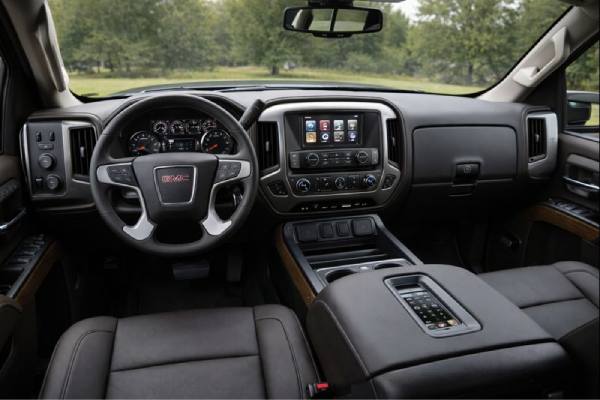
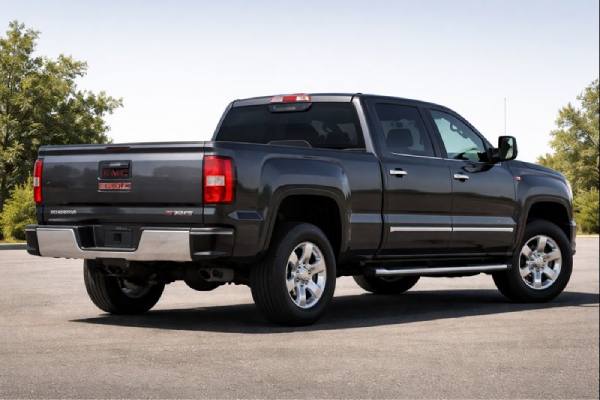
The GMTK2XX Sierra HD with the LC8 6.0L CNG setup is a work-truck concept done right: take GM’s proven iron-block 6.0 V8 and pair it with a factory-engineered natural-gas fuel system aimed at fleets, high-mileage users, and regions with strong CNG availability. In RWD form, it keeps the driveline simple, the front end lighter than 4WD variants, and the service story straightforward for shops that already know HD GM trucks.
What makes this model different is ownership math. When CNG pricing and access line up, operating cost can drop meaningfully, while the truck still behaves like a conventional Sierra HD—same cab and bed choices, similar towing manners, and familiar controls. The key trade-off is CNG-specific inspection discipline and long-term tank lifecycle planning, which matters as much as oil changes on a fleet schedule.
Quick Specs and Notes
- Strong low-end pull and simple RWD driveline suit towing and daily commercial use.
- CNG capability can cut fuel spend where stations are reliable and pricing is favorable.
- The 6.0L architecture avoids some complexity seen in newer downsized turbo engines.
- Plan ahead for CNG tank age limits and parts availability as the truck gets older.
- Inspect the CNG fuel system every 60,000 km (37,000 mi) or 36 months, and replace CNG tanks at 15 years from their manufacture date.
Contents and shortcuts
- LC8 CNG Sierra HD explained
- LC8 CNG specs and tables
- Trims, upfits, and safety tech
- Common problems and service actions
- Maintenance plan and buying tips
- Driving feel and fuel costs
- CNG HD rivals compared
LC8 CNG Sierra HD explained
Think of the LC8 Sierra HD as a “normal” GMTK2XX heavy-duty pickup first, and a CNG truck second. The chassis, body, interior, and most running gear follow the same pattern as other 2015–2019 Sierra HD models. The difference is under the hood and along the frame rails: a factory-integrated high-pressure natural-gas system adds regulators, valves, filters, lines, and a tank package designed to store CNG at very high pressure. In daily use, it drives like a gasoline 6.0 truck—because it essentially is one, with CNG added as a fuel strategy.
What CNG changes in real ownership
CNG behaves differently than gasoline in ways owners feel:
- Fueling and route planning: you need reliable stations and a realistic “how far between fills” routine.
- Storage safety discipline: tank inspections and age limits are not optional; they’re part of the vehicle’s safety envelope.
- Parts and service specialization: any shop can service brakes and suspension, but CNG diagnosis needs training and correct procedures.
Why RWD matters here
On a Sierra HD, 4WD adds capability but also adds weight, rotating parts, and additional fluids and seals. With the LC8/CNG focus often aimed at fleets (delivery, municipal, utility, site support), RWD can be the better match: fewer driveline components, fewer failure points, and easier access for routine service. It also tends to deliver slightly better efficiency at highway speeds, which matters when you’re tracking cost per kilometer.
Where this truck fits best
This configuration makes the most sense when:
- You do steady mileage (commuting, routes, job-to-job travel).
- You tow moderately and frequently rather than “max tow” all the time.
- You can schedule maintenance by calendar and mileage with discipline.
- You have CNG access that won’t turn every workday into a fueling puzzle.
If you’re an occasional-use private owner without nearby CNG stations, the CNG advantage fades quickly. If you’re a fleet manager with predictable routes and a station network (or private fueling), the LC8 Sierra HD can be one of the simplest ways to lower operating cost without changing the “pickup truck” experience.
LC8 CNG specs and tables
Below are practical, decision-grade specifications for the GMTK2XX Sierra HD RWD with the LC8 6.0L CNG-capable powertrain. Some values vary by cab, bed, axle ratio, GVWR class (2500HD vs 3500HD), and fleet upfit content—so treat the tables as a baseline, then verify by VIN and RPO codes.
Engine and performance
| Item | Specification |
|---|---|
| Code | LC8 |
| Engine layout and cylinders | V8, OHV (pushrod), 2 valves/cyl |
| Displacement | 6.0 L (5,967 cc) |
| Bore × stroke | 101.6 × 92.0 mm (4.00 × 3.62 in) |
| Compression ratio | 9.7:1 |
| Induction | Naturally aspirated |
| Fuel system | Sequential fuel injection |
| Fuel | CNG-capable (bi-fuel strategy depends on configuration) |
| Max power (gasoline) | 360 hp (268 kW) @ 5,400 rpm* |
| Max torque (gasoline) | 380 lb-ft (515 Nm) @ 4,200 rpm* |
| Max power (CNG) | 301 hp (224 kW) @ 5,400 rpm* |
| Max torque (CNG) | 333 lb-ft (451 Nm) @ 4,200 rpm* |
| Timing drive | Chain |
| Firing order | 1-8-7-2-6-5-4-3 |
*Fuel-specific output can vary by calibration and application; treat these as typical LC8 reference ratings.
Transmission and driveline
| Item | Specification |
|---|---|
| Transmission | 6-speed automatic (6L90 family) |
| Gear ratios | 1st 4.03 / 2nd 2.36 / 3rd 1.53 / 4th 1.15 / 5th 0.85 / 6th 0.67 / Rev 3.06 |
| Drive type | RWD |
| Final drive ratio | Commonly 3.73 or 4.10 (varies by GVWR, towing package, and axle) |
| Differential | Open or optional locking (package dependent) |
Chassis and dimensions
| Item | Typical range / notes |
|---|---|
| Suspension (front / rear) | Independent front; rear leaf springs |
| Steering | Power steering (HD truck tuning; ratio varies by year and package) |
| Brakes | 4-wheel disc; HD rotor sizes vary by series |
| Wheels/tyres | Fleet-dependent; common HD sizes include 17–18 in wheels |
| Wheelbase | Multiple wheelbases depending on cab/bed (regular, double, crew) |
| Overall length | Varies by cab/bed; long-bed configurations are the longest |
| Overall width | Approx. 2,040 mm (about 80 in) excluding mirrors (varies by trim) |
| Height | Varies by cab/roof and suspension package |
| Ground clearance | Typical HD truck clearance; depends on tyres and payload setup |
| Turning circle | Depends on wheelbase; longer wheelbases need more space |
If you’re spec’ing an exact build, wheelbase and length are the first “must confirm” items—because they also change CNG tank packaging and usable range.
Fuel storage (CNG focus)
| Item | Specification |
|---|---|
| CNG storage pressure | Up to 24,800 kPa (3,600 psig) |
| CNG tank capacity | Typically 17.6–18.0 GGE depending on wheelbase |
| Gasoline tank | HD gasoline tank capacity varies by model year and configuration |
| CNG tank replacement | Replace at 15 years from tank manufacture date |
| CNG inspection interval | Every 60,000 km (37,000 mi) or 36 months |
Fluids and service capacities (typical)
| Item | Specification (typical) |
|---|---|
| Engine oil | GM dexos1; SAE 5W-30 is common; about 5.7 L (6.0 qt) with filter (check engine/RPO) |
| Cooling system | Dex-Cool type coolant; capacity varies by cooling package |
| Transmission fluid | Dexron family (application-specific) |
| Rear axle fluid | Gear oil spec depends on axle and locker option |
Safety and driver assistance
| Item | Notes |
|---|---|
| Core safety systems | ABS, stability control, traction control, trailer sway support (package dependent) |
| Airbags | Front airbags plus additional coverage varies by year and cab |
| Crash ratings | HD trucks are not always tested in the same programs/versions as light-duty models; verify by model year on official databases |
| ADAS | Limited compared with modern trucks; most examples rely on stability/traction systems rather than camera/radar automation |
Trims, upfits, and safety tech
The 2015–2019 Sierra HD lineup spans from straightforward fleet trucks to premium Denali-grade models, and the LC8/CNG configuration is most commonly seen where it supports a mission: fleets, commercial operators, and organizations optimizing fuel spend. The trim badge matters—but on CNG trucks, upfit content and axle/towing configuration matter even more.
Trims you’ll commonly see
- Base / Work Truck (WT) style builds: vinyl or durable cloth interiors, simpler infotainment, steel wheels. These often pair with towing mirrors and utilitarian bed setups.
- SLE / SLT: comfort upgrades, better infotainment and convenience equipment, more common power options.
- Denali (less common for CNG fleets): premium interior and features, often heavier on electronics; great as a personal tow vehicle, but not always the cost-optimal CNG choice.
Options that materially change capability
When comparing two “similar” trucks, focus on:
- Axle ratio (3.73 vs 4.10): 4.10 generally favors towing and low-speed grade work; 3.73 is usually a better highway compromise.
- Towing package content: not just the hitch—look for cooling upgrades, integrated brake controller, and trailer wiring provisions.
- Rear differential type: an available locking differential can be a big traction advantage even in RWD, especially with a load on uneven surfaces.
- Cab/bed and payload: crew cab comfort is excellent, but payload and wheelbase choices affect turning, parking, and sometimes CNG tank packaging.
How to identify CNG and fleet build clues
Quick identifiers that help during a walk-around:
- CNG fill receptacle and labeling near the fueling area (location varies by upfit).
- High-pressure lines and tank shielding under the bed/frame area.
- RPO codes on the service parts label (glovebox/door area placement varies by year) for axle ratio, differential, and fleet packages.
- Heavy-duty electrical content (aux switches, alternator/battery upgrades) if the truck runs work equipment.
Safety systems and what’s realistic on 2015–2019 HD
These trucks lean heavily on fundamental systems:
- Stability control and traction control tuned for a high-mass vehicle.
- Trailer sway control (when equipped) as part of stability logic.
- Brake system robustness designed around heat management with payload/towing.
Advanced driver assistance (automatic emergency braking, adaptive cruise, lane centering) is generally limited or absent compared with newer generations. That is not a flaw—just a reality of the era. If your drivers expect modern ADAS, you’ll need to set expectations and train around mirrors, spacing, and braking distance.
For child-seat provisions, most crew and double cab variants include lower anchors and tether points, but the best practice is still to confirm anchor positions and allowable seating locations by the exact cab configuration in the official manual.
Common problems and service actions
A well-maintained LC8 Sierra HD can be a long-lived truck, but reliability depends on two layers: the base HD platform and the CNG hardware. The good news is that most non-CNG wear items (brakes, suspension, cooling hoses, wheel bearings) follow normal HD patterns. The “special attention” items are fuel-system sealing, regulator behavior, and tank lifecycle compliance.
Common (higher frequency) issues
- Exhaust manifold bolt leaks (low to medium cost):
Symptoms: ticking on cold start, soot marks near the manifold.
Likely cause: bolt fatigue and heat cycles.
Remedy: repair broken bolts and reseal; consider updated hardware. - Front-end wear from HD duty (medium cost):
Symptoms: clunks, wandering, uneven tire wear.
Likely cause: ball joints, tie rods, idler/pitman wear under load.
Remedy: replace worn joints and align; keep tire pressures correct for load. - Cooling system maintenance drift (medium to high risk if ignored):
Symptoms: rising temps under tow, heater performance changes, coolant smell.
Likely cause: old coolant, air pockets, neglected hoses, radiator efficiency loss.
Remedy: restore correct coolant type/mixture and fix leaks early.
CNG-specific issues (importance varies)
- Regulator or solenoid faults (medium cost, high annoyance):
Symptoms: hard starting on CNG mode, fuel switching issues, loss of power, fuel odor warnings.
Likely cause: contamination, wear, electrical connector problems.
Remedy: verify pressures, check for leaks, replace failed components with correct-rated parts. - CNG filter restriction (low to medium cost):
Symptoms: reduced performance on CNG, inconsistent fueling behavior.
Likely cause: filter loading from station-side contamination.
Remedy: replace filter on schedule; shorten intervals if fuel quality varies. - Tank corrosion or damage exposure (high severity):
Symptoms: visible corrosion, impact damage, missing shields, failed inspections.
Likely cause: harsh climates, road debris, poor underbody cleaning.
Remedy: do not “wait and see.” Follow inspection standards and replace components as required.
Recalls, TSBs, and verification habits
Because HD trucks see many duty cycles and upfits, the safest approach is process-driven:
- Run the official VIN recall check and save proof of completion.
- Ask for dealer service history and fleet maintenance logs (oil life monitor resets and mileage entries matter).
- Confirm any CNG-specific updates, inspections, and tank age documentation.
Even when a truck “feels fine,” documentation is what protects you from expensive surprises—especially when CNG components and tanks have calendar-based limits that don’t care about mileage.
Maintenance plan and buying tips
If you want this truck to be cost-effective, maintenance needs to match how HD fleets actually use vehicles: lots of idle time, towing heat, dusty work sites, and tight downtime windows. The LC8 engine itself is not “fragile,” but CNG compliance and fluid discipline separate good ownership from expensive ownership.
Practical maintenance schedule
Use this as a baseline, then adjust for severe duty (towing, dusty environments, heavy idle):
- Engine oil and filter: follow the oil life monitor, but don’t exceed 12 months between changes. Fleet-friendly cadence is often every 8,000–10,000 km (5,000–6,000 mi) if duty is heavy.
- Engine air filter: inspect at every oil service; replace when restriction rises (dusty use can shorten intervals sharply).
- Cabin air filter (if equipped): every 15,000–30,000 km (10,000–20,000 mi) depending on environment.
- Cooling system: maintain correct coolant type and mixture; service intervals depend on coolant and usage, but don’t ignore age-based replacement.
- Transmission fluid: service earlier under towing/heat; consider a conservative interval if the truck works hard.
- Rear axle fluid: inspect for leaks; change on a schedule if towing regularly or operating in water/dirt.
- Brake fluid: every 2 years is a solid best-practice for work trucks.
- Tires: rotate and check alignment regularly; HD tires hide problems until wear becomes expensive.
CNG system: the “can’t skip” items
- CNG fuel system inspection: every 60,000 km (37,000 mi) or 36 months.
- CNG tank replacement: 15 years from tank manufacture date, regardless of mileage.
- Leak checks and safe servicing: any odor, fueling irregularity, or fault light needs immediate diagnosis using correct procedures.
This is also where buying decisions are made: if the tanks are near age-out, budget accordingly. A cheap purchase price can be wiped out by deferred CNG lifecycle costs.
Buyer’s inspection checklist
Bring a flashlight and be picky:
- Underbody and tank area: look for missing shields, corrosion, or impact marks.
- Fuel-switching behavior: if it’s bi-fuel, confirm smooth transitions and stable idle.
- Cooling and transmission behavior under load: watch temps during a test drive if possible.
- Front-end play: check steering response, tire wear patterns, and suspension noises.
- Service proof: oil changes, coolant service, transmission/axle fluid, brake fluid, and documented CNG inspections.
Best “seek” and “avoid” guidance
- Seek: documented CNG inspections, tanks with plenty of calendar life remaining, towing package content that matches your use, and a clean underbody in salt regions.
- Be cautious with: trucks missing upfit documentation, trucks that sat unused for long periods (seals and regulators don’t always love inactivity), and any example with unclear tank age history.
Driving feel and fuel costs
A 6.0L Sierra HD is defined more by torque delivery and mass management than by quick acceleration. The LC8/CNG layer doesn’t change the fundamentals: it’s still a heavy-duty pickup with a long wheelbase option set, a substantial curb weight, and brakes and cooling built for work. What does change is the “fuel strategy” mindset—and how you measure efficiency.
Ride, handling, and NVH
- Straight-line stability: excellent, especially with longer wheelbases. These trucks track well on highways and feel composed with a trailer when properly set up.
- Steering feel: heavy, deliberate, and confidence-oriented rather than sporty. Expect more effort at low speeds and a stable on-center feel at speed.
- Ride quality: empty-bed ride can be firm due to rear leaf springs; with payload, the truck often feels more settled.
- Cabin noise: generally reasonable for a work truck, with tire and wind noise depending heavily on tires, mirrors, and trim.
Powertrain character on gasoline vs CNG
On gasoline, the 6.0 is familiar: predictable throttle response, a broad torque curve, and a 6-speed that prefers steady, load-aware shifts. On CNG, you may notice:
- Slightly softer peak output and different “pull” as it climbs in rpm.
- Fuel switching behavior (if bi-fuel), where transitions should be smooth when the system is healthy.
- Consistency under heat: heavy towing can stress any fuel system; clean filters and correct pressures matter.
Real-world efficiency and range
Because duty cycles vary wildly, it’s better to think in bands:
- Highway cruising (unloaded): often lands in the “low teens mpg” (US) equivalent for gasoline in real life, with CNG roughly comparable on an energy basis.
- Mixed work use: frequent stops, idle time, and payload can push consumption up quickly.
- Towing: expect a meaningful penalty—often 25–50% higher fuel use depending on speed, grade, and trailer size.
CNG range depends heavily on tank capacity and station density. If your route is predictable, this is manageable. If your day is unpredictable, you may end up running more on gasoline than planned.
Towing manners (RWD focus)
With proper tongue weight and trailer brake control, RWD HD trucks tow confidently. The main limiter is traction on loose surfaces and steep grades, especially if unladen. Tire choice and a locking rear differential can make a larger difference than many buyers expect.
CNG HD rivals compared
In the 2015–2019 window, true factory-integrated CNG heavy-duty pickups were never a mass-market segment. That means your “rivals” comparison is often less about identical CNG competitors and more about choosing the best alternative way to achieve similar operating cost goals.
Versus gasoline HD alternatives
If you compare this LC8 CNG Sierra HD to a standard gasoline 6.0 HD truck:
- Advantage LC8/CNG: potential fuel cost reduction and emissions benefits where CNG is supported.
- Advantage gasoline-only: simpler fueling logistics and fewer specialized components as the vehicle ages.
- Decision point: if your CNG station access is not rock-solid, gasoline-only is often the better real-world solution.
Versus diesel HD alternatives
Diesel HD trucks typically win on torque and towing efficiency, especially at high gross combined weights. However:
- Advantage LC8/CNG: potentially lower fuel costs in the right market, and often simpler emissions hardware compared with modern diesel systems.
- Advantage diesel: better long-haul towing efficiency, stronger grade performance, and higher resale demand in many regions.
- Decision point: frequent heavy towing over long distances tends to favor diesel; predictable routes with CNG access can favor LC8.
Versus propane (LPG) and other fleet fuels
Some fleets consider LPG conversions or other alternative fuels:
- CNG strengths: strong emissions profile and stable combustion characteristics; good fit with private fueling.
- LPG strengths: easier infrastructure in some regions and often simpler storage packaging.
- Decision point: infrastructure and technician skill availability often outweigh theoretical advantages.
The bottom line
The LC8 CNG Sierra HD RWD is a specialist truck that behaves like a normal Sierra HD—until fueling and CNG compliance enter the picture. If you have the infrastructure and the discipline, it can be a durable, cost-smart workhorse. If you don’t, a gasoline-only HD (or a diesel, depending on towing demands) is usually the safer long-term bet.
References
- 2015 Sierra Denali Owner Manual 2015 (Owner’s Manual) ([GMC][1])
- Bi-Fuel Supplemental Guide 2016 (Owner’s Manual Supplement) ([GMC][2])
- Special Engines: 6.0L Gen IV V8 – Dedicated CNG / LPG – RPO LC8 2020 (Technical Guide) ([GMC][2])
- 2016 Silverado HD Regular Cab / Crew Cab / Double Cab 2500 / 3500 Series Specifications 2016 (Specifications) ([GM News][3])
- Recalls | NHTSA 2025 (Recall Database) ([NHTSA][4])
Disclaimer
This article is for informational purposes only and is not a substitute for professional inspection, diagnosis, or repair. Specifications, torque values, service intervals, and procedures can vary by VIN, market, model year, and equipment; always verify details using official owner and service documentation for the exact vehicle you’re working on.
If this guide helped, please consider sharing it on Facebook, X/Twitter, or your preferred platform to support our work.