
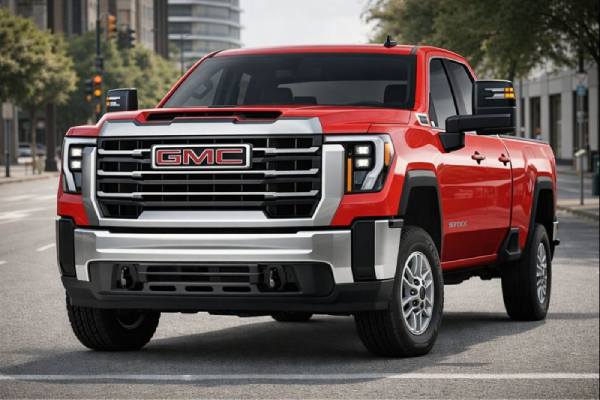
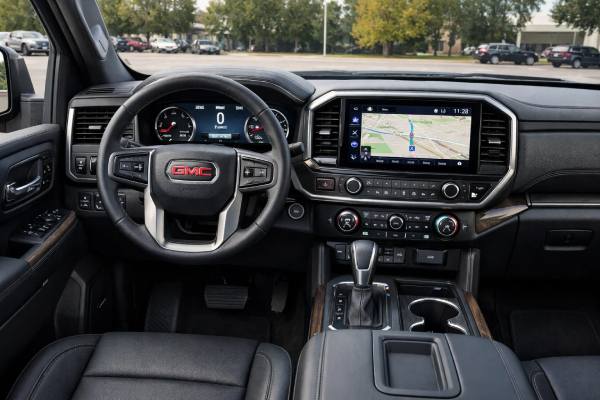
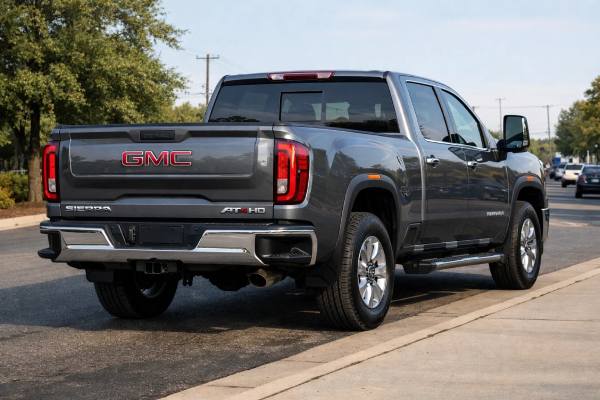
The facelift-era GMC Sierra HD RWD with the L5P 6.6L Duramax is built around one core idea: deliver heavy-duty capability with fewer compromises in daily use. The updated platform leans on a modernized electrical architecture and interior tech, while the diesel powertrain focuses on high torque at low rpm—exactly where towing and hauling live. In RWD form, the truck can offer slightly higher tow ratings than a comparable 4WD setup and avoids the extra driveline complexity of a transfer case and front axle. The tradeoff is traction when the bed is empty, especially on wet pavement or snow. If you shop this generation well—matching axle ratio, tire package, and trailering options to your workload—it can be a long-life workhorse that also feels noticeably more refined than older HD trucks.
What to Know
- Strong low-rpm pull and confident grade control make it well suited to frequent towing.
- RWD configuration can offer simpler driveline service needs than 4WD over the long term.
- Updated cabin tech (infotainment and trailering features) is a real day-to-day upgrade in the facelift years.
- Emissions hardware (DEF and DPF systems) adds complexity—short trips and idle-heavy use increase risk.
- Plan on fuel-filter service about every 24,000 km (15,000 mi) in typical use, sooner in dirty-fuel environments.
Navigate this guide
- Facelift L5P Sierra HD RWD
- L5P RWD specs and dimensions
- Trims, packages, and driver assist
- Reliability issues and recalls
- Maintenance plan and buying tips
- Real-world driving and towing
- How it stacks up against rivals
Facelift L5P Sierra HD RWD
The facelift 2024–present Sierra HD range (2500HD and 3500HD under the Sierra HD umbrella) keeps the same heavy-duty mission, but it feels more “complete” as an ownership package. The Duramax L5P is the centerpiece: a 6.6-liter turbo-diesel V8 tuned for high torque, designed to move mass without needing high rpm. In practical terms, it means the truck doesn’t feel strained when merging with a trailer, climbing long grades, or hauling a bed full of dense materials. That torque also lets the transmission hold gears longer and shift less often under steady load—important for heat management and driver confidence.
Choosing RWD changes the character more than many buyers expect. Without the front drive hardware, the steering can feel a bit lighter and less busy over broken pavement. There’s also less rotating mass in the front driveline, which can help efficiency slightly and reduce service complexity (no front differential fluid, no transfer case, and fewer U-joints/CV components to maintain). RWD can also be a smart choice for fleets or owners who primarily tow on dry roads, live in mild climates, and value payload and simplicity.
The compromise is traction—especially empty. HD pickups carry a lot of weight up front (engine, cooling pack, frame), while the rear axle can be relatively light until you load the bed or hook up a trailer. On wet roads, gravel, mud, or snow, that can translate into wheelspin if you treat the throttle like a half-ton truck. Tires matter more than the badge on the tailgate: an aggressive all-terrain can help off-pavement starts, while a highway-terrain tire can improve stability and wear for long-distance towing.
A useful way to think about this configuration is: RWD Sierra HD Duramax is a “tow tool” first, a “traction tool” second. If your real-world use aligns with that—highway miles, frequent towing, worksite duty on firm ground—it can be one of the most rational HD setups to own.
L5P RWD specs and dimensions
Below are specs that matter most for the facelift-era Sierra HD RWD with the L5P Duramax. Exact figures vary by 2500HD vs 3500HD, cab/bed, axle ratio, wheels/tires, and trailering equipment—so treat the tables as a decision guide and confirm with your VIN build sheet.
Engine and performance (L5P Duramax)
| Item | Spec |
|---|---|
| Code | L5P |
| Engine layout and cylinders | V8 turbo-diesel, 8 cylinders, OHV valvetrain |
| Displacement | 6.6 L (6,600 cc) |
| Induction | Turbocharged |
| Fuel system | Direct injection (diesel) |
| Max power | 470 hp (350 kW) @ rpm* |
| Max torque | 1,322 Nm (975 lb-ft) @ rpm* |
| Timing drive | Gear/chain system (application-dependent) |
| Emissions and efficiency standard | EPA (US market; emissions equipment includes DPF and SCR/DEF) |
| Rated efficiency | Not EPA-rated like light-duty vehicles; real-world varies strongly with load |
*Published outputs are typically quoted without emphasizing rpm in marketing material; consult official service documentation for exact rpm values by calibration.
Transmission and driveline (RWD focus)
| Item | Spec |
|---|---|
| Transmission | 10-speed automatic (Allison-branded application) |
| Drive type | RWD (2WD) |
| Differential | Rear axle varies by model; locking diff availability depends on trim/package |
| Transfer case | Not applicable (RWD) |
Chassis and dimensions (typical ranges)
| Item | Spec (varies by cab/bed) |
|---|---|
| Platform | T1XX heavy-duty |
| Suspension (front/rear) | Independent front; rear solid axle with leaf springs |
| Brakes | 4-wheel disc (sizes vary) |
| Wheels/tires | Multiple packages; confirm load range for towing |
| Length | Approx. 5,980–6,750 mm (235–266 in) |
| Wheelbase | Approx. 3,605–4,270 mm (142–168 in) |
| Width | Around 2,060 mm (81 in) excluding mirrors |
| Height | Roughly 2,020–2,080 mm (80–82 in) depending on configuration |
| Turning circle | Large; varies by wheelbase and tire package |
Capability (where RWD can matter)
| Item | Typical guidance |
|---|---|
| 0–100 km/h (0–62 mph) | Often in the ~7–9 s range empty, depending on configuration |
| Towing capacity | Wide spread; highest figures usually with 3500HD, correct axle ratio, and trailering equipment |
| Payload | Configuration-dependent; regular cab/3500HD setups typically lead |
| Roof load | Not a design focus for HD pickups; follow the owner’s manual guidance |
Fluids and service capacities (confirm by VIN)
| Item | Typical guidance |
|---|---|
| Engine oil | Use the specified diesel oil standard; capacity varies by oil pan and cooling package |
| Coolant | Use GM-specified coolant standard and mix ratio; capacity varies with cooling package |
| Transmission fluid | Use the specified ATF; capacity varies by service method (drain vs overhaul) |
| Differential | Use specified gear oil and friction modifier requirements if applicable |
Electrical (ownership-relevant)
| Item | Typical guidance |
|---|---|
| 12V battery | Heavy-duty rating varies by option content; check CCA and form factor |
| Alternator output | Varies with trailering/cold-weather packages and electrical load |
Safety and driver assistance (big picture)
| Item | Typical guidance |
|---|---|
| Crash ratings | HD trucks are not always tested the same way as light-duty models; verify by year and body style |
| ADAS suite | Forward collision alerts, automatic emergency braking, lane features, and trailer aids vary by trim and options |
If you only take one thing from the tables: match the truck’s axle ratio, rear tire load rating, and trailering hardware to your trailer weight first—then choose trim and comfort features second. That order avoids the most common “HD regret” scenario: a beautifully equipped truck that isn’t configured for the trailer you actually own.
Trims, packages, and driver assist
For facelift-era Sierra HD, trims typically range from work-focused to luxury-focused, and the drivetrain rules are important if you specifically want RWD. In many markets, RWD is most commonly available on work and mainstream trims, while the off-road-oriented trims are often 4WD-only. Before you get deep into pricing, confirm “2WD” availability for the exact trim and cab/bed you want.
Common trim ladder (how to identify them quickly)
- Pro (work spec): Basic interior materials, straightforward wheel designs, and fewer chrome accents. Often the easiest place to find RWD in fleet-style builds.
- SLE / SLT (mainstream): More comfort and tech availability; SLT usually adds leather and upscale interior cues.
- Denali / Denali Ultimate (luxury): More standard comfort and premium trim pieces; these trims can still be configured for towing, but wheel/tire choices matter.
- AT4 / AT4X (off-road oriented): Typically associated with 4WD and off-road hardware; not the usual hunting ground for RWD shoppers.
Packages that can change capability (not just appearance)
- Max Trailering / towing-focused packages: Often bundle hitch hardware, cooling upgrades, trailering mirrors, integrated brake controller, and higher-rated receiver components.
- Gooseneck and fifth-wheel prep: A must-have if you tow in the bed; retrofitting is possible but rarely as clean or cost-effective.
- Rear locker / limited-slip options: Depending on axle and package availability, this can be the single best traction upgrade for RWD owners who occasionally launch a trailer on slippery ramps.
- Wheel and tire packages: On a diesel HD, tire load range and sidewall stiffness can affect stability more than many “suspension” options.
Safety systems and ADAS (what’s standard vs optional)
Sierra HD safety and driver assistance features vary heavily by trim and packages. In general:
- Core safety: Stability control, traction control, and a full airbag system are baseline expectations, but the exact airbag count and coverage can vary by cab configuration and model year updates.
- Forward safety features: Forward collision alert and automatic emergency braking may be standard on some trims and optional on others. Calibration and sensor alignment become important after front-end repairs.
- Lane features: Lane departure warning or lane-keep assists are typically more available on higher trims. On HD trucks, lane features can feel more conservative because the vehicle is wide and heavy.
- Trailer-focused tech: This is where Sierra HD often shines—camera views, trailer length setups, and checklists can materially reduce stress on long trips. These are usually packaged rather than standard.
Year-to-year notes within the facelift era
Even inside “2024–present,” equipment can change mid-cycle. A package that is optional one year can be bundled the next, and camera/infotainment hardware may evolve. If you’re cross-shopping model years, compare window stickers (or build sheets) rather than assuming trim names mean identical content.
The ownership tip here is simple: if trailering tech and ADAS matter to you, shop by package codes and feature lists, not by trim alone. Two “Denali” trucks can be very different in towing hardware, tire package, and driver assistance coverage.
Reliability issues and recalls
The L5P Duramax has a strong reputation for doing hard miles when maintained correctly, but modern diesel ownership is less about the core engine block and more about the supporting systems: emissions aftertreatment, sensors, and heat management under load. The best reliability strategy is to understand which problems are common, which are expensive, and which are preventable with usage habits.
Common (higher frequency) concerns
- DEF and SCR system faults (medium cost):
Symptoms: Warning messages, reduced power countdowns, frequent “service emissions system” alerts.
Likely causes: DEF quality issues, heater faults, level sensors, or NOx sensor drift.
Remedy: Verify DEF freshness/quality, scan for stored codes, and replace failed sensors/heaters; some cases require software updates. - DPF regeneration problems with short-trip use (medium cost):
Symptoms: Frequent regens, fuel economy drop, increased idle, soot-related warnings.
Likely causes: Too many short drives, long idling, or interrupted regens that never complete.
Remedy: Change usage pattern (longer steady drives), ensure the truck can complete regens, and address underlying sensor issues if codes persist. - Fuel contamination sensitivity (medium to high cost):
Symptoms: Hard starts, rough running, power loss, fuel system codes.
Likely causes: Water or debris in diesel fuel, neglected fuel filter, poor storage practices.
Remedy: Regular fuel filter service, drain water separators if equipped, buy fuel from high-turnover stations, and keep records.
Occasional (depends on workload and environment)
- Cooling system strain under heavy towing (medium cost):
Symptoms: Rising temps on grades, fan running hard, reduced power in extreme conditions.
Likely causes: Stacked heat exchangers clogged with debris, coolant condition, towing beyond the truck’s “comfortable” envelope.
Remedy: Keep radiator stack clean, follow coolant service intervals, and consider towing setup changes (speed, gear selection, airflow). - Transmission behavior complaints (low to medium cost if normal):
Symptoms: Firm shifts, hunting in rolling terrain, delayed downshifts.
Likely causes: Calibration strategy prioritizing durability and heat control; sometimes improved with updates.
Remedy: Check for software updates and ensure correct fluid spec; confirm no overheating events in service history.
Rare (but expensive when they happen)
- High-pressure fuel system damage (high cost):
Symptoms: Sudden loss of power, metal contamination, no-start.
Likely causes: Severe contamination or component failure.
Remedy: This can become a full-system repair; prevention is mostly fuel quality and filter discipline.
Recalls, service actions, and how to verify them
Heavy-duty trucks can have recalls related to electrical components, tailgate systems, braking components, or software. The right process is:
- Run the VIN through the official recall database.
- Ask for dealer documentation showing completion dates and campaign numbers.
- Check for calibration updates related to drivability, emissions warnings, and camera/ADAS behavior.
Pre-purchase checks that matter most on the L5P RWD
- Evidence of regular fuel filter service and correct oil spec use.
- A scan report showing no active emissions codes and a history free of repeated aftertreatment warnings.
- Signs of appropriate towing setup: trailer brake controller use, no overheated brake smell, and stable tire wear.
- Underbody inspection for corrosion hotspots (especially in snowbelt regions) and hitch/receiver condition.
If your use case is lots of idling and short trips, the reliability story shifts. A modern diesel can still work, but you need a deliberate routine that keeps the aftertreatment system healthy.
Maintenance plan and buying tips
A simple, repeatable maintenance routine is the best “mod” you can do for a modern HD diesel. The L5P responds well to clean oil, clean fuel, and predictable heat cycles. Where owners get into trouble is stretching fuel filter intervals, ignoring emissions warnings, and letting the truck live on short trips.
Practical maintenance schedule (typical guidance)
Use the oil life monitor (OLM) as your baseline, then tighten intervals for severe service (towing, dusty sites, extended idling, frequent cold starts).
- Engine oil and filter: Follow OLM or about every 12,000 km (7,500 mi) in normal use; consider 8,000 km (5,000 mi) when towing often or idling heavily.
- Fuel filter(s): About every 24,000 km (15,000 mi), sooner with questionable fuel quality or frequent water contamination risk.
- Engine air filter: Inspect every 12,000–16,000 km (7,500–10,000 mi); replace based on restriction/dust exposure.
- Cabin air filter (if equipped): Every 24,000–32,000 km (15,000–20,000 mi), sooner in dusty climates.
- Coolant: Follow the official interval; replace sooner if you see contamination or incorrect mix ratio.
- Brake fluid: Every 3 years is a sensible default if towing; moisture is the enemy.
- Differential fluid: If towing regularly, a 48,000–80,000 km (30,000–50,000 mi) interval is a practical approach; otherwise follow official guidance.
- Transmission fluid: Best handled by service history and duty cycle; heavy towing and heat justify more frequent service.
- DEF: Refill as needed; store DEF properly (sealed, moderate temperature) to avoid quality issues.
Fluids and specs (decision-grade guidance)
Because exact specs and capacities vary by VIN and equipment, the safest approach is to verify in the correct service literature. What you can do without ambiguity:
- Use the exact oil specification required for the Duramax diesel calibration and emissions system.
- Use approved DEF and avoid expired or heat-soaked containers.
- Use the correct ATF and gear oil specs—“close enough” fluids can cause shift quality issues or wear over time.
Essential checks when buying used (RWD-specific)
- Rear tire condition and load rating: RWD HD trucks rely heavily on rear tire grip; mismatched tires can make the truck feel nervous when empty.
- Rear differential behavior: Listen for bearing noise on coast-down and check for fluid service records.
- Hitch and trailer wiring health: Corrosion and poor repairs are common; check that trailer lights, brake controller, and camera views function correctly.
- Alignment and front-end wear: Even without front drive hardware, HD trucks can wear steering/suspension components if they’ve lived on rough sites.
Which configurations tend to age best
- Trucks with documented fuel filter and oil service, and a history of highway miles, often show the fewest emissions-related problems.
- A sensible wheel and tire setup (not overly aggressive, correct load rating) helps stability and reduces steering shimmy complaints.
- If you tow heavy, prioritize factory trailering packages and bed prep. Aftermarket solutions can work, but factory integration usually wins for durability and resale.
Long-term durability outlook: the core engine and transmission can be very long-lived when serviced correctly, but the cost of neglect is higher than on older diesels. Treat emissions warnings as “fix now,” not “later.”
Real-world driving and towing
On the road, the Duramax Sierra HD RWD feels like it has “reserve” in almost every normal situation. The diesel’s torque arrives early, so you rarely need to push the throttle deep to maintain speed. In daily driving, that translates into calmer acceleration, fewer gear changes, and less noise than you might expect from a heavy-duty truck—especially at steady highway speeds.
Ride, handling, and NVH (noise and vibration)
- Ride quality: Empty-bed ride is firm, as expected with rear leaf springs designed for payload. The truck settles noticeably with 250–450 kg (550–1,000 lb) in the bed or a trailer on the hitch.
- Steering and stability: RWD models can feel slightly less complex up front than 4WD variants, but the truck is still wide and heavy—lane placement matters.
- Cabin noise: The facelift-era interior and insulation improvements help, but tire choice can dominate highway noise.
Powertrain character and transmission behavior
The 10-speed automatic generally prioritizes temperature control and smooth torque delivery. Under light throttle it shifts early; under load it holds gears longer to keep the engine in a strong torque band. Expect:
- Firm, purposeful shifts under tow—this is normal and often better for clutch longevity.
- Predictable downshifts on grades, especially when using tow/haul mode.
- Strong engine braking support (if equipped) that reduces brake wear on long descents.
Real-world efficiency (what owners typically see)
HD diesels are not as sensitive to speed as small engines, but aero drag still matters. In typical use:
- Unladen highway (about 120 km/h / 75 mph): Often around 12–15 L/100 km (16–20 mpg US / 19–24 mpg UK), depending on tires, wind, and gearing.
- Mixed driving: Often 15–20 L/100 km (12–16 mpg US / 14–19 mpg UK).
- Towing penalty: Moderate towing can increase consumption by ~30–60%; heavy towing can push it higher, especially at highway speed or in mountains.
RWD traction: how to make it work
RWD HD trucks can tow extremely well, but traction is the weak link when empty or on slippery surfaces.
- Add weight over the rear axle in winter (secured ballast) if you must drive in snow.
- Choose tires for your environment—a true winter tire is transformative if conditions demand it.
- If available, a locking rear differential can make boat ramps and wet grass far less stressful.
Towing feel and temperature management
With the correct hitch setup and trailer brake adjustment, the Sierra HD Duramax tends to feel stable and relaxed at speed. The keys are not exotic:
- Keep trailer tongue weight in the correct range.
- Use the integrated brake controller properly and test brake response before long descents.
- Watch temperatures on long grades—backing off 5–10 km/h can reduce heat dramatically without much time penalty.
If you want the most confidence from an RWD HD, treat tires and trailer setup as part of the drivetrain. They matter that much.
How it stacks up against rivals
In the heavy-duty diesel space, the Sierra HD competes in a tight field where “paper specs” are close and the real differences show up in drivability, trailering tech, dealer support, and how the truck fits your specific use. Here’s a practical comparison lens for the facelift-era Sierra HD RWD Duramax.
Versus Ford Super Duty (Power Stroke)
Ford’s Super Duty lineup is often the benchmark for towing-focused innovation and broad configuration availability. Where Sierra HD can win:
- Strong diesel torque delivery that feels effortless in normal towing.
- Trailering camera and integrated features that reduce workload on long trips (depending on options).
- A refined cabin experience in higher trims, especially for owners who spend full workdays in the truck.
Where Ford can win:
- Extremely broad upfit and fleet ecosystem, with deep configuration choices.
- Strong reputation for certain towing technologies and widespread aftermarket support.
Versus Ram HD (Cummins)
Ram HD with the Cummins is often chosen by buyers who prioritize diesel character and long-haul feel. Where Sierra HD can win:
- A modern, well-integrated 10-speed automatic feel in daily use.
- Strong towing confidence with the right trailering packages and axle ratio.
- A premium interior presentation in Denali-focused trims.
Where Ram can win:
- Certain powertrain configurations and torque delivery characteristics that some owners prefer for specific towing styles.
- Brand loyalty and perceived diesel identity in the HD segment.
Versus “same-truck” Chevrolet Silverado HD
Mechanically, Sierra HD and Silverado HD are closely related. The decision often becomes:
- Sierra for Denali/AT4 styling, interior presentation, and feature packaging.
- Silverado for different trim pricing and availability in some regions.
The RWD factor in cross-shopping
Many rivals are more commonly purchased in 4WD, so RWD comparisons can be overlooked. RWD can be an advantage if:
- You tow mostly on-road and want fewer driveline systems to maintain.
- You prefer the idea of simpler long-term ownership.
- You’re willing to solve traction with tires and smart loading rather than a transfer case.
Who should choose this Sierra HD configuration
- Frequent tower on paved roads who wants diesel torque and modern trailering tech.
- Fleet or owner-operator who values uptime and predictable service routines.
- Buyer who lives in a mild climate or already has a traction plan for winter.
Who should think twice: drivers in steep, icy regions who commute with an empty bed and cannot add ballast—4WD can be the safer daily choice even if it’s not strictly required for towing.
References
- 2026 Sierra HD | Heavy-Duty Truck | GMC 2025 (Manufacturer Specs)
- Check for Recalls: Vehicle, Car Seat, Tire, Equipment | NHTSA 2025 (Recall Database)
- 2024 GMC Sierra HD Gets Refreshed Interior, Updated Technology and More Capability 2022 (Manufacturer Release)
Disclaimer
This article is for informational purposes only and is not a substitute for professional diagnosis, inspection, or repair. Specifications, torque values, service intervals, fluids, and procedures can vary by VIN, market, calibration, and equipment. Always verify details using the official owner’s manual and service information for your specific vehicle.
If this guide helped, please consider sharing it on Facebook, X (Twitter), or your favorite forum to support our work.