
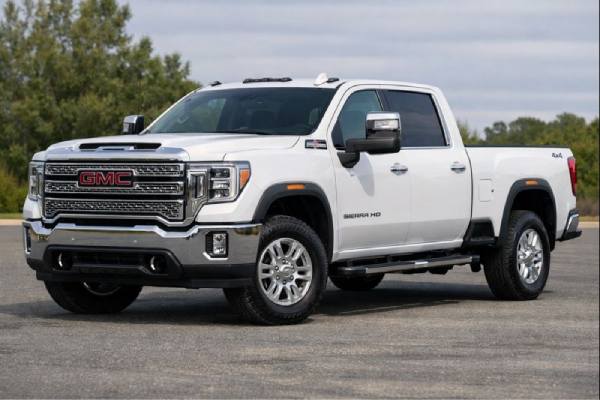
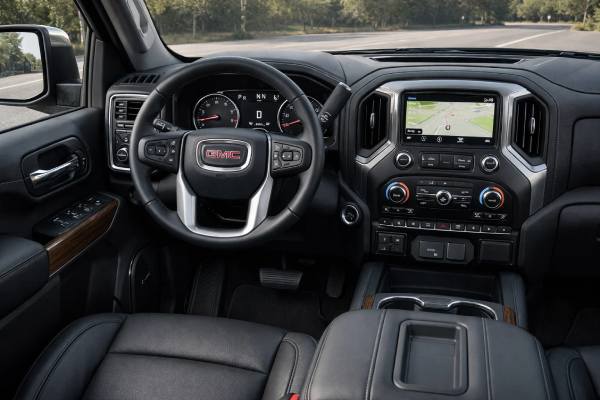
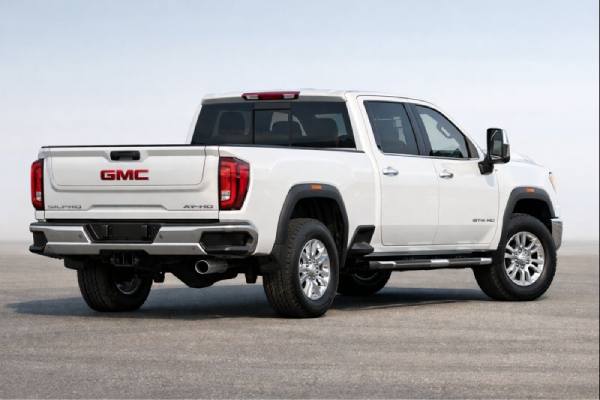
The 2020–2023 GMC Sierra HD RWD with the L5P Duramax is built for one job: moving serious weight with less drama. You get a stout 6.6-liter turbo-diesel V8 and the Allison 10-speed automatic, tuned to make big torque early and hold gears on grades without constant hunting. In RWD form, the truck is often chosen for fleet use, highway towing, and work setups where 4WD is not required—think long-bed configurations and predictable paved-road duty.
Ownership is mostly about managing heat, fluids, and aftertreatment health. These trucks can run a long time when serviced on schedule, but they do not forgive neglected fuel filtration, low DEF quality, or repeated short trips that never fully warm the emissions system. If your use case is frequent towing or high miles, this is one of the most capable heavy-duty diesel packages of its era.
Owner Snapshot
- Strong low-rpm pull with a well-matched Allison 10-speed for steady towing on grades.
- RWD layout reduces front driveline complexity and can improve service access and highway efficiency.
- Wide range of tow ratings depending on cab, bed, axle, and GVWR—verify the door-jamb labels before buying.
- Emissions hardware (DPF and SCR/DEF) dislikes repeated short trips; plan occasional long, hot runs.
- Change engine oil based on Oil Life Monitor or at least every 12 months, sooner under towing or dusty work.
Section overview
- L5P RWD Sierra HD profile
- Specs and service capacities
- Trims, packages, and driver aids
- Reliability issues and recalls
- Maintenance plan and buying tips
- Real-world driving and towing
- How it stacks up against rivals
L5P RWD Sierra HD profile
In the 2020–2023 T1XX generation, Sierra HD (2500HD/3500HD) moved to a modern heavy-duty chassis with more towing tech and a cleaner, more integrated trailer-electrical and camera ecosystem than the previous trucks. The L5P Duramax is the headline: a 6.6-liter V8 turbo-diesel designed for high load, high temperature operation—exactly the world a heavy-duty pickup lives in when it is doing real work. GMC pairs it with an Allison-branded 10-speed automatic that spreads ratios widely enough to keep the diesel in its torque band, even when you are pulling into a headwind or climbing long grades.
Choosing RWD changes the ownership story more than many buyers expect. You lose low-speed traction on loose surfaces compared with 4WD, but you also avoid front axle, transfer case, and front driveshaft service. For fleets and owners who tow primarily on pavement, RWD can be a smart simplification. The truck also tends to feel slightly more “direct” on-center because you do not have front driveline drag and engagement hardware up front. The flip side is traction when the bed is empty: a diesel HD is nose-heavy, and with a light rear axle load it can spin the tires in wet intersections or on gravel driveways. Good tires and a small amount of ballast in winter can transform behavior.
From an engineering standpoint, the key to long life is staying ahead of heat and contamination. Towing stress pushes coolant temperatures, transmission temperatures, and exhaust aftertreatment temperatures higher for longer. That is not automatically bad—these systems are designed for it—but it means your maintenance choices matter. Clean fuel, correct oil specification, and a cooling system in top condition are not “nice to have” items here; they are the difference between a truck that stays strong at 250,000 miles and one that becomes an expensive project.
Specs and service capacities
Below are core specifications for the 2020–2023 Sierra HD RWD with the L5P 6.6-liter Duramax diesel. Heavy-duty trucks vary widely by cab, bed, GVWR, axle ratio, and rear-wheel size, so treat performance and towing numbers as configuration-dependent. Use the door-jamb tire and loading label plus the trailering label (and the build sheet) as your final authority.
Engine and performance (L5P)
| Item | Specification |
|---|---|
| Code | L5P |
| Layout and valvetrain | V8, OHV, 4 valves/cyl (32 valves) |
| Bore × stroke | 103 mm × 99 mm (4.06 in × 3.90 in) |
| Displacement | 6.6 L (6,599 cc) |
| Induction | Turbocharged (diesel) |
| Fuel system | Direct injection (diesel common-rail system) |
| Compression ratio | 16.0:1 |
| Max power | 445 hp (332 kW) @ 2,800 rpm |
| Max torque | 1,234 Nm (910 lb-ft) @ 1,600 rpm |
| Emissions hardware (typical) | DPF + SCR/DEF (market dependent) |
| Rated efficiency | Not typically published as an EPA mpg label for HD pickups; real-world varies strongly with load |
Transmission and driveline
| Item | Specification |
|---|---|
| Transmission | Allison 10-speed automatic (10L1000 family) |
| Drive type | RWD |
| Gear ratios | 4.54 / 2.87 / 2.06 / 1.72 / 1.48 / 1.26 / 1.00 / 0.85 / 0.69 / 0.64 (Rev 4.54) |
| Differential | Typically open; locking diff availability varies by trim and axle package |
Dimensions (examples from common body styles)
| Configuration | Wheelbase | Overall length | Ground clearance | Cargo box volume |
|---|---|---|---|---|
| Regular cab long bed | 3,597 mm (141.6 in) | 5,982 mm (235.5 in) | 259 mm (10.2 in) | 2,365 L (83.5 ft³) |
| Double cab standard bed | 3,795 mm (149.4 in) | 6,108 mm (240.5 in) | 256 mm (10.1 in) | 2,365 L (83.5 ft³) |
| Crew cab long bed | 4,369 mm (172.0 in) | 6,759 mm (266.1 in) | 284 mm (11.2 in) | 2,365 L (83.5 ft³) |
Capability (why labels matter)
Instead of a single “tow rating,” think in three layers:
- Truck limits: GVWR, GAWR (axle ratings), and payload on the door-jamb label.
- Driveline limits: GCWR and maximum trailer rating for your axle ratio and cooling package.
- Hitch limits: receiver, hitch type, and tongue weight.
A 2500HD crew cab RWD diesel can be rated into the mid-to-high 7,000 kg range (mid-to-high 16,000 lb range) for conventional towing in certain configurations, while other trims and cabs rate lower due to weight and payload differences. Fifth-wheel and gooseneck capability, when equipped and allowed by configuration, can move higher—but it is not universal on every RWD build.
Fluids and key service capacities (Duramax-focused)
| System | Specification (typical) |
|---|---|
| Engine oil | dexosD 10W-30; about 9.0 L (9.5 US qt) with filter |
| DEF tank | About 19.3 L (5.1 US gal) |
| Fuel filter | Diesel fuel filtration is critical; follow the truck’s service message and interval guidance |
| Coolant | Use correct GM-approved coolant; capacity varies by cooling package and heater plumbing |
| Lug nuts (common HD spec) | Often 258 Nm (190 lb-ft) on 8-lug HD wheels; verify by wheel type |
Trims, packages, and driver aids
Sierra HD trims in this era typically span work-focused models up through luxury-oriented Denali, and the most important differences are often mechanical or functional rather than cosmetic. For an L5P RWD buyer, focus on three things: axle and GVWR packages, trailering equipment, and safety/driver-assist content.
Trims and options that change capability
- GVWR and axle packages: These drive your real payload and axle headroom. Two trucks with the same engine and “max tow” marketing can have very different payload once you add a diesel, a crew cab, luxury equipment, and larger wheels. If you plan to carry a heavy in-bed load (tool body, slide-in camper, salt spreader), treat payload as the first filter.
- Hitch and trailering hardware: Look for integrated trailer brake controller, factory receiver class, and wiring. Factory trailering packages usually include upgraded cooling, higher-capacity alternator choices, and better camera integration. If you tow frequently, the factory setup is often cleaner and more reliable than piecemeal aftermarket wiring.
- Rear differential choices: Some configurations offer a locking rear differential. On a RWD heavy-duty truck, this is not just an off-road feature—it helps with wet job sites, boat ramps, and winter traction when the bed is light.
- Bed and cab choices: Long beds stabilize towing and increase usable cargo volume, but they increase turning circle and can be harder to park. Regular cab long bed RWD trucks are common in fleets because they are efficient tools, but they give up rear-seat space and often some comfort features.
Quick identifiers when shopping used
- Door-jamb labels: Payload, GVWR, and tire size tell you more than the badge on the fender.
- Hitch area: Factory wiring and an integrated brake controller inside the cab are strong signs of a tow-ready build.
- Trailering camera ports: Trucks equipped with the factory camera ecosystem often have distinct connection points and menu options in the infotainment.
Safety ratings and what to expect
Heavy-duty pickups are not always tested the same way as light-duty models, and full star ratings or comparable results can be limited depending on year and body style. The practical approach is to:
- Check whether your exact year and body configuration has published results.
- Evaluate equipment: stability control, trailer sway control, and integrated brake controller matter a lot when towing.
Driver assistance and ADAS availability
Expect a mix of standard and optional features such as:
- Core safety systems: ABS, stability control, traction control, and trailer sway mitigation.
- Driver alerts (often optional): forward collision alert, lane departure warning, rear park assist, and blind spot monitoring (sometimes with trailer-length considerations).
- Calibration note: After windshield replacement, front camera service, or steering/suspension repairs, driver-assist systems may require calibration. A shop that understands HD trucks and trailer-tow sensors is worth seeking out.
Reliability issues and recalls
The L5P Duramax/Allison combination is fundamentally strong, but heavy-duty ownership is about patterns: what fails, when it fails, and what driving style accelerates it. The list below is organized by prevalence and cost tier, with symptoms and practical remedies.
Common (watch closely)
- Aftertreatment sensitivity (medium to high cost):
Symptoms: frequent regeneration messages, reduced power warnings, rising soot load, or repeated “service emissions system” alerts.
Likely causes: short-trip use, idling, poor DEF quality, failed NOx sensors, or exhaust leaks upstream of sensors.
Remedy: confirm correct DEF, run full heat cycles, repair leaks, replace failed sensors, and ensure calibrations are current. - Fuel filtration and water contamination (medium to high cost):
Symptoms: hard starts, rough running, fuel system faults, or metal contamination downstream.
Likely causes: neglected fuel filter changes or contaminated fuel.
Remedy: replace filters on schedule, drain water if equipped, and use high-turnover fuel sources—especially for fleet storage tanks.
Occasional (depends on duty cycle)
- Cooling system wear under towing (medium cost):
Symptoms: higher-than-normal coolant temps on grades, coolant smell, or slow leaks.
Likely causes: aging hoses, weak clamps, or radiator/intercooler blockage from debris.
Remedy: pressure test, clean heat exchangers, replace hoses proactively if towing frequently. - Transmission heat management and shift quality (medium cost):
Symptoms: harsh shifts under load, temp spikes, or torque-converter shudder complaints (varies).
Likely causes: high heat, fluid aging, or calibration-related behavior.
Remedy: verify temps while towing, service fluid when used hard, and check for updated calibrations.
Rare but expensive (know the signs)
- Turbo and air-path problems (high cost):
Symptoms: low boost codes, limp mode, excessive smoke, or unusual whistle/whine.
Likely causes: boost leaks, sensor faults, or turbo actuator issues.
Remedy: smoke-test charge air system, check actuator operation, fix leaks before replacing major parts.
Recalls, service actions, and how to verify
Recalls and technical service bulletins (TSBs) change over time, and the same platform can have different campaigns depending on build date and tailgate/electrical options. One notable safety recall affects certain HD trucks with power-unlatching tailgates, where water intrusion can cause unintended unlatching while parked. The right process is:
- Run an official recall check using your VIN.
- Ask the seller for dealer repair history printouts (or invoices) showing completion.
- If you tow, confirm any trailer-brake, camera, and tailgate-related updates are done—those are “small” issues that can create big day-to-day headaches.
Pre-purchase tip: if the truck is used mainly for short commutes, pay extra attention to emissions-system health. Ask whether it completes regenerations normally and whether any emissions-related warnings were “cleared” right before sale.
Maintenance plan and buying tips
A Sierra HD diesel lasts when you maintain it like a working machine, not like a commuter car. The schedule below is practical and conservative—ideal for mixed use with towing—while still respecting that many trucks use an Oil Life Monitor (OLM). If you tow often, idle for long periods, or operate in dust, shorten intervals.
Core maintenance schedule (distance or time)
- Engine oil and filter: follow OLM, but commonly every 8,000–12,000 km (5,000–7,500 mi) under towing or heavy use; at least every 12 months. Use the specified diesel oil standard (dexosD where applicable).
- Fuel filter(s): follow the truck’s service message and a regular interval; do not stretch this. Consider earlier service if you buy unknown fuel or store fuel.
- Engine air filter: inspect every 15,000 km (10,000 mi); replace when restricted or at least every 30,000–45,000 km (20,000–30,000 mi) in dusty work.
- Cabin air filter (if equipped): typically every 24,000–30,000 km (15,000–20,000 mi) or annually if you want consistent HVAC performance.
- Cooling system: inspect hoses, clamps, and heat exchangers every oil service; replace coolant per the official interval for the exact coolant type and truck configuration.
- Transmission service: if you tow heavy, plan periodic fluid service rather than “lifetime” assumptions—heat is the enemy.
- Rear differential fluid: inspect for leaks and service periodically; shorten interval if you tow frequently or operate in water/mud.
- Brake fluid: every 2–3 years regardless of mileage.
- Brake pads and rotors: inspect at every tire rotation; towing heat can accelerate wear.
- Tires: rotate about every 10,000–12,000 km (6,000–7,500 mi); check alignment annually or whenever you notice edge wear.
- 12V battery test: annually; replace proactively in the 4–6 year range depending on climate and idle time.
Fluids and “do not improvise” items
- Use the correct engine oil specification and viscosity for the Duramax.
- Use quality DEF that meets ISO standards and keep the fill area clean. Contaminated DEF can create expensive SCR faults.
- Do not mix coolant types unless the manufacturer explicitly allows it. When in doubt, flush and refill correctly.
Buyer’s guide checklist (diesel RWD specific)
- Labels first: photograph payload/GVWR and tire size from the door-jamb label. This determines whether your towing or hauling plan is realistic.
- Cold start behavior: listen for smooth idle, check for excessive smoke, and confirm no stored emissions faults.
- Tailgate and bed electronics: verify the tailgate latches reliably, cameras work, and trailer wiring is not hacked.
- Cooling stack condition: look for bent fins, debris buildup, and signs of overheating.
- Driveline feel: on a test drive, check for clunks on takeoff and on/off throttle; confirm smooth shifts under moderate load.
- Service history: prioritize trucks with documented fuel filter and oil services. Missing fuel filter records are a red flag on any modern diesel.
Long-term outlook: the platform can be very durable when maintained, especially for highway towing. Most “diesel horror stories” come from neglected filtration, ignored emissions warnings, or trucks used like short-trip commuters.
Real-world driving and towing
Unloaded, the L5P Sierra HD does not feel like a sports truck—it feels like a controlled industrial tool. The steering is tuned for stability rather than quick response, and the truck’s mass is always present in transitions. What surprises many first-time HD diesel owners is how relaxed the powertrain feels once you are rolling. Peak torque arrives low, so you do not need high rpm to make progress; the truck leans on torque and gearing.
Ride, handling, and NVH
- Ride quality: Expect a firm rear axle response when empty. Adding a load or towing a trailer often makes the truck ride better because the suspension works in its intended range.
- Straight-line stability: Excellent, especially with a long bed and proper tire pressures. Crosswinds still move a tall truck, but the chassis is steady.
- Braking feel: Confident, but remember that trailer braking setup matters as much as the truck brakes. Dial in gain and confirm the trailer brakes are healthy.
Powertrain character and transmission behavior
The Allison 10-speed’s biggest advantage is spacing. It can hold the engine in an efficient torque window instead of forcing big rpm swings. Under towing:
- It tends to downshift earlier on grades to control heat and maintain speed.
- It provides strong engine braking behavior compared with older, wider-spaced automatics.
- Drive mode and tow/haul settings can change how quickly it locks the converter and how aggressively it holds gears.
Real-world efficiency
Heavy-duty diesel economy swings widely. A lightly loaded highway trip can be reasonable for the size and power, while towing can increase consumption dramatically depending on trailer shape and speed. Practical expectations:
- Unloaded highway: often “better than you expect” for a 3/4-ton or 1-ton diesel.
- Towing: expect a large penalty; a tall enclosed trailer at highway speed costs far more than a low flatbed.
- Cold weather: short trips in winter are the worst case, because the emissions system needs heat to operate cleanly.
Towing and load confidence (RWD considerations)
RWD is perfectly capable for pavement towing if you manage traction:
- Use quality LT tires and keep the rear axle adequately loaded when roads are slick.
- If you use boat ramps, gravel, or muddy work sites, think carefully—4WD can be the difference between a calm day and a tow strap.
- Keep an eye on temperatures: coolant, transmission, and exhaust aftertreatment all run hotter under load. A truck in good shape will handle it, but a clogged cooling stack or aging hoses will show up quickly on long grades.
How it stacks up against rivals
In the 2020–2023 heavy-duty diesel space, the Sierra HD’s main rivals are other American HD pickups with modern turbo-diesel V8 powertrains. The differences that matter most are not brand loyalty items—they are configuration, payload math, and how the truck fits your towing routine.
Where the Sierra HD RWD L5P stands out
- Powertrain composure: The low-end torque and 10-speed gearing make it easy to keep speed without frantic shifting. For highway towing, it feels confident and “unbothered.”
- Trailering ecosystem: Factory trailer brake control, camera options, and integrated tow features are valuable if you use them. The more you tow, the more those systems pay back in reduced hassle.
- Service simplification in RWD: If your work is mostly road miles, deleting the 4WD hardware reduces potential front-driveline maintenance and can slightly reduce parasitic drag.
Where rivals may be a better fit
- Winter and mixed-surface traction: If you regularly launch boats, drive muddy access roads, or deal with steep snowy driveways, a competitor’s 4WD build (or a 4WD Sierra) is a more forgiving choice than RWD.
- Payload-driven buyers: Depending on trim and options, some competing configurations may deliver better payload on paper simply because of curb weight differences. If you carry heavy in the bed, shop the label, not the brochure.
- Dealer and parts ecosystem: For a work truck, local dealer competence matters. A great diesel technician network can outweigh small spec differences.
The practical verdict
If your use case is high-mile highway towing and commercial-style driving, the Sierra HD RWD L5P is an excellent tool—especially when bought with the right axle/GVWR package and maintained with discipline. If your job regularly requires traction at low speed on loose surfaces, 4WD is usually worth the cost and complexity. The smartest “comparison” move is to decide your exact load and trailer needs first, then buy the truck whose labels and equipment match that reality.
References
- SIERRA HD MODELS 2023 FEATURES, SPECS AND OPTIONS 2023 (Brochure)
- 6.6L Duramax Diesel Engine Supplement 2020 (Owner’s Manual Supplement)
- 2023 GMC Warranty and Owner Assistance Information 2023 (Warranty Manual)
- Vehicle Detail Search – 2023 GMC SIERRA 2500 PU RC | NHTSA 2023 (Recall Database)
- Safety Recall N232426400 Tailgate May Open Unexpectedly 2024 (Recall Bulletin)
Disclaimer
This article is for informational purposes only and is not a substitute for professional diagnosis, inspection, or repair. Specifications, torque values, service intervals, and procedures can vary by VIN, market, axle ratio, GVWR package, and installed equipment—always confirm details using your official service information and label data on the truck.
If you found this guide useful, please consider sharing it on Facebook, X (Twitter), or your favorite forum to help others and support our work.