
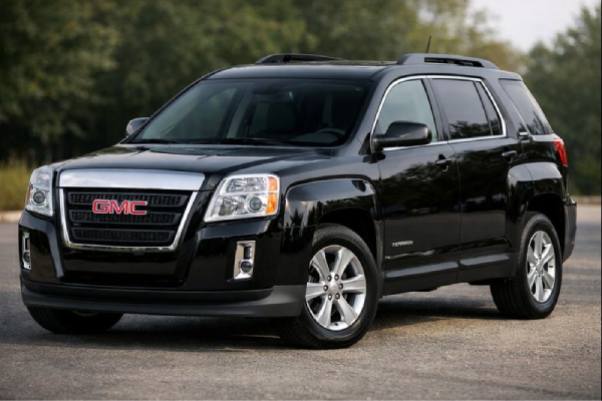
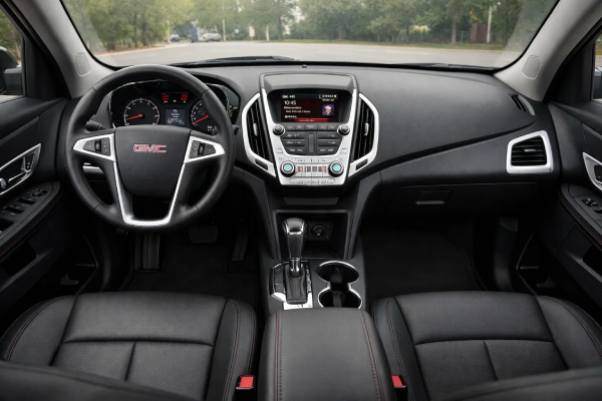
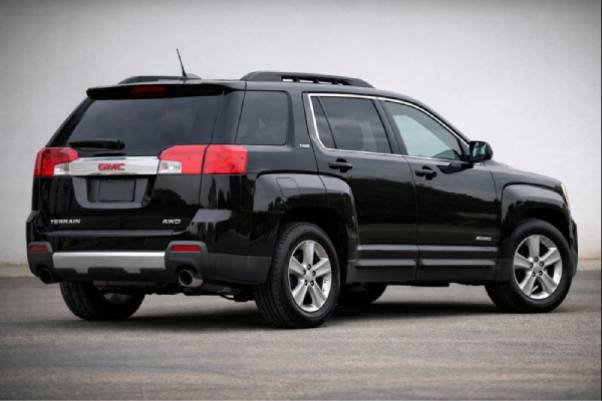
The 2012–2015 GMC Terrain AWD with the LEA 2.4-liter engine is a practical, comfort-focused compact SUV that adds real all-weather capability without moving into heavy-duty hardware. This version uses an on-demand all-wheel-drive system that prioritizes efficiency in normal driving, then sends torque rearward when the front tires slip. For owners, the story is a balance: strong highway stability and a calm ride, easy parts availability, and good cabin space—offset by known 2.4L Ecotec ownership patterns that reward disciplined oil checks and consistent maintenance. Compared with the FWD model, AWD adds traction and confidence on wet roads and light snow, but it also adds driveline components that need occasional fluid service and careful tire management. If you buy or maintain one well, it can be a dependable daily driver with sensible long-term costs.
Owner Snapshot
- Confident traction in rain and snow with an on-demand AWD system that stays unobtrusive in normal driving.
- Practical interior packaging with a tall cargo opening and an upright seating position that’s easy to live with.
- Broad parts support and straightforward service access for most routine items.
- Ownership caveat: monitor oil level between changes and address timing-chain noise or correlation faults early.
- Rotate tires every 12,000 km (7,500 mi) to keep AWD behavior smooth and reduce driveline stress.
What’s inside
- GMC Terrain AWD LEA snapshot
- Spec tables for LEA AWD
- Trims, packages, and crash safety
- Reliability hotspots and remedies
- Service strategy and purchase checks
- On-road feel and fuel use
- Rivals and value verdict
GMC Terrain AWD LEA snapshot
Think of the 2012–2015 Terrain AWD (GMT177) as a comfort-first crossover with a traction “assist” system rather than a full-time, off-road-oriented AWD layout. In everyday driving, it behaves like a front-driver—quiet, stable, and predictable. When the front tires lose grip, the system can engage the rear axle to help pull the vehicle through. That’s exactly what many owners want for winter commutes, steep wet driveways, and gravel roads, without the noise and drag of a permanent AWD setup.
The LEA 2.4-liter four-cylinder (182 hp) is tuned for steady, midrange usability, not quick acceleration. Around town, it’s responsive enough if you drive it smoothly and let the transmission do its work. On the highway, the Terrain’s longer wheelbase and weight give it a planted feel, with less “busy” motion than some lighter rivals.
AWD changes the ownership equation in three ways:
- Tires matter more. Mismatched tread depth side-to-side can confuse the system and increase driveline load. Run four matching tires, keep pressures correct, and rotate consistently.
- There’s more to service. In addition to the engine and transmission, you now have a rear drive module (rear differential unit) and a power take-off/transfer assembly that benefit from periodic fluid checks or changes based on severe use.
- More parts can age out. Occasional issues like driveline seals, coupler noises, and wheel bearing hum show up more often as mileage climbs.
The Terrain’s core advantage is “daily comfort with real-weather capability.” If you want a rugged AWD system for deep mud or repeated towing on mountain grades, this isn’t the right tool. If you want calm road manners and extra traction when conditions turn, the AWD Terrain is a strong fit.
Spec tables for LEA AWD
Below are practical, owner-focused specifications for the 2012–2015 GMC Terrain AWD with the LEA 2.4-liter engine. Exact values can vary by trim, wheels/tires, and market equipment, so treat these as a decision-making baseline and verify details by VIN when ordering parts.
Engine and performance
| Item | Specification |
|---|---|
| Engine code | LEA |
| Layout | Inline-4, DOHC, 16 valves (4 valves/cyl) |
| Displacement | 2.4 L (≈ 2,384 cc) |
| Induction | Naturally aspirated |
| Fuel system | Direct injection (SIDI) on many LEA applications |
| Max power | 182 hp (136 kW) @ ~6,700 rpm |
| Max torque | ~233 Nm (172 lb-ft) @ ~4,900 rpm |
| Timing drive | Chain |
| Emissions/efficiency standard | U.S. EPA certified (varies by year) |
Transmission and driveline
| Item | Specification |
|---|---|
| Transmission | 6-speed automatic (commonly 6T45 family) |
| Drive type | On-demand AWD (front-biased, rear engagement under slip) |
| Differentials | Front transaxle differential + rear drive module |
| Owner note | Keep all four tires closely matched in tread depth |
Chassis and dimensions
| Item | Typical value (approx.) |
|---|---|
| Suspension (front/rear) | Strut / independent rear |
| Brakes (front/rear) | Disc / disc |
| Length | ~4,707 mm (185.3 in) |
| Width | ~1,849 mm (72.8 in) |
| Height | ~1,684 mm (66.3 in) |
| Wheelbase | ~2,858 mm (112.5 in) |
| Ground clearance | ~175 mm (6.9 in) |
| Turning circle | ~11.8 m (38.7 ft) |
| Fuel tank | ~70 L (18.5 US gal / 15.4 UK gal) |
| Cargo volume | ~892 L (31.5 ft³) seats up / ~1,764 L (62.3 ft³) seats down |
Performance and capability (realistic expectations)
| Metric | Typical expectation |
|---|---|
| 0–100 km/h (0–62 mph) | ~10–11 s (trim and conditions matter) |
| Highway passing | Best with planning; use manual mode if available |
| Towing capacity | Often ~680 kg (1,500 lb) with 2.4L (verify by VIN/label) |
| Roof load | Market-dependent; verify owner info for your region |
Fluids and service capacities (common service practice)
| System | Typical fluid guidance |
|---|---|
| Engine oil | GM dexos1; commonly 5W-30 (capacity ~5.0 L / 5.3 US qt) |
| Coolant | Dex-Cool type, 50/50 mix (capacity varies by system) |
| Automatic transmission | DEXRON-VI; drain/fill volume varies by method |
| AWD units | Use GM-specified fluids for the transfer unit and rear drive module per VIN/service info |
Electrical basics
| Item | Typical value |
|---|---|
| Alternator output | Commonly ~120 A class (varies by equipment) |
| 12 V battery | Size and CCA vary; replace proactively if weak in winter |
| Spark plugs | Iridium-type in many applications; gap and part number vary |
Safety and driver assistance (high level)
| Category | Typical equipment |
|---|---|
| Core safety | ABS, stability control, traction control |
| Airbags | Front, side, and curtain airbags (configuration varies) |
| Driver assistance | Often optional: blind-spot monitoring, lane departure warning, forward collision alert (package-dependent) |
Trims, packages, and crash safety
For 2012–2015, most Terrain buyers will see familiar trim naming (such as SLE and SLT) with equipment grouped into option packages. On the AWD LEA model, trims rarely change the underlying engine and transmission, but they can change how the vehicle feels and costs to recondition—mostly through wheels/tires, interior electronics, and convenience features.
Trims and options that matter in real ownership
Wheel and tire packages:
This is the big one for the AWD Terrain. Larger wheels can sharpen steering response slightly, but they also increase tire replacement cost and can make the ride firmer. More importantly, AWD behaves best with four tires that match in size and wear. If you buy a used Terrain with mixed tires or uneven tread depth, plan on a matched set and a proper alignment check.
Cold-weather comfort:
Heated seats, remote start, and stronger HVAC options make the Terrain a better winter daily driver. If you live in a cold climate, prioritize a vehicle with these features already fitted rather than retrofitting later.
Infotainment tiers:
Higher trims often bring upgraded audio and more screen features. These don’t change durability in the powertrain, but they can change used-car value and the time you’ll spend chasing small electrical issues like intermittent buttons, camera glitches, or sensor warnings.
Crash ratings and what they mean here
For the 2012–2015 era, the Terrain’s crashworthiness story is generally solid for its class, especially in the core structural tests that matter in real-world crashes. It’s important to understand that rating bodies may evaluate different tests depending on year, and some published results apply across multiple model years when the structure is unchanged. Use ratings as a comparison tool, not as a guarantee for a specific used vehicle.
Safety systems and ADAS availability
This generation is “modern enough” to have stability control and solid airbag coverage, but it predates today’s widespread automatic emergency braking (AEB). You may find:
- Standard basics: ABS with electronic brakeforce distribution, stability control, traction control, and a full airbag suite typical for the class.
- Common options: blind-spot detection, rear cross-traffic alert, lane departure warning, and forward collision alert on higher trims or safety packages.
- Practical service note: If you replace hubs, steering angle sensors, or do alignment work, some warning lights may require calibration or relearn procedures. A clean scan-tool report after suspension or brake work is worth requesting.
If safety tech is a top priority, look for a higher-trim vehicle with documented working cameras and sensors, and verify that warning lights illuminate and clear properly at startup.
Reliability hotspots and remedies
A well-maintained Terrain AWD can be dependable, but it has a few repeating “hotspots.” The best approach is to treat them as predictable maintenance risks: catch symptoms early, fix root causes, and avoid running the vehicle while a small issue becomes a big one.
Common, higher-impact issues (watch closely)
Oil consumption and low-oil events (common, high risk if ignored)
- Symptoms: oil level drops between services; noisy top end on cold start; oil pressure warnings in severe cases.
- Likely cause: operating pattern + ring and PCV system behavior on some 2.4L applications.
- Best remedy: check oil level regularly (especially before long highway runs), use the correct oil spec, and address PCV or intake issues if diagnosed. The cheapest “repair” is consistent monitoring.
Timing chain stretch or timing correlation faults (occasional, high cost if delayed)
- Symptoms: rattle at startup, check-engine light with timing-related codes, rough running.
- Likely cause: extended oil intervals, repeated low-oil operation, or sludge/contamination affecting chain and tensioner.
- Best remedy: correct oil habits first, then inspect and replace chain components if out of spec. Don’t ignore persistent timing codes.
Occasional issues that affect drivability
Stability-control warnings and wheel-speed sensor behavior (occasional, medium cost)
- Symptoms: “Service Stabilitrak” type warnings, intermittent ABS/traction lights, odd brake pedal feel.
- Likely cause: wheel hub/bearing sensor faults, wiring issues, or low system voltage from a weak battery.
- Best remedy: confirm battery/charging health first, then diagnose hub sensors with live data.
Cooling system aging (occasional, medium cost)
- Symptoms: slow coolant loss, sweet smell, heater performance changes.
- Likely cause: hose seepage, reservoir issues, or aging seals.
- Best remedy: pressure test, fix leaks promptly, and keep coolant in the correct mix.
AWD-specific concerns (usually occasional)
Rear drive module seepage or driveline noise (occasional, medium cost)
- Symptoms: dampness around rear unit, whining/humming, clunks on engagement.
- Likely cause: seal aging, fluid breakdown, or driveline wear.
- Best remedy: inspect for leaks, confirm correct fluid, and address mounts or bearings before damage spreads.
Tire mismatch causing AWD bind (common user-induced, low-to-medium cost)
- Symptoms: shudder on tight turns, inconsistent engagement, unusual wear.
- Likely cause: uneven tread depth across tires, wrong size, or uneven pressures.
- Best remedy: keep tires matched, rotate regularly, and replace as a set when wear is uneven.
Software and calibration notes
Even when there is no driveline “failure,” updates and relearns can improve shift feel, sensor accuracy, and warning-light behavior. If a used Terrain has recurring fault codes, ask for proof of dealer-level diagnostics and confirm whether module updates or recalibrations were applied as part of the fix.
Service strategy and purchase checks
A smart maintenance strategy for the Terrain AWD focuses on oil discipline, heat management, and keeping the AWD system “happy” through tires and fluids. Below is a practical schedule that fits typical mixed driving; shorten intervals for heavy city use, short trips, extreme heat, or frequent snow operation.
Practical maintenance schedule (distance/time)
- Engine oil and filter: every 8,000–12,000 km (5,000–7,500 mi) or 6–12 months. If you do short trips, choose the shorter interval.
- Tire rotation: every 12,000 km (7,500 mi); check pressures monthly.
- Cabin air filter: every 24,000–30,000 km (15,000–20,000 mi) or annually in dusty areas.
- Engine air filter: inspect at each oil service; replace typically every 30,000–60,000 km (20,000–40,000 mi) depending on dust.
- Spark plugs: commonly around 160,000 km (100,000 mi) on long-life plugs (verify correct spec for your year).
- Coolant: follow the official interval for your VIN; replace early if contamination or repeated top-offs occur.
- Brake fluid: every 2–3 years; more often in humid climates.
- Automatic transmission fluid: consider a drain/fill around 80,000–120,000 km (50,000–75,000 mi) if you want longevity, especially with heat or hills.
- AWD driveline fluids: inspect condition and leaks; consider service around 80,000–120,000 km (50,000–75,000 mi) under severe use (snow, hills, frequent slip).
- 12 V battery: test annually after year 4; replace proactively if cold cranking weakens.
Helpful “decision” torque specs (common shop practice)
- Wheel lug nuts: ~140 Nm (103 lb-ft) is common on many GM crossovers (verify for your wheel type).
- Spark plugs: typically around 25 Nm (18 lb-ft) depending on plug design (verify plug instructions).
Buyer’s guide: what to check before purchase
- Oil-level history: Ask how often the owner checked oil between changes. A vague answer is a risk flag.
- Cold-start behavior: Listen for chain rattle and watch for rough idle in the first 30 seconds.
- AWD function: On a low-traction surface (safely), confirm rear engagement feels smooth, not clunky.
- Tires: Confirm four matching tires with even tread depth. Uneven wear suggests alignment or suspension work is due.
- Leaks: Inspect around the rear drive module and under the engine for seepage.
- Scan tool check: Even if the dash is clear, request a code scan for pending faults and readiness monitors.
Long-term durability improves dramatically when you keep oil clean, keep tires matched, and fix small leaks early.
On-road feel and fuel use
The Terrain AWD’s driving character is calm and predictable. It leans more toward “comfortable commuter” than “sporty crossover,” and that’s usually what buyers want from this model.
Ride, handling, and NVH
Ride quality:
The suspension is tuned to absorb rough pavement well, especially at city speeds. The longer wheelbase helps it settle on the highway, where it feels steady and less twitchy than some shorter rivals.
Steering and cornering:
Steering effort is light-to-moderate, with more emphasis on stability than sharp response. In corners, the Terrain is secure but not eager; you feel the weight, and it prefers smooth inputs over quick flicks.
Cabin noise:
At highway speeds, wind and tire noise depend heavily on tire brand and tread type. A good set of touring tires can make the Terrain feel significantly more refined. Because AWD models often run more aggressive all-season tires, the tire choice can be the biggest NVH swing.
Powertrain character
The LEA 2.4L delivers usable power, but it’s not fast. The best technique is a steady pedal and letting the transmission hold gears on moderate grades. If your Terrain has a manual-mode option, it can reduce “gear hunting” on rolling highways.
AWD engagement is usually subtle. In normal dry driving, you should not feel it. If you do—especially shudder in tight turns—suspect tire mismatch or a driveline fluid/condition issue.
Real-world efficiency (what owners typically see)
Real fuel use varies widely with tire choice, winter temperatures, and driving style. Expect AWD to use more fuel than FWD because of added mass and driveline drag.
Typical observed ranges many owners report under mixed use (not a guarantee, but a realistic planning guide):
- City-heavy driving: ~11.0–13.0 L/100 km (18–21 mpg US / 22–26 mpg UK)
- Highway steady cruising: ~8.5–10.0 L/100 km (23–28 mpg US / 28–34 mpg UK)
- Mixed commuting: ~9.5–11.5 L/100 km (20–25 mpg US / 24–30 mpg UK)
Cold weather can add a noticeable penalty due to longer warm-up time and higher rolling resistance in snow-oriented tires. If you run winter tires, expect another small increase in consumption.
Load and towing reality
With the 2.4L, towing is best treated as “light duty.” Keep speeds reasonable, use the correct tire pressures, and watch coolant temperature on grades. If you plan to tow often, the V6 Terrain (where available) is the better tool.
Rivals and value verdict
The Terrain AWD LEA sits in a very competitive class, and the “right” choice depends on whether you value comfort, efficiency, AWD behavior, or long-term simplicity.
How it compares to key rivals
Honda CR-V AWD (same era):
Often feels lighter and more efficient, with a strong reputation for low drama. The Terrain counters with a more planted highway feel and a cabin vibe some buyers prefer. If you prioritize “set-and-forget” ownership, the CR-V is hard to beat.
Toyota RAV4 AWD (same era):
Typically strong on reliability and resale. The Terrain can feel more comfortable and substantial, but Toyota’s long-term cost curve is often steadier. If you dislike chasing intermittent warnings or small electrical quirks, the RAV4 can be the safer bet.
Ford Escape AWD (same era):
Usually offers a more energetic drive, especially with turbo engines, but complexity can rise depending on powertrain choice. The Terrain LEA is simpler in spirit, but it requires oil discipline.
Mazda CX-5 AWD (early years):
More engaging handling and steering feel. If driving enjoyment is a priority, the CX-5 is usually ahead. The Terrain competes on ride comfort, seat height, and a “bigger” feel for the money.
Subaru Forester (symmetrical AWD philosophy):
If you want AWD that is consistently present and confidence-inspiring in deep winter conditions, Subaru’s approach often feels more “always ready.” The Terrain’s on-demand AWD is effective for slip events, but it’s not the same full-time character.
Bottom-line value verdict
Choose the Terrain AWD LEA if you want a comfortable daily driver with extra traction, you like the upright packaging, and you’re willing to maintain it proactively—especially oil checks and tire discipline. Avoid it if you want strong acceleration, frequent heavy towing, or you prefer an ownership experience that’s less sensitive to maintenance habits.
If you buy one used, prioritize condition over trim: a clean history, matched tires, smooth cold starts, and evidence of consistent service will matter more than badges or wheel size.
References
- 2013 GMC Terrain 4-door SUV 2013 (Safety Rating) ([iihs.org][1])
- Simplified Maintenance Schedule 2015 (Maintenance Schedule) ([GMC][2])
- 2012 GMC Terrain 2012 (Fuel Economy)
- Check for Recalls 2025 (Recall Database)
Disclaimer
This article is for informational purposes only and is not a substitute for professional diagnosis, repair, or safety inspection. Specifications, torque values, service intervals, and procedures vary by VIN, market, model year, and installed equipment—always verify details using official owner and service documentation for your exact vehicle.
If you found this guide useful, please consider sharing it on Facebook, X (Twitter), or your favorite forum to help others find reliable ownership information.