
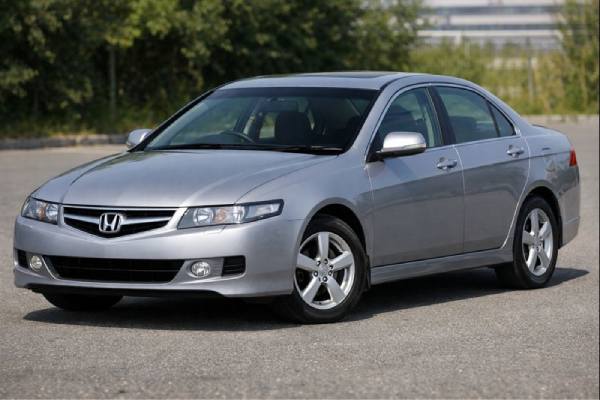
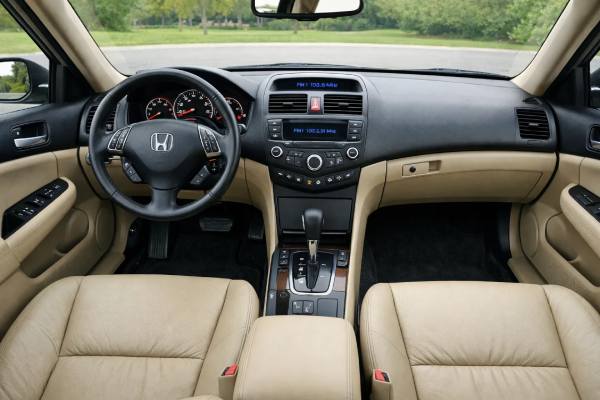
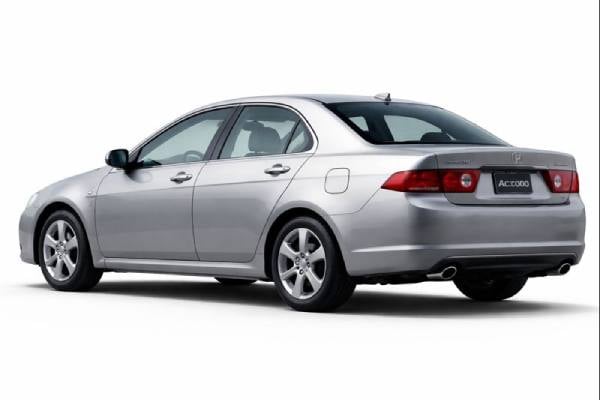
The Honda Accord CL9 with the K24A3 2.4 i-VTEC is one of the “quietly capable” Hondas: a mid-size chassis with a smooth, high-revving four-cylinder that still makes useful torque for daily driving. With about 190 hp on tap and a timing chain (not a belt), it’s built to cover big mileage without exotic upkeep—provided you stay consistent on fluids and don’t ignore early warning signs like cold-start rattles or front suspension knocks.
As a used buy, the CL9 sits in a sweet spot: modern enough for solid crash structure and stability control on many trims, but old-school enough to be DIY-friendly. The biggest ownership differentiator is condition—especially maintenance history, corrosion exposure, and transmission servicing—because age-related wear now matters more than the base design.
Quick Specs and Notes
- Strong all-rounder: smooth K24A3 power delivery, good mid-range, and long-distance comfort.
- Timing chain design reduces major scheduled engine work versus belt-driven rivals.
- Chassis balance is a highlight—especially on 17-inch packages with good tyres.
- Watch for age wear: suspension bushings, steering leaks, and neglected automatic fluid changes.
- Sensible interval: engine oil and filter every 10,000–12,000 km (6,000–7,500 mi) or 12 months, whichever comes first.
Navigate this guide
- CL9 K24A3 in context
- Specs and capacities
- Trims, safety, and equipment
- Common issues and fixes
- Maintenance and buying checks
- Real-world driving and economy
- Rivals and smart alternatives
CL9 K24A3 in context
The CL9 is the 7th-generation Accord sold in many markets with a focus on balanced handling and practical refinement. In K24A3 form, it pairs a naturally aspirated 2.4-liter inline-four with Honda’s i-VTEC system (variable valve timing and lift), aiming for a wide, usable powerband rather than “peaky” performance. It’s a great match for drivers who want one car to do commuting, family duty, and long highway trips without feeling dull.
What makes the K24A3 stand out today is how “mechanically honest” it is. Throttle response is predictable, the engine is happy to spin, and servicing is straightforward. The timing chain is designed for life-of-engine use under normal conditions, which reduces one big scheduled cost compared with belt engines—though it still depends on clean oil and a healthy tensioner system. Cooling and oil control are generally robust, so most high-mileage horror stories come down to neglect (sludged oil, missed coolant changes, overheated engines, or repeated short-trip use).
From an ownership perspective, the CL9’s value lies in its chassis and ergonomics as much as the engine. The cabin is easy to live with, visibility is good, and the suspension tuning (especially on well-kept examples) strikes a useful balance between control and comfort. The downside of being a “sweet-spot” used Honda is that it attracts buyers who want low costs—so you’ll see cars with deferred maintenance. A clean service file, even if it means a higher purchase price, usually costs less than “catching up” on fluids, bushings, and brakes after the fact.
Specs and capacities
Below are typical specifications for the Honda Accord CL9 with the K24A3 2.4 i-VTEC (190 hp). Exact values can vary by body style, trim, gearbox, wheel package, and market emissions calibration, so treat these as a practical baseline for owners and buyers.
Engine and performance (ICE)
| Item | Specification |
|---|---|
| Code | K24A3 |
| Engine layout and cylinders | Inline-4, DOHC, 4 valves/cyl (16V) |
| Induction | Naturally aspirated (NA) |
| Displacement | 2.4 L (2,354 cc) |
| Bore × stroke | 87.0 × 99.0 mm (3.43 × 3.90 in) |
| Fuel system | PFI/MPFI (port injection) |
| Compression ratio | ~10.5:1 (market dependent) |
| Max power | ~190 hp (140 kW) @ ~6,800 rpm |
| Max torque | ~220–225 Nm (162–166 lb-ft) @ ~4,500 rpm |
| Timing drive | Chain |
| Emissions standard | Euro-era compliance varies by year/market |
| Rated efficiency (typical) | ~8.5–9.5 L/100 km (25–28 mpg US / 30–33 mpg UK) combined (gearbox dependent) |
| Real-world highway @ 120 km/h (75 mph) | Often ~7.0–8.0 L/100 km (29–34 mpg US / 35–40 mpg UK) in good tune |
Transmission and driveline
| Item | Specification |
|---|---|
| Drive type | FWD |
| Transmission (typical) | 6-speed manual or 5-speed automatic (varies by market/trim) |
| Differential | Open (traction control depends on VSA equipment) |
Chassis and dimensions (typical sedan baseline)
| Item | Specification |
|---|---|
| Suspension (front/rear) | MacPherson strut / multi-link |
| Steering | Rack and pinion (assist type varies by market) |
| Brakes (front/rear) | Ventilated disc / disc (diameters vary by trim) |
| Wheels and tyres | Common: 205/55 R16 or 215/50 R17 |
| Length / width / height | ~4,665 / 1,760 / 1,445 mm (183.7 / 69.3 / 56.9 in) |
| Wheelbase | ~2,670 mm (105.1 in) |
| Turning circle (kerb-to-kerb) | ~11.4 m (37.4 ft) |
| Kerb weight | ~1,400–1,520 kg (3,086–3,351 lb) depending on trim/gearbox |
| Fuel tank | ~65 L (17.2 US gal / 14.3 UK gal) |
| Cargo volume | ~450–470 L (15.9–16.6 ft³) seats up (method varies) |
Performance and capability (typical manual vs auto spread)
| Item | Specification |
|---|---|
| 0–100 km/h (0–62 mph) | ~7.8–9.0 s (gearbox dependent) |
| Top speed | ~210–225 km/h (131–140 mph) |
| Braking 100–0 km/h | Commonly mid-to-high 30 m range on quality tyres |
| Towing | Market-dependent; many are rated for light towing only |
| Roof load | Market-dependent; check handbook for your rail/roof system |
Fluids and service capacities (typical)
| Item | Specification |
|---|---|
| Engine oil | Honda-approved oil; commonly 5W-30; ~4.2–4.5 L (4.4–4.8 US qt) with filter |
| Coolant | Honda long-life coolant; ~5.5–6.5 L (5.8–6.9 US qt) (system dependent) |
| Transmission fluid | Manual MTF or Honda ATF (spec varies); capacity varies by method (drain/fill vs overhaul) |
| A/C refrigerant | R134a; charge amount varies by system label |
Electrical (typical)
| Item | Specification |
|---|---|
| Alternator output | Often ~90–110 A (market dependent) |
| 12V battery | Size and CCA vary by climate package |
| Spark plugs | Long-life iridium type (exact part and gap per engine label/service data) |
Safety and driver assistance (era-typical)
| Item | Specification |
|---|---|
| Core systems | ABS with EBD; brake assist on many trims |
| Stability control | VSA/traction control often standard on higher trims, optional/market-dependent on others |
| Airbags | Front + front side airbags common; curtain airbags often trim/market dependent |
| ADAS | Modern AEB/ACC/LKA generally not offered on this generation |
Trims, safety, and equipment
CL9 trim naming varies widely by region, so the most useful approach is to focus on the equipment “clusters” you’ll actually encounter when shopping: comfort trims, sport-leaning trims, and tech-lux trims. The K24A3 (190 hp) typically appears in higher-output 2.4 i-VTEC versions, often paired with larger wheels and stronger brake packages than base four-cyl models.
Trims and options that change the driving experience
- Wheels and tyres: Moving from 16-inch to 17-inch packages usually tightens steering response and reduces sidewall flex. The tradeoff is harsher impacts over broken pavement and higher tyre cost.
- Suspension tuning: Some sport-oriented packages add firmer dampers and slightly different anti-roll bar tuning. On a 20-year-old car, condition matters more than the original spec—worn dampers make any trim feel sloppy.
- Transmission choice: Manuals tend to feel more lively and efficient at speed. Automatics are comfortable but become expensive if fluid changes were ignored.
- Audio and interior: Upgraded audio and leather packages are common “value traps” if they come with neglected maintenance—prioritize mechanical condition first.
Quick identifiers when viewing a used CL9
- VIN/build plate and engine code: Confirm K24A3 on the engine stamping/label where applicable.
- Cluster and dash telltales: VSA-equipped cars typically have indicator lights and switchgear that non-VSA cars lack.
- Brake size and wheel fitment: Larger OEM wheels often correlate with upgraded brakes; inspect rotor size and caliper condition.
Safety ratings and what to check today
Because safety testing protocols changed rapidly through the 2000s—and because the Accord name covers different regional versions—published star ratings may not map cleanly to your exact CL9. What you can evaluate directly on the car is often more meaningful in 2025 ownership:
- Airbag system health: Make sure the SRS light proves out correctly (on at start, then off). Any persistent SRS light needs proper diagnosis, not “resetting.”
- Child-seat provisions: Many cars include ISOFIX/LATCH points; confirm the covers and anchors aren’t damaged.
- Braking and stability function: ABS should self-test without faults; VSA-equipped cars should not show warning lights after driving.
Driver assistance reality check
This generation generally relies on solid fundamentals—structure, airbags, ABS, and stability control—rather than camera/radar systems. That’s good for long-term reliability (fewer sensors), but it means your safety depends more on tyres, brakes, and driver attention. Budget for high-quality tyres and keep the braking system fresh; that’s one of the highest ROI upgrades you can make on an older Accord.
Common issues and fixes
Most CL9 K24A3 cars don’t have a single “fatal flaw.” Instead, they develop predictable age-and-mileage issues. The best way to think about reliability now is: wear items + maintenance history.
Common (high prevalence)
- Front suspension knocks and looseness (low to medium cost):
Symptoms: clunks over bumps, vague steering, uneven tyre wear.
Likely causes: worn control-arm bushings, drop links, ball joints, or tired struts.
Remedy: diagnose by inspection under load; replace in pairs where appropriate; align after any arm work. - Brake vibration or sticking (low to medium cost):
Symptoms: steering shake under braking, one wheel running hotter, uneven pad wear.
Likely causes: warped rotors, seized slider pins, aged brake hoses.
Remedy: service sliders with proper grease; replace rotors/pads as a set; flush brake fluid if history is unknown. - A/C performance decline (medium cost):
Symptoms: weak cooling, cycling issues, noise.
Likely causes: leaks at seals, tired compressor clutch/components, condenser damage.
Remedy: leak test and repair properly; recharge by weight to the under-hood label.
Occasional (shows up with neglect or certain conditions)
- Cold-start rattle or brief timing noise (medium cost if ignored):
Symptoms: short rattle on startup, especially after sitting.
Likely causes: oil drain-back, VTC actuator wear (varies by engine family), or chain tensioner wear aggravated by extended oil intervals.
Remedy: confirm oil level/grade; shorten oil intervals; investigate if noise grows or persists warm. - Oil seepage (low to medium cost):
Symptoms: oil smell, damp areas around valve cover or front cover.
Likely causes: valve cover gasket, aging seals.
Remedy: gasket service and PCV inspection; clean and recheck to confirm source.
Rare (but expensive when it happens)
- Automatic transmission shift issues (high cost):
Symptoms: flare, harsh shifts, delayed engagement, shudder.
Likely causes: fluid neglect, solenoid/pressure switch faults, internal clutch wear.
Remedy: verify fluid condition and service history; scan for codes; address control issues early before internal damage spreads.
Recalls, service actions, and how to verify
At this age, the most relevant campaigns are often safety-related (airbags) and region-specific. Don’t rely on paperwork alone—verify by VIN through the official recall database for your market, and confirm completion with dealer records when possible. If a seller can’t show recall completion and you can’t verify it yourself, treat it as a cost and time item after purchase.
Maintenance and buying checks
A well-serviced CL9 feels “tight” even at higher mileage. A neglected one quickly turns into a rolling to-do list. Use this schedule as a practical baseline and adjust for your climate and driving (short trips, dust, mountain use, heavy city traffic).
Practical maintenance schedule (distance/time)
- Engine oil and filter: every 10,000–12,000 km (6,000–7,500 mi) or 12 months. Short trips: consider 8,000 km (5,000 mi).
- Air filters (engine and cabin): inspect every oil service; replace about 20,000–30,000 km (12,000–18,000 mi) or yearly in dusty areas.
- Coolant: if history is unknown, refresh now; then follow a conservative cycle like every 4–5 years (verify your coolant type).
- Spark plugs: typically long-life; plan around 100,000–120,000 km (60,000–75,000 mi), sooner if misfire history exists.
- Brake fluid: every 2 years regardless of mileage.
- Manual transmission fluid: every 60,000–80,000 km (37,000–50,000 mi), especially if shifts feel notchy.
- Automatic transmission fluid: every 40,000–60,000 km (25,000–37,000 mi) as a drain-and-fill cycle; avoid “flush” shortcuts unless you know the unit’s condition.
- Valve clearance (if applicable in your market): check around 80,000–120,000 km if you hear ticking or if idle quality changes.
- Serpentine belt and pulleys: inspect every service; replace when cracked/noisy (often 5–8 years depending on use).
- Tyres: rotate every 10,000–12,000 km; align after any suspension work or uneven wear.
Helpful capacities and “decision torque” (verify before tightening)
- Oil fill is typically a bit over 4 liters, so a standard 5L jug covers a change with margin.
- Common critical torque ranges on Hondas of this era include: wheel nuts roughly 100–120 Nm, spark plugs around 18–25 Nm, and drain plugs often in the 30–40 Nm range. Always confirm for your VIN and wheel type.
Buyer’s guide checklist (high signal items)
- Cold start behavior: listen for abnormal rattles, belt squeal, or prolonged chain/timing noise.
- Cooling system integrity: stable temperature on a long drive; no sweet smell; no oily residue in coolant tank.
- Transmission feel: smooth engagement cold and hot; no flare on kickdown; verify fluid color and service receipts.
- Steering and suspension: no clunks over speed bumps; no steering “dead zone”; even tyre wear.
- Brakes: straight stops; no pulsation; check caliper slider condition.
- Corrosion hotspots: lower door seams, rear arches, subframe areas, and brake lines (varies by climate).
- Electrics: windows, HVAC modes, seat heaters, and all warning lights behaving correctly.
If you want the “best long-term bet,” prioritize a car with documented fluid changes, quality tyres, and recent suspension refreshing over one with cosmetic upgrades.
Real-world driving and economy
The CL9 K24A3 feels like a mature Honda: composed at speed, light on its feet for a mid-size car, and willing to rev without sounding strained. Even though it’s not a turbo engine, it doesn’t feel flat—because gearing and throttle mapping generally keep it in the useful part of the torque curve for normal traffic.
Ride, handling, and NVH
- Ride quality: On healthy dampers, the Accord absorbs highway expansion joints well and stays stable over undulations. Worn front bushings are the main reason these start to feel “busy” or crashy.
- Steering: Expect accurate response rather than heavy feedback. If the wheel feels loose on-center, suspect alignment or front-end wear before blaming the design.
- Braking feel: Usually consistent and easy to modulate, but older caliper hardware can ruin it—sticky sliders make the pedal feel inconsistent and can overheat one corner.
Powertrain character
- Throttle response: clean and predictable, especially with a manual. Automatics tend to feel smoother but slightly less immediate.
- Mid-range and overtakes: The 2.4’s real strength is passing in the mid-range; it doesn’t need turbo boost to build speed, but it rewards a downshift.
- Transmission behavior: A good automatic should shift smoothly and avoid hunting. Any repeated flare or hesitation is a “stop and diagnose” sign.
Real-world fuel use
In mixed driving, many owners see economy in the high-20s to low-30s mpg (UK) or mid-20s mpg (US), depending on gearbox, tyre choice, and traffic. At steady 120 km/h, a well-tuned car with correct tyre pressures can be impressively efficient for its size. The biggest fuel killers are short trips, under-inflated tyres, and dragging brakes—so basic maintenance genuinely pays back.
Performance metrics that matter in daily life
A typical healthy CL9 can feel brisk rather than fast. The key is repeatability: it delivers the same response day after day when maintained, which is why these remain popular as dependable used cars.
Rivals and smart alternatives
If you’re considering a CL9 K24A3, you’re likely shopping for a reliable mid-size car with good road manners and manageable running costs. Here’s how it stacks up against common alternatives from the same era.
Toyota Avensis 2.0/2.4 (or Camry in some markets)
- Why choose Toyota: often softer ride, strong reputation, generally low drama.
- Why choose the Accord: sharper chassis feel and a more engaging power delivery at higher rpm.
Mazda 6 2.0/2.3
- Why choose Mazda: lively handling and steering feel; often cheaper to buy.
- Why choose the Accord: the K24A3 tends to feel more “effortless” at speed, and the cabin often holds up well with mileage.
VW Passat 1.8T/2.0 (market dependent)
- Why choose VW: interior ambience and highway refinement can be excellent.
- Why choose the Accord: simpler long-term ownership profile; fewer expensive “system” failures when maintained.
Ford Mondeo (petrol)
- Why choose Mondeo: great ride/handling balance and parts availability in many regions.
- Why choose the Accord: Honda drivetrain smoothness and a strong track record when serviced properly.
Entry premium sedans (BMW 3 Series, Audi A4 of the era)
- Why choose premium: steering feel, RWD dynamics (BMW), and brand preference.
- Why choose the Accord: a better odds-and-cost equation for long-term daily use—especially if you want fewer surprise bills.
Simple decision rule
- Choose the CL9 K24A3 if you want a dependable, well-balanced car and you can find one with proof of routine fluid servicing and front-end maintenance.
- Choose a rival if you prioritize a softer ride (Toyota), sharper steering feel (some Mazdas), or premium-brand dynamics and you’re prepared for higher upkeep.
References
- HONDA Accord – (Euro) (2003-2008) 2025 (Technical Overview)
- HONDA Accord – (Euro) (2003-2008) – K24A3 2.4 DOHC i-VTEC 190 hp 2025 (Technical Data)
- Check for Recalls: Vehicle, Car Seat, Tire, Equipment | NHTSA 2025 (Recall Database)
Disclaimer
This article is for informational purposes only and is not a substitute for professional inspection, diagnosis, or repair. Specifications, torque values, service intervals, and procedures can vary by VIN, market, model year, and equipment, so always verify details using your official Honda service documentation for your exact vehicle.
If you found this guide useful, please consider sharing it on Facebook or X/Twitter to support our work.