
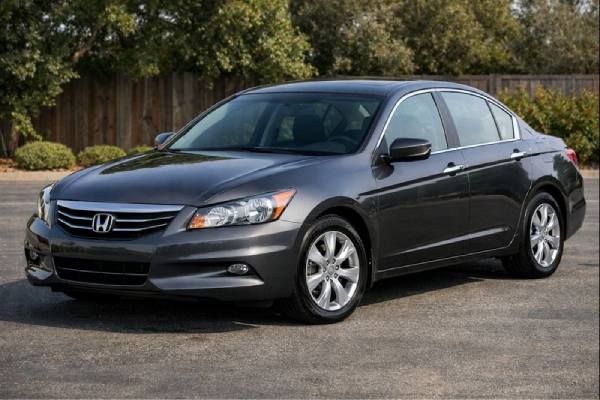
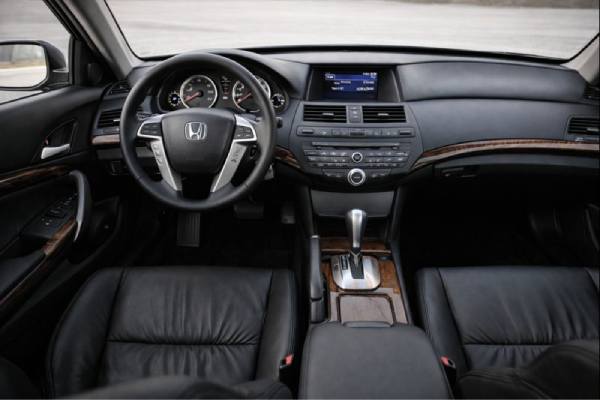
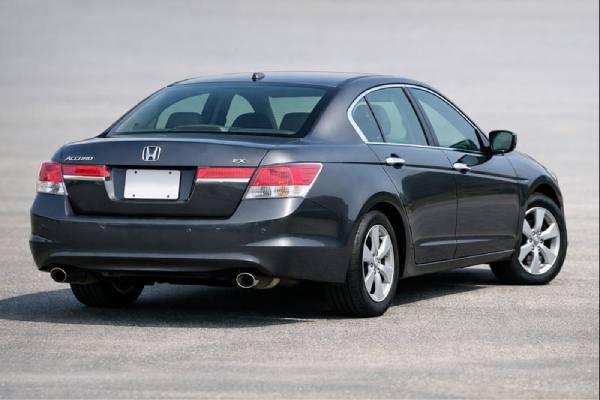
The 2011–2012 Honda Accord CP3 pairs Honda’s J35Z2 3.5-liter V6 with a comfortable, conservative chassis that’s engineered for long service life—when it’s maintained with the right fluids and intervals. This is the facelift-era version of the 8th-gen Accord, and it leans into smooth torque, predictable handling, and low day-to-day effort rather than sharp “sports sedan” behavior. The V6 is strong and refined, but it adds complexity compared with the four-cylinder models—especially around the Variable Cylinder Management (VCM) system and the timing belt. If you’re shopping used, the best examples are the ones with clean transmission service history, documented belt/water pump work, and consistent oil changes. Get those fundamentals right and the CP3 is a durable, easy-to-live-with sedan that still feels solid on the highway today.
Owner Snapshot
- Strong, quiet V6 torque makes highway passing effortless and relaxed.
- Traditional suspension and steering tuning favors stability and comfort over edgy handling.
- Budget for timing belt and water pump service around 170,000 km (105,000 mi) or 7 years if undocumented.
- Plan transmission fluid drain-and-fill every 40,000–60,000 km (25,000–40,000 mi) for best shift quality.
- Watch for VCM-related oil use or vibration on some cars, especially with short-trip driving.
Guide contents
- CP3 V6 2011–2012 in Brief
- J35Z2 Specs and Measurements
- Accord V6 Trims and Safety
- Reliability Faults and Recalls
- Maintenance Plan and Buying Advice
- Driving Feel and Real Economy
- Rivals and Smart Alternatives
CP3 V6 2011–2012 in Brief
The CP3 designation is most commonly associated with the V6 Accord sedan configuration for this generation. In 2011–2012 form, it’s best understood as a “big, honest” midsize sedan: roomy enough for adults in the back, quiet at speed, and built around a V6 that delivers real-world shove without needing to be thrashed. The J35Z2’s power delivery is the headline—strong midrange torque, smooth top-end pull, and a refined idle when everything is healthy. For everyday owners, that translates into easy merging, stress-free passing, and a car that doesn’t feel strained with passengers or luggage.
Chassis tuning is deliberately calm. The Accord’s front suspension is a strut setup and the rear is a multi-link arrangement, aimed at composure over broken pavement and predictable responses rather than quick rotation. Steering feel is light-to-moderate, and the car tends to track straight on motorways—one reason these Accords remain popular as long-distance commuters. Braking is similarly confidence-first: progressive pedal feel and predictable stops, assuming the car has good-quality rotors, pads, and fresh brake fluid.
Where the CP3 V6 differs from four-cylinder Accords is ownership complexity. The V6 uses a timing belt, not a chain, and that single detail shapes the long-term service cost profile. If the belt service is overdue or undocumented, it becomes your first budgeting item. The V6 also commonly uses cylinder deactivation (VCM) in many markets, which can introduce subtle drivability quirks on some cars—usually felt as a light vibration during transitions, or as oil consumption that’s hard to spot until it becomes noticeable on the dipstick.
As a used purchase, the best CP3 V6 examples are rarely the “lowest mileage” cars; they’re the ones with consistent records. Look for evidence of regular oil service, periodic transmission fluid drain-and-fills, cooling system care, and suspension refresh work typical of age (bushings, links, and struts). When the fundamentals are handled, this Accord rewards you with an unusually low-stress ownership experience for a 10+ year-old V6 sedan.
J35Z2 Specs and Measurements
Below are practical specifications for the 2011–2012 Accord CP3 with the J35Z2 3.5-liter V6. Exact numbers can vary by market, body style, wheel size, and equipment, so treat this as a decision-making baseline and verify by VIN and local documentation.
Engine and performance (J35Z2)
| Item | Spec |
|---|---|
| Code | J35Z2 |
| Layout | V6, SOHC, i-VTEC (varies by market) |
| Displacement | 3.5 L (≈3,471 cc) |
| Induction | Naturally aspirated |
| Fuel system | PFI (port fuel injection) |
| Max power | 271 hp (202 kW) @ ~6,200 rpm |
| Max torque | ~344 Nm (254 lb-ft) @ ~5,000 rpm |
| Timing drive | Belt |
| Emissions standard | Market-dependent (EPA/LEV, etc.) |
Transmission and driveline (typical)
| Item | Spec |
|---|---|
| Drive type | FWD |
| Transmission | 5-speed automatic (common); manual availability depends on body style/market |
| Gear ratios | Vary by transmission code; verify on your build sticker or service data |
| Differential | Open (traction control via brakes) |
If you need a quick sanity check when shopping: the smoothest-driving cars tend to have a transmission that was serviced periodically (drain-and-fill) and doesn’t flare between gears when warm. Any shudder at steady throttle around 50–80 km/h (30–50 mph) deserves a closer look.
Chassis and dimensions (typical midsize sedan range)
| Item | Typical range |
|---|---|
| Length | ~4,7–4,8 m (≈185–189 in) |
| Width | ~1,8–1,85 m (≈71–73 in) |
| Height | ~1,45 m (≈57 in) |
| Wheelbase | ~2,7 m (≈107 in) |
| Turning circle | ~11.2–11.8 m (≈37–39 ft) |
| Curb weight | ~1,55–1,65 t (≈3,400–3,650 lb) |
| Fuel tank | ~65–70 L (≈17–18.5 US gal) |
Performance and capability (realistic expectations)
| Item | Typical value |
|---|---|
| 0–100 km/h (0–62 mph) | ~6.5–7.2 s (setup-dependent) |
| Top speed | Typically limited; market-dependent |
| Towing | Often modest or not officially rated in many markets |
Fluids and service capacities (verify by VIN and manual)
| System | Common guidance |
|---|---|
| Engine oil | 5W-20 or market-specified; change by minder/interval |
| Coolant | Honda-type long-life coolant; mix per spec |
| Automatic transmission | Honda ATF (DW-1 era is common); drain-and-fill preferred |
| Brake fluid | DOT 3/4 (per manual), replace on time |
| A/C refrigerant | R-134a (most builds of this era), charge varies |
Electrical (typical)
| Item | Typical value |
|---|---|
| 12V battery | Commonly 45–60 Ah class (market varies) |
| Spark plugs | Long-life iridium/platinum type; interval depends on market schedule |
Safety and driver assistance (era-appropriate)
| Item | Notes |
|---|---|
| Core safety tech | ABS, stability control, front/side/curtain airbags (varies by trim/market) |
| ADAS | Limited compared to modern cars; features vary significantly by region |
For an owner, the takeaway is simple: the CP3’s specs are “mature tech,” not cutting-edge. That’s a benefit for long-term durability—provided you keep up with the belt service, fluid quality, and the handful of known weak spots covered later.
Accord V6 Trims and Safety
Trim naming depends heavily on market, but the 2011–2012 Accord V6 lineup usually follows a familiar pattern: a well-equipped mid trim, a luxury-leaning trim with leather and premium audio, and optional navigation or upgraded wheels. The best way to think about trims on this platform is not “status,” but “systems.” Options can change what you’ll maintain, what you’ll troubleshoot, and how expensive it is to restore the car to 100%.
Trims and options that matter in real ownership
Commonly seen equipment differences include:
- Wheel and tire size: Larger wheels look better but raise tire costs and can increase road noise and impact harshness. If your roads are rough, a smaller wheel package can genuinely make the car feel newer.
- Audio and navigation: Factory navigation and premium amplifiers can be expensive to replace. Test every speaker, check for intermittent screen behavior, and confirm all steering wheel controls work.
- Heated leather seating and power adjustments: Usually reliable, but seat-track motors and switches can be pricey if they fail.
- Sunroof: A good feature when maintained, but clogged drains can cause wet carpets and electrical gremlins. If you smell dampness, check immediately.
Quick identifiers when shopping used
Without relying on badges alone, use these practical tells:
- Look at the cluster and center stack. Factory navigation typically has a larger, integrated display and different button layout.
- Check the wheels and brake feel. Some packages include larger wheels; worn suspension on big wheels often shows up as clunks over sharp bumps.
- VIN and build sticker matter. Equipment can change mid-year; don’t assume “2012” means identical across markets.
Safety ratings and what they mean here
For 2011–2012 vehicles, safety evaluation is best interpreted in context: crash structure, airbags, and stability control are the primary safety story, not modern driver assistance. Many cars of this era can score very well in certain test protocols and still feel “old-school” compared with today’s active-safety expectations. When reading ratings, confirm:
- Body style: sedan vs coupe can differ.
- Test version: “frontal” and “side” tests evolve over time.
- Equipment: some safety equipment is standard in one market and optional in another.
Safety systems you should verify on the car
Before purchase, physically confirm:
- Airbag warning light behavior (should illuminate briefly at start, then go out).
- ABS and stability control lights (same check behavior).
- Brake pedal feel (firm, progressive, no pulsing under normal braking).
- Seatbelt retraction and latch function on all seats.
- Child-seat anchors (ISOFIX/LATCH) present and undamaged if you need them.
If you’re aiming for a “family-safe” daily driver, prioritize condition over trim. A base-trim Accord with fresh tires, good brakes, and a straight structure is a safer car in practice than a top-trim example with old tires, mismatched suspension parts, and deferred maintenance.
Reliability Faults and Recalls
The 2011–2012 CP3 V6 can be very reliable, but it has a few repeat patterns. The most helpful way to understand them is by prevalence (how often they show up) and severity (how expensive they can become).
Common and low-to-medium cost issues
- Suspension wear noises (common, low–medium):
Symptoms: clunks over small bumps, vague steering on-center, uneven tire wear.
Likely causes: front compliance bushings, sway bar links, strut mounts, rear control arm bushings.
Remedy: refresh worn links and bushings; align after significant work. - Power steering seep/leak (common, low–medium):
Symptoms: fluid level dropping, whine on cold start, damp pump area.
Likely causes: pump seals or hose seepage.
Remedy: repair leak source early; running low on fluid accelerates pump wear. - Charging system aging (occasional, medium):
Symptoms: battery light, dimming lights, hard starts.
Likely causes: alternator aging, battery at end of life, corroded grounds.
Remedy: test under load; replace proactively if output is unstable.
V6-specific concerns (prevalence varies)
- VCM-related oil consumption or plug fouling (occasional, medium):
Symptoms: oil level dropping between changes, misfire codes, roughness after long highway runs.
Likely causes: cylinder deactivation operating conditions that promote deposit patterns on some engines.
Remedy: tighter oil-change discipline, correct oil grade, and addressing misfires quickly. Some owners choose software/strategy changes in certain markets, but always prioritize official service guidance. - Engine mount wear (occasional, medium):
Symptoms: vibration at idle or during VCM transitions, thump on take-up.
Likely causes: hydraulic mount fatigue.
Remedy: replace failing mounts; verify the engine is not misfiring first, because misfires can mimic mount issues.
Higher-severity items you must respect
- Timing belt system neglect (common risk, high if ignored):
Symptoms: often none until it’s too late; sometimes squeal, visible cracking, or coolant seep from the water pump.
Root cause: belt age/time, tensioner wear, water pump bearings.
Remedy: replace belt, tensioner, and water pump as a set on schedule. This is the single biggest “make or break” item on a used J35Z2. - Automatic transmission shudder/harshness (occasional, medium–high):
Symptoms: shudder at light throttle, harsh 2–3 shifts, delayed engagement when hot.
Root cause: old fluid, internal wear, or pressure control issues.
Remedy: correct fluid with repeated drain-and-fills; diagnose pressure switches and solenoids if symptoms persist. Avoid “universal fluid” guesses.
Recalls, campaigns, and how to verify
Because recall status changes over time, the only reliable method is a VIN-based check through official channels and dealer records. When you’re inspecting a used car, ask for:
- A printout of completed recall work (or a service invoice reference).
- Proof of airbag-related campaigns if applicable in your market.
- Confirmation of software updates if drivability complaints were addressed via reflash.
Even on a “great” example, plan for age-related rubber and fluid work. Reliability on this platform is less about exotic failures and more about whether the previous owner stayed ahead of predictable wear.
Maintenance Plan and Buying Advice
A CP3 V6 that’s serviced on time can feel almost deceptively modern. The maintenance strategy is simple: protect the engine with clean oil, protect the transmission with the correct fluid, and treat the timing belt service as non-negotiable.
Practical maintenance schedule (good baseline)
Use your local maintenance minder system if equipped, but this schedule works well for most owners:
| Item | Interval (normal use) | Notes |
|---|---|---|
| Engine oil and filter | 8,000–10,000 km (5,000–6,000 mi) or 12 months | Short trips: shorten interval |
| Tire rotation | 10,000–12,000 km (6,000–7,500 mi) | Pair with brake inspection |
| Cabin air filter | 20,000–30,000 km (12,000–18,000 mi) | More often in dusty cities |
| Engine air filter | 30,000–40,000 km (18,000–25,000 mi) | Inspect sooner if dusty |
| Automatic transmission fluid (drain/fill) | 40,000–60,000 km (25,000–40,000 mi) | Use correct Honda-spec ATF |
| Brake fluid | Every 3 years | Time-based for moisture control |
| Coolant | 5 years / ~160,000 km then 3 years | Verify type and mix ratio |
| Spark plugs | ~160,000 km (100,000 mi) typical | Verify by market schedule |
| Timing belt and water pump | ~170,000 km (105,000 mi) or 7 years | Earlier if unknown history |
Fluids, parts, and “don’t cheap out” items
- Engine oil: Use the specified viscosity and a quality filter. The V6 is tolerant, but sludge from extended intervals is a long-term killer.
- ATF: The transmission’s behavior is strongly tied to correct fluid. If you inherit unknown fluid history, multiple drain-and-fills (not a harsh flush) is often the safest path.
- Brake fluid: Many owners ignore it; don’t. Fresh fluid protects ABS components and keeps pedal feel consistent.
- Cooling system: Old coolant can lead to corrosion and heater core issues. Keep it fresh and correctly mixed.
Key torque specs (critical fasteners only, typical)
| Fastener | Typical torque |
|---|---|
| Wheel lug nuts | ~108 Nm (80 lb-ft) |
| Engine oil drain bolt | ~39 Nm (29 lb-ft) |
Always verify torque values for your exact engine and pan design; overtightening drain bolts is a common, avoidable problem.
Buyer’s guide: what to inspect on a used CP3 V6
Bring a checklist and be methodical:
- Timing belt proof: invoice with date and mileage is ideal. If absent, budget it immediately.
- Transmission behavior hot and cold: drive long enough for full warm-up; check for shudder and flare.
- Oil level and condition: check before and after test drive if possible; look for burnt smell or glitter in oil (bad sign).
- Cooling system: look for crusted coolant traces near the water pump area and radiator end tanks.
- Suspension wear: listen over sharp bumps; check tire wear patterns.
- Electrical and infotainment: test every button, every window, and HVAC modes; intermittent electronics can be time-consuming.
Best long-term ownership outlook
The CP3 V6 rewards “boring” ownership: consistent fluids, preventative belt service, and quick response to small symptoms. If you want a dependable V6 sedan without modern turbo complexity, it’s a strong choice—just don’t buy one with unknown belt history unless the price clearly leaves room to catch up.
Driving Feel and Real Economy
On the road, the 2011–2012 Accord CP3 feels like a car designed by engineers who value stability and repeatability. The V6 gives it a confident, unstrained character—especially on highways—while the suspension tuning keeps body motions controlled without feeling harsh. If you’re coming from a newer car with heavier steering and aggressive damping, the Accord can initially feel light and easy. That’s the point: it’s meant to do long distances without tiring you out.
Ride, handling, and NVH
- Ride quality: generally compliant, with a firm edge over sharp impacts on larger wheel packages. Worn struts and bushings quickly make the car feel “busy,” so condition matters more than design.
- Handling balance: safe and front-biased. It grips well for a midsize sedan, but it’s not playful; it prefers clean, smooth inputs.
- Steering: light-to-moderate effort. If the wheel feels notchy or inconsistent, suspect alignment, tire issues, or tired suspension components.
- Cabin noise: typically low at steady speeds. Tire choice and wheel size make a noticeable difference.
Powertrain character
The J35Z2’s best trait is usable torque. Around town, it responds cleanly without needing high rpm, and on a motorway it pulls strongly for overtakes even with passengers. The automatic transmission is usually smooth when healthy; when it isn’t, it will tell you with shudder, flare, or delayed engagement. If the car has cylinder deactivation (VCM), you may feel subtle transitions under very light load—some cars are nearly seamless, others are more noticeable, often depending on mounts, software calibration, and driving pattern.
Real-world fuel economy expectations
Official ratings are useful for comparison, but your real-world result depends heavily on speed, tires, and traffic. Practical owner expectations for a healthy V6 automatic look like this:
- City-heavy use: roughly 11–13 L/100 km (18–21 mpg US) depending on traffic and warm-up time.
- Steady highway (100–120 km/h / 60–75 mph): roughly 7.5–9.0 L/100 km (26–31 mpg US) in good conditions.
- Mixed driving: roughly 9.5–11.5 L/100 km (20–25 mpg US).
Short-trip winter use can be materially worse because the engine spends more time cold and the transmission may not reach optimal temperature.
Performance metrics that actually matter
For this class of car, the important metric is passing performance. Even if you never time 0–100 km/h, you’ll notice how quickly it moves from 80–120 km/h. The V6 Accord typically feels strong and immediate in that range, provided the transmission kicks down cleanly. Braking performance is similarly “quiet competence”—good stops with consistent pedal feel when the braking system is maintained and not overheated by old fluid.
If your goal is a daily driver that feels confident without demanding attention, this Accord delivers. Just remember: the “like-new” feel depends on suspension freshness and correct transmission fluid service more than on raw mileage.
Rivals and Smart Alternatives
The 2011–2012 Accord CP3 V6 sits in a competitive era of midsize sedans. It isn’t the sportiest, the flashiest, or the most feature-rich by modern standards, but it often wins on “total ownership sense” when you compare mechanical simplicity and long-term serviceability.
Versus Toyota Camry V6 (same era)
Why the Accord can be better:
- Often feels more planted at speed and more connected through the chassis.
- Interior ergonomics can be more driver-focused.
- Strong aftermarket and parts availability.
Why the Camry can be better:
- Typically softer ride and quieter isolation in some trims.
- Some owners find it less sensitive to suspension wear noise.
If you want calm comfort above all else, the Camry may suit. If you want a slightly more “driver-shaped” sedan without going full sport, the Accord is a good middle ground.
Versus Nissan Altima 3.5
The Altima can feel quicker and lighter on its feet, but ownership risk can be higher depending on transmission type and maintenance history. If your priority is lower long-term drama, the Accord’s conventional automatic (rather than a CVT in many Altimas) is often a comfort.
Versus Ford Fusion (V6 era)
The Fusion can offer a more European-feeling chassis in some trims and steering calibrations, but parts cost and long-term ownership experience vary widely by engine and maintenance quality. The Accord usually wins for “predictable upkeep” and broad specialist knowledge.
Versus newer turbo-four midsize sedans
If you’re cross-shopping into newer generations with turbocharged four-cylinders, the trade is clear:
- Newer cars often deliver better tech and sometimes better fuel economy.
- The Accord V6 delivers smooth, linear power without turbo heat and complexity, but asks for belt service and (in some cases) VCM awareness.
Who should choose the CP3 V6 today?
Pick this Accord if you want:
- A proven V6 feel: smooth, torquey, and relaxed.
- A traditional driving experience with stable highway manners.
- A platform where good maintenance restores “tightness” rather than chasing constant electronic quirks.
Skip it (or be very selective) if:
- You want modern ADAS and infotainment without retrofitting.
- You cannot budget the timing belt service if it’s due.
- You mainly do short trips and won’t stay disciplined about oil and warm-up care.
In the right condition, the 2011–2012 CP3 V6 still competes well because it offers something increasingly rare: a naturally aspirated V6 sedan that can be kept healthy with straightforward maintenance and sensible, preventative service.
References
- 2012 Honda Accord 2012 (Fuel Economy)
- Vehicle Detail Search – 2012 HONDA ACCORD | NHTSA 2012 (Recall Database)
- Honda VIN Decoder 2014 (Technical Guide) ([IIHS][1])
- Resources and Manuals | Honda Canada 2025 (Owner’s Manual Portal)
Disclaimer
This article is for informational purposes only and is not a substitute for professional diagnosis, inspection, or repair. Specifications, torque values, fluid capacities, service intervals, and procedures vary by VIN, market, model year, and equipment; always verify details using your official owner’s manual and service documentation for your exact vehicle.
If you found this guide useful, consider sharing it on Facebook, X (Twitter), or your favorite forum to support our work.