
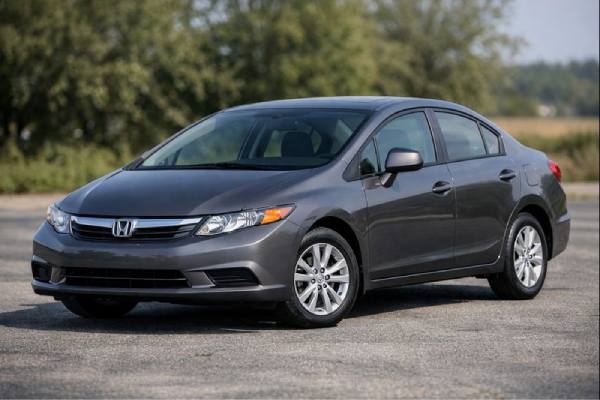
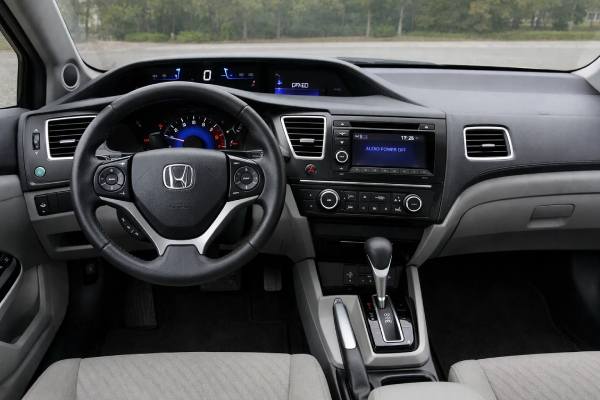
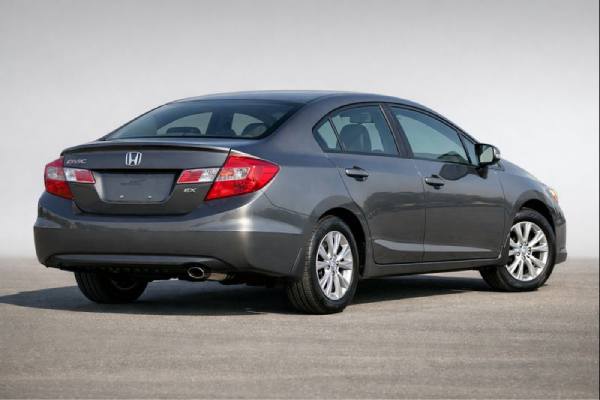
The 2011–2015 Honda Civic FB2 sedan with the R18Z1 1.8-liter engine represents a turning point in Honda’s compact-car philosophy. After decades of prioritizing sporty character, Honda refocused this generation on refinement, efficiency, and long-term ownership stability. The naturally aspirated R18Z1 avoids the complexity of early downsized turbo engines, relying instead on proven mechanical fundamentals, conservative tuning, and predictable service requirements.
For owners, this Civic is defined by balance. It is not the fastest car in its class, but it is easy to live with, forgiving of daily commuting, and inexpensive to keep on the road when maintained correctly. Noise and vibration levels are well controlled, fuel economy remains competitive even years later, and the chassis favors stability over sharp edge behavior.
This guide breaks down the Civic FB2 from an owner’s perspective: engineering design, real-world performance, known reliability patterns, maintenance planning, safety results, and how it stacks up against key rivals from the same era.
Essential Insights
- Naturally aspirated 1.8-liter engine prioritizes longevity and predictable performance.
- Comfortable suspension tuning and stable highway manners suit daily use.
- Transmission and brake-fluid neglect are the most common long-term ownership risks.
- Spark plugs typically last about 168,000 km (105,000 mi) under normal conditions.
- Annual engine oil changes are recommended even with low mileage.
Explore the sections
- Detailed overview
- Specifications and technical data
- Trims, options, and safety
- Reliability and common issues
- Maintenance and buyer’s guide
- Driving and performance
- How it compares to rivals
FB2 Civic detailed overview
The FB2 Civic sedan was engineered to appeal to drivers who value consistency and low operating stress over outright excitement. Its platform emphasizes rigidity, predictable handling, and efficient packaging. Compared with earlier Civics, the FB2 feels more mature, with a softer ride and improved noise isolation.
At the heart of the car is the R18Z1 1.8-liter inline-four. This engine uses Honda’s i-VTEC system primarily to optimize efficiency and emissions rather than high-rpm power. Throttle response is linear, cold starts are generally smooth, and thermal loads are modest, which benefits long-term durability. The timing chain design eliminates routine belt replacement, though oil quality remains critical to chain and tensioner health.
In everyday use, the Civic’s driving character is calm and predictable. Steering effort is light, making city driving and parking easy, while highway stability is reassuring. The suspension absorbs broken pavement well without feeling floaty, and body control remains composed during emergency maneuvers. This balance is intentional and aligns with the car’s role as a dependable commuter.
Ownership satisfaction often depends on expectations. Drivers seeking sharp handling or strong low-rpm torque may find the Civic underwhelming. Those who value reliability, ease of maintenance, and consistent fuel economy tend to appreciate it more over time. Properly maintained examples regularly exceed high mileage without major mechanical intervention, reinforcing the FB2’s reputation as a practical long-term vehicle.
Specifications and technical data
The following specifications describe typical figures for the Honda Civic FB2 sedan equipped with the R18Z1 engine. Market variations and trim differences can affect exact values.
Powertrain and efficiency
| Item | Specification |
|---|---|
| Engine code | R18Z1 |
| Layout | Inline-4 |
| Valvetrain | SOHC i-VTEC |
| Valves per cylinder | 4 |
| Bore × stroke | 81.0 × 87.3 mm |
| Displacement | 1.8 L (1,799 cc) |
| Induction | Naturally aspirated |
| Fuel system | Multi-point fuel injection |
| Compression ratio | 10.6:1 |
| Max power | 140 hp (104 kW) @ ~6,500 rpm |
| Max torque | 174 Nm (128 lb-ft) @ ~4,300 rpm |
| Timing drive | Chain |
| Rated efficiency | ~7.4 L/100 km (32 mpg US / 38 mpg UK) |
| Real-world highway @ 120 km/h | ~6.2–6.6 L/100 km |
| Aerodynamic drag coefficient | ~0.27 |
Transmission and driveline
| Item | Specification |
|---|---|
| Transmissions | 5-speed manual, automatic, or CVT (market dependent) |
| Drive type | Front-wheel drive |
| Differential | Open |
Chassis and dimensions
| Item | Specification |
|---|---|
| Front suspension | MacPherson strut |
| Rear suspension | Multi-link |
| Steering | Electric power steering |
| Brakes | Disc front / disc or drum rear (trim dependent) |
| Wheelbase | 2,670 mm |
| Length | 4,503 mm |
| Width | 1,753 mm |
| Height | 1,435 mm |
| Turning circle | ~10.8 m |
| Kerb weight | ~1,180–1,270 kg |
| Fuel tank | ~50 L |
| Cargo volume | ~354 L (VDA) |
Performance and capability
| Metric | Value |
|---|---|
| 0–100 km/h | ~9.0–9.5 s |
| Top speed | ~200 km/h |
| Towing capacity | Not rated in many markets |
| Payload | ~450–500 kg |
Fluids and service capacities
| System | Specification |
|---|---|
| Engine oil | 0W-20; ~3.7 L |
| Coolant | Honda Type 2; 50/50 mix |
| Transmission fluid | Honda-specified ATF or CVT fluid |
| Brake fluid | DOT 3 or DOT 4 |
| A/C refrigerant | R134a |
Electrical and safety
| Item | Specification |
|---|---|
| Alternator | ~100 A |
| 12 V battery | 45–60 Ah |
| Spark plugs | Iridium; fixed gap |
| Euro NCAP | 5 stars |
| IIHS | Good ratings (2012 sedan) |
Trims, options, and safety
Trim structures for the FB2 Civic vary by region, but most markets offered a clear progression from basic transportation to comfort-oriented variants. Understanding trim differences is important because they influence running costs, ride quality, and long-term maintenance.
Trims and options
- Base trims typically feature smaller wheels, simpler infotainment, and fewer electronic systems. These versions often ride more comfortably on poor roads and have lower tyre replacement costs.
- Mid-level trims add convenience features such as upgraded audio systems, automatic climate control, and alloy wheels. These are often the best balance between comfort and cost.
- High trims include larger wheels, premium interior materials, and advanced infotainment for the era. While pleasant to own, they can increase maintenance expenses as components age.
Wheel size is one of the most noticeable differences between trims and directly affects ride comfort and tyre pricing.
Safety ratings
The Civic platform achieved strong safety results for its time. Euro NCAP awarded the Civic five stars in 2012 testing, with high adult and child occupant protection scores. In the United States, the IIHS rated the 2012 Civic sedan “Good” across major crashworthiness categories.
Safety systems and driver assistance
Standard equipment across most markets includes:
- Electronic stability control and traction control
- Front, side, and curtain airbags
- ISOFIX or LATCH child-seat anchors
Advanced driver-assistance features such as automatic emergency braking or adaptive cruise control were generally not available in this generation, so safety performance relies primarily on structural integrity and traditional active systems.
Reliability and common issues
The FB2 Civic is widely regarded as reliable, but age-related issues become more common as mileage increases. Most problems are predictable and manageable when addressed early.
Common issues
- Transmission fluid degradation: Causes shudder, hesitation, or rough shifts, especially in CVT models. Regular fluid changes are essential.
- Engine mount wear: Leads to increased vibration at idle or during gear changes. Replacement restores refinement.
- A/C system wear: Gradual loss of cooling from leaks or compressor aging.
Occasional issues
- Suspension components: Bushings, stabilizer links, and wheel bearings wear faster on rough roads.
- Electrical faults: Usually related to battery age, grounding points, or aging switches rather than major modules.
Less common but serious
- Cooling system neglect: Overheating incidents can shorten engine life. Any sign of coolant loss or overheating history should be investigated thoroughly.
Recalls and service actions
Recall campaigns and technical service bulletins vary by year and region. A VIN check through official channels is essential before purchase to confirm completion.
Maintenance and buyer’s guide
Long-term durability of the FB2 Civic depends heavily on consistent maintenance rather than aggressive driving habits.
Practical maintenance schedule
- Engine oil and filter: Follow maintenance minder or change annually.
- Engine and cabin air filters: Inspect regularly; replace every 1–2 years.
- Brake fluid: Every 2–3 years regardless of mileage.
- Coolant: Replace at the manufacturer’s interval.
- Spark plugs: Around 168,000 km or 7 years.
- Transmission fluid: Service based on transmission type and driving conditions.
- Tyre rotation: Every 8,000–10,000 km.
Buyer inspection checklist
- Smooth cold start with no abnormal noises.
- Stable idle without excessive vibration.
- Clean, straight braking and consistent steering feel.
- No signs of coolant or oil leaks.
- Documented service history, especially for transmission fluid.
Well-maintained mid-trim cars with smaller wheels often provide the best ownership balance.
Driving and performance
On the road, the FB2 Civic emphasizes comfort and predictability. Steering is light but accurate, suspension tuning absorbs uneven surfaces well, and high-speed stability is strong for the class.
Powertrain character
The R18Z1 delivers linear power rather than strong low-rpm torque. Passing maneuvers are best handled by allowing the engine to rev. Automatic and CVT transmissions may raise engine speed noticeably under load, which is normal when functioning correctly.
Real-world efficiency
Owners commonly report fuel economy close to official ratings in mixed driving. Short trips, cold weather, and aggressive acceleration have the largest negative impact. Smooth throttle inputs and correct tyre pressures help maintain efficiency.
Overall, the Civic rewards calm driving with low fuel consumption and minimal mechanical stress.
How it compares to rivals
Against rivals such as the Toyota Corolla, Mazda3, Ford Focus, and Volkswagen Jetta, the FB2 Civic positions itself as the conservative, reliability-focused option.
Strengths
- Simple, naturally aspirated engine design
- Predictable handling and ride comfort
- Strong safety performance for its era
Weaknesses
- Less engaging handling than some competitors
- Modest low-rpm torque
- Older infotainment technology in higher trims
For buyers prioritizing long-term ownership stability over excitement, the Civic remains a compelling choice.
References
- 2012 Honda Civic Sedan Specifications and Features 2011 (Manufacturer Specifications)
- 2012 Honda Civic 4-door sedan 2012 (Safety Rating)
- Honda Civic 2012 (Safety Rating)
- 2012 Honda Civic 2012 (Official Fuel Economy)
Disclaimer
This article is for informational purposes only and does not replace professional inspection, diagnosis, or repair. Specifications, service intervals, and procedures vary by VIN, market, and equipment. Always confirm details using official Honda documentation before performing maintenance or repairs.
If you found this guide helpful, consider sharing it on Facebook, X, or other platforms to support our work.