
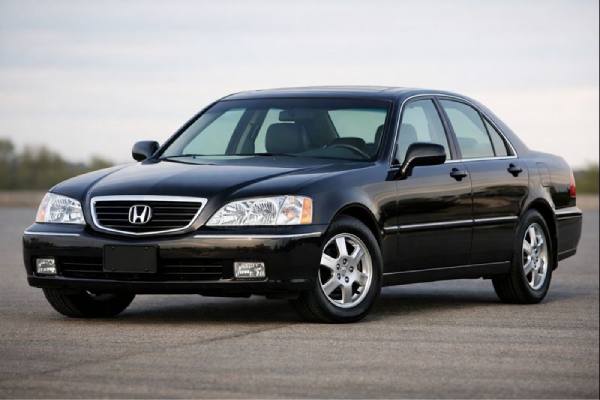
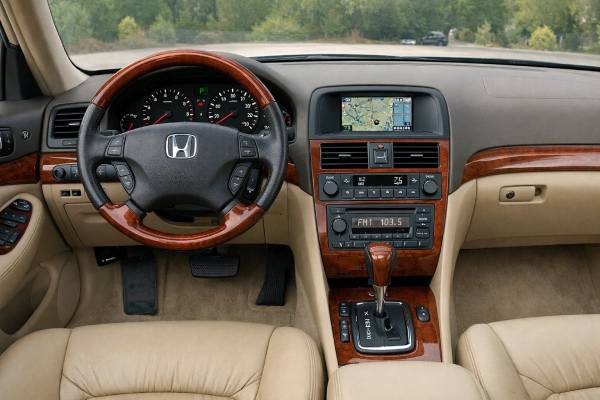
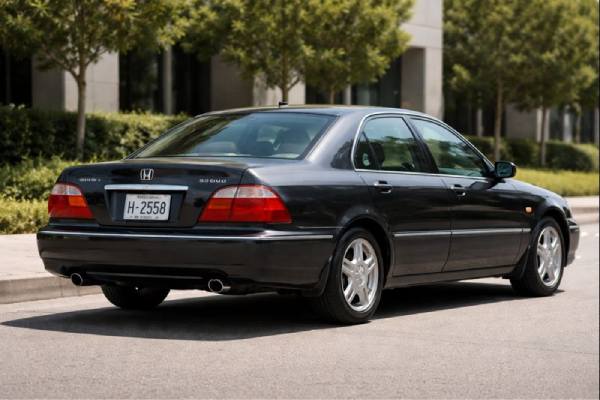
The facelifted Honda Legend (KA9) sits in an interesting sweet spot: it’s a big, quietly engineered flagship that was built to be used daily, not just admired. In 1998–2004 form, the core formula is a smooth C35A2 3.5-liter V6 paired to a traditional automatic and front-wheel drive—simple by luxury-sedan standards, and often easier to keep healthy long-term than more complex rivals.
What owners usually notice first is the refinement: a calm cabin, strong low-rpm torque, and a chassis tuned for stable high-speed travel. What matters most today is condition. A cared-for KA9 can feel “modern enough” in real traffic, but neglected examples can turn into a slow leak of time and money—mostly through deferred timing-belt service, aging rubber, and electrical niggles typical of 20+ year-old luxury cars.
Owner Snapshot
- Smooth V6 torque and relaxed highway manners make it a strong long-distance daily.
- Typically better rust-resilience and mechanical simplicity than many European rivals of the era.
- Parts availability is decent for service items, but some trim and electronics can take patience to source.
- Budget for timing-belt service if history is unclear—plan it every 90,000–120,000 mi (144,000–192,000 km) or by time.
- A realistic oil service rhythm is 8,000–10,000 km (5,000–6,000 mi) or 6–12 months, depending on use.
Navigate this guide
- KA9 Legend facelift explained
- C35A2 specs and dimensions
- Trims, equipment, and safety tech
- Reliability and known problem areas
- Maintenance plan and buying tips
- Road feel and real performance
- Rival check in today’s market
KA9 Legend facelift explained
Honda’s KA9 Legend is a late-1990s answer to a simple question: how do you make a luxury sedan feel expensive every day without turning it into a science project? The facelift years (1998–2004) kept the fundamentals—front-engine, front-wheel drive, naturally aspirated V6—but tightened the execution with updated styling, revised trim, and (in many markets) incremental improvements to noise control and electronics.
The engineering personality is “understated and overbuilt.” You don’t buy a KA9 to chase lap times; you buy it because it’s calm at 120 km/h, starts on cold mornings without drama, and doesn’t punish you with harsh ride tuning. The C35A2 3.5-liter V6 is the centerpiece: a smooth, rev-happy unit that also delivers useful torque low in the rev range, which pairs well with an automatic geared for comfort rather than constant downshifts.
The other defining trait is how the car carries its size. On paper it’s a large sedan, yet the driving experience is closer to “big Accord done properly” than to a floaty barge. Steering feel is typically light-to-medium with a stable on-center character, and the chassis tends to prioritize straight-line composure and predictable grip over sharp turn-in.
For modern ownership, the big picture is straightforward:
- Mechanically: it’s generally durable if serviced on schedule, but neglect (especially timing belt and cooling maintenance) is expensive.
- Electronically: it’s an older luxury car, which means more modules, more motors, and more opportunities for age-related faults—even if the core drivetrain is strong.
- Value: the KA9 often costs less than comparable German sedans to buy, but the best examples aren’t the cheapest listings—they’re the ones with records, recent major service, and intact interior and exterior trim.
If you’re considering one today, treat it like a classic daily driver: the goal is not perfection, but predictable, documented maintenance and a baseline refresh that restores reliability.
C35A2 specs and dimensions
Below are the most relevant specifications for the facelift-era KA9 with the C35A2 3.5-liter V6 and automatic transmission. Exact figures can vary by market, wheel package, and equipment level, so use this as a practical reference and verify against your VIN-specific documentation when ordering parts or fluids.
Powertrain and efficiency
| Item | Spec (C35A2 / KA9 3.5) |
|---|---|
| Engine code | C35A2 |
| Layout | Front, transverse |
| Configuration | V6, DOHC, 4 valves/cyl |
| Displacement | 3.5 L (3474 cc) |
| Bore × stroke | 90 × 91 mm (3.54 × 3.58 in) |
| Induction | Naturally aspirated |
| Fuel system | Multi-port injection (MPFI) |
| Compression ratio | ~9.6:1 |
| Max power | 205 hp (151 kW) @ ~5200 rpm |
| Max torque | ~297 Nm (219 lb-ft) @ ~2800 rpm |
| Timing drive | Belt (timing belt) |
| Rated economy (typical) | ~11.0 L/100 km (21.4 mpg US / 25.7 mpg UK) combined |
| Real-world highway @ 120 km/h | commonly ~9.5–10.5 L/100 km (22–25 mpg US) depending on tyres, wind, and temperature |
Transmission and driveline
| Item | Spec |
|---|---|
| Transmission | 4-speed automatic (market-dependent calibration) |
| Drive type | FWD |
| Differential | Open (traction control availability varies by market/year) |
Dimensions and weights
| Item | Spec |
|---|---|
| Length | ~4995 mm (196.7 in) |
| Width | ~1820 mm (71.7 in) |
| Height | ~1430 mm (56.3 in) |
| Wheelbase | ~2910 mm (114.6 in) |
| Kerb (curb) weight | ~1750 kg (3858 lb) |
| GVWR (gross vehicle weight rating) | ~2180 kg (4806 lb) |
| Fuel tank | ~68 L (18.0 US gal / 15.0 UK gal) |
| Cargo volume (seats up) | ~450 L (15.9 ft³) |
Performance and capability (typical)
| Metric | Typical result |
|---|---|
| 0–100 km/h (0–62 mph) | ~9.1 s |
| Top speed | ~215 km/h (134 mph) |
| Towing / payload | Market-dependent; many are not officially rated for heavy towing—treat as “light duty” at most |
Fluids and key service capacities (practical ownership)
Some capacities are widely consistent across Honda/Acura V6 platforms of the era, but always confirm by VIN and service literature.
| Item | Spec (typical for this platform) |
|---|---|
| Engine oil | 5W-30 or 10W-30 (climate dependent); ~4.6 L (4.9 US qt) with filter |
| Coolant | Long-life ethylene glycol type (Honda-spec equivalent); capacity varies by radiator/market |
| Automatic transmission fluid | Honda ATF-type fluid (era-specific); drain/fill volume is much less than total capacity |
| Brake fluid | DOT 3 or DOT 4 (market dependent); change by time |
| Power steering | Honda PSF-type fluid (avoid generic “universal” if possible) |
Electrical and ignition (high-level)
| Item | Spec |
|---|---|
| Spark plugs | Long-life plug type varies; verify heat range by VIN |
| Plug gap | Often ~1.0–1.1 mm (0.039–0.043 in), plug-specific |
| 12V battery | Size and CCA vary by market; prioritize correct tray/hold-down fit |
Safety and driver assistance (era-correct)
This generation predates modern ADAS (automatic emergency braking, lane centering, etc.). Expect traditional safety engineering: airbags, strong structure, ABS, and (on many examples) traction and stability systems depending on year/market.
If you want a “specs-first” takeaway: the KA9 is big, reasonably quick for its era, and tuned for refined torque delivery and stable cruising rather than sporty edge.
Trims, equipment, and safety tech
Because the Legend was sold across multiple regions (with overlap to the Acura RL identity in North America), trim naming can be inconsistent. The smarter approach is to identify the car by powertrain (C35A2), year (1998–2004 facelift), and equipment cues rather than relying only on badge text.
Typical equipment themes you’ll see
Most facelift KA9 cars were sold “well-optioned” relative to mainstream sedans. Common features include:
- Leather seating and power adjustments, often with seat heaters depending on market.
- Automatic climate control and a quiet, insulation-heavy cabin.
- Premium audio options (sometimes with factory amplifier and multiple speakers).
- Cruise control and a comfort-oriented instrument layout.
- Sunroof availability (common but not universal).
What changes the ownership experience most is not cosmetic trim, but functional equipment condition: seat motors, HVAC blend doors, display backlighting, audio units, and door locks/windows. A fully functioning Legend feels far more expensive than one with three “small” electrical faults.
Quick identifiers that help confirm spec
Use these practical checks when viewing a car:
- Engine bay label and stamping: confirm C35A2 and look for intact emissions/maintenance labels.
- Wheel and brake package: base wheels are often smaller; higher trims may have larger wheels and different brake hardware.
- Interior switchgear: presence of traction/stability switches (where fitted), seat heater controls, memory seat buttons.
- Headlight type and lens condition: clouded lenses are common; check for water ingress and aim stability.
- VIN decoding and build plate: helps confirm production month and original market specification.
Safety ratings and what they mean here
For this generation you may find test data under Acura RL rather than Honda Legend naming, depending on the testing body and market. In the U.S., IIHS published results for the 1996–2004 Acura RL platform, with the moderate overlap frontal test rating shown for 2000-era listings. That’s useful context for structural performance, even if your car is a non-U.S. Legend with different equipment details.
What you should not expect is modern scoring that includes pedestrian protection, advanced restraint timing, or ADAS-assisted crash avoidance—those frameworks arrived later. Treat this car as “good for its era” when maintained properly, but not comparable to a 2015+ sedan in crash-avoidance technology.
Airbags, child seats, and braking tech
A typical KA9 setup includes:
- Front airbags (and sometimes side airbags, market/year dependent).
- Seat belt pretensioners (common in this class).
- ABS as standard equipment in most markets.
- Traction/stability systems: availability varies—verify on the exact car.
For child seats, check your market’s anchoring standard. Many late-1990s cars have some form of rear anchoring points, but not always the later, standardized ISOFIX/LATCH hardware you’d expect on newer vehicles. If child-seat use matters, confirm anchors physically and verify compatibility with your seat model.
Bottom line: treat “trim” as a clue, not a guarantee—condition and verified equipment matter more than the badge.
Reliability and known problem areas
A well-kept KA9 is usually a dependable luxury sedan, but it’s still an older, complex vehicle by late-1990s standards. The most expensive ownership stories usually come from deferred maintenance plus age-related rubber and electrical wear, not from a single catastrophic design flaw.
Below is a practical map of issues by prevalence and cost tier. Mileage and age bands are approximate; condition and climate matter more than the odometer alone.
Common (plan for it)
- Timing belt service (high severity, high cost if ignored)
- Symptoms: no symptoms until it’s too late; sometimes belt noise or oil contamination from leaks.
- Root cause: normal wear; time-based degradation; tensioner and water pump aging.
- Remedy: timing belt + tensioner + idlers + water pump, and address cam/crank seals if sweating.
- Typical window: by time (often ~6–7 years) or mileage (often ~144,000–192,000 km / 90,000–120,000 mi depending on schedule).
- Automatic transmission aging (medium to high severity depending on symptoms)
- Symptoms: delayed engagement, flare on upshift, harsh 2–3, shudder under light throttle, dark/burnt fluid.
- Root cause: heat, neglected fluid changes, worn solenoids, internal clutch wear.
- Remedy: correct fluid service first (not a flush if the unit is already weak), then diagnosis of solenoids/pressure control if symptoms persist.
- Suspension bushings and ball joints (medium severity, medium cost)
- Symptoms: clunks over bumps, vague steering, uneven tyre wear, instability under braking.
- Root cause: rubber aging, heavy curb weight, city driving.
- Remedy: renew worn arms/bushings; align after repairs.
Occasional (depends on climate and care)
- Cooling system fatigue (medium to high severity)
- Symptoms: rising temp in traffic, coolant smell, soft radiator hoses, crusty deposits at seams.
- Root cause: old radiator, tired cap, neglected coolant, failing thermostat.
- Remedy: pressure test; replace weak components proactively; use proper coolant mix.
- Oil leaks and seepage (low to medium severity, low to medium cost)
- Symptoms: oil on subframe, burning smell, drips after parking.
- Root cause: valve cover gaskets, seals aging, PCV system neglect.
- Remedy: gasket refresh; ensure PCV function; clean and recheck.
- Electrical “luxury car” problems (medium severity, variable cost)
- Symptoms: intermittent window/lock issues, instrument illumination faults, audio quirks, climate-control oddities.
- Root cause: aged switches, solder joints, relays, moisture ingress.
- Remedy: diagnose systematically; avoid random module swapping.
Rare (but worth screening)
- Steering rack leaks or pump noise (medium severity)
- Symptoms: groaning at full lock, leaks at boots/lines, heavy steering.
- Remedy: correct fluid; inspect lines and rack seals.
- ABS sensor or tone ring issues (medium severity)
- Symptoms: ABS light, intermittent activation at low speed.
- Remedy: scan codes; inspect sensors and wiring.
Recalls, service actions, and how to verify
For older cars, recall visibility depends on market and age rules, but airbags remain the big headline. The safest approach is to run a VIN recall check periodically and keep proof of completion. Airbag inflator campaigns (notably Takata-related) are the most important to verify because they’re safety-critical and often handled at no charge when open.
Takeaway: the KA9 is usually “reliably old,” not “unreliably complex.” Buy the best-maintained example you can, and treat major preventive service as part of the purchase price.
Maintenance plan and buying tips
A KA9 Legend rewards owners who run maintenance like a simple checklist rather than a reaction to warning lights. The car is forgiving in daily use, but it’s not forgiving of skipped timing-belt service, overheats, or cheap fluids in sensitive systems.
Practical maintenance schedule (distance/time)
Use this as a real-world baseline for a 20+ year-old V6 sedan. Short trips, extreme heat/cold, and heavy city use justify the shorter interval.
- Engine oil and filter: every 8,000–10,000 km (5,000–6,000 mi) or 6–12 months
- If you do frequent short trips, lean toward 8,000 km / 6 months.
- Air filter (engine): inspect every service; replace typically 20,000–30,000 km (dusty regions sooner)
- Cabin filter (if equipped): 15,000–30,000 km depending on dust/pollen load
- Coolant: replace roughly every 5 years after a full system refresh, sooner if history is unknown
- Spark plugs: often ~160,000 km (100,000 mi) for long-life types, but confirm plug spec by VIN
- Timing belt + water pump: treat as mandatory if no proof
- A sensible planning interval is 90,000–120,000 mi (144,000–192,000 km) or 6–7 years, whichever comes first, depending on the schedule your market uses.
- Automatic transmission fluid: drain-and-fill at 40,000–60,000 km (25,000–40,000 mi) intervals for longevity, especially in city use
- If shifting feels off, start with correct fluid and level before assuming the worst.
- Brake fluid: every 2–3 years regardless of mileage
- Power steering fluid: inspect yearly; refresh if dark or noisy
- Tyres and alignment: rotate 10,000–12,000 km, align annually or whenever tyre wear looks uneven
- Battery and charging check: test before winter; many failures look like “random electrical problems”
Essential “decision” torque and capacity touchpoints
If you do your own basic work, the big one is oil service: the platform’s oil change capacity is around 4.6 L (4.9 US qt) with filter, and drain bolt torque matters because stripped pans are an avoidable headache. For everything deeper—timing belt, crank pulley work, transmission servicing—use VIN-specific procedures and correct tools.
Buyer’s guide: what to inspect before purchase
Bring this checklist to the viewing:
- Timing belt proof: invoice with parts listed (belt, tensioner, water pump). If the seller can’t prove it, assume it’s due.
- Cold start behavior: listen for belt squeal, top-end ticking, or idle hunting.
- Transmission: confirm smooth engagement R↔D, no flare, no shudder under light throttle.
- Cooling health: stable temperature, clean coolant, fans operating, no sweet smell after a drive.
- Suspension: clunks over small bumps often indicate worn bushings/links.
- Brakes and ABS: pedal feel, straight stops, and no warning lamps.
- Electrical sweep: windows, locks, seat motors, HVAC modes, audio, dash illumination.
- Body and underbody: check jack points, rear arches, and subframe areas for rust and past repairs.
- Tyres: uneven wear can signal alignment or worn arms—budget accordingly.
Best ownership strategy
If you buy one, plan a “baseline” service within the first month: all fluids you can verify, new filters, a careful inspection of belts/hoses, and a scan for stored fault codes (even if no light is on). After that, the Legend becomes what it was designed to be: a calm, durable long-distance sedan with a premium feel.
Road feel and real performance
On the road, the KA9’s character is less about drama and more about confidence. The steering is typically tuned for low effort at parking speeds and steady on-center tracking at highway speeds, which fits the car’s mission. You won’t get modern “electric rack” precision, but you often get a consistent, predictable response that makes the car easy to place on long drives.
Ride, handling, and NVH
- Ride: The suspension prioritizes compliance. Small bumps are usually absorbed without sharp impact, and the car feels settled at speed. Worn dampers and bushings change this dramatically—what should feel composed can become floaty or clunky—so suspension condition matters more than brand reputation.
- Handling balance: Expect safe understeer near the limit, helped by the car’s front-drive layout and comfort-oriented alignment settings. The KA9 can still carry speed smoothly through sweeping corners, but it won’t feel eager to rotate like a rear-drive rival.
- NVH (noise, vibration, harshness): This is where the Legend earns its keep. When everything is healthy—engine mounts, exhaust hangers, door seals—it can be impressively quiet for its age. Tyres make a big difference; a “sporty” tread pattern can add noticeable road roar.
Powertrain character
The C35A2 V6 tends to feel strong in normal driving because peak torque arrives relatively low. That means:
- City driving: smooth step-off, minimal need to rev.
- Passing: a kickdown delivers steady acceleration rather than a surge; it’s brisk enough, not fast by modern standards.
- Transmission logic: the 4-speed automatic is the limiting factor for modern feel. It’s usually smooth when maintained, but it can hunt more than newer 5/6-speed units on hills, and it won’t keep the engine in the “perfect” band the way newer gearboxes do.
Real-world efficiency
For a large V6 sedan, fuel economy is predictable:
- City: often mid-teens L/100 km in heavy traffic (think ~14–18 L/100 km depending on conditions).
- Highway (100–120 km/h): often around 9.5–10.5 L/100 km when the car is healthy and tyres are properly inflated.
- Mixed: around 11–12 L/100 km is a realistic planning figure for most owners.
Cold weather and short trips can push consumption up sharply, mostly because the engine spends more time warming up and the transmission stays in richer operating modes.
Performance metrics that matter
A typical KA9 3.5 does about 0–100 km/h in ~9 seconds, with a top speed around 215 km/h. In daily driving, the more meaningful metric is passing response: it feels confident at 60–120 km/h, but it won’t feel “effortless” like newer turbo sixes. The car’s strength is that it delivers its performance quietly, without harshness.
If you want the Legend at its best, keep the chassis tight (bushings, alignment), choose quiet touring tyres, and maintain cooling and transmission fluid health. That combination preserves the car’s original mission: comfortable, stable travel at real-world speeds.
Rival check in today’s market
Shopping a KA9 Legend today usually means cross-shopping older executive sedans where condition matters more than brand. The most common alternatives are period Lexus, BMW, Mercedes-Benz, Audi, Volvo, and Saab models. Here’s how the Legend generally stacks up in real ownership terms.
Against Lexus GS (S160) and early LS (XF20)
- Where the Legend wins: purchase value, understated design, and often a simpler “daily driver” vibe without the same parts pricing as flagship V8 models.
- Where Lexus wins: long-run automatic transmission reputation (varies by model), dealer-era parts support, and a more “built for forever” interior feel in some trims.
- Verdict: if you want the least emotional ownership, Lexus often edges it. If you want a rarer, quieter alternative with strong V6 smoothness, the Legend holds its own.
Against BMW 5 Series (E39) and Mercedes E-Class (W210)
- Where the Legend wins: fewer high-pressure failure points (no turbo plumbing, fewer complicated chassis systems), often lower buy-in cost, and generally forgiving daily usability.
- Where the Germans win: steering feel, rear-drive balance, and parts ecosystem (more specialists, more aftermarket options).
- Verdict: for driving feel, the Germans still lead. For “I want a comfortable sedan that won’t constantly ask for attention,” a well-kept Honda can be the calmer choice—especially if you don’t want to chase multiple overlapping age issues.
Against Audi A6 (C5)
- Where the Legend wins: typically fewer AWD-related service costs and fewer “stacked” systems that can fail together.
- Where Audi wins: interior design flair, available drivetrains, and in some markets, stronger enthusiast support.
- Verdict: if you need AWD, the Audi makes sense. If you don’t, the Legend’s simplicity can reduce long-term stress.
Against Volvo S80 and Saab 9-5
- Where the Legend wins: drivetrain smoothness and a more “Honda-like” service rhythm when cared for.
- Where the Swedes win: safety reputation and seating comfort; turbo engines can offer better low-end punch and tuning potential.
- Verdict: choose Swedish if you want the seats and the character; choose the Honda if you want quiet, naturally aspirated predictability.
Who should choose the KA9 Legend?
The KA9 makes the most sense for a buyer who:
- Values refinement and stability more than sporty handling.
- Wants a classic daily driver that’s unusual but not fragile.
- Is willing to pay upfront for maintenance history—or budget to create that history.
Key advantages to remember
- Refinement-per-dollar is strong when the car is sorted.
- V6 smoothness and torque suit real traffic and long trips.
- Ownership can be straightforward if you treat major preventive service as non-negotiable.
If you approach the Legend like a maintained flagship rather than a cheap beater, it can be one of the more satisfying “grown-up” used-car choices from its era.
References
- 2000 RL Online Reference Owner’s Manual 2000 (Owner’s Manual)
- Check for Recalls: Vehicle, Car Seat, Tire, Equipment | NHTSA 2026 (Recall Database)
- More Takata Air Bags Recalled | NHTSA 2021 (Recall Notice)
- 2000 Acura RL 2026 (Safety Rating)
- Airbag Inflator Recall Information 2020 (Recall Information)
Disclaimer
This article is for informational purposes only and is not a substitute for professional inspection, diagnosis, or repair. Specifications, torque values, service intervals, and procedures can vary by VIN, market, model year, and equipment, so always verify details against your official owner’s manual and service documentation before purchasing parts or performing work.
If this guide helped, consider sharing it on Facebook, X (Twitter), or your favorite forum/community to support our work.