
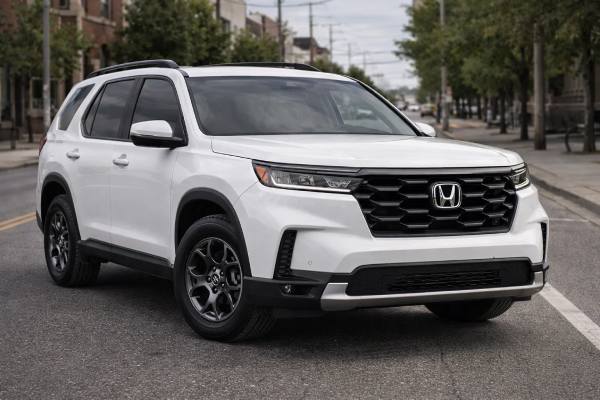
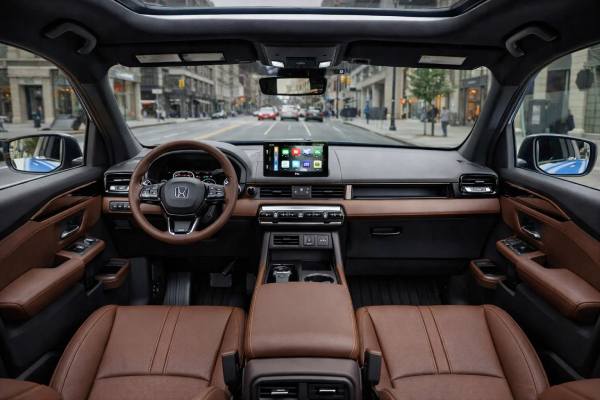
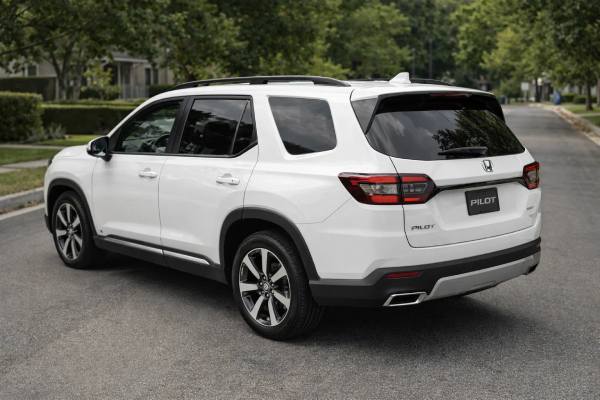
The 2023–present Honda Pilot AWD (YG2) is the “all-weather” version of Honda’s family three-row SUV, pairing a revised 3.5-liter J35Y8 V6 with a 10-speed automatic and Honda’s torque-vectoring-style AWD hardware. In daily use, the formula is simple: confident traction in rain and snow, strong towing stability, and a calm highway demeanor—without the running costs and complexity of a turbocharged engine.
Where owners tend to notice the engineering choices is in consistency. The V6 delivers smooth, predictable power, and the 10-speed keeps the engine in an easy midrange under load. The AWD system adds mass and service points, but it also reduces front-tire workload and helps the Pilot feel more planted when fully packed. If you want one SUV to handle commuting, school runs, long road trips, and occasional towing—this AWD Pilot is designed for that reality.
Owner Snapshot
- AWD hardware improves wet and snow traction and helps stability when the cabin is full or a trailer is attached.
- The 3.5L V6 is smooth and strong under load, especially on grades and at highway passing speeds.
- Real-world comfort is a core strength: quiet cruising, predictable braking, and family-friendly cabin packaging.
- Budget for extra driveline fluid services on AWD models (rear drive unit and transfer-related components).
- Plan oil and filter service about every 8,000–12,000 km (5,000–7,500 mi) or 6–12 months, depending on use.
Jump to sections
- Honda Pilot YG2 AWD in practice
- Honda Pilot YG2 AWD specifications
- Honda Pilot YG2 trims and Honda Sensing
- Known problems, recalls, and updates
- Maintenance schedule and buying tips
- Road manners, traction, and economy
- Pilot AWD vs key competitors
Honda Pilot YG2 AWD in practice
Think of the YG2 Pilot AWD as the “do-it-all” configuration. The fourth-generation Pilot rides on a stiffer structure than prior models, and the AWD drivetrain is tuned to feel secure rather than sporty. That matters when you’re carrying six or seven people: the Pilot tends to stay composed over mid-corner bumps, and it tracks straight at highway speed without constant steering corrections.
The J35Y8 3.5-liter V6 is a traditional, naturally aspirated engine (no turbocharger). That gives it a clean throttle response and consistent power delivery in hot weather, at altitude, or when towing. For owners, the biggest advantage is predictability: you don’t have to “wait” for boost, and you typically don’t have turbo-related heat management or long-term boost-control complexity to maintain.
The AWD system’s main value is not just pulling away on a slippery driveway. It also reduces how hard the front tires work during acceleration and hill climbs, which can improve stability and steering feel when the vehicle is heavily loaded. In practice, drivers notice fewer traction-control interventions on wet on-ramps, less wheelspin on steep gravel, and better confidence on mixed-friction roads (patchy snow, slush, mud).
Where AWD changes ownership is service planning. An AWD Pilot has extra fluid services beyond engine oil and ATF, and those fluids matter because they protect expensive driveline components. If the Pilot lives in short-trip city use, sees winter road salt, or does regular towing, it’s smart to treat driveline fluid changes as “protective maintenance,” not optional.
Finally, the Pilot’s packaging is a key reason it competes well. The cabin is designed around real family use: easy entry to the third row, sensible storage, and a cargo area that doesn’t feel like an afterthought. If your priorities are stability, comfort, and easy power under load, the AWD YG2 is the Pilot that leans hardest into those strengths.
Honda Pilot YG2 AWD specifications
Below are practical specs for the 2023–present Pilot AWD (YG2) with the 3.5L J35Y8 V6 and 10-speed automatic. Some items vary by trim and wheel/tire package, so ranges are shown where appropriate.
Powertrain and efficiency
| Item | Specification |
|---|---|
| Code | J35Y8 |
| Engine layout and cylinders | V6, 6 cylinders, DOHC, 4 valves/cyl (24-valve) |
| Bore × stroke | ~89.0 × 93.0 mm (~3.50 × 3.66 in) |
| Displacement | 3.5 L (3,471 cc) |
| Induction | Naturally aspirated (NA) |
| Fuel system | Direct injection (DI) |
| Compression ratio | ~11.5:1 (varies by calibration) |
| Max power | 285 hp (213 kW) @ ~6,100 rpm |
| Max torque | ~355 Nm (262 lb-ft) @ ~5,000 rpm |
| Timing drive | Belt |
| Rated efficiency (typical AWD) | ~9.8–11.8 L/100 km (20–24 mpg US / 24–29 mpg UK), trim- and wheel-dependent |
| Real-world highway @ 120 km/h (75 mph) | ~9.5–11.0 L/100 km (21–25 mpg US) depending on weather, tires, and load |
Transmission and driveline
| Item | Specification |
|---|---|
| Transmission | 10-speed automatic (10AT) |
| Drive type | AWD (torque-vectoring-style rear drive unit) |
| Differential | Front: open (typical). Rear: electronically controlled clutch packs for torque distribution (system design varies by trim calibration). |
Chassis and dimensions
| Item | Specification |
|---|---|
| Suspension (front/rear) | Front strut; rear multi-link |
| Steering | Electric power steering (EPS); ratio ~15–17:1 (varies by model setup) |
| Brakes | 4-wheel discs; front ~350 mm (~13.8 in), rear ~330 mm (~13.0 in) (approx., varies by trim) |
| Wheels/tyres (common sizes) | 255/55 R20 or 265/60 R18 (package-dependent) |
| Ground clearance | ~185–211 mm (~7.3–8.3 in), trim-dependent |
| Length / width / height | ~5,077 / 1,995 / 1,803 mm (~199.9 / 78.5 / 71.0 in), varies slightly |
| Wheelbase | ~2,890 mm (~113.8 in) |
| Turning circle (kerb-to-kerb) | ~11.8–12.1 m (~38.7–39.7 ft), wheel/tire dependent |
| Kerb weight | ~2,050–2,200 kg (~4,520–4,850 lb), trim-dependent |
| GVWR | ~2,700–2,850 kg (~5,950–6,280 lb), trim-dependent |
| Fuel tank | ~70 L (~18.5 US gal / ~15.4 UK gal) |
| Cargo volume | Approx. 470–600 L seats up; ~1,600–2,100+ L seats folded (method varies by market/measurement standard) |
Performance and capability
| Item | Specification |
|---|---|
| Acceleration 0–100 km/h (0–62 mph) | ~7.0–7.8 s (trim/tire/load dependent) |
| Top speed | ~180–190 km/h (~112–118 mph), region and limiter dependent |
| Braking 100–0 km/h | ~38–42 m (varies by tire and surface) |
| Towing capacity (braked) | Up to ~2,270 kg (~5,000 lb) on many AWD configurations (equipment-dependent) |
| Payload | Typically ~500–700 kg (~1,100–1,540 lb), trim-dependent |
Fluids and service capacities (decision-useful)
| Item | Specification (typical) |
|---|---|
| Engine oil | 0W-20; ~5.0–5.7 L (~5.3–6.0 US qt) with filter |
| Coolant | Honda-type long-life coolant; ~7–9 L (~7.4–9.5 US qt) total system (varies) |
| Transmission/ATF | Honda-spec ATF for 10AT; drain/fill often ~3.3–3.8 L (~3.5–4.0 US qt); total fill higher |
| Rear drive unit fluid | Honda rear differential fluid spec; ~1.0–1.5 L (~1.1–1.6 US qt) (approx.) |
| A/C refrigerant | R-1234yf on many newer models; charge varies by build |
| Key torque specs | Wheel lug nuts typically ~127 Nm (~94 lb-ft); drain plugs vary by component |
Safety and driver assistance (high level)
- IIHS: Strong crash-test performance in current protocols; headlight ratings depend on trim and lighting package.
- ADAS suite: Honda Sensing availability varies by trim/year; calibration-sensitive components include cameras, radar, and windshield-mounted sensors.
Honda Pilot YG2 trims and Honda Sensing
For the 2023–present generation, Pilot trims tend to cluster into three buyer types: value-focused family trims, comfort/lux trims, and the more rugged-looking TrailSport-style variants. The engine and core drivetrain are usually shared, so the meaningful differences are equipment, wheel/tires, towing hardware, and (in some cases) AWD tuning and underbody protection.
Trims and options that change how it drives
- Wheel and tire packages: This is one of the biggest “feel” differences. Larger wheels with lower-profile tires can sharpen steering response but increase impact harshness and raise tire replacement cost. Smaller wheels with taller sidewalls tend to ride better and can be more forgiving on rough surfaces.
- Tow package and cooling support: If you plan to tow regularly, look for factory towing equipment and confirm the vehicle is rated for your trailer weight. In real ownership, a Pilot that tows benefits from more frequent ATF and brake inspections even if the maintenance minder hasn’t called for it yet.
- Seat configuration: Some trims offer a second-row bench or captain’s chairs. Captain’s chairs can make third-row access easier, while the bench can be better for larger families who regularly need eight-passenger capacity.
- Lighting: Headlight performance is not just comfort—it affects safety ratings and night fatigue. If you drive rural roads often, prioritize the better headlight option (and keep the lenses clean and properly aimed).
Quick identifiers when shopping used
- Build date and equipment match: Confirm the driver-assist features present on the car match what the trim is supposed to have. On modern Hondas, camera and radar hardware can vary by year and trim.
- Tire size on the door jamb: This is a fast way to confirm the wheel/tire package, which affects ride, noise, and replacement costs.
- Hitch and wiring: A factory-style hitch and integrated wiring usually look cleaner and reduce the odds of electrical issues compared with poorly installed aftermarket kits.
Safety ratings and what they mean
The Pilot is engineered for strong crash performance, but ratings depend on the test body and the vehicle configuration. The IIHS program emphasizes crash avoidance and newer crash test protocols, while other programs may emphasize star ratings, rollover resistance, and different impact configurations. Don’t assume a single rating summarizes everything—especially if headlight ratings differ by trim.
Safety systems and ADAS (driver assistance)
Modern driver assistance is powerful but service-sensitive. Key points owners should understand:
- Honda Sensing features (varies by trim/year): automatic emergency braking, adaptive cruise control, lane keeping support, and traffic-sign recognition are common elements.
- Calibration after repairs: Windshield replacement, front-end collision repair, alignment changes, and some suspension work can require camera/radar calibration. Skipping calibration can cause warning lights or reduced system performance.
- Sensor hygiene: Keep the windshield area near the camera clean, and clear ice/slush from the front sensor area in winter. Many “false faults” are simply blocked sensors.
Known problems, recalls, and updates
The YG2 Pilot is still relatively new, so the pattern is different from an older SUV: fewer age-related mechanical failures, more “early-life” software updates, supplier-related hardware fixes, and occasional assembly-related issues. A good approach is to separate concerns into prevalence and cost impact.
Common (higher prevalence, usually lower-to-medium cost)
- Infotainment glitches and connectivity oddities
- Symptoms: screen freezes, intermittent Bluetooth dropouts, delayed camera view, random reboot.
- Likely root cause: software bugs, phone compatibility, or module updates.
- Remedy: ensure the vehicle is running the latest infotainment software; test with another phone; reset and re-pair devices before replacing hardware.
- Brake noise or vibration (pads/rotors and bedding)
- Symptoms: squeal at low speed, light steering wheel shake under braking.
- Likely root cause: pad compound behavior, uneven transfer layer, or driving pattern (short trips, light braking).
- Remedy: proper bedding procedure where safe/legal; inspect pad thickness and rotor condition; verify caliper slide lubrication at service.
- Battery sensitivity in short-trip use
- Symptoms: slow start, intermittent electrical warnings, start/stop behavior concerns (if equipped).
- Likely root cause: repeated short trips with high accessory load; aging 12V battery.
- Remedy: battery test (not just voltage), terminal cleaning, and replacement when capacity is low.
Occasional (moderate prevalence, medium-to-high cost if ignored)
- 10-speed shift quality complaints
- Symptoms: rough 2–3 or 3–4 shift, hesitation, “hunting” on hills, clunk into gear.
- Likely root cause: adaptive learning needing reset, outdated TCM calibration, or fluid condition after hard use.
- Remedy: check for software updates and perform a proper relearn procedure; consider earlier ATF service if the vehicle tows or does heavy stop-and-go.
- AWD driveline fluid neglect
- Symptoms: low-speed shudder in tight turns, whining, or binding sensation.
- Likely root cause: aged rear drive unit fluid or contamination.
- Remedy: correct fluid service with the specified Honda fluid; verify no leaks; repeat after short interval if fluid was severely degraded.
Rare (lower prevalence, but potentially high severity)
- Assembly-related fastener or component seating issues
- Symptoms: new noises, inconsistent pedal feel, warning lights.
- Likely root cause: build variance or supplier batch issue.
- Remedy: dealer inspection; verify technical service actions have been completed.
Recalls, TSBs, and how to verify completion
For any modern vehicle, recall completion status matters more than rumor. Your process should be:
- Run a VIN check using the official recall lookup tools (and keep a screenshot/PDF for your records).
- Ask for dealer service history showing campaign completion codes.
- Confirm repair details: for software updates, ask which modules were updated and whether post-update calibration and test drive were performed.
If you are buying used, treat “open recalls” as negotiable leverage rather than a deal-breaker—unless the seller refuses to complete them. A cooperative seller who schedules the recall repair before delivery is a strong positive signal.
Maintenance schedule and buying tips
A Pilot AWD can be very durable if you treat fluids and tires as the “big levers.” Modern Hondas often use a maintenance minder system, but a practical schedule is easier to follow and can be more protective for towing and short-trip use.
Practical maintenance schedule (distance/time)
Every 8,000–12,000 km (5,000–7,500 mi) or 6–12 months
- Engine oil and filter (0W-20).
- Tire pressure check; inspect tread and shoulders for alignment hints.
- Inspect brakes (pad thickness, rotor condition), especially if towing or city-heavy.
Every 16,000–24,000 km (10,000–15,000 mi)
- Rotate tires; check alignment if you see uneven wear.
- Replace cabin air filter if you drive in dusty areas or urban pollution.
Every 24,000–48,000 km (15,000–30,000 mi)
- Engine air filter (earlier if dusty).
- Brake fluid check; many owners replace brake fluid every 3 years regardless of mileage.
Every 40,000–60,000 km (25,000–37,000 mi)
- AWD rear drive unit/differential fluid service (sooner if frequent towing, mountain driving, or deep winter use).
- Transmission service strategy: if you tow or do heavy city use, consider earlier ATF drain/fill cycles than “lifetime” assumptions.
Every 80,000–120,000 km (50,000–75,000 mi)
- Spark plugs (interval depends on exact service schedule and engine calibration).
- Coolant (often longer interval; follow official documentation, but inspect hoses and clamps earlier).
Timing components
- The J35 family commonly uses a timing belt. Replace at the manufacturer interval (often around 160,000 km / 100,000 mi or age-based), and consider doing water pump and tensioner service at the same time for labor efficiency.
Fluids and specs that prevent expensive mistakes
- Use the correct Honda-specified ATF and AWD driveline fluid. “Close enough” fluids can cause shift quality issues or driveline chatter.
- If the Pilot tows, shorten ATF and brake inspection intervals. Heat and load are what age these systems.
Essential torque values (high-utility)
- Wheel lug nuts: ~127 Nm (~94 lb-ft) (verify for your exact wheel package).
- Engine oil drain plug: commonly ~30–40 Nm (~22–30 lb-ft) on many Hondas (verify per service manual).
- If you DIY, always confirm torque specs by VIN and engine variant before tightening critical fasteners.
Buyer’s guide checklist (AWD-specific)
Underbody and corrosion
- Inspect rear subframe areas, brake lines, and exposed fasteners—especially in salted climates.
Driveline
- On a tight, slow turn in a parking lot, feel for binding or chatter. Mild tire scrub is normal; pronounced shudder suggests driveline fluid needs attention.
Transmission
- During a test drive, do gentle rolling stops and light throttle tip-in. Harsh engagement or delayed response should trigger a deeper inspection and a check for software updates.
Cooling system
- Look for dried coolant residue, wet hose ends, and any sweet smell after a long drive.
Electronics
- Test every camera view, parking sensor, and driver-assist function you expect to use. ADAS repairs can be costly if sensors are damaged or calibration is skipped.
Best ownership bet
- Seek a Pilot with documented fluid services (oil, ATF strategy, and AWD fluid) and proof that recall campaigns are complete. That combination usually predicts the lowest long-term hassle.
Road manners, traction, and economy
The Pilot AWD’s driving personality is built around stability and low fatigue. The suspension leans toward control rather than softness: it absorbs highway expansion joints well and stays composed over undulating roads, especially when loaded. Steering feel is typical modern EPS—light at parking speeds and calmer on-center at highway speeds—more “easy and consistent” than “talkative.”
Powertrain character
The 3.5L V6 provides smooth, linear acceleration. It doesn’t need high rpm to feel useful, and the 10-speed automatic typically keeps the engine in a quiet band during steady cruising. Under passing demand, the transmission can drop several gears quickly; some drivers interpret that as “busy,” but it’s largely the gearbox doing its job to keep the V6 in its torque band.
If you want the most seamless behavior:
- Use normal throttle and let the transmission settle.
- In hilly terrain, consider a drive mode that reduces hunting or use manual gear selection to hold a gear on long grades.
- If you tow, watch for excessive heat smell after steep climbs and consider earlier ATF service intervals.
Real-world AWD traction
In rain and light snow, the AWD system’s biggest benefit is clean launches and fewer stability-control interruptions. On mixed surfaces, the rear torque capability helps the Pilot feel less “pulled” by the front tires. In deeper snow, tires dominate the outcome: quality winter tires can matter more than AWD alone.
Traction notes that matter:
- All-season tires are a compromise. If you see regular snow, winter tires transform braking and turning, not just acceleration.
- Tire matching matters on AWD. Keep tread depths reasonably even across all four corners to reduce driveline stress.
Efficiency in real use
Expect fuel use to vary widely based on speed, temperature, and load. A heavy three-row SUV pushing a large frontal area will always pay a penalty at 120 km/h (75 mph), and AWD adds a small additional drag and mass cost.
As a practical range:
- City-heavy commuting: often ~11–13.5 L/100 km (17–21 mpg US).
- Mixed driving: often ~10–12 L/100 km (19–24 mpg US).
- Steady highway at moderate speeds: often ~9.5–11 L/100 km (21–25 mpg US).
Load and towing behavior
With a moderate trailer, the Pilot stays stable if the hitch setup is correct and the trailer is balanced. The limiting factor is usually heat management and brake workload rather than raw power. A smart towing routine includes:
- Conservative speeds, especially in heat.
- More frequent brake inspections.
- Earlier ATF servicing and strict adherence to the correct fluid spec.
- Expect a consumption penalty; depending on trailer shape and weight, +25% to +60% fuel use is common.
Pilot AWD vs key competitors
The Pilot AWD competes in one of the toughest SUV segments, where most rivals are “good enough” at the basics. The best choice usually comes down to what you value most: powertrain feel, interior packaging, long-term maintenance confidence, or off-pavement capability.
Versus Toyota Highlander AWD
- Pilot advantage: naturally aspirated V6 feel (smooth, consistent under load) and often a more “traditional SUV” towing posture.
- Highlander advantage: hybrid availability for much better fuel economy if you mostly commute and don’t tow heavy.
- Decision tip: If fuel cost is your top priority, a hybrid Highlander-style approach can win. If towing and long-distance load stability matter more, Pilot AWD is more your speed.
Versus Kia Telluride and Hyundai Palisade AWD
- Pilot advantage: Honda’s long-term parts ecosystem and generally straightforward ownership pattern for many buyers.
- Telluride/Palisade advantage: strong value-per-feature and an upscale feel in many trims.
- Decision tip: Compare tire costs, warranty terms, and dealer reputation in your area. These vehicles can be excellent, but service experience varies widely by region.
Versus Ford Explorer AWD
- Pilot advantage: calmer “family-first” tuning and a simpler, smoother engine response profile.
- Explorer advantage: some configurations offer stronger performance character and RWD-based dynamics.
- Decision tip: If you want a sportier feel, Explorer-style tuning may appeal. If you want predictable comfort and easy drivability, Pilot AWD typically aligns better.
Versus Subaru Ascent AWD
- Pilot advantage: V6 towing feel and less turbo-related heat and boost behavior under sustained load.
- Ascent advantage: standard AWD identity and strong winter confidence when paired with the right tires.
- Decision tip: If you prefer a turbo’s low-end punch and you drive at altitude often, the Ascent approach can be compelling. If you want steady power and a more traditional drivetrain character, Pilot wins.
Bottom line
Choose the Pilot AWD if you want:
- Smooth V6 power that stays consistent when loaded.
- AWD confidence that’s easy to live with (as long as you service the driveline fluids).
- A family-focused cabin with road-trip comfort and practical packaging.
If you want maximum fuel economy above all else, prioritize a hybrid competitor. If you want the sharpest “performance SUV” feel, some RWD-based rivals may fit better. For many owners, though, the Pilot AWD lands in the sweet spot: capable, comfortable, and easy to trust.
References
- Inspection and Maintenance 2025 (Owner’s Manual)
- 2025 Honda Pilot 4-door SUV 2025 (Safety Rating)
- 2024 TOP SAFETY PICKs 2024 (Safety Rating)
- 24228-ISPM (Acura ZET CO-26349) 2023 (Recall Database)
Disclaimer
This article is for informational purposes only and is not a substitute for professional diagnosis, inspection, or repair. Specifications, torque values, fluid types and capacities, and maintenance intervals can vary by VIN, market, model year, and equipment. Always verify details using official Honda service information for your specific vehicle.
If you found this guide useful, please consider sharing it on Facebook, X/Twitter, or your favorite forum to support our work.