
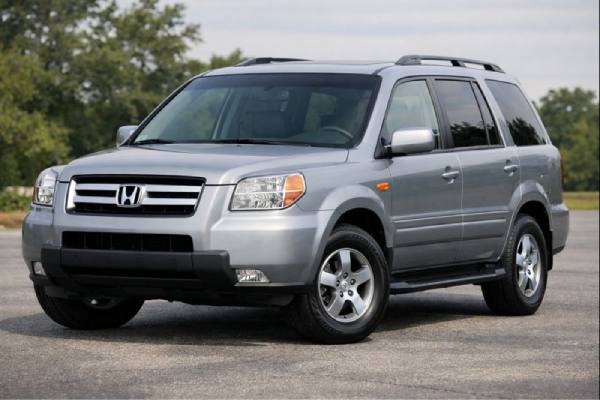
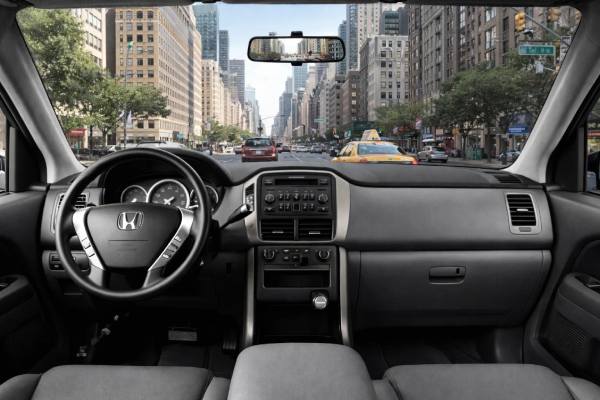

The facelifted first-generation Honda Pilot in FWD form (chassis code often referenced as YF2) is a practical three-row SUV built around a strong, simple formula: a 3.5-liter SOHC V6, a 5-speed automatic, and a roomy cabin that prioritizes everyday usability over sharp handling. In 2006–2008, Honda refined the package with updates to features and calibration while keeping the core mechanical layout familiar and easy to service.
For most owners, the draw is straightforward: predictable power delivery, comfortable long-distance manners, and a genuinely useful cargo area behind a fold-flat third row. The trade-off is that age-related maintenance now matters more than mileage alone—especially timing-belt history, fluid condition, and cooling-system health. If you buy one carefully and keep it on a clean service rhythm, this Pilot can still be a durable family hauler.
Owner Snapshot
- Smooth, naturally aspirated V6 power with a relaxed, low-stress driving feel for daily use.
- Big, usable interior and cargo space; the third row is best for kids but valuable when needed.
- FWD versions avoid AWD transfer and rear-differential service, which can reduce upkeep complexity.
- Timing belt service history is non-negotiable; budget for a complete belt kit if records are unclear.
- Plan on engine oil changes roughly every 8,000–12,000 km (5,000–7,500 mi) or 6–12 months, depending on use.
What’s inside
- Honda Pilot YF2 facelift essentials
- Honda Pilot FWD specs at a glance
- Honda Pilot 2006-2008 trims and safety
- Reliability patterns and known fixes
- Maintenance plan and buying tips
- Road feel and real economy
- Rivals and value comparison
Honda Pilot YF2 facelift essentials
Think of the 2006–2008 Pilot FWD as a “big Honda” built to take family life without drama. The facelift era kept the same broad shape and packaging that made early Pilots popular—upright seating, easy access, and a cabin that feels more minivan-practical than SUV-fancy—while improving the day-to-day experience with updated features and a more mature overall feel.
Mechanically, this generation stays refreshingly conventional. The J35-series 3.5-liter V6 uses a timing belt rather than a chain, and the 5-speed automatic is a traditional torque-converter unit. There’s no turbocharger, no direct injection, and no complex hybrid system to diagnose. That simplicity is a real advantage today: most independent shops are comfortable working on it, parts availability is strong, and preventive maintenance tends to be more important than “mystery failures.”
In FWD form, you also skip some of the all-wheel-drive-specific service tasks (rear differential fluid and transfer assembly considerations). That can reduce long-term cost and eliminate a few common noise and vibration complaints that crop up on neglected AWD systems. The flip side is traction: on wet grass, snow, or loose gravel, the FWD Pilot relies more heavily on tire quality and stability control to keep things composed.
The facelift Pilot’s real strength is how well it handles routine ownership. It’s easy to load, easy to see out of for its size, and easy to drive smoothly. The V6 makes power without needing high rpm, and it’s happiest in the “middle” of the rev range where it feels quiet and confident. If you’re shopping today, the key is not to be distracted by shiny paint or a clean interior. Condition is defined by maintenance evidence: timing belt history, transmission fluid service, cooling system integrity, and the absence of persistent warning lights.
If those basics check out, the 2006–2008 Pilot FWD still makes a compelling case as an affordable, spacious, and mechanically understandable three-row SUV.
Honda Pilot FWD specs at a glance
Below are the core specifications that matter most for ownership, service planning, and real-world capability on the 2006–2008 Pilot FWD (YF2) with the 3.5-liter J35Z1 V6. Figures can vary by VIN, market, and trim; use these as a structured reference, then confirm against your vehicle’s labels and official documentation.
Powertrain and efficiency
| Item | Spec (Pilot FWD 2006–2008) |
|---|---|
| Engine code | J35Z1 |
| Layout and cylinders | V6, SOHC, i-VTEC, 4 valves/cyl (24-valve) |
| Bore × stroke | 89.0 × 93.0 mm (3.50 × 3.66 in) |
| Displacement | 3.5 L (3,471 cc) |
| Induction | Naturally aspirated |
| Fuel system | Multi-point fuel injection |
| Compression ratio | 10.0:1 |
| Max power | 244 hp (182 kW) @ 5,750 rpm (2WD application) |
| Max torque | 240 lb-ft (325 Nm) @ 4,500 rpm |
| Timing drive | Belt |
| Rated efficiency (typical EPA era figures) | 16/22 mpg US city/highway (≈14.7/10.7 L/100 km) |
| Real-world highway @ 120 km/h (75 mph) | Often ~11.0–12.5 L/100 km depending on tires, load, wind, and terrain |
Transmission and driveline
| Item | Spec |
|---|---|
| Transmission | 5-speed automatic |
| Drive type | FWD |
| Differential | Open (traction and stability systems manage wheel slip) |
Chassis, dimensions, and capacities
| Item | Spec |
|---|---|
| Suspension (front/rear) | MacPherson strut / multi-link rear with trailing arms |
| Brakes | Ventilated front disc / rear disc, approx. 300 mm (11.8 in) front and 312 mm (12.3 in) rear |
| Popular tire size | P235/70 R16 |
| Wheelbase | 2,700 mm (106.3 in) |
| Length | 4,775 mm (188.0 in) |
| Width | 1,968 mm (77.5 in) |
| Height (varies by setup) | about 1,811 mm (71.3 in) to 1,821 mm (71.7 in) |
| Ground clearance (unladen) | about 198 mm (7.8 in) |
| Approach / departure (approx.) | 28.1° / 22.5° |
| Curb weight (typical 2WD) | about 1,934 kg (4,264 lb) to ~1,970 kg (4,341 lb) depending on trim/equipment |
| Fuel tank | 77.0 L (20.34 US gal) |
| Cargo volume (SAE-style figures) | 15.9 / 47.6 / 87.6 ft³ behind 3rd / 2nd / 1st rows (≈450 / 1,348 / 2,480 L) |
Performance and capability
| Item | Typical real-world expectation |
|---|---|
| 0–100 km/h (0–62 mph) | roughly 9.0–10.0 s (trim, load, conditions vary) |
| Towing capacity (2WD) | up to 1,588 kg (3,500 lb) with the correct towing equipment and cooling provisions |
| Braking (100–0 km/h) | tire-dependent; expect mid-40 m range when in good condition (verify with your setup) |
Fluids and service capacities (high-utility items)
| Item | Specification and capacity (typical) |
|---|---|
| Engine oil | API premium 5W-20; oil change capacity incl. filter: 4.3 L (4.5 US qt) |
| Coolant | Honda-type coolant preferred; 50/50 mix; reserve tank approx. 2.64 L (2.79 US qt) |
| Automatic transmission fluid | Honda ATF-Z1 era spec; total approx. 8.4 L (8.9 US qt), typical drain and refill about 3.8 L (4.0 US qt) |
| A/C refrigerant | HFC-134a (R-134a); charge about 700–750 g (24.7–26.5 oz) |
| A/C compressor oil | ND-OIL8 |
Key torque specs (critical fasteners only)
| Item | Torque |
|---|---|
| Engine oil drain bolt | 39 Nm (29 lbf·ft) |
These numbers aren’t just trivia—they drive your ownership costs. For example, knowing that a drain-and-fill only replaces part of the transmission fluid helps you plan a sensible service strategy, and knowing the towing ceiling helps you judge whether a given trailer setup is realistic.
Honda Pilot 2006-2008 trims and safety
The 2006–2008 Pilot lineup can look confusing because equipment overlaps, and many examples on the used market have dealer-installed accessories or aftermarket head units that blur trim lines. A practical way to shop is to focus on three questions: seating needs (7 vs 8), comfort features you care about (leather, heated seats, moonroof), and whether you want factory navigation and rear entertainment.
Trims and options: what typically changes in real life
Across these years, common trims include variations like LX (or VP/value-oriented packaging) and EX/EX-L style steps upward. What matters most isn’t the badge—it’s the functional content:
- Seating configuration: Many are 8-passenger with a second-row bench. Some equipment packages affect how the middle seat section feels and how convenient the third row is to access.
- Interior materials: EX-L-type packages often add leather-trimmed seating surfaces and heated front seats. That’s a comfort upgrade, but it can also add cost if seat heaters fail or leather is cracked from sun exposure.
- Moonroof, navigation, and rear entertainment: These features add convenience and resale appeal, but they also add components to diagnose. A non-working navigation screen or DVD system can be expensive to replace if you insist on OEM parts.
- Towing prep differences: Even when the tow rating is listed, towing capability in real life depends on correct cooling provisions, hitch hardware, and wiring. A “rated” Pilot without the right supporting equipment can overheat transmission fluid under load.
Quick identifiers you can use on a test drive
- Check for heated seat switches and leather seating surfaces (easy EX-L tell).
- Look for the factory navigation screen layout versus a standard radio.
- Confirm tire size and wheel style, but don’t assume wheels are original—many have been swapped.
Safety ratings: what to interpret carefully
Safety ratings from this era depend heavily on the test body and the exact test version used at the time. In general, the Pilot’s structure, seating position, and standard stability systems provide a solid baseline for its generation. However, it’s important to interpret results with context:
- Ratings can differ by model year and the test protocol in place at that time.
- Optional equipment doesn’t always change crash structure, but it can change curb weight and braking feel.
- Modern crash tests (small overlap, advanced headlight scoring, and today’s pedestrian criteria) weren’t always applied to vehicles of this era, so there may be fewer “modern-style” results to compare.
Safety systems and driver assistance: what you really get
You won’t find modern ADAS (advanced driver-assistance systems) like automatic emergency braking or lane centering here. What you do get, when everything is working correctly, is a strong set of foundational safety equipment:
- Front airbags plus side airbags (with passenger-side occupant-position logic on many Hondas of this era) and three-row side curtains on equipped models.
- ABS (anti-lock braking), EBD (electronic brake distribution), and brake assist to support emergency stops.
- Stability control and traction control to reduce loss-of-control incidents, especially useful on the FWD model in slick conditions.
- Child-seat provisions: LATCH/ISOFIX-style anchors for second-row positions and tether points that make three-row family use more realistic.
If you’re buying today, safety isn’t only “what the vehicle had when new.” It’s also “what still works.” Verify that the ABS and stability-control warning lights illuminate briefly at startup and go out, confirm seat belts retract properly, and check that the tire pressure monitoring system doesn’t show persistent faults.
Reliability patterns and known fixes
A well-kept 2006–2008 Pilot FWD can be very dependable, but age and maintenance quality now determine the experience more than the Honda badge. The good news is that most common problems are visible with a careful inspection and a methodical service history review.
Common issues (high prevalence)
- Timing belt overdue (high severity, high cost if ignored)
Symptoms: No symptoms until it’s too late; sometimes belt noise or cracking visible at inspection.
Likely cause: Deferred scheduled maintenance.
Remedy: Replace the timing belt, tensioner, and related components as a complete job. Many owners also replace the water pump and accessory belt while access is open. If records are unclear, assume it’s due and price it into the purchase. - Automatic transmission shift quality and fluid neglect (medium to high severity)
Symptoms: Hesitation, harsh shifts, delayed engagement, or shudder under light throttle.
Likely cause: Old or incorrect ATF, heat stress from heavy use, or long drain intervals.
Remedy: Confirm proper fluid specification and service approach. A single drain-and-fill is not the same as a full exchange, and a neglected unit may need a cautious, staged fluid refresh rather than an aggressive flush. - Cooling-system aging (medium severity)
Symptoms: Slow coolant loss, temperature creep in traffic, heater performance changes, or a sweet smell after driving.
Likely cause: Old coolant, tired hoses, radiator cap fatigue, or small seep points that worsen with time.
Remedy: Pressure test, inspect hoses and clamps, verify fan operation, and refresh coolant using the correct type and mixture. - Suspension wear and steering feel drift (medium severity)
Symptoms: Clunks over bumps, uneven tire wear, wandering on the highway, or vague steering on-center.
Likely cause: Worn bushings, ball joints, strut mounts, or alignment that hasn’t been checked in years.
Remedy: Inspect front control-arm bushings and ball joints, check rear links, and align after any suspension work.
Occasional issues (moderate prevalence)
- Engine mounts and vibration (medium severity)
Symptoms: More vibration at idle, thunk when shifting from Park to Drive, or resonance at certain speeds.
Likely cause: Mount deterioration with age and heat cycles.
Remedy: Replace failed mounts; verify idle quality and check for misfire codes before blaming mounts alone. - Oil seepage from gaskets and seals (low to medium severity)
Symptoms: Light oil film around covers or lower engine, occasional drips.
Likely cause: Normal aging of rubber and gasket material.
Remedy: Confirm it’s not active leakage onto hot exhaust components; reseal as needed during other service work.
Rare but costly issues (low prevalence, high severity)
- Overheating events and secondary damage
Symptoms: Temperature spikes, coolant boiling, repeated coolant loss.
Likely cause: Ignored leaks, failed fans, or a neglected cooling system.
Remedy: Stop driving immediately when overheating occurs; diagnose properly before replacing parts blindly.
Recalls, TSBs, and coverage: how to handle it
Older vehicles can accumulate recall campaigns over time, including safety-related components. The right approach is simple and disciplined:
- Run the VIN through an official recall database.
- Ask a dealer to confirm completion history when possible.
- Treat “open recall” status as a required fix, not a negotiating footnote.
Pre-purchase checks to request
- Proof of timing belt service (invoice, mileage, date).
- Transmission service records and evidence the correct ATF was used.
- Cooling system condition (pressure test results are ideal).
- A full scan for stored codes (not just a dashboard light check).
- A test drive long enough to evaluate shifting when warm, not just cold-start behavior.
If you buy the best-maintained example you can find, you’ll usually spend less over the first year than buying a cheaper one and “catching up” on neglected work.
Maintenance plan and buying tips
A 2006–2008 Pilot FWD rewards owners who treat maintenance as a schedule, not a reaction. The goal is to keep fluids clean, rubber components fresh, and known wear items handled before they become breakdowns.
Practical maintenance schedule (distance and time)
Use this as a real-world baseline, then adjust for severe service (short trips, extreme heat/cold, heavy city use, frequent towing).
- Engine oil and filter: every 8,000–12,000 km (5,000–7,500 mi) or 6–12 months. Use the correct viscosity and a quality filter.
- Engine air filter: inspect every 15,000 km (10,000 mi); replace roughly every 30,000–45,000 km (20,000–30,000 mi) depending on dust.
- Cabin air filter: typically every 15,000–30,000 km (10,000–20,000 mi), especially if HVAC airflow drops.
- Coolant: refresh on a time basis if history is unknown; after that, follow the coolant type’s recommended interval and keep the mix correct (typically 50/50).
- Spark plugs: replace at the scheduled interval for the plug type; don’t stretch it if you notice misfires under load.
- Automatic transmission fluid: drain-and-fill intervals matter more than mileage bragging rights. If history is unclear, consider a staged approach (multiple drain-and-fills over time) rather than a sudden full exchange.
- Brake fluid: every 2–3 years regardless of mileage.
- Brake pads and rotors: inspect at every tire rotation; replace based on thickness, wear pattern, and pulsation.
- Tire rotation and alignment: rotate about every 8,000–10,000 km (5,000–6,000 mi). Align when you install new tires or notice uneven wear.
- Accessory (serpentine) belt and hoses: inspect annually; replace at the first signs of cracking, glazing, or seepage.
- 12 V battery: test yearly; many last 4–6 years depending on climate and usage.
Fluids, capacities, and what to buy
- Engine oil: API premium 5W-20; oil change capacity including filter is about 4.3 L (4.5 US qt).
- Transmission fluid: use the correct Honda-spec ATF for the era; total capacity is much higher than a drain-and-fill amount, so don’t confuse the two.
- Coolant: use the correct coolant type; keep the mixture correct to prevent corrosion and freezing/boiling problems.
- A/C service: if cooling performance is weak, diagnose leaks and airflow issues before “topping off.” Overcharge can be as problematic as undercharge.
Essential torque values for decision-making
- Oil drain bolt: 39 Nm (29 lbf·ft).
If you do your own service, using the right torque and a fresh washer helps prevent stripped threads and chronic seepage.
Buyer’s guide: what to inspect first
Under the hood
- Look for dried coolant residue, wet seams around hoses, and any signs of past overheating.
- Check oil level and condition; milky residue or burnt smell should prompt deeper inspection.
Under the vehicle
- Inspect for powertrain leaks and torn suspension bushings.
- Check exhaust condition and heat shields (rattles are common but can mask bigger issues).
On the road
- Drive it warm. Confirm smooth shifting at light throttle and under moderate acceleration.
- Brake from highway speeds and feel for pulsation or steering shake.
- Listen for wheel-bearing hum that changes with gentle steering input.
Long-term durability outlook
If you buy one with documented timing belt service and a transmission that shifts cleanly when fully warm, you’re starting on the right foot. Most “unreliable Pilot” stories trace back to neglected intervals, incorrect fluids, or driving through warning lights. Treat it like a system—fluids, cooling, rubber, and brakes—and it tends to behave like a system: predictable and durable.
Road feel and real economy
The Pilot FWD doesn’t try to feel sporty, and that’s part of its appeal. It’s tuned for comfort, stability, and low-effort control—exactly what many owners want from a family SUV.
Ride, handling, NVH (noise, vibration, harshness)
- Ride quality: The suspension is generally compliant over broken pavement, with enough travel to handle potholes without constant crashing. When it feels harsh, worn struts, tired bushings, or overinflated tires are common causes.
- Straight-line stability: At highway speeds it tracks confidently for its era, especially with good alignment and quality tires.
- Steering feel: Expect light steering effort and moderate feedback. If it feels vague on-center, check alignment, front-end wear, and tire condition before blaming the rack.
- Braking feel: Pedal feel is usually predictable, but aging brake fluid and uneven rotor wear can make it feel soft or pulsating. A proper brake fluid change often improves consistency.
Powertrain character: what it feels like day to day
The naturally aspirated 3.5-liter V6 delivers power smoothly, with the kind of predictable throttle response that’s easy to modulate in traffic. There’s no turbo lag and no complicated boost behavior—just steady pull as rpm rises.
The 5-speed automatic is tuned for calm, early upshifts in normal driving and will downshift decisively when you ask for passing power. If you feel frequent hunting on gentle grades, it can point to aging fluid, incorrect tire sizing, or a transmission that’s not happy under load.
Real-world efficiency: what to expect
For a three-row SUV of this generation, fuel economy is reasonable but not “modern.” A realistic picture looks like this:
- City driving: often in the mid-to-high teens mpg US (roughly 13.5–15.5 L/100 km) depending on trip length and traffic.
- Highway at 100–120 km/h (60–75 mph): often around 11.0–12.5 L/100 km (about 19–21 mpg US) when the vehicle is in good mechanical condition.
- Mixed use: frequently lands around 13–14 L/100 km (roughly 17–18 mpg US) depending on climate and terrain.
Cold weather tends to push consumption up due to longer warm-up periods, denser air, winter fuel blends, and higher rolling resistance from winter tires.
Traction and control: what FWD changes
In normal conditions, the FWD Pilot feels stable and predictable. In low-grip conditions, the biggest variables become:
- Tire quality and tread depth (by far the most important).
- Stability and traction control behavior (helpful, but not a substitute for grip).
- Weight distribution (a loaded rear can reduce front traction on slick climbs).
If your use includes frequent snow or muddy access roads, the FWD model can still work well with excellent tires and careful driving, but it won’t match the “pull” of an AWD version when conditions deteriorate.
Load and towing: practical expectations
The Pilot can tow, but it’s happiest towing within sensible limits and with proper equipment. When you tow near the top of its rating, pay attention to:
- Transmission temperature management and fluid condition.
- Braking confidence and trailer brake setup where applicable.
- Stability at speed—weight distribution and tire pressure matter more than many people expect.
A well-maintained Pilot with the right tow hardware can be a confident moderate-tow vehicle, but it’s not a heavy-duty truck substitute.
Rivals and value comparison
Shopping a 2006–2008 Pilot FWD usually means cross-shopping other midsize SUVs with available third rows. Each alternative has a different “ownership personality,” so the best choice depends on whether you prioritize simplicity, cabin space, towing, or cost-to-fix.
Versus Toyota Highlander (similar era)
- Highlander strengths: Often feels refined and can be very dependable when maintained. Some configurations offer efficient drivetrains for the class.
- Pilot strengths: Typically feels roomier, with a more utilitarian cargo setup and a straightforward service ecosystem.
- Decision point: If you want a more car-like drive, Highlander often wins. If you want maximum usable space and a simple, predictable SUV feel, the Pilot is compelling.
Versus Ford Explorer (mid-2000s)
- Explorer strengths: Strong towing reputation in certain configurations and a traditional SUV vibe.
- Pilot strengths: Often smoother power delivery and a more “Honda-like” interior layout for family use.
- Decision point: If towing is central and you’re prepared for brand-specific maintenance patterns, the Explorer can make sense. If you want a calmer daily driver and easier cabin practicality, the Pilot often feels less tiring.
Versus GM three-row crossovers (where applicable)
Depending on year and market, some GM crossovers offer space and comfort, but they can vary widely in powertrain behavior and long-term costs.
- Pilot advantage: The J35 V6 and conventional 5-speed automatic are well-understood and tend to reward preventive service.
- Rival advantage: Some competitors offer more modern infotainment or a different seating feel.
- Decision point: If you want the simplest long-term ownership story, the Pilot often remains a safe bet—assuming you buy one that hasn’t been neglected.
The value play: why the Pilot still earns attention
A facelift first-gen Pilot is usually not the cheapest used SUV to fuel, and it’s not the newest-feeling cabin design. Its value comes from:
- A proven drivetrain that is serviceable and predictable.
- Practical space that still competes well today.
- An ownership experience that improves dramatically when maintenance is kept current.
If your budget allows you to buy the cleanest, best-documented example rather than the cheapest listing, the Pilot tends to return that investment with fewer surprises.
References
- 2008 (Owner’s Manual)
- untitled 2008 (Technical Guide)
- Gas Mileage of 2008 Honda Pilot 2008 (Official Fuel Economy)
- 2008 Honda Pilot 4-door SUV 2008 (Safety Rating)
- Vehicle Detail Search – 2008 HONDA PILOT | NHTSA 2008 (Recall Database)
Disclaimer
This article is for informational purposes only and is not a substitute for professional inspection, diagnosis, or repair. Specifications, torque values, service intervals, and procedures can vary by VIN, market, and equipment, so always verify details using your vehicle’s official owner’s manual and service documentation.
If this guide helped, please consider sharing it on Facebook, X (Twitter), or your favorite forum to support our work.