

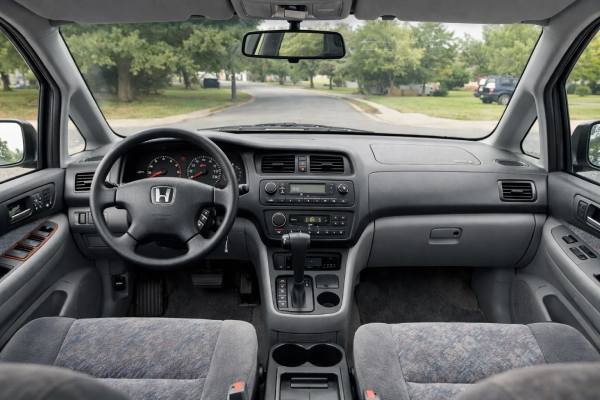
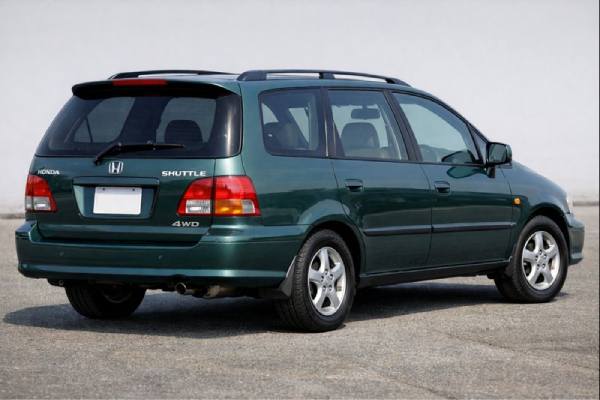
The Honda Shuttle 4WD (RA4) with the 2.3-liter F23A-series engine sits in a sweet spot of late-1990s Honda engineering: simple enough to keep running for a long time, but modern enough to feel refined in daily use. This generation blends a low, car-like driving position with the packaging benefits of a tall wagon/MPV body, plus a real advantage for winter climates—Honda’s 4WD system that can quietly add rear traction when the front wheels start to slip.
Ownership tends to revolve around three themes. First, the F23A engine rewards regular oil changes and cooling-system upkeep. Second, age-related rubber and electrical wear can matter more than mileage. Third, the driveline is durable if fluids are changed on time and the vehicle isn’t forced to do heavy towing. Buy a good one, maintain it predictably, and it remains a capable family hauler even today.
What to Know
- Stable, predictable traction in rain and snow thanks to the 4WD system’s front-biased design.
- Practical cabin packaging with usable third-row flexibility for people or cargo.
- Proven Honda 2.3-liter drivability: smooth at city speeds and relaxed on highways.
- Plan for age-driven refresh work (bushings, mounts, hoses, and sensors) rather than “major” mechanical failures.
- Change engine oil every 7,500–10,000 km (5,000–6,000 mi) or 6 months, depending on use and climate.
Section overview
- RA4 Shuttle 4WD in context
- F23A7 and drivetrain specs
- Grades, seating, and safety kit
- What breaks and what it costs
- Service schedule for long life
- How it drives day to day
- Better choices in the segment
RA4 Shuttle 4WD in context
The RA4 Honda Shuttle 4WD is best understood as a practical, car-based people mover from an era when Honda prioritized lightness, packaging efficiency, and predictable handling over sheer size. In many markets and databases you will see this vehicle grouped closely with the Odyssey of the same period, and the “RA4” chassis code is often used as the anchor identifier for the 4WD variant. The value proposition is straightforward: a roomy cabin, easy access, and a driveline tuned for normal roads rather than off-road drama.
The “4WD” here is not a truck-style system with low range or locking differentials. Instead, it is designed to be transparent: most of the time the vehicle behaves like a front-drive car, and rear drive is added as needed to reduce wheelspin. That design choice matters for owners because it keeps steering light, reduces driveline drag in normal cruising, and generally avoids the binding behavior that part-time 4×4 systems can show on dry pavement.
From an engineering perspective, the RA4’s appeal is the balance of simple mechanical layout and honest usability. The 2.3-liter SOHC inline-four is tuned for smoothness and everyday torque rather than high-rev theatrics, and it is typically paired with a 4-speed automatic in this era. The body is tall enough to be genuinely practical, but the driving position and road feel remain closer to a sedan than to a van.
As a used vehicle today, the RA4’s “goodness” depends less on the spec sheet and more on condition. A clean cooling system, tidy transmission shifts, quiet suspension, and proof of timing-belt service often matter more than any badge or trim name. The best examples feel cohesive: doors shut cleanly, the engine idles steadily, the steering is calm at speed, and the cabin remains free of water leaks. If those basics are right, the platform’s strengths—comfort, predictable traction, and flexible interior space—still make sense for family duty, winter commuting, or long-distance travel.
F23A7 and drivetrain specs
Below are practical, owner-focused specifications for the Honda Shuttle 4WD (RA4) with the 2.3-liter F23A-series engine. Exact values can vary by production date, market, and trim, so treat these as the “typical” configuration and verify against your VIN-specific service information.
Powertrain and efficiency (typical)
| Item | Specification |
|---|---|
| Engine code | F23A-series (commonly listed as F23A7 in some markets/registrations) |
| Layout | Inline-4, SOHC |
| Displacement | 2.3 L (2253 cc) |
| Induction | Naturally aspirated |
| Fuel system | Port fuel injection (PFI/MPFI, depending on market description) |
| Max power | 150 hp (110 kW) @ rpm (varies by market calibration) |
| Max torque | ~200–210 Nm (~148–155 lb-ft) @ rpm (varies) |
| Timing drive | Belt |
| Fuel | Regular unleaded |
| Rated economy (period test cycles) | Often listed around ~10 km/L on Japanese 10.15 mode for comparable 2.3 4WD trims |
Transmission and driveline
| Item | Specification |
|---|---|
| Transmission | 4-speed automatic (4AT) |
| Drive type | 4WD (front-biased, automatic engagement) |
| Differentials | Typically open; traction relies on tire grip and the 4WD coupling rather than LSD hardware |
Chassis and dimensions (one common RA4 4WD configuration)
| Item | Specification |
|---|---|
| Body style | 5-door wagon/MPV |
| Seating | 7 seats (3 rows, typical) |
| Length × width × height | ~4.77 m × 1.77 m × 1.66 m |
| Wheelbase | ~2.83 m |
| Minimum turning circle | ~5.7 m |
| Ground clearance | ~0.16 m |
| Curb weight | ~1590 kg (varies by trim/equipment) |
| Fuel tank | ~60 L |
Performance and capability (real-world expectations)
Because published testing differs by region, tyres, and load, it is more useful to describe the expected “envelope”:
- 0–100 km/h (0–62 mph): typically mid-11s to low-12s seconds for a healthy 2.3 4WD automatic with two occupants.
- Highway cruising: calm and stable; gearing favors relaxed cruising over quick passing.
- Towing: treat as light-duty; prioritize transmission temperature control and conservative loads (and confirm legal ratings for your market).
Fluids, service capacities, and key notes (owner-useful guidance)
| Item | Typical guidance (confirm by VIN) |
|---|---|
| Engine oil | 5W-30 or 10W-30 depending on climate; use an API-rated oil suited to petrol engines |
| ATF | Honda-specified ATF for the era (often referenced as ATF-Z1 historically; modern equivalents may be recommended by Honda) |
| Coolant | Honda-compatible long-life coolant; maintain correct mix for your climate |
| Timing belt | Replace on schedule; include tensioners and inspect water pump while accessible |
If you want one takeaway from the specs section, it is this: the RA4 is not “fragile,” but it is schedule-sensitive. Keep fluids clean and temperatures controlled, and the drivetrain tends to age gracefully.
Grades, seating, and safety kit
Trim structure on late-1990s Hondas can look messy today because names and option packages differed by market, and used-car listings often compress them into short labels. Still, you can reliably separate “what matters” into three buckets: functional hardware, interior configuration, and safety equipment.
Trims and options that change how the vehicle feels
Common equipment differences that you will notice in daily use include:
- Wheel and tyre packages: modest size changes can affect ride comfort and steering effort. A taller sidewall usually rides better and is kinder to older suspension.
- Seating configuration details: even within “7-seat” listings, second-row design and third-row folding mechanisms can vary. Check how quickly you can convert from people to cargo.
- Climate and glass: rear HVAC provisions, privacy glass, and defogger performance are comfort features that matter more than the badge.
- Factory aero packages or appearance kits: these change nothing mechanically but can affect replacement part availability and insurance classification in some markets.
Quick identifiers when shopping
When you inspect a candidate RA4, focus on identifiers that help you avoid “mystery spec” cars:
- Chassis code and drive: confirm the vehicle is truly RA4 and 4WD, not a front-drive sibling.
- Transmission behavior: a smooth 4AT on light throttle and clean kickdown is more important than trim name.
- Brake hardware and ABS: check for ABS function on loose gravel or wet pavement (safely), and confirm warning lights behave correctly at start-up.
- Interior wear clues: heavily worn steering wheel leather, sagging seat bolsters, and loose door checks can hint at harder life than the odometer suggests.
Safety ratings and what you can realistically verify
For this generation and market positioning, do not expect modern-style Euro NCAP or IIHS scoring to be available in a clean, directly comparable way. Instead, think in terms of equipment presence and system condition:
- Airbags: many vehicles of this era offered front SRS airbags; confirm the SRS light illuminates during bulb check and then turns off.
- ABS and brake distribution: some higher trims used ABS with electronic brake-force distribution features depending on market; verify ABS activation and make sure the brake pedal feel is consistent.
- Child-seat provisions: ISOFIX/LATCH standards were not as universal in the late 1990s as they are now, so confirm anchorage points physically rather than assuming.
- Lighting: headlight lens condition is a real safety item. Cloudy lenses and weak reflectors reduce usable night visibility more than many owners realize.
If you want a simple rule: treat safety as “systems you can confirm,” not marketing claims. A well-maintained RA4 with properly functioning airbags, brakes, tyres, and headlights is usually a safer vehicle than a neglected example with “better” trim on paper.
What breaks and what it costs
The RA4’s reliability story is usually not about dramatic engine failures. Instead, it is about predictable aging: wear parts, heat cycles, and the occasional known weak point that Honda addressed through recalls or service campaigns. Below is a practical map of issues by prevalence and cost tier, with symptoms and sensible remedies.
Common (high frequency) issues
- Suspension bushings and links (low to medium cost):
Symptoms: clunks over potholes, vague steering on-center, uneven tyre wear.
Cause: aged rubber, worn stabilizer links, tired dampers.
Remedy: replace worn links/bushings first, then assess struts; align after work. - Engine mounts (medium cost):
Symptoms: vibration at idle in gear, thump on throttle tip-in, harshness when shifting.
Cause: mount rubber collapses with age and oil exposure.
Remedy: replace the worst mount(s) first; confirm idle speed and ignition health to avoid masking the real issue. - Cooling system age-outs (medium cost, high consequence if ignored):
Symptoms: creeping temperature in traffic, coolant smell, small leaks, heater performance changes.
Cause: tired radiator end tanks, old hoses, fan-motor wear.
Remedy: pressure test, replace weak hoses, refresh coolant, and ensure fans operate correctly.
Occasional (moderate frequency) issues
- Ignition switch wear (medium cost; can be a safety concern):
Symptoms: intermittent no-start, engine cutting out with key movement, accessory power flicker.
Cause: internal contact wear from electrical load and arcing.
Remedy: replace ignition switch with the correct updated part where applicable. - Transmission shift quality changes (medium to high cost depending on cause):
Symptoms: delayed engagement into drive/reverse, harsh 2–3 shift, flare on upshift.
Cause: old ATF, solenoid wear, internal clutch wear in severe cases.
Remedy: correct fluid, evaluate solenoids, confirm mounts and throttle cable/controls (where applicable). Avoid aggressive “flush” methods on neglected gearboxes; use staged drain-and-fill if uncertain. - Power steering seepage and hose aging (low to medium):
Symptoms: whining pump, heavier steering, fluid drops under front.
Cause: hose and seal aging.
Remedy: replace leaking lines/seals and use the correct fluid.
Rare (lower frequency) but costly if present
- Head gasket or overheating aftermath (high cost):
Symptoms: persistent coolant loss, bubbles in reservoir, milky oil, misfire on cold start.
Cause: prolonged overheating, not the gasket “randomly failing.”
Remedy: compression and leak-down testing, cooling-system diagnostics before buying. - 4WD coupling behavior issues (medium to high):
Symptoms: unusual binding, rear engagement that feels abrupt, driveline noise under load.
Cause: mismatched tyres, neglected fluid service (if applicable), or aged coupling components.
Remedy: correct tyre matching (brand/model/tread depth), correct fluids, then deeper inspection if symptoms persist.
Recalls, service actions, and how to verify completion
Older Hondas commonly have documented recall/service history items such as airbag inflator campaigns, ignition switch replacement, and cooling-fan motor service campaigns. The correct approach is simple: run a VIN-based check where your market supports it, and ask for documentation showing the work was completed. On inspection day, you can also look for campaign/recall stickers in typical factory locations (door jamb areas or other specified spots) and verify warning lights behave normally.
Service schedule for long life
A practical maintenance plan for the RA4 is about preventing heat and lubrication problems, then staying ahead of age-related rubber wear. Use the schedule below as a real-world framework; shorten intervals for short-trip use, extreme temperatures, or heavy loads.
Routine schedule (baseline)
- Engine oil and filter: every 7,500–10,000 km (5,000–6,000 mi) or 6 months.
If the vehicle does short trips, idles often, or sees winter cold starts, choose the shorter interval. - Air filter (engine): inspect every oil change; replace about 15,000–30,000 km depending on dust.
- Cabin filter (if equipped): every 15,000–30,000 km or yearly for allergy comfort.
- Tyre rotation and inspection: every 10,000 km; keep tyre sizes and tread depths matched across axles for the health of the 4WD system.
Time-sensitive major items
- Timing belt service: commonly treated as ~100,000 km (60,000–100,000 mi range) or ~7 years on many belt-driven Hondas of this era.
Replace the belt, inspect/replace tensioners, and seriously consider doing the water pump at the same time because labor overlap is large. - Coolant: refresh about every 3–5 years, depending on coolant type and condition.
The goal is corrosion protection and stable boiling margin, not just “green looks fine.” - Spark plugs: typically ~40,000–100,000 km depending on plug type. If idle quality is uneven, confirm ignition health before chasing sensors.
Driveline and braking
- Automatic transmission fluid: a safe, owner-friendly approach is drain-and-fill at ~30,000–50,000 km intervals.
On older cars with unknown history, staged drain-and-fill is often safer than aggressive flushing. - Brake fluid: every 2 years regardless of mileage.
- Pads and rotors: inspect at every tyre rotation; replace based on thickness and condition.
Rubber, hoses, and “age refresh” items (high payoff)
If you want the RA4 to feel tight again, these are the parts that often transform it:
- Radiator and heater hoses (inspect yearly; replace if soft, cracked, or swollen)
- Accessory belt(s) and tensioner condition
- Engine mounts if vibration is present
- Suspension control arm bushings and sway links
- Door seals and sunroof seals (if equipped) to prevent water intrusion and musty interiors
Buyer’s guide: the 20-minute inspection
- Cold start: listen for abnormal belt noise, rough idle, or smoke.
- Cooling check: confirm fans operate, heater blows hot, and there is no coolant smell.
- Transmission feel: ensure smooth engagement into drive/reverse and consistent shifts.
- 4WD sanity: confirm tyres match and there’s no driveline shudder on tight turns.
- Underbody: look for fluid leaks, torn CV boots, and rust at seams and mounting points.
- Electrics: check windows, locks, mirrors, A/C, and all dash warning lights.
A clean RA4 with documented belt service and tidy cooling-system condition is usually the smarter buy than a “cheap” example needing everything at once.
How it drives day to day
The driving experience is defined by two things: a car-like front-drive feel most of the time, and a reassuring traction assist when conditions get slippery. In normal dry driving, the RA4 behaves like a stable family car—light steering effort, predictable cornering balance, and a suspension tune that aims for comfort over sharp turn-in.
Ride, handling, and NVH
- Ride quality: generally compliant, especially on stock-size tyres with healthy dampers. If it feels brittle, suspect worn struts or overinflated tyres rather than “that’s how it is.”
- Handling: safe and progressive. You can feel the mass compared with a sedan, but the chassis is usually calm and doesn’t demand constant corrections.
- Noise levels: wind and tyre noise rise with speed as seals and door trims age. A quiet example often signals careful ownership.
Powertrain character
The 2.3-liter engine is more about smooth, usable response than excitement. Around town it feels willing, and it handles moderate hills without drama. On the highway, the 4-speed automatic keeps things simple; the tradeoff is that passing can require planning. If kickdown feels delayed or harsh, do not assume the gearbox is “done”—old fluid, tired mounts, and throttle/idle calibration issues can make a decent transmission feel worse than it is.
Real-world efficiency
Expect fuel economy to depend heavily on tyres, alignment, and driving speed. The 4WD system and tall body shape mean it will not match a small sedan, but it can still be reasonable when maintained:
- City-heavy driving: often lands in the “high single digits to low teens” km/L range depending on traffic and warm-up time.
- Steady highway cruising: improves notably if the engine is healthy and the tyres are properly inflated.
Cold weather typically hurts economy more than owners expect—extra warm-up time, thicker fluids, and winter tyres all add drag.
Traction and control in winter
With good tyres, the RA4’s traction is one of its strongest real-world advantages. The key is not to overestimate what “4WD” means. It helps you move and stabilize, but it does not shorten braking distance on ice—that is tyre and brake territory. For snow use, prioritize:
- Matching tyres on all corners (same model and similar tread depth)
- Fresh brake fluid and predictable pedal feel
- Headlights and wipers in top condition for visibility
In short, the RA4 is a comfort-first family hauler that gains genuine confidence when the weather turns. It is at its best when driven smoothly and maintained like a system, not like a collection of separate parts.
Better choices in the segment
Whether the Honda Shuttle 4WD (RA4) is the “right” pick depends on what you value most: interior flexibility, winter traction, simplicity, or modern safety. Here is how it tends to compare with common rival directions, using real ownership criteria rather than brochure hype.
If you want maximum reliability per dollar
A well-kept RA4 can be a strong value because parts availability is generally good and the mechanical layout is conventional. However, some rivals can be even simpler:
- Front-drive wagons or MPVs without 4WD hardware can cost less to maintain, mainly because there is less driveline complexity and fewer “match-the-tyres” constraints.
- If you rarely face snow or steep wet roads, a clean 2WD alternative may be the smarter ownership play.
If you want better winter confidence than 2WD
The RA4’s traction advantage is meaningful in real climates. Compared with many front-drive-only alternatives of the era, it is easier to launch smoothly on slippery surfaces and it feels more composed when one axle loses grip. The tradeoff is that you must stay disciplined about tyres and fluid service, because neglected 4WD systems feel clumsy and can become expensive.
If you prioritize modern safety and driver assistance
This is where time shows. Many vehicles from 1998–2001 lack the crash-test transparency, side-impact structures, and driver-assistance features that became common later. If your priority list includes modern side airbags, stability control, and advanced braking support, newer rivals will usually win—even if they cost more upfront. The RA4 can still be a safe choice in the “basic systems working perfectly” sense, but it cannot be upgraded into a modern standard.
If you want space efficiency and everyday usability
The RA4’s packaging remains one of its most relevant strengths. It is often easier to live with than larger vans in tight cities, yet it offers genuine family functionality: a third row you can use, not just look at. Many rivals either feel too small in the third row or become bulky to park and fuel.
The practical verdict
Choose the RA4 if you want:
- A comfortable, car-like family hauler with useful 4WD traction
- Straightforward maintenance that rewards routine care
- A platform that ages best when the owner is methodical
Look elsewhere if you want:
- Modern crash-test comparability and driver-assistance features
- Heavy towing capability
- A “set-and-forget” car that tolerates neglected fluids and mismatched tyres
The best RA4 is not the cheapest one—it is the one with evidence of belt service, clean fluids, matched tyres, and a cooling system that has been treated like the critical reliability system it is.
References
- オデッセイをマイナーモデルチェンジし発売 | Honda 企業情報サイト 1997 (Manufacturer Release)
- オデッセイ 2.3 S 4WDの基本スペック|中古車なら〖カーセンサーnet〗 2026 (Specification Listing)
- オデッセイ、ライフ、ロゴなど 13車種のリコール | Honda 2002 (Recall Database)
- アコード、トルネオ、オデッセイのサービスキャンペーン | Honda 2001 (Service Campaign)
- ライフなど11車種のリコール | Honda 2020 (Recall Database)
Disclaimer
This article is for informational purposes only and is not a substitute for professional diagnosis, inspection, or repair. Specifications, torque values, fluid capacities, maintenance intervals, and procedures can vary by VIN, market, production date, and equipment. Always verify details using official service documentation for your exact vehicle and consult a qualified technician when needed.
If this guide helped, please consider sharing it on Facebook, X (Twitter), or your favorite forum to support our work.