
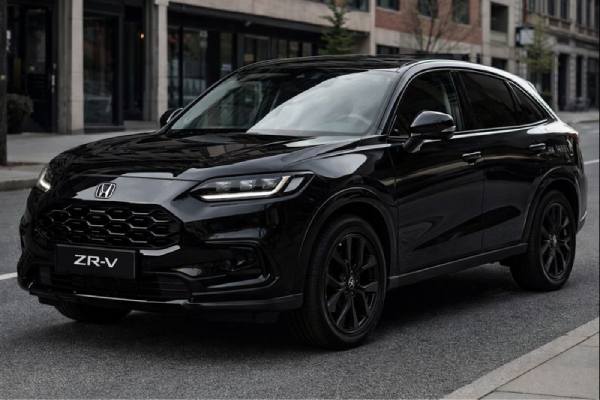
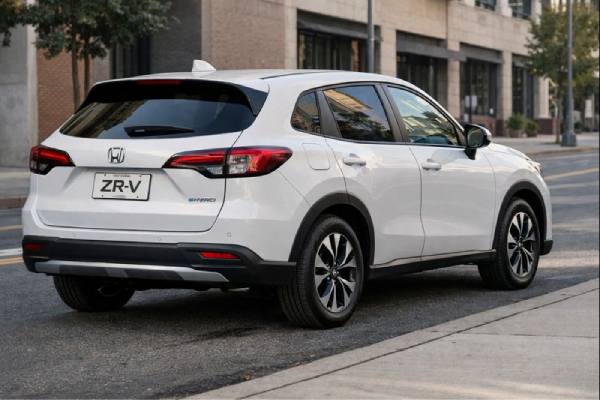
Honda’s ZR-V (RZ4) sits in a sweet spot: larger and more settled than a typical small SUV, but easier to place on the road than a full-size family crossover. In this hybrid (e:HEV) configuration, most everyday driving is motor-led, with the petrol engine working as a generator or coupling in at higher cruising speeds. The result is smooth pull-away, strong mid-speed response, and less “gear-hunting” feel than many conventional automatics.
For owners, the big story is how the ZR-V blends efficiency with an upscale cabin and a mature chassis tune. The trade-offs are the same ones most modern hybrids share: you’ll want to stay current on software updates, keep an eye on 12 V battery health, and avoid neglecting brake maintenance just because regenerative braking does much of the slowing. Done right, it can be a low-drama, high-comfort long-term car.
Quick Specs and Notes
- Smooth, motor-forward hybrid feel in town, with strong real-world mid-range response.
- Practical packaging for the class: 380 L boot seats-up and up to 1322 L seats-down (market-spec dependent).
- Efficient for its size: rated around 5.8 L/100 km (about 48.7 mpg UK) in the published combined figure.
- Keep software and driver-assist calibrations current after windscreen work or alignment changes.
- Plan on oil and filter service roughly every 12 months (or when the car’s maintenance system indicates), plus brake inspections at least once per year.
Guide contents
- Honda ZR-V RZ4 in-depth guide
- Honda ZR-V RZ4 specs and dimensions
- Honda ZR-V RZ4 trims, options, and ADAS
- Reliability, issues, and recalls
- Maintenance plan and buying tips
- Real-world driving and efficiency
- How it stacks up against rivals
Honda ZR-V RZ4 in-depth guide
The Honda ZR-V (RZ4) is best understood as a “comfort-first” hybrid SUV that still feels engineered, not softened. It’s tuned to be quiet at speed, stable in crosswinds, and predictable on imperfect roads—exactly the traits that make daily ownership feel easy after the novelty of a new car fades. The hybrid system is the headline feature, but the ZR-V’s real advantage is how well the powertrain, chassis, and driver-assistance are integrated.
In the 184 hp hybrid variant, the car typically drives like an EV at low loads: the traction motor does most of the work, while the petrol engine supplies electricity through a generator when needed. Under steady cruising, Honda’s system can couple the engine more directly to the wheels to reduce conversion losses. That operating strategy matters because it explains the ZR-V’s character: immediate response from a stop, smooth transitions, and fewer “rev flare” moments than you’d expect from a traditional CVT, even though the experience is often described as eCVT-like.
From an ownership lens, there are three practical benefits to this layout:
- Consistency in traffic: Smooth creep, clean low-speed modulation, and strong mid-speed acceleration are easy to access without chasing the right gear.
- Brake wear can be lower—but not zero: Regenerative braking reduces friction brake use, yet calipers, pads, and slide pins still need periodic cleaning and lubrication to prevent sticking or corrosion, especially if the car does mostly short urban trips.
- Fewer drivetrain complexity points than a multi-gear hybrid: You’re not relying on many shift elements to deliver performance. That can reduce some long-term “shift quality” complaints, although software updates become more important.
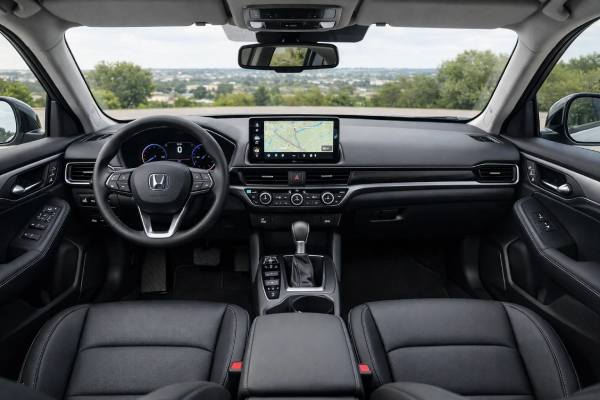
The ZR-V also leans premium inside for the segment, with a mature seating position and a cabin layout that prioritizes visibility and ergonomics over flashy shapes. If you’re shopping crossovers because you do long highway runs, the ZR-V’s calmness and predictable lane discipline systems tend to stand out—assuming you keep sensors, cameras, and windscreen calibration in spec after repairs.
Overall, the ZR-V e:HEV is a strong fit for drivers who want hybrid efficiency but dislike the disconnected feel of some CVT-equipped SUVs. Treat it like a modern electrified car—keep software current, don’t skip brake service, and use the right fluids—and it should reward you with quiet, steady, low-effort miles.
Honda ZR-V RZ4 specs and dimensions
Below are the key technical figures for the Honda ZR-V (RZ4) hybrid as commonly published for the 2.0 hybrid configuration. Note that exact equipment, weights, and some capacities can vary by market, trim, wheel size, and regulatory test method.
Powertrain and efficiency (2.0 hybrid / e:HEV)
| Item | Spec |
|---|---|
| Code | LFC-H4 (as specified in this prompt) |
| Engine layout and cylinders | Inline-4 (I-4), DOHC, 4 valves/cyl |
| Bore × stroke | 81.0 × 96.7 mm (3.19 × 3.81 in) |
| Displacement | 2.0 L (1993 cc) |
| Induction | Naturally aspirated (NA) |
| Fuel system | Direct injection (DI) |
| Compression ratio | 13.9:1 |
| Electric motor | PMSM-type traction motor (front axle), single motor drive |
| System voltage | 262.8 V |
| Battery chemistry | Lithium-ion (Li-ion) |
| Max power (engine) | 143 hp (105 kW) @ 6000 rpm |
| Max torque (engine) | 186 Nm (137 lb-ft) @ 4500 rpm |
| Max power (motor) | 184 hp (135 kW) |
| Max torque (motor) | 315 Nm (232 lb-ft) |
| Rated efficiency | 5.8 L/100 km (40.6 mpg US / 48.7 mpg UK) |
| Real-world highway @ 120 km/h | Commonly ~6.2–7.2 L/100 km depending on temperature, tyres, and load (treat as a planning range) |
Transmission and driveline
| Item | Spec |
|---|---|
| Transmission | eCVT-style hybrid drive (single-speed motor drive with engine coupling at cruise) |
| Drive type | FWD |
| Differential | Open (typical for class; torque vectoring via brakes where fitted) |
Chassis and dimensions
| Item | Spec |
|---|---|
| Suspension (front/rear) | Not always published in consumer spec sheets; commonly strut front and multi-link rear in this class (verify per market spec) |
| Steering | Electric power steering; ratio varies by model year and wheel package (not always disclosed) |
| Brakes | 4-wheel discs (diameters vary by trim/market; verify if you’re matching parts) |
| Wheels and tyres | Most common fitments are 18–19 inch packages depending on trim; confirm size on door-jamb label |
| Ground clearance | Market-dependent and not consistently published; verify for your VIN |
| Length / width / height | 4568 / 1840 / 1620 mm (179.8 / 72.4 / 63.8 in) |
| Wheelbase | 2657 mm (104.6 in) |
| Turning circle (kerb-to-kerb) | 11.0 m (36.1 ft) |
| Kerb (curb) weight | ~1639 kg (3613 lb) |
| GVWR | Varies by market and wheel/option load rating (verify on VIN plate) |
| Fuel tank | 57 L (15.1 US gal / 12.5 UK gal) |
| Cargo volume | 380 L (13.4 ft³) seats up; 1322 L (46.7 ft³) seats down (method varies by standard) |
Performance and capability
| Item | Spec |
|---|---|
| Acceleration | 0–100 km/h (0–62 mph): 7.9 s |
| Top speed | 173 km/h (108 mph) |
| Braking distance | Not consistently published; tyre choice makes a large difference |
| Towing capacity | Market/type-approval dependent; verify your registration documents and handbook |
| Payload | Market- and trim-dependent; check VIN plate and tyre/load label |
Fluids and service capacities (owner-planning values)
Manufacturers often vary capacities by sump design, oil cooler, and service method. Use these as decision-making guides only, and verify against official service data for your VIN.
| Item | Spec (typical planning guidance) |
|---|---|
| Engine oil | Honda-spec 0W-20 (common for modern Honda hybrids); capacity varies by drain/fill method |
| Coolant | Honda long-life coolant (premix or specified mix ratio per market); capacity varies by model |
| Transmission/ATF | Hybrid drive fluid spec varies; follow Honda-approved fluid for your exact unit |
| A/C refrigerant | Type/charge depends on market regulation; check under-bonnet label |
| Key torque specs | Wheel nuts are commonly around 108 Nm (80 lb-ft) on many Hondas; confirm for your wheels |
If you’re choosing parts (pads, rotors, filters), always match by VIN and brake package rather than relying on a single “ZR-V” listing—this is one of the easiest ways to avoid fitment mistakes.
Honda ZR-V RZ4 trims, options, and ADAS
Most markets position the Honda ZR-V hybrid with a small, sensible trim walk—enough choice to match budget and comfort expectations without turning ordering into a research project. In the UK and many European-style lineups, you’ll commonly see grades along the lines of Elegance, Sport, and Advance (names and exact bundles vary by country). The powertrain is usually consistent across trims in the 2.0 hybrid range, so your decision is more about comfort features, wheels, lights, and driver-assistance packaging.
Trims and option differences that matter
When you compare trims, focus on the items that affect long-term satisfaction and running costs:
- Wheel and tyre package: Larger wheels can sharpen steering response but increase tyre replacement cost and sometimes add road noise. If you do lots of motorway miles, the “smaller wheel / taller sidewall” setup is often the quietest and most durable choice.
- Headlights: Higher trims may include more capable LED headlamp systems and automatic high beam. Better lighting is a real safety upgrade on dark rural roads—more so than many cosmetic options.
- Seat comfort and cabin features: Look for driver seat adjustment range, heating (and in some markets ventilation), and whether the passenger seat is height adjustable if that matters in your household.
- Infotainment and cameras: Parking cameras, sensor coverage, and the quality of the rear camera image vary by grade. If you live in a dense city, a clearer camera and front sensors reduce the daily “parking tax” on your patience.
- Glass and noise control: Some trims add acoustic glass or extra insulation. On a hybrid that can be very quiet at low load, small NVH (noise, vibration, harshness) differences become more noticeable.
Quick identifiers when shopping used
- Badging: “e:HEV” and trim-specific badges can help, but don’t rely on them alone—badges can be swapped.
- Wheels and headlights: Wheel design and headlamp signature are often the fastest “walk-around” identifiers for higher grades.
- Cabin tells: Seat material, presence of heating controls, and camera views in the infotainment menus can reveal what you’re looking at.
Safety ratings and what they mean
Euro NCAP assessed the ZR-V in 2023 and published results in December 2023. The ZR-V was described as just below the five-star thresholds, resulting in a four-star rating, with category scores of 79% adult occupant, 86% child occupant, 81% vulnerable road users, and 68% safety assist. In plain terms, structure and restraint performance are strong, while the driver-assistance score is more “good but not leading.”
ADAS and Honda Sensing considerations
Most ZR-V hybrids are sold with a comprehensive ADAS suite that typically includes:
- AEB (car, pedestrian, and cyclist detection), plus forward-collision warning
- Adaptive cruise control (ACC)
- Lane keeping and lane departure support (LKA/LKAS style functions)
- Traffic sign recognition and intelligent speed assistance support
- Blind-spot monitoring and rear cross-traffic alert in many trims/markets
Two ownership cautions matter here:
- Calibration after repair: Windscreen replacement, alignment changes, or front-end impacts can require camera/radar recalibration. A car can “drive fine” but behave oddly in lane support if calibration is off.
- Keep sensors clean: Modern AEB and ACC depend on clear sensor views. Winter grime and waxy residues can degrade performance.
Trim choice isn’t just luxury—it’s also about tyre costs, headlight performance, and how confident you feel with the safety tech day to day.
Reliability, issues, and recalls
The ZR-V (RZ4) is still a relatively new model generation (2023–present), so there’s less long-duration data than you’d have with an older, long-running platform. That said, its hybrid system is built on Honda’s established e:HEV approach, and many of the real ownership “issues” tend to be software, sensor calibration, or usage-pattern related rather than hard mechanical failures.
Below is a practical, workshop-style way to think about common concerns—grouped by prevalence and cost severity. Treat these as patterns to watch for, not guarantees.
Common (usually low to medium cost)
- Infotainment glitches or phone pairing instability
- Symptoms: intermittent Bluetooth drops, slow boot, camera delay
- Likely cause: software bugs, device compatibility
- Remedy: software update, delete and re-pair devices, check for head-unit resets after 12 V battery work
- Brake noise or uneven brake feel in light-use driving
- Symptoms: occasional squeal, slight grab after rain, surface rust
- Likely cause: regenerative braking reduces friction brake use; corrosion builds on rotors, slides get sticky
- Remedy: periodic firm stops (when safe), annual brake strip/clean/lube in wet or salted climates
- 12 V battery sensitivity
- Symptoms: random warning lights after sitting, slow start-up sequence, odd infotainment behavior
- Likely cause: low 12 V state-of-charge from short trips, accessory draw, or battery aging
- Remedy: battery test, ensure correct charging behavior, replace proactively if repeatedly weak (especially before winter)
Occasional (medium cost)
- Driver-assistance “misbehavior” after windscreen work or alignment
- Symptoms: lane centering feels nervous, ACC unavailable, camera/radar faults
- Likely cause: calibration required, sensor bracket alignment, or camera field-of-view issues
- Remedy: OEM calibration and diagnostic scan; confirm no DTCs remain
- Hybrid system warning events
- Symptoms: warning messages, reduced power, limp mode
- Likely cause: sensor faults, software logic, or transient low-voltage events
- Remedy: scan for codes, confirm 12 V health first, apply official updates
Rare (higher cost, but important)
- High-voltage component faults (contactors, DC–DC, inverter cooling)
- Symptoms: “hybrid system” warnings, no-ready condition, reduced EV operation
- Likely cause: component failure or cooling issues
- Remedy: dealer-level diagnosis; these are warranty-relevant on newer cars
Service actions, recalls, and how to verify
Because recall status varies by VIN and country, the most reliable process is:
- Check the manufacturer’s recall/update portal using your VIN.
- Cross-check national recall databases where applicable.
- Ask for dealer printout showing completed campaigns and software versions.
If you’re shopping used, treat “it has no recalls” as something to verify, not assume. Also ask specifically about software updates related to hybrid control, braking, and driver-assistance—manufacturers often fix annoyances via calibration changes long before a problem becomes a formal recall.
Pre-purchase checks worth requesting
- Full service history plus proof of any product updates/recalls completed
- Brake service evidence (especially if the car has lived in a wet/salty climate)
- Diagnostic scan for stored/pendant faults, not just warning lights
- Confirmation that windscreen or front-end repairs (if any) included ADAS calibration
The good news: most “issues” you’ll encounter are manageable if you approach the ZR-V like the modern, software-driven hybrid it is—and if you keep routine maintenance from slipping because the car feels so effortless.
Maintenance plan and buying tips
A hybrid ZR-V can be very low-drama, but it rewards owners who follow two rules: service by time as well as distance, and don’t ignore the non-engine parts just because the engine runs less. Use the car’s maintenance system (and your local Honda schedule) as the final authority, but the outline below works well as a real-world planning guide.
Practical maintenance schedule (distance/time)
Every 10,000–20,000 km (6,000–12,500 miles) or 12 months (whichever comes first):
- Engine oil and filter (use the specified grade; many Honda hybrids call for 0W-20 in many markets)
- Full inspection: tyres, brakes, steering, suspension, underbody checks
- Brake inspection and cleaning if you do short trips or live in wet/salted areas
Every 20,000–30,000 km (12,000–18,000 miles) or 24 months:
- Cabin air filter
- Engine air filter (sooner in dusty conditions)
- Brake fluid test; replace typically every 2–3 years depending on moisture content and local guidance
Every 60,000–100,000 km (37,000–62,000 miles):
- Coolant inspection and replacement per Honda interval (hybrids can have multiple cooling loops—verify exactly what your car uses)
- Transmission/hybrid drive fluid service if specified for your unit and usage pattern
- Alignment check (annually is smart if roads are rough or you run larger wheels)
Spark plugs:
- Often in the 100,000–160,000 km range for modern Honda engines, but verify your exact engine and market schedule.
Hybrid-specific checks (at every service):
- Check cooling system condition (radiators, pumps, and coolant quality)
- Inspect for corrosion around brake hardware due to regen-heavy driving
- Health check of the 12 V battery (especially before winter)
- Confirm software updates and ensure no stored hybrid or ADAS fault codes
Consumables and fluid choices
- Oil: Use the exact spec and grade listed for your VIN. The wrong oil can increase consumption or affect cold-start behavior.
- Coolant: Use Honda-approved long-life coolant; mixing types can reduce corrosion protection.
- Tyres: Choose tyres that match the vehicle’s load rating and are known for wet braking—this has a bigger safety impact than most “performance” mods.
Buyer’s guide: what to inspect
Body and chassis
- Look for underbody impacts and bent pinch welds (common on SUVs that meet tall kerbs)
- Check for corrosion hotspots if the car has lived near the coast or in heavy road-salt regions
Hybrid and drivability
- Test drive from cold: listen for abnormal noises, confirm smooth EV-to-engine transitions
- Ensure the car enters “ready” mode consistently and doesn’t throw intermittent warnings
- Watch for odd brake feel (sticky caliper symptoms) and confirm consistent stopping
Electronics and ADAS
- Verify cameras and sensors: ACC, lane assist, parking sensors, rear camera clarity
- Ask about any windscreen replacements and whether recalibration paperwork exists
Recommended trims and usage matching
- Long-distance and family use: prioritize comfort features, better headlights, and the quieter wheel/tyre package
- Urban-heavy use: prioritize parking aids and camera quality; plan regular brake cleaning
- Keep/avoid guidance: avoid examples with repeated warning-light history, unclear service records, or “cheap” windscreens without proof of ADAS calibration
Long-term durability outlook
The ZR-V’s hybrid system is designed to reduce drivetrain stress in stop-start conditions, but long-term satisfaction hinges on maintenance discipline: clean brakes, healthy 12 V power, correct fluids, and up-to-date software. If those boxes are ticked, the ZR-V is positioned to be one of the more “set-and-forget” hybrids in its class.
Real-world driving and efficiency
On the road, the ZR-V hybrid’s personality is defined by two things: a calm chassis and a powertrain that feels more electric than petrol in everyday use. In city driving, it often steps off smoothly and quietly, with the traction motor doing the heavy lifting. That motor-led feel is what many owners describe as “premium,” because it avoids the busy, shifting sensation common in small turbo SUVs.
Ride, handling, and NVH
- Ride quality: tuned for composure. It tends to absorb sharp edges better than many sportier rivals, especially on the more comfort-oriented wheel packages.
- Stability: strong straight-line stability at motorway speeds, with steady body control over long undulations.
- Steering: light to medium effort, predictable rather than chatty. It’s more “accurate” than “expressive,” which suits the car’s mission.
- Cabin noise: low-load cruising can be impressively quiet for the class; you’ll hear more tyre noise on coarse surfaces if you run larger wheels.
Powertrain character and transitions
Honda’s e:HEV approach aims to keep the engine in efficient operating zones, with electric drive covering transient demands. In practice:
- Throttle response: strong initial response from the motor, especially from 0–50 km/h.
- Passing performance: the motor torque makes 50–80 km/h and 80–120 km/h responses feel confident without needing a “kickdown.”
- Engine sound: under heavy demand the engine can rise in rpm and hold, which is normal for this style of hybrid control. It’s usually smoother than a typical CVT drone, but you’ll still notice it on long climbs.
Drive modes generally shift throttle mapping and regen feel more than they change outright power. If you prefer a “natural” brake pedal, spend time learning how the regen blends—most drivers adapt quickly, but it’s worth a few days of attention.
Real-world efficiency
Rated consumption figures are useful, but real driving varies with temperature, wheel size, and speed.
Typical ownership ranges (planning figures):
- City: often strong results because regen and motor drive shine in stop-start use
- Highway (100–120 km/h): expect consumption to rise; aerodynamic drag dominates at speed
- Cold weather: hybrids can lose noticeable efficiency in winter due to cabin heat demand and longer engine warm-up time
If you want the best motorway economy, two habits help:
- Keep tyres at correct pressure and choose low-rolling-resistance tyres when replacement time comes.
- Use ACC smoothly and avoid repeated aggressive accelerations—hybrids reward steady driving.
Braking feel and consistency
Because regen does a lot of the work, friction brakes can feel slightly “different” than a purely petrol car, especially at very low speeds where blending changes. The key is consistency: during a test drive, do several gentle stops and a couple of firmer stops. Any pulling, grinding, or pedal pulse should trigger a brake inspection before purchase.
Overall, the ZR-V’s driving experience is more mature than many compact SUVs: it’s quiet, confident, and easy to drive smoothly. If you prioritize comfort and consistency over sporty feedback, it’s a strong match.
How it stacks up against rivals
The ZR-V hybrid competes in a crowded space where many SUVs offer “good enough” at a lower price, while a few offer standout efficiency or standout space. The ZR-V’s competitive advantage is balance: it tends to feel more refined than value-focused rivals, while staying simpler than some plug-in alternatives.
Versus Toyota hybrid SUVs (C-HR, Corolla Cross, RAV4 Hybrid)
- Strength for Honda: the ZR-V often feels more motor-forward and smooth in transient driving, with a mature cabin and a planted chassis.
- Strength for Toyota: Toyota’s hybrid reputation is long established and some models offer AWD hybrid variants in certain markets.
- Decision point: if you want a calm, premium-feeling drive and like Honda ergonomics, ZR-V fits. If you want maximum hybrid variety (including AWD options), Toyota may have more configurations.
Versus Hyundai Tucson Hybrid and Kia Sportage Hybrid
- Strength for Honda: generally strong integration of powertrain and chassis, with a less “busy” feel on the motorway.
- Strength for Hyundai/Kia: often aggressive pricing, very strong infotainment feature lists, and sometimes longer warranty packages depending on market.
- Decision point: if you value a refined drive and “set-and-forget” comfort, ZR-V has appeal. If you want the most tech for the money, cross-shop carefully.
Versus Nissan Qashqai e-POWER (series-hybrid feel)
- Strength for Honda: proven multi-mode hybrid strategy and generally very natural road manners.
- Strength for Nissan: e-POWER can feel especially EV-like in how the engine decouples from the wheels, depending on conditions.
- Decision point: both aim for EV-like response without plugging in. Choose based on test-drive feel, cabin ergonomics, and local service support.
Versus Mazda CX-5 (non-hybrid) and other petrol-only SUVs
- Strength for Honda: fuel economy and low-speed smoothness, especially in traffic-heavy use.
- Strength for Mazda/petrol-only: sometimes simpler under-hood layout and a more “traditional” power delivery feel; often strong steering feel.
- Decision point: if you do lots of city driving or mixed commuting, the ZR-V hybrid advantage grows. If you do mostly open-road driving and prefer a conventional drivetrain, a petrol SUV can still be compelling.
The short verdict
Pick the ZR-V hybrid if you want:
- A refined, quiet compact SUV feel without stepping up to a bigger class
- Hybrid efficiency that benefits real commuting, not just test cycles
- A cohesive driving experience with strong everyday usability
Look harder at alternatives if you need:
- AWD availability in your market
- Maximum boot space or towing capability in this size class
- A plug-in hybrid for regular short EV-only trips
In the right use case—mixed driving, regular commuting, and a preference for comfort—the ZR-V e:HEV is one of the most “complete” hybrids in its segment.
References
- Honda ZR-V Hybrid 2023 Specs, Dimensions & Interior | Honda 2023 (Specifications)
- Euro NCAP | Safety must come first as big and bold SUVs continue to hit the market 2023 (Safety Rating)
- Honda Owners | Recalls and Updates | Honda UK 2026 (Recall Database)
- Check if a vehicle, part or accessory has been recalled – GOV.UK 2026 (Recall Database)
- e:HEV – Original Honda Hybrid System | Honda Technology | Honda Global 2026 (Technical Guide)
Disclaimer
This article is for informational purposes only and is not a substitute for professional diagnosis, inspection, or repair. Specifications, torque values, service intervals, and procedures can vary by VIN, market, model year, and installed equipment. Always verify details using your official owner’s manual, service manual, and manufacturer guidance for your exact vehicle.
If you found this guide useful, please consider sharing it on Facebook, X (Twitter), or your favorite forum—your support helps us keep publishing detailed, practical ownership content.