
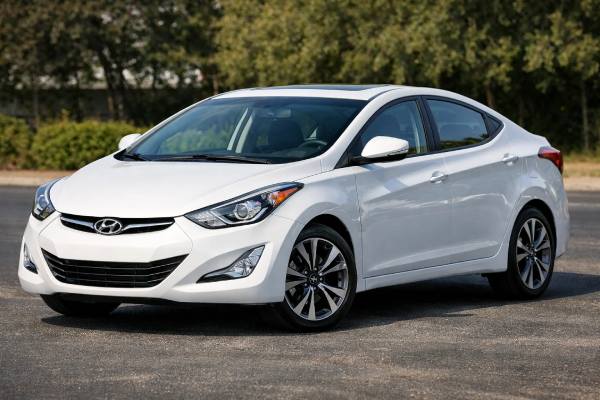
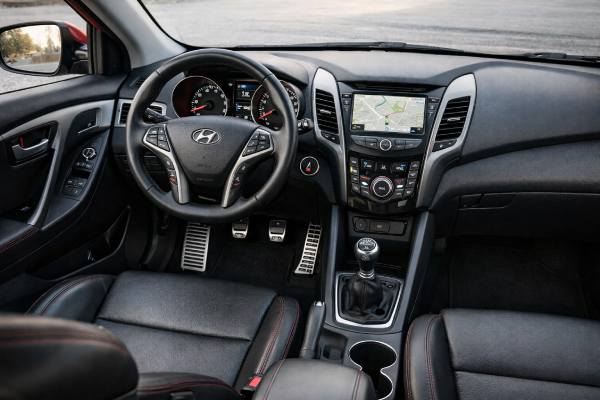
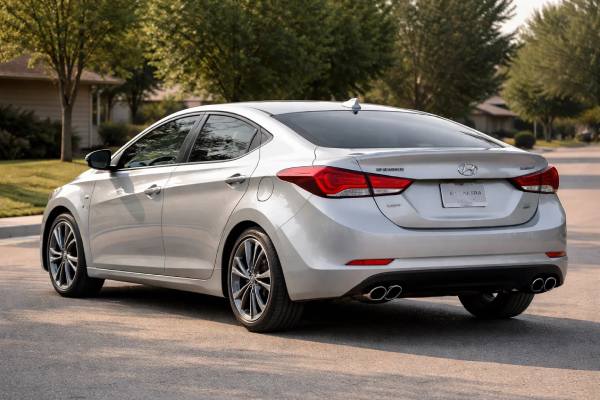
The facelifted 2014–2016 Hyundai Elantra Sport is the sharper end of the UD sedan range, but it is important to understand what kind of “sport” car it really is. This is not a full sport sedan in the Civic Si sense. It is a better-equipped Elantra with a stronger 2.0-litre direct-injected Nu engine, firmer suspension and steering calibration, larger wheels, and a cleaner feature set for drivers who wanted more punch than the standard 1.8 offered. The 166 hp figure in this title reflects the lower-output PZEV form sold in some markets, while the standard federal version was rated higher. Either way, the ownership story is similar. The Elantra Sport blends good interior space, useful fuel economy, and simple front-wheel-drive packaging with just enough extra urgency to feel worthwhile. The watch-outs are also clear now: direct-injection maintenance, known Nu-engine campaign history, and the difference between a well-serviced car and a cheap one.
Top Highlights
- The 2.0 GDI engine gives the Sport meaningfully stronger mid-range pull than the standard 1.8-litre Elantra.
- Sport-tuned steering and suspension, 17-inch wheels, and the rear spoiler make it the most focused sedan version of this generation.
- Cabin space and trunk room remain genuine strengths, so it still works well as a daily family car.
- The main ownership caveat is engine history: certain 2.0 GDI cars need careful checking for campaign and warranty-extension eligibility.
- A sensible baseline is engine oil and filter every 10,000–12,000 km or 12 months, with closer attention if the car sees short trips or hard use.
Jump to sections
- Hyundai Elantra Sport facelift focus
- Hyundai Elantra Sport 2.0 facts
- Hyundai Elantra Sport grades and safety
- Reliability issues and factory actions
- Service plan and buying advice
- Daily driving and real performance
- Where it stands against rivals
Hyundai Elantra Sport facelift focus
The facelifted UD Elantra Sport arrived for the 2014 model year as Hyundai’s answer to buyers who liked the regular Elantra’s roominess and value but wanted a little more energy from the powertrain and chassis. That matters because the Sport is not a separate performance platform. It keeps the same light, efficient sedan structure that made the standard Elantra popular, but adds the larger 2.0-litre Nu GDI engine, recalibrated steering, firmer dampers and rear springs, a larger front stabilizer bar, and more aggressive trim details. Hyundai also backed those mechanical changes with cosmetic cues that were easy to spot: two-tone 17-inch alloys, projector headlights with LED accents, LED taillights, a rear spoiler, aluminum pedals, and Sport-specific exterior detailing.
That combination gives the Sport a clearer identity than many trim-level “appearance packages.” The biggest difference is under the hood. While the regular 2014–2016 sedan centered on the 1.8 MPI engine, the Sport used the 2.0-litre Nu GDI four-cylinder. In standard federal form it was rated at 173 horsepower and 154 lb-ft, but the PZEV form used in some states was rated at 166 horsepower and 148 lb-ft. The title of this guide follows that lower output because it is the rating many used buyers will see in listings and state-specific documentation. The important point is that the Sport’s engine has a noticeably broader, stronger feel than the 1.8, particularly once the tach passes the middle of the rev range.
The facelift itself also matters. Hyundai did more than change bumpers. The 2014 refresh brought new front and rear styling, revised foglamp treatment, more sound insulation, a reworked cabin layout, and broader infotainment availability. The Sport trim also received a 4.3-inch touchscreen with rearview camera as standard early in the run, while later packaging updates added features such as proximity key entry, heated front seats, and optional navigation depending on year and transmission. By 2016, Hyundai also altered the Sport’s standard equipment mix to lower its starting price, which is why some 2016 cars look slightly less lavish than earlier ones even though the mechanical formula remained the same.
What makes the Sport worth considering today is that it still lands in a useful sweet spot. It is quicker and more distinctive than the normal Elantra, but not burdened with turbocharging, all-wheel drive, or a dual-clutch gearbox. The sedan remains roomy, efficient, and easy to park. In other words, the Sport version improves the everyday Elantra rather than replacing it with something compromised. That is a good formula for used ownership, provided the car has the paperwork and condition to match the badge.
Hyundai Elantra Sport 2.0 facts
Because this facelift range spans 2014 through 2016, and because Hyundai sold both federal and PZEV versions of the Sport’s 2.0 GDI engine, the specification picture needs one clear note. The Sport sedan is mechanically the same concept throughout the run, but power output differs by emissions calibration. Standard federal cars were rated at 173 hp and 154 lb-ft, while Elantra Sport PZEV versions were rated at 166 hp and 148 lb-ft. This guide follows the 166 hp title while identifying the shared hardware around it.
Powertrain and efficiency
| Item | Hyundai Elantra Sport (UD) 2.0 GDI |
|---|---|
| Code | Nu 2.0 GDI |
| Engine layout and cylinders | Inline-4, transverse, 4 cylinders |
| Valvetrain | DOHC, D-CVVT, 4 valves per cylinder |
| Bore × stroke | 81.0 × 97.0 mm (3.19 × 3.82 in) |
| Displacement | 2.0 L (1,999 cc) |
| Induction | Naturally aspirated |
| Fuel system | Gasoline direct injection |
| Compression ratio | About 11.5:1 |
| Max power | 166 hp (124 kW) @ 6,500 rpm for Sport PZEV; 173 hp (129 kW) @ 6,500 rpm in standard federal form |
| Max torque | 201 Nm (148 lb-ft) @ 4,700 rpm for Sport PZEV; 209 Nm (154 lb-ft) @ 4,700 rpm in standard federal form |
| Timing drive | Chain |
| Rated efficiency | Around 8.4 L/100 km combined (28 mpg US / 33.6 mpg UK) |
| Official city / highway | 9.8 / 6.7 L/100 km auto (24/35 mpg US); manual highway usually one mpg lower |
| Real-world highway @ 120 km/h (75 mph) | Usually about 6.9–7.8 L/100 km in a healthy sedan |
Transmission and driveline
| Item | Hyundai Elantra Sport (UD) 2.0 GDI |
|---|---|
| Transmission | 6-speed manual or 6-speed automatic |
| Drive type | Front-wheel drive |
| Differential | Open front differential |
Chassis and dimensions
| Item | Hyundai Elantra Sport (UD) sedan |
|---|---|
| Suspension front / rear | MacPherson strut / coupled torsion beam |
| Steering | Column-mounted motor-driven electric power steering |
| Steering tune | Sport-specific steering and suspension calibration |
| Brakes | Ventilated front discs about 280 mm (11.0 in), solid rear discs about 262 mm (10.3 in) |
| Wheels and tyres | Most common Sport fitment: 215/45 R17 |
| Length / width / height | 4,529 mm (178.3 in) / 1,775 mm (69.9 in) / 1,435 mm (56.5 in) |
| Wheelbase | 2,700 mm (106.3 in) |
| Turning circle | 10.6 m (34.8 ft) |
| Kerb weight | Roughly 1,260–1,320 kg (2,778–2,910 lb), depending on gearbox and equipment |
| Fuel tank | 48 L (12.68 US gal / 10.56 UK gal) |
| Cargo volume | 419 L (14.8 ft³), seats up |
| Ground clearance | Not consistently published in the open manufacturer sources reviewed |
Performance and capability
| Item | Hyundai Elantra Sport (UD) 2.0 GDI |
|---|---|
| 0–100 km/h (0–62 mph) | About 8.5–9.0 s, depending on gearbox and emissions tune |
| Top speed | About 200–205 km/h (124–127 mph) |
| Braking distance | No single official open figure confirmed |
| Towing capacity | Often not officially rated in U.S. literature; verify by VIN and market if relevant |
| Payload | Generally in the 420–480 kg class, depending on trim and gearbox |
Fluids and service capacities
| Item | Practical guidance |
|---|---|
| Engine oil | API SM or better; commonly 5W-20 or 5W-30 depending on climate and market |
| Engine oil capacity | About 4.0 L (4.2 US qt) with filter |
| Coolant | Ethylene glycol-based coolant, usually 50/50 mix |
| Coolant capacity | About 5.9 L (6.23 US qt) |
| Manual transmission fluid | Hyundai-approved manual transmission oil, verify exact grade by VIN |
| Automatic transmission fluid | Hyundai ATF SP-IV or VIN-specified equivalent |
| A/C refrigerant | R-134a |
| A/C refrigerant charge | Verify under-hood label before service |
| A/C compressor oil | PAG type matched to the compressor, verify by label |
| Key torque specs | Wheel nuts 90–110 Nm (66–81 lb-ft); oil drain plug about 39 Nm (29 lb-ft) |
Safety and driver assistance
| Item | Hyundai Elantra Sport (UD) sedan |
|---|---|
| IIHS | Top Safety Pick; Good in moderate overlap front, side, roof strength and head restraints; Acceptable in driver-side small overlap |
| ANCAP | 5 stars for the same generation test family |
| Headlight rating | Not part of the test protocol used here |
| ADAS suite | No AEB, ACC, lane-keeping or blind-spot monitoring in the modern sense |
The Sport’s core appeal shows up clearly in these numbers. It is still a compact sedan with modest operating costs and everyday practicality, but it adds enough engine and chassis substance to feel distinct from the standard 1.8-litre car.
Hyundai Elantra Sport grades and safety
For this article, the baseline region is the United States, because that is where the facelifted Elantra Sport sedan was most clearly defined as a separate trim. In that context, the Sport sits above the regular SE in powertrain intent and below a full performance car in mechanical ambition. It is best described as the enthusiast-leaning trim within a mainstream sedan lineup. That means equipment differences matter more than some buyers expect.
The 2014 Sport entered the range with the 2.0 GDI engine as its headline feature, but Hyundai made sure the trim looked and felt different as well. Sport-specific exterior cues included 17-inch two-tone alloy wheels, projector headlights with LED accents, LED taillights, chrome beltline trim, a visible exhaust tip, and a rear spoiler. Inside, it gained Sport-specific details like aluminum pedals and aluminum door-sill plates, while also benefitting from the facelifted dashboard layout and improved infotainment. In early Sport trim form, the 4.3-inch color touchscreen and rearview camera were standard, which was a useful feature edge in this class at the time.
The 2015 model year kept the same basic formula but added a new Tech Package for the Sport, available with the automatic transmission. That package moved the car closer to a premium compact feel rather than a stripped-back sport trim. Navigation, a larger screen, and added convenience content made the Sport a more complete car for buyers who wanted more than just the larger engine. That matters today because it means a used Sport can vary quite a bit in specification even when the badge on the trunk lid is identical.
For 2016, Hyundai revised the value equation again. The Sport lost some standard luxury content, including standard leather seating and the standard power sunroof, to lower its starting price. That means 2016 examples can be a little more mechanical and a little less upscale than earlier Sport models, even though the engine, wheel package, and sport-tuned suspension and steering remained the same. A buyer who wants the richest equipment mix may actually prefer a well-kept 2014 or 2015 Sport, while a buyer who wants the simplest, lowest-cost Sport might like a later cloth-seat car better.
Safety is strong by segment standards for the time, though the Sport does not gain a special safety tune separate from the rest of the sedan line. IIHS results for the 2011–2016 sedan family are respectable, with Good ratings in moderate-overlap front, side, roof strength, and head restraints, plus an Acceptable result in driver-side small overlap. That was enough for the Elantra sedan to qualify as a Top Safety Pick in the applicable IIHS criteria set. ANCAP also rated the generation at 5 stars. The important caveat is that these ratings apply to the broader sedan family, not a unique Sport crash program.
Safety equipment on the Sport typically included six airbags, ABS, electronic stability control, traction control, four-wheel disc brakes, active front head restraints, hill-start assist, and a driver’s blind-spot mirror on the facelifted line. What it did not include was modern driver assistance. There is no factory autonomous emergency braking, adaptive cruise, lane-centering, or blind-spot warning system in the current sense. So if you are buying one now, safety depends far more on condition, tyre quality, brake health, and whether any crash repairs were done correctly than on trim brochures alone.
Reliability issues and factory actions
The Elantra Sport’s reliability story starts with the engine. The 2.0 GDI Nu engine gives the Sport its character, but it is also the system that demands the most serious used-car scrutiny. Not every engine fails, and many cars run well for a long time, but this is not a range where you should shrug off warning noises or vague service histories. Hyundai later added both KSDS software coverage and an engine warranty extension for certain 2014–2016 Elantras with the Nu 2.0 GDI engine, which tells you immediately that this is the area to verify first.
The most important issue is connecting-rod-bearing and related engine damage on certain cars. Symptoms can include abnormal knocking, a flashing check-engine light, DTC P1326, or a limp-home condition triggered by the knock-sensor detection logic. Some cars show warning through persistent lower-end noise; others first show oil-consumption complaints or rough operation. If the car has received the KSDS update and qualifies under the extended warranty program, Hyundai’s framework gives owners a clearer path to diagnosis and possible repair. From a buyer’s standpoint, this means you should ask specifically whether the car has received Campaign 966 or its updated equivalent and whether any engine or short-block work has already been performed.
Direct injection adds its own layer of normal maintenance concerns. Because this is a GDI engine, intake-valve deposit build-up over time is more likely than on a port-injected engine. That does not mean every Elantra Sport needs immediate intake cleaning, but it does mean that rough idle, cold stumble, and declining response on higher-mileage cars should not automatically be blamed on bad fuel or old plugs. Likewise, oil consumption complaints should be treated seriously. Hyundai later published inspection and repair guidance for excessive oil consumption across multiple engine families, and Nu-engine owners who ignore rising oil use do themselves no favors.
The rest of the car is more ordinary. The 6-speed automatic is usually durable when maintained, but harsh or lazy shifting on a neglected car deserves attention. The manual is simpler and generally the safer long-term bet, though clutch wear is normal on abused cars. Front-end wear is also predictable rather than alarming: stabilizer links, strut mounts, bushings, and tyres can all affect the way the Sport feels. Brake drag or uneven pad wear can creep in when slider service has been skipped. The electric steering system can also develop column-related noises, especially on earlier cars, though the severity ranges from minor annoyance to something worth repairing promptly.
A practical reliability map looks like this:
| Issue | Prevalence | Severity | Typical symptoms | Likely remedy |
|---|---|---|---|---|
| Nu 2.0 GDI bearing or lower-end engine issue | Occasional but high-impact | High | Knock, P1326, flashing MIL, limp mode | KSDS check, bearing inspection, engine repair or replacement if eligible |
| Excessive oil consumption | Occasional | Medium to high | Falling oil level, smoke, noisy top end or lower end | Oil consumption test, leak check, repair per service procedure |
| Intake-valve carbon build-up | Occasional | Medium | Rough idle, cold hesitation, reduced response | Intake cleaning and tune-up work |
| MDPS coupler or steering-column noise | Occasional | Low to medium | Click, thud, light knock when steering at low speed | Coupler or column component service |
| Automatic-transmission neglect | Occasional | Medium | Harsh shifts, flare, delayed engagement | Fluid service and diagnosis before damage grows |
| Suspension wear | Common | Low to medium | Clunks, poor tyre wear, vague response | Links, bushings, mounts, dampers, alignment |
| Brake drag or uneven wear | Common | Medium | Pulling, hot wheel, uneven pad wear | Caliper service, pads, discs, fluid |
| Open recall or service campaign | Occasional | High | Sometimes no symptom | Verify by VIN and complete all open campaigns |
Factory actions matter here. In addition to the KSDS-related campaign and powertrain warranty extension, buyers of 2014–2015 cars should also verify whether the ABS-module recall work was ever completed where applicable. The safest approach is to treat recall and campaign history as part of the car’s service history, not a separate paperwork footnote.
Service plan and buying advice
A good maintenance plan for the Elantra Sport starts with one basic rule: do not treat it like a disposable compact just because it was affordable when new. The 2.0 GDI engine wants clean oil, regular checks, and honest servicing. The good news is that the car itself is still fairly simple. The engine is naturally aspirated, the timing drive is a chain, the rear suspension is compact and durable, and the front-wheel-drive layout is familiar to any competent independent workshop.
A practical schedule for real ownership looks like this:
| Item | Practical interval |
|---|---|
| Engine oil and filter | Every 10,000–12,000 km or 12 months |
| Engine air filter | Inspect every service, replace about every 20,000–30,000 km |
| Cabin air filter | Every 15,000–20,000 km or yearly |
| Spark plugs | Inspect at major service and replace to schedule; use idle quality as a clue |
| Timing chain | No routine replacement interval; inspect if noisy, poorly maintained, or if timing faults appear |
| Coolant | Every 3–5 years |
| Brake fluid | Every 2 years |
| Automatic transmission fluid | Preventive service is wise on older cars despite “lifetime” language |
| Manual transmission oil | About every 60,000–90,000 km |
| Accessory belt and hoses | Inspect yearly |
| Brake pads, discs, calipers, and slider pins | Inspect every service |
| Tyre rotation | About every 10,000 km |
| Wheel alignment | Yearly or when wear and pull appear |
| 12 V battery and charging test | Yearly after year 4 of battery life |
Fluid guidance is straightforward but still worth doing carefully. Engine oil fill is about 4.0 L with filter. Coolant capacity is roughly 5.9 L and should use the correct ethylene glycol-based mix. Automatic cars need the correct Hyundai-spec fluid for the 6-speed automatic, not a lazy “universal” substitute. Wheel nuts belong in the 90–110 Nm range, and even small jobs like drain-plug tightening matter because stripped threads and over-tightened service parts create needless problems.
For buyers, inspection order matters. Start cold. Listen for knock before the car fully warms up. Check the oil level and condition before the test drive, not after. Then verify steering feel at parking speed, because this is when coupler or column noises show themselves most clearly. On the road, pay attention to throttle response, idle stability at the first stop, transmission behavior, brake pull, and whether the car tracks straight under light braking and on a steady cruise.
A smart buyer’s checklist looks like this:
- Confirm KSDS or related service-campaign completion.
- Ask directly about any engine replacement, short-block work, or oil-consumption testing.
- Check for cold-start knock, not just warm-engine smoothness.
- Verify the transmission shifts cleanly hot and cold.
- Inspect tyres for matching brands and even wear.
- Check steering for click or thud at low speed.
- Inspect suspension for front-end noise and rear shock fatigue.
- Confirm recall completion by VIN.
- Review maintenance records for annual oil service, not vague owner memory.
- Look for signs of cheap reconditioning, like bargain tyres and skipped brake service.
The best Elantra Sport is usually not the cheapest one. It is the one with a boring file full of real maintenance and campaign records. The years to prefer depend on your priorities. A 2014 or 2015 can offer richer standard Sport equipment, while a 2016 may be slightly simpler and cheaper to buy. In both cases, engine history matters more than trim-year trivia. Long-term durability is decent when the car has been maintained with discipline. It falls off quickly when owners assume the badge alone makes it low-risk.
Daily driving and real performance
The Elantra Sport drives the way its name suggests only if you keep expectations realistic. It is noticeably livelier than the ordinary 1.8-litre Elantra, but it is still a front-wheel-drive compact sedan tuned for everyday use first. That is not a criticism. In fact, it is why the Sport works so well as a used daily. It offers more power, slightly sharper responses, and better-looking hardware without becoming tiring or expensive to live with.
The 2.0 GDI engine is the center of the experience. In standard federal tune it feels properly stronger than the 1.8, while the 166 hp PZEV version still has enough improvement to make the Sport feel worthwhile. The extra displacement and torque help most in the mid-range. This is not a torque-rich turbo engine, but it has a cleaner, fuller response once you are above a gentle cruise and ask for real acceleration. Around town it feels easy. On the highway it feels more confident than the smaller engine when passing or climbing grades. The manual gearbox suits the engine better if you enjoy involvement. The automatic is smoother and perfectly workable, but it makes the car feel more like a well-equipped commuter than a sporty sedan.
Handling is best described as tidier rather than transformed. Hyundai’s sport-tuned suspension and steering calibration improve the car, and the stiffer dampers, rear springs, and larger front bar make the Sport feel more settled than a regular Elantra. Turn-in is cleaner, body roll is better controlled, and the 17-inch tyres add response. But the underlying torsion-beam rear layout and comfort-oriented platform still show through. Push hard on a rough road and the car reminds you that it is a sharpened compact sedan, not a true performance model. The electric steering is accurate enough, though it still lacks the rich feedback of the best cars in this class.
Ride quality remains good, especially compared with sport-themed rivals that lean too hard on low-profile tyres and stiff bushings. The Sport is firmer than a base Elantra but not punishing. That makes it easy to recommend to people who want one car to do everything. Commute, errands, family use, and the occasional back-road drive all fit the brief.
Fuel economy is also strong enough to justify the badge. Official U.S. ratings for the 2.0 Sport center around 24 mpg city and 34–35 mpg highway depending on transmission. In real use, healthy cars usually land around 8.0–9.5 L/100 km in town, 6.9–7.8 L/100 km at a steady 120 km/h highway pace, and roughly 7.5–8.6 L/100 km in mixed driving. Short cold trips, carbon build-up, worn tyres, or a lazy automatic can move those numbers in the wrong direction. But when maintained, the Sport still offers better performance than the 1.8 without becoming expensive to fuel.
That is the Elantra Sport’s real dynamic verdict: it is quick enough to feel rewarding, comfortable enough to live with, and efficient enough to stay sensible. For many owners, that balance matters more than absolute excitement.
Where it stands against rivals
Compared with the Mazda3 2.5, the Elantra Sport is the calmer and less charismatic option. The Mazda is the better driver’s car, with more steering feel and a more eager chassis. It also feels more deliberately tuned around driver engagement. The Hyundai answers with better rear-seat and trunk packaging, a softer everyday ride, and a slightly more relaxed ownership character. If you want the more entertaining compact, the Mazda wins. If you want a roomier, lower-stress sedan with a decent power bump over the base engine, the Elantra Sport stays very competitive.
Against the Honda Civic from the same period, the Hyundai again trades badge strength for value and space. The Civic generally feels a little more polished and holds resale better. The Elantra counters with a larger-feeling cabin, a broader feature set in many used examples, and a stronger value case per dollar spent. The Sport trim also gives Hyundai a more distinct middle ground between basic commuter and true performance model, even if it never reaches Civic Si levels of focus.
The Toyota Corolla S is perhaps the clearest contrast. Toyota’s reputation for durability remains powerful, and buyers who want the least controversial choice still gravitate there. But the Elantra Sport usually feels more interesting and more generously equipped. Its 2.0 GDI engine gives it a performance advantage over many Corolla trims of the same era, and the Hyundai’s cabin space remains a strong practical edge. The Corolla is the safer emotional purchase. The Elantra Sport is often the more satisfying rational purchase when condition is equal.
The Kia Forte deserves mention because it shares corporate DNA and often ends up on the same shopping list. Depending on trim and engine, the Forte can deliver a similar value story, but the Elantra Sport sedan often feels slightly cleaner in packaging and more coherent as an all-rounder. They are close enough that condition and price matter more than theoretical differences.
That really sums up the Elantra Sport’s place in the market. It is not the class hero for raw pace, and it is not the class leader for bulletproof reputation. What it offers instead is a useful mix of real space, decent power, respectable economy, and straightforward daily usability. For buyers who want a compact sedan that feels a little sharper than average without becoming demanding, the Sport remains easy to justify.
The final verdict is simple. A good Elantra Sport is a genuinely appealing used compact. A bad one is defined almost entirely by ignored maintenance and missing campaign history. That makes inspection more important than excitement. Choose carefully, and the Sport badge still means something worthwhile.
References
- REFRESHED 2014 ELANTRA ARRIVES AT LOS ANGELES AUTO SHOW WITH NEW GDI ENGINE, DYNAMIC DESIGN AND HOST OF NEW FEATURES 2013 (Manufacturer Specifications)
- 2015 ELANTRA BRINGS FEATURE-PACKED VALUE TO SHOPPERS 2014 (Manufacturer Specifications)
- 2014 Hyundai Elantra 2026 (Safety Rating)
- 2015 Hyundai Elantra 2026 (Fuel Economy)
- powertrain extended warranty 2026 (Warranty Extension)
Disclaimer
This article is for informational purposes only and is not a substitute for professional diagnosis or repair. Specifications, torque values, intervals, and procedures vary by VIN, market, emissions calibration, trim, and equipment, so always verify the correct details against official service documentation before servicing, repairing, or buying a vehicle.
If this guide helped you, please consider sharing it on Facebook, X, or another social platform to support our work.