
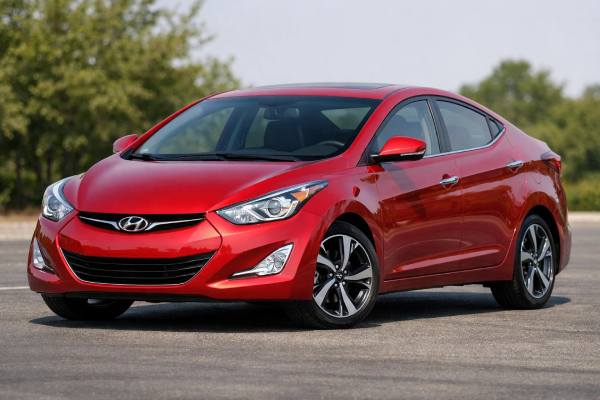
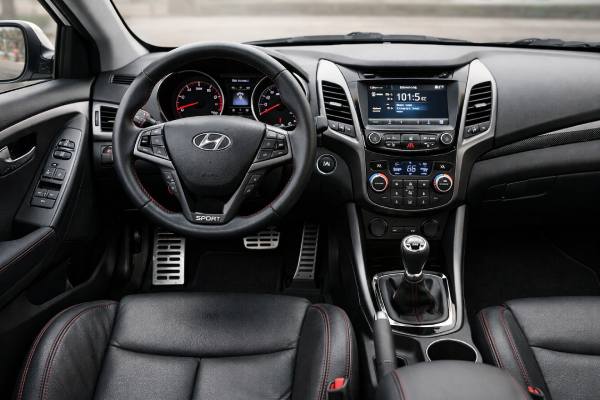
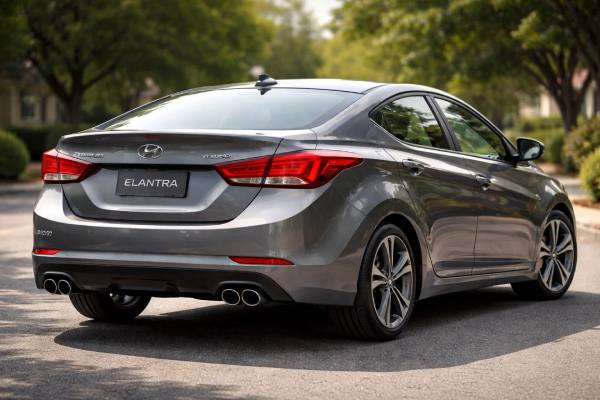
The facelift-era Hyundai Elantra Sport is one of the more interesting compact sedans Hyundai built before the later turbocharged Sport and N Line models arrived. In 2014–2016 form, this 173 hp version paired the updated Elantra body with a 2.0-litre GDI engine, sharper steering and suspension tuning, and a useful mix of comfort and everyday practicality. That balance is what still makes it appealing. The car is quicker and better equipped than a regular 1.8 Elantra, but it stays simpler than newer turbocharged alternatives. There is no forced induction, no dual-clutch gearbox, and no complicated adaptive chassis hardware. The trade-off is that ownership depends heavily on maintenance history. Oil-change discipline, recall completion, cooling-system condition, and engine-noise checks matter more than cosmetics. If you want an inexpensive compact with solid safety equipment, good highway manners, and a little extra punch, the Elantra Sport still deserves a serious look.
Core Points
- The 2.0 GDI Sport gives the facelift Elantra a clear performance step over the standard 1.8-litre car.
- Standard safety equipment is strong for the class, with stability control, traction control, and four-wheel disc brakes.
- Sport-specific steering and suspension tuning make it feel sharper than a regular Elantra without ruining comfort.
- The main ownership caution is the Nu 2.0 GDI engine’s known bearing-related warranty-extension history on some cars.
- A smart oil-service interval is every 6,000 to 10,000 km or 6 to 12 months, depending on use.
Contents and shortcuts
- Hyundai Elantra Sport UD Profile
- Hyundai Elantra Sport UD Specs
- Hyundai Elantra Sport UD Trim and Safety
- Common Troubles and Service Campaigns
- Maintenance Routine and Buyer’s Checklist
- On-Road Feel and Consumption
- How It Stacks Up Against Rivals
Hyundai Elantra Sport UD Profile
The facelift Elantra Sport sits in an unusual but useful niche. Hyundai did not build it as a true sport compact in the mold of a Civic Si or a later Elantra Sport 1.6T. Instead, it created a stronger, better-equipped version of the regular Elantra that added power, chassis tuning, and visual upgrades without turning the car into a demanding daily driver. That makes the 2014–2016 Sport easy to understand even now. It is a warm compact sedan, not a hardcore one.
This version matters because Hyundai’s standard facelift Elantra was already a competent car. The 2014 refresh sharpened the front and rear styling, updated lighting and trim, and helped the model feel less soft-looking than the original 2011 launch car. The Sport then added the more powerful 2.0 GDI engine, Sport-specific steering and suspension tuning, larger wheels, and trim details that made the car feel a little more focused. In U.S. consumer material it was simply called the Elantra Sport. In service and recall documentation, Hyundai and NHTSA often grouped these facelift sedans under MD or MD/UD coding, which explains why you may see both naming conventions in parts and campaign records.
The 2.0 GDI engine is the main reason to choose this car over a regular Elantra of the same era. With 173 hp and 154 lb-ft, it adds real mid-range and top-end strength over the 1.8 MPI model. It also works with a six-speed manual or a six-speed automatic, both of which are more modern pairings than many rivals in the same used-car price bracket. On paper, that does not sound dramatic. In real driving, though, it is enough to change the character of the car. The Sport feels less breathless merging onto highways, less strained with passengers on board, and more satisfying in everyday passing.
It also remains a rational buy because the rest of the package stays practical. Cabin space is still generous for a compact sedan. The trunk is large. Visibility is good. Running costs are moderate when the car is healthy. That matters, because many used performance-oriented compacts punish owners with premium fuel requirements, harsher ride quality, or expensive wear items. The Elantra Sport mostly avoids that.
The downside is that this version brings a more complicated risk profile than the base car. The Nu 2.0 GDI has known history around connecting-rod-bearing concerns on some vehicles, and Hyundai later addressed certain 2.0 GDI cars with software campaigns and warranty extensions. That does not make every Sport a problem car. It does mean you should buy on records and condition, not just on mileage or trim badge. When sorted, the facelift Elantra Sport is one of the more usable compact warm sedans of its time.
Hyundai Elantra Sport UD Specs
The table below focuses on the facelift-era Hyundai Elantra Sport sedan sold for the 2014–2016 model years in North America with the 2.0-litre Nu GDI engine. Some minor figures vary by transmission, wheel package, and market labeling, so exact VIN-level data should still be checked before ordering parts.
Powertrain and efficiency
| Item | Hyundai Elantra Sport 2.0 GDI |
|---|---|
| Code | Nu-family 2.0 GDI petrol |
| Engine layout and cylinders | Inline-4, DOHC, 4 cylinders, 4 valves per cylinder |
| Bore × stroke | 81.0 × 97.0 mm (3.19 × 3.82 in) |
| Displacement | 2.0 L (1,999 cc) |
| Induction | Naturally aspirated |
| Fuel system | Gasoline direct injection |
| Compression ratio | about 11.5:1 |
| Max power | 173 hp (129 kW) @ 6,500 rpm |
| Max torque | 209 Nm (154 lb-ft) @ 4,700 rpm |
| Timing drive | Chain |
| Rated efficiency | manual 8.4 L/100 km combined (28 mpg US / 33.6 mpg UK); automatic 8.4 L/100 km combined (28 mpg US / 33.6 mpg UK) |
| EPA city / highway | manual 24 / 34 mpg US; automatic 24 / 35 mpg US |
| Real-world highway @ 120 km/h (75 mph) | typically about 6.8–7.8 L/100 km (34.6–30.2 mpg US / 41.5–36.2 mpg UK) |
Transmission and driveline
| Item | Value |
|---|---|
| Transmission | 6-speed manual or 6-speed automatic with SHIFTRONIC |
| Drive type | FWD |
| Differential | Open |
Chassis and dimensions
| Item | Value |
|---|---|
| Suspension front | MacPherson strut |
| Suspension rear | Coupled torsion beam axle |
| Steering | Rack-and-pinion, motor-driven power steering |
| Steering ratio | Not consistently published in open official Sport literature |
| Brakes | 280 mm (11.0 in) front discs / 262 mm (10.3 in) rear discs |
| Wheels and tyres | 205/55 R16 or 215/45 R17 depending on Sport package details |
| Ground clearance | Not commonly published in open owner-facing Sport documents |
| Length / Width / Height | 4,550 / 1,775 / 1,445 mm (179.1 / 69.9 / 56.9 in) |
| Wheelbase | 2,700 mm (106.3 in) |
| Turning circle | about 10.6 m (34.8 ft) |
| Kerb weight | about 1,289–1,324 kg (2,842–2,919 lb) depending on transmission |
| GVWR | about 1,770 kg (3,902 lb), label-dependent |
| Fuel tank | about 48.5 L (12.8 US gal / 10.7 UK gal) |
| Cargo volume | 420 L (14.8 ft³), trunk |
| Payload | VIN-label specific |
Performance and service capacities
| Item | Value |
|---|---|
| 0–100 km/h (0–62 mph) | roughly mid-8- to low-9-second range depending on transmission and test method |
| Top speed | about 200 km/h (124 mph), not a heavily marketed brochure figure |
| Braking distance | no widely published official 100–0 km/h figure; U.S. magazine testing showed competitive 60–0 mph results |
| Towing capacity | not generally promoted for this market version |
| Engine oil | API SM / ILSAC GF-4 or better; SAE 5W-20 preferred; about 4.1 L (4.3 US qt) |
| Coolant | ethylene glycol base for aluminum radiator; about 6.7 L (7.1 US qt) |
| Manual transmission fluid | API GL-4 SAE 75W-85; about 2.0 L (2.1 US qt) |
| Automatic transmission fluid | SP-IV specification; about 7.3 L (7.7 US qt) |
| Brake fluid | DOT 3 or DOT 4 equivalent |
| A/C refrigerant | verify by VIN or under-hood label |
| A/C compressor oil | verify by VIN or under-hood label |
| Key torque specs | wheel nuts 88–107 Nm (65–79 lb-ft) |
Safety and driver assistance
| Item | Value |
|---|---|
| Euro NCAP | No commonly cited Euro NCAP result for this U.S.-market Sport sedan |
| IIHS small overlap front | Acceptable |
| IIHS moderate overlap front | Good |
| IIHS side | Good |
| IIHS roof strength | Good |
| IIHS head restraints and seats | Good |
| IIHS Top Safety Pick | 2015 model-year sedan page shows Top Safety Pick |
| ADAS suite | No AEB, ACC, lane support, blind-spot monitoring, or traffic-sign assist |
The main technical takeaway is that the Sport is still a fundamentally simple front-drive compact. Its appeal does not come from exotic hardware. It comes from a healthy bump in power, better equipment, and tuning changes that make the car feel more serious without becoming expensive to run.
Hyundai Elantra Sport UD Trim and Safety
The facelift Elantra Sport is easier to shop than many modern compact cars because Hyundai kept the lineup fairly clear. In practical terms, the Sport sat above the regular SE and Limited-style trims as the performance-oriented sedan in the range. It used the stronger 2.0 GDI engine, added sport-tuned steering and suspension calibration, and usually carried the more purposeful wheel-and-tyre package. That matters because buyers sometimes treat the Sport as just a cosmetic trim. It is not. The powertrain and chassis differences are real enough to change the driving experience.
The easiest identifiers are simple. A genuine Sport should have the 2.0 GDI engine, sport-themed cabin and exterior details, four-wheel disc brakes, and the related Sport trim badging and wheel packages for the market. In many cases you also get leather seating surfaces or mixed-trim upholstery, a sunroof, 17-inch alloy wheels, projector-style lighting treatments, and a more aggressive lower-body appearance than the base sedan. Exact content varies by year and package, but the theme stays consistent: the Sport is the sharper, more highly specified non-turbo Elantra.
Mechanically, there are no differential tricks or hidden performance systems here. You get front-wheel drive, standard electronic stability control, traction control, and a conventional suspension layout. The improvement comes from calibration rather than expensive hardware. Hyundai specifically pitched the Sport on its steering and suspension tuning, not on a complete reengineering of the platform. That is why it still feels mature rather than raw. It is more alert than the regular Elantra but not punishing.
Safety is one of the car’s strongest arguments in period context. Standard safety equipment includes stability control, traction control, vehicle stability management, brake assist, electronic brake-force distribution, front and side airbags, side curtains, and active front head restraints. The platform’s IIHS results are also respectable. The 2015 Elantra sedan page shows a Top Safety Pick designation, with Good scores in moderate overlap, side, roof strength, and head-restraint testing, plus an Acceptable small-overlap result. That is not class-leading by today’s standards, but it is solid for a compact sedan of this age.
There is still an important limitation. This is pre-ADAS mainstream technology. You do not get autonomous emergency braking, lane-keeping assist, blind-spot monitoring, or adaptive cruise control. Buyers moving from newer cars will notice that immediately. The Sport’s safety strength lies in its structural and passive-safety package, not in modern electronic collision avoidance.
For used buyers, that means trim shopping should focus on equipment you will actually use. If you want the car at its best, look for a Sport with the larger wheel package, heated seats, sunroof, and good infotainment condition. But do not overpay for badge and leather alone. A mechanically healthy Sport with clean records is much more valuable than a cosmetically flashy one with noisy engine internals or ignored recalls.
Common Troubles and Service Campaigns
The Elantra Sport’s reliability story is mostly defined by one big question and several smaller, manageable ones. The big question is the Nu 2.0 GDI engine. Hyundai later issued warranty-extension and knock-sensor-related campaign material for certain 2014–2016 Elantra vehicles with this engine, tied to connecting-rod-bearing wear and the need to detect abnormal engine noise earlier. That does not mean every Elantra Sport is doomed. It does mean the engine deserves more scrutiny than the rest of the car.
Here is the practical issue map:
- Common, low-cost: spark plug wear, ignition-coil weakness, brake-pad and rotor wear, battery aging, cabin-filter neglect, and noisy suspension links
- Common, medium-cost: front lower-arm bushings, wheel bearings, engine mounts, and steering-column flex-coupling noise
- Occasional, medium- to high-cost: connecting-rod-bearing noise, short-block failure on affected 2.0 GDI engines, automatic shift-quality decline from neglected fluid
- Rare, high-cost: overheating damage from ignored coolant loss, or prolonged operation after engine knock symptoms appear
The engine symptoms that matter most are easy to list. Listen for knocking or heavy ticking that does not sound like normal direct-injection noise, especially on cold start and under light acceleration. Watch for metallic sounds that grow worse warm, low-oil-pressure signs, or blinking malfunction indicators tied to knock-sensor logic. Also check oil condition carefully. A seller who says the car “uses a little oil but they all do that” is not describing an acceptable used-car condition.
The second issue pattern is steering-related. Hyundai’s motor-driven power steering systems from this era can develop a click or thud through the steering column as the small flexible coupling wears. It is usually not a loss-of-control issue, but it does make the car feel cheap and worn. The repair is well known, and it is worth using as a bargaining point if the car clicks at low speed or while stationary.
Brakes and suspension deserve attention too. The Sport is still a compact front-drive sedan, but its firmer calibration and larger wheels can expose worn bushings, tired dampers, and poor alignment more quickly than on a base Elantra. Uneven inner-edge tyre wear, rear-brake drag, or front-end clunks on poor roads are all common signs of a car that needs refreshing.
Recalls also matter. One major campaign concerns the ABS module, which can develop an internal short and raise the risk of an engine-compartment fire. If that recall is open, the car should not be treated as “basically fine.” Have it verified and completed. More broadly, the safest approach with any Elantra Sport is to run the VIN through Hyundai and NHTSA records, then compare the result with service invoices. The car is mechanically simple enough that you do not need perfection. You do need proof that the big-ticket risks were handled properly.
Maintenance Routine and Buyer’s Checklist
A careful maintenance routine is the difference between an Elantra Sport that stays cheap to own and one that becomes a false economy. Hyundai’s factory schedule allows longer intervals in normal use, but many older Sport sedans now live hard lives with short trips, long idle periods, and uncertain service history. A slightly conservative plan makes sense.
| Item | Practical interval |
|---|---|
| Engine oil and filter | every 6,000–10,000 km or 6–12 months |
| Severe-service oil interval | every 6,000 km or 6 months |
| Engine air filter | inspect every service, replace roughly every 24,000–36,000 km |
| Cabin air filter | every 12 months or about 15,000–20,000 km |
| Spark plugs | inspect by 90,000 km, replace by about 105,000–160,000 km depending on plug type and condition |
| Timing chain | no fixed interval; inspect if noisy, oil-starved, or showing timing-correlation faults |
| Drive belts | inspect at every service, replace when cracked or noisy |
| Coolant | first major change around 10 years or 192,000 km, then every 2 years or 48,000 km |
| Automatic transmission fluid | refresh around 80,000–100,000 km if history is unknown |
| Manual transmission oil | refresh around 80,000–100,000 km if history is unknown |
| Brake fluid | every 2 years |
| Tyre rotation | every 10,000–12,000 km |
| Alignment check | yearly or after pothole damage |
| Battery test | yearly from year 4 onward |
The fluid details are useful because they help you judge whether a seller’s receipts make sense:
- engine oil about 4.1 L with filter
- automatic transmission fluid about 7.3 L total
- manual transmission oil about 2.0 L
- coolant about 6.7 L
- wheel nuts 88–107 Nm
A direct-injection engine like this one also benefits from a few extra habits. Use good oil and do not stretch intervals. Listen for changes in startup noise. Keep the cooling system healthy. If the car has spent its life on short trips, expect some intake-valve deposit buildup over time, even if it is not severe enough to trigger obvious faults.
For buyers, I would inspect the car in this order:
- Cold start first. Do not accept a pre-warmed engine.
- Check recall and campaign status. ABS and engine-related campaign history both matter.
- Listen for steering-column clicks. They are common and easy to identify.
- Drive it long enough to warm everything. The automatic should shift cleanly and the engine should stay smooth.
- Inspect tyres carefully. Cheap tyres, uneven wear, or mixed brands often hint at neglected alignment or suspension work.
- Check under the hood for amateur fixes. Wrong coolant, loose battery clamps, or cheap filters tell you a lot about the car’s maintenance culture.
- Review oil-change frequency, not just oil-change existence. On this engine, interval discipline matters.
The best examples are cars with regular oil changes, clean recall records, smooth steering feel, and no suspicious engine noise. The ones to avoid are cheap cars with vague history, open campaigns, and owners who insist every knock is “normal GDI sound.” Those are the cars that get expensive.
On-Road Feel and Consumption
The Elantra Sport drives the way a good warm compact should drive. It is sharper than the base model, more willing on an open road, and still comfortable enough to use every day. Hyundai did not reinvent the chassis, but the Sport-specific tuning is noticeable. The steering feels quicker and better weighted, the front end responds more cleanly, and the car stays flatter in transitions than a regular Elantra without becoming stiff or nervous.
Ride quality is still civilized. That matters because some compact “sport” trims of this era were tuned too aggressively for real roads. The Elantra Sport avoids that mistake. It rides firmly enough to feel controlled, especially on 17-inch wheels, but it does not become brittle unless the dampers or bushings are already worn. Straight-line stability is good, motorway refinement is respectable, and the sedan body remains quiet enough for longer trips.
The 2.0 GDI engine is a strong fit for the chassis. Throttle response is clean, and the engine feels noticeably more energetic above 3,000 rpm than the 1.8-litre Elantra. It is not especially torquey at very low rpm, but once it wakes up it pulls with enough enthusiasm to make highway merging and passing easy. The manual is the better enthusiast choice because it helps the car feel lighter and more direct. The automatic is still the better commuter transmission, but it trades some sharpness for smoothness.
Real-world fuel economy is another reason the Sport works:
- City: about 9.0–10.2 L/100 km
- Highway at 100–120 km/h: about 6.6–7.8 L/100 km
- Mixed driving: about 7.8–8.8 L/100 km
That lines up well with the EPA picture of 24 mpg city and 34–35 mpg highway. In UK mpg terms, that is roughly high-20s to low-40s depending on where and how you drive. Cars with healthy alignment, correct tyre pressures, and clean plugs usually meet those expectations easily. Cars with dragging brakes, poor oil quality, or tired sensors do not.
Performance is strong enough to matter, even if Hyundai never sold the Sport as a track toy. Expect 0–100 km/h in roughly the high-8- to low-9-second range and a top speed around 200 km/h. More importantly, expect the car to feel responsive enough that you do not have to plan every overtake half a mile in advance. That is the real benefit of the Sport trim. It is not dramatic. It is simply more capable everywhere you actually use it.
How It Stacks Up Against Rivals
The Elantra Sport’s natural rivals include the Honda Civic Si’s lower trims rather than the Si itself, the Mazda3 2.5, the Kia Forte SX in broad spirit, and upper trims of the Toyota Corolla and Ford Focus from the same era. The Hyundai’s place in that group is straightforward: it is the value-rich, middle-ground choice.
Against a Mazda3 2.5, the Hyundai usually loses on steering feel and driver involvement. The Mazda feels more alive and more polished when pushed. The Elantra wins on cabin space, often on purchase price, and sometimes on feature value. Against a Corolla, the Hyundai feels stronger and better equipped, but the Toyota still tends to win on market confidence and resale. Against a Focus, the Elantra usually avoids some of the risk that makes certain Focus automatics hard to recommend, which matters a lot on the used market.
| Rival | Where the Elantra Sport wins | Where the rival may win |
|---|---|---|
| Mazda3 2.5 | Better value, more equipment for the money, roomy cabin | Better steering, better chassis feel |
| Toyota Corolla S | More power, stronger feature set, more engaging powertrain | Reputation and resale confidence |
| Ford Focus SE/Titanium | Less drivetrain drama, stronger long-term simplicity | Sharper road manners in some trims |
| Kia Forte | Similar value, often nicer equipment mix in Hyundai trim structure | Depending on market, easier parts crossover and sportier styling |
The Elantra Sport’s biggest advantage is that it does several things well at once. It is quick enough, spacious enough, comfortable enough, and cheap enough to run when healthy. Many rivals do one of those things better, but fewer do all of them as evenly. Its biggest disadvantage is the engine risk profile. A buyer who ignores the Nu 2.0 GDI history can easily turn a bargain into a headache.
My verdict is simple. The facelift Hyundai Elantra Sport is one of the more underrated compact sedans of its era. It is best for buyers who want a warm, useful daily driver rather than a true sport compact. The right car is a documented, quiet-running example with completed campaigns and no steering or brake neglect. The wrong car is a noisy one with vague oil history and open recalls. Buy the first kind, and the Elantra Sport still makes a strong case.
References
- 2015 ELANTRA BRINGS FEATURE-PACKED VALUE TO SHOPPERS 2014 (Manufacturer Publication)
- Gas Mileage of 2015 Hyundai Elantra 2026 (Fuel Economy Data)
- 2015 Hyundai Elantra 4-door sedan 2026 (Safety Rating)
- engine warranty extension (txxm) 2021 (TSB)
- Part 573 Safety Recall Report 23V-651 2023 (Recall Database)
Disclaimer
This article is for informational purposes only and is not a substitute for professional diagnosis, repair, or VIN-specific workshop guidance. Specifications, torque values, maintenance intervals, recall applicability, procedures, and parts fitment can vary by VIN, trim, transmission, market, and production date, so always verify details against official Hyundai service documentation for the exact vehicle.
If this guide helped you, please consider sharing it on Facebook, X, or another platform to support our work.