
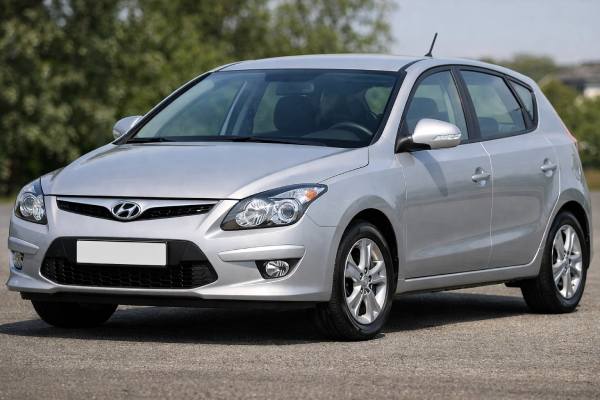
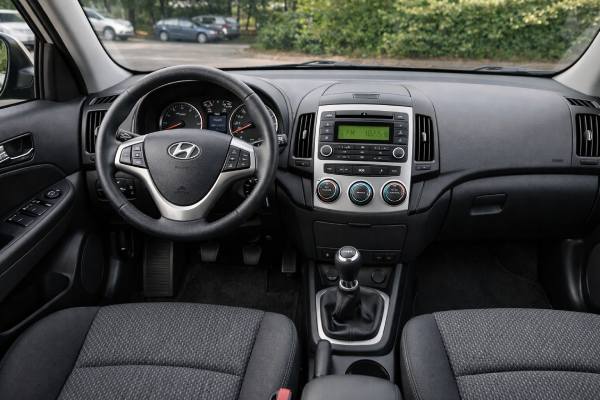
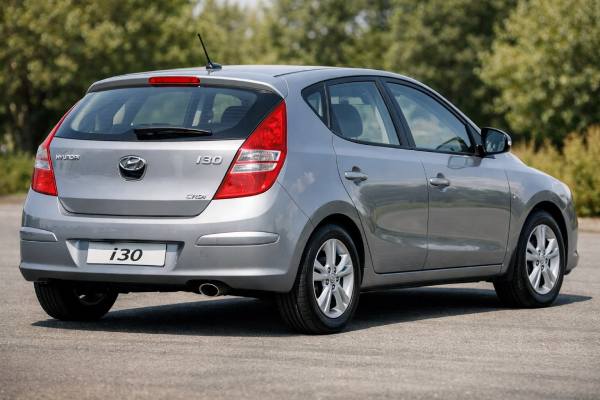
The facelifted Hyundai i30 FD 1.6 CRDi is one of those used cars that makes more sense the longer you look at it. On paper, it is a compact diesel hatchback from the early 2010s. In practice, it offers a well-packaged cabin, a strong torque curve, and running costs that can still look sensible if the car has been serviced properly. The facelift years also brought a tidier design, some equipment updates, and in many markets a cleaner, more efficient calibration than the earlier FD diesel.
That combination gives this version a clear role today. It is not the most exciting hatchback of its era, and it does not have modern driver assistance, but it is roomy, easy to drive, and usually cheaper to buy than an equivalent Golf or Focus diesel. The biggest question is not whether the design works. It does. The real question is whether the specific car in front of you has had the oil changes, filter services, and diesel-system care that this engine needs to age well.
What to Know
- Strong low-end torque, good motorway manners, and useful real-world fuel economy remain this version’s biggest strengths.
- The facelift cabin is practical, visibility is good, and the FD chassis still feels composed on rough roads.
- Many cars gained better gearing and lower official fuel use than earlier FD diesels, especially in manual form.
- Poor oil service history can lead to timing-chain wear, turbo problems, or expensive emissions-related faults.
- A safe routine is engine oil and filter every 10,000–15,000 km or every 12 months.
Section overview
- Hyundai i30 FD Facelift Profile
- Hyundai i30 FD Facelift Specs
- Hyundai i30 FD Facelift Safety and Trim
- Fault Patterns and Recall Work
- Service Routine and Buying Tips
- Road Manners and Fuel Use
- Rival Matchups and Value
Hyundai i30 FD Facelift Profile
The facelifted FD i30 arrived at the point where Hyundai was no longer trying to be merely cheaper than the class leaders. It was trying to be credible next to them. That matters because the car still feels designed around everyday use rather than brochure tricks. The hatchback body is compact enough for city streets and narrow parking bays, yet it has enough rear-seat room and boot space to work as a genuine family car. In facelift form, the styling became cleaner and a little sharper, but the real appeal stayed mechanical and practical.
The 1.6 CRDi diesel is the key part of the package. With 116 hp, it does not sound special until you drive it in normal traffic. The useful figure is torque. The engine delivers its best shove low in the rev range, which means the car feels more relaxed than the output suggests. It pulls cleanly from low speed, works well on the motorway, and usually needs fewer downshifts than the small petrol engines in the same range. That makes the i30 feel mature rather than busy.
The facelift also benefited from the basic strengths of the FD platform. Front MacPherson struts and a multi-link rear suspension gave the car a more settled feel than some budget hatchbacks that relied on simpler rear-end layouts. Straight-line stability is good, the ride is composed, and the car does not feel flimsy when the road turns rough. Steering feedback is still limited, but the chassis itself is fundamentally sound.
Ownership today comes down to use history. A well-maintained facelift 1.6 CRDi can still be a very sensible daily hatchback. A badly maintained one can become a chain-noise, turbo-hose, DPF, and suspension-refresh project in a hurry. These cars reward regular motorway use, correct oil, and timely filter changes. They punish neglect. That is why the facelift diesel still makes sense for the right buyer: it offers a lot of usability and efficiency, but only if you choose carefully.
Hyundai i30 FD Facelift Specs
The table below focuses on the 2010–2012 facelift Hyundai i30 FD hatchback with the 1.6 CRDi 116 hp diesel engine. Small differences by market, emissions level, trim, and gearbox are normal, especially between Euro 4 and Euro 5 cars.
Powertrain and efficiency
| Item | Data |
|---|---|
| Engine code | D4FB |
| Engine layout and cylinders | Inline-4 diesel, 4 cylinders, DOHC, 4 valves per cylinder |
| Bore × stroke | 77.2 × 84.5 mm (3.04 × 3.33 in) |
| Displacement | 1.6 L (1,582 cc) |
| Induction | Turbocharged with intercooler |
| Fuel system | Common-rail direct injection |
| Compression ratio | about 17.3:1 |
| Max power | 116 hp (85 kW) @ 4,000 rpm |
| Max torque | 255 Nm (188 lb-ft) @ about 1,900–2,750 rpm |
| Timing drive | Chain |
| Rated combined efficiency | about 4.5–4.9 L/100 km manual, market dependent |
| Real-world highway @ 120 km/h | usually about 5.2–6.1 L/100 km |
Transmission and driveline
| Item | Data |
|---|---|
| Transmission | 6-speed manual on many facelift diesels; 4-speed automatic in some markets |
| Drive type | FWD |
| Differential | Open |
Chassis and dimensions
| Item | Data |
|---|---|
| Front suspension | MacPherson strut |
| Rear suspension | Multi-link |
| Steering | Rack and pinion, electric power assist |
| Brakes | Ventilated front discs, rear discs |
| Typical brake sizes | about 280 mm (11.0 in) front, about 262 mm (10.3 in) rear |
| Most popular tyre size | 205/55 R16 |
| Length | 4,245 mm (167.1 in) |
| Width | 1,775 mm (69.9 in) |
| Height | 1,480 mm (58.3 in) |
| Wheelbase | 2,650 mm (104.3 in) |
| Turning circle | about 10.3–10.5 m (33.8–34.4 ft) |
| Kerb weight | roughly 1,330–1,390 kg (2,932–3,064 lb), depending on trim and gearbox |
| GVWR | roughly 1,820–1,870 kg (4,012–4,123 lb), market dependent |
| Fuel tank | 53 L (14.0 US gal / 11.7 UK gal) |
| Cargo volume | about 340 L (12.0 ft³) seats up / about 1,250 L (44.1 ft³) seats folded, VDA-style packaging |
Performance and capability
| Item | Data |
|---|---|
| 0–100 km/h | about 11.1–11.5 s manual |
| Top speed | about 188–190 km/h (117–118 mph) |
| Braking distance | exact model-specific factory figure not consistently published |
| Towing capacity | often around 1,300–1,500 kg (2,866–3,307 lb) braked, by market |
| Payload | roughly 430–500 kg (948–1,102 lb) |
Fluids and service capacities
| Item | Data |
|---|---|
| Engine oil | Diesel-approved low-ash or approved-spec oil, commonly 5W-30 |
| Engine oil capacity | about 5.3 L (5.6 US qt) |
| Coolant | Ethylene-glycol coolant for aluminium radiator |
| Coolant capacity | about 6.6–6.8 L (7.0–7.2 US qt) |
| Brake and clutch fluid | DOT 3 or DOT 4 |
| Brake and clutch fluid capacity | about 0.7–0.8 L (0.74–0.85 US qt) |
| Manual transaxle fluid | verify by gearbox code and market specification |
| Automatic transaxle fluid | verify by transmission code and market specification |
| A/C refrigerant | verify by under-bonnet label |
| Key torque spec | Wheel nuts 88–107 Nm (65–79 lb-ft) |
Safety and driver assistance
| Item | Data |
|---|---|
| Crash ratings | FD-family Euro NCAP rating: 4-star adult protection in the original i30 assessment |
| IIHS | Not applicable for the European i30 hatchback |
| Headlight rating | No IIHS headlight rating applicable |
| ADAS suite | No modern ADAS; no AEB, ACC, lane-keep assist, or blind-spot monitoring |
The technical summary tells the story clearly: the facelift i30 diesel is not complex by modern standards, but it still depends heavily on correct maintenance and market-specific specification checks.
Hyundai i30 FD Facelift Safety and Trim
Facelift cars were usually better equipped than earlier FD examples, but the trim story still depends heavily on region. Some markets sold simple fleet-focused diesels with cloth seats and small wheels, while others offered better audio, climate control, cruise control, larger alloys, parking sensors, trip computer functions, and more upscale trim materials. The easiest way to decode a used car is not by the badge on the tailgate but by the hardware inside it. Check the climate panel, steering-wheel buttons, wheel size, seat trim, parking sensors, and audio unit rather than trusting an ad description.
Mechanically, trim differences were modest, but facelift diesels often came with details that changed the ownership experience. Many manual cars had a six-speed gearbox, which improved motorway refinement and helped official economy. Some markets also offered Blue Drive-style efficiency measures, revised emissions calibrations, lower rolling-resistance tyres, or start-stop on selected trims. Those updates can be useful, but they can also add variation in DPF strategy, battery demand, or replacement-part cost. That is why a VIN- and market-specific check matters.
The facelift itself brought more than cosmetic change. Front and rear styling were revised, cabin trim was updated, and some later examples adopted cleaner emissions tuning and slightly different equipment packaging. In the used market, that means 2011 and 2012 cars can feel a little more polished than an earlier FD without becoming a fundamentally different vehicle. The core chassis, cabin layout, and safety architecture stayed the same.
On safety, the important point is that the facelift inherited the FD family structure rather than receiving an all-new safety concept. The original i30 family earned a four-star Euro NCAP adult-occupant result, with the report stating that the rating applied across the i30 range tested at the time. The passenger compartment remained stable, but frontal-impact knee and femur protection limited the final adult score. Child-seat compatibility and information labeling were acceptable but not class-leading in period.
Typical equipment on facelift cars included front airbags, side airbags, curtain airbags, seatbelt pretensioners, ISOFIX anchor points, ABS, and brake-force distribution. Electronic stability control was fitted in many markets and trims, but it was not universal on every version. There was no modern active-safety layer. Buyers should expect baseline late-2000s passive safety and conventional stability systems, not camera-based or radar-based assistance. After any repair, the key issue is correct restoration of airbags, belts, crash structure, and suspension geometry, not software calibration of ADAS sensors.
Fault Patterns and Recall Work
The facelift 1.6 CRDi does not have a reputation for being fragile, but it is very sensitive to service quality. Most common issues follow a predictable pattern, which is good news for buyers who inspect carefully.
Common and usually moderate-cost issues
- EGR and intake contamination: Symptoms include sluggish response, uneven idle, excess smoke under load, or repeated fault codes. Root cause is usually soot build-up from diesel use, especially short-trip driving. The remedy is cleaning, replacement of failed components, and making sure the engine is regularly driven at full operating temperature.
- DPF trouble on urban-use cars: Frequent regenerations, warning lights, rising oil level in severe cases, or limp mode often point to repeated interrupted regeneration cycles. Cars that do only short urban trips are most vulnerable.
- Suspension wear: Drop links, lower-arm bushes, top mounts, and rear bushings are age-and-road-condition items. Symptoms are clunks, vague tracking, or uneven tyre wear. Remedy is straightforward parts replacement and alignment.
- Rear brake drag: Sticky calipers and poor handbrake balance are familiar on older cars, especially where corrosion is present.
Occasional but higher-cost issues
- Timing-chain wear: The D4FB uses a chain, not a belt. Symptoms are cold-start rattle, timing correlation faults, or harsh running. The cause is often extended oil intervals, incorrect oil, or heavy use on neglected service history. Remedy is chain, guides, tensioner, and verification of timing.
- Turbo wear or boost leaks: Loss of pull, whistle, smoke, or overboost/underboost faults can come from split hoses, intercooler leaks, actuator issues, or the turbocharger itself. Not every “bad turbo” diagnosis is truly a failed turbo.
- Injector and fuel-system issues: Hard starting, uneven idle, or poor hot restarting may point to leak-off issues, injector wear, or fuel contamination. Water in the filter is especially important on diesel Hyundais of this period.
Driveline and chassis watchpoints
Manual cars can develop clutch and dual-mass flywheel wear, especially after towing or heavy urban use. Symptoms are slip under load, idle rattle, or pedal vibration. Steering-column or assist-related clunks also appear on some cars and are annoying enough to affect the ownership experience, even when not dangerous.
Corrosion hotspots
Check rear arches, bonnet edge, tailgate seam, underbody seams, subframes, rear suspension mounts, brake-line runs, and jacking points. Rust is now an age issue, not an isolated exception.
Recall and service-action relevance
The most directly relevant official campaign for the wider i30 FD range is the airbag-control-unit programming recall affecting 2007–2012 i30s in Australia. The issue was improper ACU programming, and the remedy was reprogramming. Buyers should verify completion through official VIN checks or dealer records. Facelift buyers should also pay attention to software history for engine management and emissions-related drivability complaints. On a used diesel, a reflash or updated calibration can be the correct remedy for persistent running faults, not just a parts swap.
Service Routine and Buying Tips
A good maintenance routine for the facelift i30 1.6 CRDi is more preventive than heroic. The best cars are rarely the ones with the lowest mileage. They are the ones with repeatable, boring, documented servicing.
Practical maintenance routine
- Engine oil and filter: every 10,000–15,000 km or 12 months. If the car does short trips, cold-weather use, or heavy city work, stay near 10,000 km.
- Engine air filter: inspect at each service and replace around 20,000–30,000 km, sooner in dusty conditions.
- Cabin air filter: every 12 months or about 15,000–20,000 km.
- Fuel filter: replace according to schedule and do not postpone it. On a common-rail diesel, fuel filtration is cheap insurance.
- Coolant: renew to the correct specification and interval. On a newly purchased used car with uncertain history, a full coolant refresh is wise.
- Brake fluid: every 2 years.
- Manual gearbox oil: even if marketed as long-life, changing it around 80,000–100,000 km is sensible.
- Automatic transmission fluid: refresh earlier than any “filled for life” idea suggests.
- Timing chain: inspect by symptoms and fault history rather than by a fixed belt-style interval.
- Auxiliary belt and hoses: inspect annually.
- Tyre rotation: roughly every 12,000 km if wear pattern supports it.
- Battery testing: from about year four or five onward, especially on stop-start cars.
Useful fluid and torque data
| Item | Recommendation |
|---|---|
| Engine oil | Approved diesel 5W-30, typically ACEA C3 or equivalent approved spec |
| Engine oil capacity | about 5.3 L |
| Coolant capacity | about 6.6–6.8 L |
| Brake and clutch fluid | DOT 3 or DOT 4 |
| Wheel nut torque | 88–107 Nm |
Buyer’s inspection checklist
- Start the engine cold and listen for chain rattle, extended cranking, and injector imbalance.
- Drive the car long enough to check boost delivery and whether the engine pulls cleanly through the mid-range.
- Look for smoke under load or obvious turbo-hose leaks.
- Ask when the fuel filter was last replaced and what oil grade has been used.
- Check for clutch slip in a higher gear and listen for flywheel noise at idle.
- Inspect rear brakes and handbrake performance.
- Check underbody rust carefully, especially around subframes and brake lines.
- Look for uneven tyre wear that points to worn bushes or poor alignment.
- Verify whether stability control, parking sensors, and climate control all work correctly.
- Confirm recall completion and any software updates.
The long-term durability outlook is good if the car has been used like a proper diesel hatchback and not a neglected short-trip commuter. The wrong example can be expensive. The right example can be a very sensible long-term daily.
Road Manners and Fuel Use
The facelift i30 1.6 CRDi is not an exciting car, but it is a very easy one to understand. Its best qualities show up after a full day of normal driving rather than in a short test drive. Around town, it feels light enough on its feet, though the diesel character is always present. There is a clear step from off-boost response into useful mid-range torque, but the transition is not especially crude. Once moving, the car feels stronger than the headline number suggests.
On the motorway, the facelift diesel makes more sense than it does in town. The engine settles into a relaxed stride, overtaking response is decent in a manual car, and the longer gearing fitted to many facelift versions helps refinement. It is still not silent. You hear diesel clatter at idle and some road noise on rough surfaces, but the overall impression is mature. The car tracks straight, resists crosswinds reasonably well, and feels more substantial than many bargain-badged hatchbacks from the same era.
Ride quality is one of the better parts of the FD platform. The multi-link rear suspension gives the car a planted, composed feel over patchy roads. It does not crash harshly, and it does not feel floaty when fully loaded with passengers or luggage. Steering feedback is limited and light, so enthusiastic drivers will still prefer a Focus, but the Hyundai remains calm and predictable.
Real-world efficiency expectations for a healthy manual car
- City: about 5.8–7.2 L/100 km
- Highway at 100–120 km/h: about 5.0–6.1 L/100 km
- Mixed use: about 5.3–6.3 L/100 km
Cold weather, repeated short trips, poor tyres, DPF regenerations, or a tired thermostat can push those numbers upward. The automatic version is usually less efficient and feels less alert.
The powertrain suits a calm driving style. It rewards short-shifting and steady throttle more than high-rev driving. That makes it a good everyday match for the car’s mission. This is also a hatchback that copes well with load. Four adults and luggage do not overwhelm it, and moderate motorway inclines rarely require frantic downshifts in manual form. Braking feel is conventional and confidence-inspiring when the system is healthy, though old tyres and sticky rear calipers can quickly undermine that.
The verdict from behind the wheel is simple. The facelift 1.6 CRDi is not memorable for one outstanding talent. It is memorable because the whole package remains coherent: enough torque, enough comfort, enough stability, and enough economy to keep it relevant if the car is in good condition.
Rival Matchups and Value
The facelift i30 1.6 CRDi sat in one of Europe’s toughest classes, and that context still matters when shopping used examples. Its natural rivals include the Ford Focus 1.6 TDCi, Volkswagen Golf Mk6 1.6 TDI, Kia cee’d 1.6 CRDi, Opel or Vauxhall Astra, Renault Mégane dCi, and in some markets the Mazda 3 diesel. Against those cars, the Hyundai rarely dominates one metric, but it often makes a strong overall case.
Against the Ford Focus, the i30 gives away steering feel and driver engagement. The Focus is still the sharper car. The Hyundai answers with a calmer ownership proposition, a well-judged ride, and often lower purchase prices. Against the Volkswagen Golf Mk6, the i30 feels less premium in the cabin, but it is often easier to buy without paying a brand premium. Against the Kia cee’d, the comparison is extremely close because so much engineering is shared. In practice, the better-maintained car is the better choice, not the better-known badge.
The i30’s strongest value argument is balance. It offers good space, sensible fuel economy, strong low-end pull, a durable-feeling chassis, and parts familiarity. It is not the best driver’s car, not the most premium, and not the most advanced. But it can be one of the easiest to justify financially.
It makes the most sense for buyers who want:
- a compact hatchback that still feels roomy
- lower running costs than a similarly sized petrol car
- solid motorway performance without needing a larger engine
- straightforward ownership rather than modern electronics and luxury features
It makes less sense for buyers who only do short urban trips, because any older diesel will dislike that routine. It also makes less sense if you want modern active safety or the sharpest handling in the class.
As a used buy, the facelift i30 1.6 CRDi stands out as a rational choice rather than an emotional one. That is not faint praise. With the right service history, it remains one of the more convincing budget-friendly diesel hatchbacks of its era.
References
- Hyundai Owners manuals | Hyundai Motor UK 2026 (Owner’s Manual)
- HYUNDAI I30 2011 OWNER’S MANUAL Pdf Download | ManualsLib 2017 (Owner’s Manual)
- Scheduled Maintenance Service – Hyundai i30 Owner’s Manual [Page 281] | ManualsLib 2014 (Service Manual)
- REC-000635 – Hyundai Motor Company – HYUNDAI I30 2007 – 2012 | Vehicle Recalls 2019 (Recall Database)
- Frontal impact driver Frontal impact passenger Side impact … 2007 (Safety Rating)
Disclaimer
This article is for informational purposes only and is not a substitute for professional diagnosis, repair, or model-specific technical advice. Specifications, torque values, service intervals, procedures, and equipment vary by VIN, market, emissions version, gearbox, and trim, so always verify critical details against the correct official service documentation for the exact vehicle.
If this guide helped you, please consider sharing it on Facebook, X, or another social platform to support our work.