
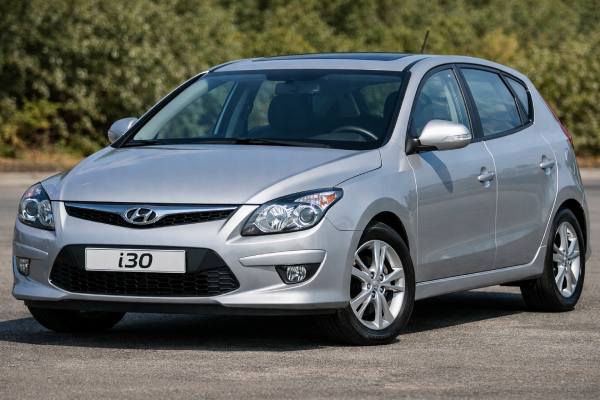
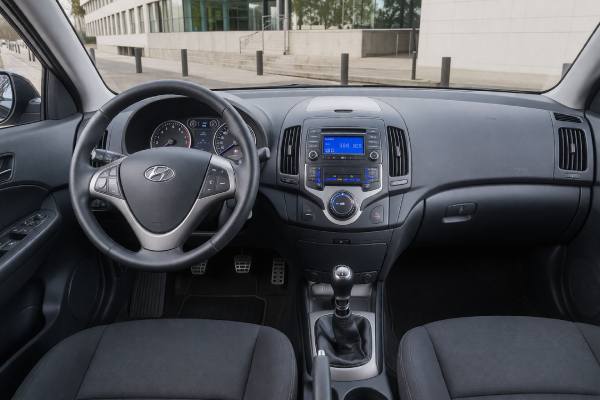
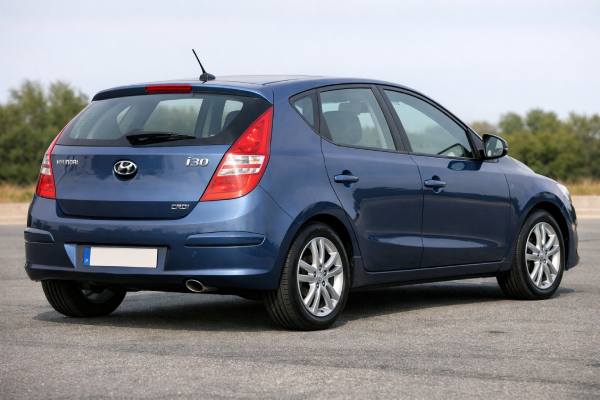
The facelifted Hyundai i30 FD 1.6 CRDi U2 is one of the most interesting first-generation i30 variants because it combines the mature FD chassis with the stronger later diesel engine. In 128 hp form, the 1.6-liter common-rail turbo diesel gives the car the kind of mid-range torque that suits a practical family hatchback far better than the smaller petrol engines. It is not only quicker in everyday use, but also calmer on the motorway and more efficient on longer trips. Just as important, the facelift brought a cleaner look, small trim upgrades, and in many markets a better mix of standard safety and comfort equipment. Today, the main attraction is balance: strong fuel economy, useful real-world pulling power, a roomy cabin, and conventional front-wheel-drive engineering. The catch is that this diesel needs the right kind of ownership. Short-trip neglect, poor servicing, and incomplete recall history matter far more here than trim badge or wheel design.
Essential Insights
- The 128 hp U2 diesel gives the FD i30 much stronger everyday acceleration than the small petrol versions.
- Long-distance fuel economy is excellent for an older compact hatch, especially with a healthy DPF and correct tyres.
- The FD platform still offers good cabin space, stable motorway manners, and a useful 340 L boot.
- Cars used only for short urban trips are more likely to suffer DPF, EGR, and intake contamination issues.
- Engine oil and filter are best changed every 12 months or 12,000–15,000 km, even if the handbook in some markets allows longer.
Explore the sections
- Hyundai i30 FD facelift diesel profile
- Hyundai i30 FD U2 spec tables
- Hyundai i30 facelift grades and protection
- Common failures and recall work
- Maintenance plan and buying checklist
- Real-world pace and fuel use
- Where it stands against rivals
Hyundai i30 FD facelift diesel profile
The facelifted FD-generation Hyundai i30 sits in an interesting place in the used market. It is old enough to avoid a lot of later electronic and infotainment complexity, but new enough to feel like a properly developed European family hatchback instead of a budget outsider. That matters, because the i30 was designed to compete seriously with cars like the Ford Focus, Opel Astra, Volkswagen Golf, and Toyota Auris. In facelift 1.6 CRDi U2 form, it finally had the engine to match the chassis.
The main story is torque. The 128 hp diesel does not turn the i30 into a hot hatch, but it gives it the kind of flexible, low-effort performance that owners notice every day. Overtaking needs less planning, motorway cruising is more relaxed, and the car feels less strained with passengers or luggage. If you regularly drive long distances, carry adults in the rear seats, or live in hilly areas, this engine makes far more sense than the lower-output petrols.
Mechanically, this version is also appealing for buyers who still want a relatively conventional car. It is front-wheel drive, uses a six-speed manual in many markets, and rides on a suspension layout that was advanced for the class at the time: MacPherson struts up front and a multi-link rear axle. That rear setup helps the i30 feel composed over broken surfaces and stable when loaded. Even now, that gives the FD i30 a mature character.
The facelift itself brought more than cosmetics. The front end became more modern, some markets gained revised equipment structure, and diesel offerings were updated. Depending on region, the 128 hp U2 diesel was not the only 1.6 CRDi offered, so buyers need to verify the exact engine output from the VIN, engine code, and registration data. That matters because market-specific cars differ in emissions hardware, gearbox pairing, and standard features.
Ownership, however, is where the real verdict is decided. This is an efficient diesel hatchback from an era when emissions systems became more demanding but were still less sophisticated than later Euro 6 cars. That means the i30 1.6 CRDi U2 can be an excellent long-distance car if it gets proper oil, quality fuel, and regular motorway use. It can also become expensive if it lives on short school runs and skipped services. DPF loading, EGR contamination, tired injectors, dual-mass flywheel wear, and intake grime are the issues that separate a good example from a poor one.
In short, the facelifted i30 FD diesel is best for drivers who value torque, range, practicality, and simplicity over image. Buy the right car and it still feels like a sensible, grown-up compact hatch. Buy the wrong one and the savings vanish quickly in deferred diesel maintenance.
Hyundai i30 FD U2 spec tables
The figures below reflect the commonly published specification for the facelifted 2010–2012 Hyundai i30 FD 5-door hatchback with the 1.6 CRDi U2 128 hp diesel and six-speed manual transmission. Some numbers vary slightly by market, emissions package, tyre size, and trim, so ranges are shown where that is the more honest answer.
| Powertrain and efficiency | Specification |
|---|---|
| Code | D4FB / U2 1.6 CRDi |
| Engine layout and cylinders | Front-transverse inline-4, DOHC, 4 cylinders, 4 valves per cylinder |
| Bore × stroke | 77.2 × 84.5 mm (3.04 × 3.33 in) |
| Displacement | 1.6 L (1,582 cc) |
| Induction | Turbocharged, intercooled, variable-geometry turbo |
| Fuel system | Common-rail direct injection |
| Compression ratio | About 17.3:1 |
| Max power | 128 hp (94 kW) @ 4,000 rpm |
| Max torque | 260 Nm (192 lb-ft) @ 1,900–2,750 rpm |
| Timing drive | Chain |
| Rated efficiency | About 4.3–4.7 L/100 km (54.6–47.9 mpg US / 65.7–60.1 mpg UK), market- and ISG-dependent |
| Real-world highway @ 120 km/h (75 mph) | Usually 5.2–6.0 L/100 km in good condition |
| Transmission and driveline | Specification |
|---|---|
| Transmission | 6-speed manual |
| Drive type | FWD |
| Differential | Open |
| Chassis and dimensions | Specification |
|---|---|
| Suspension front / rear | MacPherson strut / multi-link independent rear |
| Steering | Rack-and-pinion with motor-driven power steering |
| Steering ratio | 2.85 turns lock-to-lock |
| Brakes | Front ventilated discs about 280 mm (11.0 in), rear solid discs about 262 mm (10.3 in) |
| Most common tyre size | 205/55 R16 |
| Ground clearance | Roughly 150 mm (5.9 in), market-dependent |
| Length / width / height | 4,245 / 1,775 / 1,480 mm (167.1 / 69.9 / 58.3 in) |
| Wheelbase | 2,650 mm (104.3 in) |
| Turning circle | About 10.4 m (34.1 ft) |
| Kerb weight | About 1,340–1,390 kg (2,954–3,064 lb), depending on trim |
| GVWR | Roughly 1,860–1,910 kg (4,101–4,211 lb), market-dependent |
| Fuel tank | 53 L (14.0 US gal / 11.7 UK gal) |
| Cargo volume | 340 L (12.0 ft³) seats up / about 1,250 L (44.1 ft³) seats folded, VDA |
| Performance and capability | Specification |
|---|---|
| 0–100 km/h | About 11.0–11.3 s |
| Top speed | About 192–197 km/h (119–122 mph) |
| Braking distance | Exact published figure depends heavily on wheel and tyre package |
| Towing capacity | Often up to about 1,400 kg (3,086 lb) braked / 650 kg (1,433 lb) unbraked; verify by VIN plate |
| Payload | Roughly 470–540 kg (1,036–1,190 lb) |
| Fluids and service capacities | Specification |
|---|---|
| Engine oil | Usually 5W-30 or 5W-40 diesel oil to the required Hyundai and emissions spec; low-ash oil is important on DPF-equipped cars |
| Engine oil capacity | About 5.3 L (5.6 US qt) with filter |
| Coolant | Ethylene-glycol coolant for aluminium radiator, normally 50:50 mix |
| Coolant capacity | About 6.8 L (7.2 US qt) |
| Manual transmission oil | API GL-4 manual gearbox oil, typically around 1.9–2.0 L (2.0–2.1 US qt) depending on gearbox version |
| Brake / clutch fluid | DOT 3 or DOT 4 |
| A/C refrigerant | R-134a; exact charge varies by label |
| A/C compressor oil | PAG type; verify by system label |
| Key torque specs | Wheel nuts commonly 88–107 Nm (65–79 lb-ft); other critical values should be checked by VIN-specific workshop data |
| Safety and driver assistance | Specification |
|---|---|
| Crash ratings | Euro NCAP 2007 protocol: 4-star adult, 4-star child, 2-star pedestrian |
| IIHS | Not applicable to this model line |
| Headlight rating | No IIHS headlight rating available |
| ADAS suite | No AEB, ACC, lane centering, blind-spot monitoring, or traffic-sign recognition |
What matters most from the table is how coherent the package is. The 1.6 CRDi U2 gives strong real-world torque without making the car too heavy or too complex, and the FD chassis remains genuinely practical and well judged for everyday use.
Hyundai i30 facelift grades and protection
Trim names changed by country, so this is one of those cars where equipment matters more than badge. In different markets you may see variants such as Classic, Comfort, Style, Premium, Deluxe, or local-market special editions. The safest buying method is to decode the actual equipment on the car rather than trust the seller’s description.
Lower trims usually came with steel wheels, manual air conditioning, simpler seat cloth, and a basic radio or CD unit. Mid-level versions often added alloy wheels, fog lamps, leather-trimmed steering wheel and gear knob, steering-wheel controls, Bluetooth phone support, and cruise control. Better-equipped facelift cars may also have automatic lights, climate control, parking sensors, rain-sensing wipers, privacy glass, or semi-leather trim. In some markets, Flex Steer was fitted, letting the driver alter steering assistance between comfort-oriented and firmer settings.
For the 1.6 CRDi 128 specifically, the important differences are not only cosmetic. Wheel size affects ride quality and tyre cost. Higher trims with 16-inch alloys generally strike the best balance. Some markets also linked specific diesel outputs to better trims, which means you may find the 128 hp engine alongside stronger standard safety equipment and more useful motorway features. That is an ownership advantage, not just a brochure point.
Quick identifiers help. Steel wheels and rotary manual HVAC controls usually point to the simpler end of the range. Alloy wheels, a leather wheel, steering-wheel buttons, rear parking sensors, and a more detailed trip computer usually point to a mid- or higher-grade facelift car. The most trustworthy identifier is still the VIN-based build data, especially when engines and trim packs overlap.
On safety, the FD i30 was respectable in its era, but buyers need to read that in period context. The platform’s Euro NCAP result came from the older 2007 test regime, where the i30 scored four stars for adult protection, four for child protection, and two for pedestrian protection. That does not mean it is unsafe; it means it belongs to an earlier safety generation. Compared with newer hatchbacks, it lacks modern active safety systems that now prevent crashes rather than simply help occupants survive them.
Most facelift i30s were fitted with front, side, and curtain airbags, along with ABS, brake-force distribution, brake assist, and stability functions such as ESP and VSM depending on market. ISOFIX anchorage points were part of the family-car brief, and that still matters for used buyers with child seats. What you do not get is modern driver assistance. There is no autonomous emergency braking, adaptive cruise, lane-centering, or blind-spot intervention.
Because of that, condition has a direct safety effect. Good tyres, working ABS and ESP, straight brake response, and no airbag warning lights matter more here than on a newer car packed with electronic safety layers. A clean, lower-trim i30 with working systems and complete history is usually the better buy than a flashier one with electrical faults, crash repairs, or unresolved recall work.
Common failures and recall work
The facelifted i30 1.6 CRDi U2 is usually dependable when it is driven as a diesel should be driven and serviced on time. Most serious trouble comes from neglect, repeated short-trip use, or cars that have reached a high age and mileage without preventive work. The engine itself is not especially fragile, but the ownership pattern matters.
The most common issue group is emissions-related.
- Common, low to medium cost: EGR valve and intake contamination.
- Symptoms: hesitation, rough idle, flat response, smoke, engine light.
- Likely cause: soot build-up from short trips and low-load driving.
- Best remedy: proper diagnosis, then clean or replace the EGR and inspect the intake path.
- Common, medium cost: DPF loading on urban-use cars.
- Symptoms: regeneration fans running often, reduced power, warning lights, rising oil level on badly neglected cars.
- Likely cause: incomplete regenerations from short runs and incorrect oil.
- Best remedy: force a proper diagnostic check first; do not simply remove parts or clear codes and hope.
- Common, medium to high cost: clutch and dual-mass flywheel wear.
- Symptoms: shudder on take-off, rattle at idle, slipping under torque, poor shift feel.
- Likely cause: high mileage, towing, stop-start use, or previous driving abuse.
- Best remedy: replace clutch kit and DMF together when required.
- Occasional, medium cost: turbo hose leaks and boost-control faults.
- Symptoms: whistle, sudden loss of torque, limp mode, smoke under load.
- Likely cause: split hoses, weak clamps, sticky boost-control hardware.
- Best remedy: smoke test and live-data diagnosis before replacing the turbo itself.
- Occasional, medium cost: timing-chain wear from poor oil history.
- Symptoms: chain rattle at start-up, timing-correlation faults, rough running.
- Likely cause: long oil intervals, low oil level, poor oil quality.
- Best remedy: replace chain, guides, and tensioner when noise or measured wear demands it.
- Occasional, low to medium cost: suspension wear and rear brake binding.
- Symptoms: knocking over broken roads, vague alignment, hot rear wheel, uneven pad wear.
- Likely cause: age, potholes, and corrosion in brake hardware.
- Best remedy: refresh worn bushes or links in pairs and service the rear brakes correctly.
Recall and service actions also matter on FD-platform cars. Public recall records show steering-related campaigns on some FD-era cars, with the remedy involving inspection, motor replacement, or software update for the motor-driven power steering system. Separate actions affected airbag control programming on certain vehicles, and later regional campaigns addressed airbag inflator risk. Not every facelift diesel falls into every campaign, but every buyer should run the VIN through an official recall checker and ask a Hyundai dealer for open or closed campaign status.
Rust is less dramatic than on some rivals, but still worth checking carefully. Inspect front and rear subframe areas, sill ends, jacking points, tailgate seams, rear wheel arches, and brake-line routing. On the diesel, also inspect underbody heat shielding and DPF surroundings for corrosion and poor previous repair work.
The smartest pre-purchase approach is simple: scan the car, cold-start it, inspect the underside, ask for proof of oil history, and verify recall completion. When those basics are right, the i30 diesel can age very well.
Maintenance plan and buying checklist
This engine rewards disciplined maintenance more than expensive maintenance. That is good news, because it means the car can stay strong with sensible routine care. It also means that buying one without service proof is a gamble, especially for a diesel.
A practical maintenance plan for the facelift 1.6 CRDi U2 looks like this:
| Item | Practical interval | Notes |
|---|---|---|
| Engine oil and filter | Every 12,000–15,000 km or 12 months | Safer than stretching oil on an older DPF diesel |
| Engine air filter | Inspect every 15,000 km, replace around 30,000 km | Earlier in dusty areas |
| Cabin air filter | Every 12 months or 15,000 km | Helps HVAC and demisting |
| Fuel filter | About every 30,000 km or 2 years | Sooner with suspect fuel quality |
| Coolant | First major replacement around 10 years or 210,000 km, then every 30,000 km or 24 months | Also inspect yearly |
| Brake fluid | Every 24 months | Do not ignore on ABS-equipped cars |
| Manual gearbox oil | Sensible preventive change at 60,000–90,000 km | Often improves shift feel |
| Auxiliary belt and tensioners | Inspect every service | Replace at noise, cracking, or wobble |
| Timing chain | No fixed routine change; inspect for rattle, correlation faults, and tensioner wear | Dirty oil shortens life |
| Brake pads and discs | Inspect every service | Rear calipers can bind with age |
| Tyre rotation | Every 12,000 km | Check alignment at the same time |
| 12 V battery test | Yearly after year four | Weak voltage causes strange faults |
| DPF and EGR check | During annual service on short-trip cars | Watch for rising soot load and poor regen history |
For fluids, the most useful planning figures are about 5.3 L of engine oil with filter, about 6.8 L of coolant, DOT 3 or DOT 4 brake fluid, and roughly 1.9–2.0 L of manual transmission oil depending on gearbox version. On DPF-equipped cars, use the correct low-ash diesel oil spec for the exact market and VIN. Wrong oil can shorten DPF life.
Buyer’s inspection checklist:
- Confirm the exact engine output and VIN campaign history.
- Ask for oil-change invoices, not only stamps.
- Start it cold and listen for chain noise, injector knock, and DMF rattle.
- Check for smoke on hard acceleration once warm.
- Scan for stored DPF, glow-plug, EGR, boost, ABS, EPS, and airbag faults.
- Inspect intercooler hoses, coolant level, and underside heat shielding.
- Test clutch take-up and listen for flywheel chatter at idle.
- Check rear brakes, tyre wear pattern, and front suspension noise.
- Look for rust at sills, subframes, and jacking points.
The best cars are usually those owned by drivers who covered regular medium or long journeys, used quality oil, and fixed small issues before they became expensive diesel issues. The ones to avoid are low-mileage city cars with weak service records, warning lights, and vague answers about DPF or clutch work. Long term, a cared-for i30 1.6 CRDi can still be a very durable hatchback.
Real-world pace and fuel use
The facelifted i30 1.6 CRDi U2 is one of those cars that feels better in daily use than the headline 0–100 km/h number suggests. On paper, about 11 seconds to 100 km/h is merely decent. On the road, the diesel torque makes the car feel quicker than that in the situations owners actually care about.
Step-off is smooth rather than punchy, but once the turbo is in its working range the car pulls with real intent. The wide mid-range is the engine’s strong point. You do not need to chase the red line to make progress. Instead, the car likes a clean, short-shifted driving style, and it pulls hard enough through the middle gears to make overtaking noticeably easier than in the smaller petrol versions. There is some turbo lag at very low rpm, but it is mild by the standards of the period.
The six-speed manual suits the engine well. Ratios are close enough to keep the diesel on boost without making motorway driving buzzy. At a steady cruise the car feels relaxed, and that is where this version makes its strongest case. Straight-line stability is good, the steering is light but predictable, and the multi-link rear suspension helps it stay composed over uneven tarmac. It is not as playful as a Ford Focus, but it is calmer and more mature than many people expect.
Ride quality is generally best on 16-inch wheels. That setup gives enough grip without introducing the sharper low-speed thump that can come with larger rims. Braking feel is solid when the system is healthy, though neglected rear calipers can make the car feel less crisp than it should.
Noise levels are reasonable for an older diesel hatch. At idle, you will hear the engine. Once warm and moving, the sound settles, and on a long run the i30 feels more refined than its price point suggests. Road and wind noise are present, but not intrusive in a good car.
Real-world economy is one of the main reasons to buy this version:
- City: about 6.0–7.0 L/100 km
- Highway at 100–120 km/h: about 5.0–6.0 L/100 km
- Mixed driving: about 5.4–6.3 L/100 km
Short trips, winter starts, active DPF regeneration, cheap tyres, and poor alignment can push those figures upward. A heavily urban car can easily miss its reputation for economy. A healthy long-run car often beats expectations.
With a full cabin or luggage on board, the engine still feels well suited to the job. That is the real advantage of the 128 hp diesel. It makes the FD i30 feel like a complete family hatchback rather than merely an economical one. If you want a relaxed, efficient commuter and motorway car, this is one of the stronger versions in the FD lineup.
Where it stands against rivals
The Hyundai i30 FD 1.6 CRDi 128 is at its best when judged as a whole ownership package rather than by badge prestige. Against the main rivals of its era, it rarely dominates in one category, but it very often lands near the top for balance.
The Ford Focus 1.6 TDCi is the more engaging driver’s car. Its steering and chassis feel are better, and keen drivers usually notice that quickly. The Hyundai responds with a roomier feel, a calmer motorway character, and often better used-market value for the same money. If you care more about steady ownership than cornering finesse, the i30 makes a stronger argument.
Against the Volkswagen Golf 1.6 TDI, the Hyundai usually loses on perceived interior quality and image, but it can win on purchase price and value retention relative to repair cost. Golf buyers often pay more up front for the badge and cabin impression. Hyundai buyers often get a similar level of real usefulness for less money.
The Kia cee’d with the related diesel powertrain is the closest mechanical rival. In many cases the decision simply comes down to which example has the better history, trim, and condition. Both can be smart buys. The Hyundai often feels slightly more conservative in design, which some buyers actually prefer.
Compared with the Opel Astra diesel, the i30 usually feels lighter and more straightforward. Compared with the Toyota Auris diesels of the time, it often offers a better blend of space and torque, though Toyota still carries a stronger long-term dependability reputation in many markets. Against the Mazda3 diesel alternatives, rust and ownership history can matter just as much as the underlying engineering.
So who should buy this Hyundai? It suits drivers who want:
- real diesel torque without excessive complexity,
- strong motorway economy,
- useful cabin and hatchback practicality,
- and a lower-cost alternative to mainstream European badges.
It is less suitable for buyers who do only short city trips, want modern active safety tech, or dislike managing older diesel emissions hardware. In those cases, a simpler petrol hatchback may be smarter.
Overall, the facelifted i30 FD 1.6 CRDi U2 128 is one of the more rational used compact diesels of its generation. It is not the sharpest, fanciest, or most fashionable option. But for drivers who cover real distances and want an honest, efficient, well-packaged hatchback, it remains a seriously worthwhile choice.
References
- HYUNDAI I30 OWNER’S MANUAL Pdf Download | ManualsLib 2013 (Owner’s Manual)
- Brochure: Hyundai FD i30 (March 2011) 2011 (Model Brochure)
- Frontal impact driver Frontal impact passenger Side impact … 2007 (Safety Rating)
- REC-000612 – Hyundai Motor Company – HYUNDAI i30 (FD) , Elantra (HD) 2009 – 2010 | Vehicle Recalls 2015 (Recall Notice)
- REC-000635 – Hyundai Motor Company – HYUNDAI I30 2007 – 2012 | Vehicle Recalls 2019 (Recall Notice)
Disclaimer
This article is for informational purposes only and is not a substitute for professional diagnosis, repair, or official workshop guidance. Specifications, torque values, intervals, procedures, and equipment can vary by VIN, market, emissions package, and trim, so always verify details against the correct official service documentation for the exact vehicle.
If this guide helped you, please consider sharing it on Facebook, X, or another social platform to support our work.