
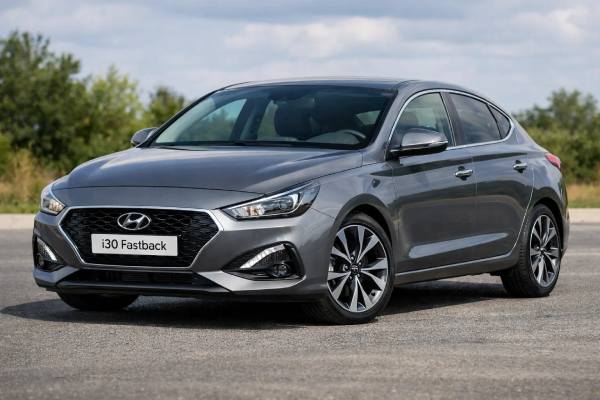
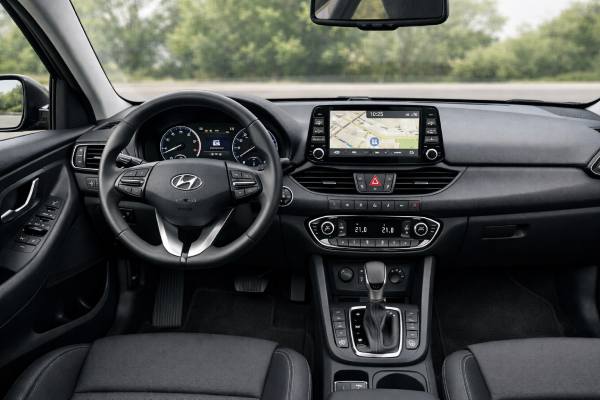
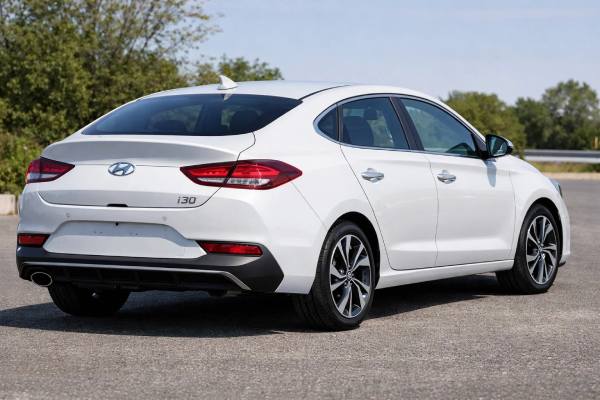
The facelift Hyundai i30 Fastback PD with the 1.0 T-GDi 48V powertrain is a niche car in a good way. It takes the regular i30’s sensible compact-car engineering and wraps it in a sleeker five-door fastback body, then adds a light electrification system that improves stop-start smoothness and everyday efficiency without turning the car into a full hybrid. That makes it easier to live with than the shape first suggests. You still get a useful boot, tidy exterior dimensions, and a familiar front-wheel-drive layout, but the longer roofline and lower rear deck give it a more premium look than the ordinary hatchback. For owners, the biggest strengths are balance and ease: it is efficient, quiet enough for long trips, and less demanding than a hot hatch. The main caution is that this is still a direct-injection turbo triple with mild-hybrid hardware, so oil service discipline, gearbox behavior, and software history matter more than the badge alone.
What to Know
- The Fastback body looks more distinctive than the hatchback and still offers a genuinely useful cargo area.
- The 1.0 T-GDi 48V setup is efficient, light, and well suited to mixed commuting and motorway use.
- Six-speed iMT and seven-speed DCT options let buyers choose between simplicity and convenience.
- Poor servicing can lead to ignition faults, carbon build-up, or awkward low-speed DCT behavior.
- For long-term durability, change engine oil every 10,000–15,000 km or every 12 months.
On this page
- Hyundai i30 Fastback 48V overview
- Hyundai i30 Fastback 120 specs
- Hyundai i30 Fastback trims and driver aids
- Common faults and campaign history
- Upkeep routine and used-car checks
- On-road character and consumption
- Market position versus competitors
Hyundai i30 Fastback 48V overview
The facelift i30 Fastback 1.0 T-GDi 48V is one of those cars that looks more specialized than it really is. In basic engineering terms, it is still a compact Hyundai i30, so it keeps the everyday virtues people expect from the model line: easy controls, sensible dimensions, a stable chassis, and reasonable running costs. What changes is the presentation. The Fastback body is longer and lower than the hatchback, giving the car a sleeker side profile and a more upscale rear end without turning it into a cramped coupe.
Mechanically, this version matters because it sits at the intersection of Hyundai’s facelift and mild-hybrid transition. The 1.0-litre T-GDi is a turbocharged three-cylinder petrol engine paired with a 48-volt mild-hybrid system. That system does not drive the wheels by itself. Instead, it uses a belt starter-generator to recover energy, assist the engine in selected situations, and make stop-start behavior smoother. The idea is practical rather than dramatic. You still fill it with petrol and drive it like a normal combustion car, but it feels slightly more polished and slightly less wasteful in traffic.
This model also introduced Hyundai’s six-speed intelligent manual transmission, or iMT, in many markets. That matters because it changes the car’s character. The iMT behaves like a normal manual from the driver’s seat, but the clutch actuation is electronically managed, allowing the system to disconnect the engine in coasting situations. Buyers could also choose Hyundai’s seven-speed dual-clutch transmission, which suits steady commuting well but needs a careful used-car test drive.
One point needs to be stated clearly: this specific query combines years and specifications that were not identical in every market. Hyundai’s early facelift technical data clearly documented a 120 PS 1.0 T-GDi 48V Fastback. Later market pages and later local brochures sometimes show different output naming or a narrower Fastback engine range. In other words, “2024 i30 Fastback 1.0 48V” may not mean exactly the same thing everywhere. If you are shopping, the VIN and the actual engine output matter more than the registration plate.
As a used buy, though, the concept remains attractive. This is the sensible Fastback. It is not the i30 N, and it is not pretending to be. Instead, it gives you better style than the regular hatchback, more real-world efficiency than the older 1.4 T-GDi, and fewer ownership compromises than many people expect from a low-roof compact car.
Hyundai i30 Fastback 120 specs
The best open official source for the facelift Fastback 1.0 T-GDi 48V is Hyundai’s February 2020 European technical data. That sheet lists the Fastback with the 1.0 T-GDi 48V in both 6iMT and 7DCT form. UK and other market sheets add engine and mild-hybrid detail for the same powertrain family.
Powertrain and efficiency
| Item | 1.0 T-GDi 48V 6iMT | 1.0 T-GDi 48V 7DCT |
|---|---|---|
| Code | Kappa 1.0 T-GDi 48V | Kappa 1.0 T-GDi 48V |
| Engine layout and cylinders | Inline-3, DOHC, 4 valves/cyl | Inline-3, DOHC, 4 valves/cyl |
| Displacement | 1.0 L (998 cc) | 1.0 L (998 cc) |
| Bore × stroke | 71.0 × 84.0 mm (2.80 × 3.31 in) | 71.0 × 84.0 mm (2.80 × 3.31 in) |
| Induction | Turbocharged | Turbocharged |
| Fuel system | Direct injection | Direct injection |
| Compression ratio | 10.5:1 | 10.5:1 |
| Max power | 120 hp (88.3 kW) @ 6000 rpm | 120 hp (88.3 kW) @ 6000 rpm |
| Max torque | 172 Nm (127 lb-ft) @ 1500–4000 rpm | 172 Nm (127 lb-ft) @ 1500–4000 rpm |
| Timing drive | Chain | Chain |
| Mild-hybrid motor | Belt starter-generator | Belt starter-generator |
| Battery | Li-ion polymer | Li-ion polymer |
| Motor output | 12 kW | 12 kW |
| System voltage | 48 V | 48 V |
| Rated efficiency | about 5.2–5.4 L/100 km WLTP range in later market data | about 5.3–5.4 L/100 km WLTP range in later market data |
| Real-world highway @ 120 km/h | about 5.9–6.8 L/100 km | about 6.0–6.9 L/100 km |
Later official Fastback pages in some markets show a 100 PS version of the 1.0 T-GDi with optional 48V support, which is why buyers should always verify the actual output of the car they are considering. This article focuses on the 120 hp facelift-era version identified in the 2020 European technical data.
Transmission and driveline
| Item | 6iMT | 7DCT |
|---|---|---|
| Transmission | 6-speed intelligent manual | 7-speed dual-clutch automatic |
| Drive type | FWD | FWD |
| Differential | Open | Open |
Chassis and dimensions
| Item | Hyundai i30 Fastback 1.0 T-GDi 48V |
|---|---|
| Suspension front / rear | MacPherson strut / multi-link or CTBA by market sheet |
| Steering | MDPS / rack-and-pinion |
| Steering turns lock-to-lock | 2.57 |
| Turning circle | 10.6 m (34.8 ft) kerb-to-kerb equivalent |
| Brakes | Front and rear discs; diameter varies by trim |
| Common wheel and tyre sizes | 205/55 R16 or 225/45 R17 |
| Ground clearance | 135 mm (5.3 in) |
| Length / Width / Height | 4455 / 1795 / 1425 mm |
| Wheelbase | 2650 mm (104.3 in) |
| Kerb weight | 1252–1393 kg 6iMT; 1282–1423 kg 7DCT |
| GVWR | 1820 kg 6iMT; 1850 kg 7DCT |
| Fuel tank | 50 L (13.2 US gal / 11.0 UK gal) |
| Cargo volume | 405–450 L / 1306–1351 L (14.3–15.9 / 46.1–47.7 ft³), published figures vary by floor layout and 48V packaging |
| Towing capacity | 1200 kg braked / 600 kg unbraked (manual); 700 kg braked / 300 kg unbraked (DCT) |
| Roof load | 80 kg |
Performance and service capacities
| Item | 6iMT | 7DCT |
|---|---|---|
| 0–100 km/h | 11.2 s | 11.2 s |
| Top speed | 196 km/h (122 mph) | 196 km/h (122 mph) |
| Engine oil incl. filter | about 4.0–4.2 L (4.2–4.4 US qt), verify by VIN | about 4.0–4.2 L (4.2–4.4 US qt), verify by VIN |
| Gear oil / transmission fluid | about 1.6–1.8 L | about 2.0 L |
| Coolant | roughly 5.5–6.0 L class, verify by VIN | roughly 5.5–6.0 L class, verify by VIN |
Safety headline
| Item | Hyundai i30 family result |
|---|---|
| Euro NCAP | 5 stars |
| Adult / child / vulnerable road users / safety assist | 88% / 84% / 64% / 68% |
| IIHS | not applicable in this market context |
The numbers show the Fastback clearly: it is not a slow car, but it is tuned more for smooth everyday use than for outright punch.
Hyundai i30 Fastback trims and driver aids
Trim structure is one of the more confusing parts of this car, because the facelift Fastback was not sold with the same engine and equipment mix in every European market. That matters a lot for used buyers. Hyundai’s early facelift technical data clearly showed the Fastback with the 1.0 T-GDi 48V, 1.5 T-GDi 48V, and diesel options. Some national price lists then narrowed the Fastback range, sometimes focusing more heavily on the 1.5 and diesel cars, especially in higher trims. So if you are looking at classified ads, do not assume every facelift Fastback came in the same combinations.
In equipment terms, the familiar pattern still applies. Lower or mid trims tend to use 16-inch wheels, simpler cabin trim, and the most value-focused infotainment. Upper versions add larger alloy wheels, more exterior detail, richer upholstery, keyless access, heated seats, heated steering wheel, larger touchscreens, and better parking support. On the Fastback, that matters because the body already makes the car feel more premium than the hatch. A well-specced example can feel far more expensive than its badge suggests.
The facelift period also improved connectivity. Depending on year and trim, you can find a 10.25-inch navigation screen, digital supervision cluster, Bluelink connected services, over-the-air map updates, wireless charging, rear-view camera support, and USB-C charging points. These are not small details in daily use. They are part of what keeps a 2020–2024 i30 Fastback feeling current in 2026.
Safety is another strength. The i30 family already had a solid five-star Euro NCAP result, and the facelift broadened Hyundai SmartSense support. Common or widely available features include Forward Collision-Avoidance Assist, Lane Keep Assist, Intelligent Speed Limit Assist, Driver Attention Warning, eCall, TPMS, and multiple airbags. Higher trims and later updates can add Lane Follow Assist, Blind Spot Collision Warning, Rear Cross Traffic Collision Warning, Safe Exit Warning, Highway Driving Assist, navigation-based cruise functions, and rear occupant alert.
That said, the exact list matters. Some systems were standard in one market and optional in another. Windscreen replacement or bumper repair can also affect camera or radar calibration, so a used car with a long equipment list is only valuable if the systems still work as intended.
For most buyers, the sweet spot is a mid- or upper-trim 1.0 T-GDi 48V car on 16- or 17-inch wheels. That keeps tyre costs reasonable, preserves ride comfort, and still gives you the convenience and safety features that actually improve daily ownership.
Common faults and campaign history
The facelift i30 Fastback 1.0 T-GDi 48V is not a disaster-prone model. Its real weakness is that it can be mistaken for a simple compact runabout and serviced too casually. In reality, it is a modern turbo direct-injection engine with mild-hybrid support, and it responds best to regular attention.
Common | Low to medium cost: ignition and drivability faults.
Small turbo petrol engines often show their first bad habits through spark plugs and coils. On this engine, the signs are usually hesitation under load, a slight misfire at higher boost, rough idle, or a check-engine light that comes and goes. The likely causes are aging plugs, weak coils, poor fuel quality, or software adaptation issues. The fix is usually straightforward, but neglected cars can feel much worse than they really are.
Common | Medium cost: intake-valve carbon build-up.
This is a direct-injection engine, so fuel does not wash the intake valves. Cars used mostly for short trips can gradually collect deposits that cause rough cold running, softer response, or a less clean idle. It is not normally an immediate failure point, but it is a known long-term ownership theme for engines like this.
Occasional | Medium cost: 7DCT low-speed awkwardness.
The dual-clutch gearbox is efficient and pleasant once the car is moving, but it can feel hesitant or slightly jerky in crawling traffic. That does not automatically mean it is failing. What matters is whether the behavior feels consistent and healthy or whether it feels like clutch shudder, poor engagement, or adaptation problems. A careful cold test drive is important.
Occasional | Medium cost: 48V system warnings or stop-start complaints.
The mild-hybrid setup is modest, but it still adds extra hardware: belt starter-generator, control electronics, battery, and charging logic. Faults can show up as erratic stop-start behavior, charging warnings, or a car that seems electrically fussy without a major mechanical fault. Diagnostic scanning is worthwhile before purchase.
Occasional | Low to medium cost: suspension and tyre-related noise.
The Fastback itself is not unusually fragile, but trim level and tyres matter a lot. Cheap replacement tyres, poor alignment, or worn bushes can make the car feel noisier and harsher than it should. On a properly shod car, the chassis usually feels tidy and calm.
Rare | Medium to high cost: timing-chain noise on badly maintained cars.
The engine uses a chain, which removes a scheduled timing-belt replacement but does not make the timing system immortal. Cars with long oil-change gaps deserve more caution. Cold-start rattle, correlation faults, or general top-end noise should not be ignored.
For recalls and service campaigns, the safest route is always the official VIN checker plus dealer records. The i30 family has had market-specific service actions over time, but there is no single public campaign that defines every 1.0 T-GDi 48V Fastback. That is why exact VIN confirmation matters more than internet summaries.
Upkeep routine and used-car checks
A practical maintenance plan is more important on this car than heroic repair knowledge. The i30 Fastback 1.0 T-GDi 48V tends to stay reliable when serviced a little more conservatively than the longest official schedules might suggest. That is especially true once the car is older, has mixed urban use, or has a dual-clutch transmission.
A good routine looks like this:
- Engine oil and filter: every 10,000–15,000 km or 12 months. This is the single most useful step for long-term turbo and timing-system health.
- Engine air filter: inspect at each annual service; replace around 30,000 km sooner in dusty conditions.
- Cabin filter: every 12 months.
- Spark plugs: inspect by about 45,000 km; replace around 45,000–60,000 km if performance is no longer crisp.
- Brake fluid: every 2 years.
- Coolant: inspect yearly and renew according to official age guidance for the exact coolant and market.
- Manual gear oil or DCT fluid: if history is unclear, a preventive change is sensible once mileage climbs rather than waiting for symptoms.
- Tyres, pads, discs, and alignment: inspect at every service. These cars respond clearly to tyre quality and wheel geometry.
- Timing chain: no routine replacement interval, but monitor for cold-start rattle, noisy operation, or timing-correlation faults.
- 12 V and 48 V electrical health: test annually from about year 4 onward, especially if stop-start or charging behavior changes.
- Belt starter-generator drive and related hardware: inspect as part of regular service work on mild-hybrid cars.
Published open technical sheets do not give every workshop specification, so some details remain VIN-sensitive. Engine oil approval, exact viscosity, coolant standard, air-conditioning refrigerant charge, and some torque values must be checked against official service information for the exact car. That is normal for a modern Hyundai, not a sign that the model is obscure.
When buying used, ask for:
- complete service history with dates, not just a recent stamp
- proof of regular oil servicing
- a cold start with no warning lights
- smooth pull under load with no stutter
- clean low-speed DCT behavior if automatic
- good matching tyres on each axle
- working lane-assist, camera, parking, and sensor systems
- confirmation of completed recalls and service campaigns
- evidence of recent brake-fluid and gearbox-fluid care on higher-mileage cars
The best cars are usually the least dramatic ones: stock, well serviced, and on decent tyres. Long-term durability looks respectable when the car is maintained like a modern turbo mild hybrid, not like an old naturally aspirated commuter that can miss service windows without consequence.
On-road character and consumption
The i30 Fastback 1.0 T-GDi 48V does not chase excitement the way an N Line badge might suggest from a distance. Instead, it aims for polish, and that suits the body style. The front end feels light, the steering is quick enough for easy town work, and the longer rear body helps the car feel planted on the motorway. It is a better long-distance companion than many people expect from a 1.0-litre three-cylinder.
The engine is modest on paper but sensible in practice. With 172 Nm available from low rpm, it does not need large revs to keep up with traffic. Throttle response is decent rather than sharp, and the turbo is tuned more for smoothness than for a big surge. The mild-hybrid system helps most around stop-start events and lift-off phases, making the car feel slightly cleaner and calmer in traffic. It does not turn the i30 Fastback into a full hybrid experience, but it does smooth the edges.
Transmission choice changes the feel noticeably. The 6iMT is the more interesting option for drivers who still enjoy a manual and want the lighter, simpler setup. The 7DCT is the easier commuter choice and usually suits mixed urban use well, though it still behaves like a dual-clutch gearbox rather than a soft torque-converter auto. Neither version is quick in a hot-hatch sense, but both are adequate for overtaking and relaxed cruising.
Official performance is straightforward: about 11.2 seconds to 100 km/h and a 196 km/h top speed. In daily use, the more relevant trait is how easily the car holds speed once it is moving. It is not especially fast up a steep grade with a full load, but it rarely feels overwhelmed.
Real-world fuel use is one of the car’s strong arguments. Expect roughly 6.8–8.0 L/100 km in heavy urban work, 5.9–6.8 L/100 km at steady highway speeds around 100–120 km/h, and around 6.2–7.2 L/100 km in mixed use. That works out to about 29–35 mpg US / 35–42 mpg UK in town, 35–40 mpg US / 42–48 mpg UK on the highway, and 33–38 mpg US / 40–46 mpg UK mixed. Winter weather, 17-inch tyres, and repeated short trips will move those figures upward.
So the verdict on the road is simple: the i30 Fastback 1.0 T-GDi 48V is not thrilling, but it is refined, efficient, and more mature than many small turbo compact cars.
Market position versus competitors
The facelift i30 Fastback 1.0 T-GDi 48V occupies a slightly unusual place in the compact market, which is part of its appeal. It does not line up perfectly against a single obvious rival. Some competitors match its size, some match its powertrain, and some match its style, but few combine all three in the same way.
Against a Volkswagen Golf 1.0 eTSI or Ford Focus 1.0 EcoBoost, the Hyundai’s main advantage is shape. It feels more special to look at without becoming less practical to live with. Against a Skoda Octavia, it gives away rear-space and cargo supremacy, but the Hyundai is tidier in size and easier to place in daily driving. Compared with a Mazda3 Fastback, the Hyundai usually counters the Mazda’s richer interior feel with better rear practicality, more conventional controls, and a more obviously efficient small-turbo setup.
Its strongest points are clear:
- more distinctive body than a normal hatchback
- strong economy for a compact petrol
- useful safety and connectivity upgrades in facelift form
- sensible chassis tuning and long-distance manners
- broadly good value as a used buy
Its weaker points are just as easy to understand:
- not especially quick
- DCT needs careful evaluation
- direct injection means carbon build-up is a long-term consideration
- market-to-market engine and trim variation can confuse buyers
That last point is the most important. The facelift Fastback range changed more by market than many people expect. Some countries documented the 1.0 T-GDi 48V clearly in both manual and DCT form. Others focused more on 1.5-litre or diesel Fastbacks later in the cycle. That means a buyer who understands the exact engine and trim is at an advantage.
Overall, though, the car makes a persuasive case. If you want a compact car that feels a little more elegant than the class average, still offers real practicality, and does not punish you at the fuel pump, the i30 Fastback 1.0 T-GDi 48V is a quietly clever choice.
References
- Hyundai i30 Technical Specifications 2020 (Technical Data)
- New Hyundai i30: sleeker, safer, and more efficient 2020 (Press Kit)
- Bolder and more high-tech: i30 gets update 2024 (Press Release)
- EuroNCAP | Hyundai i30 2017 (Safety Rating)
- Home | Hyundai Recalls & Service Campaigns 2026 (Recall Database)
Disclaimer
This article is for informational purposes only and is not a substitute for professional diagnosis, repair, or VIN-specific service documentation. Specifications, torque values, service intervals, capacities, and procedures can vary by VIN, market, model year, transmission, and trim, so always verify the exact details against official Hyundai service information for the vehicle you are buying, maintaining, or repairing.
If this guide was useful, please consider sharing it on Facebook, X, or another community you trust to support our work.