
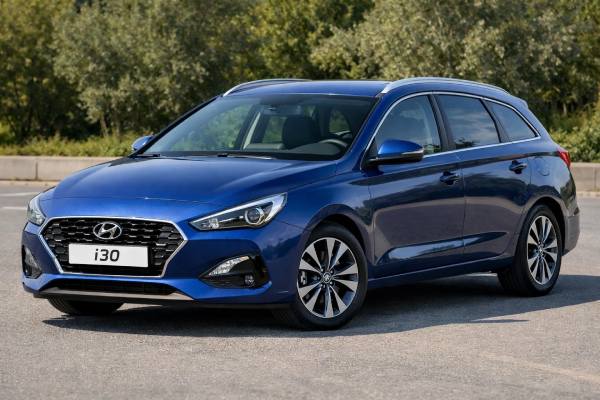
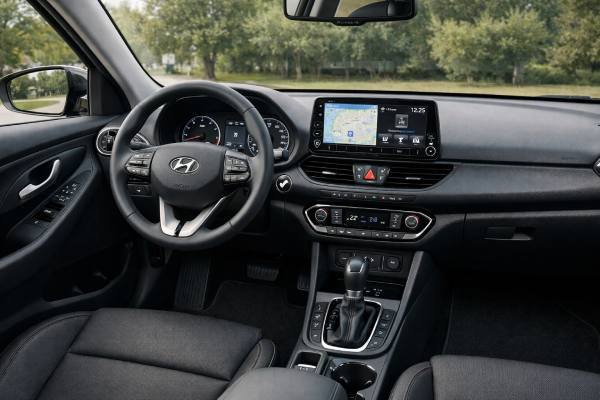
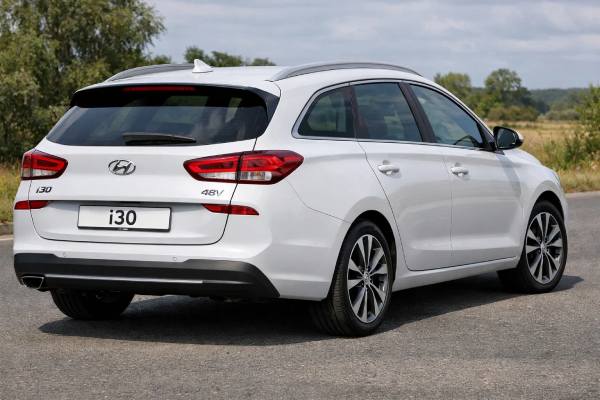
The facelift Hyundai i30 Wagon PD 1.5 DPi 110 is the quiet rational choice in the range. It does not promise turbo shove or sporty branding. Instead, it offers something many long-term owners still value more: a simple naturally aspirated petrol engine, manual transmission only, strong cabin usability, and one of the most useful cargo areas in the compact estate class. That formula matters. In a market full of small turbo engines, hybrid complexity, and crossover compromises, the i30 Wagon 1.5 DPi remains refreshingly straightforward. It is aimed at drivers who want dependable daily transport, predictable running costs, and a car that can handle family use without becoming expensive to own. The facelift updates from 2020 onward added better connectivity, broader safety technology, and sharper styling, while the basic strengths stayed intact. For buyers who care more about honest engineering and practicality than headline pace, this is one of the most sensible wagon variants Hyundai built in the PD generation.
What to Know
- The 1.5 DPi is a simple naturally aspirated petrol engine with no turbocharger and no hybrid battery to manage.
- The wagon body gives you a genuinely large 602 L boot and strong family-car versatility.
- Manual-only driveline simplicity is a real long-term ownership advantage for many buyers.
- Performance is adequate rather than quick, especially when fully loaded or driven on fast motorways.
- A 12-month or 15,000 km oil change routine is the sensible ownership habit, even where broader service intervals appear in market schedules.
Start here
- Hyundai i30 Wagon petrol profile
- Hyundai i30 Wagon spec data
- Hyundai i30 Wagon trim and safety map
- Long-term faults and campaigns
- Upkeep schedule and smart buys
- On-road feel and economy
- Rival wagons and alternatives
Hyundai i30 Wagon petrol profile
The facelift i30 Wagon 1.5 DPi fills a very specific role in the Hyundai range. It is the practical estate for buyers who want a conventional petrol engine and who do not need the extra performance of the turbocharged 1.5 T-GDi. That sounds modest on paper, but it gives this model a clear identity. The 1.5 DPi uses a 1,498 cc naturally aspirated four-cylinder petrol engine with multi-point injection, 110 PS, 144 Nm, and a 6-speed manual gearbox. There is no turbocharger, no dual-clutch transmission, and no 48-volt hybrid system in this version. For some buyers, that absence of complexity is exactly the reason to choose it.
The wagon body adds real substance to the package. At 4,585 mm long with 602 litres of VDA luggage space and up to 1,650 litres with the rear seats folded, it is a proper compact estate rather than a hatchback with a slightly longer roof. In daily life, that means easier airport runs, more useful family packing, better dog-car duty, and more flexible weekend cargo capacity than most hatchbacks or style-led fastbacks can offer. Unlike the mild-hybrid versions in the wider i30 line, the 1.5 DPi keeps the full underfloor boot packaging, which is a practical bonus.
What it does not offer is effortless performance. With 110 hp and 144 Nm at 3,500 rpm, this is a car that prefers smooth inputs and sensible gearing. It is well suited to urban commuting, suburban routes, and moderate-distance travel, but it will not feel punchy when heavily loaded or when joining a fast motorway uphill. Drivers coming from a diesel or a small turbo petrol need to reset expectations. This engine likes revs more than torque, and its performance is best when worked deliberately rather than lazily.
The upside is predictability. The naturally aspirated petrol powertrain gives the car a very linear response, easier low-speed behavior than some small turbo engines, and fewer long-term worries about turbochargers, gasoline particulate filters, or hybrid-system packaging. That does not make it maintenance-free, but it does make it easier to understand and usually cheaper to keep healthy over time.
Within the facelift 2020–2024 i30 family, this version is the ownership-first choice. Hyundai’s updates during the facelift era focused on sharper styling, better digital features, improved SmartSense safety systems, and broader trim variety, but the 1.5 DPi remained the fundamentally simple option. If your priorities are practicality, ease of use, and lower mechanical complexity, this wagon makes a strong case for itself.
Hyundai i30 Wagon spec data
The 1.5 DPi wagon’s numbers explain its character very clearly. This is a front-wheel-drive, manual-only, naturally aspirated estate with practical dimensions and conservative running gear. It is not the fastest i30 Wagon, but it may be the easiest to own.
| Powertrain and efficiency | Hyundai i30 Wagon 1.5 DPi |
|---|---|
| Engine code / family | Smartstream 1.5 DPi petrol |
| Engine layout | Inline-4, front-transverse petrol |
| Cylinders and valvetrain | 4 cylinders, DOHC, 4 valves per cylinder |
| Bore × stroke | 72.0 × 92.0 mm (2.83 × 3.62 in) |
| Displacement | 1.5 L (1,498 cc) |
| Induction | Naturally aspirated |
| Fuel system | Electronically controlled multi-point injection |
| Compression ratio | 11.0:1 |
| Max power | 110 hp (81 kW) @ 6,000 rpm |
| Max torque | 144 Nm (106 lb-ft) @ 3,500 rpm |
| Timing drive | Chain |
| Emissions standard | Euro 6d |
| Rated efficiency | 5.9 L/100 km official converted value |
| Real-world highway at 120 km/h | roughly 6.2–7.0 L/100 km |
| Transmission and driveline | Hyundai i30 Wagon 1.5 DPi |
|---|---|
| Transmission | 6-speed manual |
| Drive type | FWD |
| Clutch | Hydraulic single dry plate |
| Differential | Open |
| Chassis and dimensions | Hyundai i30 Wagon 1.5 DPi |
|---|---|
| Front suspension | MacPherson strut |
| Rear suspension | Torsion-beam rear axle |
| Steering | Electric rack and pinion |
| Steering ratio | 13.4:1 |
| Turns lock-to-lock | 2.57 |
| Front brakes | Ventilated discs, 280 mm |
| Rear brakes | Disc, 272 mm |
| Most common tyre sizes | 195/65 R15, 205/55 R16, 225/45 R17 |
| Ground clearance | 140 mm (5.5 in) |
| Length | 4,585 mm (180.5 in) |
| Width | 1,795 mm (70.7 in) |
| Height | 1,465 mm without rails, 1,475 mm with roof rails |
| Wheelbase | 2,650 mm (104.3 in) |
| Turning circle | 10.6 m (34.8 ft) |
| Kerb weight | 1,281–1,459 kg (2,824–3,217 lb) |
| GVWR | 1,800 kg (3,968 lb) |
| Fuel tank | 50 L (13.2 US gal / 11.0 UK gal) |
| Cargo volume | 602 / 1,650 L (21.3 / 58.3 ft³), VDA |
| Performance and capability | Hyundai i30 Wagon 1.5 DPi |
|---|---|
| 0–100 km/h | 12.6 s |
| Top speed | 187 km/h (116 mph) |
| Braking distance | factory figure not consistently published |
| Towing, braked | 1,200 kg (2,646 lb) |
| Towing, unbraked | 600 kg (1,323 lb) |
| Payload | 341–519 kg (752–1,144 lb) |
| Fluids and service capacities | Hyundai i30 Wagon 1.5 DPi |
|---|---|
| Engine oil | 3.4 L (3.6 US qt) with filter |
| Oil grade | use VIN-specific Hyundai-approved petrol specification |
| Coolant | 5.8 L (6.1 US qt) |
| Manual transmission oil | 1.6 L (1.7 US qt) |
| Differential / transfer case | not separate on this FWD layout |
| A/C refrigerant | verify under-bonnet label |
| A/C compressor oil | verify under-bonnet label |
| Key torque spec | wheel nuts 107–127 Nm (79–94 lb-ft) |
| Safety and assistance | Hyundai i30 Wagon 1.5 DPi |
|---|---|
| Euro NCAP | 5 stars |
| Adult occupant protection | 88% |
| Child occupant protection | 84% |
| Vulnerable road user | 64% |
| Safety assist | 68% |
| IIHS | not applicable |
| ADAS availability | FCA, LKA, DAW, HBA standard or optional by market; later facelift years broadened LFA, RCA, LVDA, BCA, and improved FCA availability |
Two technical details matter more than they first appear to. First, the 1.5 DPi uses multi-point injection rather than direct injection, which can reduce long-term intake deposit concerns compared with some direct-injected petrol engines. Second, this engine keeps a timing chain rather than moving to the belt-and-electrified arrangements seen elsewhere in the facelift range. Those choices help define why the 1.5 DPi is the simple long-term option in the lineup.
Hyundai i30 Wagon trim and safety map
The facelift i30 Wagon range varied by country, but the 1.5 DPi generally sat in the practical middle or lower-middle of the line-up. It was not usually the prestige or performance pick. Instead, it was the engine for buyers who wanted the wagon body and updated cabin tech without paying for the turbocharged or diesel variants. That matters when you shop used, because the trim name alone does not tell the full story. The 1.5 DPi also brings specific mechanical differences that are worth understanding.
The most important functional differences are these:
- The 1.5 DPi is manual only.
- It uses a torsion-beam rear axle rather than the multi-link rear setup found on stronger engines.
- It generally runs the smaller brake packages and more modest wheel sizes.
- It preserves full luggage capacity because it has no mild-hybrid battery under the cargo floor.
That means a used 1.5 DPi wagon will usually feel a little less sophisticated at the rear axle than a stronger turbo or diesel i30 on rough roads, but it may also cost less to keep on tyres, brakes, and suspension consumables. The lower-power car is less about prestige and more about value.
Common facelift trim patterns often included entry or comfort-led grades, then better-equipped middle trims, followed by Trend, Prime, or N Line depending on market. On many cars, the ideal used balance is a mid-spec version on 16-inch wheels. That usually gives you the useful features without the ride penalty and tyre cost of the larger wheel packages. N Line wagons became available in the facelift era, but the 1.5 DPi is not the engine that best fits the sporty trim image. It works well enough there, but it is more convincing in comfort- or value-oriented specification.
The facelift changes improved the cabin and safety story meaningfully. Hyundai added a 7-inch digital cluster, a 10.25-inch navigation screen on upper trims, broader Bluelink availability, wireless phone mirroring in some versions, and a stronger SmartSense package. That is important because the i30 Wagon can feel much newer inside than its basic platform age suggests.
On safety, the underlying result stayed strong. The i30 family’s five-star Euro NCAP rating remains a real strength for family buyers. Standard or available features through the facelift years included Front Collision-Avoidance Assist with pedestrian recognition, Lane Keeping Assist, Driver Attention Warning, High Beam Assist, Intelligent Speed Limit Warning, and later additions such as Lane Following Assist, Rear Collision-avoidance Assist, Leading Vehicle Departure Alert, and improved blind-spot intervention on better-equipped cars.
For used buyers, the practical advice is simple:
- Check which safety systems are actually fitted, not just mentioned in the ad.
- Confirm proper operation after any windscreen or front-bumper repair.
- Prefer trims that balance comfort, safety, and wheel size over cosmetic upgrades alone.
The 2024 refresh did not reinvent the i30 Wagon mechanically. It mainly refined styling, connectivity, and equipment presentation. So the most important differences across 2020–2024 are still trim content, safety hardware, and overall condition rather than a dramatic shift in the basic 1.5 DPi formula.
Long-term faults and campaigns
The 1.5 DPi is one of the lower-risk engines in the facelift i30 range, mostly because it avoids several sources of modern powertrain complexity. There is no turbocharger, no direct injection, no dual-clutch gearbox, and no mild-hybrid system in this version. That does not make the car perfect, but it does change the risk profile in a good way. Most of the likely problems are ordinary wear-and-tear issues rather than high-cost architecture problems.
A realistic reliability map looks like this:
- Common and low cost: 12 V battery fatigue, brakes, tyres, suspension links, cabin electronics glitches, and age-related clutch wear.
- Occasional and medium cost: ignition coils, spark plugs, intake and idle-related drivability complaints, wheel bearings, and air-conditioning issues.
- Rare and higher cost: neglected cooling-system leaks, chain noise on a poorly maintained engine, accident-related ADAS faults, or heavy clutch and flywheel replacement on badly treated cars.
The strongest reliability advantage of the 1.5 DPi is what it does not have. Compared with the facelift diesel, it avoids DPF and AdBlue issues. Compared with the 1.5 T-GDi, it does not carry turbocharger or direct-injection concerns. Compared with the 48-volt powertrains, it has simpler packaging and fewer electrically integrated subsystems. That simplicity is why many cautious used-car buyers prefer it, even though it gives away performance.
Typical issues and the usual logic behind them:
- Uneven idle or a soft misfire under load: often ignition-related, with plugs or coils the first things to check.
- Higher fuel use than expected: commonly tyre pressure, short-trip use, overdue filters, or a tired thermostat rather than a major engine defect.
- Clutch slip or high pedal engagement: wear from urban use or repeated towing.
- Rattles from the rear or front suspension over broken surfaces: links, bushes, or general chassis wear rather than deeper structural trouble.
- Camera or lane-assist warnings after repairs: calibration issue rather than a true sensor failure.
Because this is a naturally aspirated multi-point-injected petrol, it is also less prone to the kind of heavy intake deposit story that sometimes follows direct-injected engines on short-trip use. That does not mean deposits never happen, only that the risk is lower and the ownership conversation is less complicated.
There is no single engine-specific recall headline that defines the 1.5 DPi wagon in the way some powertrains become known for one major campaign. That said, model-wide or market-specific service actions can still exist. The safe process is always the same: run the VIN through Hyundai’s official recall checker and compare the result with dealer records. A clean dashboard is not proof that campaign work was completed.
Pre-purchase, request:
- full service history,
- proof of oil changes with the correct specification,
- a proper cold start,
- a clutch and gearbox test on an incline,
- confirmation that all warning lights stay off,
- and a close look under the car for corrosion or poor repair work.
Overall, the 1.5 DPi wagon has a good long-term outlook. Its weak points are ordinary enough that most can be caught early and repaired without turning the car into a money pit.
Upkeep schedule and smart buys
The best way to own a 1.5 DPi wagon is to lean into its simplicity. This is not a car that needs exotic care. It just needs timely, boring maintenance. That is exactly why it can be such a good used buy.
A practical maintenance schedule looks like this:
| Item | Practical interval |
|---|---|
| Engine oil and filter | every 12 months or 15,000 km |
| Engine air filter | inspect yearly, replace around 30,000 km |
| Cabin filter | every 12 months or 15,000–20,000 km |
| Spark plugs | inspect by schedule; many owners budget replacement around 45,000–60,000 km |
| Coolant | inspect yearly; replace by VIN-specific schedule or if history is unclear |
| Manual gearbox oil | inspect for leaks; refresh around 100,000–120,000 km is sensible |
| Brake fluid | every 2 years |
| Brake pads and discs | inspect every service |
| Aux belt and hoses | inspect every service |
| Tyre rotation and alignment check | around every 10,000–15,000 km |
| 12 V battery test | yearly after year four |
| Timing chain | inspect only if noisy, out of phase, or fault symptoms appear |
Useful capacity and decision data:
- Engine oil capacity is 3.4 L with filter.
- Coolant capacity is 5.8 L.
- Manual gearbox oil capacity is 1.6 L.
- Fuel tank capacity is 50 L.
- Wheel nut torque is 107–127 Nm.
The official market schedule shown in Hyundai’s technical data combines a 15,000 km or 1-year oil-change interval with broader 30,000 km or 2-year service spacing. In real used-car ownership, the safest approach is the simpler one: do the oil every year and inspect the rest closely at the same time. The car is not demanding, but it benefits from consistency.
For buyers, the checklist should focus on the things most likely to have been ignored:
- Clutch condition and take-up.
- Smooth cold idle and clean throttle response.
- Consistent service stamps and invoices, not just one recent service.
- Tyre wear pattern, which can reveal alignment neglect.
- Rear axle, bushings, and brake condition.
- Air-conditioning performance.
- Tailgate seals, rear load floor, and water ingress signs.
- Correct ADAS function after any visible body repair.
The best trims to seek are usually mid-spec wagons with 16-inch wheels, good maintenance records, and no unnecessary cosmetic modifications. A lightly optioned car can still be a very good buy if it has strong service history and the right condition. Cars to be cautious about are heavily worn urban examples with a tired clutch, uneven tyres, cheap replacement parts, or obvious evidence that maintenance was delayed because the engine was seen as “simple enough to ignore.”
Long-term durability should be above average for the class if the car gets proper routine care. This is one of the few facelift-era compact wagons where buying the less glamorous engine often makes the smarter long-term decision.
On-road feel and economy
The i30 Wagon 1.5 DPi drives exactly the way its specification suggests: calmly, predictably, and without much drama. It is not slow in a dangerous sense, but it is also not eager. Around town and on secondary roads, the car feels light enough on its feet and easy to manage. The clutch is straightforward, the manual gearbox suits the engine well, and the naturally aspirated response is smooth and linear at low speed.
On faster roads, the car’s strengths and weaknesses become clearer. The chassis is stable, the steering is light but accurate enough, and the wagon tracks well on the motorway. Hyundai gave the PD i30 a mature road feel, and that remains true in the facelift wagon. Cabin noise is generally acceptable, especially on smaller wheels, and the estate body does not feel awkward or floppy at speed.
The powertrain character is the important part. With only 144 Nm and peak power arriving at 6,000 rpm, the engine needs revs more than the diesel or turbocharged alternatives do. It will happily cruise once up to speed, but overtaking on fast roads often requires a downshift and a little planning. Fully loaded with passengers and luggage, the car feels competent rather than energetic. Buyers who mostly drive in flatter areas and at moderate speeds will adapt quickly. Buyers who spend their lives on fast, busy motorways may wish for more torque.
The rear suspension setup also shapes the verdict. Because the 1.5 DPi uses the simpler rear axle rather than the multi-link arrangement of stronger versions, it can feel a little less polished on sharp broken surfaces. That said, the trade-off is not dramatic. On ordinary roads, the car is still comfortable, and many owners will never mind the difference, especially on 15-inch or 16-inch tyres.
Real-world fuel use is one of the car’s better arguments:
- City: about 7.0–8.2 L/100 km in ordinary urban use.
- Highway at 100–120 km/h: about 6.2–7.0 L/100 km.
- Mixed driving: about 6.5–7.4 L/100 km.
That is not hybrid-level economy, but it is respectable for a naturally aspirated petrol estate with a manual gearbox. It also tends to be consistent. There is no turbo boost habit or regeneration cycle to distort the numbers as much as in some alternatives. Towing or full-load holiday use will raise consumption noticeably, often by 15–25 percent depending on speed and terrain.
The i30 Wagon 1.5 DPi is at its best when driven smoothly. Keep momentum, use the gearbox properly, and it feels honest and easy. Ask it to behave like a torquey turbo or diesel, and it reminds you that it is the simple petrol in the range. That is not a flaw. It is just the personality of the car.
Rival wagons and alternatives
The i30 Wagon 1.5 DPi sits in an unusual spot because many rivals moved further toward turbocharging or hybridization. That gives the Hyundai a clear identity: it is one of the simpler compact estates you can still buy from this period.
The Kia Ceed Sportswagon is the closest family rival. It shares much of Hyundai-Kia thinking on packaging and value, though engine line-ups differ by market. The Ceed often feels slightly more modern in presentation, but the Hyundai counters with straightforward ergonomics, strong value, and a similarly practical long-roof layout. Choose by condition and equipment, not badge.
The Skoda Octavia Combi is the class benchmark for outright practicality. It usually offers a larger boot and a slightly bigger-car feel. But it is often more expensive on the used market, and the Hyundai can win on simplicity if you are comparing non-turbo versus turbo alternatives. The Skoda is the more spacious tool. The Hyundai is often the easier budget decision.
The Ford Focus Estate is the better driver’s car. Steering feel and body control are usually sharper, and the chassis feels more playful. But the Hyundai is often the calmer ownership proposition if your priorities are reliability simplicity and a conventional cabin layout rather than handling flair.
The Toyota Corolla Touring Sports hybrid is the obvious modern alternative for drivers who do lots of urban work. It will usually beat the Hyundai on stop-start fuel use and city refinement. But it is also a different ownership philosophy. The Toyota is the smarter urban commuter. The Hyundai is the simpler manual petrol wagon for drivers who prefer conventional mechanicals.
The Volkswagen Golf Variant and Seat Leon Sportstourer bring stronger badge appeal or slightly more polished cabins in some versions, but they often lean heavily on turbocharged engines and more complex transmission choices. The Hyundai’s advantage is not glamour. It is clarity. You know what it is, and you know what you are maintaining.
So who should buy the i30 Wagon 1.5 DPi?
- Buyers who want a straightforward petrol estate.
- Owners planning long-term use with predictable maintenance.
- Families who need a big boot but do not want SUV bulk.
- Drivers who value mechanical simplicity over speed.
Who should look elsewhere?
- Drivers who regularly carry full loads on fast roads.
- Buyers who want effortless overtaking torque.
- Mostly urban users who would benefit more from a hybrid.
- Anyone who expects sporty performance from a 110 hp wagon.
In the end, the Hyundai compares well because it stays in its lane. It does not try to be the fastest, the most premium, or the most fashionable. It aims to be useful, honest, and durable. For the right buyer, that is enough to make it the better choice.
References
- Hyundai i30 Kombi | Technische Daten | Stand: 4.2019 2021 (Technical Data)
- New Hyundai i30: sleeker, safer, and more efficient 2020 (Press Kit)
- Bolder and more high-tech: i30 gets update 2024 (Press Release)
- Euro NCAP | Hyundai i30 2017 (Safety Rating)
- Home | Hyundai Recalls & Service Campaigns 2025 (Recall Database)
Disclaimer
This article is for informational purposes only and is not a substitute for professional diagnosis, repair, or factory workshop guidance. Specifications, torque values, service intervals, fluids, procedures, trim content, and safety equipment can vary by VIN, market, model year, and installed options. Always verify every critical detail against the correct official service documentation for the exact vehicle.
If this guide was useful, please consider sharing it on Facebook, X, or another social platform to support our work.