
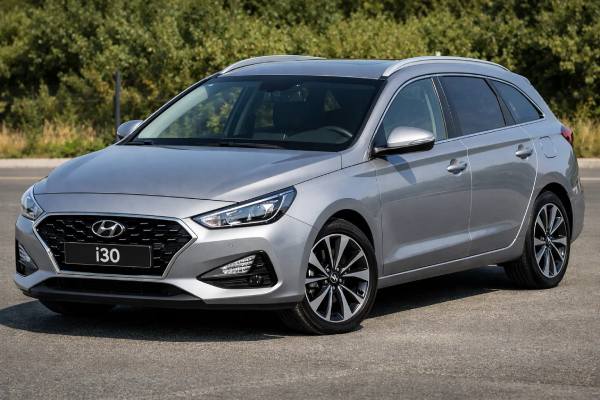
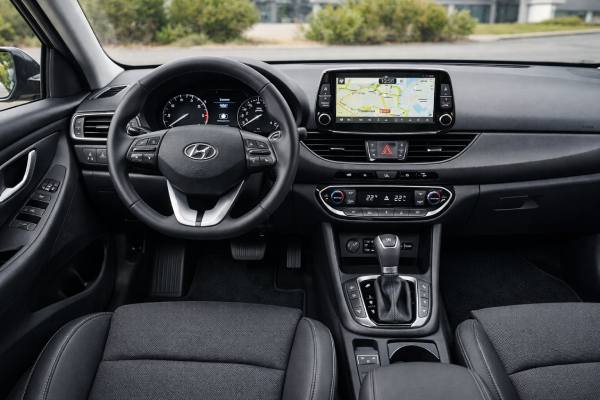
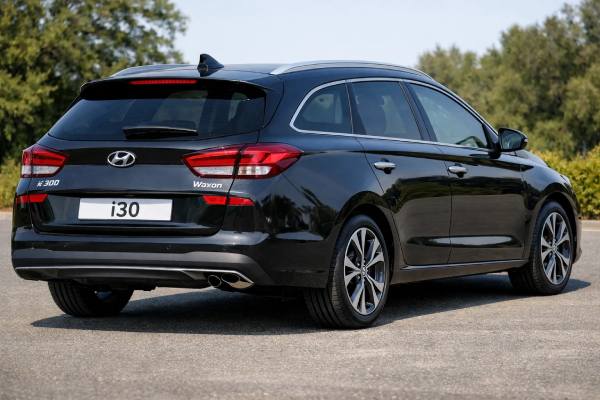
The facelifted Hyundai i30 Wagon PD 1.0 T-GDi 120 hp is one of those cars that makes more sense the longer you look at it. It is not fast in the hot-hatch sense, and it is not as fashionable as a compact SUV, but it quietly solves a lot of real ownership problems. You get a useful estate body, a 602-litre boot, a compact footprint, and a small turbo petrol engine that feels stronger than its size suggests in daily driving. The facelift also brought sharper styling, improved connectivity, and a broader safety package. For many buyers, that makes this wagon a better fit than the older diesel versions, especially if most trips are urban or mixed. The main caveat is that this is still a direct-injection turbo engine with market-specific trim and gearbox combinations, so service history and exact specification matter. This guide covers the facelift-era 120 hp version sold across European markets from 2020 onward.
Quick Specs and Notes
- The wagon body gives you 602 L of boot space without making the car bulky to park or expensive to run.
- The 1.0 T-GDi engine is smoother and more flexible than many small three-cylinder rivals at motorway speeds.
- Facelift cars gained better infotainment, stronger SmartSense safety features, and a cleaner interior layout.
- Check carefully for coil and plug issues, DCT shudder on automatic cars, and any signs of poor service history.
- A practical oil-service rhythm for used ownership is every 10,000–15,000 km or 12 months.
Quick navigation
- Hyundai i30 Wagon Facelift Portrait
- Hyundai i30 Wagon Powertrain Facts
- Hyundai i30 Wagon Facelift Grades
- Common Faults and Update History
- Scheduled Care and Buyer’s Notes
- Everyday Dynamics and Consumption
- Against Ceed SW, Focus Estate and Octavia
Hyundai i30 Wagon Facelift Portrait
The facelifted i30 Wagon arrived with a clearer sense of purpose than many mid-cycle updates. Hyundai did not reinvent the car. Instead, it sharpened the styling, improved the cabin technology, expanded the SmartSense safety package, and kept the wagon’s strongest asset intact: honest, useful practicality in a compact footprint. That matters because this is a car bought for real life. It carries family luggage, shopping, work bags, flat-pack furniture, and the occasional holiday load far more often than it chases style points.
The wagon body is the biggest reason to look at this version over the hatchback. With 602 litres of luggage space and 1,650 litres with the rear seats folded, it offers the kind of boot capacity that makes everyday compromises disappear. Yet it is still only 4,585 mm long, so it fits city parking spaces and narrow suburban streets much more easily than a larger estate or crossover. That balance is why the i30 Wagon remains appealing even in a market crowded with SUVs.
The 1.0 T-GDi engine sounds modest on paper, but it suits the car better than many buyers expect. Hyundai’s turbocharged three-cylinder offers enough torque to keep the wagon feeling responsive in normal driving, and the facelift-era powertrain range gave buyers more choice depending on market. In some countries, the 120 PS unit was offered in conventional form with a six-speed manual or optional seven-speed DCT. In others, the same basic output became tied to 48-volt mild-hybrid hardware and Hyundai’s intelligent manual transmission strategy. That market variation is important on the used market, because two cars that look almost identical in adverts can differ meaningfully in drivetrain and complexity.
The facelift also improved the car’s ownership appeal from behind the wheel. The cabin gained better screen technology, wider connected-service support in higher trims, and a more competitive safety story. Hyundai added lane-following assistance, rear collision-avoidance support, leading vehicle departure alert, and upgraded front collision-avoidance functionality with bicycle detection. Those changes made the i30 feel more modern without changing its basic character.
That character is best described as calm, practical, and quietly competent. The i30 Wagon is not a car that tries to impress you in one dramatic area. Instead, it wins by doing nearly everything well enough: decent ride quality, tidy road manners, useful cabin space, respectable fuel economy, and manageable running costs. In this 1.0 T-GDi form, it is especially attractive for drivers who want petrol smoothness and estate practicality without moving to a larger, heavier, and thirstier car.
The ownership caution is straightforward. Because this is a small direct-injection turbo petrol, it depends on proper maintenance more than old naturally aspirated family estates did. Oil quality matters, ignition components matter, and gearbox behavior matters on DCT cars. Buy a well-kept example and the i30 Wagon can be a smart long-term tool. Buy a neglected one, and the same car can become annoying in lots of small ways.
Hyundai i30 Wagon Powertrain Facts
For this guide, the reference point is the facelifted European-market Hyundai i30 Wagon with the 1.0 T-GDi 120 output family. Hyundai’s 2020 technical data sheet gives the core powertrain, performance, weight, towing, and wagon-capacity figures, while the facelift press material fills in the trim and safety picture. Some workshop-level service capacities are not clearly published in the open Hyundai sources, so those are shown carefully where reasonable and flagged for VIN-level verification.
| Powertrain and efficiency | Value |
|---|---|
| Code | 1.0 T-GDi Kappa family |
| Engine layout and cylinders | Inline-3, DOHC, 3 cylinders, 4 valves per cylinder |
| Displacement | 1.0 L (998 cc) |
| Bore × stroke | 71.0 × 84.0 mm (2.80 × 3.31 in) |
| Induction | Turbocharged |
| Fuel system | Direct injection |
| Compression ratio | about 10.5:1 |
| Max power | 120 PS, commonly listed as 120 hp, 88.3 kW @ 6,000 rpm |
| Max torque | 172 Nm (126.9 lb-ft) @ 1,500–4,000 rpm |
| Timing drive | Chain |
| Rated efficiency | around 5.2–4.9 L/100 km in early published form; later WLTP and mild-hybrid figures vary by market |
| Real-world highway @ 120 km/h | about 5.8–6.8 L/100 km in a healthy standard car |
| Transmission and driveline | Value |
|---|---|
| Transmission | 6-speed manual or 7-speed DCT, market dependent |
| Drive type | FWD |
| Differential | Open |
| Chassis and dimensions | Value |
|---|---|
| Suspension front/rear | MacPherson strut / multi-link or CTBA depending on market and specification |
| Steering | Electric rack-and-pinion |
| Brakes | Ventilated front discs; rear setup varies by trim and market |
| Wheels and tyres | Common sizes include 195/65 R15, 205/55 R16, and 225/45 R17 |
| Ground clearance | approximately 140 mm (5.5 in), wheel and market dependent |
| Length | 4,585 mm (180.5 in) |
| Width | 1,795 mm (70.7 in) |
| Height | 1,465 mm (57.7 in), 1,475 mm with roof rails in some specs |
| Wheelbase | 2,650 mm (104.3 in) |
| Turning circle | about 10.6 m (34.8 ft) |
| Kerb weight | 1,229–1,417 kg (2,709–3,124 lb), depending on gearbox and exact trim |
| GVWR | 1,820–1,850 kg (4,012–4,079 lb) |
| Fuel tank | 50 L (13.2 US gal / 11.0 UK gal) |
| Cargo volume | 602 L / 1,650 L (21.3 / 58.3 ft³), VDA |
| Performance and capability | Value |
|---|---|
| 0–100 km/h (0–62 mph) | 11.2 s |
| Top speed | 196 km/h (122 mph) |
| Braking distance 100–0 km/h | tyre and trim dependent; no single open factory figure published |
| Towing capacity | 1,200 kg (2,646 lb) braked manual / 700 kg (1,543 lb) braked DCT in published 2020 data |
| Unbraked towing | 600 kg (1,323 lb) manual / 300 kg (661 lb) DCT in published 2020 data |
| Payload | roughly 400–520 kg depending on trim |
| Fluids and service capacities | Value |
|---|---|
| Engine oil | use Hyundai-approved full-synthetic oil, commonly 0W-30 or 5W-30 depending on market and emissions spec; verify exact approval by VIN |
| Engine oil capacity | approximately 3.6–3.8 L (3.8–4.0 US qt), verify by VIN and drain procedure |
| Coolant | Hyundai-approved long-life coolant at the correct mix ratio |
| Coolant capacity | roughly 5.0–5.5 L (5.3–5.8 US qt), verify by VIN |
| Transmission fluid | use only the exact Hyundai fluid for the specific manual or DCT gearbox |
| Differential and transfer case | not applicable as separate service units on this FWD layout |
| A/C refrigerant | verify from the under-bonnet label and production date |
| A/C compressor oil | verify by refrigerant type and VIN |
| Key torque specs | always confirm wheel, spark plug, drain plug, and brake fastener values in official service data before work |
| Safety and driver assistance | Value |
|---|---|
| Euro NCAP baseline for PD i30 family | 5 stars |
| Adult occupant protection | 88% |
| Child occupant protection | 84% |
| Vulnerable road users | 64% |
| Safety assist | 68% |
| ADAS suite | FCA/AEB, lane keep assist, lane following assist, eCall, rear collision warning support, speed-limit warning, driver attention warning, and more depending on trim and market |
These figures make the i30 Wagon’s position easy to understand. It is not quick, but it is fast enough. It is not tiny, but it is easy to place. Most of all, it turns a small turbo petrol into a genuinely versatile family estate without burdening the owner with diesel-specific running habits.
Hyundai i30 Wagon Facelift Grades
Trim structure on the facelifted i30 Wagon depends heavily on market, but the most useful baseline for English-language buyers is the UK-style lineup introduced with the facelift. There, Hyundai simplified the range and pushed more equipment into higher starting trims. For the Tourer body, the 120 PS 1.0 turbo powertrain was mainly tied to SE Connect and Premium, while the more aggressively styled N Line emphasis sat more clearly with hatchback and Fastback versions. That matters because many used buyers assume “facelift” automatically means rich specification. It does not. The wagon still needs to be read trim by trim.
SE Connect is where the facelift Tourer started to feel modern rather than merely acceptable. It brought 16-inch alloy wheels, automatic headlamps with LED daytime running lamps, folding mirrors, an 8-inch touchscreen, Apple CarPlay and Android Auto, rear-view camera, Bluetooth with voice control, air conditioning, and rear parking sensors. That already covers the core features many family buyers want, especially if they care more about value than about cabin luxury.
Premium was the more desirable middle ground. It layered on 17-inch alloys, LED headlamps and tail lamps, dual-zone climate control, the larger 10.25-inch navigation display, the upgraded connected-service system, automatic wipers, front parking sensors, heated seats, heated steering wheel, electric driver’s seat adjustment, wireless phone charging, privacy glass, keyless entry, and a more polished interior feel. In daily use, Premium is usually the trim that makes the i30 Wagon feel like a genuinely well-specified estate rather than just a sensible one.
Across European markets, trim naming can differ. Comfort, Style, Trend, Prime, N Line appearance packages, and local option bundles all exist depending on country. That is why the safest way to shop is not by badge alone. Check the actual wheel size, headlamp type, screen size, seat trim, and driver-assistance menus. The same applies to drivetrain details. Some facelift 1.0 wagons are straightforward six-speed manuals, some use the seven-speed DCT, and some markets received 48-volt mild-hybrid hardware or iMT systems that change both maintenance and driving behavior.
The safety picture is good, but it also needs careful reading. There is no separate facelift wagon crash-test result. The relevant official benchmark remains the PD i30 family’s five-star Euro NCAP rating, with the rating later reviewed against facelift and mild-hybrid derivatives. Structurally, that gives the wagon a strong passive-safety baseline. More importantly for real owners, Hyundai expanded the active-safety content in the facelift. Lane Following Assist, Rear Collision-avoidance Assist, Leading Vehicle Departure Alert, upgraded Front Collision-Avoidance Assist with cyclist recognition, and eCall were part of the improved SmartSense package.
In practice, that means even modestly specified facelift wagons can feel more current than pre-facelift cars. But do not assume every car has every feature. Some systems are standard in certain countries and optional in others. That matters especially on used imports and dealer stock from mixed sources.
When viewing a car, check the actual hardware. Look for the camera cluster near the windscreen, confirm whether the screen menus show lane and safety functions, and test the parking sensors and rear camera properly. Any car with replaced glass or front-end repair history deserves extra caution because driver-assistance calibration quality matters more than buyers often realize.
Common Faults and Update History
The facelifted i30 Wagon 1.0 T-GDi is generally a solid used proposition, but it is not a no-maintenance appliance. Like most modern small turbo petrol cars, it ages best when serviced consistently and driven in a way that keeps the engine, battery, and electronics healthy. Its problems are usually manageable, but they cluster around the same familiar areas: ignition, sensors, batteries, software, and gearbox behavior on automatic cars.
A realistic fault map looks like this:
- Common and lower-cost: weak 12 V batteries, stop-start inconsistency, tyre-pressure warnings, infotainment glitches, occasional Bluetooth issues, and minor interior trim rattles.
- Occasional and medium-cost: ignition-coil or spark-plug deterioration causing misfire under load, thermostat or coolant seepage, boost-hose leaks, and front suspension consumables such as drop links or bushes.
- Occasional and medium-to-high cost: seven-speed DCT hesitation or shudder in low-speed traffic, especially on cars that live in town and have patchy service history.
- Less common but worth watching: intake-valve carbon build-up over longer mileage, timing-chain noise on poorly maintained engines, and turbo-related issues caused by poor oil discipline rather than by inherent weakness.
The engine itself is usually better than buyers fear. The 1.0 T-GDi has enough real-world torque to avoid constant high-rpm use, and that helps. But it is still a direct-injection turbo petrol. That means it likes correct oil, sensible warm-up, and regular servicing. Cars that have lived on stretched intervals or cheap lubricants are the ones more likely to develop noisy timing components, rough idle, or reduced smoothness under load.
Misfire is one of the most useful warning signs on a viewing. If the car stumbles under acceleration, hesitates at motorway merge speeds, or feels uneven when pulling hard in a taller gear, start by thinking about spark plugs and ignition coils, not instant disaster. These are common wear points on small turbo petrol engines. But they still matter, because a seller who ignored those basics may also have ignored the bigger ones.
The DCT, where fitted, deserves special attention. Hyundai’s dual-clutch setup can work well, but it is not as forgiving of neglect as a conventional torque-converter automatic. Warning signs include shudder when moving off, awkward crawling behavior in traffic, hesitation when engaging drive on a slope, or jerky parking manoeuvres when hot. Some of that can be calibration related. Some of it can be wear. Either way, it should be priced and diagnosed properly, not waved away as “normal for these.”
On 48-volt mild-hybrid versions, there is another layer to consider. They are not inherently troublesome, but they do add more battery management, starter-generator, and control logic than the plain petrol cars. If your target car has mild-hybrid hardware, make sure stop-start operation, charging behavior, and any hybrid-related warnings are fully normal.
Software history is an under-rated part of the used-car story. Hyundai’s own servicing approach includes checking for recommended updates and performing them, which can affect infotainment behavior, drivability, and assistance-system performance. On a late-model connected car, that matters. A well-documented service record is valuable not just as proof of oil changes, but as proof that the car has stayed within the manufacturer’s support loop.
For recalls and campaign work, the correct approach is always VIN-first. Do not rely on memory, trim names, or online forum summaries. Check the official recall route, and ask for dealer evidence that any open actions were completed.
Scheduled Care and Buyer’s Notes
The facelifted i30 Wagon 1.0 T-GDi does not need complicated ownership, but it does benefit from a schedule that is a little more cautious than the broadest marketing promises. On a used example, the goal is to protect the turbo, the timing chain, the ignition system, and the gearbox by staying ahead of wear instead of reacting to it.
A practical long-term schedule looks like this:
| Item | Practical interval | Notes |
|---|---|---|
| Engine oil and filter | 10,000–15,000 km or 12 months | Stay near 10,000 km if trips are short or the car works hard in traffic |
| Engine air filter | Inspect yearly, replace around 20,000–30,000 km | Sooner in dusty conditions |
| Cabin filter | 12 months or 15,000–20,000 km | Cheap and worth replacing on time |
| Spark plugs | 45,000–60,000 km or around 4 years | Do not stretch if the car is under load often |
| Coolant | Check every service, renew by official schedule | Use only the approved coolant type |
| Brake fluid | Every 2 years | Important for long-term corrosion and pedal consistency |
| Brake inspection | Every service | Pads, discs, hoses, and slider condition all matter |
| Manual gearbox oil | Inspect for leaks; refresh by condition and use | Use only the correct Hyundai fluid |
| DCT fluid and behavior | Inspect for leaks and monitor shift quality carefully | History matters more than sales language |
| Timing chain | No scheduled belt interval, but inspect on symptoms | Noise, rough timing behavior, or correlation faults matter |
| Auxiliary belt and hoses | Inspect every service | Replace on cracking, squeal, or age |
| Tyres and alignment | Pressure monthly, alignment when wear pattern changes | Inner shoulder wear means investigate |
| 12 V battery | Test yearly from year 4 onward | Weak batteries create many nuisance faults |
| 48 V system checks where fitted | At dealer or specialist inspections | Only for mild-hybrid versions |
In everyday ownership, fluids and specifications matter as much as intervals. Use the exact Hyundai-approved engine oil for the VIN and market, not simply the nearest bottle with the right viscosity on the front. The same goes for gearbox fluid, coolant chemistry, and spark plugs. Modern small turbo engines are usually reliable when maintained correctly, but they are much less tolerant of shortcuts than old multipoint-injection petrol wagons were.
The buyer’s inspection checklist should focus on the items that most directly change ownership cost:
- Cold start quality and idle smoothness.
- Any hesitation or misfire under load.
- Coolant level and signs of seepage around hoses or thermostat housing.
- Full service invoices, not just a stamped book.
- DCT smoothness in traffic if automatic.
- Matching quality tyres and even wear across the axle.
- Rear camera, parking sensors, screen response, and smartphone connectivity.
- No warning lights for engine, tyre pressure, safety systems, or battery charging.
- Evidence of campaign and update completion.
- Condition of the boot floor, cargo trims, and rear suspension area on heavily used family cars.
The best buys are usually mid-spec cars with clear history, sensible wheel sizes, and no mystery modifications. Premium trim is a particularly attractive target because it adds real everyday comfort rather than superficial gadgetry. The cars to treat with more caution are neglected DCT examples, cars with repeated low-voltage problems, and imported specifications where the exact drivetrain and service requirements are unclear.
Long term, the durability outlook is good if the car has been looked after properly. It is not a legendary old-school estate that will tolerate complete indifference, but it is a modern family wagon with a strong set of core qualities and no obvious fatal flaw when maintained with discipline.
Everyday Dynamics and Consumption
The facelifted i30 Wagon 1.0 T-GDi is not a performance estate, but it rarely feels underpowered in the way some 1.0-litre cars do. That is the first thing most drivers notice. Because the turbo engine delivers 172 Nm from low rpm, the car feels more relaxed than its size and cylinder count suggest. In town, it pulls cleanly enough without endless downshifts. On the motorway, it can hold speed with confidence so long as you treat it like a 120 hp family car rather than a warm hatch.
That balance is why the i30 Wagon works. Hyundai’s engineers did not try to disguise the fact that it is a practical estate. Instead, they tuned it to be composed, usable, and easy to live with. Straight-line stability is good, the car tracks well at speed, and it avoids the nervousness that some tall crossovers and lighter compact wagons develop on open roads. Cabin noise is also well judged for the class. You hear the three-cylinder engine when working it, but at a cruise the car settles into a calm, grown-up rhythm.
Ride quality depends partly on wheel size. Cars on 15-inch or 16-inch wheels are usually the sweet spot, offering a more forgiving secondary ride over patched urban surfaces and poorer country roads. Seventeen-inch cars still drive well, but they feel a little firmer and can be more sensitive to tyre brand and pressure. For daily family use, the smaller wheel setups are often the wiser choice unless you strongly prefer the look of the larger alloys.
Handling is tidy rather than playful. Turn-in is accurate enough, body control is sensible, and the steering is light without feeling vague. This is not a car that tries to entertain you in every corner, but it is also not dull. It has enough balance to feel competent and enough grip to remain reassuring in wet weather and loaded conditions. That is a good fit for a family wagon.
Transmission choice changes the character more than the engine does. The manual version is the simplest and, for many owners, the most appealing long-term choice. It suits the engine’s torque band and removes one of the more expensive used-car variables. The DCT makes traffic easier and can feel smooth when healthy, but it should always be judged by behavior, not assumption.
Real-world fuel economy is one of the i30 Wagon’s strongest arguments. The factory numbers look good, but real use matters more. In mixed driving, most owners should expect around 6.0–7.0 L/100 km. Steady 100–120 km/h motorway work usually lands around 5.8–6.8 L/100 km. Heavy city use, cold weather, frequent short trips, roof loads, and DCT traffic driving can push the number toward 7.5–8.0 L/100 km or above. Those figures are still quite respectable for a roomy petrol estate.
Performance is sufficient rather than exciting. About 11.2 seconds to 100 km/h and a top speed of 196 km/h will not impress enthusiasts, but that misses the point. This car’s strength is that it feels willing enough when lightly loaded, remains composed with passengers and luggage, and does not punish the owner with excessive fuel use or noise in return.
Against Ceed SW, Focus Estate and Octavia
The facelifted i30 Wagon sits in a very logical part of the market, which is why its rivals tell the story so clearly.
Against the Kia Ceed SW, the Hyundai feels like its closest cousin in both concept and appeal. The two cars overlap strongly in size, drivetrain philosophy, and ownership logic. The Kia sometimes feels a touch more contemporary in design depending on year and trim, while the Hyundai often counters with a more understated cabin and a mature, balanced feel on the road. On the used market, this is usually a battle won by condition, trim, and service history rather than by any major engineering gap.
Against the Ford Focus Estate, the Hyundai gives away some steering sweetness and dynamic sparkle. The Ford is still the more engaging driver’s car in this class. But the i30 Wagon is arguably the more rounded family choice if you care about calm long-distance manners, straightforward ergonomics, and lower-stress ownership. It feels like a car designed to be lived with rather than shown off.
Against the Skoda Octavia Estate, the Hyundai loses some outright rear-seat and luggage-space bragging rights, because the Skoda is simply one of the roomiest cars in the class. But the Octavia is also physically larger, and that matters if your daily life includes tighter city parking or smaller garages. The i30 Wagon’s advantage is that it delivers very real estate usefulness without feeling oversized. For many families, that is the smarter compromise.
The Volkswagen Golf Estate is another important benchmark. It usually feels more polished in its powertrain calibration and carries stronger badge appeal. But the Hyundai often fights back with better value, especially when comparing similarly aged used examples. If you can buy a newer, better-equipped i30 Wagon for the same money as an older Golf Estate, the Hyundai starts to make a lot of sense.
That is really the core of the i30 Wagon 1.0 T-GDi facelift verdict. It is not the class icon. It is not the biggest. It is not the most fun. But it is a highly credible all-rounder that combines a strong boot, compact outer dimensions, respectable efficiency, modern safety equipment, and generally sensible running costs. In a used market full of bloated crossovers and overcomplicated prestige cars, that combination is more attractive than it first appears.
For the right buyer, it may actually be one of the smartest estates in the segment. If you need diesel-mileage economy or maximum tow weight, there are better answers. If you want a practical petrol family car that remains easy to park, comfortable to drive, and affordable to run, the facelift i30 Wagon 1.0 T-GDi deserves to be on the shortlist.
References
- New Hyundai i30: sleeker, safer, and more efficient 2020 (Press Kit)
- Hyundai i30 Technical Specifications 2020 (Technical Data)
- EuroNCAP | Hyundai i30 2017 (Safety Rating)
- Hyundai Car Servicing | Hyundai Motor UK 2026 (Servicing)
- Hyundai Warranty Terms and Conditions 2024 (Warranty)
Disclaimer
This article is for informational purposes only and is not a substitute for professional diagnosis or repair. Specifications, torque values, service intervals, fluid grades, capacities, and procedures vary by VIN, market, drivetrain, and equipment, so always verify the exact requirements against official Hyundai service documentation for the specific vehicle.
If this guide helped you, please consider sharing it on Facebook, X, or another social platform to support our work.