

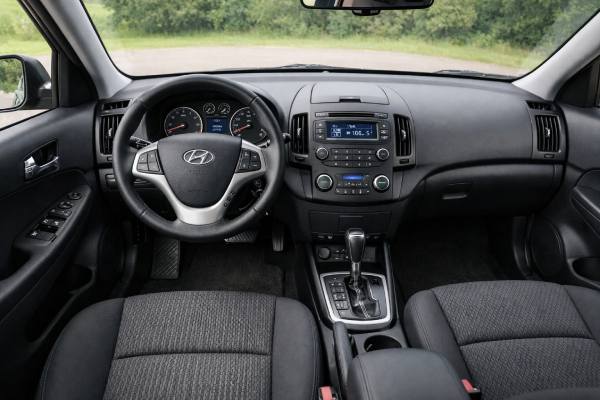
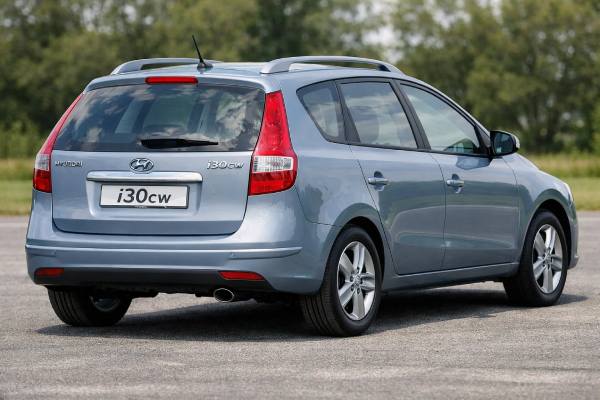
The facelifted Hyundai i30cw FD 1.6 CRDi 90 hp is one of those used estates that makes more sense the longer you look at it. It combines a compact footprint with genuinely useful wagon cargo space, a frugal diesel engine, and the straightforward front-wheel-drive layout many buyers still prefer for daily use. In facelift form, it also brought tidier styling, Euro 5-era efficiency improvements, and a more polished feel than early FD cars. The 90 hp version is not quick, but that misses the point. This is a value-focused family estate designed for commuting, light family duty, and long motorway runs where its torque, six-speed manual gearbox, and low fuel use matter far more than headline acceleration. Today, its strongest appeal is practicality with modest running costs. The main caution is that age now matters more than original specification, so timing-component condition, diesel fuel-system health, suspension wear, and recall history are all more important than trim badge alone.
Essential Insights
- The estate body is the big selling point, with useful rear-seat and luggage flexibility in a compact footprint.
- The 1.6 CRDi 90 hp engine is economical and relaxed at steady speeds, especially with the 6-speed manual.
- Facelift cars benefit from cleaner emissions tuning and a more modern look without adding major complexity.
- Short-trip use is the biggest ownership caveat because DPF, EGR, and diesel fuel-system issues are more likely on lightly used cars.
- A practical oil-and-filter rhythm is every 15,000 km or 12 months, with shorter intervals for severe use.
Start here
- Hyundai i30cw facelift profile
- Hyundai i30cw 90 hp numbers
- Hyundai i30cw equipment and safety
- Trouble spots and service actions
- Upkeep plan and buying checks
- Real-world manners and economy
- Against used estate rivals
Hyundai i30cw facelift profile
The facelifted i30cw sits in a very practical corner of the used-car market. It is a compact estate from a period when manufacturers still offered wagon versions of mainstream hatchbacks without turning everything into a crossover. That gives it a shape many buyers now appreciate more than they did when new: easy to load, easy to park, and more space-efficient than a similarly sized SUV. Hyundai aimed the original i30 family squarely at European buyers, and the cw estate followed that same logic with tidy road manners, sensible interior packaging, and a clear focus on day-to-day usability.
In 1.6 CRDi 90 hp form, the emphasis is efficiency and value rather than performance. The diesel engine offers enough low-end pull to make the car feel flexible in traffic and settled on the motorway, but not enough to disguise the fact that this is the entry diesel rather than the fast one. That is not really a criticism. Buyers looking at this version usually want a lower tax and fuel bill, not brisk overtaking times. When driven within that context, the 90 hp model is easy to understand. It works best as a commuting and family-hauling estate for drivers who regularly cover enough distance to justify an older diesel.
The facelift matters because it sharpened the i30cw’s appeal without changing its core identity. Styling was cleaned up, emissions were improved, and some markets received better trim logic, eco-focused Blue Drive packaging, and small equipment changes that made the car feel more mature. Hyundai did not turn the FD into a radically different product. Instead, it polished an already sensible formula. That is good news in the used market because the facelift cars retain the same basic mechanical simplicity while feeling a little newer and better resolved.
The estate body is one of its biggest strengths. Published luggage figures put the i30cw at about 415 liters with the rear seats in place and around 1,395 liters with them folded. That is meaningful space for a compact estate and enough to make the car useful for travel, child seats, pets, small furniture runs, or outdoor gear. The rear opening is wide, the load area is square enough to be practical, and the longer roofline gives the car more genuine carrying ability than the hatchback version.
What matters today is that this is no longer just a value alternative to a Ford Focus Estate or Skoda Octavia Estate. It is now an older used diesel, and that changes the buying priorities. A clean, well-serviced example can still feel like a smart purchase because the core package is so rational. But a neglected one can quickly become expensive through suspension wear, diesel aftertreatment problems, poor recall history, and catch-up maintenance. In other words, the i30cw facelift is appealing because it is useful and efficient, but it still needs the same careful inspection any aging diesel estate deserves.
Hyundai i30cw 90 hp numbers
For this article, the focus is the facelifted Hyundai i30cw FD sold from 2010 to 2012 with the 1.6 CRDi 90 hp diesel engine and front-wheel drive. Equipment and eco packages varied slightly by country, so the figures below reflect the mainstream European-market six-speed manual estate rather than every regional trim or tyre combination.
Powertrain and efficiency
| Item | Hyundai i30cw (FD) 1.6 CRDi 90 hp |
|---|---|
| Code | D4FB |
| Engine layout and cylinders | Inline-4, 4 cylinders, DOHC, 4 valves/cyl |
| Bore × stroke | 77.2 × 84.5 mm (3.04 × 3.33 in) |
| Displacement | 1.6 L (1,582 cc) |
| Induction | Turbocharged, intercooler |
| Fuel system | Common-rail direct injection |
| Compression ratio | 17.3:1 |
| Max power | 90 hp (66 kW) @ 4,000 rpm |
| Max torque | 235 Nm (173 lb-ft) @ 1,750–2,500 rpm |
| Timing drive | D4FB family timing-chain layout; verify by VIN before ordering parts |
| Engine systems | Diesel particulate filter |
| Rated efficiency | about 4.7 L/100 km (50.0 mpg US / 60.1 mpg UK) combined |
| Urban | about 5.4 L/100 km (43.6 mpg US / 52.3 mpg UK) |
| Extra-urban | about 4.3 L/100 km (54.7 mpg US / 65.7 mpg UK) |
| Real-world highway @ 120 km/h | usually around 5.3–6.0 L/100 km depending on tyres, weather, and load |
The key takeaway is simple: this engine is tuned for economy rather than pace. The torque arrives early enough to make the car usable, but it is still the slowest diesel in the facelift range. For buyers who spend time on open roads rather than doing constant short urban trips, that trade-off can work well.
Transmission, chassis, and dimensions
| Item | Hyundai i30cw (FD) 1.6 CRDi 90 hp |
|---|---|
| Transmission | 6-speed manual |
| Drive type | FWD |
| Differential | Open |
| Suspension front / rear | MacPherson strut / independent rear layout |
| Steering | Power-assisted rack and pinion |
| Brakes front / rear | Ventilated discs 280 mm (11.02 in) / discs 262 mm (10.31 in) |
| Wheels and tyres | 185/65 R15 is a common size on 90 hp cars |
| Length | 4,500 mm (177.2 in) |
| Width | 1,775 mm (69.9 in) |
| Height | 1,565 mm (61.6 in) |
| Wheelbase | 2,700 mm (106.3 in) |
| Turning circle | about 10.4 m (34.1 ft) |
| Kerb weight | about 1,334 kg (2,941 lb) |
| GVWR | about 1,920 kg (4,233 lb) |
| Payload | about 586 kg (1,292 lb) |
| Fuel tank | 53 L (14.0 US gal / 11.7 UK gal) |
| Cargo volume | 415 L (14.7 ft³) seats up / 1,395 L (49.3 ft³) seats folded |
The estate body is the practical highlight here. The load area is substantially more useful than the hatchback’s, and that changes how the car works in daily life. This is not just a hatch with a longer roof. It is a genuinely more cargo-friendly version of the FD family.
Performance, fluids, and safety basics
| Item | Hyundai i30cw (FD) 1.6 CRDi 90 hp |
|---|---|
| 0–100 km/h | about 14.4 s |
| Top speed | about 172 km/h (107 mph) |
| Braking distance 100–0 km/h | not consistently published for this exact variant; tyre choice matters greatly |
| Towing capacity | market and trim dependent; verify by VIN and local handbook |
| Engine oil capacity | about 5.3 L (5.6 US qt) |
| Coolant capacity | about 6.8 L (7.2 US qt) |
| Engine oil grade | low-SAPS diesel oil of the correct Hyundai/ACEA specification, commonly 5W-30 depending on climate |
| Coolant | Hyundai-approved ethylene-glycol coolant |
| Crash rating | ANCAP 5 stars for i30cw variants with side curtain airbags; without curtains the i30cw held 4 stars |
| ADAS | no AEB, ACC, lane keeping assist, blind-spot monitoring, or traffic-sign assist |
A few figures deserve caution. Towing limits varied by market and homologation details, so they are best checked from VIN-specific documents. The same is true for manual gearbox fluid capacity and exact refrigerant charge. For a used buyer, the most useful hard numbers are fuel use, cargo space, payload, and the 53-liter tank, because those are the figures that shape daily ownership.
Hyundai i30cw equipment and safety
Facelift i30cw trim structure varied across Europe, but most markets followed a familiar pattern: a lower trim focused on value, a mid-level version with the essentials families actually wanted, and a higher trim that added convenience and appearance upgrades. Names differed by country, but badges such as Classic, Comfort, Style, and Blue Drive-related variants were common. That means buyers should not rely only on the trim name when shopping used. A VIN-based equipment lookup or careful visual inspection is a better guide than a seller’s ad copy.
The 90 hp diesel was usually associated with the more economical side of the range. Many examples rode on smaller wheels, often 15-inch alloys or steel wheels with full covers, which suited the car well. They lowered tyre costs, softened the ride, and helped efficiency. Better-equipped trims added alloy wheels, richer seat fabrics, a trip computer, steering-wheel controls, rear parking aids in some markets, and upgraded audio or climate features. Some eco-oriented versions also prioritized lower rolling resistance, emissions tuning, and efficiency-oriented equipment rather than appearance upgrades.
Quick identifiers help. Lower-output 90 hp cars often wear smaller wheel packages and simpler trim, while more expensive 1.6 CRDi versions with 116 or 128 hp are more likely to show larger wheels, more exterior detailing, and better cabin finish. That matters because many used-car ads lump all 1.6 diesels together. For buyers, the safest approach is to verify power output from the VIN or official registration data, then inspect equipment on the car itself rather than assuming the badge tells the whole story.
Safety equipment was respectable for the era, though market-dependent. ABS, EBD, and stability control were important parts of the i30cw’s appeal, and multiple airbags were available across the range. The important catch is that curtain airbags were not universal in every market or trim. That matters because the i30cw’s stronger five-star ANCAP result applied specifically to variants fitted with side curtain airbags. Without them, the model held a four-star result instead. For a used buyer, that means checking equipment is not just about comfort. It directly affects the safety rating story.
The i30cw also predates the modern ADAS era. Buyers should not expect autonomous emergency braking, blind-spot warning, lane-centering, or radar cruise. Safety is instead built around conventional systems: body structure, seatbelt pretensioners, multiple airbags, ESC, and solid basic chassis behavior. In practical terms, the best safety upgrade today is not software. It is a well-maintained example with proper tyres, healthy brakes, completed recalls, and the full airbag package.
Year-to-year facelift changes were evolutionary rather than dramatic. The biggest differences that matter to used buyers are emissions class, trim logic, lighting details, wheel fitments, and whether a particular market car combines the lower 90 hp engine with the features you actually want. That is why the best shopping strategy is to focus on verified equipment and condition instead of chasing one trim label across every country listing.
Trouble spots and service actions
The facelift i30cw 1.6 CRDi 90 hp is generally a sensible older diesel estate, but it follows the same rule as most cars in this class: it is dependable when maintained and troublesome when neglected. The core engine and chassis design are not inherently fragile, yet time, mileage, and driving pattern have a huge effect on how these cars age. A motorway-used car with steady servicing is usually far more attractive than a low-mileage example that has spent years doing short cold trips.
Common, lower-to-medium cost issues
- Suspension wear: anti-roll bar links, bushes, front joints, and drop links can create knocks and looseness.
- Rear brake drag: disc-brake hardware can seize or wear unevenly on lightly used cars.
- Glow plugs and battery weakness: cold-start roughness is not unusual as these cars age.
- Cabin trim and tailgate wear: wagons get used hard, so tired cargo trim and worn load-bay fittings are common rather than alarming.
Common, medium-cost diesel issues
- EGR fouling: symptoms include hesitation, uneven pull, smoke, and fault codes.
- DPF trouble: repeated short journeys can clog the filter, reduce performance, and raise fuel use.
- Fuel filter neglect or poor fuel quality: hard starting and inconsistent running can follow.
- Turbo hose or intake leaks: loss of boost and a dull, flat feel are classic signs.
Occasional but important
- Injector sealing or fueling imbalance: look for diesel smell, smoky starts, or uneven idle.
- Timing-chain wear symptoms: if chain stretch or tensioner wear develops, owners may notice rattle on start-up or timing-correlation faults.
- Cooling-system aging: hoses, thermostat housing areas, and small leaks deserve attention before they become major faults.
The official recall point most relevant across the FD family is the airbag control unit calibration campaign affecting i30 FD vehicles built up to May 2012. Earlier steering-related campaigns also exist in the wider FD story, especially on earlier production ranges, so a VIN-based recall check is essential even on facelift cars that look fine. The key lesson is simple: do not assume an older Hyundai has had every campaign completed just because it has survived this long.
Software and calibrations matter too, even on a relatively simple diesel estate. Engine-management updates can affect drivability, warning-light behavior, and some emissions-related complaints. If a car has persistent fault codes, recurring DPF issues, or rough running with no clear mechanical cause, it is worth asking whether the dealer network ever applied the latest control-module updates.
For pre-purchase checks, request:
- Full service history with oil grade details where possible.
- Recall completion proof.
- Evidence of recent brake and suspension work.
- Confirmation that the DPF and EGR systems are functioning properly.
- A scan for stored engine, ABS, and airbag faults.
A well-kept i30cw 90 hp is rarely exciting, but it can be a very solid used buy. A badly maintained one often reveals itself through multiple small faults rather than one dramatic failure, which is why a careful inspection matters so much.
Upkeep plan and buying checks
The best maintenance strategy for the i30cw 1.6 CRDi is conservative rather than optimistic. Hyundai’s schedule provides the baseline, but older diesel estates respond well to a slightly stricter approach. Fresh oil, clean filtration, healthy brakes, and regular inspections matter more than stretching intervals. That is especially true for cars used in town, because short-trip diesel use accelerates soot buildup and makes DPF life harder.
Practical maintenance schedule
- Engine oil and filter: every 15,000 km or 12 months for normal use; shorten for severe operation or frequent short trips.
- Engine air filter: inspect routinely and replace when dirty; do not clean and reuse.
- Cabin air filter: replace regularly to keep heater and A/C performance healthy.
- Fuel filter: replace on schedule and earlier if fuel quality is doubtful.
- Coolant: first replacement at 210,000 km or 10 years, then every 30,000 km or 24 months.
- Brake fluid: every 24 months is a smart preventive interval.
- Tyre rotation: every 12,000 km is a useful rule of thumb.
- Brakes: inspect pads, rotors, rear caliper condition, and parking-brake action at each service.
- Battery and glow-plug health: check before winter on older cars.
- Timing components: inspect for cold-start rattle, correlation faults, and chain-related noise rather than assuming they are lifetime parts.
- Manual gearbox and driveshafts: check for leaks, worn mounts, and torn boots.
- Auxiliary belts and hoses: inspect for cracking, swelling, and bearing noise.
Fluids and service notes
| Item | Practical guidance |
|---|---|
| Engine oil capacity | about 5.3 L (5.6 US qt) |
| Coolant capacity | about 6.8 L (7.2 US qt) |
| Fuel tank | 53 L (14.0 US gal / 11.7 UK gal) |
| Oil type | low-SAPS diesel oil of the correct Hyundai/ACEA specification |
| Coolant type | Hyundai-approved ethylene-glycol coolant |
| Brake fluid | DOT 4 type is the normal expectation |
| Tyre size | 185/65 R15 common on 90 hp variants |
| Air cleaner note | replace when necessary; do not wash and reuse |
| Diesel fuel note | poor fuel quality can require more frequent filter replacement |
Buyer’s guide checklist
- Start the engine from cold and listen for chain noise, injector clatter, or uneven idle.
- Check for strong, smooth boost without flat spots.
- Confirm no DPF, airbag, ABS, or ESC warning lights remain after start-up.
- Inspect the tailgate area, load floor, rear arches, and underside for corrosion.
- Test the rear brakes and parking brake, because estate cars often spend time lightly loaded and can suffer rear brake neglect.
- Inspect tyres for mismatched brands and uneven wear.
- Check the clutch for slip or shudder under load.
- Verify curtain airbags if safety equipment level matters to you.
- Run the VIN through Hyundai’s recall system and ask for invoice-backed service history.
Long-term durability is respectable if the car has seen steady maintenance and the right kind of use. The best examples are often owned by drivers who covered regular mixed or motorway miles. The least appealing are urban-only cars with uncertain fuel quality, short service history, and multiple dashboard warnings.
Real-world manners and economy
The i30cw 1.6 CRDi 90 hp is not fast, but it is usually pleasant in the ways that matter for an everyday estate. It has enough low-rpm torque to move cleanly away from junctions, enough flexibility to make traffic driving easy, and a six-speed manual gearbox that suits the engine’s character. At a steady pace, the car feels more relaxed than its power figure suggests. That is the key to understanding it. This version is not about making the most of every overtaking gap. It is about covering distance calmly and economically.
Ride comfort is one of its better traits, especially on the smaller wheel and tyre packages common to 90 hp cars. The estate body gives the chassis a planted feel, and the suspension is generally well judged for daily driving. Broken urban roads can still expose worn dampers or bushes on an older example, but a healthy car feels tidy rather than flimsy. The steering is accurate enough, though not particularly rich in feedback. That fits the broader character of the car: solid, predictable, and more mature than sporty.
Noise levels are acceptable for a period diesel estate. At idle and under cold load, the 1.6 CRDi clearly sounds like a diesel. Once warm and settled at motorway speeds, though, it becomes easier to live with than many buyers expect. Tyres and maintenance quality have a big influence here. Cheap rubber, tired engine mounts, and worn suspension joints can make a perfectly decent i30cw feel far rougher than it should.
Performance needs honest expectations. A 0–100 km/h time of around 14.4 seconds and a top speed near 172 km/h are adequate, not impressive. The important number is torque. With 235 Nm arriving low in the rev range, the car feels competent enough for commuting and family use as long as you drive it smoothly. Passing at higher speeds takes planning, and full-load motorway climbing will show the limits of the 90 hp tune.
Fuel use is where the i30cw 90 hp earns its keep. Official combined consumption sits around 4.7 L/100 km, and real-world highway figures can still be very good for an older estate if the car is healthy. Mixed driving usually lands closer to the mid-5s or low-6s L/100 km, while short winter trips or DPF trouble can push it higher. That is why this version still makes the most sense for drivers who do enough distance to keep the diesel systems happy.
Load carrying is another strong point. The estate shell remains composed when loaded, and the longer roofline helps the car keep its balance with luggage onboard. It is not a heavy tow car, and towing limits should always be checked by VIN and market, but as a practical family estate it still feels well judged. In short, the i30cw 90 hp drives exactly the way a sensible diesel wagon should: steady, economical, and easy to live with when in good condition.
Against used estate rivals
In today’s used market, the facelift i30cw 1.6 CRDi 90 hp competes less with brand-new compact cars and more with older estates like the Kia cee’d SW 1.6 CRDi, Ford Focus Estate 1.6 TDCi, Opel Astra Sports Tourer 1.7 CDTi, Peugeot 308 SW HDi, and some lower-powered Skoda Octavia Estate diesels. Its strongest argument is not that it dominates any one category. It is that it avoids many of the obvious downsides of its rivals while offering a very usable body style and low running costs.
Against the Kia cee’d SW, the Hyundai feels like a close cousin because it effectively is one in concept and market position. The decision often comes down to condition, trim, and local parts support more than engineering differences. Against the Ford Focus Estate, the Hyundai gives away some steering polish and driver appeal, but can win on simplicity and ownership calm. Against a Peugeot 308 SW or certain Opel diesels, the i30cw often looks attractive because it is mechanically straightforward and easier to understand for the average used buyer.
The Skoda Octavia Estate is the rival many practical buyers will consider. The Skoda can feel larger, more mature, and in some trims more premium. It also often carries stronger resale values. The i30cw’s answer is value. A clean Hyundai can offer a lot of the same everyday usefulness for less money, though it does not have the same brand image or range of drivetrain choices.
Where the i30cw loses ground is mostly in outright pace and image. The 90 hp version is not brisk, and buyers who want stronger overtaking performance should look at the 116 or 128 hp diesels or an entirely different car. It also lacks the more premium cabin impression of the best German or Czech alternatives. Yet in purely rational terms, it remains appealing because it combines:
- compact exterior dimensions,
- real estate-car cargo space,
- good diesel economy,
- straightforward front-wheel-drive packaging,
- and safety fundamentals that were decent for the era.
The main reasons to avoid it are equally clear:
- diesel short-trip use does not suit it,
- safety equipment varies by trim,
- timing-component and DPF health need careful checking,
- and age now matters more than original spec.
That leaves a pretty clear verdict. The facelift i30cw 1.6 CRDi 90 hp is not a fashionable used estate, but it is one of the more logical ones. For the buyer who wants an affordable wagon with good fuel use and conventional engineering, it still deserves serious consideration. The best examples are honest cars that do their job quietly. The wrong ones usually show plenty of warning signs before you buy, which makes careful inspection the real skill that separates a good purchase from a disappointing one.
References
- HYUNDAI I30 OWNER’S MANUAL Pdf Download | ManualsLib 2026 (Owner’s Manual)
- Hyundai i30 I CW (facelift 2010) 1.6 CRDi (90 Hp) | Technical specs, data, fuel consumption, Dimensions 2026 (Technical Data)
- Hyundai i30 | Safety Rating & Report | ANCAP 2026 (Safety Rating)
- Home | Hyundai Recalls & Service Campaigns 2026 (Recall Database)
- Hyundai recalls certain ‘i30 (FD)’ passenger vehicles – CCPC Consumers 2020 (Recall Database)
Disclaimer
This article is for informational purposes only and is not a substitute for professional diagnosis or repair. Specifications, torque values, service intervals, procedures, and fitted equipment can vary by VIN, market, build date, emissions package, and trim. Always verify critical technical data against the official service documentation for the exact vehicle before ordering parts or carrying out maintenance.
If this guide helped you, please consider sharing it on Facebook, X, or another social platform to support our work.