
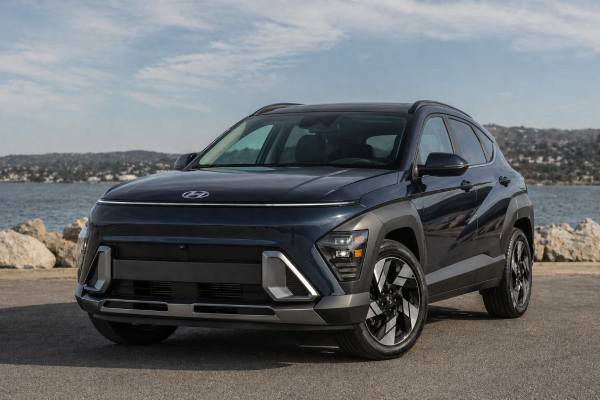
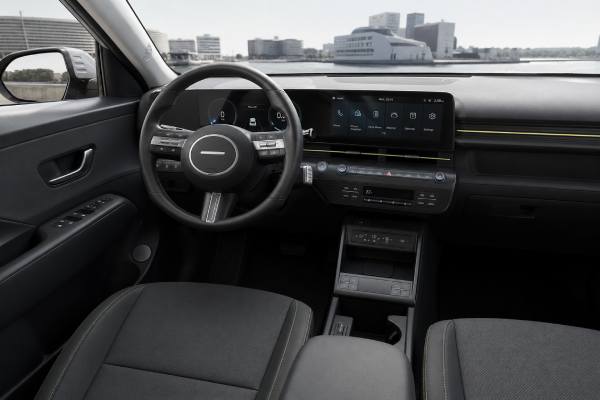
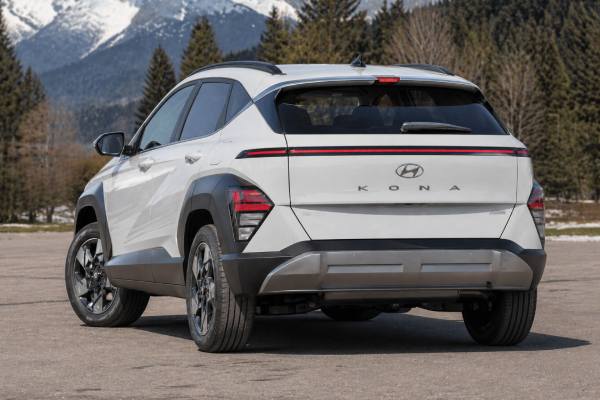
The current Hyundai KONA (SX2) 1.6 T-GDi is the version of the new-generation KONA for buyers who want the sharpest petrol performance without stepping into a full electric model or a dedicated N product. In today’s published European-market form, it combines a 1.6-litre turbocharged direct-injection engine, a seven-speed dual-clutch transmission, and either front-wheel drive or optional all-wheel drive depending on trim and market. That makes it notably quicker and more flexible than the smaller petrol engines, while still preserving the SX2 KONA’s roomy cabin, clean dashboard design, and useful family-car footprint. The catch is simple. This is a modern turbo GDi crossover, so it needs more disciplined servicing and slightly more mechanical sympathy than a plain naturally aspirated small SUV. For the right owner, that is a fair trade. The SX2 1.6 T-GDi is not the cheapest KONA to run, but it is one of the most complete.
Core Points
- Strong mid-range torque makes the SX2 KONA feel genuinely brisk in real traffic.
- The new-generation body is roomier and more mature than the older KONA without becoming hard to park.
- Current 180 hp versions pair well with the 7DCT and offer useful upper-trim equipment.
- The main ownership caution is the turbo GDi and DCT combination, which rewards timely oil changes and smooth low-speed use.
- A current official baseline in published European material is an oil change every 15,000 km or 1 year.
Start here
- Hyundai KONA SX2 turbo profile
- Hyundai KONA SX2 numbers and hardware
- Hyundai KONA SX2 grades and smart safety
- Known weaknesses and dealer updates
- Ownership schedule and purchase pointers
- Road character and real consumption
- SX2 turbo versus alternatives
Hyundai KONA SX2 turbo profile
The SX2-generation KONA is a more substantial vehicle than the first KONA in almost every way. It is longer, wider, cleaner in layout, and much easier to justify as a family car rather than just a stylish small crossover. The 1.6 T-GDi sits near the top of the petrol range and is the version that gives the chassis the performance it always looked like it deserved. In today’s current European-market material, it is the engine for buyers who want a quicker KONA without giving up everyday practicality.
That matters because the rest of the KONA lineup can feel very different depending on which engine you choose. The smaller petrol engines do the job, but the 1.6 turbo is the one that makes overtaking easy, motorway merging relaxed, and full-load driving feel natural rather than strained. On paper, the gap does not look enormous. On the road, it is obvious. The extra torque arrives much earlier, the throttle response is more effortless once rolling, and the seven-speed dual-clutch transmission keeps the engine in a more useful part of the power band.
This guide uses the current European and German-market 1.6 T-GDi 180 PS car as the baseline because it is the clearest officially published current version of the model. That also means it reflects some real market nuance. Today, the 180-output engine is not universally fitted across every trim. In Germany, for example, it appears on higher trims, and all-wheel drive is reserved for the top N Line X. That shapes both the buying decision and the ownership experience. A front-wheel-drive 180 car is lighter, cheaper on tyres, and a little more efficient. The AWD version adds security and traction, but it also adds weight, cost, and a small fuel-consumption penalty.
The broader character of this KONA is easy to understand. It is not a hard-edged performance SUV. It is a quick, well-equipped compact crossover that still prioritizes comfort, cabin tech, and daily usability. The SX2 body gives it better rear-seat space and a more useful boot than the old car. The dashboard feels cleaner and more premium. The visibility is good, and the upright seating position still makes it easy to live with.
The main ownership compromise comes from the powertrain. A turbocharged direct-injection engine and a dual-clutch transmission are never the most forgiving combination for neglected maintenance or purely lazy urban use. That does not make this KONA fragile. It simply means it is the version that rewards owners who understand what they are buying. Treated properly, it has the ingredients of a very strong all-round small SUV.
Hyundai KONA SX2 numbers and hardware
Because the current 1.6 T-GDi KONA varies by market, wheels, and drivetrain, the figures below reflect the current published European and German-market 180-output version as the main reference point. Where public factory material does not clearly publish a value, it is better to say so than to invent it.
| Item | Hyundai KONA (SX2) 1.6 T-GDi 180 hp |
|---|---|
| Code | Smartstream 1.6 T-GDi; current public European sheets identify the engine mainly by output rather than a full workshop code |
| Engine layout and cylinders | Inline-4, DOHC, 16 valves, 75.6 × 89.0 mm (2.98 × 3.50 in) |
| Displacement | 1.6 L (1,598 cc) |
| Induction | Turbocharged |
| Fuel system | Gasoline direct injection |
| Compression ratio | 10.0:1 |
| Max power | 180 PS / about 177 hp (132 kW) @ 6,000 rpm |
| Max torque | 265 Nm (195.5 lb-ft) @ 1,500–4,500 rpm |
| Timing drive | Chain-driven timing layout is typical for this engine family |
| Rated efficiency | WLTP combined 6.4 L/100 km for FWD and 7.0 L/100 km for AWD in current German-market data |
| Real-world highway @ 120 km/h | Usually around 7.0–8.0 L/100 km (33.6–29.4 mpg US / 40.4–35.3 mpg UK), depending on tyres, weather, and load |
| Item | Hyundai KONA (SX2) 1.6 T-GDi 180 hp |
|---|---|
| Transmission | 7-speed DCT; current public European material does not consistently publish the internal gearbox code |
| Drive type | FWD, with optional AWD on selected high trims in some current markets |
| Differential | Open; AWD versions use an active on-demand system rather than a locking differential |
| Suspension (front / rear) | MacPherson strut / torsion beam on FWD, multi-link on AWD |
| Steering | Column-mounted motor-driven power steering, rack and pinion, 2.5 turns lock-to-lock |
| Brakes | Front ventilated discs and rear solid discs; current public European pricing sheets do not clearly publish rotor diameters for this exact variant |
| Wheels and tyres | Most common current 180-output European tyre size is 215/55 R18; other trims and regions may vary |
| Ground clearance | 170 mm (6.7 in) on 17- and 18-inch wheels in current European data |
| Length / Width / Height | 4,350 / 1,825 / 1,585 mm (171.3 / 71.9 / 62.4 in); N Line body length 4,385 mm (172.6 in) |
| Wheelbase | 2,660 mm (104.7 in) |
| Turning circle (kerb-to-kerb) | 10.6 m (34.8 ft) |
| Kerb weight | Roughly mid-1.4 to mid-1.6 tonne range depending on trim and drivetrain |
| GVWR | About 2,015 kg (4,442 lb) for current AWD 180-output spec; lower on lighter FWD versions |
| Fuel tank | 47 L (12.4 US gal / 10.3 UK gal) |
| Cargo volume | 466 / 1,300 L (16.5 / 45.9 ft³), method per current European published data |
| Item | Hyundai KONA (SX2) 1.6 T-GDi 180 hp |
|---|---|
| Acceleration | 0–100 km/h in 8.1 s for FWD and 8.4 s for AWD |
| Top speed | 210 km/h (130 mph) FWD, 209 km/h (130 mph) AWD |
| Braking distance | No single current open official 100–0 km/h stop-distance figure published for this exact powertrain |
| Towing capacity | 1,310 / 600 kg (2,888 / 1,323 lb) braked / unbraked in current published European data |
| Payload | Varies by trim and drivetrain; confirm from registration plate and VIN data before purchase |
| Engine oil | Use the exact Hyundai-approved oil specification and viscosity listed for the VIN-market car; open public current documents do not cleanly publish one universal fill figure |
| Coolant | Use Hyundai-approved long-life coolant only; verify mix and service quantity by VIN |
| Transmission fluid | Use the correct 7DCT fluid only; verify service quantity and procedure by VIN |
| Differential / transfer case | AWD versions require VIN-correct fluid specifications and service procedures |
| A/C refrigerant | Check under-bonnet label before service |
| Key torque specs | Wheel nuts: 107–127 Nm (79–94 lb-ft) |
| Crash ratings | Euro NCAP 2023: 4 stars; Adult 80%, Child 83%, Vulnerable Road Users 64%, Safety Assist 60% |
| IIHS | Strong 2024–26 crashworthiness ratings on the current Kona family |
| Headlight rating (IIHS) | Acceptable |
| ADAS suite | FCA 1.5, ACC with stop, lane keeping and lane following, speed-sign assist, HDA 1.5, plus blind-spot and rear cross-traffic functions on higher trims or packages |
The spec verdict is straightforward. This KONA is not outrageously fast, but it is much quicker than the mainstream small-SUV norm and backed by a genuinely useful current equipment and safety package.
Hyundai KONA SX2 grades and smart safety
For the current 1.6 T-GDi KONA, trim choice matters almost as much as the engine. Hyundai does not treat the 180-output car as a bargain-basement performance option. In current German-market form, it sits in the better-equipped part of the range and appears on N Line, Prime, and N Line X trims, while AWD is reserved for N Line X. That immediately tells you what sort of buyer Hyundai had in mind. This is the quick, upper-trim KONA, not the stripped-down one.
N Line is often the natural entry point into the 180-output car. It adds the sportier design treatment, better cabin presentation, and wheel and trim details that make the SX2 feel more expensive than the lower grades. It is also the trim where the 180 PS engine begins to make sense emotionally, because the look and the drivetrain finally line up. Prime then shifts the focus toward comfort and driver assistance, with features like the larger lighting package, tailgate convenience, surround-view camera, richer seat trim, powered front seats, and broader blind-spot support. N Line X is the one for buyers who want the fullest current combination of appearance, equipment, and the option of AWD.
There are a few practical identifiers worth knowing. Current 180 cars tend to run 18-inch wheels, and better trims gain the LED front light bar, projection headlamps, and richer parking-assistance setup. N Line X adds more premium-feeling seat materials, BOSE audio, and the broader smart-key and digital-key functionality. In the used market later on, that will matter because classified listings will almost certainly overstate trim levels. Physical equipment is more reliable than seller wording.
On safety, the SX2 KONA is well equipped, but not perfect. Euro NCAP gave the current-generation KONA a 4-star rating in 2023. That does not tell the whole story by itself. The adult and child scores are solid, and the active-safety package is broad, but a few details in the crash and assisted-driving tests kept the car just below the 5-star threshold. In real ownership terms, it remains a safe current small SUV, but not one of the very best on the European scoreboard.
The IIHS picture is stronger for the North American Kona family that shares this generation’s body structure. The current Kona earns Good crashworthiness results in the major crash tests, Good front-crash-prevention performance, and an Acceptable headlight result, with those ratings applying across the current 2024–26 body generation. That is useful context because it suggests the underlying shell is strong even if market-specific safety-package scoring differs between Europe and North America.
Hyundai’s active-safety offering is one of the SX2’s best strengths. Current published trim data shows forward collision-avoidance assist, adaptive cruise with stop function, highway driving assist, lane following assist, lane keeping assist, intelligent speed-limit assistance, rear camera, and parking sensors as core parts of the upper-trim package. On better cars and option packs, you also get blind-spot collision warning, blind-spot view monitor, rear cross-traffic collision warning, safe exit warning, side parking sensors, and rear parking collision-avoidance braking. That means the current 180-output KONA is not just a fast trim. It is also one of the most complete safety and convenience packages in the KONA lineup.
Known weaknesses and dealer updates
Because the current 1.6 T-GDi SX2 KONA is still a relatively young model, it does not yet have the long public failure history of an older crossover that has already spent a decade on the road. That is good news. But it also means buyers need to separate two things clearly: actual SX2-specific public patterns and the well-known watch points of a modern turbocharged direct-injection engine with a dual-clutch transmission.
| Prevalence and cost tier | What to watch for | Why it matters |
|---|---|---|
| Common / low | Tyre edge wear, brake surface corrosion, 12 V battery weakness, parking-sensor or camera complaints after minor repair | These are everyday ownership issues that can make a current car feel older than it is |
| Occasional / medium | Warm low-speed DCT jerkiness, coil or plug-related misfire, boost-hose seepage or loose clamps, wheel-alignment drift | Usually manageable if caught early and not ignored |
| Rare / high | Turbo wear from poor oil history, AWD coupling or driveline stress from mismatched tyres, timing-correlation or chain-noise concerns at higher mileage | These are the expensive problems that good history is meant to prevent |
The main drivetrain caution is still the 7DCT. In ordinary driving it suits the engine well and helps the car feel alert. In repeated creeping traffic, steep hill launches, or badly judged stop-start use, it can feel more abrupt than a conventional torque-converter automatic. That does not automatically mean a fault. What matters is consistency. A healthy KONA should feel deliberate but clean. Persistent shudder, rough engagement after warm-up, or repeated hesitation under gentle load deserves inspection.
The engine side is more about habits than about a single famous defect. This turbo GDi unit wants clean oil, healthy ignition components, and intact boost plumbing. Over time, repeated short trips, extended oil intervals, and cheap fuel or indifferent servicing can increase the chance of rough cold running, misfire under load, oil vapour buildup, and eventually intake-carbon issues that are common to many direct-injection turbo engines. That is not a reason to fear the car. It is a reason to service it properly.
AWD cars bring one more rule: keep four matching tyres on them. Significant rolling-diameter mismatch, neglected alignment, or repeated hard launches can turn an otherwise durable rear driveline into a noisy and expensive one. If an AWD SX2 KONA has vibration, shunt, or rear-end hum, treat that as serious and not just “normal SUV noise.”
Software also matters more on a current KONA than many buyers expect. Infotainment and navigation can be updated, while engine, transmission, and ADAS calibration work stays in dealer territory. That means a full service history on a new-ish KONA is not just about oil stamps. It is also about whether the car has had its updates and calibration checks when needed.
At the moment, there is no single public campaign that defines every 2025-present 1.6 T-GDi SX2. That is why VIN-based recall and service-campaign checks are essential. Do not rely on seller memory or generic forum lists. On a car this new, official VIN confirmation and dealer records are much more useful than second-hand anecdotes.
Ownership schedule and purchase pointers
For this KONA, the smartest maintenance strategy is not extreme. It is simply disciplined. Current Hyundai Germany service information lists an engine-oil change every 15,000 km or 1 year and a general maintenance interval every 30,000 km or 2 years. That is a good official backbone. For owners who expect long-term durability from a turbo GDi engine, though, it is sensible to tighten the plan slightly in heavy urban use, hot climates, repeated cold starts, or regular fast-road driving.
| Item | Practical interval | Owner note |
|---|---|---|
| Engine oil and filter | Official baseline 15,000 km or 1 year; 10,000–12,000 km is a wise severe-use target | The single biggest long-term protection for turbo and timing-hardware health |
| Engine air filter | Inspect every service, replace around 30,000–45,000 km | Shorten in dusty regions |
| Cabin air filter | About every 30,000 km or 2 years | Earlier if HVAC output or demisting drops |
| Spark plugs | Do not run them to failure; inspect history carefully by 60,000 km | Important on a turbo GDi under load |
| Brake fluid | Every 2 years | Cheap preventive maintenance with real benefit |
| Coolant | Follow the official VIN-market long-life schedule | Do not mix chemistries or improvise top-ups |
| 7DCT fluid and shift quality | Check service history and behaviour at every service; proactive fluid service can make sense in harder use | Especially relevant for hot climates and repeated urban creeping |
| AWD driveline fluids | Inspect history and check for seepage or noise | More important than many owners expect |
| Tyre rotation and alignment | Every 10,000–12,000 km | Critical for tyre life and AWD health |
| Brake pads and discs | Inspect every service | Current crossovers still suffer rear disc neglect in light use |
| 12 V battery | Test annually from year four onward | Weak batteries trigger nuisance warnings and poor system behaviour |
| Timing chain monitoring | No routine replacement interval, but pay attention to cold-start noise and timing-correlation faults | Noise and codes matter more than mileage alone |
For buyers, the inspection checklist should focus on the expensive risks rather than the obvious cosmetic ones. Start with service history and confirm which engine and drivetrain the car actually has. Then look for smooth cold start, clean warm take-up from the DCT, even tyre wear, no vibration at motorway speed, no rear driveline hum on AWD cars, and no warning messages from engine, gearbox, or driver-assistance systems.
The best current or near-new buys are usually straightforward:
- Stock car, not tuned.
- Full dealer or specialist history.
- Matching tyres on all four corners.
- Clean ADAS operation with no glass or bumper calibration doubts.
- No repeated gearbox excuses from the seller.
- Sensible trim choice for your needs.
The trims to seek depend on priorities. A front-wheel-drive 180 PS N Line or Prime usually makes the most sense for drivers who want pace with lower running cost. An AWD N Line X is the better choice only if you really need the extra traction and are willing to accept the extra cost and slight efficiency penalty. The cars to avoid are modified examples, early neglected lease returns, and any AWD car wearing a mismatched set of tyres.
Long-term durability should be respectable, but the formula is simple: treat it like a quality turbo car, not a disposable crossover.
Road character and real consumption
The SX2 KONA 1.6 T-GDi drives the way most buyers expect a “top petrol small SUV” to drive. It is not savage, but it is strong enough to feel genuinely quick. The 265 Nm torque plateau arrives early, and that means the car never has to be driven hard to feel capable. In everyday use, that changes everything. Overtaking is easier, motorway slip-road acceleration is calmer, and the KONA carries passengers and luggage without the breathless feeling that lower-output small SUVs can develop.
The seven-speed DCT is central to that character. Once rolling, it works well with the engine and keeps the powertrain feeling alert. Kickdown response is decent, and Sport mode makes the car feel sharper without turning it harsh. The downside is the familiar one: in crawling traffic and repeated low-speed parking manoeuvres, the DCT never feels as fluid as a good torque-converter automatic. Buyers who understand that will adapt quickly. Buyers expecting seamless creep in every situation may prefer something less performance-oriented.
Ride and handling depend partly on drivetrain and wheel size. Front-wheel-drive cars are the lighter, simpler choice and feel eager enough for most conditions. AWD cars bring more traction and a more sophisticated rear suspension, which helps composure on poor surfaces and in wet-weather corner exits. Neither version is a sports SUV, but both are more competent than the average small crossover. The steering is light, clean, and accurate. Straight-line stability is good. Body control is well managed. And because the SX2 body is better packaged and better damped than the old KONA, the car feels more mature at speed.
Noise, vibration, and harshness are acceptable rather than luxury-grade. The engine is fairly quiet at a cruise but becomes noticeable under full boost. Tyre noise depends heavily on the wheel and tyre package. Eighteen-inch cars are the likely sweet spot. They look right and keep the car stable without the extra edge that larger sporty wheel packages can bring.
Real-world economy is respectable given the performance. A careful front-wheel-drive car can land very close to its official 6.4 L/100 km combined figure on mixed routes, but many owners will see something closer to 6.8–7.8 L/100 km in normal use. AWD versions generally use more, and 7.4–8.4 L/100 km mixed is a fair expectation. At a steady 120 km/h motorway pace, something in the 7.0–8.0 L/100 km range is realistic depending on weather, gradients, tyres, and load.
This KONA is at its best as a brisk, refined daily crossover rather than a back-road toy. That is not criticism. It is the whole point. Hyundai built the 1.6 T-GDi SX2 to feel stronger, easier, and more expensive than the lesser petrol models, and on the road it succeeds.
SX2 turbo versus alternatives
The current 1.6 T-GDi KONA sits in a crowded class, but it still makes a clear case for itself. Its natural rivals are other small and lower-compact crossovers that combine decent power, strong equipment, and everyday usability. In practical terms, that means cars like the Volkswagen T-Roc, Ford Puma, Mazda CX-30, Toyota C-HR, and some better-specced Nissan Juke or Renault Captur variants.
| Rival | Where the rival may do better | Where the KONA answers back |
|---|---|---|
| Volkswagen T-Roc | More mature motorway feel and more conservative ergonomics | Stronger value-per-equipment, fresher cabin design, and a more generous standard safety story on upper trims |
| Ford Puma | More playful chassis and lighter-feeling steering | More rear-seat space, better current infotainment layout, and a stronger upper-output petrol option in many markets |
| Mazda CX-30 | Richer cabin materials and more polished steering feel | More obvious torque, more flexible turbo response, and a roomier, more modern digital interface |
| Toyota C-HR | Hybrid efficiency and conservative drivetrain reputation | More direct throttle response from the turbo petrol and a more traditional gearbox feel on the move |
The KONA’s biggest strength in this group is balance. It is quick enough to feel special, yet roomy and easygoing enough to work as a family car. It also looks contemporary inside and out without becoming hard to use. Some rivals are more elegant, some are softer, some are more efficient, and some are more driver-focused. The KONA sits near the middle of all those strengths, which is often what makes it the smarter long-term choice.
Its weaknesses are clear too. If your priority is absolute long-term mechanical simplicity, a naturally aspirated or hybrid rival may feel safer. If your priority is sharp handling above everything else, the Ford Puma is hard to ignore. If you want the most premium small-crossover cabin for the money, Mazda still has a strong case. But if you want one small SUV that combines pace, technology, safety equipment, space, and a strong everyday feel, the current 1.6 T-GDi KONA deserves to be high on the list.
That is really the conclusion. The Hyundai KONA (SX2) 1.6 T-GDi 180 hp is not the cheapest version, and it is not the simplest. It is the version that best matches the SX2 body’s grown-up platform with a genuinely useful level of performance. For buyers who want a small SUV that feels quick, current, and complete, that is a strong advantage.
References
- Hyundai KONA 2026 (Specifications)
- KONA | Performance | Hyundai Motor Europe 2026 (Performance)
- KONA 2025 – Car & User Manual 2025 (Owner’s Manual)
- Euro NCAP | Hyundai KONA 2023 (Safety Rating)
- 2025 Hyundai Kona 2025 (Safety Rating)
Disclaimer
This article is for informational purposes only and is not a substitute for professional diagnosis, inspection, or repair. Specifications, torque values, intervals, capacities, procedures, and equipment can vary by VIN, market, drivetrain, trim, and production date, so always verify the exact vehicle against official Hyundai service documentation before making maintenance or repair decisions.
If this guide was useful, please consider sharing it on Facebook, X, or another platform to support our work.