
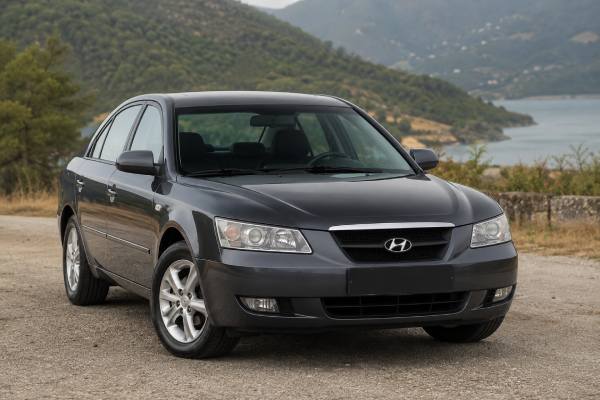
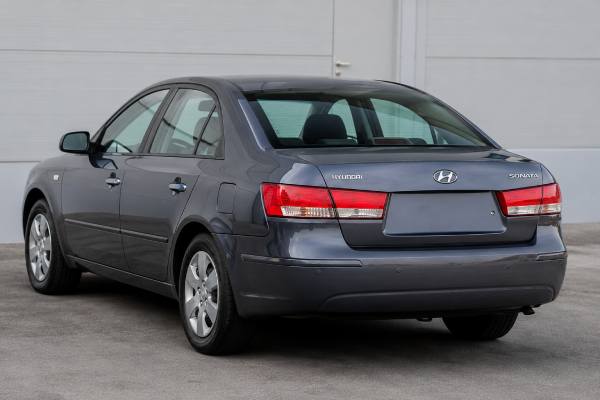
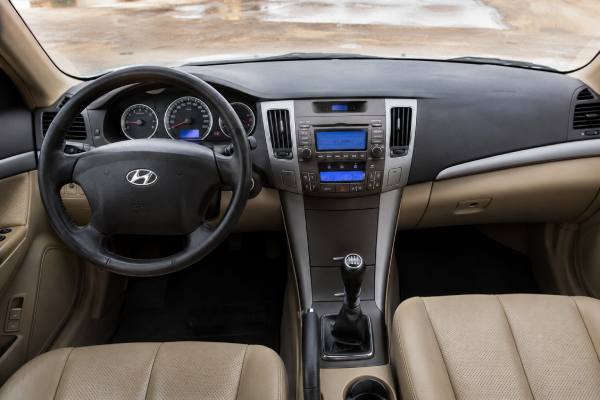
The Hyundai Sonata NF 2.0 CRDi is the diesel version of Hyundai’s fifth-generation midsize sedan, sold mainly in Europe and selected non-U.S. markets. It is a large, comfortable, front-wheel-drive saloon with a 2.0-litre common-rail turbodiesel engine, generous cabin space, a big boot, and simpler electronics than many newer diesel sedans.
One important detail: published power figures for the NF diesel vary by market and catalogue. The pre-facelift 2.0 CRDi is commonly listed around 140 PS/138 hp/103 kW, while later or differently rated versions may appear as 143, 146, 148, or 150 hp depending on source, market, and metric/imperial conversion. For maintenance, parts, and buying decisions, the VIN, engine code, emissions equipment, and build date matter more than the headline horsepower figure.
Quick Overview
- Spacious midsize sedan with a comfortable ride, large boot, and relaxed diesel torque.
- The 2.0 CRDi suits long-distance use better than short urban trips, especially where DPF equipment is fitted.
- Main ownership risks are timing-belt neglect, EGR/boost-system faults, injector wear, clutch/DMF wear, and corrosion.
- Engine oil service is typically every 7,500–15,000 km or 6–12 months, depending on market and driving conditions.
- A well-kept late-2006 or 2007 car with documented timing-belt, fluid, and brake service is usually the safest buy.
Table of Contents
- Hyundai Sonata NF Diesel Profile
- Hyundai Sonata NF Technical Specifications
- Hyundai Sonata NF Trims and Safety
- Reliability Issues and Recalls
- Maintenance Schedule and Buying Advice
- Road Manners and Diesel Performance
- Comparing Sonata NF With Rivals
Hyundai Sonata NF Diesel Profile
The Hyundai Sonata NF marked a major step forward from earlier Sonatas. It was longer, wider, more rigid, and more mature in road manners. In petrol form it competed with cars such as the Toyota Avensis, Honda Accord, Ford Mondeo, Volkswagen Passat, Mazda6, and Kia Magentis. The 2.0 CRDi diesel version gave the NF a more European-friendly powertrain: better fuel economy, stronger low-rpm torque, and more relaxed motorway performance than the smaller petrol engines.
The car’s strongest everyday qualities are space, comfort, and value. The cabin is broad, rear-seat room is generous, and the boot is large for a conventional sedan. It does not feel sporty, but it feels stable and calm at speed. The long wheelbase, soft suspension tuning, and diesel torque make it a good distance car when maintained properly.
The 2.0 CRDi engine is Hyundai’s D4EA-family common-rail diesel. It uses a turbocharger and intercooler, with four cylinders and 16 valves. It is not a performance diesel by modern standards, but the useful torque band makes the Sonata easier to drive than the peak horsepower number suggests. The engine pulls best from low-to-mid revs and is happiest when driven smoothly rather than hard.
This is also a car where market accuracy matters. In many catalogues, the NF diesel begins around 2006 even though the NF body appeared earlier. Some 2005-registered Sonatas are petrol cars, while diesel availability depended on country and stock timing. Buyers should therefore confirm that the vehicle is the 2.0 CRDi diesel by checking the registration document, VIN plate, emissions sticker, service book, and engine code.
The NF is relatively simple compared with newer diesel sedans. There is no hybrid system, no high-voltage battery, no dual-clutch transmission, and no advanced driver-assistance suite. That simplicity helps keep some repair costs manageable. However, the diesel system itself is still complex enough to require proper diagnostics: common-rail injection, turbo control, EGR, glow-plug circuits, sensors, vacuum lines, and, in some markets, diesel particulate filter hardware.
The best use case is regular medium-to-long journeys. A Sonata CRDi that spends most of its life on open roads can be durable and economical. One used only for short trips may develop EGR deposits, DPF-related problems where fitted, weak battery symptoms, condensation in the exhaust, sticking brake components, and more frequent oil contamination. For a buyer, the car’s previous usage pattern is almost as important as mileage.
Hyundai Sonata NF Technical Specifications
Figures below are for the NF 2.0 CRDi sedan as commonly listed for the pre-facelift diesel model. Exact values can vary by country, gearbox, emissions equipment, wheel package, and build date.
| Item | Hyundai Sonata NF 2.0 CRDi diesel |
|---|---|
| Engine code | D4EA family; confirm exact suffix by VIN |
| Engine layout | Front transverse inline-four diesel, 4 cylinders |
| Valvetrain | SOHC, 4 valves per cylinder, 16 valves total |
| Bore × stroke | 83.0 × 92.0 mm (3.27 × 3.62 in) |
| Displacement | 2.0 L (1,991 cc) |
| Induction | Turbocharged, intercooled; VGT/VNT on many versions |
| Fuel system | Diesel common-rail direct injection |
| Compression ratio | Approximately 17.3:1 |
| Maximum power | Commonly listed around 140 hp/103 kW at 4,000 rpm; some catalogues list nearby market-dependent figures |
| Maximum torque | 305 Nm (225 lb-ft) at roughly 1,800–2,500 rpm |
| Timing drive | Timing belt |
| Official combined fuel use | About 6.1 L/100 km (38.6 mpg US / 46.3 mpg UK) for 6-speed manual versions |
| Typical highway at 120 km/h | Approximately 6.3–7.2 L/100 km (37–32.7 mpg US / 44.8–39.2 mpg UK), depending on tyres, load, wind, and engine condition |
| Item | Specification |
|---|---|
| Transmission | 6-speed manual; 4-speed automatic available in some markets |
| Drive type | Front-wheel drive |
| Differential | Open front differential |
| Front suspension | Independent MacPherson strut, coil spring, anti-roll bar |
| Rear suspension | Independent multi-link, coil spring, stabilizer bar |
| Steering | Rack and pinion, hydraulic power assistance; ratio varies by market/service source |
| Brakes | Front ventilated discs, rear discs; common CRDi parts listings show 300 mm front and 284 mm rear discs on many cars |
| Common tyre size | 215/60 R16 on 6.5J × 16 wheels; some trims use 17-inch packages |
| Ground clearance | About 160 mm (6.3 in) |
| Length / width / height | 4,800 / 1,832 / 1,475 mm (189.0 / 72.1 / 58.1 in) |
| Wheelbase | 2,730 mm (107.5 in) |
| Turning circle | About 12.0 m (39.4 ft) |
| Kerb weight | Approximately 1,566–1,590 kg (3,452–3,505 lb), depending on source and equipment |
| GVWR | Approximately 2,150 kg (4,740 lb) |
| Fuel tank | 70 L (18.5 US gal / 15.4 UK gal) |
| Boot volume | 523 L (18.5 ft³), method varies by market listing |
| Item | Typical value or guidance |
|---|---|
| 0–100 km/h | About 10.7 seconds for 6-speed manual |
| Top speed | About 203 km/h (126 mph) |
| 100–0 km/h braking | Not consistently published; tyre condition and brake hardware matter more on used examples |
| Towing capacity | Up to 1,700 kg (3,748 lb) braked; 750 kg (1,653 lb) unbraked, where approved |
| Payload | Approximately 560 kg (1,235 lb) |
| Engine oil | 5W-30 ACEA C2/C3 with DPF; 5W-30 ACEA B4 commonly used without DPF; service fill about 5.9 L (6.2 US qt) |
| Coolant | Ethylene-glycol coolant for aluminium radiators, usually 50/50 mix; about 8.1–8.5 L (8.6–9.0 US qt) |
| Manual gearbox oil | 75W-85 API GL-4; about 1.9 L (2.0 US qt) |
| Automatic transmission fluid | Hyundai ATF SP-III; about 8.5 L (9.0 US qt) total capacity on 2.0 diesel automatic versions |
| Brake/clutch fluid | DOT 3 or DOT 4; about 0.9 L (1.0 US qt) |
| Power steering fluid | PSF-3 or PSF-4; about 1.0 L (1.1 US qt) |
| A/C refrigerant | R134a, commonly listed around 550 ±20 g (19.4 ±0.7 oz) |
| A/C compressor oil | PAG46-type oil, commonly around 150 mL (5.1 fl oz), but compressor type must be checked |
| Key torque values | Wheel nuts commonly 100 Nm (74 lb-ft); oil drain plug commonly 35–45 Nm (26–33 lb-ft); always verify service data |
Hyundai Sonata NF Trims and Safety
Trim names for the Sonata NF changed by country. Depending on market, the diesel could appear in grades such as Classic, Comfort, Style, Dynamic, GLS, or similar local names. Because the diesel was not offered everywhere, a trim name alone is not enough to identify the correct car. The safest identifiers are the VIN, engine code, emissions plate, gearbox, service book, and equipment build sheet.
Most diesel NF models shared the same basic mechanical layout: front-wheel drive, the 2.0 CRDi engine, disc brakes all round, independent rear suspension, and either manual or automatic transmission. Differences were usually equipment-based rather than structural. Higher trims could add alloy wheels, automatic climate control, leather or part-leather upholstery, heated seats, cruise control, upgraded audio, electric seat adjustment, rain sensors, automatic lights, rear parking sensors, or a sunroof.
Wheel and tyre packages matter because they affect ride comfort and replacement cost. A 16-inch package with 215/60 R16 tyres is usually the best match for comfort and economy. A 17-inch package can sharpen response slightly but may ride more firmly and be more sensitive to worn suspension bushings or cheap tyres.
Safety equipment was strong for the period but basic by modern standards. Many NF models were available with front airbags, front side airbags, curtain airbags, ABS, EBD, traction control, and electronic stability control, though exact standard equipment varied by country and trim. U.S.-market information often lists six airbags and ESC as standard, while European diesel cars must be checked individually.
Crash-test ratings also need context. Euro NCAP testing of the Sonata platform used the older star-and-score system, not today’s percentage-heavy system. The 2006 test result is commonly quoted as 4 stars for adult occupant protection, 4 stars for child occupant protection, and 2 stars for pedestrian protection. That is respectable for the period but not directly comparable with current Euro NCAP scores.
IIHS results for the 2006 U.S.-market Sonata are also useful for body-structure context. The car achieved a Good rating in the original moderate-overlap front test, Acceptable in the original side test, and Good for head restraints and seats. Later roof-strength categorization for the broader 2006–2010 generation is not the same as a modern small-overlap or updated side-impact result. IIHS headlight ratings and modern front-crash-prevention tests were not part of the 2006 evaluation.
Do not expect modern ADAS. AEB, adaptive cruise control, lane keeping assist, blind-spot monitoring, rear cross-traffic alert, traffic sign recognition, and cyclist detection were not typical features on this model. Any camera, parking aid, or multimedia system found today may be aftermarket and should be judged on installation quality.
For child seats, check for ISOFIX/LATCH anchors in the rear outboard seating positions and confirm that the seat belts retract cleanly. On older cars, also inspect seat-belt webbing, pretensioner warning lights, airbag warning lights, and any evidence of crash repairs.
Reliability Issues and Recalls
A good Sonata NF 2.0 CRDi can cover high mileage, but neglected examples become expensive quickly. The diesel engine is generally sturdy when serviced on time, yet it depends heavily on clean oil, clean fuel, correct timing-belt replacement, healthy boost control, and proper cooling.
| Issue area | Prevalence | Cost tier | Symptoms | Likely remedy |
|---|---|---|---|---|
| Timing belt and water pump | Common maintenance risk | Medium to high | No proof of belt service, belt noise, coolant seepage, rough running after poor repair | Replace belt kit, tensioner, idlers, and usually water pump at correct interval |
| EGR and intake deposits | Common on short-trip diesels | Low to medium | Hesitation, smoke, limp mode, poor low-rpm response | Diagnose EGR operation, clean intake path, repair vacuum/boost leaks |
| Turbo VGT control | Occasional | Medium to high | Underboost, overboost, limp mode, siren noise, heavy smoke | Check vacuum solenoids, actuator movement, boost hoses, intercooler, and turbo condition |
| Injectors and fuel system | Occasional at age | Medium to high | Hard starting, diesel knock, uneven idle, fuel smell, excess smoke | Leak-off test, scan correction values, repair seals or replace/refurbish injectors |
| Dual-mass flywheel and clutch | Common at high mileage | Medium to high | Rattle at idle, judder, slipping, vibration when pulling away | Replace clutch and DMF as a matched job |
| Automatic transmission wear | Occasional | Medium | Delayed engagement, flares, harsh shifts, dark fluid | Fluid service, scan for faults, avoid cars with persistent slip |
| Suspension bushings and links | Common | Low to medium | Knocks, vague steering, uneven tyre wear | Replace worn arms, links, bushes, and align |
| Corrosion | Market-dependent | Medium to high | Rust at rear subframe/crossmember, brake pipes, sills, arches, underbody seams | Inspect on lift; treat early rust or reject severe structural corrosion |
Diesel-specific problems tend to come from age and use pattern. Cars used for short trips often show dirty EGR systems, soot-heavy intake passages, weak batteries, glow-plug faults, or DPF issues where fitted. Long-distance cars can be mechanically healthier, but only if oil and belt work were not skipped.
Software and calibration issues are less central than on modern vehicles, but dealer updates may exist for engine drivability, emissions-related faults, automatic shift behavior, or warning-light logic. If a car has recurring limp mode or an emissions warning, do not approve repairs based only on generic fault-code clearing. Ask for a full scan, live data, freeze-frame information, and confirmation that the correct calibration is installed.
Official recalls and service campaigns vary heavily by country and VIN. U.S.-market NF Sonatas had recalls involving early seatback/recliner-lever interaction, airbag warning labels, occupant classification systems, headlamp-related issues, rear crossmember corrosion in salt-belt areas, and ABS-module fire risk on certain vehicles. These do not automatically apply to every European diesel, but they are useful reminders of what to verify: airbag warning lights, seat function, underbody corrosion, brake electronics, and dealer campaign history.
Before buying, request:
- VIN-based recall and campaign check from an official Hyundai dealer or national recall database.
- Proof of timing-belt replacement with mileage/date and parts used.
- Oil-change records using diesel-appropriate oil.
- Evidence of gearbox, brake fluid, coolant, and fuel-filter service.
- Cold-start video or cold-start inspection in person.
- Diagnostic scan before and after a road test.
- Lift inspection for corrosion, leaks, brake pipes, steering rack boots, and suspension play.
A cheap Sonata CRDi with no timing-belt history, smoke, warning lights, and underside rust is usually not cheap at all. A documented car with clean starting, stable temperature, smooth boost, and a dry underbody is a much better ownership proposition.
Maintenance Schedule and Buying Advice
The maintenance schedule below is a practical guide for an older Sonata NF diesel. Always adapt it to the official schedule for the VIN, local fuel quality, climate, and driving conditions.
| Item | Recommended interval | Notes |
|---|---|---|
| Engine oil and filter | 7,500–15,000 km or 6–12 months | Use diesel-rated 5W-30; choose DPF-compatible oil where fitted |
| Engine air filter | 15,000–30,000 km | Shorten interval in dusty areas |
| Cabin air filter | 12 months or 15,000 km | A clogged filter reduces demisting and A/C performance |
| Fuel filter | 30,000–60,000 km | Replace sooner with poor fuel or hard-start symptoms |
| Timing belt kit | Often around 90,000–150,000 km or 5–10 years, depending on market schedule | Replace belt, tensioner, idlers, and usually water pump together |
| Auxiliary belt and hoses | Inspect yearly; replace when cracked, noisy, or oil-soaked | Check tensioner and alternator pulley |
| Coolant | Every 2–5 years, depending on coolant type and local schedule | Use aluminium-compatible ethylene-glycol coolant at correct mix |
| Manual gearbox oil | 60,000–100,000 km | Use 75W-85 GL-4; do not substitute unsuitable GL-5 unless approved |
| Automatic transmission fluid | 40,000–60,000 km on older cars | Use Hyundai SP-III specification; avoid universal fluid unless explicitly approved |
| Brake and clutch fluid | Every 2 years | DOT 3 or DOT 4; old fluid can corrode hydraulic parts |
| Brake pads, discs, calipers | Inspect every service | Rear calipers and slide pins can stick on low-use cars |
| Tyre rotation and alignment | 10,000–15,000 km; alignment when wear appears | Uneven wear often points to bushings, alignment, or accident repair |
| 12 V battery | Test yearly after year 4 | Diesel starting needs strong battery and glow-plug health |
| Valve clearances | Not a routine owner service on most versions | Investigate abnormal top-end noise or compression issues professionally |
For buying, prioritize condition over mileage. A 220,000 km car with a complete file may be safer than a 140,000 km car with missing belt history and warning lights. Check the oil cap and dipstick for sludge, coolant for oil contamination, turbo hoses for excessive oil, and exhaust smoke under load. A small puff at start-up is less worrying than continuous black smoke, blue smoke, or white smoke once warm.
On the road test, the engine should start cleanly, idle evenly, pull from low rpm, and build boost without hesitation. The temperature gauge should stabilize and stay stable. The clutch should bite cleanly without heavy vibration. A manual gearbox should shift without crunching. An automatic should engage Drive and Reverse promptly and shift without flares.
Inspect underneath. Look at the rear subframe/crossmember, rear suspension arm mounts, sills, brake pipes, fuel lines, floor seams, front subframe, jacking points, and wheel arches. Surface rust is expected on many older cars; perforation near suspension mounting points is not.
Recommended examples are usually late-2006 or 2007 cars with documented timing-belt work, clean MOT/inspection history, good tyres, no warning lights, and evidence of regular diesel use beyond short trips. Be cautious with cars that have fresh underseal over rust, deleted emissions hardware, unexplained remaps, damp carpets, mismatched tyres, or an airbag light that “only needs resetting.”
Long-term durability is fair to good when maintained. The Sonata NF is not as prestigious as an Accord or Passat, but that can work in the buyer’s favour. It is often cheaper to buy, roomy for the money, and comfortable. The main mistake is treating the purchase price as the total cost. Budget for catch-up maintenance immediately unless the seller can prove it has already been done.
Road Manners and Diesel Performance
The Sonata NF 2.0 CRDi drives like a comfort-biased midsize sedan rather than a sporty saloon. Its long wheelbase and relatively soft suspension give it a settled feel on motorways. At urban speeds it absorbs bumps well, although worn dampers, tired bushings, or heavy 17-inch wheels can make the ride feel looser or harsher than intended.
Steering is light and easy, with enough accuracy for normal driving but limited feedback. The car is stable in a straight line, and it feels at its best on open roads where the diesel engine can sit in its torque band. In corners, body roll is controlled but noticeable. It is secure rather than agile. Tyres make a large difference: good touring tyres improve braking, wet grip, and noise more than most owners expect.
The 2.0 CRDi’s main strength is mid-range torque. It does not sprint off the line like a modern high-output diesel, but once moving it pulls cleanly from low rpm. The best progress comes from using the torque between roughly 1,800 and 3,500 rpm. Revving it hard adds noise without much reward. A healthy turbo system should deliver smooth boost; flat response, sudden surges, or limp mode usually means a boost-control, EGR, vacuum, sensor, or turbo-vane issue.
With the 6-speed manual, the Sonata feels most natural on longer trips. The extra ratio helps reduce cruising revs and fuel use. The clutch should not judder, and the flywheel should not rattle heavily at idle. The 4-speed automatic, where fitted, is smoother in traffic but can feel dated. It may also use more fuel and needs correct SP-III fluid service. Harsh engagement or shift flare should not be dismissed as normal age.
Cabin noise is acceptable for the period. There is more diesel sound at idle and under acceleration than in newer common-rail cars, but the engine settles at cruise. Wind and tyre noise increase with worn door seals, old tyres, or poor wheel alignment. A droning rear tyre or humming wheel bearing can be mistaken for general old-car noise, so listen carefully on different road surfaces.
Real-world economy depends strongly on use. In mixed driving, a healthy manual car often lands around 6.5–7.8 L/100 km (36–30 mpg US / 43–36 mpg UK). Long, steady trips can be better. Heavy city use, cold starts, automatic transmission, roof loads, old tyres, dragging brakes, or a stuck thermostat can push fuel use much higher. Winter use also increases consumption because diesel warm-up is slower and the battery/glow system works harder.
The Sonata can tow moderate loads where legally rated and properly equipped, but it is not a heavy-duty tow car. With a trailer, braking condition, rear suspension health, cooling-system condition, tyre load rating, and legal nose weight matter. Expect a clear fuel penalty under load, especially on hills.
Comparing Sonata NF With Rivals
The Sonata NF 2.0 CRDi makes most sense when judged as a value-focused comfort sedan. It is not the sharpest, most premium, or most efficient car in its class, but it offers space and long-distance comfort for relatively modest money.
| Rival | Where it can beat the Sonata | Where the Sonata can appeal |
|---|---|---|
| Honda Accord 2.2 i-CTDi | Sharper handling, strong diesel reputation, better cabin feel | Sonata is often cheaper and more comfort-biased |
| Toyota Avensis 2.0 D-4D | Strong reliability image, easy ownership, conservative running costs | Sonata may offer more equipment for the price |
| Ford Mondeo TDCi | Better steering, more engaging chassis, wider parts familiarity | Sonata feels calmer and can be better value if clean |
| Volkswagen Passat 2.0 TDI | More premium image, strong motorway refinement, broader market support | Sonata avoids some Passat-specific ownership costs and image pricing |
| Mazda6 diesel | Sportier road feel, sharper responses | Sonata is quieter in character and less focused on sportiness |
| Kia Magentis 2.0 CRDi | Similar value proposition, related Korean midsize-sedan appeal | Choice should come down to condition, history, equipment, and corrosion |
Against rivals, the Sonata’s biggest weakness is not one single defect but market perception. It has less badge pull, a smaller enthusiast community, and sometimes fewer diesel-specific used parts than a Passat or Mondeo. Some mechanics may see fewer NF diesels, so finding a workshop familiar with Hyundai/Kia CRDi systems helps.
Its biggest advantage is value. A clean Sonata CRDi can give a lot of car for the money: large cabin, big boot, relaxed motorway ability, respectable safety for its era, and good economy when used properly. It is a sensible choice for someone who wants comfort and space rather than sharp handling or premium-brand status.
Buy the Sonata if you find one with evidence, not promises: documented belt work, correct oil, clean diagnostics, no structural rust, smooth starting, healthy boost, and good tyres. Skip it if the seller cannot explain warning lights, if the engine smokes heavily, if the clutch rattles badly, or if corrosion is advanced. The best NF diesel is a practical, understated car. The worst one is a neglected diesel sedan whose low price only hides overdue repairs.
References
- Hyundai Sonata V (NF) 2.0 CRDi 16V (140 Hp) | Technical specs, data, fuel consumption, Dimensions 2026 (Technical Data)
- 2006 Hyundai Sonata 2006 (Safety Rating)
- HYUNDAI SONATA AND TUCSON ACHIEVE HIGHEST GOVERNMENT CRASH TEST RATING 2005 (Safety Rating)
- IMPORTANT SAFETY RECALL 2013 (Recall Database)
- R134a/R1234yf Airconditioning Filling Chart – NRF.eu 2017 (Service Specification)
Disclaimer
This article is for informational purposes only and is not a substitute for professional diagnosis, inspection, or repair. Specifications, torque values, service intervals, fluid capacities, emissions equipment, recalls, and procedures can vary by VIN, market, build date, gearbox, and trim. Always verify important data against the official owner’s manual, workshop manual, dealer service information, and VIN-specific recall records before servicing or buying a vehicle.
If this guide helped you, please consider sharing it on Facebook, X/Twitter, or your preferred platform to support our work.