
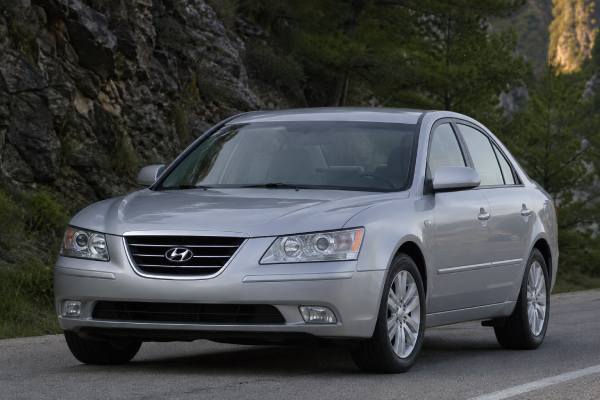
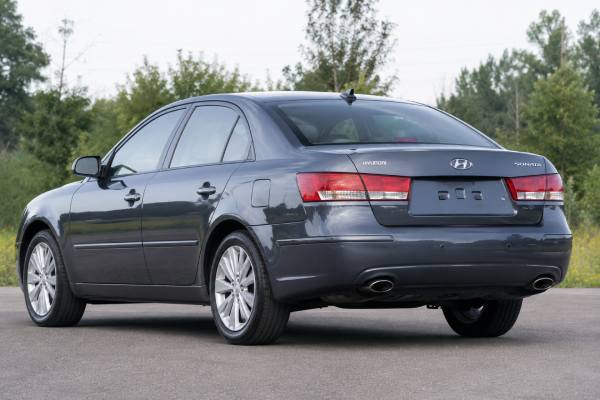
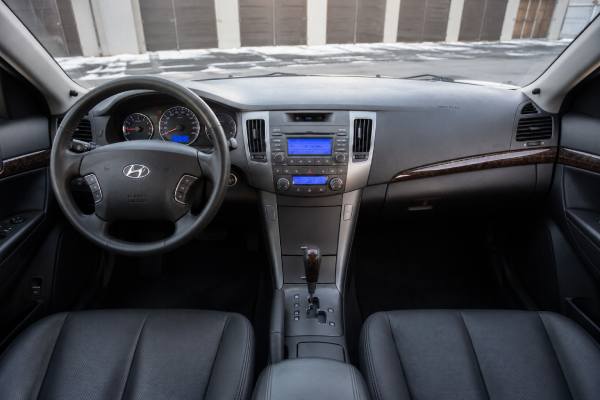
The facelift Hyundai Sonata NF 2.0 CRDi is a large, front-wheel-drive diesel sedan built for buyers who want space, comfort, long-distance economy, and simple mechanical value rather than badge prestige. In this 150 hp form, the 2.0-litre CRDi gives the Sonata the torque it needs for relaxed motorway use, while the facelift brought a cleaner exterior, improved cabin presentation, and stronger equipment in many markets.
This guide focuses on the 2008–2010 facelift-era Sonata NF with the 2.0 CRDi diesel engine, including the 6-speed manual and 4-speed automatic versions where the data differs. It covers the practical details that matter when maintaining, comparing, or buying one today: specifications, dimensions, fuel use, reliability risks, safety ratings, service needs, and what to inspect before purchase.
Owner Snapshot
- Spacious cabin, large 523 L boot, and comfortable long-distance ride make it a strong-value family sedan.
- The 305 Nm diesel engine is relaxed on the motorway and more economical than the petrol Sonata versions.
- Manual cars are quicker and more efficient; automatic cars are easier in traffic but use noticeably more fuel.
- The timing belt is a key ownership item; many schedules list replacement around 150,000 km or 10 years, but verify by market and VIN.
- Engine oil and filter service is typically every 15,000 km or 12 months in normal use, shorter for severe city or short-trip use.
Table of Contents
- Hyundai Sonata NF Diesel Summary
- Hyundai Sonata NF Technical Specs
- Hyundai Sonata NF Trims and Safety
- Reliability Issues and Service Actions
- Maintenance Schedule and Buying Guide
- Driving Performance and Efficiency
- How Sonata NF Compares
Hyundai Sonata NF Diesel Summary
The Hyundai Sonata NF facelift diesel is best understood as a comfort-focused mid-size-to-large sedan with European-style diesel economy and a relatively straightforward mechanical layout. It is not a sporty sedan, and it is not as refined as some premium German alternatives, but it offers a lot of cabin space, a large boot, good high-speed stability, and strong value on the used market.
The facelift model arrived with more polished styling, a revised interior, and improved equipment in many regions. Depending on market, it was sold under trim names such as Comfort, Classic, Premium, SLX, Elite, or similar local grades. The core formula stayed the same: a four-door sedan, five seats, front-wheel drive, independent suspension, and a choice of petrol engines or the 2.0 CRDi diesel.
The diesel engine is the main reason to choose this version. The D4EA 2.0 CRDi is a 1,991 cc turbocharged common-rail diesel producing 150 hp at 3,800 rpm and 305 Nm from 1,800 to 2,500 rpm. That torque band gives the Sonata good flexibility without needing high revs. It suits open-road use, commuting, and family travel more than hard acceleration. The manual version is the better choice for performance and fuel economy, while the automatic version is smoother in heavy traffic but slower and thirstier.
Dimensionally, the Sonata NF is a generous sedan. It is about 4,800 mm long with a 2,730 mm wheelbase, so rear-seat space is one of its strengths. The boot is also large at around 523 L, helped by the sedan’s long rear overhang. The trade-off is that it is not as easy to load as a hatchback or wagon, and the rear seats do not create the same flat utility space as some rivals.
For used buyers, the car’s appeal depends heavily on maintenance history. A well-serviced Sonata CRDi can be durable, but neglected examples can become expensive quickly because diesel components, timing belt work, dual-mass flywheels, turbo issues, injector faults, DPF problems on equipped cars, and automatic transmission wear are not cheap relative to the car’s current market value.
The best examples are usually privately owned cars with documented oil services, timing belt replacement, correct diesel fuel-filter maintenance, clean coolant, and evidence that recalls or service campaigns were checked. Cars used mostly for long journeys tend to age better than cars used for short urban trips, because diesel engines, EGR systems, turbochargers, and DPF-equipped exhaust systems dislike repeated cold running.
As a buying proposition, the Sonata NF 2.0 CRDi makes the most sense if you want a comfortable, inexpensive, roomy diesel sedan and are willing to inspect it carefully. It is less compelling if you need modern driver assistance, premium interior materials, low-emission urban access, or hatchback practicality. Its sweet spot is simple: long-distance comfort, usable torque, and a lot of car for the money.
Hyundai Sonata NF Technical Specs
The tables below focus on the facelift Sonata NF 2.0 CRDi 150 hp diesel. Some figures vary by country, trim, wheel package, emissions equipment, transmission, and homologation standard. Always verify VIN-specific data before ordering parts or fluids.
Powertrain and efficiency
| Item | Specification |
|---|---|
| Engine code | D4EA |
| Engine layout | Front transverse inline-4 diesel |
| Valvetrain | SOHC, 4 valves per cylinder, 16 valves total |
| Bore × stroke | 83.0 × 92.0 mm (3.27 × 3.62 in) |
| Displacement | 2.0 L (1,991 cc) |
| Induction | Turbocharged and intercooled |
| Fuel system | Common-rail direct diesel injection |
| Compression ratio | 17.3:1 |
| Maximum power | 150 hp / 110 kW at 3,800 rpm |
| Maximum torque | 305 Nm / 225 lb-ft at 1,800–2,500 rpm |
| Timing drive | Timing belt |
| Emissions standard | Euro 4; DPF availability depends on market |
| Rated fuel economy, manual | Urban 7.8 L/100 km; extra-urban 5.0 L/100 km; combined 6.0 L/100 km (30.2 / 47.0 / 39.2 mpg US; 36.2 / 56.5 / 47.1 mpg UK) |
| Rated fuel economy, automatic | Urban 9.7 L/100 km; extra-urban 5.4 L/100 km; combined 7.0 L/100 km (24.2 / 43.6 / 33.6 mpg US; 29.1 / 52.3 / 40.4 mpg UK) |
| Real-world highway at 120 km/h | Typically about 6.2–7.2 L/100 km manual; about 7.0–8.2 L/100 km automatic, depending on tyres, load, wind, and engine condition |
Transmission and driveline
| Item | Manual | Automatic |
|---|---|---|
| Transmission | 6-speed manual | 4-speed automatic with Selectronic manual mode in many markets |
| Drive type | Front-wheel drive | Front-wheel drive |
| Differential | Open front differential | Open front differential |
Chassis, dimensions, and capacity
| Item | Specification |
|---|---|
| Body style | 4-door sedan, 5 seats |
| Front suspension | Independent double-wishbone type in many official market descriptions; verify market specification |
| Rear suspension | Independent multi-link |
| Steering | Power-assisted rack and pinion; commonly listed around 16.9:1 overall ratio |
| Front brakes | Ventilated discs; common rotor sizes around 280–300 mm (11.0–11.8 in), depending on market and parts listing |
| Rear brakes | Solid discs; common rotor sizes around 262–284 mm (10.3–11.2 in), depending on market and parts listing |
| Popular tyre size | 215/60 R16 on 16 in wheels; some trims may use larger alloy wheels |
| Ground clearance | About 160–165 mm (6.3–6.5 in), market dependent |
| Length / width / height | 4,800 / 1,832 / 1,475 mm (189.0 / 72.1 / 58.1 in) |
| Wheelbase | 2,730 mm (107.5 in) |
| Turning circle | About 10.9–12.0 m kerb-to-kerb depending on source and market (35.8–39.4 ft) |
| Kerb weight | About 1,585 kg manual / 1,605 kg automatic (3,494 / 3,538 lb) |
| GVWR | About 2,150 kg (4,740 lb) |
| Payload | About 565 kg manual / 545 kg automatic (1,246 / 1,202 lb) |
| Fuel tank | 70 L (18.5 US gal / 15.4 UK gal) |
| Boot volume | About 523 L (18.5 ft³); measurement method varies by market |
Performance and towing
| Item | Manual | Automatic |
|---|---|---|
| 0–100 km/h | 10.7 seconds | 11.6 seconds |
| 0–62 mph | 10.7 seconds | 11.6 seconds |
| Top speed | 203 km/h (126 mph) | 200 km/h (124 mph) |
| 100–0 km/h braking distance | Typically around 40–43 m (131–141 ft) on good tyres; not a universal official figure | Typically around 40–44 m (131–144 ft) on good tyres; not a universal official figure |
| Towing capacity | Up to about 1,700 kg braked / 750 kg unbraked in markets where rated | Often about 1,100 kg braked / 750 kg unbraked for CRDi automatic; verify towbar and market approval |
Fluids and service capacities
| System | Specification and capacity |
|---|---|
| Engine oil | Typically 5W-30 or 5W-40 diesel-rated oil. Use ACEA C3 where a DPF is fitted; otherwise use the VIN-specific Hyundai-approved diesel specification. Capacity about 6.7 L (7.1 US qt) full system; service refill may be lower. |
| Coolant | Ethylene-glycol long-life coolant, commonly mixed 50:50 with demineralized water. Capacity about 8.5 L manual / 8.3 L automatic (9.0 / 8.8 US qt). |
| Manual transmission oil | API GL-4 SAE 75W-85; commonly around 1.75–1.9 L depending on gearbox and market. |
| Automatic transmission fluid | Hyundai/Kia SP-III type ATF for the 4-speed automatic; total fill commonly listed around 8.5 L, with drain-and-fill volume lower. |
| Differential / transfer case | Not applicable as a separate rear differential or transfer case; front differential is integrated with the transaxle. |
| A/C refrigerant | R134a, about 550 g ±20 g (19.4 oz ±0.7 oz), depending on A/C system label. |
| A/C compressor oil | PAG46 / FD46XG type, commonly about 150 mL (5.1 fl oz), verify compressor label. |
| Key torque values | Wheel nuts 90–110 Nm (65–80 lb-ft); engine oil drain plug commonly around 35–45 Nm (25–33 lb-ft). Always verify fastener-specific service data. |
Safety and driver assistance
| Item | Result or availability |
|---|---|
| Euro NCAP-era rating | Older pre-2009 format: adult occupant 4 stars / 27 points; child occupant 4 stars / 37 points; pedestrian 2 stars / 12 points. Modern adult/child/VRU percentage format was not used for this test era. |
| IIHS rating basis | IIHS ratings for 2006–2010 Sonata apply to the NF generation in the U.S. market: Good moderate overlap front, Acceptable side, Marginal roof strength, Good head restraints/seats for the 2008 listing. |
| Headlight rating | No modern IIHS headlight rating for this generation. |
| Airbags | Typically six airbags: dual front, front side, and side curtain airbags; market equipment may vary. |
| Stability and braking systems | ABS, EBD, brake assist, traction control, and ESP/ESC fitted or standard in many facelift markets; confirm by trim and region. |
| ADAS | No modern AEB, ACC, lane keeping, blind-spot monitoring, rear cross-traffic alert, cyclist detection, or traffic-sign recognition. |
Hyundai Sonata NF Trims and Safety
Trim names for the Sonata NF facelift vary widely by market. In Europe, listings often show grades such as Classic, Comfort, Style, Executive, or Premium. In Australia and some other right-hand-drive markets, SLX and Elite were common. Some regions used “Transform” to describe the facelifted Sonata. Because the model was not configured identically everywhere, the smartest way to evaluate a specific car is to combine the badge, VIN, build plate, option stickers, interior equipment, and dealer records.
Trim and option differences
Lower trims usually focus on the Sonata’s basic strengths: large cabin, air conditioning, electric windows, central locking, CD audio, front and side safety equipment, and 16-inch wheels. Higher trims may add leather upholstery, climate control, alloy wheels, upgraded audio, steering-wheel controls, cruise control, trip computer, heated seats in some markets, parking sensors, sunroof availability, and more chrome or woodgrain-style cabin trim.
Mechanical differences are usually limited. The important changes are transmission, wheel and tyre package, tow rating, and sometimes stability-control availability. The 6-speed manual is the better fit if you want lower fuel use and stronger acceleration. The 4-speed automatic is more relaxed in city traffic but has wider gear spacing and higher fuel consumption. Where towing is relevant, the CRDi manual may be rated substantially higher than the CRDi automatic.
Quick identifiers include the CRDi badge, diesel filler label, tachometer redline, intercooler and turbo plumbing under the bonnet, and the D4EA engine code in documentation or parts catalogues. Manual cars have a conventional 6-speed lever; automatics often have a gated Selectronic-style selector with manual mode. Higher trims may be easier to identify by leather seating, automatic climate control, factory alloy design, parking sensors, and upgraded audio controls.
The 2008 facelift is recognized by revised front and rear styling, updated lighting details, and a more modern dashboard layout than earlier NF cars. Some 2010-registered cars may be late-build or late-sale examples rather than a distinct technical update, so registration year should not be treated as proof of specification.
Safety structure and occupant protection
For its era, the Sonata NF had a good basic safety package. Many facelift cars were fitted with six airbags, front seatbelt pretensioners, active front head restraints, ABS, EBD, brake assist, traction control, and stability control. ISOFIX/LATCH-type child-seat anchor availability depends on market, but many cars include rear child-seat provisions and three-point rear belts.
The structure was competitive for the mid-2000s but must be judged by period standards. It does not have the same small-overlap crash performance, active crash avoidance, pedestrian protection, or driver-assistance technology expected from modern sedans. The older Euro NCAP rating format cannot be compared directly with modern percentage-based tests because the protocols changed.
IIHS ratings for the 2006–2010 Sonata generation show strong moderate-overlap frontal performance, acceptable side-impact performance, marginal roof strength, and good head restraint performance in the U.S. testing context. These results help describe the platform, but equipment and regulation differences mean they should not be treated as identical for every diesel Sonata sold globally.
Driver assistance and calibration notes
This generation predates modern ADAS. There is no factory autonomous emergency braking, adaptive cruise control, lane keeping, traffic-sign assistance, blind-spot monitoring, or cyclist detection. Parking sensors may be fitted as factory equipment or dealer accessories in some markets, but they are assistance aids rather than safety systems.
After suspension, steering, brake, or airbag-related repairs, the priority is correct mechanical alignment, no warning lights, proper wheel-speed sensor operation, and a scan for stored ABS/ESP/SRS codes. There is usually no camera or radar calibration because the car does not use modern camera/radar ADAS. However, steering-angle sensor calibration or ABS/ESP fault clearing may be required after certain repairs.
Reliability Issues and Service Actions
A Sonata NF 2.0 CRDi can be a dependable used diesel when it has been maintained well, but age now matters as much as mileage. Many examples are old enough for rubber parts, belts, mounts, bushings, brake pipes, cooling parts, electrical connectors, and corrosion-prone areas to need attention even if the odometer looks reasonable.
| Issue | Prevalence | Severity / cost | Typical symptoms | Best remedy |
|---|---|---|---|---|
| Overdue timing belt | Common on neglected cars | High | No proof of belt service, noisy idlers, coolant seep near water pump | Replace belt, tensioners, idlers, and usually water pump as a set |
| EGR and intake contamination | Common with short trips | Medium | Flat response, smoke, rough idle, limp mode, EGR codes | Clean or replace EGR parts, inspect intake, fix root cause rather than only clearing codes |
| Turbo control or boost leaks | Occasional | Medium to high | Whistling, low boost, limp mode, oil mist on hoses, poor overtaking power | Pressure-test hoses, check vacuum control, actuator movement, intercooler, and turbo condition |
| Injector or fuel-pressure faults | Occasional | High | Hard starting, diesel knock, smoke, rough running, rail-pressure codes | Check fuel filter, leak-off test injectors, scan live rail pressure, repair with quality parts |
| DPF restriction where fitted | Market dependent | Medium to high | Frequent regeneration, warning light, rising oil level, poor economy | Confirm DPF fitment, diagnose sensors and regeneration conditions before replacement |
| Automatic shift flare or harsh changes | Occasional | Medium | Delayed engagement, flare between gears, thump on kickdown | Check ATF level and condition, use correct SP-III fluid, scan solenoid and speed-sensor data |
| Manual clutch and dual-mass flywheel wear | Occasional at higher mileage | Medium to high | Rattle at idle, vibration, clutch slip, judder pulling away | Replace clutch and flywheel as needed; inspect rear main seal while gearbox is out |
| Suspension bushings and links | Common with age | Low to medium | Knocks over bumps, vague steering, uneven tyre wear | Replace worn arms, bushes, drop links, and align the car |
| Corrosion underneath | Common in salted climates | Medium to high | Rust on rear subframe, brake pipes, sills, suspension mounts, exhaust | Inspect on a lift; treat early corrosion and avoid structurally compromised cars |
The D4EA engine’s most important maintenance item is the timing belt. A seller claiming “it looks fine” is not enough. You want an invoice showing the date, mileage, and parts replaced. If there is no proof, budget for the belt service immediately. A failed belt can cause serious engine damage.
Fuel quality also matters. A neglected diesel fuel filter can cause hard starting, poor high-pressure pump life, injector wear, and drivability faults. On a test drive, the engine should start cleanly hot and cold, settle into a stable idle, pull strongly from low revs, and avoid excessive smoke once warm. A little diesel clatter is normal, but uneven knocking, heavy black smoke, or repeated limp mode is not.
For automatic cars, the 4-speed gearbox should engage Drive and Reverse promptly, shift without flare, and kick down cleanly. Dark or burnt ATF is a warning sign. A fluid change may improve a slightly neglected unit, but it will not repair worn clutches, valve-body issues, or sensor faults.
Chassis durability is generally reasonable, but the car is now old enough that bushes, ball joints, dampers, rear links, wheel bearings, and brake components may all be wear items. Listen for rumbling wheel bearings, clunks from the front over sharp bumps, and rear-end instability over uneven roads. Uneven tyre wear often points to worn suspension parts or poor alignment.
Service actions and recalls are market-specific. U.S. Sonata campaigns included stop-lamp switch issues, occupant-classification airbag concerns on earlier cars, and rear crossmember corrosion campaigns in salt-belt conditions. These do not automatically apply to every diesel Sonata sold elsewhere, but they show why a VIN check matters. Ask the seller for dealer recall printouts, and check the VIN with the relevant Hyundai recall portal or dealer in the country where the car is registered.
Maintenance Schedule and Buying Guide
Maintenance should be based on the official schedule for the vehicle’s VIN, but the following intervals are a practical guide for an older Sonata NF 2.0 CRDi that you want to keep reliable. For city use, short trips, dusty roads, towing, hot climates, or poor fuel quality, use shorter intervals.
| Item | Practical interval | Notes |
|---|---|---|
| Engine oil and filter | Every 15,000 km or 12 months; 7,500–10,000 km for severe use | Use correct diesel oil. If DPF-equipped, use low-SAPS oil meeting the required specification. |
| Engine air filter | Every 30,000 km or sooner in dusty areas | A blocked filter worsens smoke, economy, and turbo response. |
| Cabin filter | Every 15,000–30,000 km or annually | Replace sooner if airflow is weak or windows mist easily. |
| Fuel filter | Every 30,000–60,000 km depending on fuel quality | Use quality filters and drain water where the housing allows. |
| Timing belt system | Often listed around 150,000 km or 10 years; verify by VIN | Replace belt, tensioners, idlers, and usually water pump together. |
| Serpentine belts and hoses | Inspect every service; replace if cracked, glazed, swollen, or noisy | Old rubber is a common source of breakdowns. |
| Coolant | Typically every 4–5 years after initial fill, or per official schedule | Use correct long-life coolant and maintain proper mix ratio. |
| Manual transmission oil | Every 60,000–90,000 km, or sooner if shifting quality declines | Use API GL-4 75W-85 type fluid unless service data specifies otherwise. |
| Automatic transmission fluid | Every 40,000–60,000 km on older cars | Use correct SP-III type ATF; avoid universal fluids unless explicitly approved. |
| Brake fluid | Every 2 years | Moisture-contaminated fluid reduces braking performance and damages components. |
| Brake pads, rotors, pipes | Inspect every service | Check rear discs, calipers, handbrake operation, and brake-pipe corrosion. |
| Tyre rotation and alignment | Rotate every 10,000–15,000 km; align when wear is uneven | Bad alignment makes the car feel vague and increases tyre wear. |
| 12 V battery | Test annually after 4 years | Weak batteries can cause misleading electrical symptoms. |
| A/C service | Performance check every 2 years | Confirm refrigerant quantity from under-bonnet label before charging. |
A good pre-purchase inspection should start cold. Ask the seller not to warm the car before you arrive. The diesel should start without excessive cranking, smoke, or warning lights. Listen for rattles from the auxiliary belt area, timing belt covers, dual-mass flywheel, and turbo. Check for coolant smell, oil leaks, injector blow-by, split boost hoses, and evidence of poor-quality previous repairs.
On the road, the engine should pull cleanly from about 1,800 rpm. A flat response, whooshing noise, heavy smoke, or limp mode suggests boost, EGR, MAF, vacuum-control, fuel-pressure, or DPF-related problems. Test both gentle and firm acceleration. On manual cars, accelerate in a high gear from low rpm to check for clutch slip. On automatics, check smooth engagement, steady shifts, and kickdown response.
Underneath, inspect the rear subframe, sills, jacking points, brake lines, fuel lines, suspension mounts, exhaust hangers, and rear wheel arches. Corrosion is one of the few issues that can make an otherwise cheap Sonata uneconomical to repair. A lift inspection is strongly recommended before purchase.
The best Sonata NF CRDi to buy is usually a later facelift car with full service history, evidence of timing belt work, clean oil and coolant, working air conditioning, no warning lights, matched tyres, and no structural rust. The manual is better for economy and towing. The automatic is acceptable if smooth and properly serviced, but its fuel consumption and lower tow rating should be considered.
Avoid cars with missing service records, unclear belt history, coolant contamination, repeated engine-management lights, unresolved airbag/ABS lights, severe rust, slipping clutch, harsh automatic shifts, or evidence that the DPF or emissions system has been illegally removed. A cheap neglected diesel sedan can become expensive very quickly.
Driving Performance and Efficiency
The Sonata NF 2.0 CRDi drives like a relaxed long-distance sedan rather than a sharp sports saloon. Its strongest qualities are straight-line stability, ride comfort, cabin space, and easy torque. At motorway speeds, it feels settled and mature, especially on 16-inch tyres. Larger wheels can improve appearance and steering response, but they may add road noise and make the ride firmer over broken surfaces.
The steering is light to medium in weight and easy to use in town. It is accurate enough for normal driving, but it does not offer the feedback of a Ford Mondeo or Mazda6. The chassis is stable and forgiving, with safe front-wheel-drive understeer if pushed. It is happiest being driven smoothly, using the diesel torque rather than high revs.
Ride quality is one of the car’s better traits. The long wheelbase helps it absorb motorway undulations and rougher secondary roads. Worn dampers, tired bushes, cheap tyres, or poor alignment can spoil this quickly, so a car that feels floaty, noisy, or nervous is probably due chassis work rather than simply “how they all drive.”
The engine’s useful torque arrives from around 1,800 rpm. Below that, it can feel soft, especially with the air conditioning on or when pulling away on a slope. Once the turbo is awake, it pulls the car with little effort. The manual gearbox lets you keep the engine in its best range and gives the official 0–100 km/h time of about 10.7 seconds. The automatic is smoother in traffic but feels more old-fashioned because it has only four forward gears. It is slower at about 11.6 seconds to 100 km/h and can be noisier under kickdown.
Noise levels are acceptable for the era. The engine is clearly diesel at idle and when cold, but it settles at cruising speed. Road noise depends heavily on tyre brand, tread depth, and wheel size. Wind noise is moderate, and the cabin’s broad layout suits relaxed travel. If a test car has droning, vibration, or harshness under load, check engine mounts, exhaust mounts, driveshafts, tyres, wheel bearings, and dual-mass flywheel condition.
Real-world economy depends strongly on transmission and usage. A healthy manual car can often return about 6.5–7.8 L/100 km in mixed driving, with relaxed highway trips in the low-to-mid 6s. City use is more likely around 7.5–9.0 L/100 km, especially in cold weather. The automatic commonly uses around 7.8–9.2 L/100 km mixed and can reach 9–11 L/100 km in urban use. At steady open-road speeds, it is much better, but it rarely matches the manual.
Cold weather, short journeys, old thermostats, dragging brakes, underinflated tyres, dirty air filters, poor injectors, and DPF regeneration can all increase fuel use. A thermostat stuck open is a common diesel economy killer because the engine takes too long to reach full operating temperature.
Towing with the CRDi manual is reasonable within the rated limit because the engine has good low-rpm torque. The automatic’s lower tow rating should be respected. When towing, check cooling system condition, ATF condition, brakes, tyres, and legal towbar rating. Expect fuel use to rise sharply with load, wind resistance, and hills.
How Sonata NF Compares
The Sonata NF 2.0 CRDi competes with diesel family sedans and liftbacks from the late 2000s. Its main advantage is value: it usually costs less than a similar Toyota Avensis, Honda Accord, Volkswagen Passat, or Ford Mondeo, while offering generous space and decent comfort. Its main weakness is that it feels less modern than the best European rivals and lacks the driver-assistance and interior polish of newer cars.
| Rival | Where the Sonata is stronger | Where the rival may be stronger |
|---|---|---|
| Toyota Avensis 2.0 D-4D | Often cheaper to buy, roomier-feeling cabin, strong value | Better reputation for conservative durability and resale value |
| Honda Accord 2.2 i-CTDi / i-DTEC | Lower purchase price, softer ride, simpler value appeal | Sharper engineering feel, stronger interior quality, better manual gearbox |
| Ford Mondeo 2.0 TDCi | Simpler comfort focus, often less expensive, spacious rear cabin | Better handling, more body styles, stronger parts and specialist support in some markets |
| Mazda6 diesel | More relaxed ride, usually cheaper, less sporty but comfortable | More engaging steering and handling; wagon availability improves practicality |
| Volkswagen Passat 2.0 TDI | Lower buying cost, less image-driven pricing, roomy interior | Better perceived quality, stronger engine range, more premium cabin feel |
| Skoda Superb diesel | May be cheaper depending on market, simpler sedan feel | Far better rear space and hatchback-style practicality in many versions |
The Sonata is not the enthusiast choice. A Mondeo or Mazda6 is more satisfying on a twisty road. It is not the premium-feeling choice either; a Passat or Accord feels more expensive inside. It is also not the most practical if you need a hatch or wagon. But as a comfortable diesel sedan with a big boot and modest used prices, it can be very appealing.
The best reason to choose the Sonata NF CRDi is not that it is class-leading in one area. It is that it combines acceptable diesel performance, good space, comfortable cruising, and low purchase cost. That makes it a rational used buy for drivers who prioritize function over image.
The buying decision should come down to condition. A carefully maintained Sonata is more attractive than a neglected Passat or Mondeo with hidden repair needs. But a rusty, poorly serviced Sonata is not worth buying just because it is cheap. For this generation, service history and underbody condition matter more than trim level.
References
- Hyundai Sonata V (NF, facelift 2008) 2.0 CRDi (150 Hp) | Technical specs, data, fuel consumption, Dimensions 2026 (Technical Data) ([Auto Data][1])
- Hyundai Sonata V (NF, facelift 2008) 2.0 CRDi (150 Hp) Automatic | Technical specs, data, fuel consumption, Dimensions 2026 (Technical Data) ([Auto Data][2])
- 2008 Hyundai Sonata 2026 (Safety Rating) ([IIHS][3])
- Home | Hyundai Recalls & Service Campaigns 2026 (Recall Database) ([recalls.hyundai.co.uk][4])
- Hyundai Owners manuals | Hyundai Motor UK 2026 (Owner’s Manuals) ([Hyundai][5])
Disclaimer
This article is for informational purposes only and is not a substitute for professional diagnosis, repair, or inspection. Specifications, torque values, service intervals, fluids, procedures, towing limits, emissions equipment, and safety systems can vary by VIN, market, trim, production date, and installed equipment. Always verify critical information against the official service documentation for the specific vehicle.
If this guide was useful, please consider sharing it on Facebook, X/Twitter, or with another Hyundai owner to support our work.