
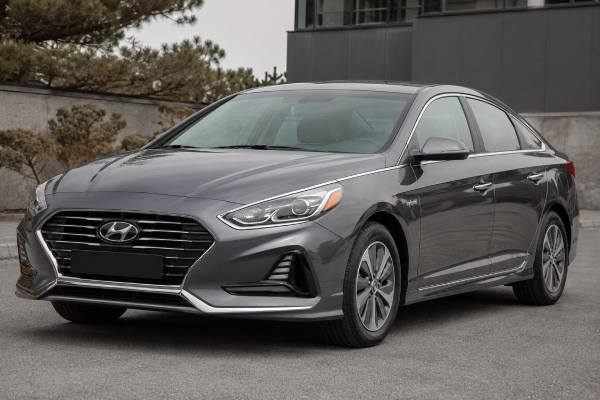
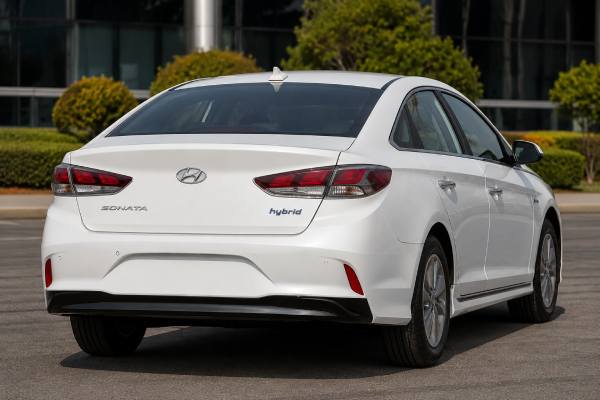
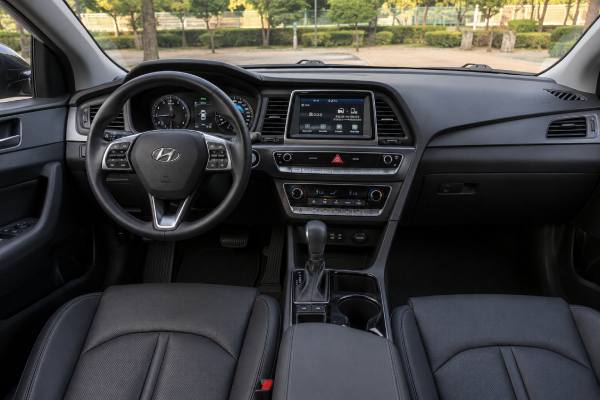
The 2018–2019 Hyundai Sonata Hybrid LF facelift is a midsize front-wheel-drive hybrid sedan built around Hyundai’s Nu 2.0-liter GDI Atkinson-cycle gasoline engine, a 38 kW electric motor, a lithium-ion polymer battery, and a conventional-style 6-speed automatic transmission. It is not the sportiest midsize hybrid of its era, but it offers a strong blend of cabin space, relaxed driving manners, good highway efficiency, and simpler day-to-day usability than a plug-in hybrid.
For used buyers, the main appeal is value: the Sonata Hybrid often costs less than equivalent Toyota Camry Hybrid and Honda Accord Hybrid models while still offering generous equipment and a roomy interior. The key is buying carefully, because engine campaign status, maintenance records, hybrid-system health, and recall completion matter more than trim badges.
Final Verdict
The 2018–2019 Hyundai Sonata Hybrid LF is a smart used midsize sedan for buyers who want comfort, space, and real hybrid fuel savings without paying Toyota Camry Hybrid money. Its strongest appeal is the combination of a roomy 106 cu ft passenger cabin, a usable 13.4 cu ft trunk, and a smooth 193 hp hybrid system with a normal-feeling 6-speed automatic. It suits commuters, families, and highway-heavy drivers best. The main caveat is engine-related campaign and warranty-extension history, so the best examples are cars with documented oil changes, completed Hyundai campaigns, no bearing-noise symptoms, and a clean hybrid battery health check.
| Pros | Cons |
|---|---|
| 193 hp hybrid system feels stronger than economy-focused rivals | Fuel economy trails Camry Hybrid and Accord Hybrid leaders |
| 6-speed automatic gives familiar, non-CVT driving feel | Transmission is smooth, not especially quick or sporty |
| Large sedan cabin with excellent front legroom | Trunk is smaller than gasoline Sonata due to hybrid hardware |
| SE trim delivers the best EPA efficiency rating | Limited trim loses some economy with larger wheels and equipment |
| Strong available safety tech for the 2018 facelift | Best IIHS result depends on options and specific headlights |
| Hyundai engine warranty programs may help qualified cars | Campaign completion and oil history are essential buying checks |
Table of Contents
- 2018–2019 Sonata Hybrid LF Overview
- Sonata Hybrid Specifications and Technical Data
- Trims, Options, Safety and Driver Assistance
- Reliability, Common Issues and Service Actions
- Maintenance and Used Buying Guide
- Driving, Performance and Real-World Efficiency
- How the Sonata Hybrid Compares to Rivals
2018–2019 Sonata Hybrid LF Overview
The facelifted 2018–2019 Sonata Hybrid is best understood as a comfortable, efficiency-focused family sedan rather than a high-tech showcase or performance hybrid. It uses the LF-generation Sonata body with revised styling, updated equipment, and a hybrid layout that favors smoothness and highway refinement.
The model covered here is the non-plug-in Sonata Hybrid, not the Sonata Plug-in Hybrid. That distinction matters. The regular hybrid has a smaller 1.76 kWh lithium-ion polymer battery, no charge port, no wall charging, and a larger trunk than the plug-in version. It is designed to be driven like a normal gasoline sedan: fill it with regular fuel, let the hybrid system manage electric assist and regenerative braking, and service it on a normal mileage schedule.
Hyundai’s powertrain choice gives this Sonata a different feel from many hybrid rivals. Instead of an eCVT, it uses a 6-speed electronic automatic transmission with SHIFTRONIC manual mode. That means engine revs rise and fall through stepped gears, which some drivers prefer because it feels more familiar than Toyota-style hybrid transmission behavior. The tradeoff is that the Sonata does not match the best rivals for city fuel economy.
The car’s main strengths are:
- A quiet and roomy cabin for the money.
- Good highway mileage and long driving range.
- A conventional sedan driving feel.
- Strong standard and available comfort equipment.
- Better used-market value than many Toyota and Honda alternatives.
Its main weaknesses are equally important:
- Engine-related Hyundai campaigns and warranty-extension checks matter.
- EPA economy is good, but not class-leading.
- Hybrid brake feel can be slightly blended and artificial.
- Limited models with 17-inch wheels are less efficient than SE models.
- Long-term confidence depends heavily on maintenance history.
For a used buyer, the sweet spot is usually a well-documented 2018 or 2019 Sonata Hybrid SE if fuel economy is the priority, or a Limited if comfort features matter more. The best cars have dealer records showing campaign completion, regular oil changes at least every 7,500 miles or 12 months, clean coolant and brake fluid history, and no warning lights related to the engine, hybrid battery, or EVAP system.
Sonata Hybrid Specifications and Technical Data
The 2018–2019 Sonata Hybrid LF uses a naturally aspirated 2.0-liter Nu GDI four-cylinder paired with a front-mounted electric motor and a compact lithium-ion polymer battery. Unlike the plug-in version, this HEV does not charge from the grid, so battery condition, regenerative braking, and gasoline-engine health are the main efficiency factors.
| Item | Specification |
|---|---|
| Engine family | Nu 2.0L GDI DOHC 16-valve inline-four |
| Displacement | 1,999 cc / 2.0 liters |
| Bore × stroke | 81 mm × 97 mm |
| Compression ratio | 13.5:1 |
| Engine output | 154 hp at 6,000 rpm; 140 lb-ft at 5,000 rpm |
| Electric motor output | 38 kW / 51 hp; 151 lb-ft from 0–1,770 rpm |
| Battery | 1.76 kWh lithium-ion polymer, 270 V maximum |
| Combined system output | 193 hp at 6,000 rpm |
| Fuel type | Regular unleaded gasoline |
| Item | Specification |
|---|---|
| Drive layout | Front-wheel drive |
| Transmission | 6-speed electronic automatic with SHIFTRONIC |
| Transmission design note | Hybrid automatic without conventional lock-up torque converter |
| Final drive | 3.320 |
| Steering | Column-mounted motor-driven power steering |
| Turning circle | 10.9 m / 35.6 ft curb-to-curb |
| Item | Specification |
|---|---|
| Body style | 4-door midsize sedan, 5 seats |
| Length | 4,854 mm / 191.1 in |
| Width | 1,864 mm / 73.4 in, mirrors excluded |
| Height | 1,471 mm / 57.9 in |
| Wheelbase | 2,804 mm / 110.4 in |
| Curb weight | 1,586–1,615 kg / 3,497–3,560 lb |
| Fuel tank | 60.0 L / 15.85 US gal |
| Passenger volume | 106.1 cu ft |
| Cargo volume | 13.4 cu ft / about 379 L |
| Item | Specification |
|---|---|
| Front suspension | MacPherson strut with high-performance dampers |
| Rear suspension | Multi-link with high-performance dampers |
| Front brakes | 305 mm / 12.0 in ventilated discs |
| Rear brakes | 285 mm / 11.2 in ventilated discs |
| Regenerative braking | Cooperative hydraulic and regenerative brake control |
| SE tires | 205/65R16 |
| Limited tires | 215/55R17 |
| Trim | EPA city/highway/combined | Metric equivalent |
|---|---|---|
| SE | 40 / 46 / 42 mpg US | 5.9 / 5.1 / 5.6 L/100 km |
| Limited | 39 / 44 / 41 mpg US | 6.0 / 5.3 / 5.7 L/100 km |
These numbers make the Sonata Hybrid efficient for a large sedan, especially on long highway trips. The SE is the efficiency pick because its smaller wheels and lighter equipment help it achieve the best rating.
Trims, Options, Safety and Driver Assistance
The 2018–2019 Sonata Hybrid trim structure is simple: SE is the value and efficiency trim, while Limited is the comfort and technology trim. Mechanically, both use the same 193 hp hybrid system, front-wheel drive, and 6-speed automatic, so the choice is mostly about equipment, wheels, interior finish, and safety features.
Trim and equipment differences
The SE is the better choice for buyers who want the lowest running cost. Its 16-inch wheel and tire package helps ride comfort and fuel economy, and it avoids some of the higher-cost luxury items that can age poorly. Common SE features include dual-zone climate control, a touchscreen infotainment system, Apple CarPlay and Android Auto compatibility, key hybrid displays, and the core safety equipment expected in a modern midsize sedan.
The Limited adds a more premium feel. Depending on market and package, it may include leather upholstery, ventilated front seats, heated steering wheel, upgraded audio, larger 17-inch alloy wheels, more advanced driver assistance features, LED lighting, rear parking assistance, and additional convenience technology. The Limited is nicer to live with, but it is also slightly heavier and less efficient.
Useful identifiers include:
- “Hybrid” badging on the trunk and front fenders.
- Blue-accented Hyundai hybrid details on some markets.
- Eco-focused instrument display with hybrid power-flow information.
- Battery packaging under the trunk floor rather than behind the rear seat.
- 16-inch wheels on SE and 17-inch wheels on Limited in common U.S. specifications.
Year-to-year changes from 2018 to 2019 were modest. The major update came with the 2018 facelift, which brought revised exterior styling, updated interior details, improved infotainment availability, and broader driver-assistance availability compared with earlier LF Hybrid years. A 2019 car is not automatically better than a 2018 car; condition, mileage, campaigns, and service records matter more.
Safety ratings and structure
The LF Sonata body performed well in major crash-test programs. The 2018 Hyundai Sonata sedan received strong IIHS crashworthiness scores, with “Good” ratings in the main crashworthiness categories listed by IIHS. The important detail is that the highest IIHS award depended on having optional front crash prevention and specific headlights built after the relevant production date.
In practical terms, do not assume every used Sonata Hybrid has the same safety outcome. A base car without the right headlights or collision-avoidance package may not match the best-rated configuration. For used shopping, verify the actual trim, build date, headlight type, and driver-assistance equipment on the car.
Safety systems and ADAS
Core safety equipment includes front airbags, front side airbags, side-curtain airbags, ABS, electronic brake-force distribution, stability control, traction control, tire-pressure monitoring, and LATCH/ISOFIX-style child-seat anchors. Blind-spot monitoring was a major selling point on facelifted Sonata models, and higher trims or option packages may add forward collision warning, automatic emergency braking, lane-departure warning, lane-keeping assistance, smart cruise control, rear cross-traffic alert, and parking sensors.
ADAS inspection is important after windshield, bumper, grille, or suspension work. Forward-facing camera and radar systems may require calibration after replacement, alignment, accident repair, or bumper removal. On a used example, warning lights, disabled lane support, inconsistent smart cruise behavior, or replaced front-end parts should prompt a professional scan and calibration check.
Reliability, Common Issues and Service Actions
A good 2018–2019 Sonata Hybrid can be durable, but reliability depends strongly on oil-change discipline, campaign completion, and correct hybrid-system diagnosis. The biggest ownership risk is not the hybrid battery; it is usually the gasoline engine and related Hyundai service-action history.
| Issue area | Prevalence | Severity | Typical signs |
|---|---|---|---|
| Nu GDI bearing-related engine concerns | Occasional, VIN-dependent | High | Knock, P1326, limp mode, oil warning |
| EVAP/NVLD P0456 campaign issue | Occasional, climate-dependent | Low to medium | Check-engine light, small EVAP leak code |
| Trunk latch recall on certain 2018 cars | VIN-dependent | Medium | Recall open, trunk emergency release concern |
| Brake rotor corrosion from regen use | Common in wet or salty climates | Low to medium | Pulsation, grinding, rusted rear rotors |
| 12 V battery weakness | Common with age | Low to medium | No-start, warning lights, low-voltage codes |
| Suspension bushings and wheel bearings | Occasional with mileage | Medium | Clunks, humming, uneven tire wear |
Engine and KSDS-related checks
The Nu 2.0 GDI hybrid engine is efficient, but Hyundai’s broader engine programs make documentation important. Certain 2016–2019 Sonata Hybrid and Plug-in Hybrid vehicles with the Nu 2.0-liter GDI hybrid engine are included in Hyundai engine warranty-extension information, and the KSDS software update is central to coverage for qualified vehicles.
For buyers, this means the pre-purchase inspection should include:
- A VIN campaign check through Hyundai and NHTSA.
- Proof that KSDS or related engine campaigns were completed if applicable.
- A cold start and warm idle check for knocking, ticking, or rattling.
- A scan for P1326 and stored history codes, not just active warning lights.
- Oil level and oil-change interval review.
- Inspection for oil leaks around the valve cover, timing cover, oil pan, and filter area.
A flashing check-engine light, P1326, engine protection mode, metallic knock, or oil-pressure warning should be treated as a major red flag. Do not buy the car assuming a sensor replacement will solve it.
Hybrid battery and electrical system
The 1.76 kWh lithium-ion polymer battery is small compared with plug-in hybrids, and it is used mainly for assist, regenerative energy storage, and low-speed electric operation. In normal use, the car’s battery management system protects the pack from full deep cycling. As a result, severe degradation is not the most common problem, but age, heat exposure, accident history, and water intrusion can still matter.
Useful signs of a healthy hybrid system include smooth EV-to-engine transitions, no hybrid warning messages, stable state-of-charge behavior, normal regenerative braking, and no unusual contactor clicking beyond normal startup sounds. A professional scan should check hybrid battery block data, inverter and battery cooling codes, DC–DC converter operation, and stored history faults.
The 12 V battery deserves attention because weak low-voltage batteries can create confusing warning lights. On a used Sonata Hybrid, a fresh 12 V battery is not a major expense, but repeated low-voltage faults can mask deeper charging or DC–DC issues.
EVAP, recalls and service campaigns
One notable service campaign involves DTC P0456, an EVAP “very small leak” code, on certain 2016–2019 Sonata Hybrid LF HEV vehicles. The issue is linked to the natural vacuum leak detection sensor and salt particulate exposure in some coastal environments. The repair involves updated filtering hardware and NVLD sensor replacement when required.
Certain 2018 Sonata Hybrid vehicles are also affected by the trunk latch recall campaign. The concern involves trunk latch pawl damage that could affect operation of the emergency trunk release. The remedy is replacement of the trunk latch base with improved parts.
Before buying, ask for printed or digital proof of recall and campaign completion. A clean dashboard is not enough; campaigns can be open without causing warning lights.
Maintenance and Used Buying Guide
The safest maintenance strategy for the Sonata Hybrid is to follow Hyundai’s official schedule, then shorten fluid intervals when the car sees severe use. Severe use includes short trips, very hot or cold weather, dusty areas, repeated stop-and-go driving, mountain driving, rideshare use, and long idling.
| Interval | Service items |
|---|---|
| Every 7,500 mi / 12 months | Engine oil and filter; tire rotation; brake, tire and fluid inspection |
| Every 15,000 mi | Cabin filter; brake fluid, parking brake, fuel hoses and EVAP inspection |
| Every 30,000 mi | Engine air filter; fuel lines and cooling-system inspection |
| Every 45,000–60,000 mi | Brake fluid replacement; alignment check; inspect belts, hoses and suspension |
| Every 60,000–75,000 mi | Consider automatic transmission fluid service under severe use |
| Around 95,000–105,000 mi | Iridium spark plugs; inspect ignition coils and GDI carbon symptoms |
| 120,000 mi / 10 years | Engine coolant service; inspect hybrid cooling loops and hoses |
| Every visit after 8 years | 12 V battery test; hybrid-system scan if warning history is present |
The engine uses a timing chain, not a scheduled timing belt. That does not mean the chain should be ignored. During inspection, listen for cold-start rattle, check for timing-correlation faults, and inspect for guide or tensioner symptoms if noise develops. Chain replacement is condition-based, not a routine mileage item.
Useful service reference points include SAE 5W-30 or 5W-40 oil in many references for the 2.0L Nu GDI application, about 5.1 US qt / 4.8 L with filter in common service listings, and an oil drain-plug torque around 29 lb-ft / 39 Nm. Because Hyundai specifications can vary by market and manual revision, confirm the exact oil grade, capacity, and torque from the owner’s manual or service information for the VIN.
Used buying checklist
A proper inspection should focus on the expensive systems first:
- Confirm VIN, model year, trim, and hybrid/non-plug-in status.
- Check Hyundai and NHTSA recall status.
- Ask for oil-change records, not just verbal claims.
- Verify KSDS and related engine campaign completion where applicable.
- Scan all modules, including engine, hybrid control, brake, body, and ADAS.
- Listen for engine knock at cold start and after full warm-up.
- Check transmission shifts under light, moderate, and highway throttle.
- Inspect inverter, coolant hoses, radiator, and hybrid cooling components.
- Look for crash repair around front bumper, grille, radar, windshield, and rear quarter panels.
- Inspect rear brakes carefully, because regenerative braking can let rotors corrode.
- Check tire wear for alignment, bushing, or suspension issues.
- Test every ADAS feature, infotainment function, camera, sensor, and key.
A clean 2019 is attractive because it is newer, but a documented 2018 can be the better buy if it has completed campaigns and better maintenance records. Avoid cars with unexplained warning lights, engine replacement paperwork that cannot be verified, flood history, heavy front-end accident repairs, or missing service history.
Driving, Performance and Real-World Efficiency
The Sonata Hybrid drives like a quiet midsize sedan first and a hybrid second. Its best qualities are smooth low-speed response, relaxed highway manners, and a more familiar transmission feel than many eCVT hybrids.
Around town, the electric motor gives the car clean step-off from a stop, and the gasoline engine joins in without much drama when more power is needed. The transition is generally smooth, though drivers used to Toyota’s more seamless hybrid system may notice the Hyundai’s engine starts and gear changes more clearly. The 6-speed automatic is a key part of the car’s character: it shifts smoothly and keeps the powertrain feeling conventional, but it is tuned for efficiency rather than aggressive response.
With 193 hp combined, acceleration is adequate for merging and passing. Independent road tests commonly place 0–60 mph in the mid-8-second range, depending on trim, tire condition, temperature, and battery state of charge. That is quick enough for daily use, but not quick enough to make the Sonata Hybrid feel sporty.
Ride comfort is one of its better traits. The 16-inch SE is the smoother and quieter choice over broken pavement, while the 17-inch Limited has a firmer edge but still feels comfortable by midsize sedan standards. Straight-line stability is good, and the long wheelbase helps the car feel composed on highways. Steering is light to medium in weight and accurate enough, but feedback is modest.
Braking feel is typical of many hybrids from this period. The system blends regenerative braking with friction braking, so the pedal can feel less linear than a conventional sedan at low speeds. During normal driving it is easy to adapt, but a test drive should include several gentle and firm stops to check for pulsation, scraping, or inconsistent pedal response.
Real-world fuel economy depends heavily on speed and weather. A realistic expectation is:
- City driving: about 5.8–6.7 L/100 km, or 35–41 mpg US.
- Highway at 60–70 mph: about 5.1–5.8 L/100 km, or 41–46 mpg US.
- Highway at 75 mph: often closer to 6.0–6.7 L/100 km, or 35–39 mpg US.
- Mixed use: about 5.6–6.4 L/100 km, or 37–42 mpg US.
Cold weather reduces hybrid benefit, especially on short trips. The engine runs more often to provide cabin heat and reach operating temperature, and winter tires can reduce economy further. In cold climates, rear brake corrosion and 12 V battery health also become more important.
How the Sonata Hybrid Compares to Rivals
The Sonata Hybrid’s strongest competitive argument is value. It is usually less expensive used than a Toyota Camry Hybrid or Honda Accord Hybrid of similar age and mileage, while offering a large cabin, good equipment, and a more traditional automatic-transmission feel.
| Model | Why choose it | Why choose the Sonata Hybrid instead |
|---|---|---|
| Toyota Camry Hybrid | Best reputation, excellent economy, strong resale | Usually lower purchase price and familiar 6-speed feel |
| Honda Accord Hybrid | More polished hybrid response and sharper driving feel | Often cheaper, quieter, and more comfort-focused |
| Ford Fusion Hybrid | Good value, comfortable ride, widely available | Sonata offers a larger-feeling cabin and longer warranty appeal |
| Kia Optima Hybrid | Closely related platform and similar efficiency | Choose based on condition, equipment, and dealer records |
| Chevrolet Malibu Hybrid | Excellent efficiency and strong city economy | Sonata has broader used-market familiarity and cabin comfort |
Against the Toyota Camry Hybrid, the Sonata loses on resale strength, long-term reputation, and top fuel-economy numbers. The Camry is the safer conservative choice, especially for buyers who plan to keep the car well past 150,000 miles. The Hyundai fights back with lower used prices and a more conventional driving feel.
Against the Honda Accord Hybrid, the Sonata is softer and less engaging. The Accord’s hybrid system is generally more responsive and refined under mixed driving. However, used Accord Hybrids often command higher prices, and the Hyundai can make more sense for a buyer who prioritizes comfort and purchase cost over sharper handling.
The closest rival is the Kia Optima Hybrid, which shares much of the same underlying technology. Between those two, buy the cleaner car with better service history, fewer owners, no accident damage, and completed campaigns. Brand preference matters less than condition.
The Sonata Hybrid is not the best hybrid sedan if maximum mpg is the only goal. It is best for buyers who want a roomy, comfortable, well-equipped sedan at a reasonable used price and are willing to verify maintenance and campaign history before purchase.
References
- 2018 Sonata Hybrid/Plug-In Hybrid Specifications 2018 (Manufacturer Specifications) ([Motorshow][1])
- Fuel Economy of the 2019 Hyundai Sonata Hybrid 2019 (Fuel Economy) ([Fuel Economy][2])
- 2018 Hyundai Sonata 2018 (Safety Rating) ([IIHS Crash Testing][3])
- Check for Recalls: Vehicle, Car Seat, Tire, Equipment | NHTSA 2026 (Recall Database) ([NHTSA][4])
- Manuals & Warranties | Hyundai Resources | MyHyundai 2026 (Owner Resources) ([MyHyundai][5])
Disclaimer
This article is for informational purposes only and is not a substitute for professional diagnosis, repair, inspection, or official service guidance. Specifications, torque values, maintenance intervals, campaign eligibility, software updates, and procedures can vary by VIN, market, production date, trim, and equipment. Always verify critical information against the official owner’s manual, Hyundai service documentation, dealer campaign records, and the vehicle’s VIN.
If this guide helped you, please consider sharing it on Facebook, X/Twitter, or another platform to support our work.