
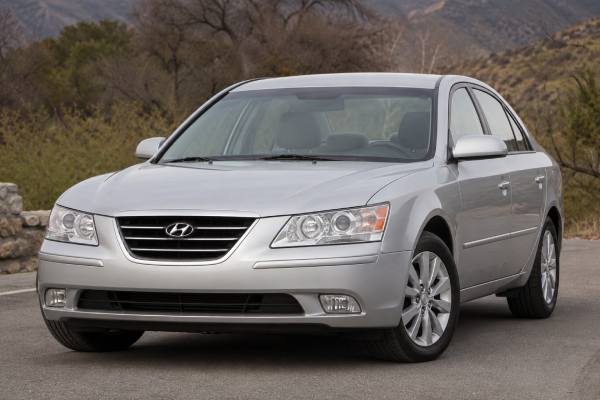
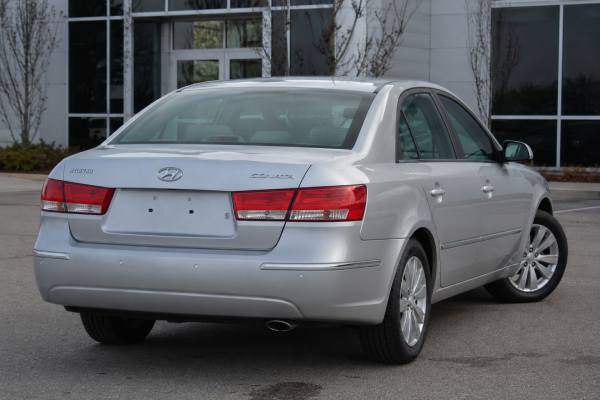
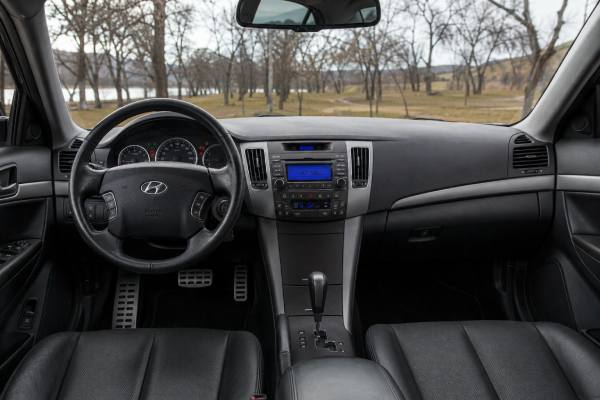
The facelifted Hyundai Sonata NF with the Theta II 2.0 gasoline engine is a practical mid-size sedan aimed at buyers who want space, comfort, simple ownership, and reasonable running costs without moving into premium-car repair bills. Sold in different markets with slightly different trim names and equipment, this 2008–2010 facelift brought sharper exterior details, a refreshed interior, and updated powertrains while keeping the core NF formula: front-wheel drive, independent suspension, a large cabin, and a conventional naturally aspirated four-cylinder engine.
This guide focuses on the 2.0-litre Theta II / G4KD version rated around 164 hp, with market-dependent manual or automatic transmissions. It covers the key specifications, ownership issues, safety background, maintenance needs, and buying checks that matter when evaluating one today.
Quick Overview
- Spacious cabin and 523 L trunk make the Sonata NF more useful than many compact sedans of the same era.
- The 2.0 Theta II is a naturally aspirated, chain-driven engine with simple MPI fuel injection and no turbocharger.
- Ride comfort, straight-line stability, and value are stronger points than sporty handling.
- Check carefully for rear subframe/crossmember corrosion, oil consumption, cooling leaks, and neglected automatic transmission fluid.
- A practical oil service interval is 7,500 miles / 12,000 km or 6 months in normal use, shorter for severe city use.
Table of Contents
- Sonata NF Facelift Model Context
- Sonata NF 2.0 Technical Specs
- Sonata NF Trims and Safety
- Reliability, Issues and Recalls
- Maintenance and Buying Checks
- Driving Feel and Performance
- Comparison With Key Rivals
Sonata NF Facelift Model Context
The Hyundai Sonata NF sits in the fifth-generation Sonata family, positioned as a roomy D-segment or mid-size sedan depending on the market. The 2008 facelift updated the car rather than replacing it. The main changes were a revised front end, updated lights, restyled bumpers, new wheel designs, interior trim improvements, and revised powertrain tuning. In many markets, the facelift model is easier to identify by its cleaner grille design, more modern headlamp shape, updated rear lamps, and a dashboard that feels less plain than earlier NF models.
The 2.0 Theta II version is especially relevant in export markets where tax, insurance, and fuel costs made the larger 2.4 and V6 engines less attractive. It uses Hyundai’s G4KD 1,998 cc inline-four, a naturally aspirated all-aluminium engine with dual overhead camshafts, four valves per cylinder, multi-point fuel injection, and continuously variable valve timing. Unlike later GDI Theta II engines in newer Sonatas, this version uses port injection, which helps reduce intake-valve carbon buildup risk and makes diagnosis simpler for many independent workshops.
This exact model should not be confused with the later YF Sonata introduced around 2010–2011 in many markets. The later car has a different body, different crash structure, different electronics, and, in some regions, different Theta II GDI engines with a separate reliability history. The NF facelift 2.0 is more traditional: hydraulic or electro-hydraulic-era steering depending on market, a conventional automatic or manual transmission, steel unibody construction, and relatively straightforward servicing.
The car’s main appeal today is value. A good Sonata NF 2.0 offers the space of a larger family sedan, inexpensive parts availability in many regions, and a powertrain that is not highly stressed. It is not a performance sedan, but the 164 hp output is enough for normal commuting, highway cruising, and family use when the engine and transmission are healthy.
Its main ownership risk is not complexity but age. By now, most examples are well over 15 years old. Rubber parts, cooling hoses, engine mounts, suspension bushes, brake lines, underbody fasteners, and electrical connectors can matter more than the odometer alone. A low-mileage car that spent winters in road salt may be a worse buy than a higher-mileage car from a dry climate with strong service records.
For a buyer, the best example is not necessarily the highest trim. It is the car with clean structure, smooth cold start, stable idle, no timing-chain rattle, no severe oil consumption, clean coolant, smooth transmission shifts, working air conditioning, and documented fluid changes. Equipment is a bonus; condition is the priority.
Sonata NF 2.0 Technical Specs
The following figures describe the facelift Hyundai Sonata NF 2.0 Theta II gasoline sedan. Some values vary by market, transmission, wheel package, emissions calibration, and local homologation. Always confirm against the VIN plate, owner’s manual, and market-specific service data.
Powertrain and Efficiency
| Item | Specification |
|---|---|
| Engine code | Theta II / G4KD |
| Engine layout and cylinders | Front transverse inline-4, 4 cylinders, DOHC, 4 valves per cylinder, CVVT |
| Bore × stroke | 86.0 × 86.0 mm (3.39 × 3.39 in) |
| Displacement | 2.0 L (1,998 cc) |
| Induction | Naturally aspirated |
| Fuel system | Multi-point fuel injection / MPFI |
| Compression ratio | 10.5:1 |
| Maximum power | 164 hp / 165 PS (121 kW) @ 6,200 rpm |
| Maximum torque | 197 Nm (145 lb-ft) @ about 4,500–4,600 rpm |
| Timing drive | Chain |
| Rated efficiency | About 7.7–7.9 L/100 km combined (30.5–29.8 mpg US / 36.7–35.8 mpg UK) |
| Real-world highway at 120 km/h / 75 mph | Typically about 7.0–8.5 L/100 km (34–28 mpg US / 40–33 mpg UK), depending on tyres, load, wind, terrain, and transmission |
Transmission and Driveline
| Item | Specification |
|---|---|
| Transmission | 5-speed manual or 4-speed automatic, depending on market and trim |
| Drive type | Front-wheel drive |
| Differential | Open front differential |
Chassis, Dimensions and Capacity
| Item | Specification |
|---|---|
| Front suspension | Independent MacPherson strut with coil springs and anti-roll bar |
| Rear suspension | Independent multi-link |
| Steering | Rack and pinion; about 12.0 m (39.4 ft) turning circle |
| Brakes | Ventilated front discs, rear discs; ABS fitted in most facelift markets |
| Popular tyre sizes | 205/60 R16, 215/60 R16, or 215/55 R17 depending on trim |
| Ground clearance | Market-dependent; commonly around 160 mm (6.3 in) |
| Length / width / height | 4,800 / 1,832 / 1,475 mm (189.0 / 72.1 / 58.1 in) |
| Wheelbase | 2,730 mm (107.5 in) |
| Curb weight | About 1,478–1,482 kg (3,258–3,267 lb) |
| GVWR | About 2,030 kg (4,475 lb) |
| Fuel tank | 67–70 L (17.7–18.5 US gal / 14.7–15.4 UK gal), market dependent |
| Cargo volume | About 523 L (18.5 ft³) trunk volume; sedan body, no full seats-down wagon-style load bay |
Performance and Service Capacities
| Item | Typical figure |
|---|---|
| 0–100 km/h (0–62 mph) | About 9.9 s manual; about 11.4 s automatic |
| Top speed | About 207 km/h (129 mph) manual; about 194 km/h (121 mph) automatic |
| 100–0 km/h braking distance | Usually about 39–43 m (128–141 ft) on good tyres; condition-sensitive |
| Towing capacity | Market-dependent; verify VIN plate and local manual before towing |
| Payload | About 548–552 kg (1,208–1,217 lb), depending on transmission and equipment |
| Engine oil | API SJ/SL or higher, ILSAC GF-3 or higher; 5W-20 or 5W-30 commonly specified; about 3.9 L (4.1 US qt) for 2.0 G4KD in many listings |
| Coolant | Ethylene-glycol coolant suitable for aluminium engines; 50/50 mix typical; about 6.0–6.2 L (6.3–6.6 US qt) |
| Automatic transmission fluid | Hyundai/Kia SP-III type where fitted; capacity varies by transmission and service method |
| Manual transmission oil | MTF 75W/85 API GL-4 type where fitted |
| Brake fluid | DOT 3 or DOT 4 equivalent |
| A/C refrigerant | Usually R134a on this generation; charge weight should be verified from the under-hood label |
| Key torque examples | Oil drain plug about 34–44 Nm (25–33 lb-ft); oil filter about 12–16 Nm (9–12 lb-ft) where applicable |
Sonata NF Trims and Safety
Trim names changed by country, but the facelift NF 2.0 was commonly sold in comfort-oriented grades rather than performance versions. In some markets, names such as Classic, Comfort, Style, Premium, GLS, or Executive were used. The important point is that most 2.0 cars share the same basic mechanical layout: front-wheel drive, the G4KD engine, independent suspension, and either a manual or automatic transmission.
Trim and Option Differences
Lower trims usually have cloth upholstery, manual or basic automatic climate controls, steel wheels or 16-inch alloys, simpler audio, and fewer convenience features. Mid and high trims may add alloy wheels, fog lamps, automatic climate control, leather or leather-look trim, heated seats, cruise control, power driver’s seat, upgraded audio, rear parking sensors, and sometimes sunroof or navigation depending on market.
Mechanical differences are usually modest. The 2.0 engine output does not normally change by trim. Wheel and tyre packages can change the driving feel: 16-inch tyres ride more softly and are cheaper to replace, while 17-inch tyres sharpen steering response slightly but can add road noise and impact harshness. Some market versions used firmer suspension tuning after the facelift, but the Sonata NF remains a comfort-biased sedan.
Quick identifiers include the facelift front grille and lamps, revised rear lighting, updated centre stack, trim badges, wheel design, and market-specific VIN/build labels. A buyer should not rely only on badges because many older cars have had bumpers, wheels, audio units, or trim pieces replaced. The VIN, registration data, engine code, emissions label, and service records give a more reliable picture.
Safety Ratings and Equipment
The NF Sonata was strong for its period but should be judged by mid-2000s standards, not modern ADAS standards. Typical safety equipment includes dual front airbags, front side airbags, curtain airbags on many markets, anti-lock brakes, electronic brake-force distribution, traction control or electronic stability control on better-equipped versions, three-point seat belts, and rear child-seat anchors.
IIHS testing for the 2006–2010 Sonata rated the car Good in the original moderate overlap front test, Acceptable in the original side test, Marginal for roof strength, and Good for head restraints and seats. This is respectable for the era, but it does not equal the protection level of a newer sedan designed for small-overlap, stronger roof, pedestrian, and active-safety testing.
NHTSA results for U.S.-market cars of this period were generally strong in frontal and side crash categories, with rollover performance depending on the old rating method. However, U.S. results apply most directly to U.S.-spec cars. Airbag calibration, seat structures, lighting, and standard ESC availability can differ by market.
ADAS availability is limited by modern standards. Do not expect factory automatic emergency braking, adaptive cruise control, lane centering, blind-spot monitoring, rear cross-traffic alert, or traffic-sign recognition on this generation. Parking sensors and basic cruise control may be present, but they are not substitutes for modern driver-assistance systems. After windscreen, suspension, steering, or crash repairs, the main calibration concerns are basic alignment, steering-angle sensor calibration where applicable, ABS/ESC sensor health, and correct airbag/SRS fault clearing.
For family use, check the rear seat belts, child-seat anchors, airbag warning lamp, seat occupancy sensor, and all door locks. An illuminated SRS light is not a minor cosmetic issue; it can indicate a seat sensor, clock spring, pretensioner, wiring, or module fault that affects restraint operation.
Reliability, Issues and Recalls
The Sonata NF 2.0 is generally a durable car when serviced well, but age and neglected maintenance can create expensive problems. The best way to judge one is by system: engine, cooling, transmission, chassis, corrosion, and electronics.
| Issue | Prevalence | Cost tier | Typical signs |
|---|---|---|---|
| Rear subframe/crossmember corrosion | Common in salt climates | High | Rear alignment changes, clunks, visible rust, failed inspection |
| Oil consumption or low-oil damage | Occasional | Medium to high | Low dipstick level, blue smoke, knocking, chain noise |
| Timing-chain noise or tensioner wear | Occasional at high mileage | Medium | Cold-start rattle, cam/crank correlation codes |
| Cooling leaks | Common with age | Low to medium | Coolant smell, low reservoir, crust near radiator or hoses |
| Automatic shift flare or harsh engagement | Occasional | Medium to high | Delayed Drive/Reverse, flare on upshift, dirty ATF |
| Suspension bushes and links | Common with age | Low to medium | Knocks, wandering, uneven tyre wear |
| Stop-lamp switch faults | Known recall item | Low if recall covered | Brake lights wrong, ESC light, shifter stuck in Park |
Engine and Timing System
The G4KD uses a timing chain, not a rubber timing belt. That reduces routine replacement needs, but it does not make the system lifetime-proof. Chain stretch, guide wear, or a weak tensioner can appear after high mileage, poor oil maintenance, extended oil intervals, or frequent low-oil operation. Symptoms include rattling for more than a brief moment after cold start, rough running, poor performance, and cam/crank timing fault codes. The correct remedy is diagnosis with live timing data and mechanical inspection, then replacement of chain, guides, tensioner, and related seals if out of spec.
Oil condition matters. This engine is not usually difficult to service, but it can suffer if owners treat the oil light as a maintenance reminder. The oil-pressure warning lamp means pressure is already dangerously low. On a test drive, listen for deep knocking under load, ticking that does not fade warm, and rattle on restart after a hot soak.
Because this is an MPI engine, it is less prone to severe intake-valve carbon buildup than later direct-injection engines. Still, throttle body deposits, PCV issues, ageing ignition coils, worn spark plugs, oxygen sensors, and vacuum leaks can cause rough idle or check-engine lights.
Cooling, Transmission and Chassis
Cooling system age is a major concern. Inspect the radiator tanks, hose ends, thermostat area, water pump, heater hoses, and coolant colour. Overheating can turn a good cheap sedan into a poor investment quickly. A healthy car should reach normal temperature steadily, hold it in traffic, and produce stable cabin heat.
Automatic versions need special attention. Harsh shifts can come from old fluid, solenoid issues, mounts, throttle input problems, or internal wear. The fluid should not smell burnt or look black. A proper road test includes cold engagement, gentle throttle shifts, kickdown, highway cruising, and stop-start traffic. Manual versions are simpler but can need clutch, release bearing, or shifter linkage work.
Underbody condition is often the deciding factor. Rear crossmember corrosion is the headline issue in road-salt regions, but also inspect brake lines, fuel lines, rear control-arm mounts, front subframe edges, jacking points, sills, wheel arches, and suspension fasteners. A clean-looking exterior can hide expensive rust underneath.
Recalls and Service Actions
Known recall themes include rear crossmember corrosion in salt-belt conditions and stop-lamp switch faults affecting brake lights, ESC warnings, and shift interlock operation. Because recall eligibility is VIN-specific, do not assume a car is repaired just because it is the correct year. Ask for dealer records and run an official VIN recall check before purchase.
Pre-purchase documents to request include oil-change history, coolant service records, transmission fluid service, recall completion proof, wheel alignment records, and any invoices for suspension, brakes, radiator, water pump, ignition coils, oxygen sensors, or timing-chain work. A seller who can show dated maintenance records is usually a safer bet than one who says “it never needed anything.”
Maintenance and Buying Checks
A well-kept Sonata NF 2.0 is straightforward to maintain. The key is not exotic parts; it is regular service, correct fluids, and early attention to leaks, corrosion, and suspension wear.
| Service item | Suggested interval | Notes |
|---|---|---|
| Engine oil and filter | 7,500 miles / 12,000 km or 6 months; shorter in severe use | Use correct API/ILSAC grade; check level monthly |
| Engine air filter | Inspect every service; replace about 15,000–30,000 miles / 24,000–48,000 km | Replace sooner in dusty areas |
| Cabin air filter | 12 months or 10,000–15,000 miles / 15,000–24,000 km | Important for HVAC airflow and demisting |
| Coolant | First major replacement around 60,000 miles / 96,000 km or 60 months; then about 25,000 miles / 40,000 km or 24 months | Use aluminium-compatible ethylene-glycol coolant |
| Spark plugs | Typically around 60,000 miles / 96,000 km for iridium plugs | Replace earlier if misfire codes appear |
| Timing chain | No fixed belt-style replacement interval | Inspect if noisy, oil-starved, or timing faults appear |
| Serpentine belt and hoses | Inspect every service; replace by condition | Look for cracks, glazing, swelling, and coolant crust |
| Automatic transmission fluid | Often best serviced every 30,000–60,000 miles / 48,000–96,000 km on older cars | Use correct SP-III type where specified |
| Manual transmission oil | Inspect and replace around 60,000 miles / 96,000 km or if shifting degrades | Use GL-4 MTF, not generic GL-5 unless approved |
| Brake fluid | Every 2 years | DOT 3 or DOT 4 equivalent |
| Tyre rotation and alignment | Rotate every 6,000–8,000 miles / 10,000–13,000 km; align when wear appears | Rear alignment problems can indicate worn arms or corrosion |
| 12 V battery | Test annually after 3 years | Weak batteries can trigger odd electrical symptoms |
Buyer Inspection Checklist
Start with the body and underside. Look at the rear crossmember, rear control-arm mounting points, sills, wheel arches, brake lines, fuel lines, exhaust hangers, and front subframe. Surface rust is expected on many older cars; swelling seams, perforation, soft metal, or distorted suspension mounting points are much more serious.
Then check the engine cold. It should start promptly, idle evenly, and settle without heavy rattling. Remove the oil cap and check for sludge. Pull the dipstick and confirm the oil level. Look for leaks around the valve cover, timing cover, oil filter housing area, sump, and crank seals. Check coolant level only when safe, and look for oily residue, rust-coloured coolant, or signs of repeated top-ups.
On the road, the car should track straight, brake without pulsing, shift cleanly, and hold temperature in traffic. Listen for front-end knocks over small bumps, rear clunks, wheel-bearing hum, power-steering whine, exhaust leaks, and tyre roar. Test the air conditioning, heater, all windows, locks, mirrors, radio, instrument lights, ABS light, ESC light, and SRS light.
Recommended versions are clean, rust-free, well-documented cars on 16-inch wheels with working safety systems and recent fluids. Avoid cars with severe underbody corrosion, overheating history, persistent oil-pressure warnings, noisy timing chain, slipping automatic transmission, missing catalytic converter, disabled warning lights, or unclear ownership paperwork.
Long-term durability is good when the car is treated as an ageing sedan rather than a disposable cheap car. Budget for suspension refresh, tyres, brakes, fluids, engine mounts, and occasional sensors. The purchase price may be low, but catching up years of neglected maintenance can cost more than buying a better example first.
Driving Feel and Performance
The Sonata NF 2.0 is best understood as a comfortable family sedan, not a sport sedan. Its strengths are space, ride comfort, predictable handling, and relaxed highway manners. The body is larger than many cars with similar running costs, which gives it a settled feel at speed but also makes it less agile in tight urban driving.
Ride, Handling and NVH
Ride comfort is one of the car’s better qualities. On 16-inch tyres, the suspension absorbs broken pavement and expansion joints well, with a soft but controlled feel. The multi-link rear suspension helps the car remain composed over uneven surfaces, especially compared with cheaper torsion-beam sedans. Worn dampers, tired rear links, or cheap tyres can make the car feel floaty or noisy, so condition matters.
Steering is light to moderate in weight and easy in parking manoeuvres. Feedback is limited, but the car is predictable. In corners, the Sonata leans more than a sportier rival and eventually moves into safe understeer. Stability control, where fitted, is useful in wet or snowy conditions and should not be ignored when checking equipment.
Cabin noise is acceptable for the period. The engine is quiet at low rpm, becomes more noticeable above 4,000 rpm, and can sound coarse if mounts are worn. Wind noise around mirrors and tyre noise from budget replacements are common on older examples. A well-maintained car on good touring tyres is pleasant at 100–120 km/h.
Powertrain Character
The 2.0 Theta II needs revs for its best performance. Low-rpm torque is adequate, not strong, so automatic cars can feel slower with passengers or air conditioning on. The manual transmission gives better control and quicker acceleration, while the automatic suits relaxed driving but is not especially quick by modern standards.
Throttle response is simple and linear. There is no turbo lag because there is no turbocharger, but there is also no low-rpm boost. Passing on two-lane roads requires planning, especially with the automatic. The engine is happiest when kept in the midrange rather than lugged at very low rpm.
Real-world economy varies widely. In city use, expect roughly 10–12 L/100 km (24–20 mpg US / 28–24 mpg UK). Mixed use often lands around 8–9.5 L/100 km (29–25 mpg US / 35–30 mpg UK). Gentle highway driving can be in the 7–8.5 L/100 km range (34–28 mpg US / 40–33 mpg UK), but winter tyres, short trips, roof racks, poor alignment, dragging brakes, or a failing thermostat can worsen those numbers.
Braking performance is adequate when the system is fresh. Old brake fluid, seized slider pins, cheap pads, corroded rear discs, or mismatched tyres can make the pedal feel weak or inconsistent. A proper brake refresh often transforms how these cars feel.
Comparison With Key Rivals
The Sonata NF 2.0 competes most naturally with older mid-size sedans such as the Toyota Camry, Honda Accord, Mazda6, Ford Mondeo, Kia Magentis/Optima, Chevrolet Epica, Opel/Vauxhall Vectra or Insignia, and Nissan Primera or Teana depending on market. Its position is usually value-led: more space and equipment for the money, with slightly less brand prestige than Toyota or Honda.
| Model | Sonata advantage | Rival advantage |
|---|---|---|
| Toyota Camry 2.0/2.4 | Often cheaper to buy with generous equipment | Usually stronger resale and excellent reliability reputation |
| Honda Accord 2.0 | Softer ride and often lower purchase price | Sharper handling, better cabin feel, stronger enthusiast appeal |
| Mazda6 2.0 | More relaxed and comfort-oriented | More engaging steering and handling |
| Ford Mondeo 2.0 | Simpler ownership in some regions, good cabin space | Excellent chassis balance and broader body choices |
| Kia Magentis/Optima 2.0 | Similar mechanical base with Hyundai styling and equipment differences | May be cheaper still, depending on local market |
Against a Camry, the Sonata usually wins on price and sometimes equipment. The Camry often wins on resale confidence and the depth of used parts supply. Against an Accord, the Sonata feels softer and less precise, but it can be a better fit for buyers who care more about comfort than driver involvement. Against a Mazda6 or Mondeo, the Sonata gives up some steering feel but may be cheaper to maintain if local Hyundai parts availability is strong.
The best reason to choose the Sonata NF 2.0 is not that it is the most exciting sedan of its era. It is that a clean, serviced example can deliver a lot of car for modest money. It has a large trunk, adult-friendly rear seat, uncomplicated gasoline engine, and conventional layout. The biggest reason to walk away is structural corrosion or evidence of neglected fluids.
For most buyers, condition should outrank brand comparisons. A well-maintained Sonata NF 2.0 with clean underbody, smooth engine, documented recall work, and fresh suspension is a better purchase than a neglected Camry, Accord, or Mazda6 bought only for the badge. At this age, the individual car matters more than the brochure.
References
- OWNER’S MANUAL Operation Maintenance Specifications 2008 (Owner’s Manual)
- Hyundai Sonata V (NF, facelift 2008) 2.0 (165 Hp) | Technical specs, data, fuel consumption, Dimensions 2026 (Technical Data)
- 2009 Hyundai Sonata 2026 (Safety Rating)
- Part 573 Safety Recall Report 13V-354 2014 (Recall Database)
- 2009 SONATA: TRANSFORMED FROM THE INSIDE OUT FOR A MORE PREMIUM AND FUEL-EFFICIENT MID-SIZE SEDAN EXPERIENCE 2008 (Manufacturer Publication)
Disclaimer
This article is for informational purposes only and is not a substitute for professional diagnosis, repair, inspection, or service advice. Specifications, torque values, service intervals, fluids, procedures, recall eligibility, and equipment can vary by VIN, market, production date, and installed options. Always verify details against official service documentation, the vehicle’s labels, and qualified professional guidance before maintenance or repair.
If this guide helped you, please consider sharing it on Facebook, X/Twitter, or your preferred social platform to support our work.