

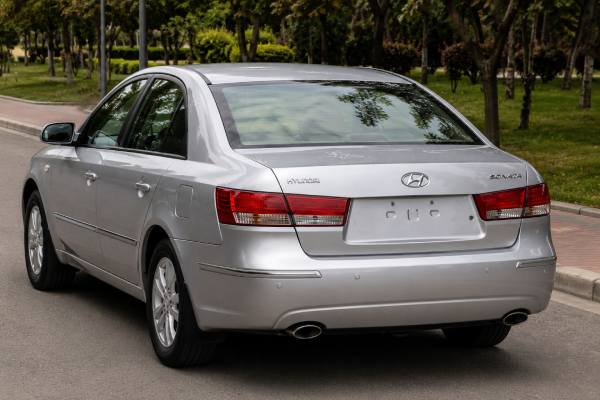
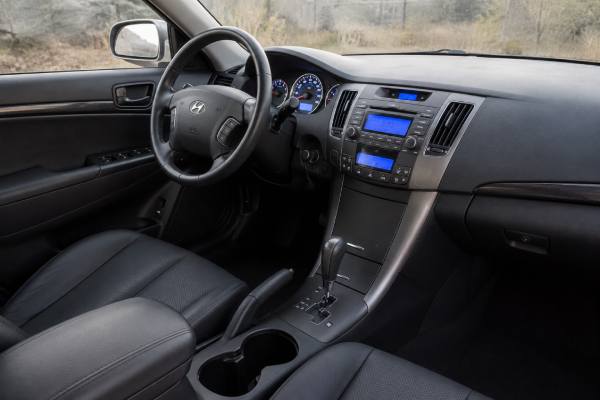
The facelift Hyundai Sonata NF with the 2.4-liter Theta II gasoline engine is one of the more practical used midsize sedans from the late 2000s. It offers a roomy cabin, a large trunk, simple front-wheel-drive mechanicals, and generally affordable servicing. In many markets this version is rated at about 174 hp, while North American literature often lists the same facelift 2.4-liter family at 175 hp depending on rating standard and emissions calibration.
This guide focuses on the 2008–2010 facelift Sonata NF with the naturally aspirated 2.4-liter MPI four-cylinder engine, commonly associated with the G4KE/Theta II family in many markets. It covers the specs, dimensions, performance, safety ratings, common problems, maintenance needs, and buying checks that matter most when evaluating one today.
Owner Snapshot
- Spacious midsize sedan with a large 523 L / 16.3 ft³ trunk and comfortable long-distance cabin.
- Simple naturally aspirated 2.4-liter MPI engine is easier to service than later direct-injection designs.
- Standard stability control and six airbags were strong safety advantages for the era.
- Check carefully for rear crossmember corrosion, automatic-transmission shift quality, oil leaks, and incomplete recall work.
- Normal engine oil service is typically every 12,000 km / 7,500 miles or 6 months; severe use can shorten this to 4,800 km / 3,000 miles.
Table of Contents
- Hyundai Sonata NF Facelift Guide
- Hyundai Sonata NF 2.4 Specifications
- Hyundai Sonata NF Trims and Safety
- Reliability Issues and Service Actions
- Maintenance Schedule and Buying Advice
- Driving Performance and Economy
- Sonata NF Rivals and Alternatives
Hyundai Sonata NF Facelift Guide
The Hyundai Sonata NF facelift sits between two very different eras of Hyundai. It is newer and more refined than the earlier budget-focused Sonatas, but it predates the more dramatic styling and direct-injection powertrains that arrived with the next-generation YF Sonata. That makes the 2008–2010 facelift NF especially interesting as a used car: it is modern enough to offer good comfort and safety equipment, yet old-school enough to remain mechanically straightforward.
The facelift brought a cleaner exterior, a much-improved interior, better cabin materials, updated trim equipment, and revised suspension and steering tuning. The 2.4-liter engine is a naturally aspirated inline-four with multi-point fuel injection rather than the later gasoline direct-injection system. For many used buyers, that is a benefit. It avoids some of the intake-valve carbon buildup concerns associated with many direct-injection engines, and it usually keeps servicing simpler and cheaper.
In this specification, the Sonata NF is not a sports sedan. It is a comfortable, roomy, front-wheel-drive family car built around predictable manners rather than excitement. The 2.4-liter engine provides enough power for normal commuting, highway cruising, and light family use, but it needs revs when fully loaded or climbing long grades. The 5-speed automatic is the more common transmission in many markets, while some entry versions were available with a 5-speed manual.
Its strongest qualities are space, value, comfort, and mechanical simplicity. Rear-seat space is generous for the class, the trunk is large, and parts availability is usually good. A well-maintained example can be a sensible low-cost sedan, especially for drivers who want something larger than a compact car without the fuel and maintenance costs of a V6.
The main caution is condition. These cars are now old enough that age matters more than mileage alone. A low-mileage car with original coolant, tired suspension rubber, old tires, rusty brake lines, and neglected automatic-transmission fluid may be worse than a higher-mileage car with clear service history. Salt-climate corrosion is especially important because certain Sonata NF models were subject to rear crossmember corrosion recalls or service campaigns in affected regions.
The best ownership experience usually comes from a car with:
- Documented oil changes and correct fluid use.
- Smooth cold starts and no timing-chain rattle.
- A clean underbody, especially around the rear crossmember and suspension mounts.
- Smooth automatic engagement from Park to Drive and Reverse.
- No overheating history.
- Completed recall and campaign records.
- Good tires, straight braking, and quiet suspension.
For buyers comparing this car with Toyota Camry, Honda Accord, Nissan Altima, Mazda6, or Ford Fusion models from the same era, the Hyundai’s appeal is strongest when price, equipment, and service condition are favorable. It is less desirable if it has serious corrosion, poor maintenance history, or transmission symptoms.
Hyundai Sonata NF 2.4 Specifications
The table below focuses on the facelift Sonata NF 2.4-liter gasoline model. Some figures vary by market, emissions calibration, trim, wheel package, and transmission. North American models, Korean domestic cars, Chinese-market versions, and European-market examples may not be identical.
Powertrain and Efficiency
| Item | Hyundai Sonata NF facelift 2.4 |
|---|---|
| Engine code | Commonly G4KE / Theta II family; verify by VIN and engine label |
| Engine layout | Inline-4 gasoline, DOHC, 4 valves per cylinder |
| Bore × stroke | 88.0 × 97.0 mm / 3.46 × 3.82 in |
| Displacement | 2.4 L / 2,359 cc |
| Induction | Naturally aspirated |
| Fuel system | Multi-point fuel injection |
| Compression ratio | About 10.5:1, market dependent |
| Maximum power | 174 hp / 128 kW at about 6,000 rpm; some North American ratings list 175 hp |
| Maximum torque | About 228 Nm / 168 lb-ft at about 4,000 rpm |
| Timing drive | Timing chain |
| Official efficiency | Automatic: about 9.4 L/100 km combined / 25 mpg US / 30 mpg UK; 10.7 city / 7.4 highway L/100 km |
| Real highway at 120 km/h / 75 mph | Typically about 7.4–8.5 L/100 km / 28–32 mpg US / 33–38 mpg UK when healthy and lightly loaded |
Transmission and Driveline
| Item | Specification |
|---|---|
| Manual transmission | 5-speed manual on selected base trims and markets |
| Automatic transmission | 5-speed automatic, electronically controlled |
| Drive type | Front-wheel drive |
| Differential | Open front differential |
| Front suspension | Double-wishbone layout |
| Rear suspension | Multi-link independent layout |
| Steering | Power-assisted rack-and-pinion; hydraulic or electric assistance depends on market and build |
Dimensions and Capacities
| Item | Measurement |
|---|---|
| Length | 4,815 mm / 189.6 in |
| Width | 1,832 mm / 72.1 in |
| Height | 1,475 mm / 58.1 in |
| Wheelbase | 2,730 mm / 107.5 in |
| Ground clearance | About 160 mm / 6.3 in |
| Turning circle | About 10.9 m / 35.8 ft, market dependent |
| Curb weight | About 1,500–1,560 kg / 3,300–3,440 lb depending on trim and transmission |
| Fuel tank | 67 L / 17.7 US gal / 14.7 UK gal in many North American cars; about 70 L in some markets |
| Cargo volume | 523 L / 16.3 ft³ trunk, SAE-style luggage measurement |
| Common tyre size | 215/60 R16; some trims use larger alloy wheel packages |
Performance and Capability
| Item | Typical figure |
|---|---|
| 0–100 km/h / 0–62 mph | About 9.3–10.0 seconds depending on transmission, tyres, and test method |
| Top speed | About 200–206 km/h / 124–128 mph where unrestricted |
| 100–0 km/h braking | About 41–43 m / 135–141 ft in good condition with suitable tyres |
| Towing capacity | Often listed around 680 kg / 1,500 lb braked in some markets; verify local handbook and tow package |
| Payload | Varies by trim and market; check door placard and registration documents |
Fluids, Service Capacities, and Torque Values
| System | Specification and capacity |
|---|---|
| Engine oil | API SJ/SL or newer, ILSAC GF-3 or newer; 5W-20 preferred in many manuals, 5W-30 acceptable; about 4.3 L / 4.54 US qt with filter |
| Coolant | Ethylene-glycol coolant, typically 50/50 mix with distilled water; about 6.3–6.5 L / 6.7–6.9 US qt depending on transmission |
| Automatic transmission fluid | Hyundai/Kia SP-III specification; total capacity about 7.8 L / 8.24 US qt |
| Manual transmission oil | 75W/85 API GL-4; about 1.75 L / 1.85 US qt |
| Brake and clutch fluid | DOT 3 or DOT 4 |
| Power steering fluid | PSF-4 where hydraulic steering is fitted |
| A/C refrigerant | Usually R134a; commonly about 550 g / 19.4 oz, but verify underhood label |
| A/C compressor oil | PAG46 / FD46XG-type oil; commonly about 150 mL / 5.1 fl oz, verify label and compressor specification |
| Oil drain plug torque | 34–44 Nm / 25–33 lb-ft |
| Oil filter torque | 12–16 Nm / 9–12 lb-ft |
| Wheel lug nut torque | Typically around 90–110 Nm / 66–81 lb-ft; verify by wheel and market service data |
Hyundai Sonata NF Trims and Safety
The facelift Sonata NF was sold with different trim names by region, but the broad equipment pattern is similar: an entry version focused on value, a mid-grade version with better wheels and comfort equipment, and a higher-grade version with leather, premium audio, or convenience features.
In North America, the familiar names were GLS, SE, and Limited. Other markets used trim names such as GL, GLS, Premium, Elegance, or local grade names. Because used imports and market-specific equipment can vary widely, the safest approach is to inspect the car rather than rely only on badges.
Trim and Option Differences
The base 2.4-liter trims usually came with cloth seats, air conditioning, power windows and locks, keyless entry, 16-inch wheels, cruise control on many versions, and the essential safety equipment. Some base models were available with a manual gearbox, which is now less common but can be attractive for buyers who prefer lower repair risk.
Mid-grade cars added features such as alloy wheels, upgraded seat trim, better audio, fog lights, steering-wheel controls, and additional convenience items. In some markets, sportier suspension tuning or larger wheels were tied to a specific trim.
Higher trims typically added leather upholstery, heated front seats, automatic climate control, sunroof availability, premium audio, power driver seat, and more exterior chrome or trim detailing. These cars are nicer to live with, but they also add more age-related electrical and interior items to check.
Quick identifiers include:
- 16-inch tyres on many base and mid-level 2.4 models.
- Leather, heated seats, sunroof, and upgraded audio on higher trims.
- Trim badges on trunk lid or front fenders, depending on market.
- VIN, build plate, and option label for the most reliable equipment confirmation.
- Transmission shifter pattern and cluster display for manual versus automatic cars.
Mechanical differences are usually modest on the 2.4-liter Sonata NF. Most versions use the same basic front-wheel-drive layout, similar suspension architecture, and the same naturally aspirated four-cylinder engine. Wheel size and tyre quality can make a bigger real-world difference than trim badge alone.
Safety Ratings and Structure
The Sonata NF performed well in some safety categories for its era but does not match modern crash-test expectations. IIHS ratings for the 2006–2010 generation list Good performance in the moderate-overlap front test, Acceptable in the side test, Marginal for roof strength, and Good for head restraints and seats. These ratings are useful, but they come from an older test environment and should not be compared directly with current small-overlap, updated side-impact, pedestrian, and headlight protocols.
NHTSA ratings for this generation were also based on the older pre-2011 system. Many listings show strong frontal and side-impact scores, but buyers should remember that older star ratings used different test procedures from today’s tougher scoring system.
Euro NCAP did not publish a widely used modern-style result for every NF facelift variant in the same way it does for newer European models. For that reason, percentage-style adult, child, pedestrian, and safety-assist scores should not be assumed unless they can be verified for the exact tested version.
Safety Equipment and Driver Assistance
Safety equipment was a strong point when the facelift Sonata NF was new. Typical equipment includes:
- Dual front airbags.
- Front seat-mounted side airbags.
- Full-length side-curtain airbags.
- Active front head restraints.
- Three-point seat belts for all seating positions.
- Front seat-belt pretensioners and load limiters.
- LATCH or ISOFIX-style child-seat anchor provisions, depending on market.
- Anti-lock braking system.
- Electronic brake-force distribution.
- Brake assist.
- Electronic stability control and traction control on many major-market facelift cars.
- Tyre pressure monitoring in markets where required.
Modern ADAS is largely absent. Do not expect factory autonomous emergency braking, adaptive cruise control, lane-keeping assist, blind-spot monitoring, rear cross-traffic alert, cyclist detection, or traffic-sign recognition. Rear parking sensors or camera systems may appear on some cars, but these are market- and trim-dependent and are not equivalent to modern driver-assistance suites.
Because the car does not rely heavily on cameras or radar, there are fewer ADAS calibration concerns after windscreen or bumper repairs. However, basic safety systems still require correct service. Wheel-speed sensors, steering-angle calibration, yaw-rate sensors, brake-light switch operation, tyre size, and battery voltage can all affect ABS, ESC, and traction-control performance.
Reliability Issues and Service Actions
The Sonata NF 2.4 can be a durable car when maintained, but it should not be judged only by Hyundai’s general reputation or by later Theta engine discussions. This facelift 2.4-liter version is a naturally aspirated multi-point-injection engine, not the later 2011+ Sonata direct-injection engine family that became known for major bearing and debris-related recall coverage in some markets. That said, age, oil quality, overheating history, and neglect still matter.
Common and Occasional Problems
| Issue | Prevalence | Severity | Typical symptoms and remedy |
|---|---|---|---|
| Valve cover or timing cover oil seepage | Common with age | Low to medium | Burning-oil smell, oily engine edges, drips after parking; replace gaskets and clean breather system |
| Timing-chain noise or tensioner wear | Occasional | Medium to high | Rattle at cold start, timing correlation faults, poor running; inspect chain, guides, tensioner, and oiling condition |
| Ignition coil, spark plug, or sensor faults | Common on older cars | Low to medium | Misfire, hard starting, check-engine light; diagnose before replacing parts blindly |
| Automatic shift flare or harsh engagement | Occasional | Medium to high | Delayed Drive or Reverse, harsh 2–3 shifts, flare under throttle; check SP-III fluid condition, mounts, solenoids, and TCU updates |
| Engine and transmission mounts | Common | Low to medium | Vibration at idle, clunk on gear engagement, excessive engine movement; replace failed mounts |
| Suspension links, bushings, struts | Common | Low to medium | Knocks over bumps, vague steering, uneven tyre wear; inspect control arms, sway links, ball joints, and alignment |
| Rear crossmember corrosion | Region dependent | High | Rust around rear suspension mounting area, alignment issues, structural weakness; verify recall/campaign completion and inspect underbody |
| Brake caliper slide or parking brake corrosion | Common in wet or salty climates | Low to medium | Dragging brake, hot wheel, uneven pad wear; service slide pins, calipers, cables, and hardware |
| A/C leaks or compressor wear | Occasional | Medium | Weak cooling, cycling, oily condenser or hose joints; leak test before recharge |
Engine and Cooling System
The 2.4-liter MPI engine is generally straightforward, but it does not tolerate poor oil service. Listen carefully during the first cold start. A brief light noise can be normal on an older engine, but a strong chain rattle, deep knock, or persistent ticking needs diagnosis. Check for oil leaks around the valve cover, front cover, oil pan, and oil pressure switch area.
The cooling system deserves special attention. A car with a history of overheating can later develop head-gasket issues, brittle hoses, radiator tank cracks, thermostat faults, or cooling-fan problems. During inspection, confirm the temperature gauge stays stable, the cabin heater works, fans cycle correctly, and there is no coolant smell from the exhaust or cabin.
Because this engine uses port injection, intake-valve carbon buildup is less of a defining issue than on many later direct-injection engines. Throttle-body deposits, PCV problems, vacuum leaks, and aging oxygen sensors can still cause rough idle, hesitation, or poor economy.
Transmission and Chassis
The 5-speed automatic can last well if fluid is clean and correct, but old or incorrect ATF can create harsh shifts, flare, and delayed engagement. Hyundai SP-III specification fluid is important; universal fluids should be used only if they clearly meet the required specification. During a test drive, check shifts when cold, when hot, during gentle acceleration, and during a firm kickdown.
Suspension wear is expected at this age. The front double-wishbone layout gives the Sonata a composed ride, but it also means worn control-arm bushings, ball joints, and struts can noticeably affect steering and tyre wear. Rear multi-link components should be checked for corrosion, worn bushings, and alignment problems.
Recalls, Campaigns, and Verification
Two safety-related areas are especially important:
- Stop lamp switch recalls and campaigns affected multiple Hyundai models from this era. Symptoms can include brake lights not working correctly, cruise control problems, ESC warning lights, or shifter interlock issues.
- Rear crossmember corrosion campaigns affected certain Sonata NF vehicles in salt-belt regions. The remedy may involve inspection, anti-corrosion treatment, or crossmember replacement depending on condition and campaign rules.
Always verify recalls by VIN through the official manufacturer lookup and an official safety database. A seller saying “there were no recalls” is not enough. Ask for dealer records, campaign invoices, and inspection notes. For salt-climate cars, a lift inspection is strongly recommended before purchase.
Maintenance Schedule and Buying Advice
A used Sonata NF 2.4 is usually inexpensive to maintain, but only if routine service is kept up. The most important rule is to treat the car as an aging machine, not just a mileage number. Rubber, plastic, coolant, seals, mounts, tyres, brake hoses, and suspension parts age even when mileage is low.
Practical Maintenance Schedule
| Item | Interval or inspection point | Notes |
|---|---|---|
| Engine oil and filter | Every 12,000 km / 7,500 miles or 6 months; severe use around 4,800 km / 3,000 miles | Use correct viscosity and quality; shorten interval for short trips, heat, dust, or city use |
| Engine air filter | Inspect every service; replace about 24,000–48,000 km / 15,000–30,000 miles | Replace sooner in dusty climates |
| Cabin air filter | Every 12–24 months | More often in dusty, humid, or high-pollen areas |
| Spark plugs | About 96,000 km / 60,000 miles | Use correct heat range and type; inspect coils and boots |
| Coolant | Usually first around 96,000 km / 60,000 miles or 5 years, then about every 48,000 km / 30,000 miles or 2 years | Use correct ethylene-glycol coolant mix; avoid mixing unknown coolants |
| Automatic transmission fluid | Inspect regularly; severe use around 48,000 km / 30,000 miles | Use SP-III specification; consider periodic service on any used car with unknown history |
| Manual transmission oil | Inspect for leaks; replace around 96,000 km / 60,000 miles or earlier under hard use | Use 75W/85 API GL-4 |
| Brake fluid | Every 2–3 years in practical service | Use DOT 3 or DOT 4; check moisture and pedal feel |
| Brake pads, rotors, hoses | Inspect every service | Clean and lubricate caliper slide pins where appropriate |
| Timing chain system | No routine belt-style replacement | Inspect if rattling, timing faults, metal debris, or poor oil history are present |
| Serpentine belt and hoses | Inspect every service; often replace around 96,000–145,000 km / 60,000–90,000 miles | Replace sooner for cracks, swelling, glazing, or oil contamination |
| Tyres and alignment | Rotate about every 12,000 km / 7,500 miles; align if wear is uneven | Suspension wear can quickly ruin tyres |
| 12 V battery | Test annually after 3 years; typical replacement 4–6 years | Weak voltage can create odd warning lights and starting issues |
Buying Checklist
When inspecting a Sonata NF 2.4, start with the basics. A clean, documented car is worth more than one with nicer wheels but no maintenance records.
Before purchase, check:
- VIN recall status through official systems.
- Oil change records and correct oil grade.
- Coolant color, level, and evidence of overheating.
- Automatic-transmission fluid condition and shift behavior.
- Rear crossmember, rear subframe area, brake lines, fuel lines, and suspension mounts for corrosion.
- Front control arms, ball joints, sway-bar links, struts, and rear bushings.
- Engine mounts and transmission mounts.
- A/C cooling performance.
- Power windows, locks, mirrors, sunroof, audio, and instrument cluster.
- Tyre date codes, tread pattern, and uneven wear.
- Brake pulsation, caliper drag, and parking-brake operation.
- Exhaust leaks and catalytic-converter condition.
- Evidence of accident repair, water ingress, or mismatched paint.
The best versions to seek are usually clean 2.4-liter cars with complete service history, minimal rust, smooth automatic operation, and no warning lights. A base or mid-grade car can be a better buy than a neglected high-trim example because there are fewer expensive comfort features to fail.
Be cautious with cars that have:
- Rust near suspension mounting points.
- Harsh or slipping automatic shifts.
- Overheating history.
- Knocking or chain rattle.
- Multiple unresolved warning lights.
- Wet carpets or musty interior odor.
- Fresh undercoating hiding corrosion.
- Very cheap tyres and poor alignment.
Long-term durability is reasonable when the engine is serviced, the cooling system is kept healthy, and corrosion is controlled. The car’s value is now strongly tied to condition, not badge prestige or original trim level.
Driving Performance and Economy
The Sonata NF 2.4 drives like a comfortable midsize sedan from the late 2000s. It is quiet enough for commuting, relaxed on the highway, and easy to place in traffic. It does not feel as sharp as a Mazda6 or Honda Accord from the same era, but it offers a settled ride and a roomy cabin that suit family use.
Ride, Handling, and Braking
The front double-wishbone and rear multi-link suspension give the car a more sophisticated base layout than many budget sedans. In good condition, the ride is composed over broken pavement and stable at highway speeds. Worn shocks, old tyres, tired bushings, or poor alignment can make the car feel loose, noisy, or floaty, so a test drive is essential.
Steering feel is light to moderate depending on market and assistance type. It is not especially communicative, but it is predictable. The car turns in safely rather than sharply, with mild understeer if pushed. Larger wheels may improve response slightly but can make the ride firmer and increase tyre cost.
Braking performance is adequate when the system is fresh. A healthy car should stop straight, with a firm pedal and no heavy vibration. Pulsing, grinding, pulling, or a hot smell after driving usually points to warped rotors, sticking slide pins, aged hoses, or caliper problems.
Engine and Transmission Character
The 2.4-liter engine is smooth enough for daily use and has a simple, linear power delivery. It does not have turbocharged low-rpm punch, so it works best when allowed to rev. Around town, throttle response is predictable. On the highway, it cruises comfortably, but passing at 100–120 km/h may require a downshift, especially with passengers or luggage.
The 5-speed automatic is generally calm in normal driving. It may downshift a little slowly by modern standards, but it suits the car’s relaxed character. Harsh engagement, flare, shudder, or hesitation should not be dismissed as “normal for the age.” Those symptoms deserve inspection before purchase.
Manual-transmission cars are simpler and can feel more responsive, but clutch wear, synchro feel, and gear engagement should be checked carefully. A vague shifter or slipping clutch can turn a cheap purchase into an expensive repair.
Real-World Fuel Economy
Fuel economy depends heavily on route, tyres, maintenance, and driving style. A healthy automatic 2.4-liter Sonata NF typically returns:
- City driving: about 10.5–12.5 L/100 km / 19–22 mpg US / 23–26 mpg UK.
- Mixed driving: about 8.8–10.2 L/100 km / 23–27 mpg US / 28–32 mpg UK.
- Highway at 100–110 km/h: about 7.0–8.0 L/100 km / 29–34 mpg US / 35–40 mpg UK.
- Highway at 120 km/h / 75 mph: about 7.4–8.5 L/100 km / 28–32 mpg US / 33–38 mpg UK.
Cold weather, short trips, low tyre pressure, dragging brakes, old oxygen sensors, dirty air filters, or poor alignment can raise consumption noticeably. A car returning very poor economy should be checked for brake drag, thermostat faults, fuel trims, misfires, and transmission lock-up operation.
Load and Towing
The Sonata can carry a family and luggage comfortably, but it is not a heavy-duty tow vehicle. Where towing is permitted, limits are modest and vary by market. For any towing use, the cooling system, brakes, tyres, transmission fluid, and suspension condition matter more than the brochure number. Expect fuel use to rise sharply with a trailer, roof box, or full passenger load.
Sonata NF Rivals and Alternatives
The Sonata NF 2.4 competes with some of the strongest midsize sedans of its era. Its advantage is usually value: it can offer similar space and equipment for less money than the most sought-after Japanese rivals. Its weakness is that resale value, interior polish, and brand reputation may not be as strong.
| Rival | Strengths versus Sonata | Sonata advantage |
|---|---|---|
| Toyota Camry 2.4 | Excellent reputation, smooth powertrain, strong resale | Often cheaper to buy with similar space and equipment |
| Honda Accord 2.4 | Sharper steering, strong engine, better driver appeal | Usually softer-riding and better value at the same price |
| Nissan Altima 2.5 | Good acceleration and roomy cabin | Conventional automatic can be preferable to aging CVT examples |
| Mazda6 2.5 | More engaging handling and sportier character | More relaxed ride and often lower purchase cost |
| Ford Fusion 2.3/2.5 | Solid chassis and broad parts availability in North America | Larger trunk and strong equipment value in many trims |
Choose the Sonata NF if you want a spacious, affordable sedan with simple mechanicals, good standard safety equipment for its age, and reasonable running costs. It makes the most sense as a practical used car, commuter, student car, or family backup vehicle.
Choose a Camry if maximum resale value and conservative long-term ownership are more important than purchase price. Choose an Accord or Mazda6 if steering feel and driving engagement matter more. Consider an Altima carefully because CVT condition can dominate ownership cost. A Ford Fusion can be a strong alternative where parts and good independent mechanics are plentiful.
The Sonata NF’s best buying case is not that it beats every rival outright. Its best case is that a clean, well-maintained example can deliver a lot of car for the money. At this age, the individual vehicle matters more than the model badge. A rust-free Sonata with records is usually a smarter buy than a neglected rival with a better reputation.
References
- OWNER’S MANUAL Operation Maintenance Specifications 2009 (Owner’s Manual)
- 2009 SONATA: TRANSFORMED FROM THE INSIDE OUT FOR A MORE PREMIUM AND FUEL-EFFICIENT MID-SIZE SEDAN EXPERIENCE 2008 (Manufacturer Publication)
- 2009 Hyundai Sonata 2009 (Safety Rating)
- Gas Mileage of 2009 Hyundai Sonata 2009 (Fuel Economy)
- Check for Recalls: Vehicle, Car Seat, Tire, Equipment 2026 (Recall Database)
Disclaimer
This article is for informational purposes only and is not a substitute for professional diagnosis, inspection, or repair. Specifications, torque values, maintenance intervals, procedures, fluids, and equipment can vary by VIN, market, trim, transmission, and production date. Always verify critical information against the official owner’s manual, service documentation, parts catalog, underhood labels, and qualified technician guidance for the exact vehicle.
If this guide helped you, please consider sharing it on Facebook, X/Twitter, or another platform to support our work.