
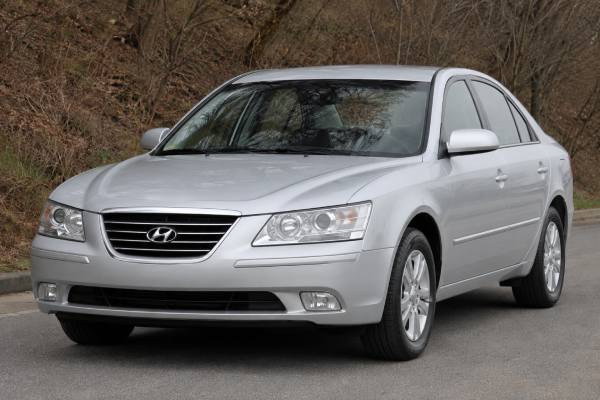

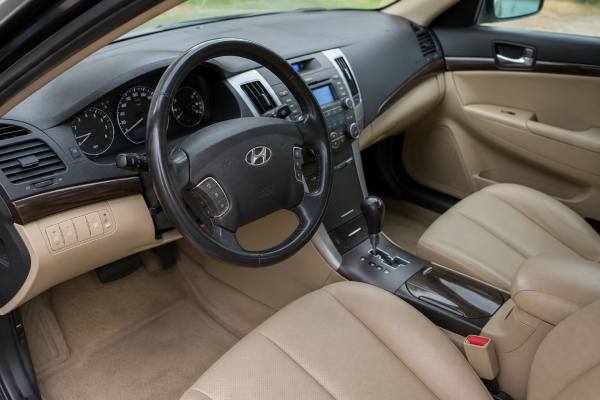
The facelifted 2009–2010 Hyundai Sonata NF with the 2.4-liter Theta II gasoline engine is a roomy, practical front-wheel-drive sedan built around simple ownership priorities: space, comfort, value, and straightforward maintenance. In North American specification, the 2.4L Theta II inline-four made 175 hp and was paired with either a 5-speed manual or a 5-speed SHIFTRONIC automatic, depending on trim.
This guide focuses on the facelift NF Sonata with the naturally aspirated 2.4L MPI engine, not the later YF-generation Sonata or the newer GDI Theta II cars. That distinction matters because many online discussions mix together different Sonata generations and engine families. Here, the focus is the 2009–2010 NF facelift: its specs, dimensions, common issues, safety equipment, maintenance needs, driving feel, and buying checks.
Owner Snapshot
- Spacious cabin and 16.3 cu ft trunk make it more practical than many same-era midsize sedans.
- The 2.4L Theta II MPI engine is simpler than later GDI versions and uses a timing chain, not a belt.
- Standard ESC, ABS, traction control, six airbags, and active front head restraints were strong safety features for the era.
- Check stop-lamp switch recall completion, oil leaks, suspension wear, ATF condition, and corrosion before buying.
- Normal oil service is typically every 7,500 miles / 12,000 km or 6 months, with severe-use service as often as 3,000 miles / 4,800 km or 3 months.
Table of Contents
- Sonata NF Facelift Model Brief
- Sonata NF Theta II Specs
- Sonata NF Trims and Safety
- Reliability, Issues and Recalls
- Maintenance and Buying Advice
- Road Feel and Performance
- Sonata NF Against Rivals
Sonata NF Facelift Model Brief
The Hyundai Sonata NF was the fifth-generation Sonata, sold in many markets from the mid-2000s into 2010. The facelift covered here arrived for the 2009 model year in the United States and continued into 2010 before the YF-generation Sonata replaced it. The update was more than a light cosmetic refresh. Hyundai revised the interior, updated the exterior lamps and bumpers, improved suspension tuning, sharpened steering feel, and upgraded the 2.4-liter four-cylinder engine to the second-generation Theta II specification.
The 2.4L Theta II version is the most common and sensible configuration. It does not have the effortless passing power of the 3.3L V6, but it is lighter, easier on fuel, and generally cheaper to maintain. Output for the non-PZEV North American engine is 175 hp and 168 lb-ft, while some emissions-compliant PZEV versions were rated slightly lower. The engine is an aluminum, dual-overhead-cam, 16-valve inline-four with multi-point fuel injection and continuously variable valve timing. It uses a timing chain, so there is no scheduled timing-belt replacement.
The Sonata NF’s main appeal is size for the money. Although commonly compared with midsize sedans, its passenger and trunk space are generous. The cabin is wide enough for family use, the rear seat is adult-friendly, and the trunk is large at 16.3 cu ft. The facelift interior also feels more modern than the 2006–2008 cabin, with cleaner controls, better audio integration, available navigation, and improved materials on higher trims.
This model is best suited to buyers who want a comfortable daily driver rather than a sporty sedan. The ride is relaxed, the controls are easy, visibility is good, and ownership costs can be reasonable if the car has been serviced correctly. It is also old enough now that condition matters more than trim. A clean GLS with records is often a better buy than a neglected Limited with leather and sunroof.
Scope matters with this car. The 2009–2010 NF 2.4L MPI should not be confused with the later 2011–2014 YF Sonata 2.4L GDI, which is tied to a different set of engine recalls and reliability discussions. Both are part of the wider Theta family, but they differ in fuel injection, generation, body platform, and failure patterns. When shopping, identify the body style, VIN year, emissions label, and engine type before applying advice meant for another Sonata.
Sonata NF Theta II Specs
The following specifications focus on the 2009–2010 Hyundai Sonata NF facelift with the 2.4L Theta II MPI gasoline engine in typical North American form. Values can vary by market, trim, wheel package, transmission, emissions certification, and equipment.
Powertrain and Efficiency
| Item | Specification |
|---|---|
| Engine code / family | Theta II 2.4L MPI, commonly G4KE-family in many markets |
| Layout | Front transverse inline-four, 4 cylinders |
| Valvetrain | DOHC, 16 valves, 4 valves per cylinder, CVVT |
| Bore × stroke | 88.0 × 97.0 mm / 3.46 × 3.82 in |
| Displacement | 2.4 L / 2,359 cc / 143.9 cu in |
| Induction | Naturally aspirated |
| Fuel system | Multi-point fuel injection |
| Compression ratio | Approximately 10.5:1 |
| Max power | 175 hp / 130 kW @ 6,000 rpm |
| Max torque | 228 Nm / 168 lb-ft @ 4,000 rpm |
| Timing drive | Chain |
| Recommended fuel | Regular unleaded gasoline |
| EPA efficiency, automatic | 9.4 L/100 km combined; 22 city / 32 highway mpg US; 26 city / 38 highway mpg UK |
| EPA efficiency, manual | 9.4 L/100 km combined; 21 city / 32 highway mpg US; 25 city / 38 highway mpg UK |
| Real-world 120 km/h / 75 mph | Often around 7.8–8.8 L/100 km / 27–30 mpg US when healthy and lightly loaded |
Transmission and Driveline
| Item | Specification |
|---|---|
| Manual transmission | 5-speed manual, available mainly on GLS / some SE trims |
| Automatic transmission | 5-speed SHIFTRONIC automatic |
| Drive type | Front-wheel drive |
| Differential | Open front differential integrated with transaxle |
| AWD / 4×4 | Not available on this NF Sonata |
Chassis, Dimensions and Capacity
| Item | Specification |
|---|---|
| Front suspension | Independent double wishbone with coil springs and stabilizer bar |
| Rear suspension | Independent multi-link with stabilizer bar |
| Steering | Hydraulic power rack-and-pinion |
| Steering ratio | About 16.9:1 |
| Turning circle | 10.9 m / 35.8 ft |
| Front brakes | Ventilated discs, about 279 mm / 11.0 in |
| Rear brakes | Solid discs, about 262 mm / 10.3 in |
| Common tyre sizes | 215/60R16 or 215/55R17 |
| Length | 4,800 mm / 189.0 in |
| Width | 1,830 mm / 72.0 in |
| Height | 1,475 mm / 58.0 in |
| Wheelbase | 2,730 mm / 107.4 in |
| Ground clearance | About 160 mm / 6.3 in, market dependent |
| Curb weight | About 1,493–1,585 kg / 3,292–3,494 lb, depending on trim |
| GVWR | About 2,030 kg / 4,475 lb, market dependent |
| Approximate payload | Around 450–535 kg / 990–1,180 lb, depending on trim and placard |
| Fuel tank | 67 L / 17.7 US gal / 14.7 UK gal |
| Cargo volume | 462 L / 16.3 ft³, SAE trunk volume |
Performance and Capability
| Item | Typical Figure |
|---|---|
| 0–100 km/h / 0–62 mph | About 9.0–9.8 seconds, transmission and load dependent |
| 0–60 mph | About 8.7–9.4 seconds |
| Top speed | About 205–210 km/h / 127–130 mph |
| 100–0 km/h braking | About 40–43 m / 131–141 ft on good all-season tyres |
| US light towing rating | Up to about 680 kg / 1,500 lb where permitted and equipped |
| Unbraked trailer guidance | Often around 450 kg / 1,000 lb in markets that publish it |
| Roof load | Verify by market accessory and owner documentation |
Fluids and Service Capacities
| Item | Specification / Capacity |
|---|---|
| Engine oil | API SJ / SL or above; ILSAC GF-3 or above; SAE 5W-20 or 5W-30 preferred |
| Engine oil capacity | 4.3 L / 4.54 US qt with filter |
| Manual transaxle oil | Hyundai MTF 75W-85, API GL-4; about 1.75 L / 1.8 US qt |
| Automatic transaxle fluid | Hyundai Genuine ATF SP-III or approved SP-III equivalent; about 6.3 L / 6.66 US qt total service quantity varies |
| Coolant | Ethylene-glycol coolant suitable for aluminum engines, usually 50/50 mix |
| Coolant capacity | About 6.5 L / 6.87 US qt for 2.4L |
| Brake fluid | DOT 3 or DOT 4 |
| Power steering fluid | PSF-4 type; about 0.9 L / 0.95 US qt |
| A/C refrigerant | R-134a; commonly listed around 530–570 g / 18.7–20.1 oz, verify underhood label |
| A/C compressor oil | PAG46 / FD46XG-type; commonly around 150 mL / 5.1 fl oz, verify service label |
| Oil drain plug torque | 34–44 Nm / 25.3–32.5 lb-ft |
| Oil filter torque | 12–16 Nm / 8.7–11.6 lb-ft |
| Wheel nut torque | 88–108 Nm / 65–80 lb-ft |
Safety and Driver Assistance
| Item | Availability / Rating |
|---|---|
| Airbags | Six airbags: dual front, front seat-mounted side, and side curtains |
| Stability control | ESC standard |
| Traction control | Standard with ESC |
| ABS / EBD / Brake Assist | Standard |
| Active head restraints | Front seats |
| Child-seat anchors | Rear LATCH / ISOFIX-type provisions by market |
| IIHS moderate overlap front | Good, rating applies to 2006–2010 models |
| IIHS side impact | Acceptable, rating applies to 2006–2010 models |
| IIHS roof strength | Marginal |
| IIHS head restraints and seats | Good |
| NHTSA-era ratings | Generally five-star front and side results under the older test protocol |
| Headlight rating | Not rated under modern IIHS headlight test protocol |
| AEB / ACC / lane keeping | Not available on this generation |
| Blind-spot / rear cross-traffic alert | Not available on this generation |
Sonata NF Trims and Safety
For the 2009 facelift, the main U.S. trim walk was GLS, SE, and Limited. Equipment and names differ in Canada, Australia, Korea, Europe, and other markets, but the structure is similar: a value-focused base model, a sportier mid-trim, and a comfort-oriented top trim.
GLS is the simplest and often the best used buy. Typical equipment includes air conditioning, power windows and locks, keyless entry, cruise control, heated mirrors, 60/40 split rear seatback, AM/FM/XM/CD/MP3 audio, auxiliary and USB inputs, ABS, ESC, traction control, TPMS, and six airbags. The 2.4L GLS could be found with the 5-speed manual or optional 5-speed automatic. The Popular Equipment Package added features such as automatic headlights, chrome window trim, steering-wheel audio controls, a trip computer, and a power driver seat.
SE is the one to look for if steering response and wheel package matter. It added sport-tuned suspension, 17-inch alloy wheels, 215/55R17 tyres, a rear spoiler, fog lights, leather-wrapped controls, sportier seat trim, and more standard convenience equipment. The SE’s suspension uses firmer tuning and larger stabilizer bars, so it feels more controlled than GLS or Limited, though it can ride more firmly on rough roads.
Limited is the comfort trim. It commonly includes leather seating surfaces, heated front seats, automatic climate control, power sunroof, premium Infinity audio, auto-dimming mirror with HomeLink and compass, power driver seat, and 17-inch wheels. For the 2.4L Limited, the 5-speed automatic is the usual transmission. The only major factory option in many cases was navigation.
There are several quick identifiers. GLS cars often have 16-inch steel wheels or simpler alloys, cloth seats, and fewer chrome accents. SE models have the rear spoiler, 17-inch wheels, fog lights, and sport-themed interior pieces. Limited cars usually have leather, sunroof, heated seats, chrome door handles or trim, and premium audio branding. For certainty, check the VIN, emissions label, original window sticker, or dealer build sheet.
Safety equipment is a major strength for the period. The facelift Sonata kept ESC standard at a time when some rivals still made stability control optional on lower trims. ABS, Brake Assist, EBD, traction control, TPMS, front-seat side airbags, side curtains, and active front head restraints were also part of the safety package. Child-seat anchors are fitted in the rear, and all seating positions use three-point belts.
The safety ratings need context. The Sonata NF performed well in older frontal testing and had a Good IIHS moderate-overlap result. The side-impact result was Acceptable, mainly because of structural and pelvis/leg injury measures rather than head protection. Roof strength was Marginal by IIHS criteria. Modern crash tests are tougher, so these ratings should not be read as equivalent to current Top Safety Pick standards.
ADAS is mostly absent. There is no factory automatic emergency braking, adaptive cruise control, lane keeping, blind-spot monitoring, traffic-sign recognition, or rear cross-traffic alert on the 2009–2010 NF Sonata. After windshield, suspension, steering, or brake work, there are no camera/radar calibrations like on modern vehicles, but ABS/ESC wheel-speed sensors, steering-angle inputs, and brake switch function still need to be correct.
Reliability, Issues and Recalls
The 2009–2010 Sonata NF 2.4L is generally a durable car when serviced, but age is now the main enemy. Most examples are old enough to have worn suspension rubber, tired cooling hoses, dirty transmission fluid, weak engine mounts, corroded brake hardware, and aging electrical connectors. A well-kept car can still be a dependable commuter; a neglected one can become expensive quickly because small deferred items stack up.
| Issue | Prevalence | Severity / Cost | Symptoms | Best Remedy |
|---|---|---|---|---|
| Stop-lamp switch recall | Common campaign item | Low to medium | ESC light, brake lights not working correctly, cruise issues, shifter interlock problems | Verify Campaign 110 completion; replace switch if needed |
| Valve cover or oil pan seepage | Common with age | Low to medium | Oil smell, residue on engine, drips after parking | Replace gasket/seal, clean and recheck |
| Engine mounts | Common with age | Medium | Vibration at idle, clunk on gear engagement | Replace worn mounts with quality parts |
| ATF aging / shift harshness | Occasional to common | Medium | Harsh shifts, delayed engagement, flare, shudder | Service with correct SP-III fluid; diagnose solenoids if persistent |
| Suspension links and bushings | Common | Low to medium | Clunks, wandering, uneven tyre wear | Inspect control arms, sway links, struts, alignment |
| Brake hardware corrosion | Common in salted climates | Low to medium | Pulsation, dragging, parking brake issues | Service caliper slides, pads, rotors, cables |
| Cooling hoses / radiator age | Occasional | Medium | Coolant smell, overheating, seepage | Pressure-test, replace aged hoses/radiator/cap |
| Wheel bearings | Occasional | Medium | Humming that changes with speed or load | Replace bearing/hub assembly |
| A/C compressor or clutch wear | Occasional | Medium | Weak cooling, noise, clutch cycling issues | Leak test, verify charge, diagnose compressor/clutch |
| Body and subframe corrosion | Climate dependent | Medium to high | Rust at subframes, brake lines, rear arches, rockers | Avoid severe corrosion; repair early |
The 2.4L Theta II MPI engine is simpler than later direct-injection Theta II engines. It is not immune to problems, but it is not the same ownership case as the later 2011+ 2.4L GDI Sonata. The NF engine uses port injection, which avoids the intake-valve carbon buildup concerns typical of many GDI engines. It also uses a chain rather than a belt. Chain replacement is not a routine interval item, but chain rattle at startup, cam/crank correlation codes, or persistent timing noise should be investigated.
Oil level matters. These engines can tolerate high mileage, but they do not like extended oil neglect, low oil level, or overheating. On a pre-purchase inspection, listen for cold-start rattle, check for blue exhaust smoke, inspect the underside for leaks, and scan for stored codes even if the check-engine light is off. A noisy top end may point to oil control valve issues, worn timing components, or poor oil history.
The automatic transmission is usually smooth when healthy. Problems often come from old fluid, incorrect fluid, worn mounts that exaggerate shift shock, or solenoid/valve-body issues. A road test should include cold engagement into Drive and Reverse, gentle 1–2 and 2–3 shifts, kickdown, highway lockup, and a hot restart. Any flare, bang, or delayed engagement deserves diagnosis before purchase.
The main recall item to verify on many affected Hyundai vehicles from this era is the stop-lamp switch campaign. A faulty brake switch can affect brake lights, cruise cancellation, ESC warning behavior, and the shift interlock. Completion should be checked by VIN through Hyundai or a dealer. Do not assume completion because the car has passed inspection; the switch can be replaced quickly, but proof matters.
Corrosion is the other big used-car divider. Cars from dry climates usually age well. Cars from road-salt regions need closer inspection at the front subframe, rear suspension mounting areas, brake lines, fuel lines, rocker panels, wheel arches, exhaust hangers, and underbody seams. Surface rust is normal on an older sedan; heavy scaling, soft metal, leaking lines, or compromised suspension pickup points are reasons to walk away.
Maintenance and Buying Advice
Good maintenance is what separates a cheap old Sonata from a reliable one. The official schedule uses mileage and time, with more frequent service under severe driving. Many used examples now qualify as severe-use cars because they see short trips, stop-and-go traffic, hot weather, cold starts, dusty roads, or long periods between services.
| Service Item | Practical Interval |
|---|---|
| Engine oil and filter | 7,500 miles / 12,000 km or 6 months normal; 3,000 miles / 4,800 km or 3 months severe |
| Engine oil level check | Weekly or at every fuel fill on older/high-mileage cars |
| Engine air filter | Inspect every service; replace about 30,000 miles / 48,000 km or sooner in dust |
| Cabin air filter | About every 10,000–15,000 miles / 16,000–24,000 km or annually |
| Spark plugs, iridium | About 97,500 miles / 156,000 km |
| Coolant | First at 60,000 miles / 96,000 km or 60 months; then every 25,000 miles / 40,000 km or 24 months |
| Automatic transmission fluid | Inspect regularly; replace around 30,000 miles / 48,000 km in severe use, 60,000 miles / 96,000 km is prudent for used cars |
| Manual transaxle oil | Inspect; replace around 60,000 miles / 96,000 km under severe use |
| Brake fluid | Inspect often; replace every 2–3 years in practical ownership |
| Brake pads, rotors and calipers | Inspect at tyre rotation or twice yearly |
| Tyre rotation | Every 7,500 miles / 12,000 km |
| Wheel alignment | Check with uneven wear, pulling, suspension work, or annually on rough roads |
| Drive belts and hoses | Inspect at every service; replace aged/cracked parts |
| Timing chain | No routine replacement; inspect for noise, stretch symptoms, guide/tensioner wear, and timing faults |
| Valve clearance | Inspect if noisy, rough, or at high mileage per service guidance |
| 12 V battery | Test yearly after 3 years; typical replacement window is 4–6 years |
| A/C system | Check performance annually; recover and charge by weight only |
Use the correct fluids. The automatic transmission needs SP-III specification fluid or an approved equivalent. Generic multi-vehicle ATF can create shift problems. The cooling system needs coolant compatible with aluminum engine components, usually mixed 50/50 with clean water. Engine oil viscosity should follow climate and manual guidance, with 5W-20 or 5W-30 commonly preferred.
When inspecting a car, start cold. A seller who pre-warms the engine may be hiding startup rattle, smoke, idle flare, or weak battery behavior. Look for oil around the valve cover, timing cover area, oil pan, filter housing, and rear main area. Check the coolant reservoir for correct level and color, and look for dried coolant residue near hose ends and radiator seams.
On the road, the car should track straight, shift smoothly, idle quietly, and brake without pulsation. The steering should not knock over bumps, and the front end should not wander. A loose, floaty feel usually means worn tyres, struts, control-arm bushings, ball joints, sway-bar links, or alignment issues. These are not unusual on an older Sonata, but they should be priced into the deal.
Best buys are clean, stock cars with service records, working A/C, smooth automatic shifts, no serious rust, and proof of recall checks. A 2.4L GLS or Limited automatic is usually the easiest to own. SE models are worthwhile if the suspension is healthy and the 17-inch tyres are not worn or mismatched. Manual cars are simpler but less common, and clutch condition matters.
Avoid cars with overheating history, milky oil, persistent transmission flares, severe underbody rust, airbag warning lights, missing catalytic converters, non-working brake lights, or multiple unresolved electrical faults. Also be cautious with very cheap examples that need tyres, brakes, struts, mounts, battery, fluids, and A/C work at the same time; the total can exceed the car’s value.
Long-term durability is respectable when maintenance is current. The Sonata NF is not as polished as an Accord or Camry of the same period, but it can be a strong value because parts are available, mechanical access is reasonable, and the 2.4L MPI drivetrain is relatively conventional.
Road Feel and Performance
The 2.4L Sonata NF is not a performance sedan, but it is strong enough for normal commuting, highway cruising, and family use. The engine’s 175 hp rating gives it acceptable acceleration, especially compared with older base four-cylinder midsize sedans. It feels best when driven smoothly rather than aggressively.
Throttle response is clean at low speeds, though the 2.4L needs revs for stronger passing. Around town, it pulls away without drama and the automatic generally shifts early for economy. At highway speeds, kickdown is needed for quick passing, and the engine becomes more audible above midrange rpm. The 5-speed automatic is a better match for most drivers than the manual because it suits the car’s relaxed character, but it must shift cleanly and without flare.
Ride comfort is one of the Sonata’s strengths. GLS and Limited models absorb broken pavement well, and the long wheelbase gives the car stable highway manners. The cabin is reasonably quiet for its age, although tyre noise, worn door seals, aging engine mounts, or tired suspension can make neglected examples feel much rougher than good ones. The SE feels tighter and more responsive, but the firmer suspension and 17-inch tyres can transmit more impact harshness.
Handling is safe and predictable rather than sporty. The car leans when pushed, and steering feedback is limited compared with an Accord or Mazda6. The facelift brought quicker steering response, but the Sonata still prioritizes ease and stability. ESC intervention is useful in poor weather, and the front-wheel-drive layout behaves predictably on wet or snowy roads when fitted with good tyres.
Braking feel is adequate, with four-wheel discs, ABS, EBD, and Brake Assist. The system is not especially sporty, but it is confidence-inspiring when maintained. Pulsation, soft pedal feel, or pulling under braking usually points to worn rotors, air/moisture in the brake fluid, sticking caliper slides, old tyres, or suspension looseness.
Fuel economy is a strong reason to choose the 2.4L over the V6. The official automatic rating is 22 mpg city and 32 mpg highway, with a 25 mpg combined rating. In real use, many healthy cars return around 24–28 mpg US mixed, with highway trips near 30 mpg US possible when speeds are moderate. Short trips, winter fuel, roof racks, low tyre pressure, old spark plugs, dragging brakes, and failed thermostats can all pull mileage down.
At 120 km/h / 75 mph, expect economy to drop compared with a relaxed 100 km/h / 62 mph cruise. The engine is naturally aspirated and geared for conventional 2000s highway use, so wind resistance and tyre condition matter. A well-maintained car on 16-inch tyres may do better than an SE on worn 17-inch tyres.
The Sonata can handle light towing where the owner’s manual and local rules allow it, but it is not a tow vehicle. A small utility trailer is realistic; heavy loads, steep grades, or high-speed towing are not. When carrying passengers and luggage, leave extra braking distance and monitor coolant temperature in hot weather.
Sonata NF Against Rivals
The Sonata NF’s main rivals are the Toyota Camry, Honda Accord, Nissan Altima, Ford Fusion, Chevrolet Malibu, Mazda6, and Kia Optima. Against these, the Sonata’s strengths are value, cabin space, standard safety equipment, and simple comfort. Its weaknesses are less polished steering, weaker resale strength, and a cabin that can age unevenly if neglected.
| Rival | Sonata NF Advantage | Rival Advantage |
|---|---|---|
| Toyota Camry | Often cheaper, roomy trunk, strong standard safety kit | Stronger resale, smoother refinement, broad parts support |
| Honda Accord | Better value, softer ride, large trunk | Sharper handling, stronger reputation, better driver feel |
| Nissan Altima | More conservative drivetrain, comfortable cabin | Livelier handling, stronger available powertrains |
| Ford Fusion | Larger trunk, strong equipment value | Often better steering feel, available AWD on some Fusion trims |
| Chevrolet Malibu | More standard safety appeal in Sonata | Malibu can feel quieter and more composed in some trims |
| Mazda6 | Softer ride, more cabin/trunk practicality | Mazda6 is more engaging to drive |
| Kia Optima | Similar mechanical base, Sonata often easier to find | Optima may be cheaper in some markets |
Compared with the Camry, the Sonata is the value pick. A same-condition Camry usually costs more, but it also has stronger resale and a long reliability reputation. The Sonata counters with standard ESC, a big trunk, good warranty history when new, and lower used prices. For a buyer on a fixed budget, the Sonata can make more sense if service records are good.
Compared with the Accord, the Sonata is softer and less engaging. The Accord has better steering and a more premium driving feel, but it may cost more and can have its own age-related issues. The Sonata is better for buyers who care more about comfort and purchase price than handling precision.
Compared with the Altima and Mazda6, the Sonata is less sporty. It does not have the same steering response or cornering balance. However, its conventional automatic and relaxed tuning may appeal to buyers who want low-stress daily use rather than a sharper drive.
The Ford Fusion is a strong alternative because it offers good steering and, in some versions, available AWD. The Sonata counters with interior space and simple trim value. The Chevrolet Malibu can feel solid and quiet, but the Sonata often offers more trunk space and a strong safety-feature list for the money.
The closest relative is the Kia Optima of the same era. Mechanically, the two share many ideas and components, so condition, price, and service history matter more than badge. The Sonata usually has broader recognition and may be easier to source in some used markets.
The best reason to buy the Sonata NF 2.4L is not excitement. It is honest usefulness. Choose it if you want a large, comfortable, inexpensive sedan with decent fuel economy, good safety equipment for its time, and straightforward service needs. Skip it if you want modern ADAS, sporty handling, luxury-grade noise isolation, or a car immune to old-age maintenance.
References
- 2009 SONATA: TRANSFORMED FROM THE INSIDE OUT FOR A MORE PREMIUM AND FUEL-EFFICIENT MID-SIZE SEDAN EXPERIENCE 2008 (Manufacturer Media Release)
- OWNER’S MANUAL Operation Maintenance Specifications 2009 (Owner’s Manual)
- Gas Mileage of 2009 Hyundai Sonata 2009 (Fuel Economy)
- 2009 Hyundai Sonata 2009 (Safety Rating)
- Stop Lamp Switch Recall Campaign 2013 (Recall Campaign)
Disclaimer
This article is for informational purposes only and is not a substitute for professional diagnosis, repair, inspection, or official service information. Specifications, torque values, fluid capacities, intervals, procedures, equipment, and recalls can vary by VIN, market, production date, trim, and installed components. Always verify against the official owner’s manual, service documentation, underhood labels, VIN recall records, and a qualified technician before servicing or buying a vehicle.
If this guide helped you, please consider sharing it on Facebook, X/Twitter, or your preferred community to support our work.