
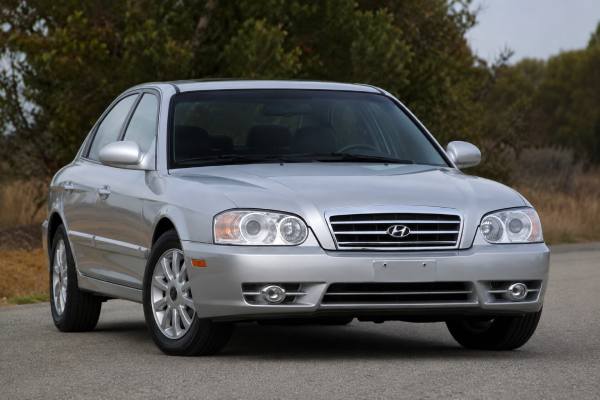
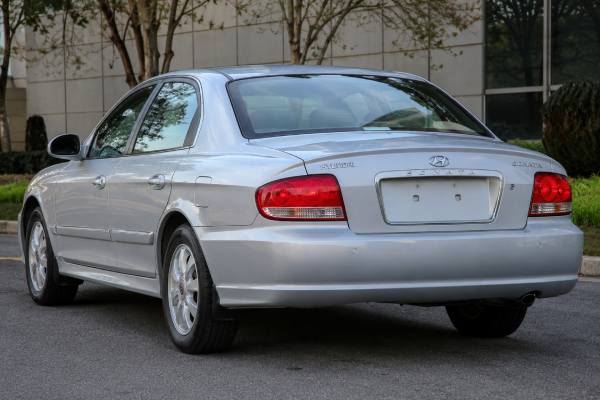
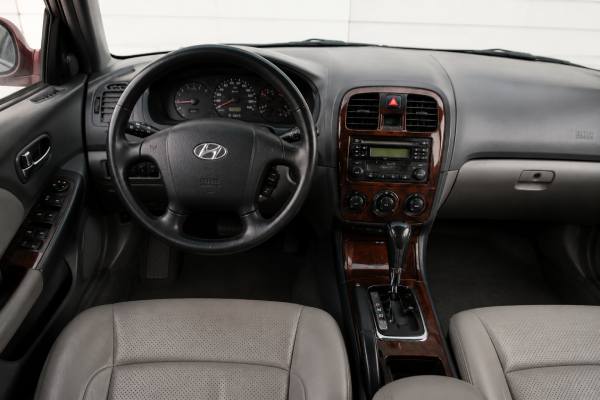
The 2005–2007 Hyundai SONATA NF with the Theta 2.0 petrol engine is a roomy, front-wheel-drive midsize sedan built for comfort, simple ownership, and value. In 144 hp form, it is not the fastest NF Sonata, but it gives buyers a practical mix of cabin space, chain-driven timing, conventional multi-point fuel injection, and generally affordable parts.
This guide focuses on the early NF-generation 2.0-litre petrol model, commonly listed with the G4KA Theta-family inline-four. Equipment, trim names, service intervals, and recall coverage vary by market, so a VIN-specific check is especially important before buying or servicing one.
Owner Snapshot
- Spacious cabin and large 523 L boot make it useful as a family or commuting sedan.
- The naturally aspirated 2.0 MPi engine is simpler than later direct-injection turbo designs.
- Main ownership risks are rust, neglected fluids, aging suspension bushes, and unresolved recalls.
- Engine oil service is best kept around 10,000 km or 12 months, sooner in heavy city use.
- The timing system uses a chain, but cold-start rattle or timing-correlation faults still need diagnosis.
Table of Contents
- Sonata NF 2.0 Core Picture
- Sonata NF 2.0 Specs
- Sonata NF Trims and Safety
- Reliability, Issues and Recalls
- Maintenance and Buying Advice
- Driving, Performance and Economy
- Comparisons With Period Rivals
Sonata NF 2.0 Core Picture
The Hyundai SONATA NF replaced the earlier EF-generation Sonata and moved the model closer to mainstream midsize rivals in size, refinement, and safety equipment. The 2.0-litre 144 hp version was aimed at buyers who wanted the space of a large sedan without the fuel, tax, or insurance burden of larger 2.4, 2.7 V6, or 3.3 V6 versions.
The car’s basic formula is conventional and owner-friendly: a front transverse inline-four engine, front-wheel drive, steel monocoque body, hydraulic power steering, MacPherson-strut front suspension, and an independent multi-link rear axle. That layout gives the NF Sonata a comfortable, stable character rather than a sporty one. It is best viewed as a relaxed saloon for commuting, family trips, and long-distance road use.
The 2.0 Theta petrol engine uses an aluminium block and head, dual overhead camshafts, four valves per cylinder, multi-point fuel injection, and naturally aspirated induction. The 86 mm bore and 86 mm stroke make it a square engine, which helps it feel reasonably smooth as revs rise. Peak torque arrives at 4,250 rpm, so this model prefers planned acceleration rather than lazy low-rpm pulling. With the 5-speed manual gearbox it feels more alert than the 4-speed automatic, but both versions are tuned for ease rather than excitement.
For used-car buyers, the appeal is strongest when the car has been maintained properly and kept away from severe corrosion. The Sonata NF is spacious, inexpensive compared with Japanese rivals, and mechanically uncomplicated. The main reason to be selective is age. Even a sound 2005–2007 example is now an older car, so tyres, brakes, suspension rubber, cooling hoses, engine mounts, and electronics matter as much as headline mileage.
A good example should start cleanly from cold, idle smoothly, shift without flare or crunching, track straight, brake evenly, and show no airbag, ABS, or check-engine warning lights. The engine should not rattle heavily on start-up, smoke under acceleration, overheat in traffic, or consume oil at a rate that forces frequent top-ups. A car with complete service records, clean underbody structure, recent fluids, and verified recall status is far more desirable than one with low mileage but no maintenance proof.
Sonata NF 2.0 Specs
The figures below describe the 2005–2007 Sonata NF 2.0 16V petrol 144 hp sedan. Some markets used different emissions calibrations, trim equipment, wheel packages, and transmission combinations, so use the VIN and local service data when ordering parts.
Powertrain and efficiency
| Item | Specification |
|---|---|
| Engine code | G4KA, Theta-family 2.0 MPi petrol |
| Layout | Front transverse inline-4 |
| Valvetrain | DOHC, 4 valves per cylinder, 16 valves total |
| Bore × stroke | 86.0 × 86.0 mm |
| Displacement | 2.0 L, 1,998 cc |
| Induction | Naturally aspirated |
| Fuel system | Multi-point manifold injection |
| Compression ratio | 10.5:1 |
| Max power | 144 hp, 106 kW at 6,000 rpm |
| Max torque | 189 Nm, 139 lb-ft at 4,250 rpm |
| Timing drive | Chain |
| Official urban economy | About 10.4 L/100 km, 22.6 mpg US, 27.2 mpg UK |
| Official extra-urban economy | About 6.6 L/100 km, 35.6 mpg US, 42.8 mpg UK |
| Real highway at 120 km/h | Commonly around 7.5–8.8 L/100 km depending on tyres, load, wind, and transmission |
Transmission and driveline
| Item | Specification |
|---|---|
| Manual gearbox | 5-speed manual, market-dependent code |
| Automatic gearbox | 4-speed automatic, market-dependent option |
| Drive type | Front-wheel drive |
| Differential | Open front differential |
| Traction aids | ABS standard on many markets; ESC availability depends on trim and market |
Chassis, dimensions and capacity
| Item | Specification |
|---|---|
| Front suspension | Independent MacPherson strut, coil spring, anti-roll bar |
| Rear suspension | Independent multi-link, coil spring, stabilizer bar |
| Steering | Hydraulic power-assisted rack and pinion |
| Steering ratio | About 16.9:1 on comparable NF specifications |
| Front brakes | Ventilated discs, commonly 280 × 26 mm; some packages use larger discs |
| Rear brakes | Solid discs, commonly 262–284 × 10 mm depending on market and build date |
| Common tyre size | 215/60 R16 |
| Wheel size | 6.5J × 16 |
| Ground clearance | About 160 mm, 6.3 in |
| Length | 4,800 mm, 189.0 in |
| Width | 1,832 mm, 72.1 in |
| Height | 1,475 mm, 58.1 in |
| Wheelbase | 2,730 mm, 107.5 in |
| Turning circle | About 12.0 m, 39.4 ft turning diameter |
| Kerb weight | About 1,465 kg, 3,230 lb |
| GVWR | About 2,030 kg, 4,475 lb |
| Payload | About 565 kg, 1,246 lb |
| Fuel tank | 70 L, 18.5 US gal, 15.4 UK gal |
| Boot volume | 523 L, 18.5 ft³ |
Performance and capability
| Item | Specification |
|---|---|
| 0–100 km/h | About 10.5 s with manual transmission |
| Top speed | About 202 km/h, 126 mph |
| 100–0 km/h braking | Typically mid-40 m range on good tyres; not usually published for this exact trim |
| Towing capacity | Market-dependent; verify VIN plate and owner’s manual |
| Best use case | Family sedan, commuting, motorway cruising, taxi/private-hire use where regulations allow |
Fluids and service capacities
| System | Specification and capacity |
|---|---|
| Engine oil | API/ILSAC petrol-engine oil; commonly 5W-20, 5W-30, or 10W-30 by climate; about 4.3 L, 4.5 US qt with filter |
| Coolant | Ethylene-glycol coolant for aluminium engines, normally 50/50 mix; about 7.3 L, 7.7 US qt |
| Manual gearbox | API GL-4 SAE 75W-85; about 1.8–1.9 L, 1.9–2.0 US qt |
| Automatic gearbox | Hyundai/Kia SP-III-type ATF for early 4-speed units; about 7.8 L total, less for drain-and-fill |
| Brake and clutch fluid | FMVSS 116 DOT 3 or DOT 4; replace by condition and interval |
| Power steering | Hyundai PSF-3 or PSF-4 equivalent; about 1.0 L system amount |
| A/C refrigerant | R134a; commonly about 530–570 g, 18.7–20.1 oz |
| A/C compressor oil | PAG/FD46XG or ISO 46-type oil; commonly about 150 mL, 5.1 fl oz |
| Key torque examples | Wheel nuts commonly about 88–108 Nm, 65–80 lb-ft; spark plugs and drain plugs must be verified by service data |
Safety and driver assistance
| Item | Specification |
|---|---|
| Airbags | Dual front airbags, front side airbags, and curtain airbags on many NF markets; verify trim |
| Child-seat anchors | LATCH/ISOFIX and top-tether provisions vary by region |
| IIHS crashworthiness | U.S. 2006 Sonata: Good moderate overlap front, Acceptable side, Marginal roof strength, Good head restraints |
| IIHS headlight rating | Not part of the period rating for this model |
| Euro NCAP | Period test data may use older star/point methods rather than modern adult/child/VRU percentages |
| ADAS | No modern AEB, ACC, lane keeping, blind-spot monitoring, or traffic-sign recognition on this generation |
Sonata NF Trims and Safety
Trim names for the Sonata NF changed by country. Depending on market, buyers may see labels such as GL, GLS, Deluxe, Executive, Comfort, Style, or similar distributor-specific names. The exact 2.0-litre 144 hp engine was more common in markets where displacement-based taxation made it attractive, while North American cars were usually sold with 2.4-litre four-cylinder or 3.3-litre V6 engines.
In practical buying terms, trim matters less than condition, but there are still useful differences. Lower trims often have steel wheels or simple alloy wheels, cloth seats, manual or basic automatic climate control, and fewer convenience features. Higher trims may add alloy wheels, leather or leather-look upholstery, automatic climate control, upgraded audio, fog lamps, cruise control, power driver’s seat adjustment, rear parking sensors, and sometimes electronic stability control.
The easiest identifiers are visible equipment and paperwork. Look for the engine code and emissions label under the bonnet, the VIN plate, wheel size, airbag labels, ESC switch if fitted, climate-control panel type, seat trim, audio head unit, and original service book. Do not rely only on boot badges, because older Sonatas are often debadged, repaired, or fitted with replacement panels.
From a safety standpoint, the NF was a major step up from older Hyundais. The body structure was stiffer, side and curtain airbags were widely fitted, and anti-lock braking was common. However, it is still a mid-2000s car. It does not have the active safety technology buyers expect in newer sedans, and lighting performance depends heavily on headlamp condition, bulb quality, lens clarity, and aim.
The IIHS data for the U.S.-market 2006 Sonata is useful for understanding the structure, but it should not be treated as a perfect substitute for every 2.0-litre export-market version. The U.S. car received Good in the moderate-overlap front test, Acceptable in the side test, Marginal in roof strength, and Good for head restraints and seats. That is respectable for its era, but it is not comparable with a modern midsize sedan tested under newer protocols.
For families, check the rear-seat child-anchor points before purchase. Make sure the airbag warning light comes on at ignition and then goes out normally. If the passenger-airbag indicator behaves oddly, the seat has been replaced, the seat cover has been modified, or water has been spilled into the centre console or seat wiring area, the occupant classification system should be diagnosed with proper scan equipment. Airbag systems are not a place for guesswork.
Calibration implications are also simple but important. Steering-angle sensors, ABS/ESC components, seat sensors, and SRS wiring must be handled correctly after suspension work, crash repair, seat removal, or dashboard work. A cheap repair that leaves warning lights on can turn a good-value Sonata into a poor purchase.
Reliability, Issues and Recalls
A well-maintained Sonata NF 2.0 can be a durable car, but most remaining examples are now old enough that condition is more important than reputation. The engine itself is usually not the biggest worry if oil changes were regular. Rust, suspension wear, old automatic transmission fluid, cooling-system aging, and neglected safety campaigns deserve more attention.
| Issue area | Prevalence | Severity | Typical signs | Likely remedy |
|---|---|---|---|---|
| Rear crossmember and underbody corrosion | Occasional to common in salt climates | High | Rear alignment shift, clunks, heavy rust, MOT/inspection failure | Inspect on lift; repair or replace affected parts |
| Front and rear suspension bushes | Common with age | Medium | Knocks, wandering, uneven tyre wear | Replace worn arms, bushes, links, alignment |
| Engine oil leaks | Common with age | Low to medium | Oil smell, wet valve cover, front cover seepage | Replace gasket/seal, clean and monitor |
| Timing-chain noise | Occasional | Medium to high | Cold-start rattle, cam/crank correlation codes | Diagnose tensioner, guides, oil pressure; replace parts if out of spec |
| Oil consumption | Occasional | Medium | Frequent top-ups, smoke, fouled plugs | Check PCV, leaks, compression, ring condition |
| Automatic shift flare or harsh shifts | Occasional | Medium | Delayed engagement, flare 2–3, harsh kickdown | Correct SP-III fluid service, scan solenoids/sensors |
| ABS, ESC, airbag warning lights | Occasional | Medium to high | Warning lamps, stored codes | Scan with Hyundai-capable tool; repair root cause |
| A/C weak cooling | Common with age | Low to medium | Warm vents, compressor cycling, leaks | Leak test, recharge by weight, replace faulty parts |
The 2.0 Theta MPi is not the same ownership proposition as later, more complex direct-injection Theta engines. It avoids direct-injection carbon build-up and turbocharger concerns, but it still depends on clean oil. Long oil intervals, low oil level, overheating, or cheap filters can accelerate chain, bearing, and cam-phaser wear. On a cold start, a brief soft noise is less concerning than a loud rattle that continues, returns frequently, or comes with timing-related fault codes.
Cooling-system checks are important because the engine has an aluminium block and head. Look for radiator end-tank seepage, swollen hoses, a weak thermostat, slow fan operation, brown coolant, oily residue in the expansion tank, or overheating in traffic. A neglected cooling system can turn an otherwise simple engine into an expensive repair.
The chassis is comfortable but bush-heavy. Front lower arms, anti-roll-bar links, strut mounts, rear trailing/control-arm bushes, wheel bearings, and engine mounts are all age-sensitive. A test drive over broken pavement is useful. Listen for dull knocks from the rear, sharp front-end rattles, steering clunks, and humming wheel bearings that change with road speed.
Recalls and service actions vary by country and VIN. U.S.-market NF Sonatas had several notable campaigns, including occupant classification system reprogramming, stop-lamp switch replacement on affected vehicles, rear crossmember corrosion repair in salt-belt areas, sun-visor airbag warning-label repairs on early cars, and an ABS module relay campaign for certain Korean-built 2006 vehicles. These campaigns do not automatically apply to every 2.0-litre export-market car, but they are useful warning areas. Before buying, check the VIN through the official Hyundai or national recall database and ask for dealer proof of completion.
Pre-purchase checks should include:
- Full service history with oil, coolant, brake fluid, and gearbox-fluid evidence.
- Cold-start test after the car has sat overnight.
- OBD scan for engine, ABS, ESC, SRS, and transmission modules.
- Lift inspection for rear subframe, sills, brake lines, fuel lines, and suspension mounts.
- Check for correct tyre size, even tread wear, and straight tracking.
- Confirmation that all recall or field-service campaigns are complete.
- Road test with gentle driving, full-throttle acceleration, braking from speed, and parking-speed steering.
Maintenance and Buying Advice
The Sonata NF 2.0 rewards preventive maintenance. It is not a car that needs exotic servicing, but it does suffer when owners stretch intervals because the vehicle is inexpensive. Fluids, rubber parts, and corrosion protection are the difference between a cheap dependable sedan and a frustrating one.
| Item | Practical interval |
|---|---|
| Engine oil and filter | Every 10,000 km or 12 months; 5,000–7,500 km for short trips, heat, dusty roads, or hard use |
| Engine air filter | Inspect every 15,000 km; replace around 30,000 km or sooner if dusty |
| Cabin air filter | Every 12 months or 15,000–20,000 km |
| Spark plugs | Inspect around 45,000–60,000 km; replace by plug type, often 90,000–100,000 km for long-life plugs |
| Coolant | Initial long interval if documented; then every 30,000 km or 24 months is prudent on older cars |
| Brake fluid | Every 24 months |
| Manual gearbox oil | Around 100,000 km or 8 years; sooner if shift quality declines |
| Automatic transmission fluid | 40,000–60,000 km for severe use; do not use universal fluid unless it clearly meets the required spec |
| Timing chain | No routine replacement; inspect for rattle, stretch, guide wear, tensioner faults, and timing codes |
| Serpentine belt and hoses | Inspect yearly; replace cracked, glazed, noisy, swollen, or oil-soaked parts |
| Brake pads and rotors | Inspect every service; check slide pins and parking-brake operation |
| Tyre rotation and alignment | Rotate every 10,000 km; align after suspension work or uneven wear |
| 12 V battery | Test yearly after 3 years; many last 4–6 years |
| Valve clearances | Not normally a routine owner service; inspect if noisy, misfiring, or after cylinder-head work |
For fluids, avoid mixing unknown products. Use a correct petrol-engine oil grade for climate, Hyundai-compatible coolant for aluminium engines, GL-4 gear oil in the manual gearbox, correct SP-III-type ATF in early automatics, and DOT 3 or DOT 4 brake fluid from a sealed container. A bargain service with the wrong transmission fluid can cost more than doing the job properly.
When inspecting a used example, start with the body. Check the rear crossmember, subframes, rear control-arm mounts, sills, jacking points, wheel arches, lower doors, boot floor, front radiator support, brake pipes, and fuel lines. Surface rust is expected on an older car; structural corrosion near suspension mounts is not.
Next, check the engine bay. A clean engine is not enough. Look under the oil cap for sludge, check coolant colour, inspect the radiator and expansion tank, look for fresh sealant around covers, and watch the exhaust after a warm restart. The idle should be steady with the A/C on and off. A rough idle may be as simple as a dirty throttle body or vacuum leak, but it can also point to ignition, compression, or sensor problems.
For the manual gearbox, the clutch should take up smoothly without slipping in higher gears. Second and third gears should not crunch when cold. For the automatic, engagement from Park to Drive should be prompt, shifts should be smooth once warm, and kickdown should not cause a long flare before acceleration. A scan tool can reveal stored transmission codes even when the dashboard is clear.
The best cars to seek are unmodified, rust-free, petrol 2.0 examples with complete records, two keys, clean interior electronics, working A/C, matching tyres, no warning lamps, and recent brake and suspension work. Avoid cars with heavy underbody corrosion, repeated overheating, unexplained oil consumption, missing SRS parts, gearbox slipping, or vague paperwork.
Long-term durability is fair to good when maintained. The Sonata NF 2.0 is unlikely to become a collectible, but that is part of its charm: it can still be a comfortable, inexpensive sedan if bought carefully.
Driving, Performance and Economy
The Sonata NF 2.0 drives like a comfort-oriented midsize sedan. It is calm on straight roads, stable at motorway speeds, and roomy enough to make long journeys feel relaxed. The suspension is tuned to absorb broken surfaces rather than encourage hard cornering. On 16-inch wheels with 215/60 tyres, the ride is usually more forgiving than on larger wheels.
Steering feel is light to moderate. It is accurate enough for daily driving, but not especially communicative. In corners, the car leans more than a sport sedan and will move into safe understeer if pushed. Good tyres make a large difference. Cheap or mismatched tyres can make the NF feel vague, especially in rain.
The 2.0 engine is smooth enough but needs revs. Around town it is easy to drive, although it does not have much low-end torque for a car of this weight. With the manual gearbox, the driver can keep it in the stronger part of the rev range. With the 4-speed automatic, the engine can feel more relaxed but slower to respond, especially when climbing grades or overtaking with passengers.
Cabin noise is moderate. Tyre roar and wind noise become more noticeable above 110–120 km/h, but the Sonata remains settled. Engine noise rises when the 2.0 is worked hard, though it is not harsh when healthy. If a test car drones, vibrates heavily, or booms under load, check engine mounts, exhaust condition, wheel bearings, and tyres.
Real-world fuel consumption depends strongly on route and gearbox. In steady suburban use, expect roughly 9–11 L/100 km, or about 21–26 mpg US. In heavy city traffic with A/C, short trips, and an automatic gearbox, 11–13 L/100 km is realistic. On open roads at 90–100 km/h, a well-maintained manual can return around 6.8–7.5 L/100 km. At 120 km/h, 7.5–8.8 L/100 km is a more honest expectation. Mixed use commonly lands around 8.5–10.0 L/100 km.
Cold weather can add 10–20 percent to consumption because of longer warm-up, thicker fluids, heater use, winter tyres, and short journeys. A thermostat stuck open, dragging brakes, weak oxygen sensors, old spark plugs, low tyre pressure, or poor alignment can also raise fuel use.
Braking feel is generally progressive when the system is fresh. Because the car is now old, brake quality depends heavily on rotor condition, pad material, caliper slide pins, rear parking-brake hardware, brake fluid age, and tyre grip. Any pulsing, pulling, long pedal travel, or ABS warning should be fixed before regular use.
The Sonata NF 2.0 is not an ideal tow car in this engine form. If towing is allowed in the local manual, keep loads modest, respect the VIN plate, and service the cooling system and transmission first. For frequent towing, a larger-engine version or a different vehicle is a better choice.
Comparisons With Period Rivals
Against period rivals, the Sonata NF 2.0 is strongest on space, value, equipment, and simple mechanical design. It is weaker on brand image, interior material quality, steering feel, and resale value. That mix can work very well for a buyer who wants a roomy sedan at a modest price and is willing to inspect condition carefully.
| Rival | Where it usually feels stronger | Where the Sonata NF 2.0 can make sense |
|---|---|---|
| Toyota Camry 2.4 | Refinement, reputation, resale value | Lower purchase price, roomy cabin, good equipment for money |
| Honda Accord 2.0/2.4 | Handling, engine response, interior finish | Softer ride, simpler value buy, often cheaper parts-car availability |
| Mazda6 2.0 | Steering feel, chassis balance, driver appeal | More relaxed ride, larger-sedan comfort, less sporty but calmer |
| Ford Mondeo 2.0 | Road manners, steering, estate availability | Sedan comfort, straightforward drivetrain, good used value |
| Opel/Vauxhall Vectra 1.8/2.2 | European parts availability, hatch/estate options | More rear-seat space and a softer long-distance feel |
| Kia Magentis/Optima MG 2.0 | Similar platform and engine family | Choice depends mainly on condition, price, and trim |
The Camry is the conservative benchmark. It usually feels more polished and has a stronger reliability image, but clean examples often cost more. The Accord is more rewarding to drive and has sharper powertrain response, especially in 2.4 form. The Mazda6 is the better driver’s car but may ride more firmly. The Mondeo is excellent on the road and more versatile as an estate, while the Vectra can be cheap and practical but varies widely by engine and trim.
The Sonata’s advantage is that it does not need to win every category. It only needs to be a sound, spacious, comfortable car at the right price. A rust-free, well-serviced NF 2.0 with working safety systems is more appealing than a neglected rival with a better badge. Conversely, a rusty Sonata with warning lights and no history should be avoided even if it looks inexpensive.
For most buyers, the best decision process is simple: compare condition first, records second, corrosion third, and trim fourth. The Sonata NF 2.0 is worth considering when it passes those tests and is priced below cleaner Japanese rivals.
References
- Hyundai Sonata V (NF) 2.0i 16V (144 Hp) | Technical specs, data, fuel consumption, Dimensions 2026 (Specifications) ([Auto Data][1])
- 2006 Hyundai Sonata 2026 (Safety Rating) ([IIHS][2])
- Check for Recalls: Vehicle, Car Seat, Tire, Equipment 2026 (Recall Database) ([NHTSA][3])
- HMA TSB 2018 (Recall TSB) ([NHTSA][4])
- Hyundai Owners Manuals 2026 (Owner’s Manuals) ([Hyundai][5])
Disclaimer
This article is for informational purposes only and is not a substitute for professional diagnosis, repair, or inspection. Specifications, torque values, service intervals, fluids, procedures, safety equipment, and recall applicability can vary by VIN, market, model year, trim, and fitted equipment. Always verify details against official Hyundai service documentation, the VIN plate, local regulations, and a qualified technician.
If this guide helped you, please consider sharing it on Facebook, X/Twitter, or your preferred social platform to support our work.